








Designing Winter Interest for Mississauga Landscapes — Practical Garden Ideas & Expert Design
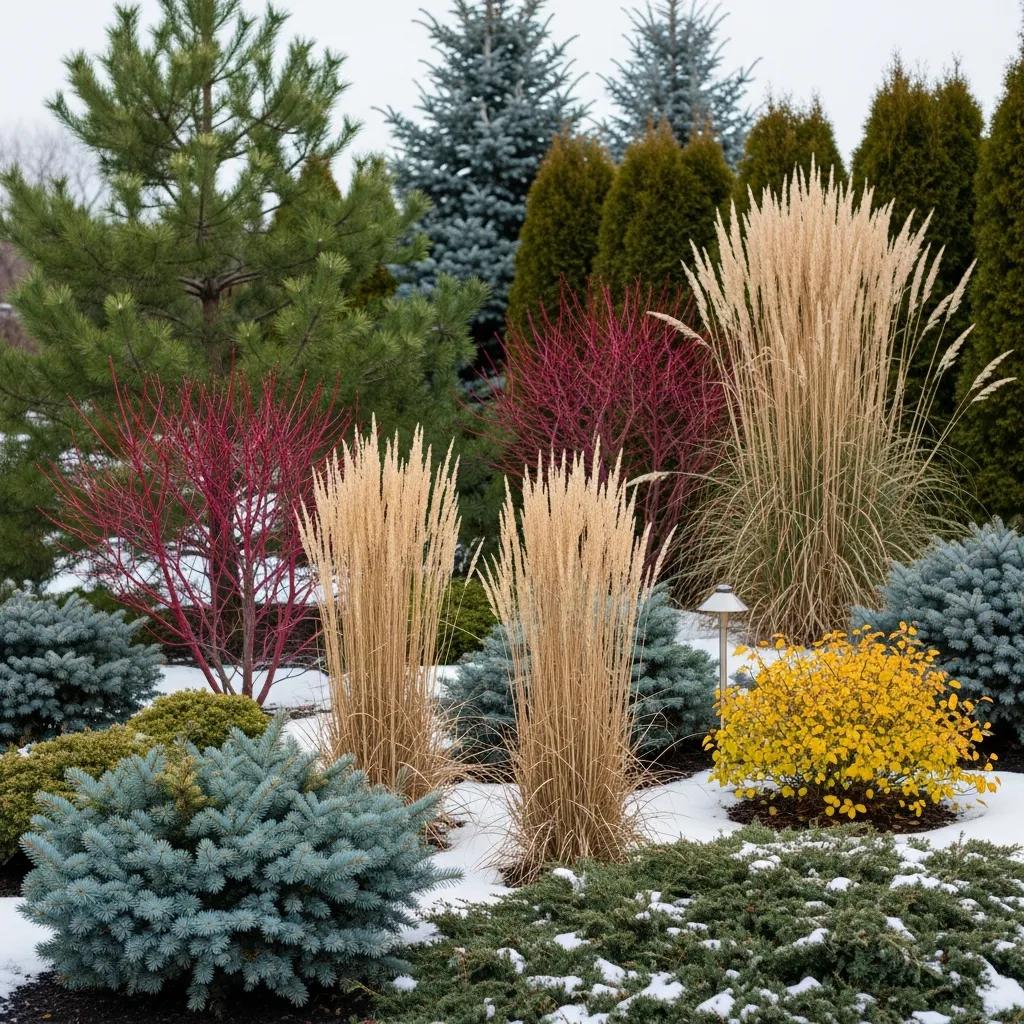
Winter interest is the smart use of plants, hardscape and lighting to keep a property looking good and working well through Mississauga’s colder months. This guide shows what winter interest looks like in GTA conditions, why it matters, and how to plan plantings, structures and seasonal care so curb appeal, safety and ecological value last year‑round. You’ll find recommended cold‑hardy evergreens, shrubs with striking bark and berries, and ornamental grasses with sculptural seedheads, plus hardscaping and lighting ideas that create clear structure and safe wayfinding in low light. We also cover low‑maintenance design principles, a practical maintenance checklist, and how commercial maintenance and snow removal tie into a winter‑ready landscape. Clear comparison tables and a step‑by‑step process explain how to commission a custom winter landscape with Maverick Landscaping, including how to request estimates.
Why winter interest matters for your Mississauga property
Winter interest is the intentional layering of form, texture and colour so a site stays attractive and safe when deciduous plants go dormant. Keeping year‑round structure and focal points protects perceived property value, supports local wildlife and reduces seasonal maintenance headaches. Thoughtful winter planning also makes snow clearing and pedestrian access simpler and safer. Below are the main benefits property owners and managers can expect when they design for winter interest.
- Curb appeal and property value: Keeps a property looking well cared for during the months visitors notice most.
- Safety and accessibility: Clear sightlines and durable surfaces reduce slip risks and make snow removal easier.
- Ecological support: Berries and evergreen shelter provide food and cover for birds and beneficial insects through winter.
- Operational efficiency: Smart plant placement and hardscaping lower emergency winter work and long‑term costs.
Those advantages often lead owners to combine one‑time design with ongoing commercial maintenance programs to protect both aesthetics and operations.
What winter landscaping delivers — benefits at a glance
A winter‑aware landscape delivers visual continuity, practical resilience and measurable operational savings during the cold months. Aesthetically, evergreen groupings, colourful bark and seedheads create dependable focal points that preserve curb appeal. Functionally, well‑placed paths, durable paving and layered plantings reduce snow buildup in high‑traffic zones and limit freeze‑thaw damage. Operationally, a winter‑first design reduces reactive maintenance by guiding foot traffic, cutting de‑icing needs and protecting vulnerable plants with buffer plantings. Together, these gains help homeowners and commercial property teams get better results with less seasonal disruption.
How winter interest improves property value and supports wildlife
Maintaining clear sightlines, entrances and focal points in winter improves first impressions and can help tenant retention. Plants that hold berries or structural interest provide food and shelter for birds and small mammals, supporting urban biodiversity during freeze periods. Simple moves — massing evergreens and placing berry‑producing shrubs strategically — create habitat corridors and visual anchors that attract wildlife while remaining easy to maintain. To keep these benefits, include a maintenance plan that limits salt exposure, refreshes mulch and prunes selectively so both value and habitat function endure.
Which cold-season plants succeed in Mississauga?
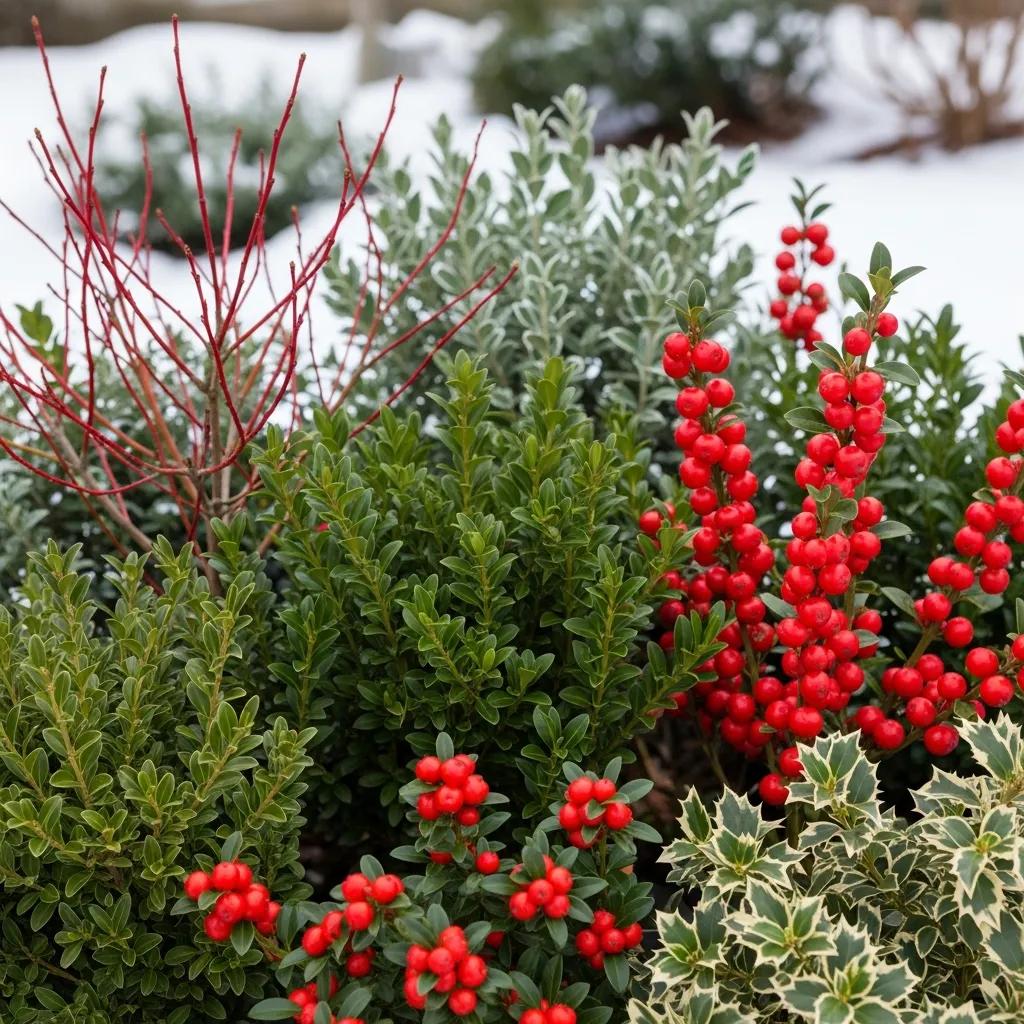
Mississauga’s climate favours a mix of hardy evergreens, shrubs with ornamental bark or berries, and ornamental grasses whose seedheads add winter texture. Choosing species that tolerate wind, salt and freeze‑thaw cycles ensures long‑term performance and fewer winter failures. Below are the plant groups and common examples that perform well across the GTA for foundations, screens and specimen plantings.
- Evergreen shrubs and conifers for structure: Boxwood, yew and juniper provide year‑round green form with low upkeep.
- Trees and shrubs with colourful bark or berries: Red twig dogwood and winterberry holly give reliable winter colour.
- Ornamental grasses and seedheads: Miscanthus and feather reed grass hold vertical lines and catch snow for sculptural interest.
Mix these groups to balance colour, texture and maintenance needs; the table below compares common choices by winter feature and care.
Introductory table comparing cold‑season plants and practical notes.
| Plant | Winter Benefit | Care Level | Hardiness / Notes |
|---|---|---|---|
| Boxwood (Buxus) | Dense evergreen foliage that provides year‑round structure | Moderate — light pruning in spring | Best in sheltered spots; avoid heavy road salt |
| Red Twig Dogwood | Bright red stems that read clearly in winter | Low — coppice occasionally to renew stems | Tolerates wet soils; most effective in groups |
| Winterberry Holly | Persistent red berries that feed birds | Moderate — needs male and female plants for fruit | Prefers moist, acidic soil; high wildlife value |
| Juniper | Textured foliage and strong drought tolerance | Low — minimal pruning; groundcover types suppress weeds | Very hardy; good for massing and erosion control |
| Miscanthus sinensis | Tall seedheads and graceful winter movement | Low — cut back in late winter before new shoots | Adds verticality and helps catch snow |
Best evergreen shrubs for winter interest in Ontario
Evergreen shrubs are the backbone of a four‑season landscape, giving steady colour and shape. Boxwood offers formal structure for foundations and hedges; yew tolerates shade and shaping; junipers and dwarf conifers add texture and drought resilience. Upright hollies and glossy‑leaf shrubs contrast nicely with fine textured grasses. Planting strategy matters: mass evergreens behind lower beds to keep sightlines open, and use dense evergreens as windbreaks to protect tender plantings and limit salt spray. Proper mulching and targeted pruning improve evergreen resilience and reduce replacement costs.
How ornamental bark and winter berries add colour and texture
Bark and berries become focal features after leaves drop, offering bright stems and fruit that pop against snow and stone. Red twig dogwood and paperbark maple deliver bold stem colour; winterberry and some hollies hold fruit that attracts birds and punctuates beds. Pair colourful bark with evergreen backdrops or pale stone to create layered contrast that reads in low light. From a care standpoint, prune to encourage new colourful stems and protect berry‑producing shrubs from excess salt to preserve their visual and ecological value through the season.
How hardscaping and structure lift a winter garden
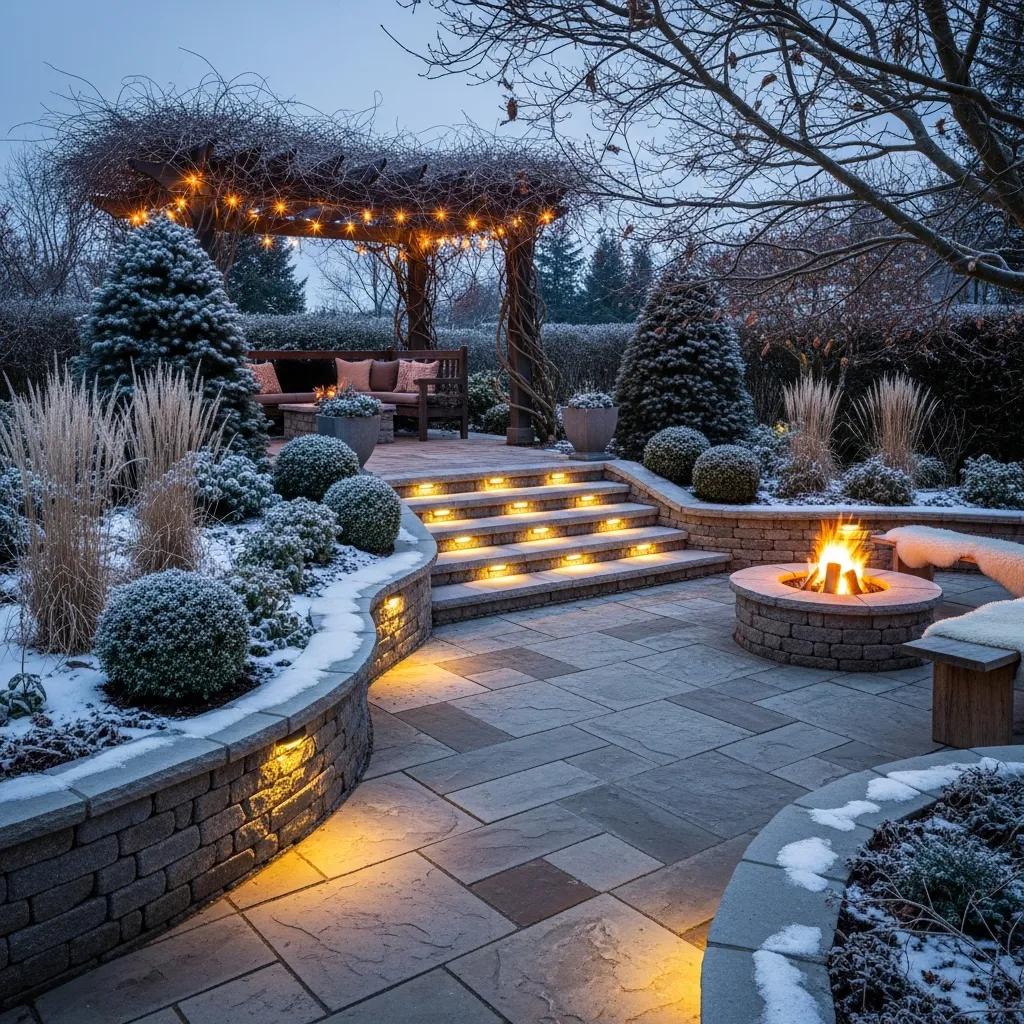
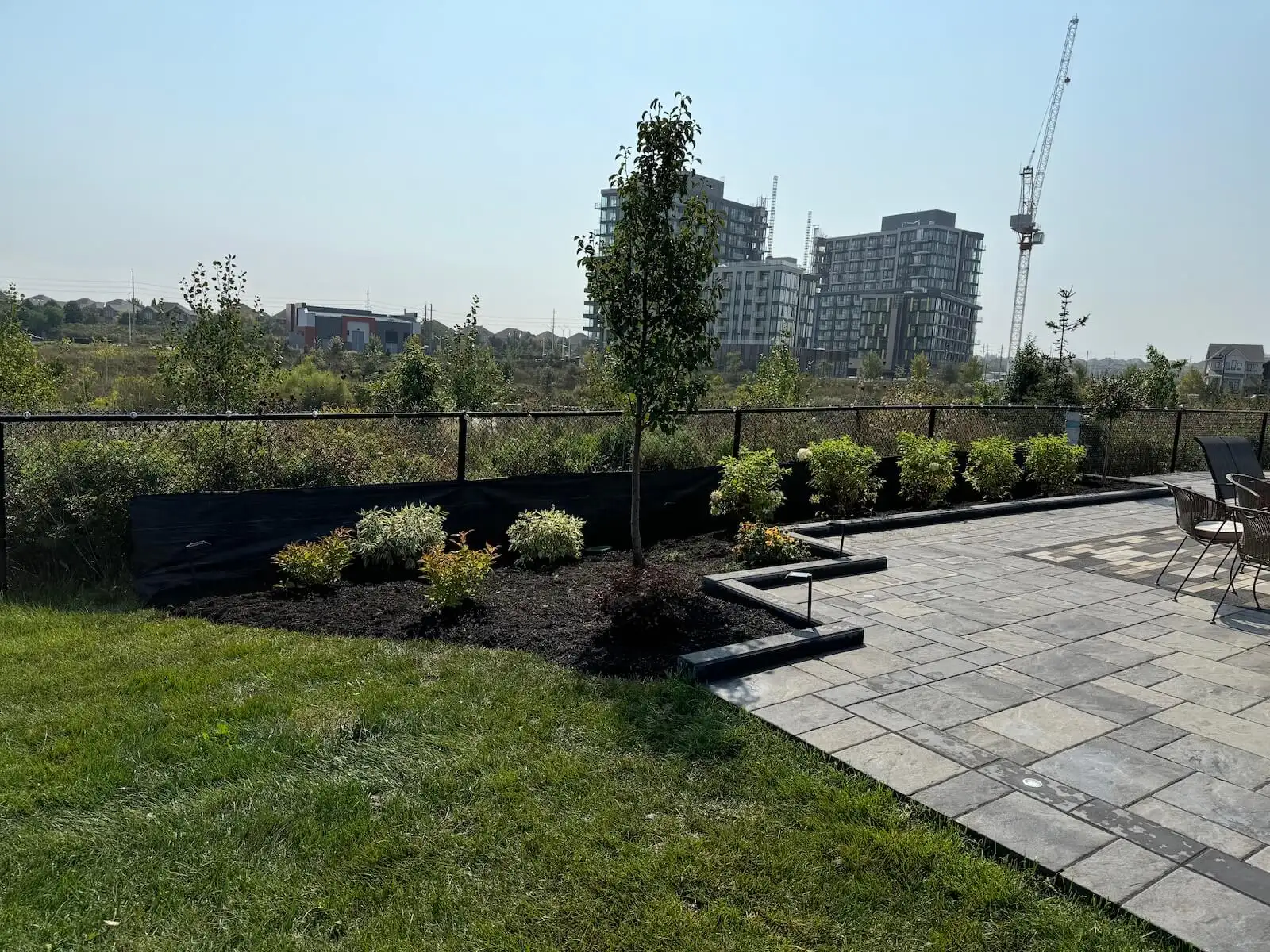
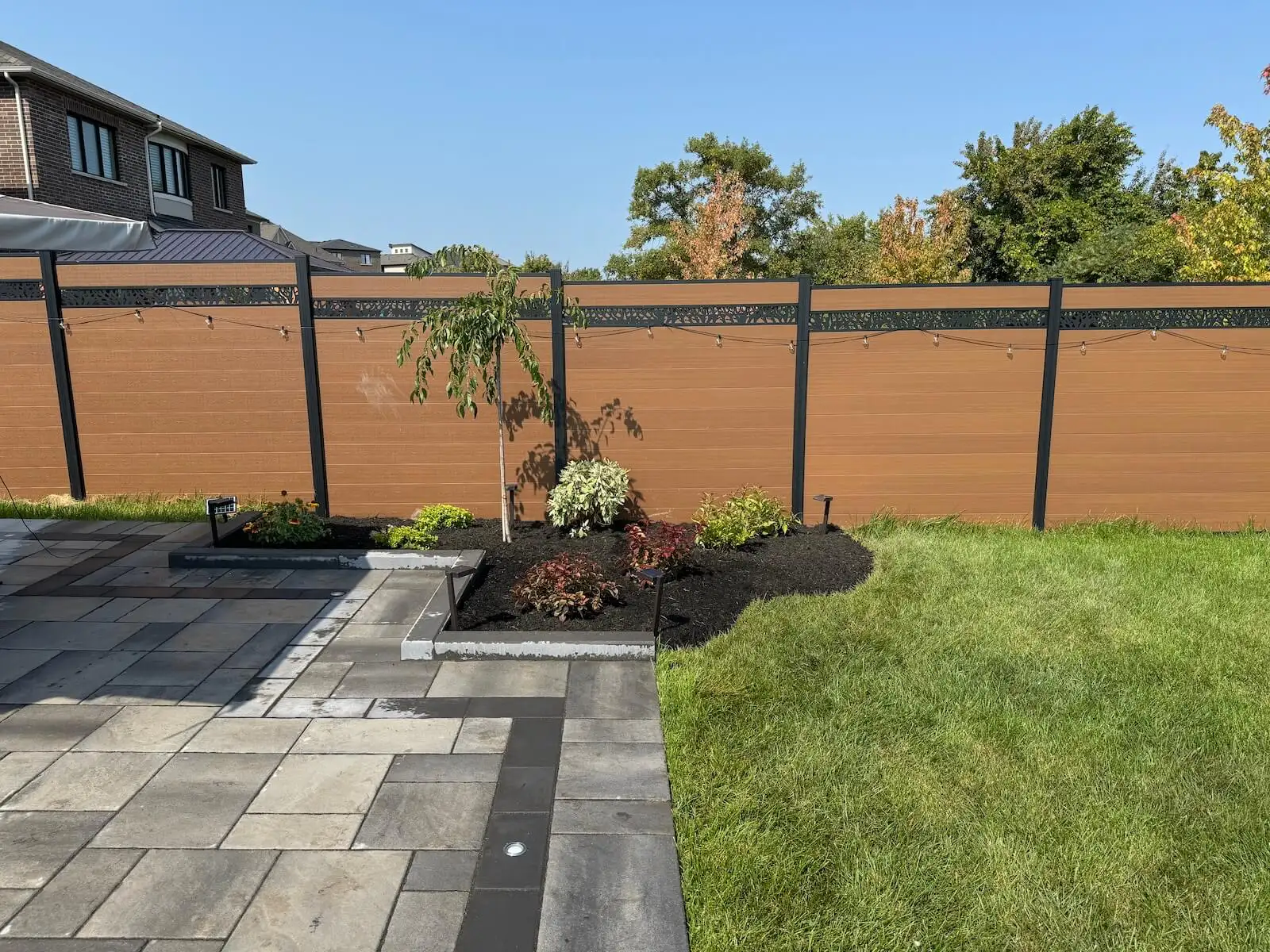
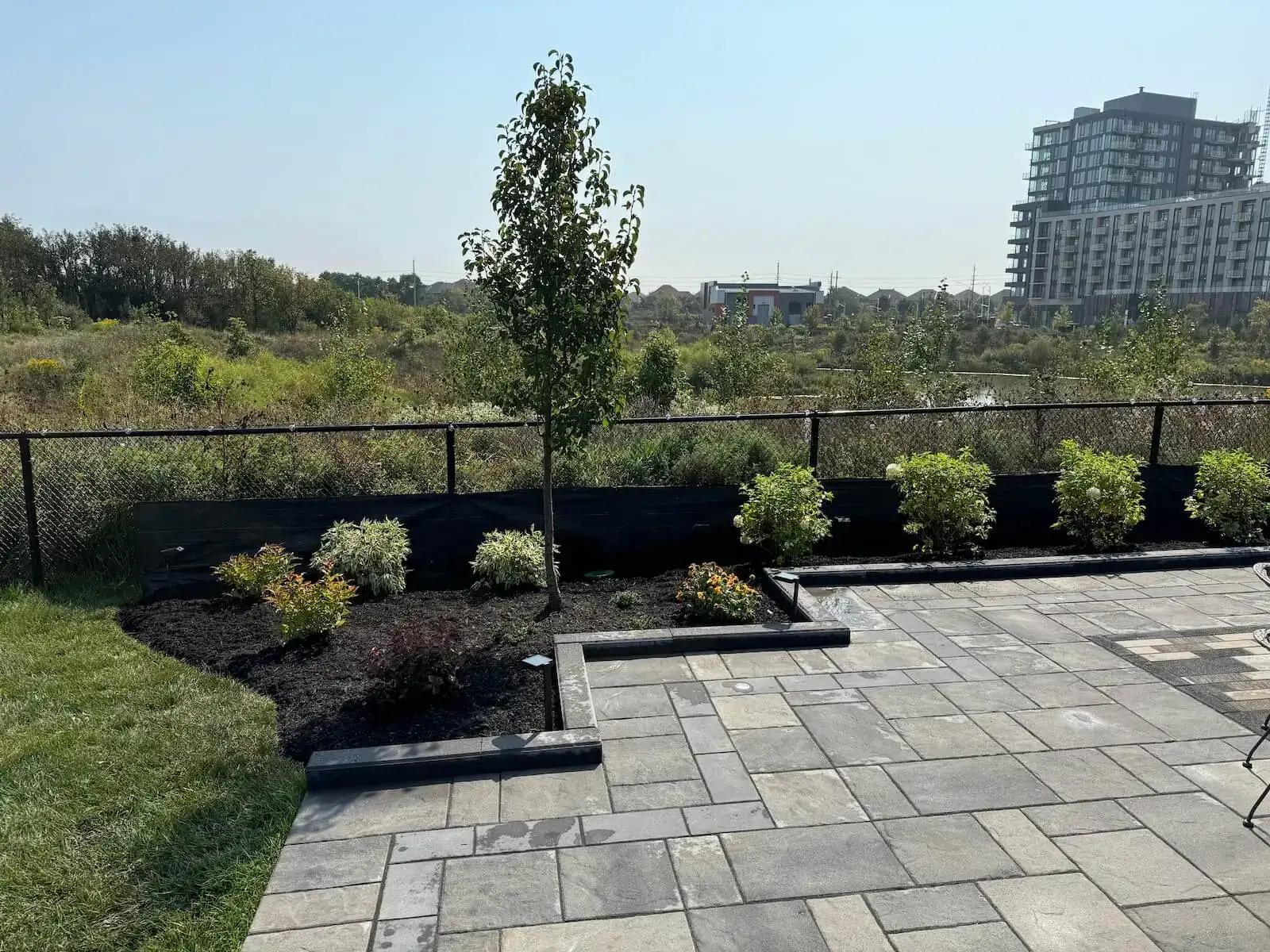
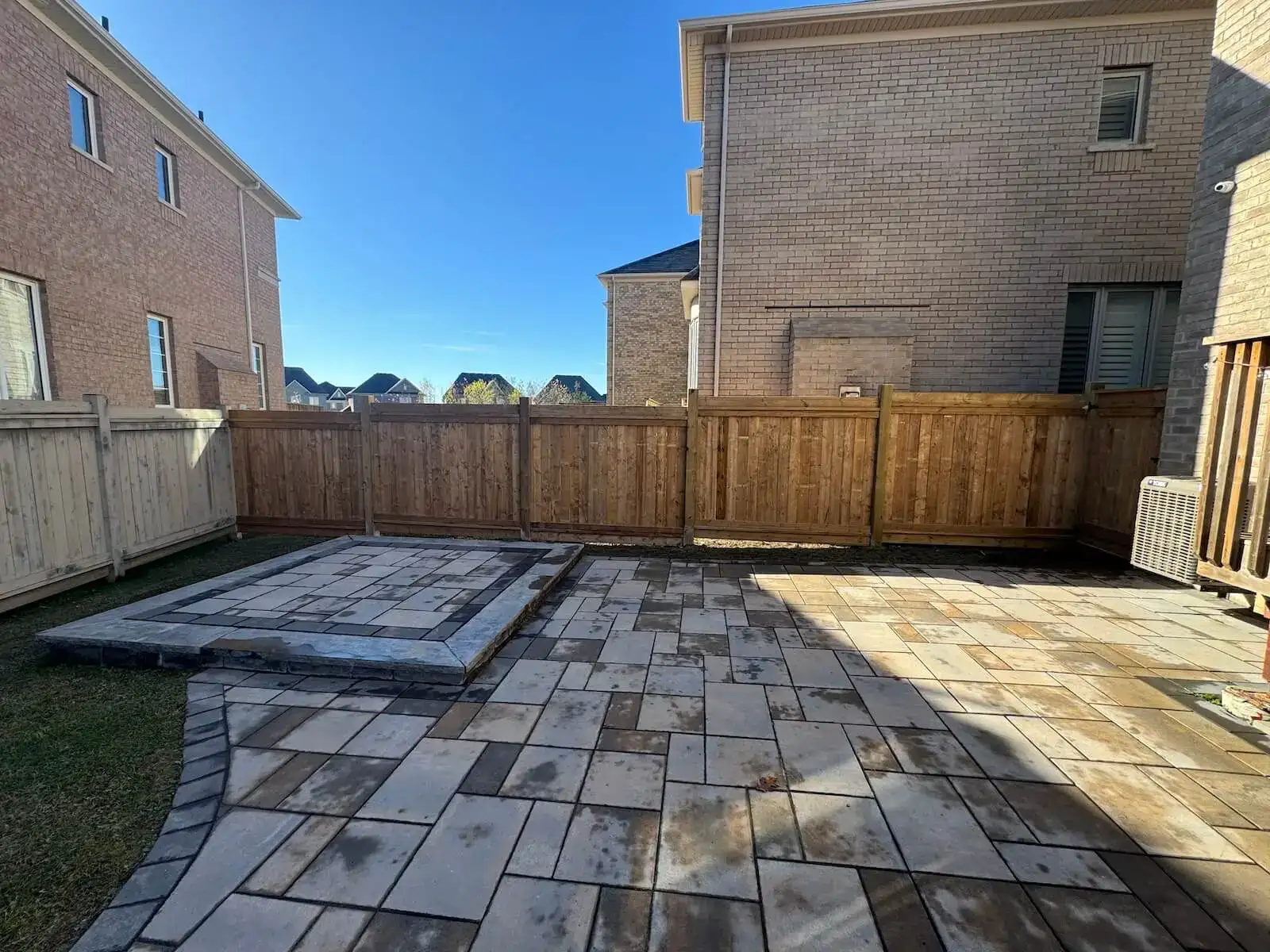
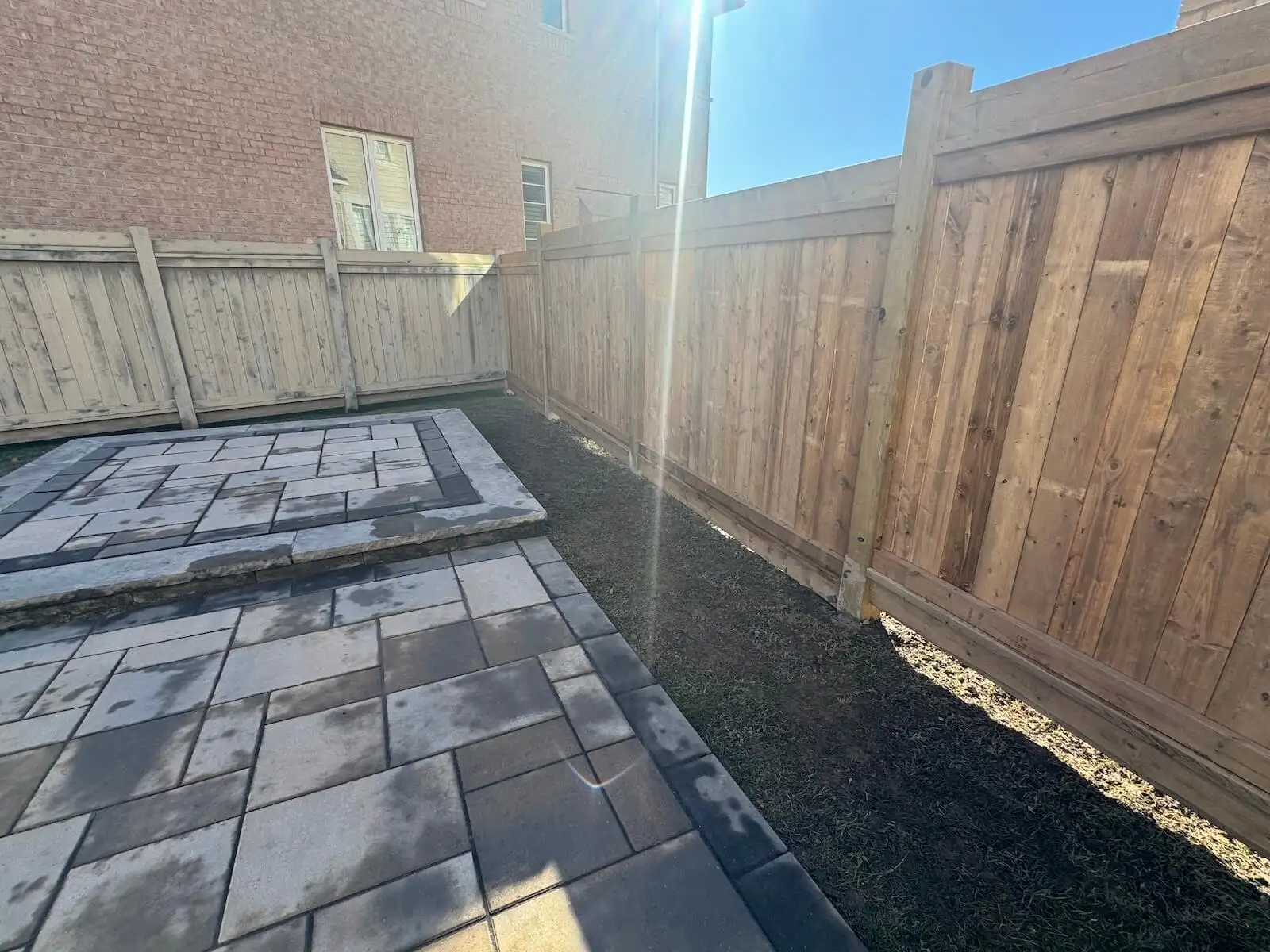
Hardscape is the framework that keeps a winter garden readable and usable. Patios, retaining walls and stone steps hold form when plants are dormant and help manage snow by defining cleared zones. Materials that age gracefully — natural stone, textured pavers and durable wood — contrast nicely with evergreens and barked shrubs while requiring predictable upkeep. Hardscape also integrates with lighting and finishes to make paths safer in icy conditions and easier to shovel or plow. The table below compares common hardscape options by winter benefit and maintenance/cost considerations.
Introductory table comparing hardscaping elements for winter benefits.
| Element | Material / Style | Winter Benefit | Maintenance / Cost Implication |
|---|---|---|---|
| Patios / Walkways | Natural stone or textured pavers | Stable, non‑slip surfaces for clearing and seating | Higher upfront cost; long life and low seasonal repairs |
| Retaining Walls | Stone or poured concrete | Defines snow storage and prevents erosion | Moderate cost; monitor for freeze‑thaw movement |
| Steps & Ramps | Salt‑tolerant treads and handrails | Safer transitions during freeze‑thaw cycles | Periodic surface treatment and fastening checks required |
| Raised Planters | Stone or treated wood | Keeps soil warmer and shields roots from salt | Moderate cost; easier to protect plants in storms |
| Focal Structures | Pergolas or stone columns | Provide vertical interest and anchors for lighting | Variable cost; boosts winter wayfinding and curb appeal |
Hardscape features that deliver year-round structure and mood
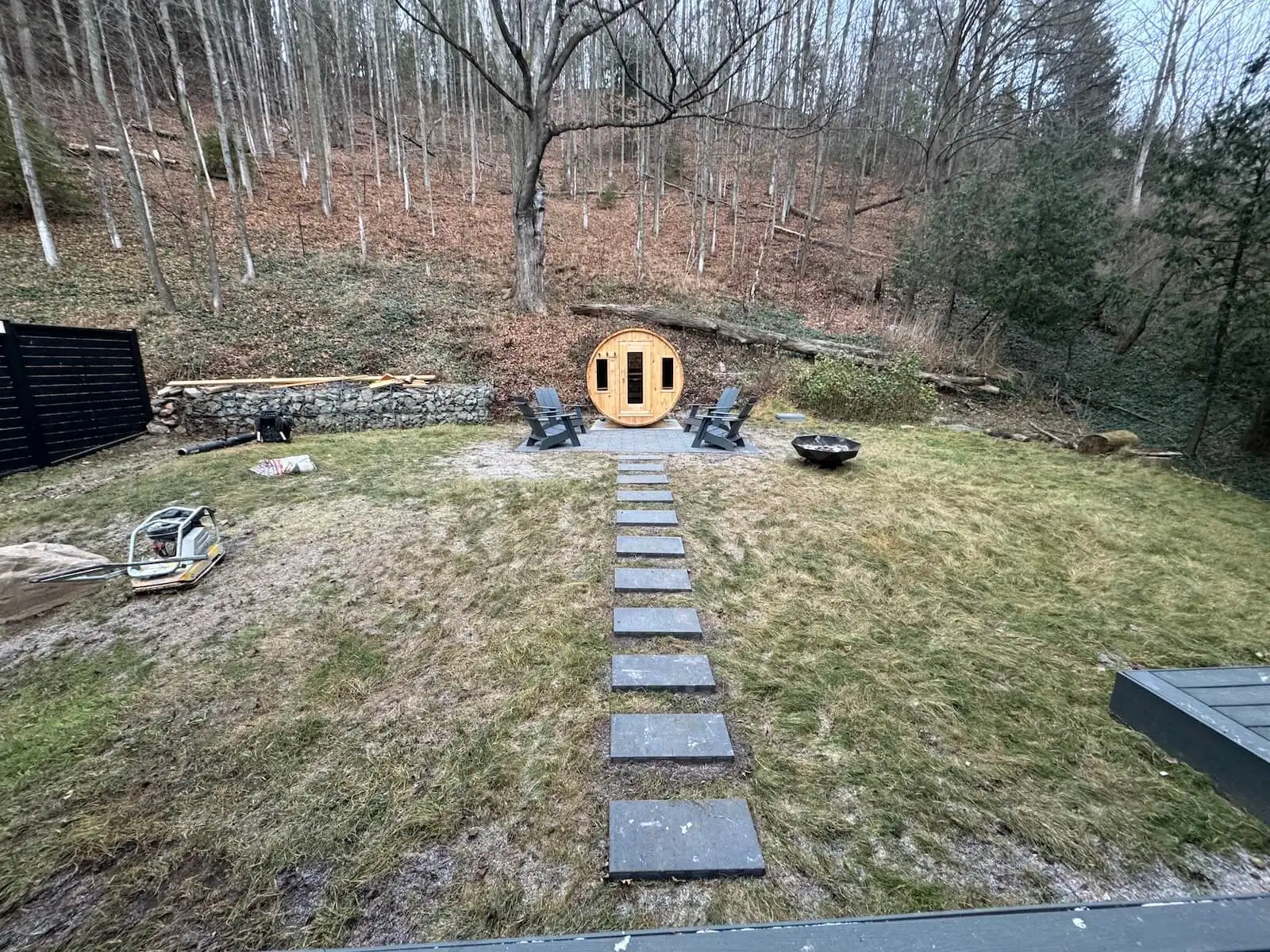
Certain hardscape elements keep adding value in winter by creating clear sightlines and permanent anchors. Textured paver patios and broad steps reduce slip risk and provide staging areas for snow, while retaining walls and terraces hold soil and frame plant masses. Stone columns, boulders and permanent raised planters act as visual anchors that contrast with soft textures and take uplighting well at dusk. These features also help maintenance crews by marking clear cleared areas and protecting beds from windblown snow.
How outdoor lighting improves winter landscapes
Lighting strengthens form, texture and safety during short daylight months by highlighting evergreens, bark and hardscape and by making walkways obvious. Combine low‑voltage uplights for specimen trees, warm path lights for wayfinding and subtle accents for bark or water features to balance ambiance with efficiency. Choose cold‑rated LED fixtures mounted above expected snow depths to reduce maintenance and ensure reliable performance through freeze‑thaw cycles. Thoughtful lighting raises nighttime curb appeal and makes commercial properties safer and easier to navigate.
Key principles for designing a successful winter landscape in Mississauga
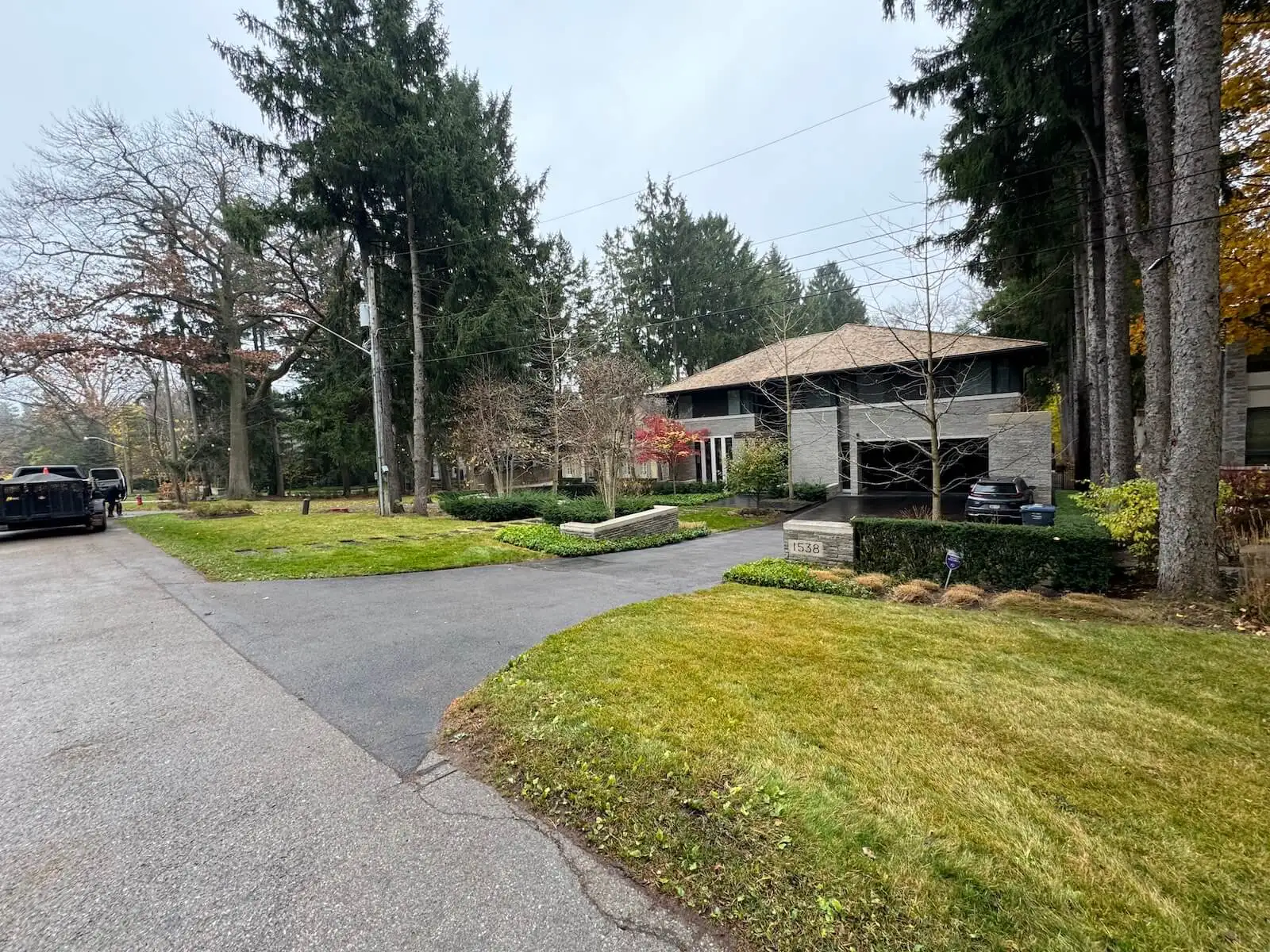
Design for winter by prioritizing form, texture and layered structure so each season flows into the next. Start with a backbone of evergreens and well‑placed hardscape, add mid‑layer shrubs with colourful bark or berries, and finish with ornamental grasses and seedheads for movement. Favor native or well‑adapted species and permeable surfaces to lower inputs and support ecology. Below are practical design principles and a short checklist you can apply to both residential and commercial sites.
- Establish a structural backbone: mass evergreens and permanent hardscape to define spaces.
- Layer textures: mix glossy leaves, fine grasses and coarse bark for depth.
- Design for maintenance: choose materials and species that tolerate salt, wind and winter compaction.
These steps create a resilient framework that simplifies seasonal care and keeps landscapes attractive through Mississauga winters.
How form, texture and colour create four-season interest
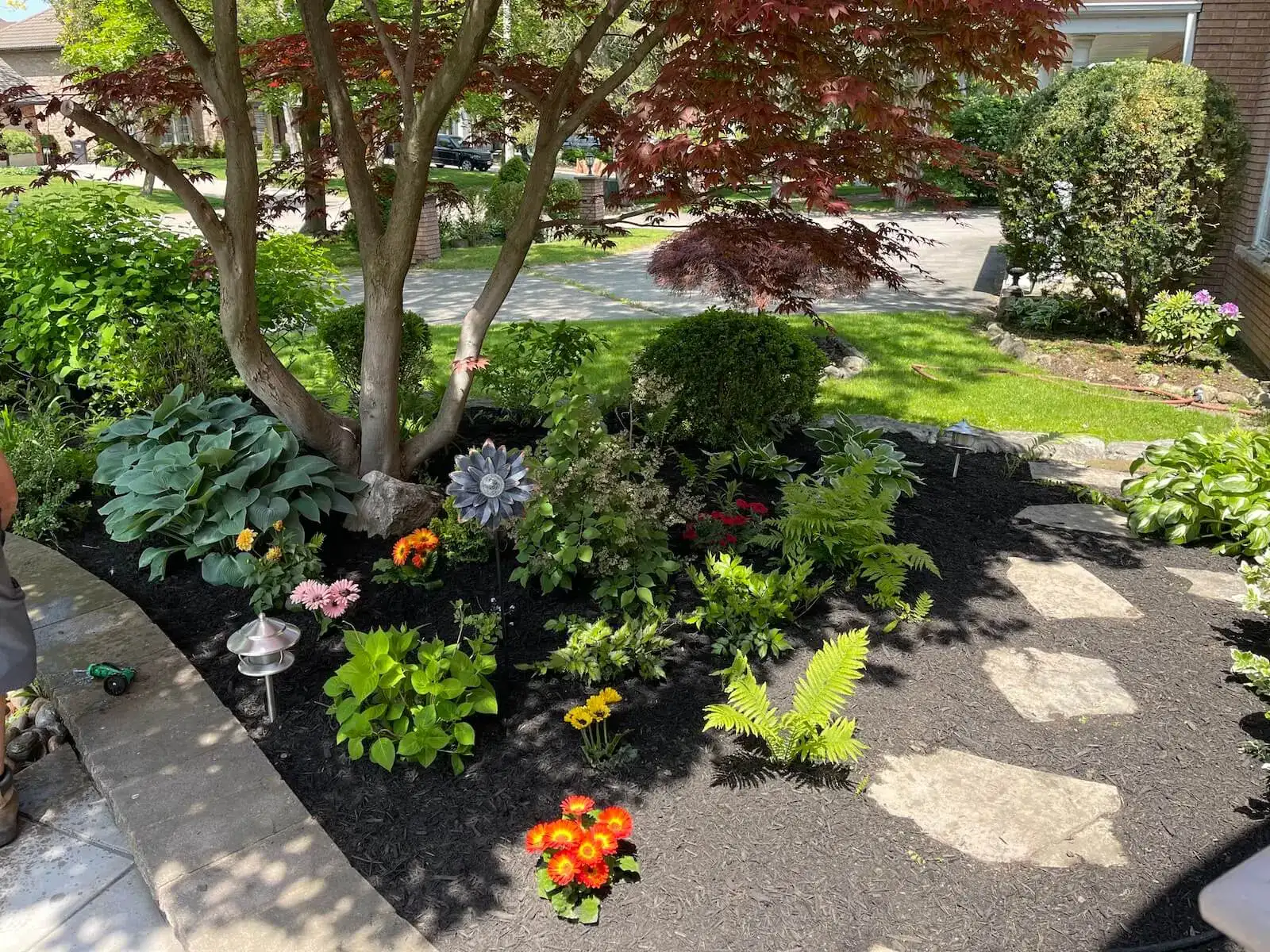
Using contrasting forms — columnar trees, rounded evergreens and tall grasses — builds an architectural silhouette that reads in every season, especially winter. Texture from glossy leaves, feathery grasses and rough bark provides visual contrast when flowers are absent, and pops of colour from bark or berries guide the eye. Simple arrangements — massed evergreens at the back, red‑stem shrubs mid‑layer and seedhead grasses up front — produce balanced compositions that read from the street and up close. Choose species suited to sun and wind exposure and you’ll reduce maintenance while improving longevity.
Low-maintenance winter garden ideas for homeowners and property managers
Low‑maintenance winter gardens rely on a durable plant palette, clear hardscape lines and predictable service routines to reduce labour and extend asset life. Pick hardy evergreens, drought‑tolerant conifers and long‑lived ornamental grasses that require little pruning and tolerate occasional de‑icing. Use permeable paving and good grading to limit ice buildup and choose raised planters to protect root zones from plowing and salt. A seasonal checklist — late‑fall mulch, early‑spring pruning and winter salt‑management — keeps costs steady. Partnering with a maintenance provider streamlines these tasks and preserves long‑term value.
How Maverick Landscaping supports commercial winter landscaping in Mississauga
Maverick Landscaping provides integrated design, installation and year‑round maintenance for commercial properties across Mississauga and the GTA, pairing winter‑aware landscape design with commercial snow removal programs. Our in‑house design team prioritizes winter interest and operational efficiency, while maintenance and snow services protect curb appeal and accessibility. Maverick’s work is backed by awards and a 5‑year limited labour warranty that reflects our commitment to quality installation and ongoing support. For property managers, bundled programs reduce vendor complexity and help protect landscape investment through every season.
- Commercial design & build: Custom winter‑ready landscapes tailored to property management needs.
- Year‑round maintenance: Seasonal cleanups and plant protection that lower lifecycle costs.
- Snow management & safety: Reliable operational plans that keep properties accessible and reduce liability.
This integrated approach connects visual goals with operational reliability — essential for commercial sites that need consistent presentation and safe access in winter weather.
Core commercial snow removal services that protect safety and access
Effective commercial snow programs bundle core services to reduce liability and keep businesses running during storms. Typical offerings include:
- Plowing: Clearing parking areas and driving lanes to restore vehicle access quickly.
- De‑icing and anti‑icing: Applying materials to limit ice formation and improve traction on high‑traffic surfaces.
- Sidewalk and entrance clearing: Ensuring pedestrian routes and entrances are shoveled and treated for safety.
- Emergency response and priority routing: Rapid mobilization for major events to protect tenants and maintain operations.
Coordinating snow management with landscape preservation — protecting plantings from heavy equipment and limiting salt exposure — preserves both safety and long‑term landscape value.
How year-round maintenance and seasonal cleanups protect your investment
Regular maintenance and timely seasonal cleanups stop small problems from becoming expensive repairs by protecting plants and hardscape from winter stressors. Typical tasks include fall pruning, burlap‑wrapping vulnerable specimens, spring inspections for salt damage and regular mulch renewal to moderate moisture and temperature. These routines reduce plant loss, prevent erosion and limit hardscape repairs from freeze‑thaw cycles. Maverick Landscaping’s maintenance packages, combined with our 5‑year limited labour warranty, help deliver predictable results and extend the life of plantings and constructed features.
How to get started creating winter interest on your property
Getting started pairs practical planning with the right information so designers can produce realistic, cost‑effective winter‑ready plans. The steps below outline a common path from initial consultation to installation and handover to help you prepare for a custom winter landscape program.
- Initial consultation and site visit: We assess microclimates, sun exposure, soil and existing hardscape to identify constraints and opportunities.
- Design development and revisions: Concept plans are created and refined with stakeholder feedback to meet maintenance and budget needs.
- Installation and quality checks: Planting, hardscaping and lighting are installed with attention to winter durability and coordination with seasonal crews.
- Maintenance handover and warranty: We establish a service cadence and transfer care protocols, with options that include warranty‑backed labour coverage.
Sharing photos, property type and a brief scope before your consultation speeds estimates and helps our design team tailor recommendations to your site. These steps guide clients through a transparent process that balances appearance and operations.
Our custom winter landscape design process
A custom design starts with a site assessment to capture conditions that influence plant selection and hardscape placement, followed by concept sketches and prioritized recommendations. Our in‑house team refines plans with client input and specifies materials chosen for winter resilience, including salt‑tolerant species and durable paving. Installation is scheduled to minimize disruption to property operations and quality checks confirm plant health and structural integrity at handover. A maintenance plan and available warranties complete the package for both commercial and residential clients.
How to request a free estimate for your winter project
To request an estimate, gather basic property details — residential or commercial, photos, scope of work and any timing constraints — and share them during your initial outreach to speed an accurate quote. Maverick Landscaping accepts inquiries by phone and email, and our Google Business Profile lists local details to help plan a site visit. Clear site photos and access notes make proposals more accurate and help our designers deliver cost‑efficient, winter‑ready solutions.
Frequently Asked Questions
What are some effective winter maintenance tips for homeowners?
Protect your winter landscape by removing heavy snow from branches to prevent breakage and keeping paths clear for safety. Apply mulch in late fall to insulate roots and retain moisture. Where possible, use salt alternatives near plantings — sand or grit for traction — and schedule seasonal checks so issues are caught and fixed early.
How can I incorporate seasonal decorations into my winter landscape?
Use natural elements like evergreen boughs, pinecones and berries for wreaths and planters to add seasonal character without harming plants. String lights on trees and shrubs to create warmth on long winter nights, and choose weatherproof decorations that don’t block maintenance access or interfere with snow clearing.
What are the best practices for snow removal in landscaped areas?
Protect plants and hardscape by using a shovel or blower with a soft edge and by designating snow storage zones away from beds. Avoid salt near sensitive plantings — opt for sand or gravel for traction — and remove heavy snow promptly to prevent branch or structural damage. A proactive plan keeps both people and plants safe.
How can I choose the right lighting for my winter garden?
Choose cold‑rated LED fixtures for reliability and energy efficiency. Use uplights to showcase specimen trees and shrubs, path lights for safe wayfinding and warm‑toned illumination to create a welcoming atmosphere. Place fixtures above expected snow lines and focus lighting on focal points like grasses, bark and hardscape for the best winter impact.
What role do native plants play in winter landscaping?
Native plants are well adapted to local winters and typically need less care. They provide habitat and food for wildlife during cold months and often resist pests and disease better than non‑natives. Incorporating natives boosts biodiversity and builds a more resilient, lower‑maintenance landscape.
How can I ensure my winter garden remains eco-friendly?
Use organic mulch, choose native and drought‑tolerant species, and specify permeable paving to reduce runoff. Consider solar‑powered lights and manage invasive species responsibly. These choices lower inputs, protect local ecosystems and keep your landscape sustainable through winter.
What are some common mistakes to avoid in winter landscaping?
Avoid over‑planting that leads to overcrowding, and don’t select species that aren’t cold‑hardy for your site. Keep up with pruning and snow removal to prevent damage, and limit salt use near plants. Planning with maintenance in mind helps you avoid these common pitfalls and build a landscape that lasts.