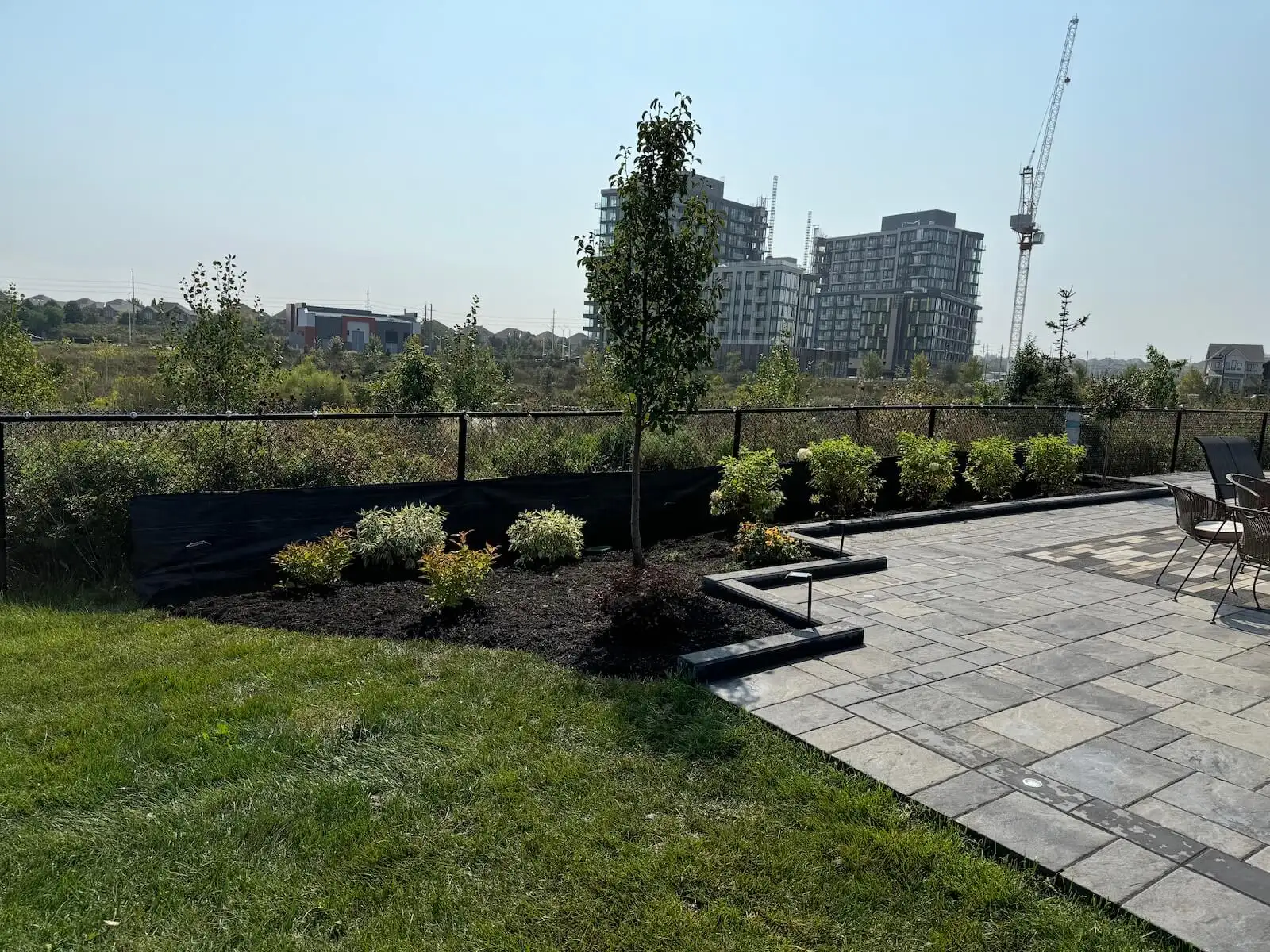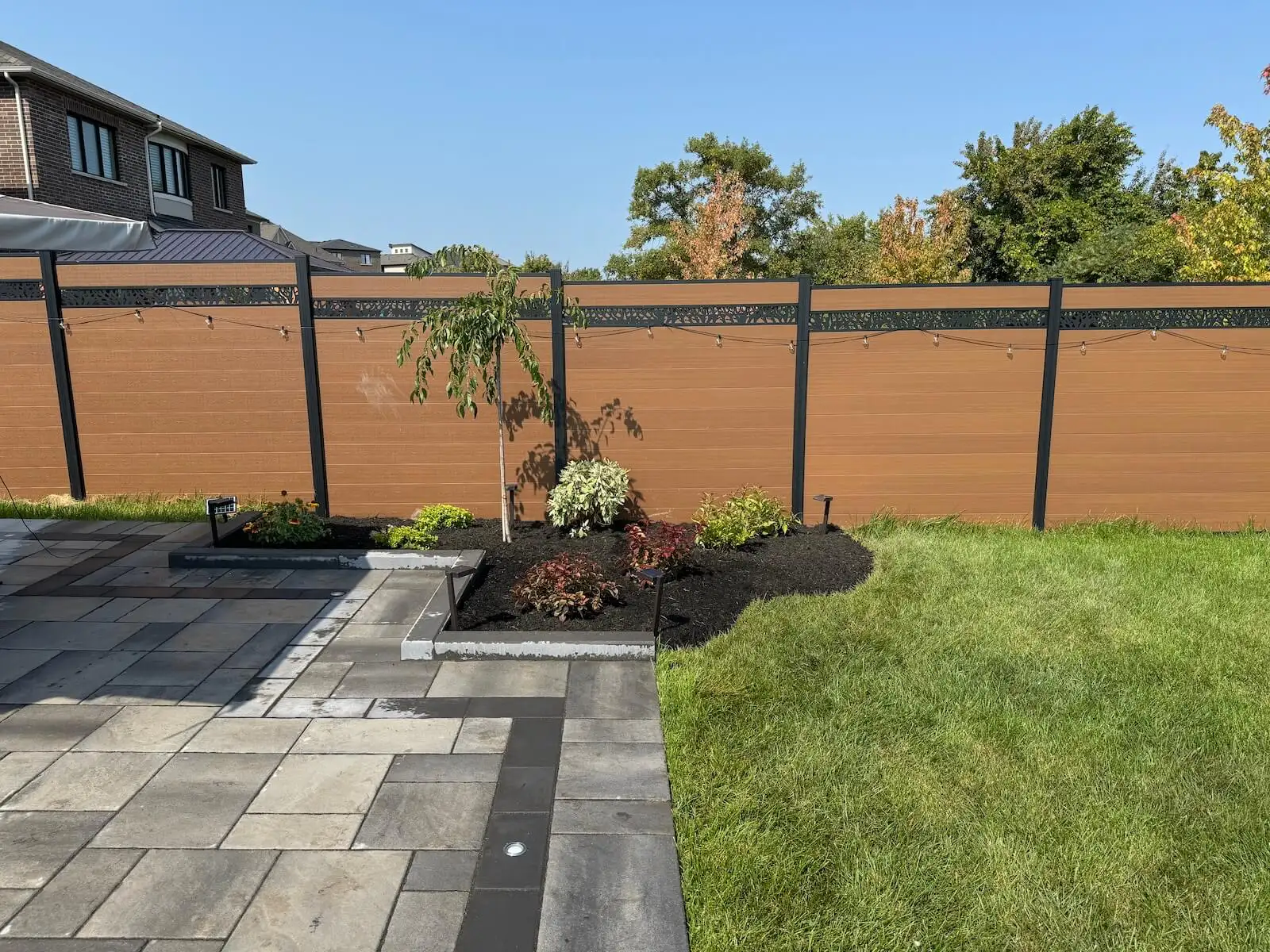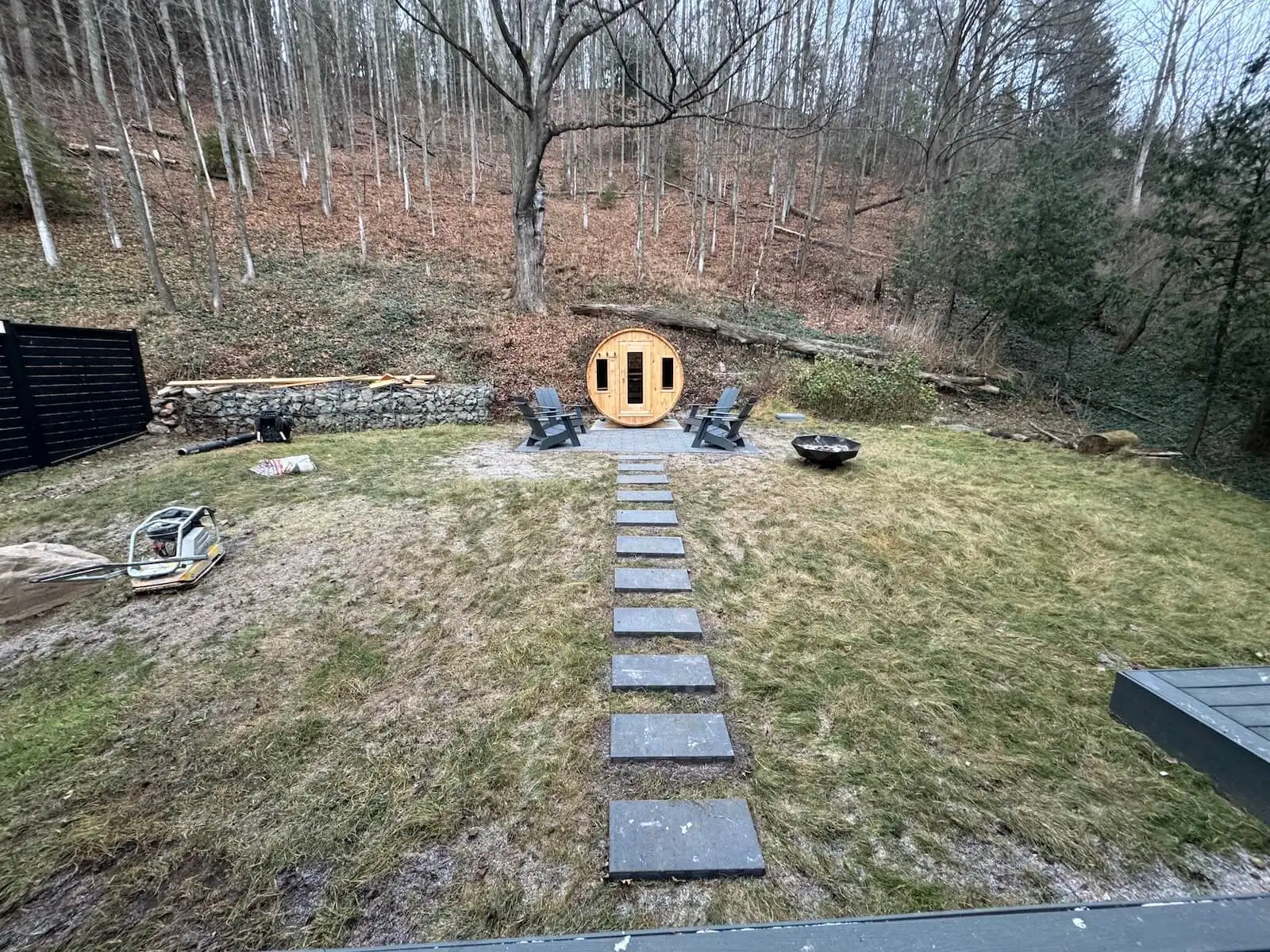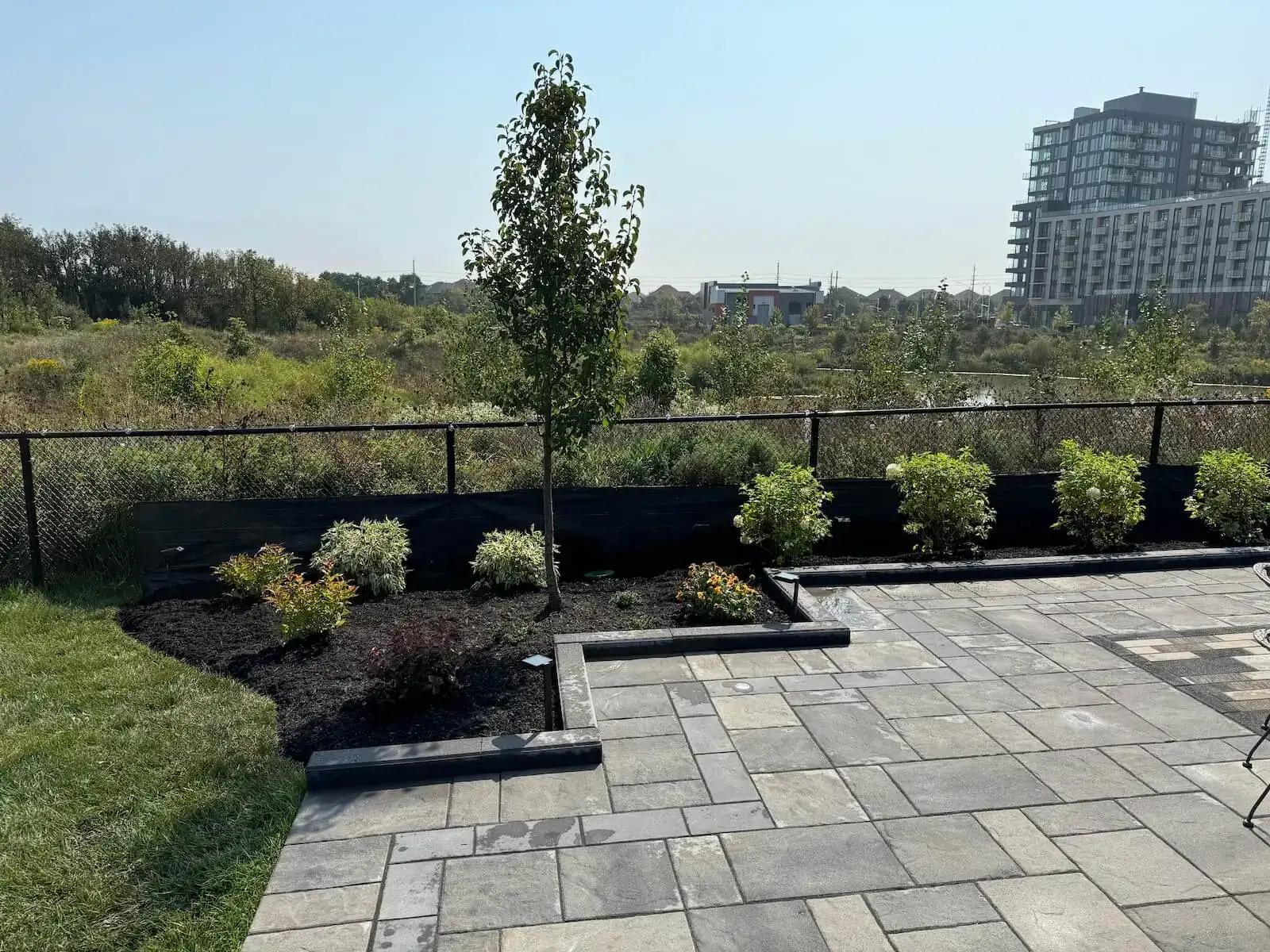









Canadian homeowners – including those in places like Mississauga, Ontario – often face unique challenges in front yard landscaping. Harsh winters with heavy snow and freezing temperatures test the hardiness of plants, while hot summers demand drought tolerance. Yet a well-designed front yard is crucial: it sets the first impression for your home and can even boost curb appeal and property value.
The key is to blend aesthetic beauty with functional practicality, ensuring your front yard looks inviting year-round and stands up to Canada’s climate. In the following ideas, we explore a mix of innovative hardscaping and strategic plantings tailored to Canadian homes.
From creative use of native plants to smart solutions for snow and rain, these 20 front yard landscaping ideas will help you transform your outdoor entrance into an attractive, resilient space that complements your home.
1. Create a Welcoming Walkway with Durable Pavers
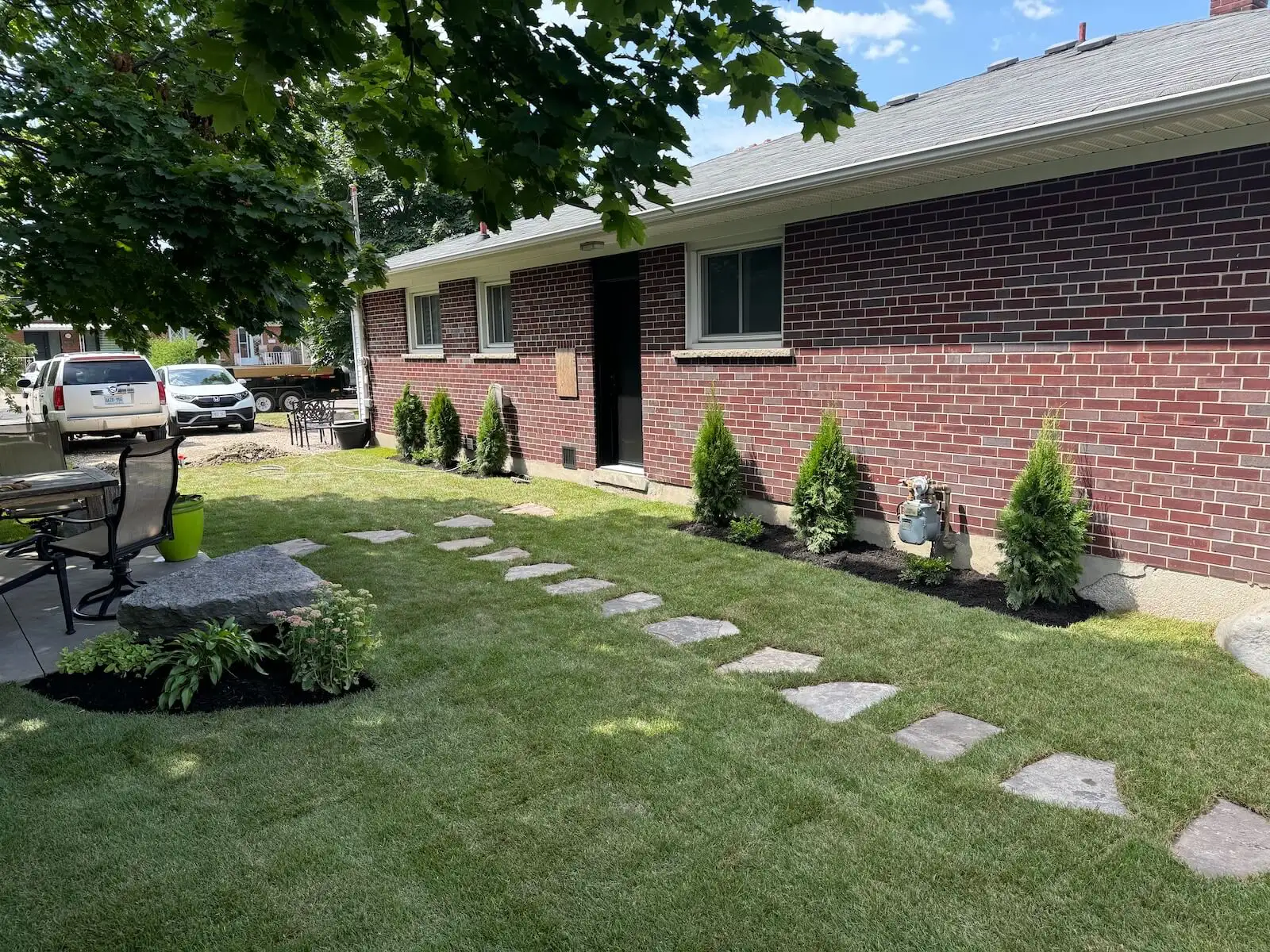
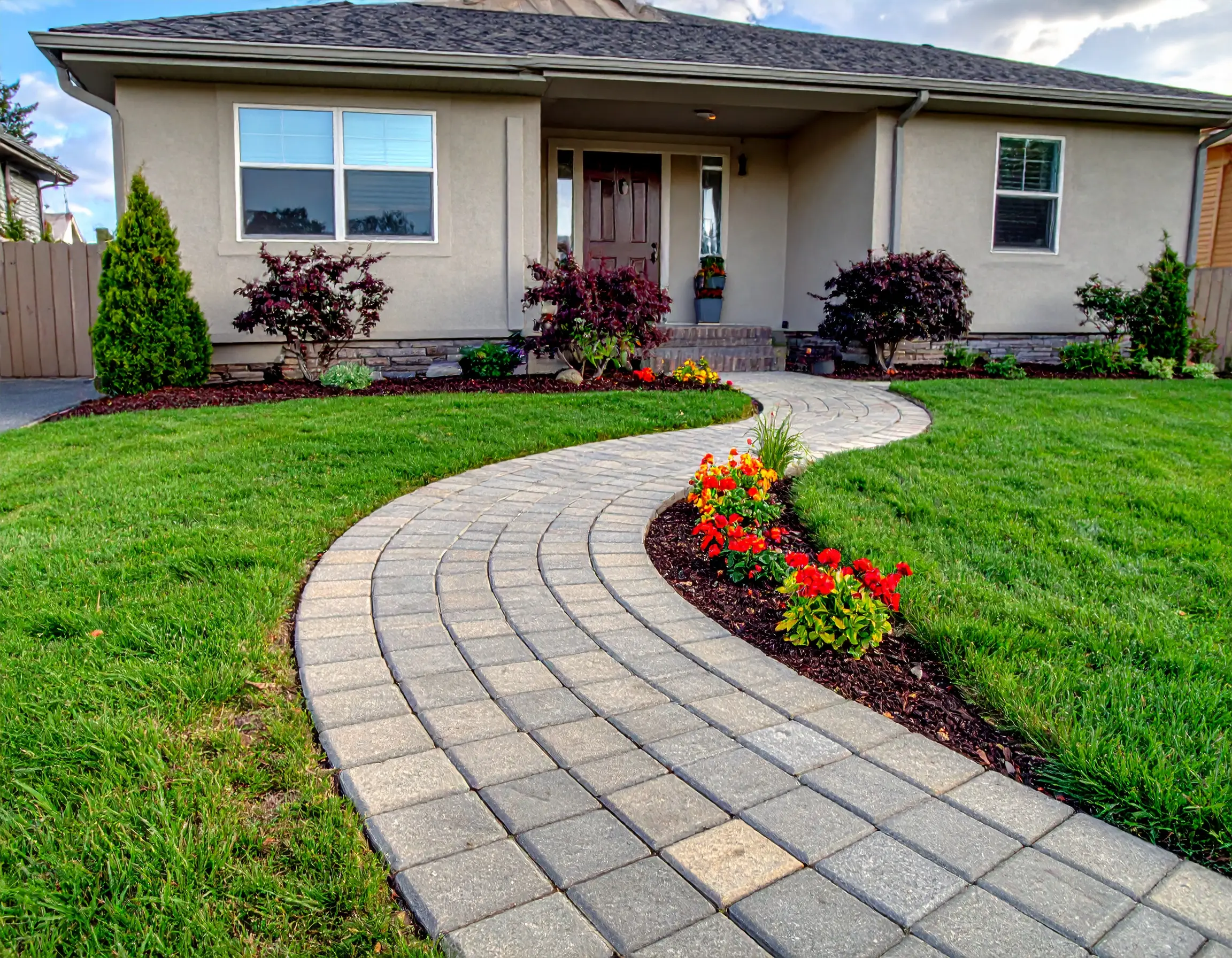
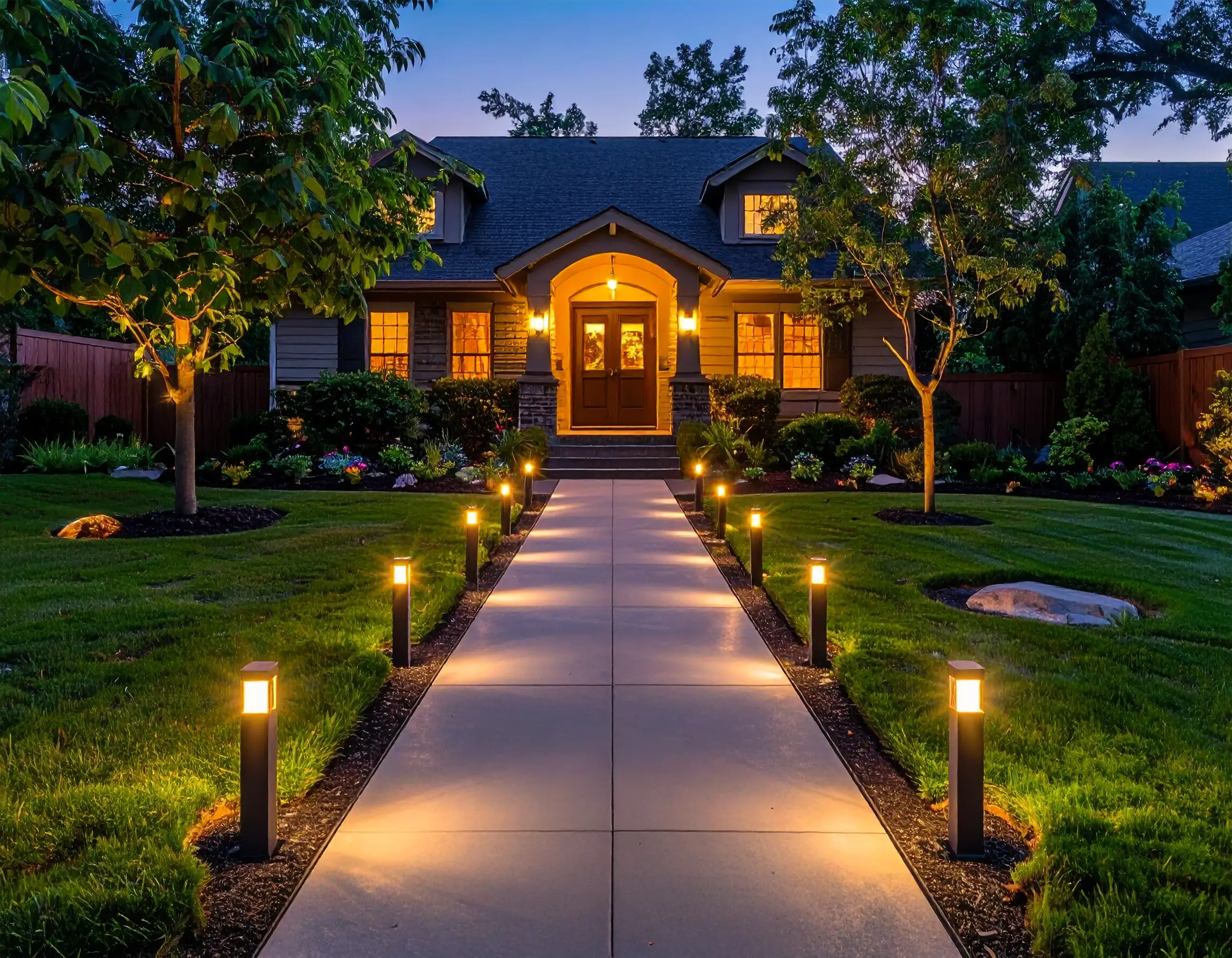
Your front walkway is more than just a path – it’s the red carpet to your door. Upgrading a plain concrete walk to an attractive hardscape path instantly elevates curb appeal. Consider installing interlocking concrete pavers or natural stone slabs in a gentle curve leading to your entrance. Fill the joints with polymeric sand to lock pieces in place and prevent weeds from sprouting. For added charm and safety, line the walkway with low-voltage LED lights to illuminate the route on dark evenings. (This is especially useful during Canadian winters when night falls early.)
A well-defined, well-lit path makes your front yard both inviting and functional. For example, one Mississauga homeowner replaced a straight cement path with a curved paver walkway bordered by flower beds, completely refreshing the look and feel of the entry. By guiding visitors with a beautiful lit path, you welcome them warmly while also ensuring surefooted steps in every season.
2. Add Lush Foundation Plantings for Year-Round Appeal
The base of your home – along the foundation walls – is a prime zone to beautify with plants. Foundation plantings are the shrubs, flowers, and small trees placed around your house’s perimeter. By mixing plants that shine in different seasons, you can keep this area attractive all year. Start with evergreens (like dwarf spruce, juniper, or cedar) for year-round green structure, as these will stay lush even through snow. Then add deciduous flowering shrubs (such as hydrangea, Potentilla, or rose of Sharon) for bursts of spring/summer color.
Tuck in hardy perennials for added texture and blooms – think of Black-eyed Susans or hostas depending on sun exposure. For placement, put taller shrubs at the corners of the house and lower-profile plants under windows to frame the home in a welcoming way. Always choose species suited to your local climate and hardiness zone so they thrive; for instance, Mississauga’s zone 6 means you can use many hardy Ontario-native shrubs. With a thoughtful selection, your foundation beds will have something interesting to offer in every season – from fresh spring growth to summer flowers, autumn foliage, and the deep green of evergreens in winter.
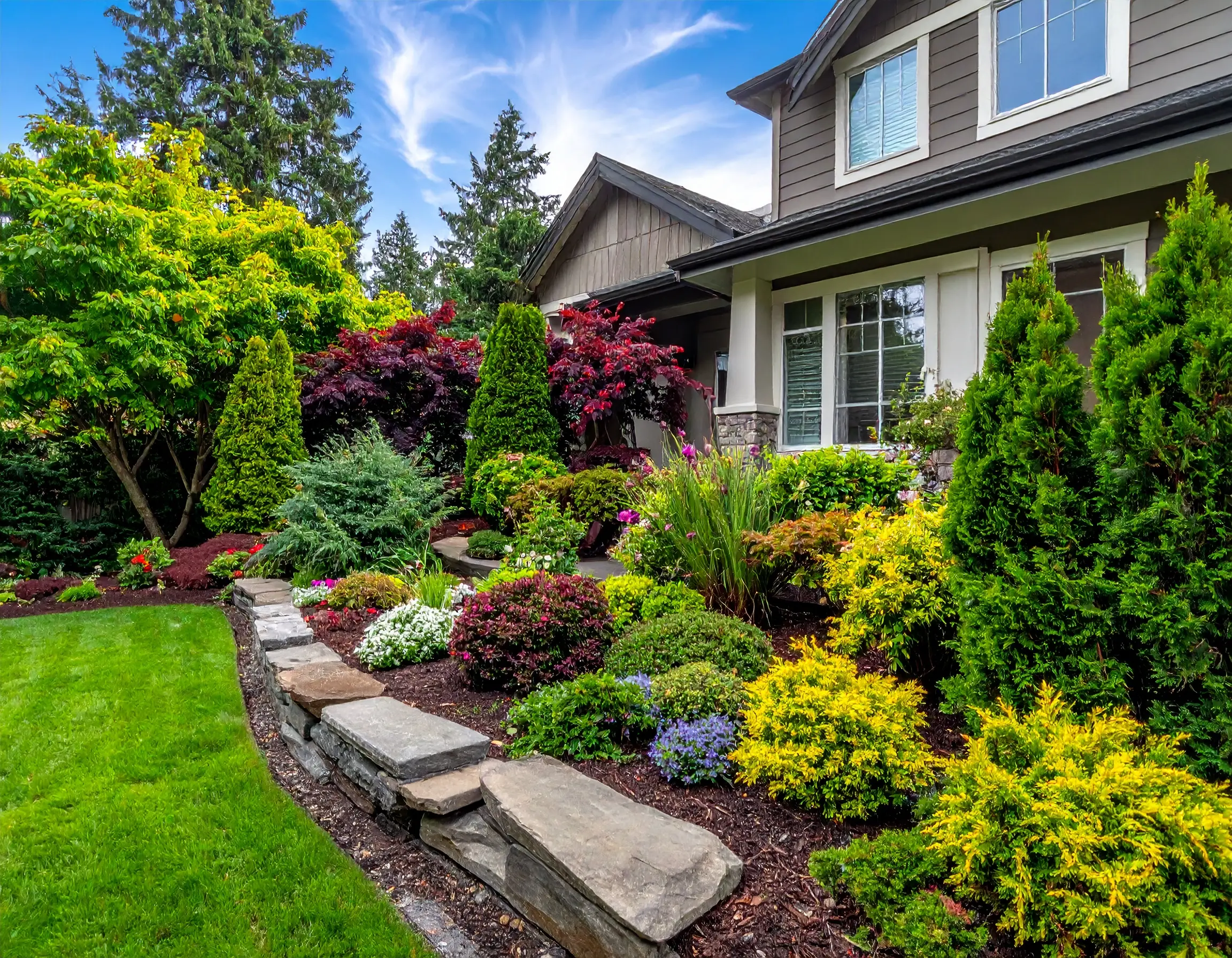
3. Opt for a Low-Maintenance Rock Garden with Native Plants
If you prefer a landscape that’s as tough as it is beautiful, try creating a rock garden in part of your front yard. Rock gardens replace high-maintenance lawn or flower beds with a mix of decorative stone and hardy, drought-tolerant plants. Start by laying down a base of gravel, river rocks, or crushed stone in an area where you want a low-care focal point. Then, plant native perennials that thrive in fast-draining, gravelly soil – great choices include sedums, stonecrop, purple coneflower, or even hardy succulents like hens-and-chicks.
These plants are adapted to local conditions and can handle periods of dryness once established. The combination of rocks and resilient plants greatly reduces watering and weeding needs while still providing plenty of texture and color. In other words, you get an attractive, Zen-like garden corner that practically takes care of itself. An added benefit of using native species is that they generally require less maintenance and irrigation than exotic plants, saving you time and money in the long run. With a well-planned rock garden, you’ll have a front yard feature that looks artistic and stays attractive through heat, drought, and even light frosts.
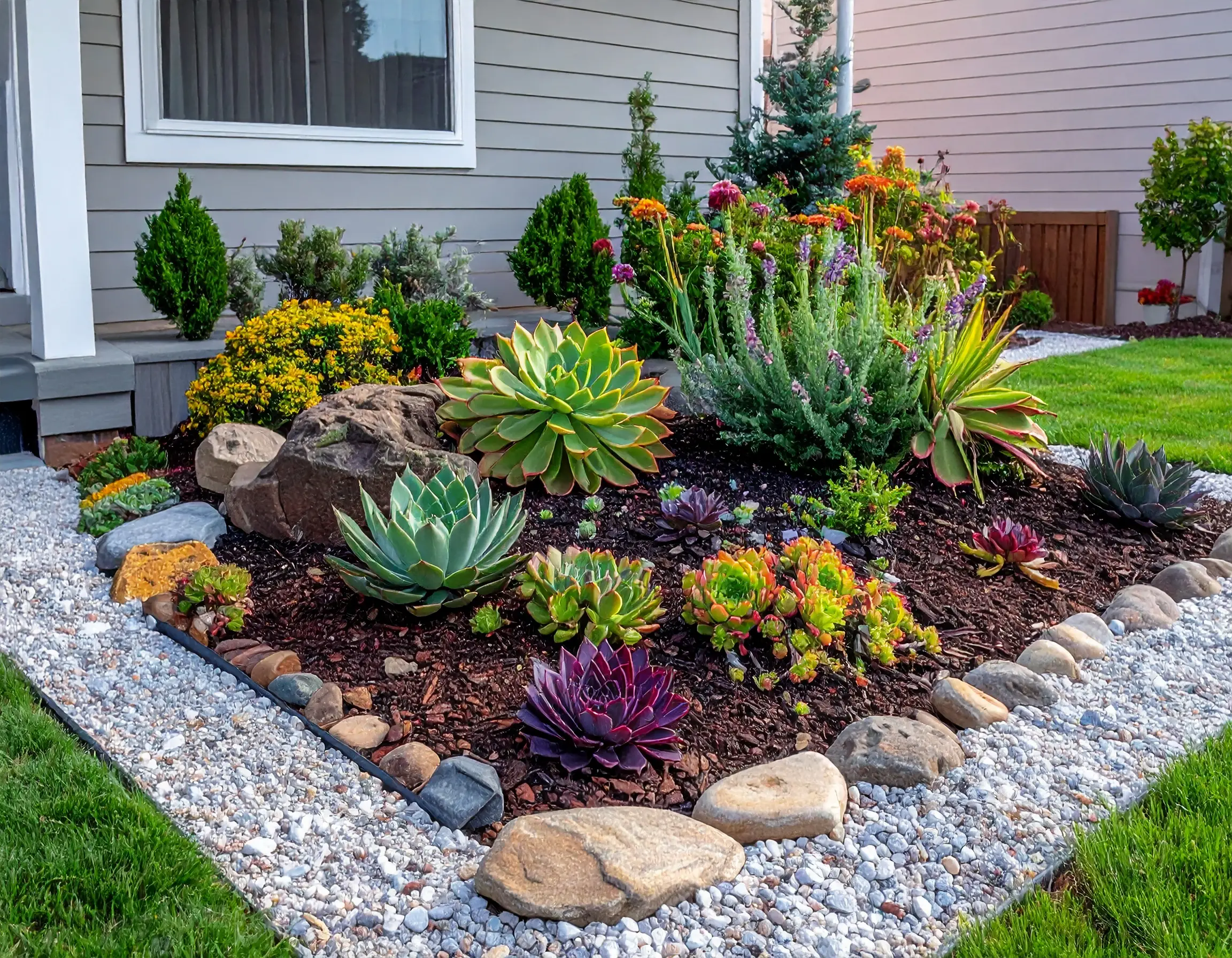
4. Carve Out a Cozy Front Patio or Seating Nook
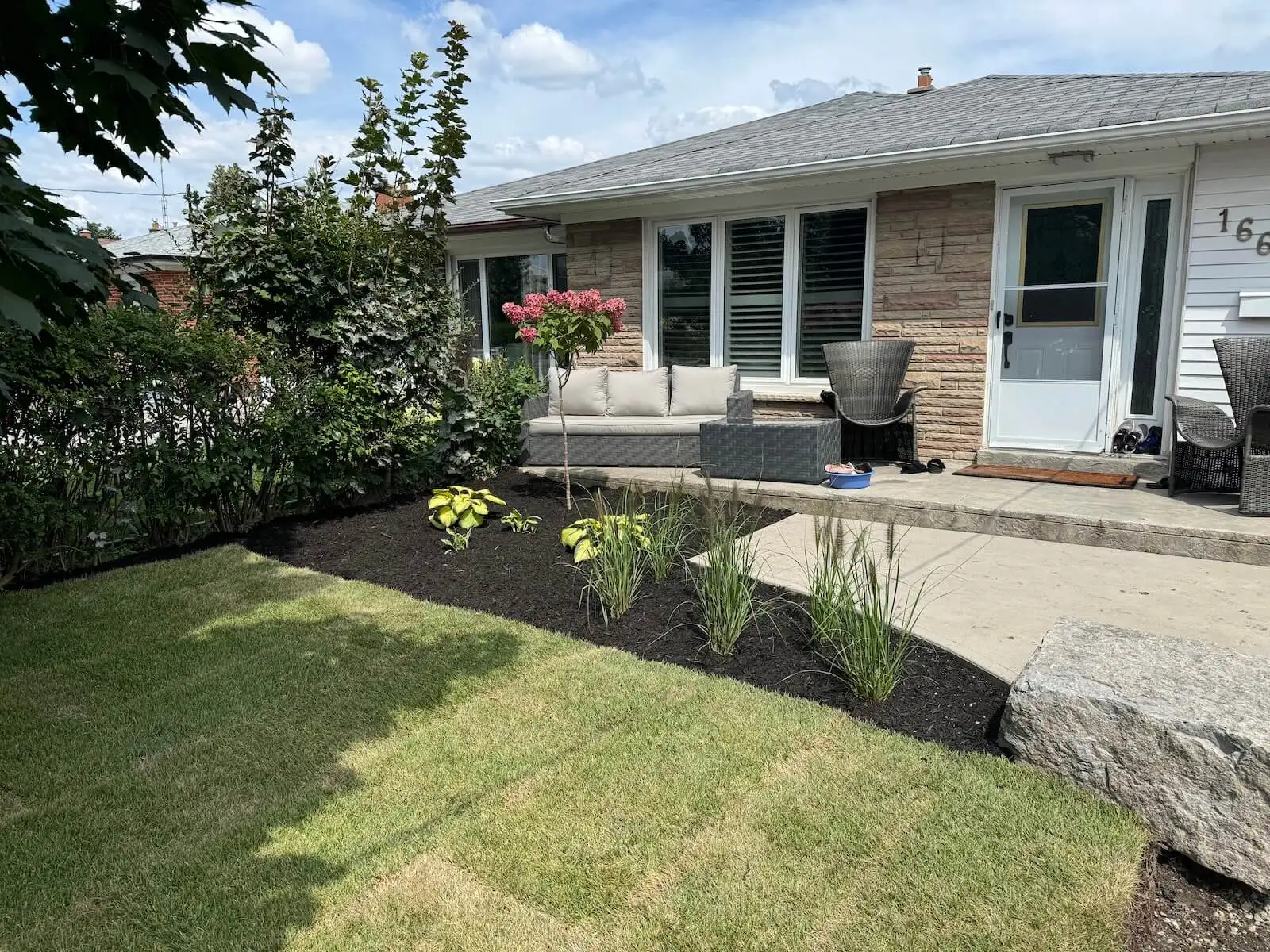
Who says your front yard is just for looks? If space permits, consider adding a small patio or seating area out front. This could be as simple as an expanded front stoop, a flagstone nook under a tree, or a corner patio by the entrance. Having a seating spot in the front yard creates a welcoming, social atmosphere – it encourages friendly chats with neighbors or a quiet place for you to enjoy a morning coffee. For example, you might place a stylish bench under a shade tree or arrange a pair of weatherproof chairs on a little paver platform surrounded by plants. To make the area feel cozy, enclose it slightly with landscaping: fragrant flowers, ornamental grasses, or a low hedge can provide a sense of privacy and beauty.
A functional front patio not only boosts your enjoyment of the outdoors, but also adds to curb appeal by showing that the space is truly lived-in and loved. It transforms your front yard from just an entryway into an outdoor living area. Plus, during Canadian summers or early fall, it’s delightful to sit out front and watch the world go by. Whether you have a sprawling lawn or a small urban yard, even a modest seating nook can make your front yard more inviting and useable.
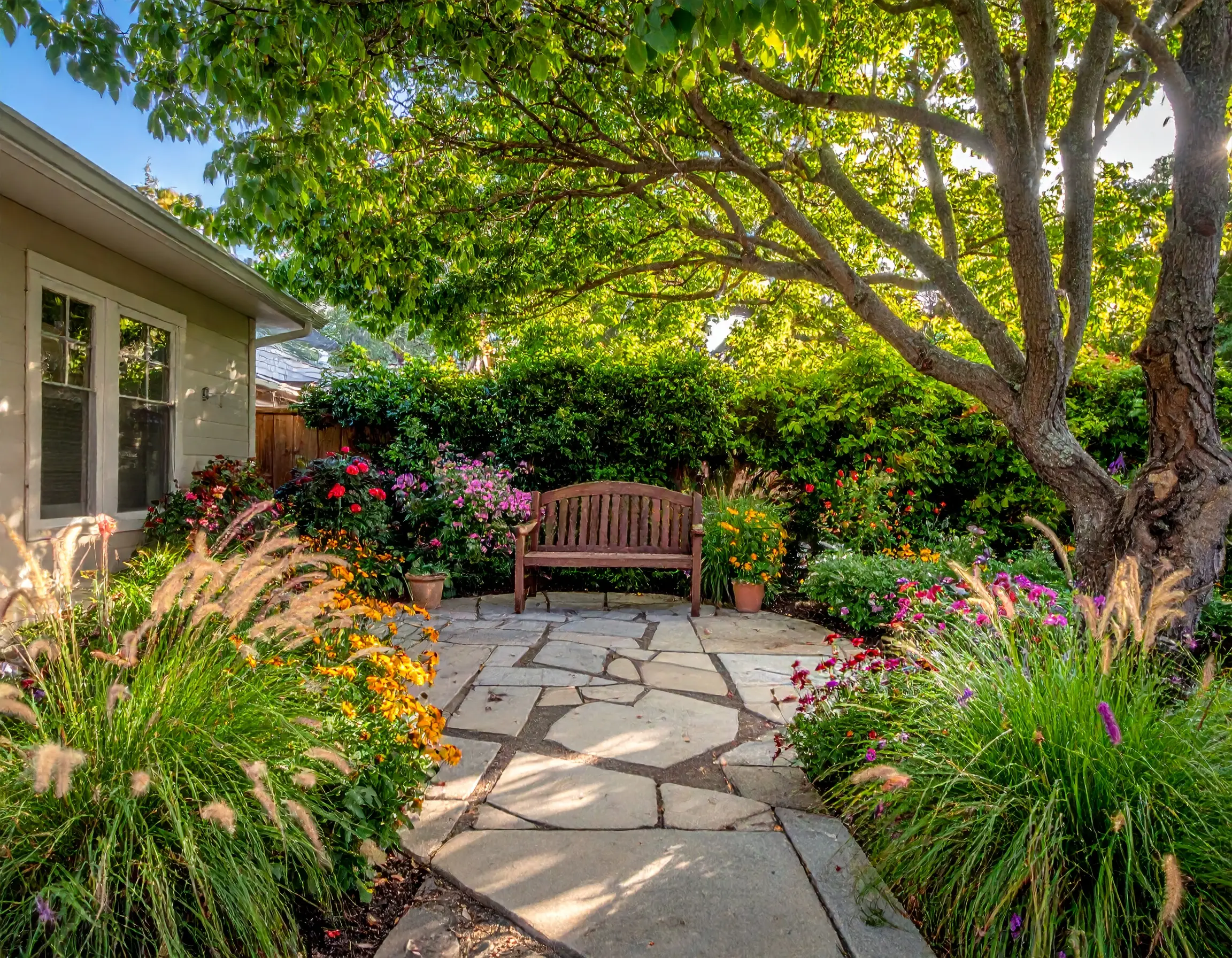
5. Plant a Pollinator-Friendly Native Garden
Transform a section of your front yard into a pollinator haven by planting a variety of native flowers and flowering shrubs. A pollinator-friendly garden will attract bees, butterflies, and hummingbirds – bringing motion and life to your landscape while supporting the local ecosystem. Focus on native species known to thrive in your region and feed pollinators.
Great choices in Ontario and much of Canada include butterfly weed (Asclepias tuberosa), purple coneflower (Echinacea), black-eyed Susans (Rudbeckia), bee balm (Monarda), lavender, and flowering herbs like sage or thyme. These plants offer nectar or pollen that pollinators love, and because they’re native, they tend to be hardy and low-maintenance. Arrange them in informal, natural-looking clusters – almost like a mini wildflower meadow along the front of your house or driveway. Not only will you enjoy seasonal blooms, but you’ll also see butterflies fluttering and hear contented buzzing in the warmer months.
By making your garden a welcoming place for insects and birds, you are helping to preserve essential pollinators, which in turn helps your entire garden thrive. It’s a win-win: your front yard gains a burst of color and charm, and you’re contributing to biodiversity right at home. As a bonus, many pollinator plants have lovely scents or interesting textures, adding even more sensory appeal to your front yard.
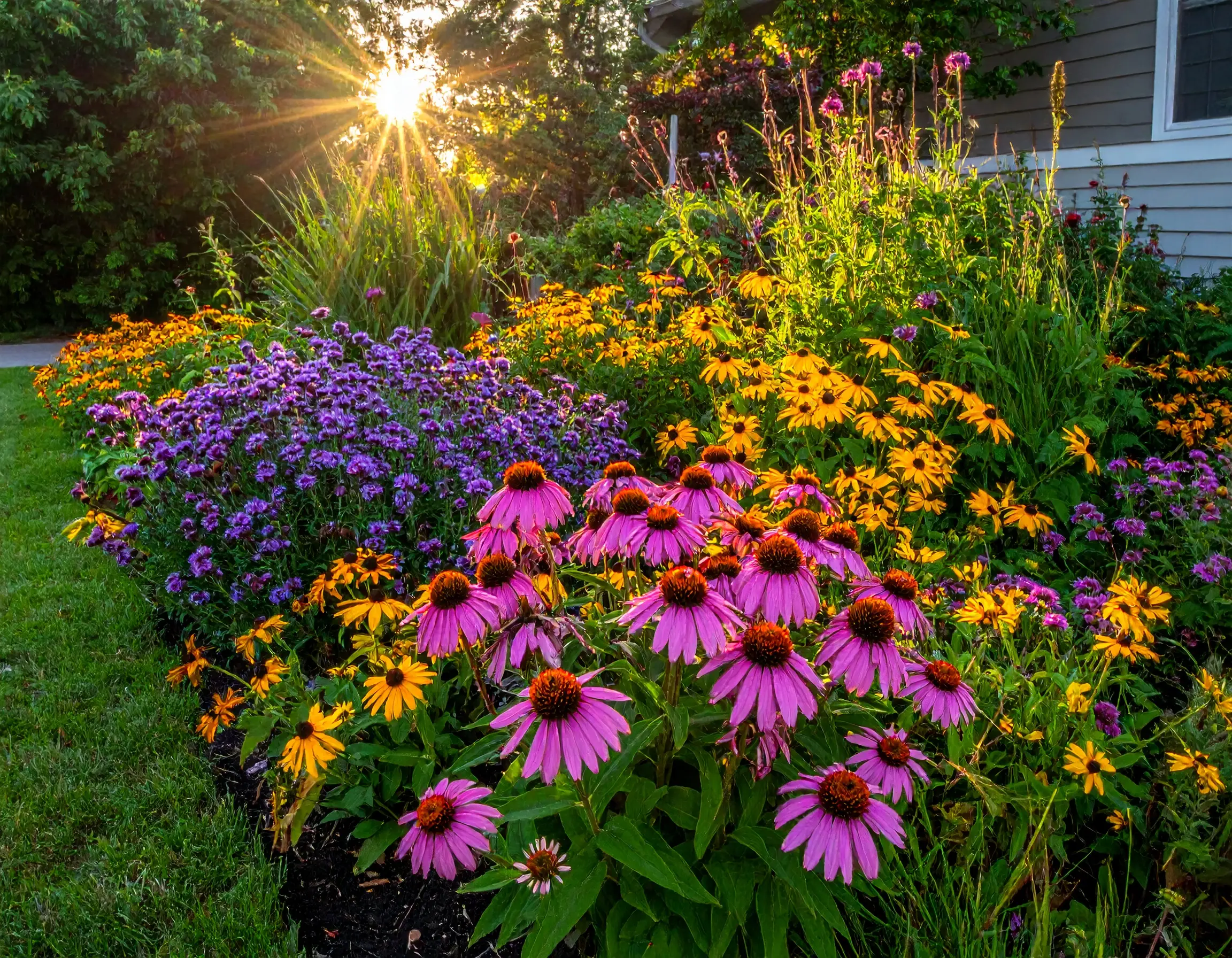
6. Install Dramatic Lighting for Evening Curb Appeal
Don’t let your front yard fade into darkness after sunset. Thoughtfully designed landscape lighting can showcase your home’s exterior and garden features even at night – all while improving safety. Start by illuminating your main pathway or driveway with stake lights or bollard lights; this ensures visitors can safely reach your door and immediately gives a warm, inviting glow. Next, use a mix of uplights and spotlights to accent key features of your front yard. For example, placing an uplight at the base of a beautiful tree can highlight its canopy, or positioning a spotlight to wash your house facade can bring out architectural details.
You might also add accent lights to highlight a flower bed, an entry sign, or a fountain. This layered approach adds depth and drama, making your home look like a magazine cover in the evenings. Importantly, outdoor lighting isn’t just aesthetic – it also deters intruders and prevents accidents by brightening potential hazards like steps or uneven paths. In fact, outdoor lighting is one of the top features home buyers look for, according to the National Association of Home Builders.
A well-lit exterior signals that a property is cared for and enhances its curb appeal immensely. With energy-efficient LED fixtures and solar options widely available, you can achieve stunning effects without a huge electricity bill. By extending the usability and visibility of your front yard into the night, you’ll get to enjoy your landscaping on winter evenings and host summer gatherings under the stars with equal ease.
7. Plant a Statement Tree or Ornamental Focal Point
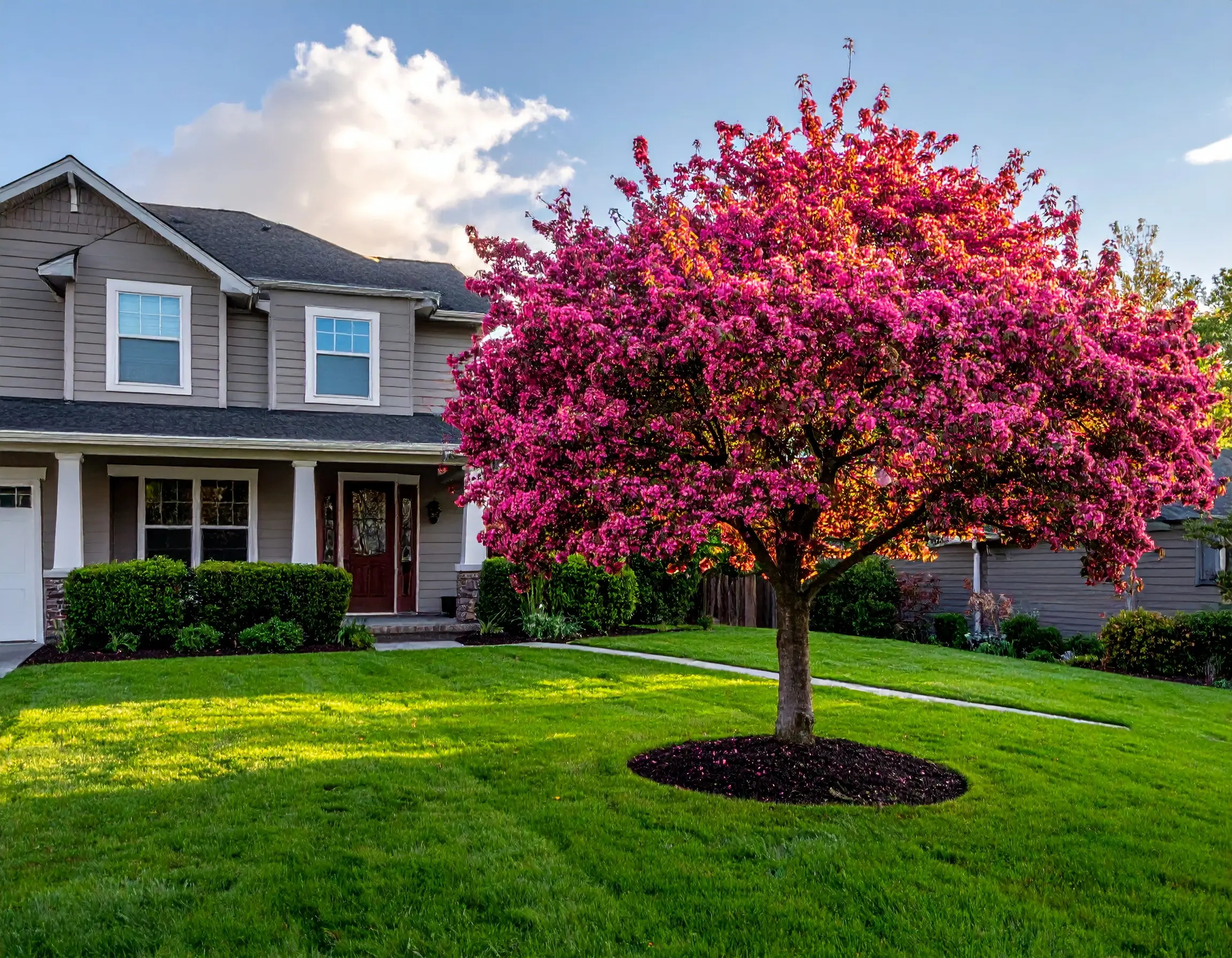
Sometimes, all it takes to transform a front yard is one standout tree or ornamental plant placed just right. Planting a statement tree can anchor your entire front landscape and provide a strong focal point that draws the eye. In Canadian climates, popular choices for a front yard specimen tree include flowering ornamentals like crabapple, serviceberry, or eastern redbud (which offer spring blossoms), as well as hardy shade trees like maple, oak, or linden.
Even a smaller ornamental tree – a Japanese maple or dwarf spruce, for instance – can have a big impact if positioned nicely in the yard. When choosing your tree, consider its mature size and shape; you’ll want it to complement your house (not overwhelm it or tangle in power lines). Placing a tree off to one side of the yard or framing the corner of the house often works well to balance the composition.
Over a few years, a young sapling will grow into a graceful centerpiece that provides dappled shade, seasonal color, or interesting texture (some have beautiful bark or fall foliage). Besides aesthetic appeal, remember that trees are a smart investment: they can enhance property values by anywhere from 5% to 20% as they mature. For instance, a flowering dogwood that bursts into bloom each May can become a neighborhood delight, or a sturdy evergreen can stand as a year-round pillar of greenery. A well-chosen statement tree adds personality and permanence to your front yard – it’s a living legacy that can last decades.
8. Introduce Artistic Hardscape Elements (Boulders, Sculptures, or Fountains)
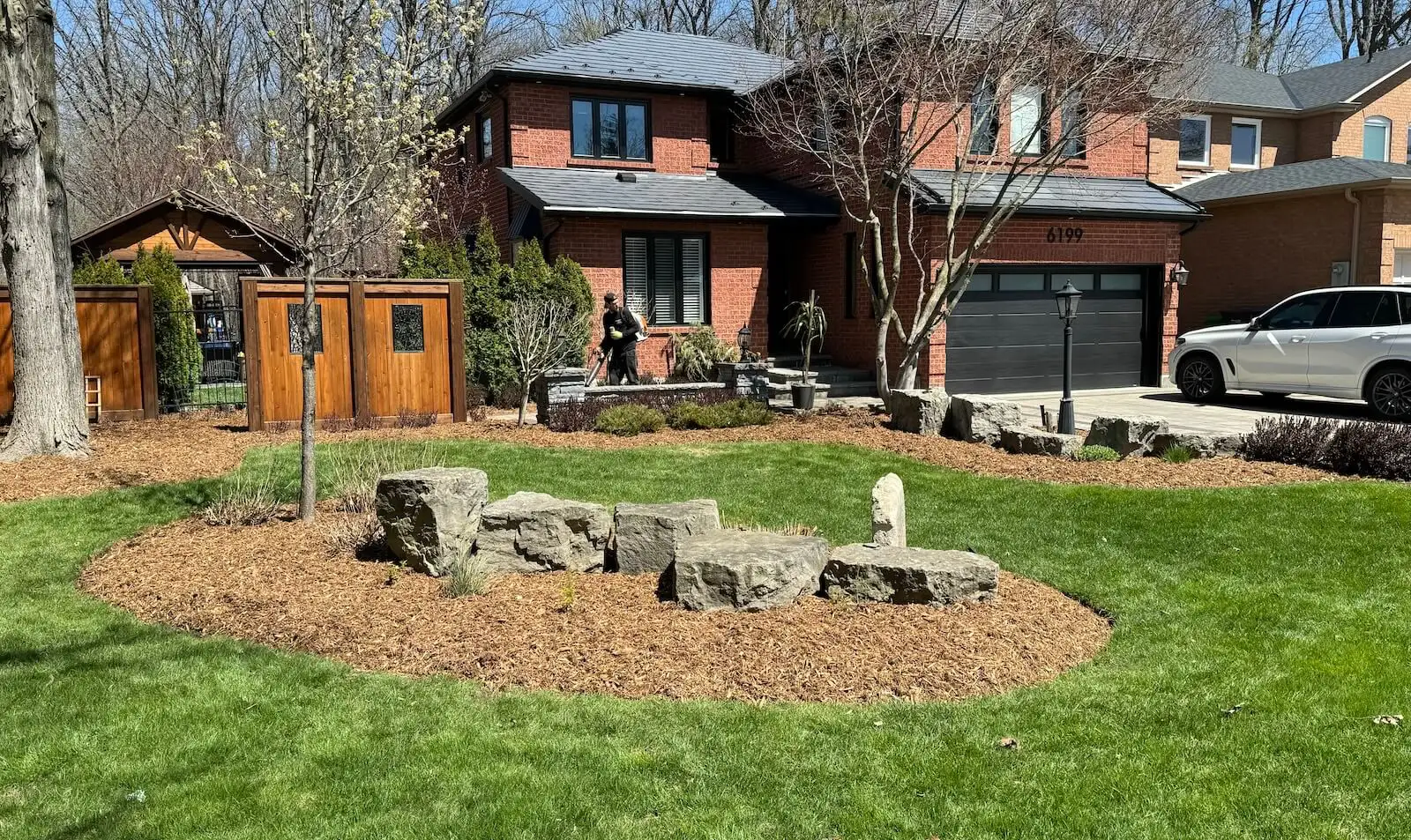
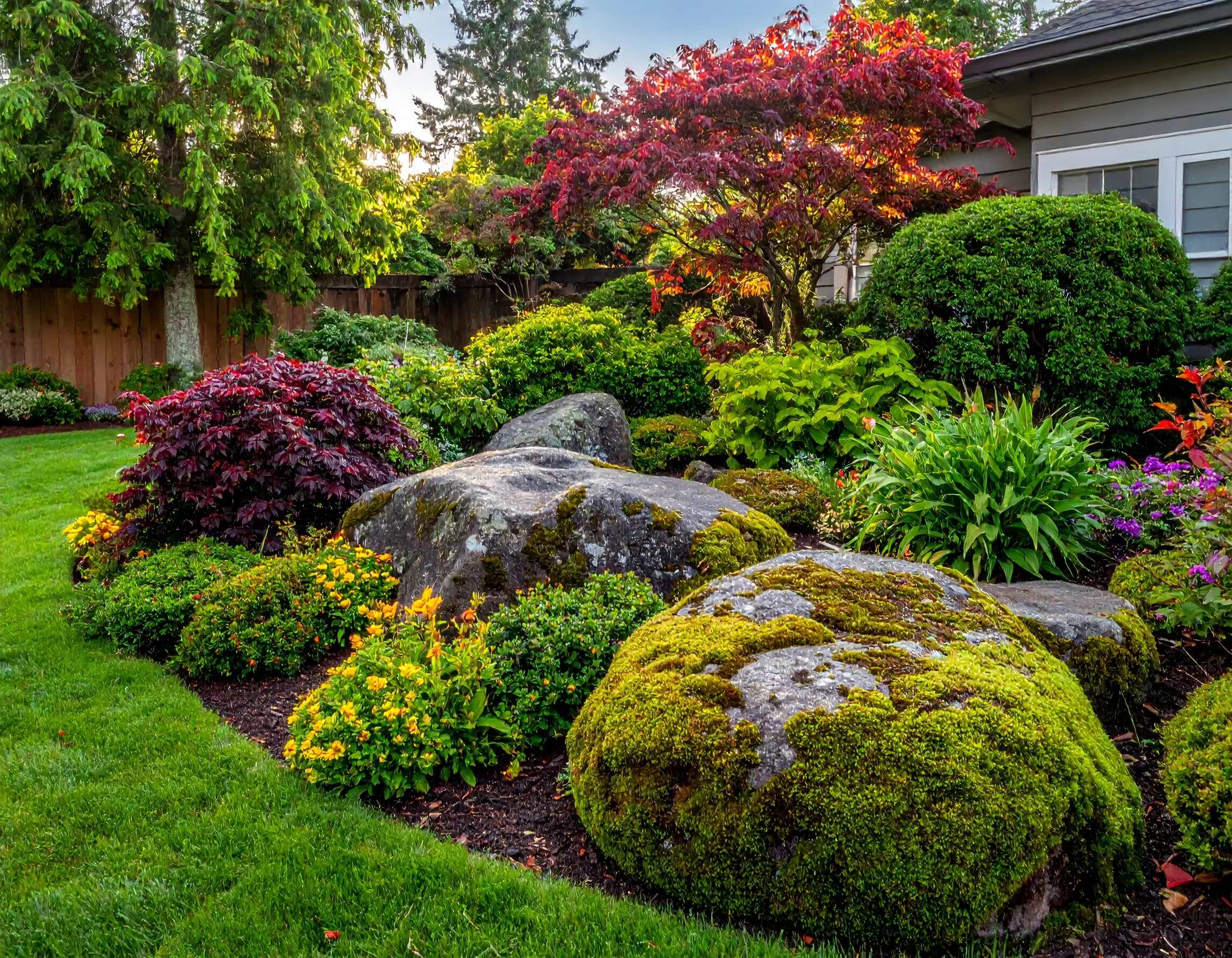
Give your front yard a personal touch by incorporating one or two artistic hardscape elements. These are non-plant features like large stones, sculptures, water features, or unique structures that can serve as focal points and add character to your landscape. For a natural look, you might nestle a grouping of mossy boulders in a corner of a garden bed – they create visual interest and look attractive even in winter when plants are dormant.
If you prefer an artful flair, consider a garden sculpture or statue that reflects your personality (anything from a classic birdbath or a modern abstract piece to a whimsical gnome, depending on your style). Another idea is a small fountain or water feature near the front door or walkway – the sound of trickling water is soothing and can make your home’s entrance feel like an oasis. These features provide year-round interest and often become conversation pieces.
For example, a weather-resistant ceramic urn or sphere sculpture placed amid low shrubs can draw the eye, or a wrought-iron trellis with a decorative design could function like garden art. When adding hardscape accents, ensure they are proportionate to your space (a tiny yard might get overwhelmed by a huge boulder, whereas a large lawn could accommodate a cluster). The goal is to create a focal point that complements the plantings and architecture. A well-placed piece of garden art or stone can make your front yard memorable and unique, elevating it from ordinary to one-of-a-kind.
9. Try an Edible Front Yard Garden
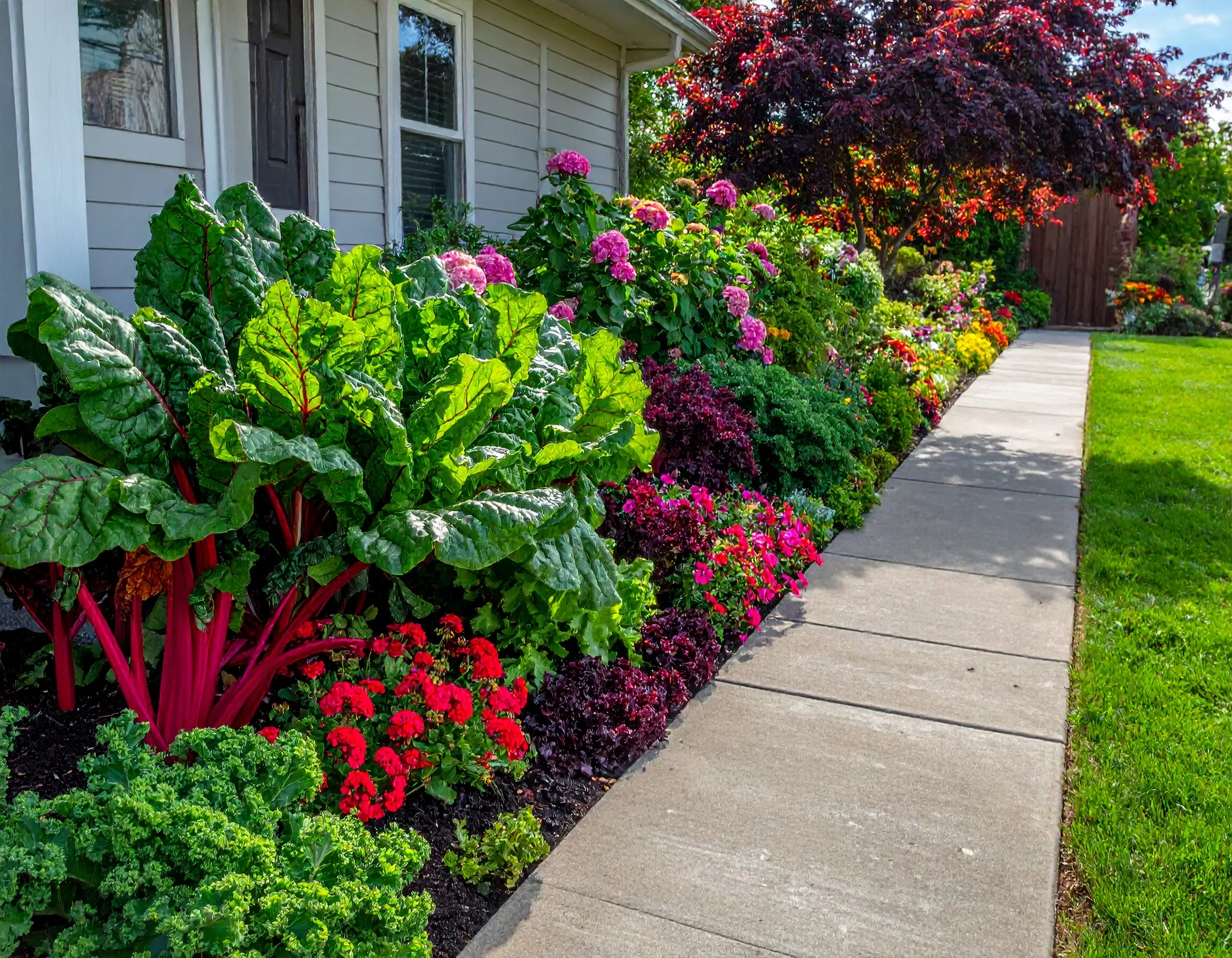
For a truly innovative (and practical) twist, consider integrating edible plants into your front yard landscaping. Who says vegetable gardens must be relegated to the backyard? Many edible plants are quite ornamental and can blend beautifully with traditional front yard shrubs and flowers. For example, you could plant colorful Swiss chard or kale in a border alongside petunias, edge a walkway with frilly lettuce or curly parsley, or use blueberry bushes and dwarf apple trees as part of your shrub plan (they have lovely spring flowers and fall color, plus fruit).
Herb gardens are also fantastic in front yards: a tidy rosemary or lavender hedge smells wonderful, and herbs like thyme or oregano can act as fragrant groundcovers between stepping stones. By turning part of your front yard into an edible garden, you create a space that’s not only attractive but also provides fresh produce and herbs for your kitchen. Imagine picking some fresh basil or cherry tomatoes from your front yard on your way inside – talk about functional landscaping! To keep it visually appealing, design the edible elements much like you would ornamentals: consider symmetry, color, and seasonal interest.
Many veggies and herbs have different textures and hues that you can play with (bright rainbow chard stems, deep purple basil, silvery sage, etc.). Moreover, mixing edibles into your front yard can spark great conversations with neighbors and inspire others to use their yards more productively. Just ensure local bylaws or neighborhood rules allow food gardens in front (most do, and some communities even encourage it). Done thoughtfully, an edible front yard garden can be both a feast for the eyes and for your family’s table.
10. Use Permeable Pavers for Better Drainage
Upgrade your driveway or front walk with permeable pavers to combine style with smart drainage. Unlike solid concrete or asphalt, permeable paving materials (such as permeable interlocking pavers, porous concrete, or grid pavers) allow water to seep down into the ground between or through them. This means rain and snowmelt can infiltrate rather than run off into the street or puddle on your property.
By installing permeable pavers, you’re effectively adding drainage solutions right under your feet. According to the U.S. Environmental Protection Agency, these alternative pavements let rain and snowmelt soak into underlying soil and gravel, which reduces runoff and even filters out pollutants. In a Canadian setting, that translates to less standing water (which can freeze into ice) and reduced strain on storm sewers during heavy rain. From a design perspective, permeable pavers come in many attractive styles – from classic cobblestone looks to modern geometric grids – so you don’t have to sacrifice looks for function.
For instance, a driveway made of permeable pavers can have the same visual appeal as a traditional brick drive, but with superior drainage performance. Additionally, permeable systems can help prevent winter ice buildup since water isn’t pooling on the surface as much. When planning your front yard hardscaping, especially if you’re redoing a driveway, walkway, or patio, it’s worth considering permeable options. You’ll be adopting an eco-friendly practice (often earning you local environmental rebates or incentives) and protecting your property from drainage issues, all while enhancing curb appeal with a high-end hardscape finish.

11. Accent with Seasonal Planters for Pops of Color
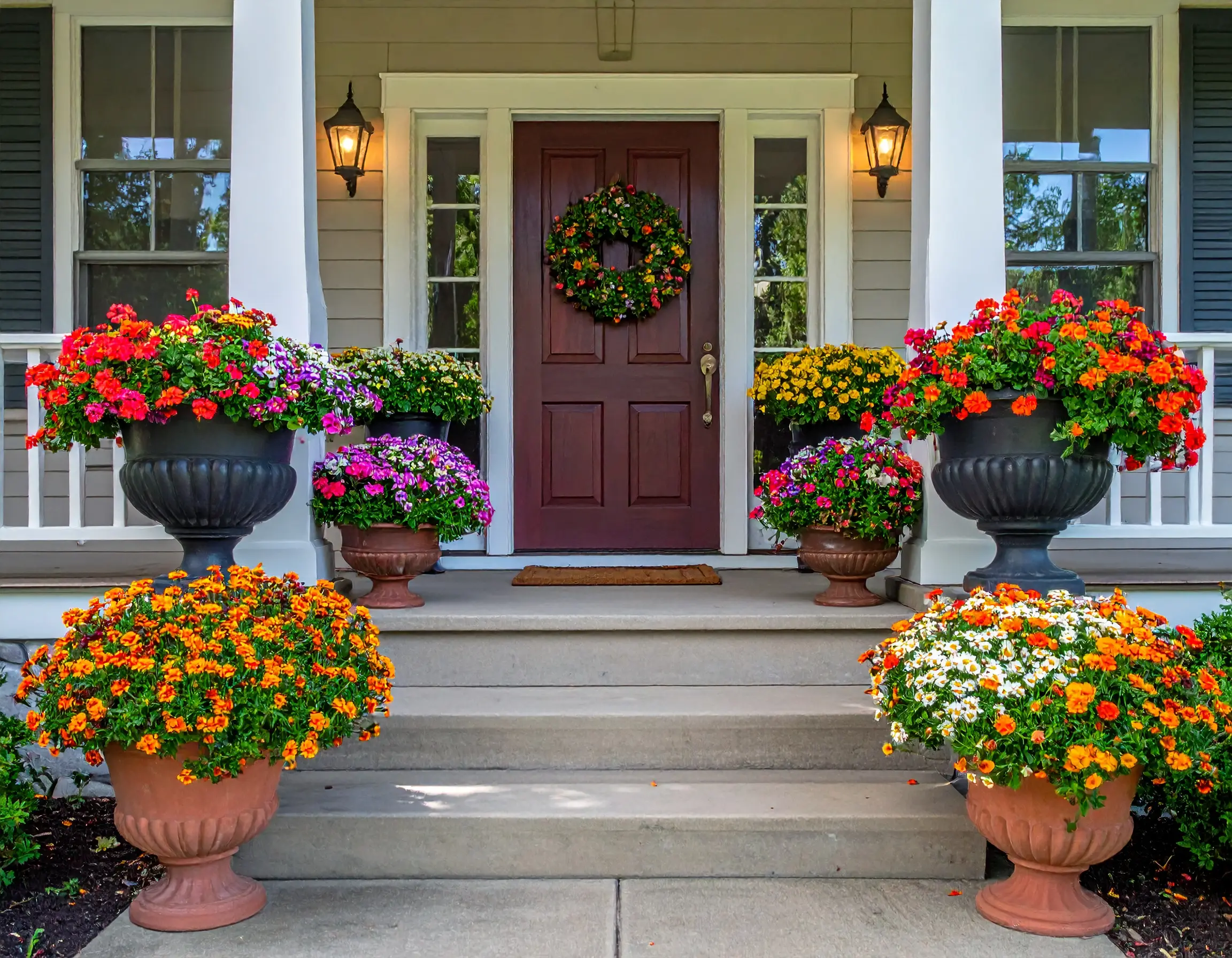
Even if your front yard has limited garden beds – or if you just want extra color – planters and container gardens are your best friend. Large pots or planter boxes by the front door, on your steps, or flanking the garage can instantly add a burst of seasonal beauty. Try filling them with bright annual flowers, interesting foliage plants, or even small evergreens depending on the time of year. In spring, a planter could overflow with tulips and daffodils; in summer, you might switch to petunias, geraniums or tropical cannas; autumn could see mums and ornamental cabbages; and in winter, you can even arrange boughs of evergreen, red dogwood twigs, and decorative berries for a festive look. Seasonal planters allow you to refresh your front yard’s look throughout the year without overhauling the whole landscape.
They also let you experiment with colors and plant combinations in a low-commitment way (since you can replant them each season). From a functional standpoint, container gardening is ideal for Canadian homes because you can use high-quality potting mix (overcoming poor native soil), and you can move pots around or shelter them if extreme weather is coming. Place planters where they’ll have the most impact – commonly by the entryway to warmly greet guests, or at the ends of steps and pathways to visually anchor those features. Hanging baskets on a porch or railing are another option to add eye-level blooms.
The great thing about planters is their versatility: you can even incorporate little extras like solar stake lights in them, or swap in decorative elements (like mini pumpkins and corn stalks in fall planters). With a bit of creativity, seasonal planters ensure your front yard never looks drab or barren, even in the off-season.
12. Terrace a Sloped Front Yard with Low Retaining Walls
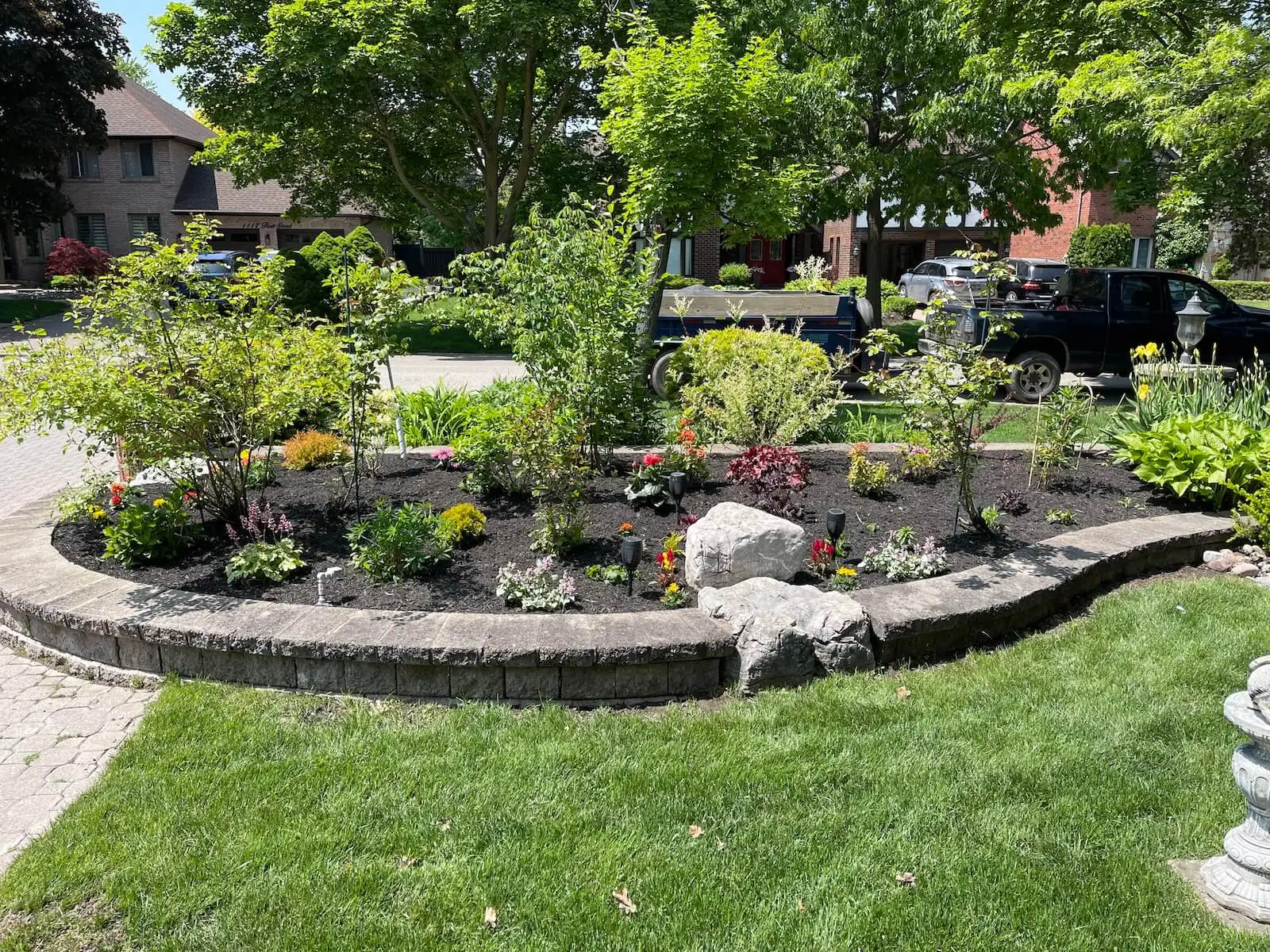
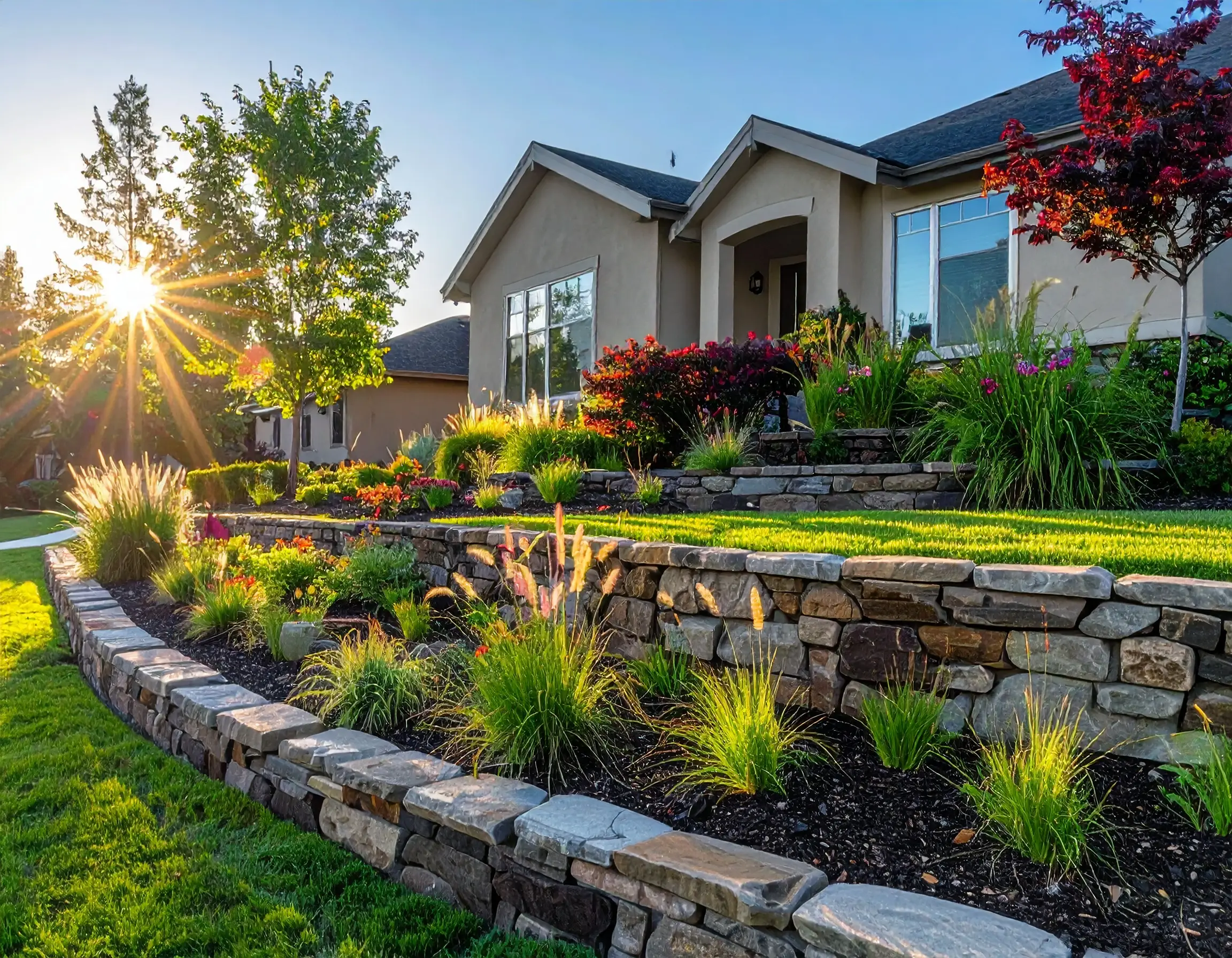
If your home is on a hill or your front yard has a slope, don’t view it as a problem – treat it as an opportunity. Terracing a sloped front yard can turn a challenging incline into an attractive, structured landscape. By building one or more low retaining walls, you create flat terraced areas that step down toward the street. These terraces not only make planting easier (since you have level ground to work with) but also add dimension and architectural interest to your yard.
For example, with a gentle slope you might install a single stone or interlocking block wall maybe 2-3 feet high, backfill behind it, and have a flat lawn or garden bed at the top with another planting bed below. For steeper slopes, multiple mini-walls with staggered garden beds can be very striking. Use materials that complement your home – natural limestone or fieldstone for a rustic look, or sleek engineered wall blocks for a clean modern vibe.
Once the terraces are built, populate them with landscape elements: perhaps a row of ornamental grasses or flowering shrubs along the top of a wall, and perennials or groundcover cascading slightly over the edge softening the stone. Terracing has practical benefits too: it helps control erosion and runoff by breaking a long slope into smaller, flatter sections that absorb water better.
As water flows down, each level slows it, giving it a chance to soak into the soil rather than wash away. By taming your slope with well-designed terraces, you’ll gain usable planting areas, improve drainage, and give your front yard a polished, tiered look that sets it apart. It’s a classic case of turning a potential landscape headache into a stunning feature.
13. Install a Rain Garden for Natural Drainage
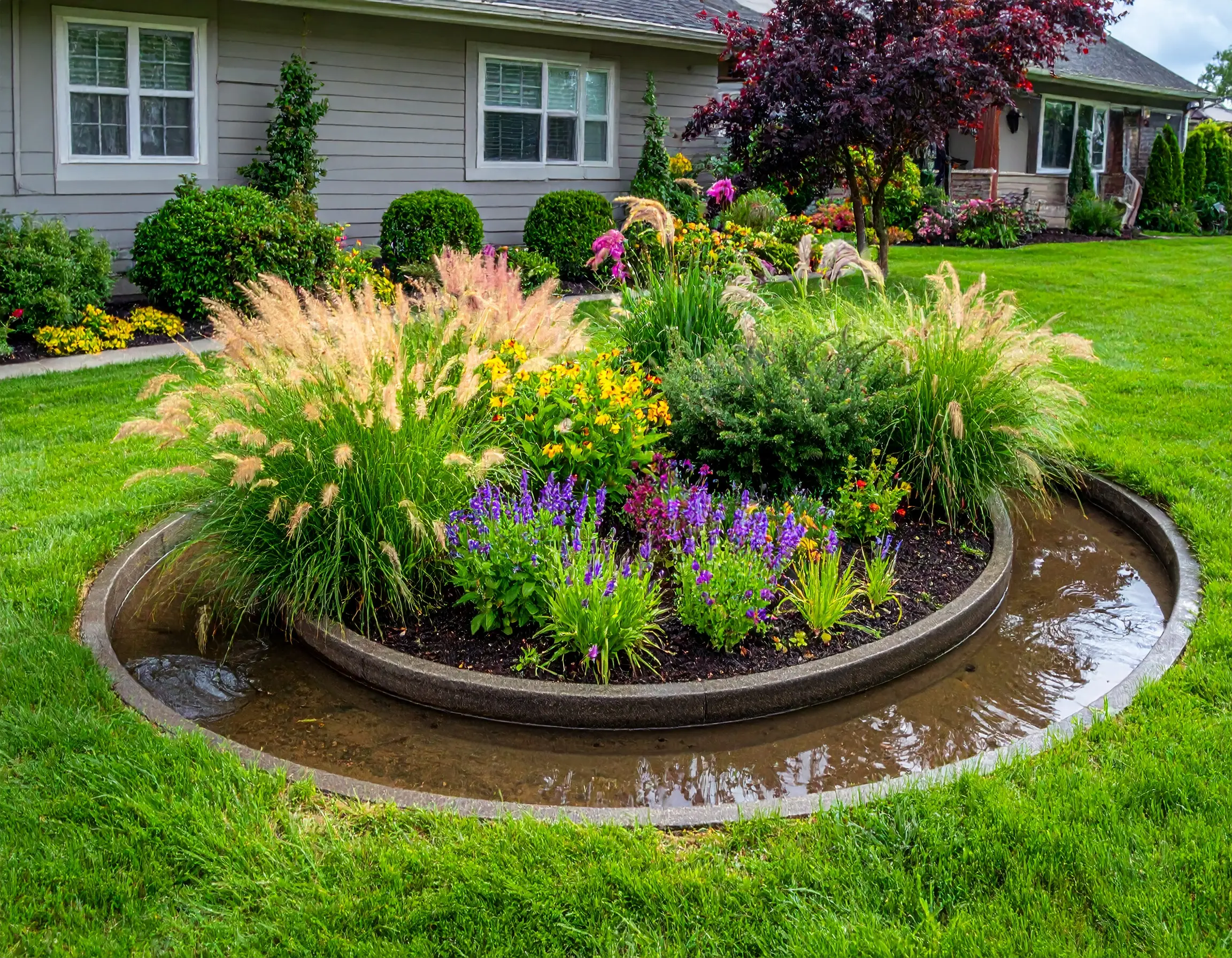
Does water tend to puddle in a low spot of your front yard or near your downspouts? If so, you can solve a drainage issue and add beauty by creating a rain garden. A rain garden is a slightly sunken planting bed designed to catch and absorb rainwater runoff from roofs, driveways, or lawns. Instead of water pooling on your lawn or rushing into storm drains, it fills the rain garden – where it slowly soaks into the ground and is taken up by plants. To build one, choose the area where water naturally flows or collects (often at the bottom of a slope or below a gutter spout).
Dig a shallow depression and amend the soil with compost and sand if needed to improve drainage. Then plant a mix of water-loving, native plants that can handle both wet and dry periods. Good rain garden plants for Canadian regions include native grasses like switchgrass, flowering perennials like Joe-Pye weed, iris, and bee balm, and shrubs like red osier dogwood or winterberry holly. These species tolerate occasional flooding of their roots but are also hardy for dry spells.
The result will look like a regular flower bed or lush garden, but it’s actually a hardworking drainage system. During heavy rains or snowmelt, excess water will collect in the rain garden and gradually filter into the soil, rather than overwhelming your lawn or foundation. According to WWF Canada, a rain garden can absorb up to 30% more water than an equivalent patch of lawn, greatly reducing runoff.
And beyond managing stormwater, rain gardens help filter out pollutants and provide habitat for pollinators and birds. From an aesthetic viewpoint, a rain garden often becomes a vibrant focal point – picture a mini wetland oasis with rushes and blooms swaying, possibly even butterflies dancing around. It’s form and function in perfect harmony, ideal for the environmentally conscious homeowner.
14. Use Privacy Screens and Hedges as Windbreaks
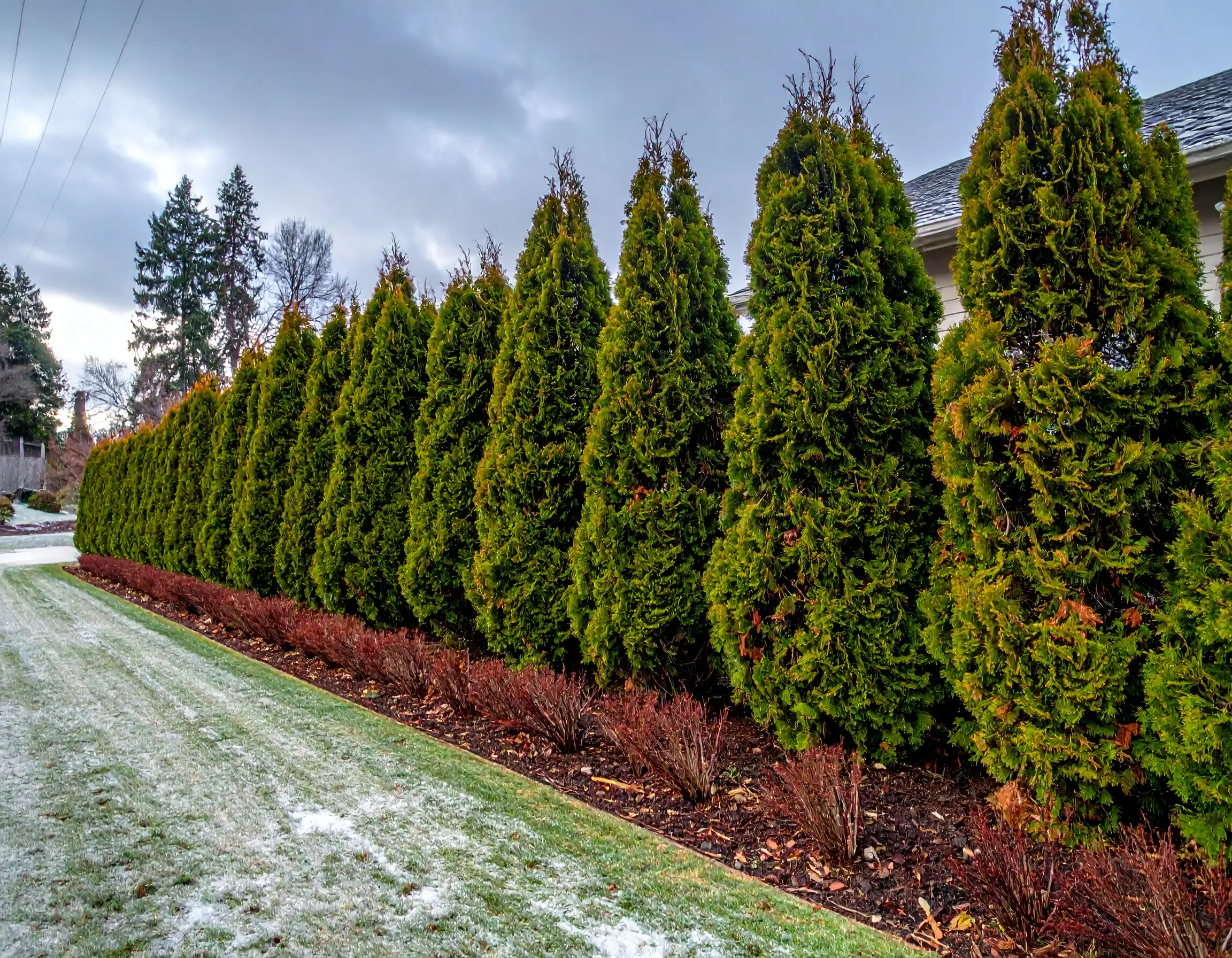
If you crave a bit more privacy or your front yard faces strong winds, planting hedges or installing screens can be a smart solution. A living privacy hedge made of shrubs not only defines your property boundary but also adds greenery and can block undesirable views (like a busy road or a neighbor’s driveway).
For Canadian climates, evergreens are a top choice for hedging because they keep their foliage year-round, giving you screening even in winter. Cedar, spruce, or juniper hedges are popular in places like Ontario – a row of cedar trees, for instance, can create a lush green wall that also acts as a windbreak against cold winter gusts. Deciduous shrubs can work too (like a line of dogwoods or lilacs) but they’ll be bare in winter, so often a mix of evergreen and deciduous provides both year-round cover and seasonal flowers.
Besides hedges, you can use decorative screens or fences in strategic spots – for example, a lattice panel with a climbing vine can partially screen a porch, or an attractive wooden fence section could shield a seating nook from the street. These structures can be less imposing than a full fence around the yard, yet still offer a sense of enclosure.
From a functional angle, windbreak plantings will slow down winter winds and can reduce snow drifting in your yard (and even slightly lower heating costs by buffering your house). In summer, they give shade and cooling. Meanwhile, privacy screens allow you to enjoy your front yard without feeling fully exposed to every passerby. When designing this, keep bylaws and sightlines in mind – hedges near driveways shouldn’t block visibility. A well-planned arrangement of hedges and screens can make your front yard feel like a cozy retreat, protected from wind and prying eyes, while also adding natural beauty.
15. Explore Lawn Alternatives and Groundcovers
Tired of mowing an expansive lawn or struggling with grass that won’t thrive? Consider replacing some (or all) of your traditional turf with low-maintenance groundcovers or lawn alternatives. A conventional grass lawn can be high-maintenance – needing frequent mowing, watering, and fertilizing – but there are other plants that can fill that space with less work. One increasingly popular option is a clover lawn or eco-lawn mix.
Clover stays green, is drought-tolerant, and naturally fertilizes the soil by fixing nitrogen. It requires much less mowing and no chemical fertilizers since the clover feeds the soil – saving you time and money. In fact, clover or mixed micro-clover lawns need far less frequent mowing and watering than grass does, and they remain soft and lush.
Other flowering groundcovers can work nicely in front yards too: creeping thyme forms a low carpet with purple blooms and gives off a lovely scent when stepped on; creeping phlox provides a mat of green and spring flowers; sedum and drought-resistant groundcovers can handle sun-baked areas without fuss. If you still want an open green look but less maintenance, some people opt for mixes of fescue grasses and clover, sometimes sold as “eco-turf” or “bee lawn” seed mixes – these typically grow shorter, need mowing only occasionally, and support pollinators.
Another alternative is using ornamental grasses and perennials in place of lawn: by clustering plants with mulch or gravel in between, you create a prairie-style or modern garden vibe that eliminates turf completely. This approach cuts out weekly mowing and can reduce water usage significantly.
When converting part of a lawn, start small – maybe replace the strip along your driveway or create an island bed in the center of the lawn. Over time, you might find that a patchwork of groundcovers and plant beds is far more rewarding (and eco-friendly) than a plain grass lawn. Plus, a yard with diverse groundcover has an attractive, lush look and often stays greener during summer droughts when ordinary lawns turn brown.
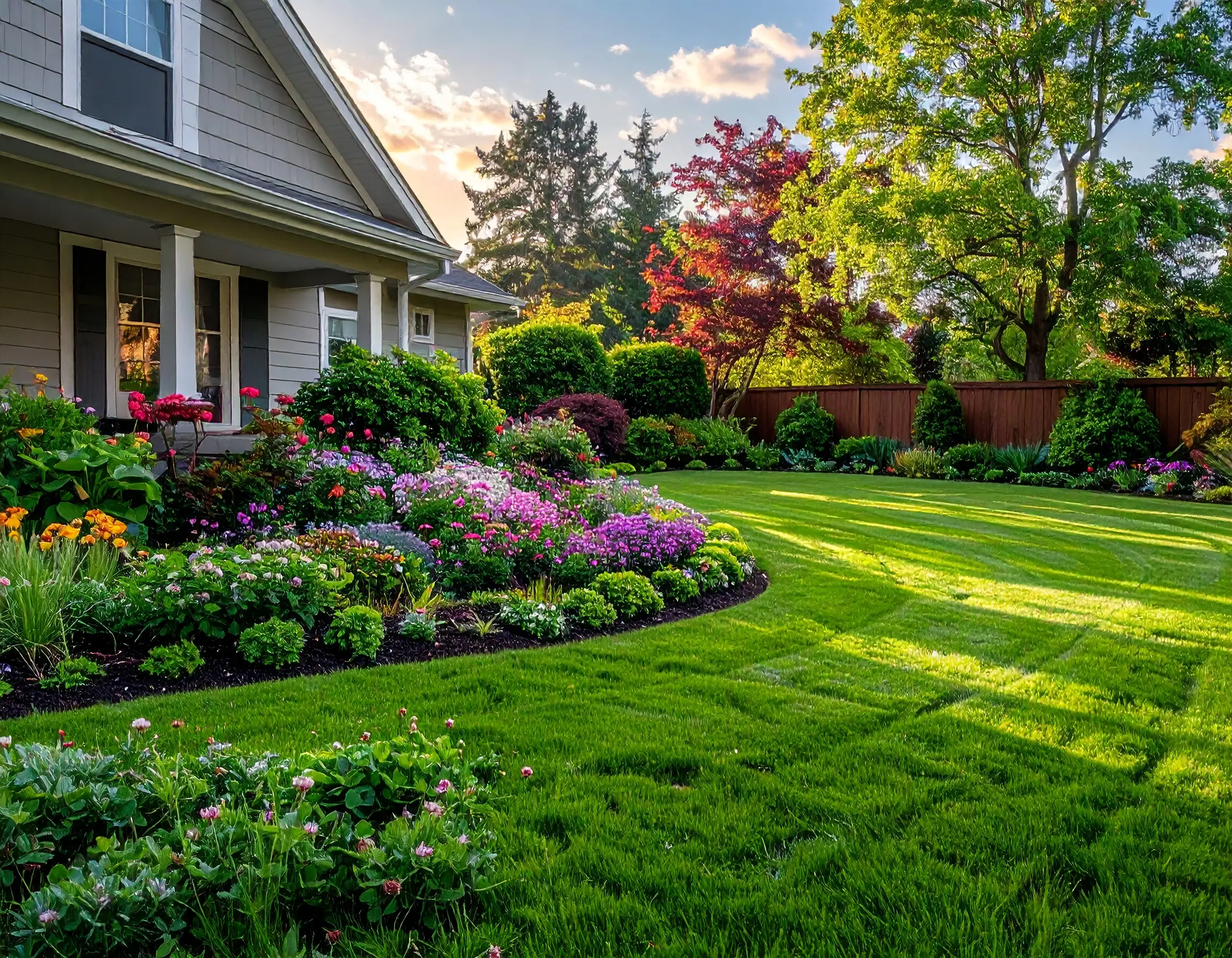
16. Highlight the Entry with a Charming Arbor or Trellis
Make a grand statement at the entrance to your front yard by adding a decorative arbor or trellis – it’s like a handshake for your home. An arbor is a typically arched structure that can frame a gate or walkway, instantly creating a focal point and a sense of arrival. Imagine a lovely wooden or metal arbor over the path leading to your front door, perhaps with a climbing rose or clematis vine trained up its sides. In the growing season it becomes a tunnel of blooms; in winter, the structure itself still adds architectural interest.
A trellis is a flat lattice panel that you can use against a wall or as a freestanding divider, also perfect for climbing plants. Placing a trellis by your front porch and planting a vigorous vine such as honeysuckle, trumpet vine, or ivy can soften the facade of the house and add greenery to vertical spaces. These elements add old-world charm and curb appeal in spades – few things are as inviting as a rose-covered arbor welcoming guests.
They also serve practical functions: an arbor can support a porch swing or a pair of lanterns for lighting, and a trellis can obscure unsightly views (like utility meters) when covered in foliage. In Canadian climates, choose hardy climbing plants (like clematis, which can handle cold, or annual morning glories that you replant each year) to adorn your arbor/trellis.
Even without plants, a well-crafted arbor painted to match your trim or a wrought-iron trellis with an elegant design adds a lot of character. Finally, consider seasonal decor – you can wrap the arbor with string lights for a magical evening look or add garlands during holidays. By focusing attention on the gateway to your front yard, you set a delightful tone for the whole property.
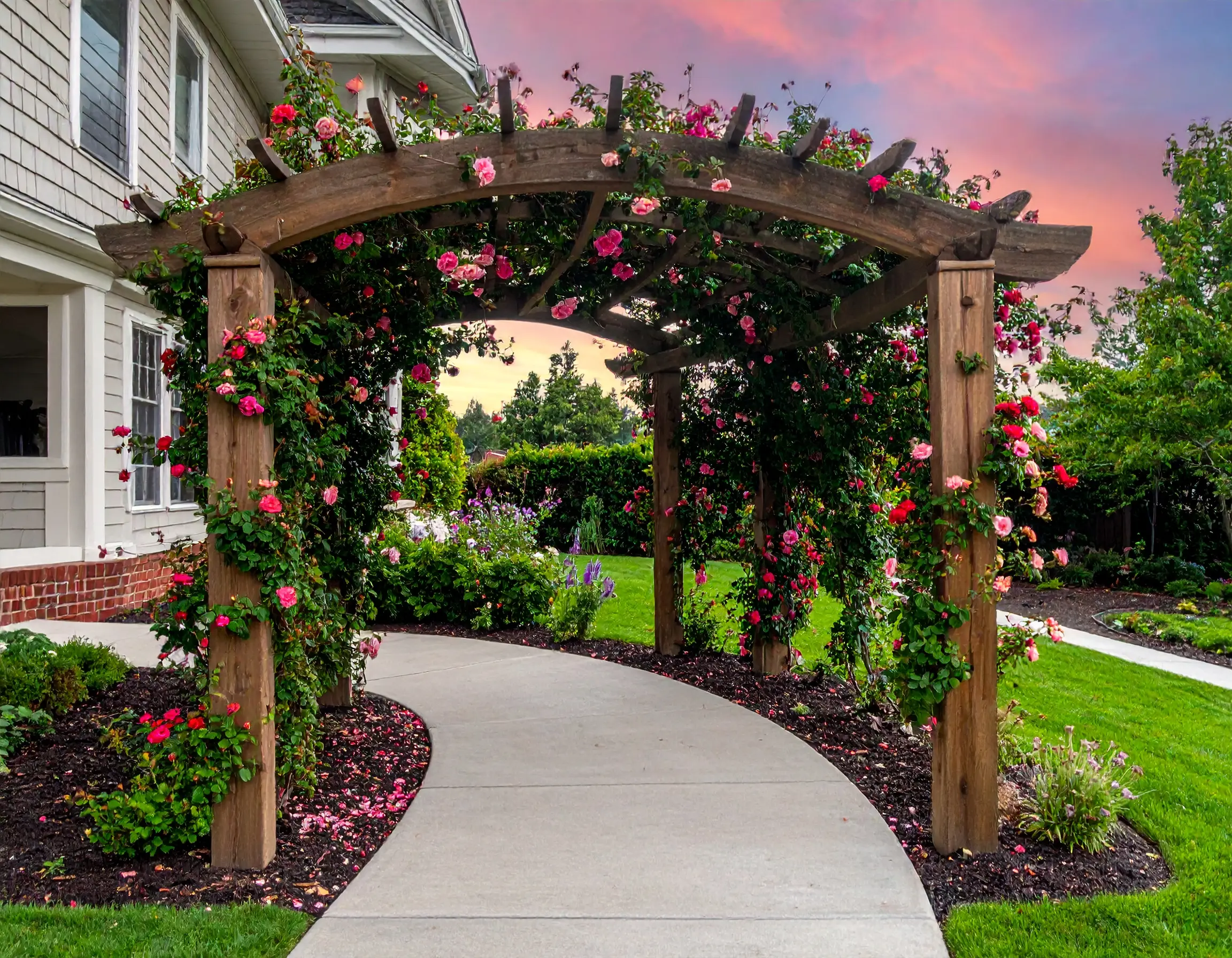
17. Keep Borders Tidy with Defined Edging
Sometimes it’s the little details that elevate a landscape from good to great. One pro tip is to give all your lawn and garden bed borders a crisp, defined edge. Edging creates a visual separation between different areas – for example, between your grass lawn and the flowerbeds, or between a driveway and adjacent plantings. A neat edge signals that your landscape is well cared for and intentional. You can achieve this in different ways.
The simplest is a natural edge: using a flat-edged shovel to cut a clean line where the lawn meets the soil or mulch of a bed, creating a shallow trench that keeps grass from creeping into the garden. For a more permanent solution, install physical edging materials. There are many options: metal or plastic strip edging that is low-profile and keeps grass roots out, or more decorative choices like brick, stone, or pavers laid end-to-end along the border. Even a row of old cobblestones or a timber can work, depending on your style.
Well-defined edges not only look sharp (literally and figuratively) but also make maintenance easier – mowing or trimming is simpler when you have a clear boundary to follow, and mulch stays in place rather than spilling onto the lawn. Additionally, edging can be a design feature: a line of white marble chips or river stones along the front of a bed can accentuate shapes and complement your house colors.
Take a look at professionally landscaped gardens and you’ll notice nearly all have clear edging that outlines each component. This tidy framing effect gives your front yard a polished, intentional appearance. It’s an easy weekend project that can dramatically upgrade the overall impression of your home’s exterior for minimal cost.
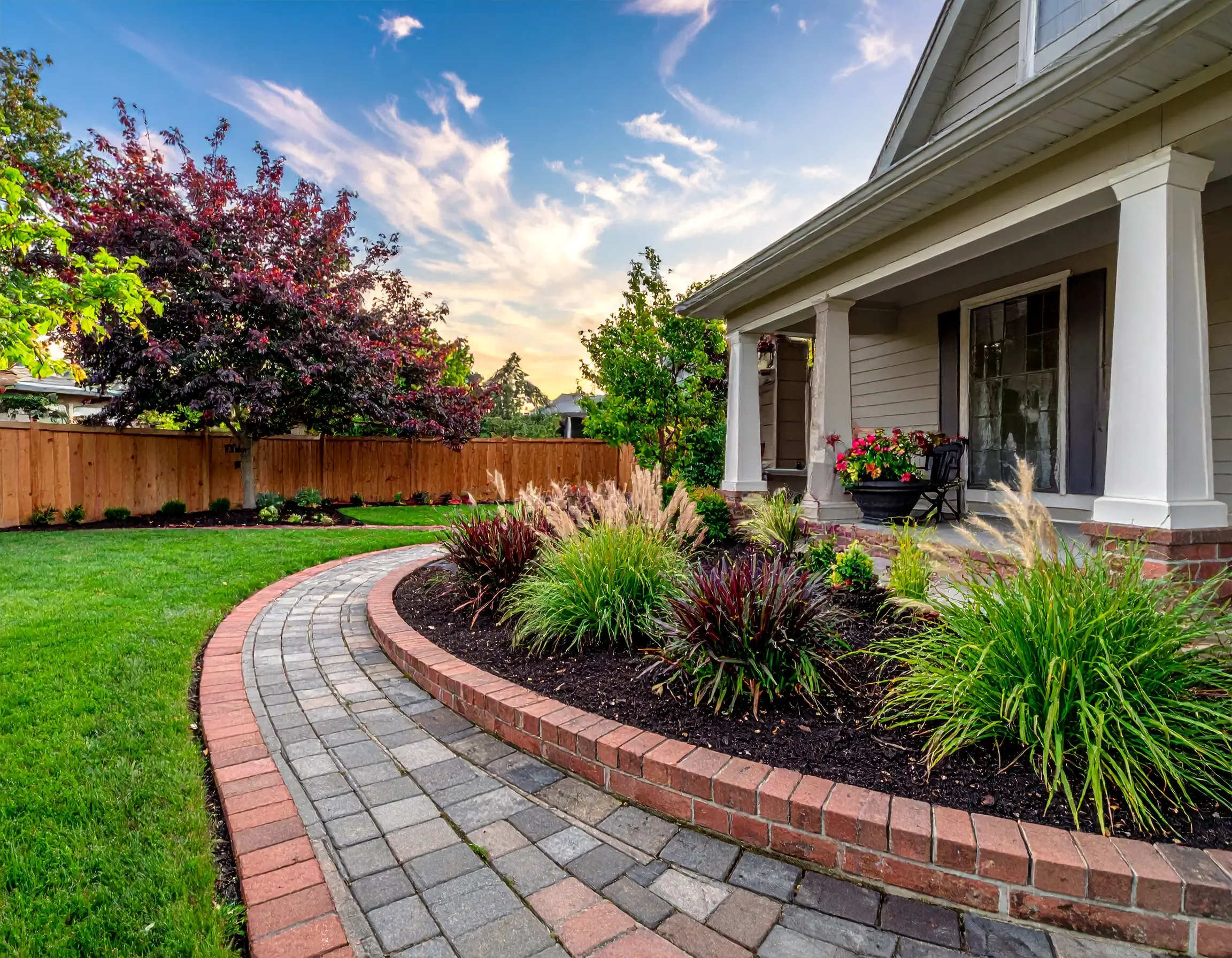
18. Ensure Winter Interest with Evergreens and Accents
A truly successful Canadian front yard looks appealing even in January. The key to avoiding a barren winter landscape is to plan for winter interest when selecting your plants and decor. Evergreen shrubs and trees are obvious heroes – their foliage stays green (or blue, or gold, depending on the variety) all winter, providing color and structure when deciduous plants have lost their leaves.
Consider planting a few evergreen features such as a dwarf Alberta spruce, an emerald cedar hedge, or holly and rhododendron shrubs (in milder regions) so that your front yard has splashes of green against the snow. Beyond evergreens, look for plants with interesting bark, berries, or seed heads that persist into winter. For example, red osier dogwood has bright red stems that stand out beautifully against snow, and certain viburnum or crabapple varieties hold red berries that not only add color but also attract birds in the cold months.
Ornamental grasses can be fantastic in winter if left uncut – their golden or tan blades sway above the snow and look magical when frosted. Even perennials like coneflowers, if you leave their dried seed cones, can add sculptural interest and feed winter birds. Aside from plants, incorporate some non-plant accents: a well-placed garden bench, a birdbath, or an art piece can become a focal point in a snowy yard (think of a classic black bench against a white backdrop – striking!).
You can also use outdoor lighting (as discussed) to highlight evergreen topiaries or wreaths on the front door. Planning for winter interest means your front yard will never completely “die back.” Instead, it will have a deliberate design even in the off-season – giving you something nice to look at during those long winter months and ensuring your home maintains curb appeal year-round, not just in summer.
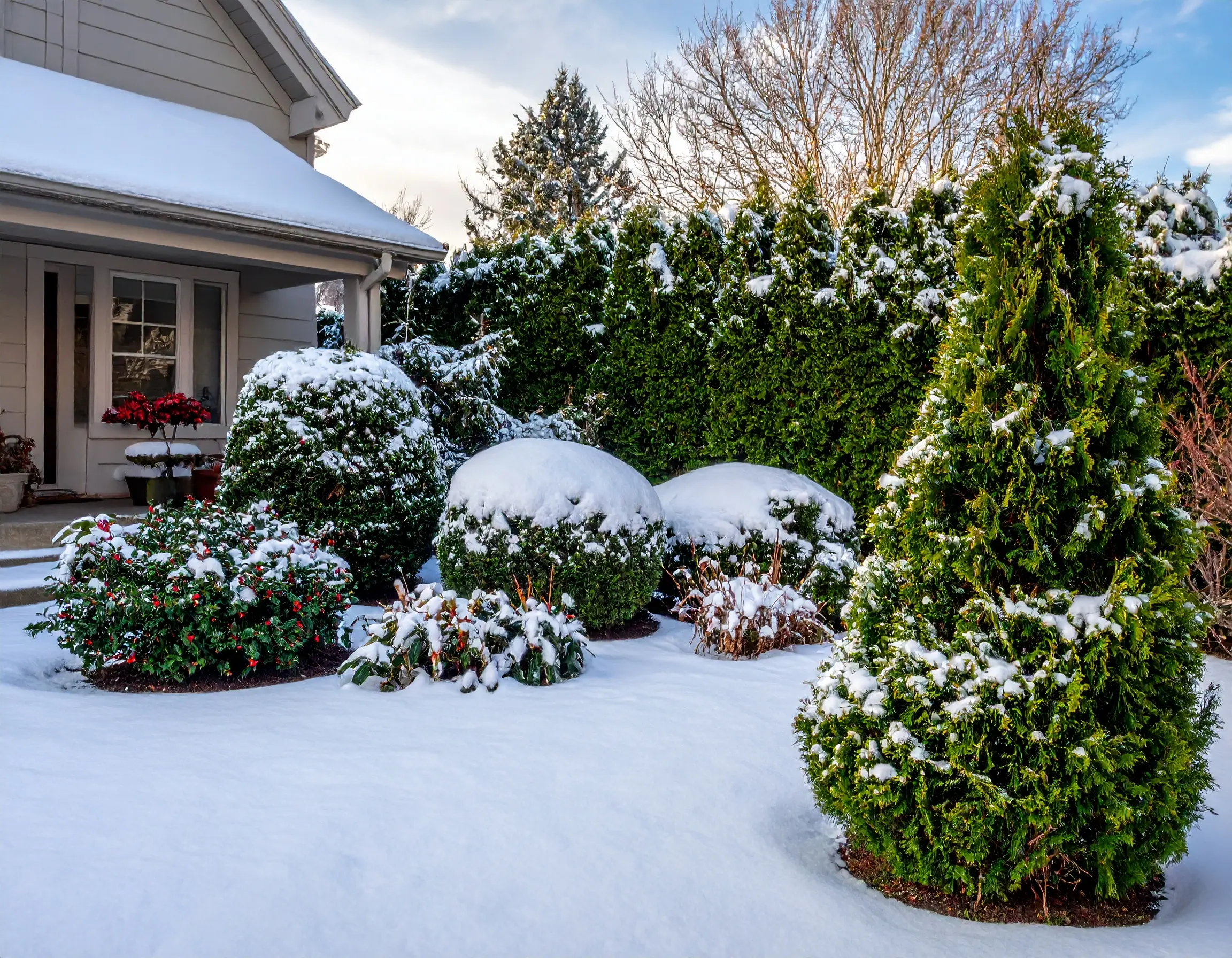
19. Use Layered Planting for Depth and Dimension
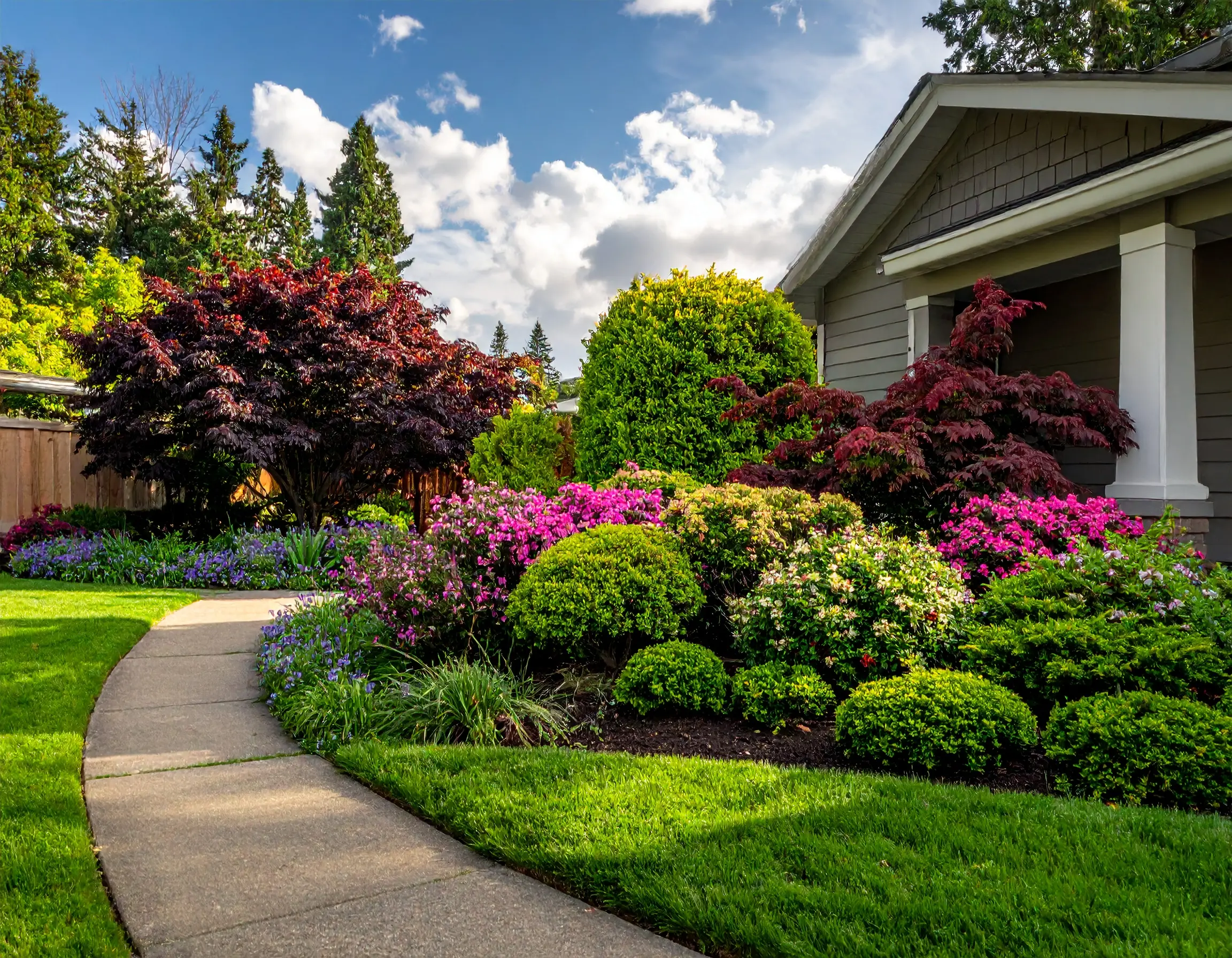
One landscape design secret used by professionals is layering – arranging plants in tiers of different heights and depths to create a rich, full look. Instead of a flat row of plants all the same height (which can feel dull and make a space look smaller), aim to have layers: low groundcovers or edging plants in front, medium-height shrubs or perennial flowers in the middle, and taller shrubs or small trees in the back (nearest the house or fence).
This staggered height approach gives the illusion of depth and makes even a modest front yard feel more expansive and dynamic. For example, along the front of your house you could have a foreground of low sedum or hosta, behind them a row of hydrangea or spirea shrubs, and then a backdrop of taller yews or a clump of dogwood shrubs against the wall. From the street, this reads as a lush, layered tapestry of plant life rather than a thin line. In a corner of the yard, you might plant a trio of layers such as daylilies in front, then dwarf fountain grasses, then a background of taller ornamental grass or a dwarf pine.
Layered planting also ensures multi-season interest, because you can mix different types so something is blooming or colorful in each layer at any given time. It’s the same idea as arranging furniture in a room – you wouldn’t put everything in one line; you distribute items in 3D space. Just be sure to give each plant the room it needs at maturity (don’t overcrowd too tightly) and consider their spacing so taller ones don’t completely eclipse the shorter ones.
When done right, layering can make a small front garden look like a curated botanical collection, and a larger garden feel abundantly filled in. The depth draws the eye in and often gives that “professionally landscaped” impression. It’s a technique that maximizes visual impact without necessarily increasing maintenance – it’s all about the layout.
20. Prioritize Professional Planning and Year-Round Maintenance
Last but certainly not least: remember that a stunning front yard isn’t just about one-time installation – it’s built on good planning and consistent care. Taking the time for thoughtful planning up front will save headaches later. Consider consulting with a landscape professional or doing a detailed site plan yourself.
Take into account how all the elements will work together: the sight lines from the street and from your windows, traffic flow (paths people will take), where snow will be piled, how water will drain, and what the maintenance needs of each feature are. A master plan ensures you don’t plant a tree in a spot that will block your view in 10 years, or put a garden bed where future construction (like adding a sidewalk) might disturb it.
Planning also helps you budget effectively – landscaping is an investment in your home’s value, so you want to spend wisely for maximum effect. Once your design is in place, year-round maintenance is the key to keeping it looking great. This doesn’t mean you have to slave away every weekend – it means doing the right tasks at the right time. Simple seasonal routines go a long way: spring mulching of beds and pruning of any winter damage, summer weeding and watering during dry spells, autumn leaf cleanup and maybe protecting young plants with burlap, and occasional fertilizing or lawn care as needed.
If you’re someone who enjoys DIY gardening, following a maintenance calendar will help your yard thrive. But if you prefer to simply enjoy the view without the work, consider hiring a reliable landscaping service to do seasonal clean-ups, pruning, or weekly lawn care. Many homeowners find that professional maintenance is worth the cost, as it preserves the quality of their landscape investment (and saves time).
Enlisting expert help can also be crucial for tasks like large tree pruning, managing pests, or designing improvements over time. The goal is to protect and polish what you’ve created so it continues to enhance your home’s curb appeal for years to come. In short, plan smart at the start, and don’t forget the follow-through – your dream front yard is an ongoing project, but one that will reward you daily with its beauty and functionality.
Ready to Transform Your Front Yard?
A front yard that is both beautiful and functional will not only make your home more attractive, but also make your everyday life a little brighter. From solving practical issues like drainage or privacy to creating spaces you can actively enjoy, the ideas above cover a range of possibilities for Canadian homes. Whether it’s adding a welcoming pathway, planting hardy shrubs that thrive in Mississauga’s climate, or incorporating unique personal touches, there are countless ways to bring out the best in your front landscape.
If you’re eager to get started on an eye-catching and resilient front yard, our team at Maverick Landscaping is here to help every step of the way. We specialize in designing and building landscapes that thrive in the GTA’s conditions, blending creativity with deep horticultural know-how. From the initial concept and plans through to the final planting and stonework, we handle every detail with care and professionalism. Your satisfaction is our priority – we won’t rest until your front yard reflects your vision and enhances your home’s curb appeal.
Contact us today for a free consultation and let’s discuss how to turn your front yard dreams into reality. Together, we can create a front yard that truly reflects your style, meets your needs (be it low-maintenance, child-friendly, pollinator-friendly – you name it), and makes coming home each day a joy. With expert guidance and quality workmanship, you’ll soon be stepping outside to a vibrant front yard oasis that you’ll be proud to showcase in every season. Let’s transform your front yard into the best view on the block!