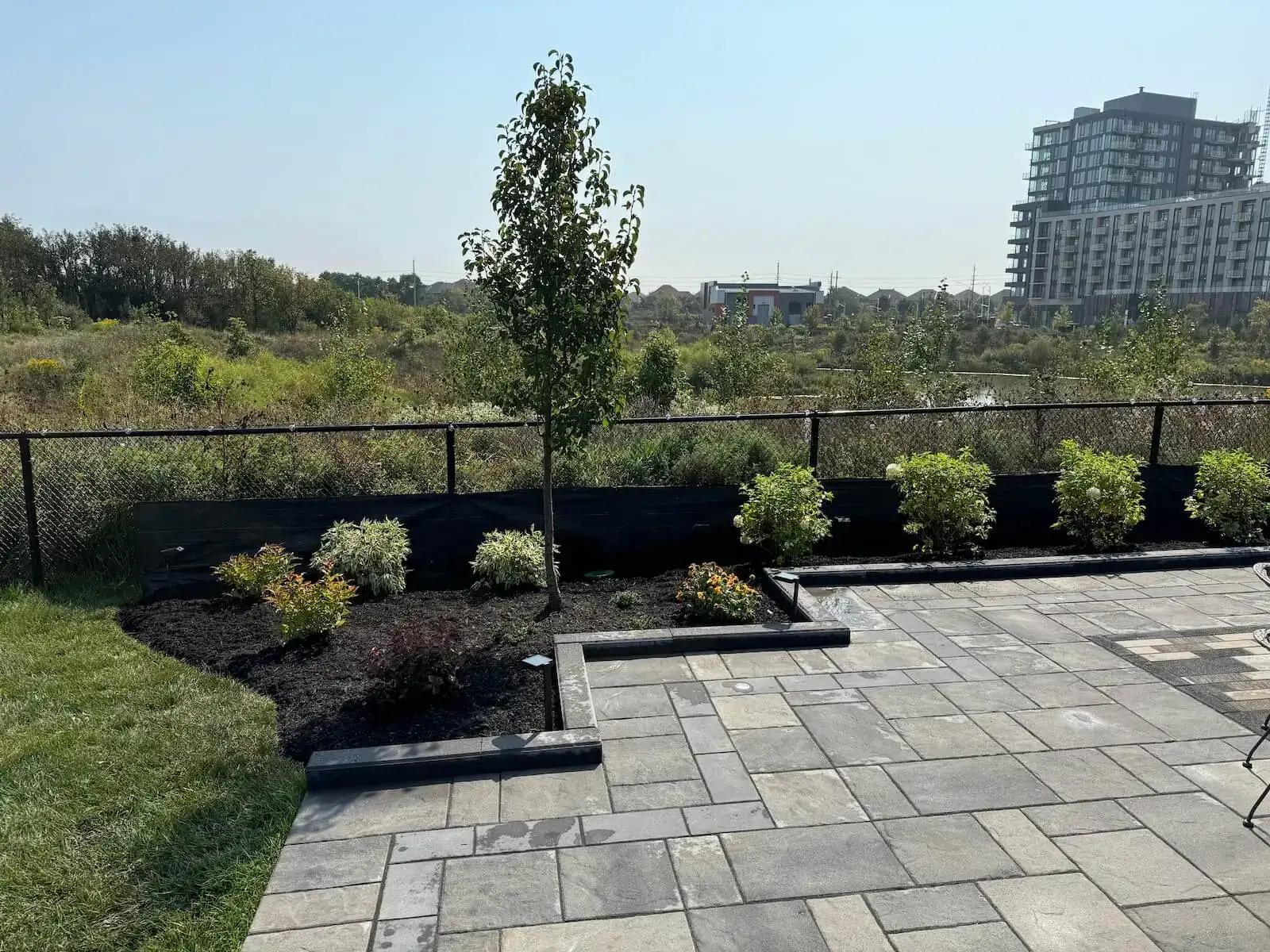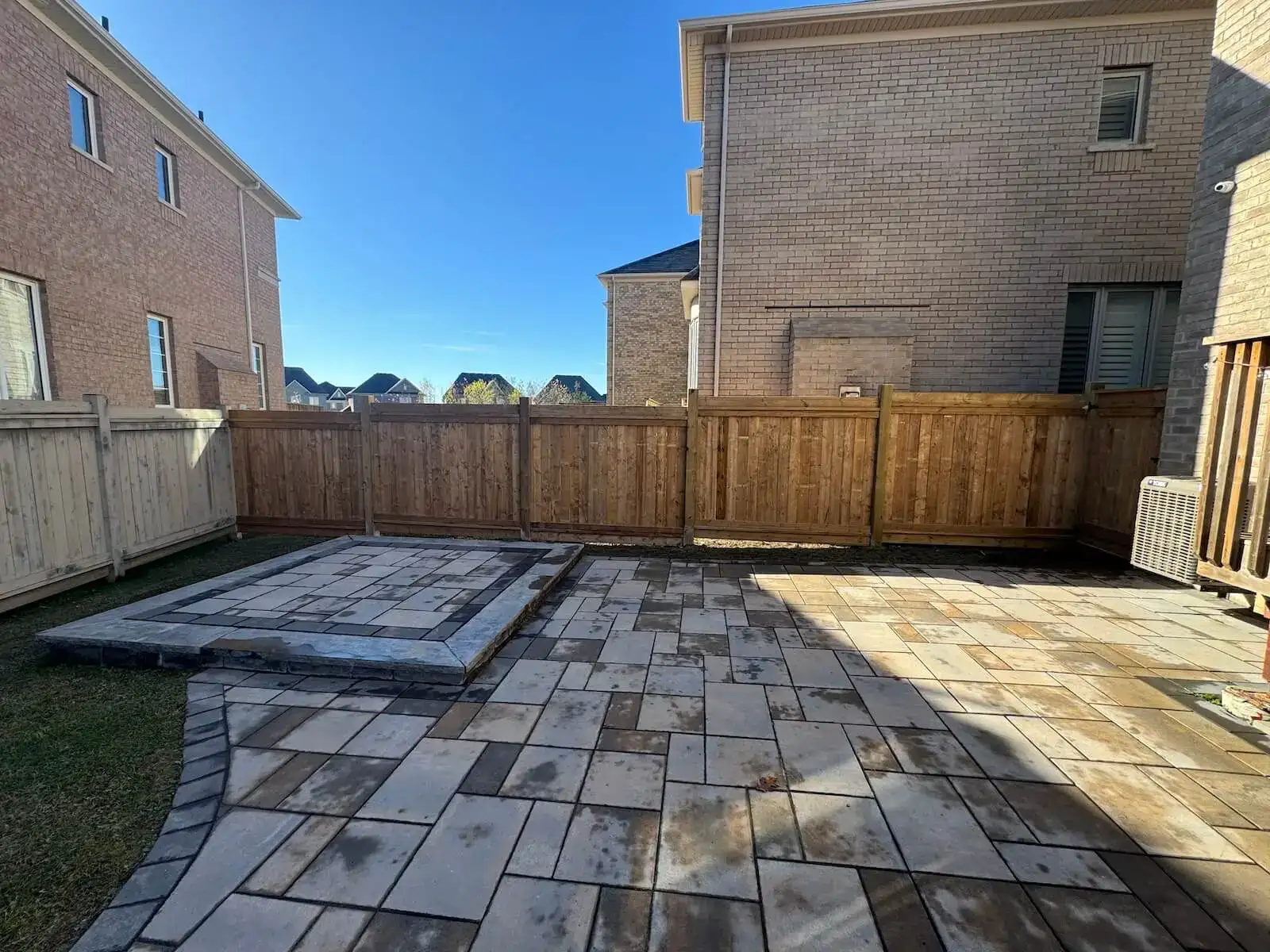









Retaining walls don’t have to drain your bank account. With some creativity and the right materials, you can build a sturdy wall that stands up to Canadian weather without spending a fortune. Below are 20 inexpensive retaining wall ideas – each with notes on DIY suitability, relative cost, and the pros and cons (especially considering Canada’s freeze-thaw climate and moisture challenges).
1. Pressure-Treated Timber Walls
DIY-Friendly?
Yes. Building a timber retaining wall is a straightforward DIY project for many homeowners. Basic construction involves stacking landscaping timbers or 6×6 posts, secured with spikes or rebar, and adding “deadman” anchors for strength.
Relative Cost
Low. Pressure-treated pine or fir lumber is one of the cheapest retaining wall materials. In fact, wood walls are becoming popular partly due to their affordability. Hiring a pro costs ~$15 – $30 per sq. ft, but doing it yourself roughly halves that cost.
Pros and Cons
- Pros: Inexpensive and widely available; easy to cut and install with common tools. Timber walls blend naturally into yards and can last 15 – 40 years with proper treatment and drainage. Wood is flexible and absorbs slight ground movements, helpful in freeze-thaw conditions if drainage is managed.
- Cons: Even treated wood can eventually rot or warp in Canada’s wet, cold climate. Proper drainage gravel behind the wall is essential to reduce rot and frost heave damage. Limit wood walls to about 1 m (3 – 4 ft) height, as they are less strong than masonry. Periodic maintenance (inspections, replacing any rotted sections) is needed to reach the upper end of their lifespan.
2. Reclaimed Railroad Tie Wall
DIY-Friendly?
Yes, for small walls, but the ties are very heavy. Old railway ties (treated with creosote) have been used for decades as retaining walls; they stack like giant bricks and are pinned or spiked together. Enlist help or machinery due to their weight.
Relative Cost
Very Low (often free or cheap). Used railroad ties can sometimes be obtained for nothing or a few dollars each, making them attractive to budget-conscious builders. They’re cheaper than new lumber if you find a good source, though top-quality used ties cost more and lesser ones might fall apart quickly.
Pros and Cons
- Pros: Extremely rugged and thick – a tie wall can withstand a lot of weight. Creosote-treated ties resist rot and insect damage for decades. Many old tie walls still perform in harsh environments (even low-lying, wet areas) where they’ve “lasted years”. They won’t easily shift in frost because each tie weighs ~100+ kg, and the creosote treatment helps shed water.
- Cons:Toxicity and handling. Creosote is a preservative but is also toxic – avoid use near vegetable gardens or where kids/pets frequent. Wear gloves and a dust mask when cutting or drilling ties. They are only “marginally better than untreated wood” if constantly wet, so like all wood, they require good drainage behind the wall to extend life. Over time (20+ years) they may leach tar and smell in hot sun. Some municipalities restrict or discourage using old ties, so check local guidelines. If appearance matters, note that tie walls have a rough, rustic look (which some people love, others don’t).

3. Pallet Wood Retaining Wall
DIY-Friendly?
Yes. Using wooden shipping pallets is a creative DIY way to build averycheap, low retaining wall or raised bed. Pallets can be anchored vertically as a fence-style wall or broken down into slats and stacked. It’s relatively simple carpentry, but best for small garden walls (under 60 cm tall).
Relative Cost
Minimal. Pallets are often free from warehouses or construction sites. You might only spend on fasteners, stakes, or wood preservative, making this one of the cheapest solutions (practically the cost of nails and labor).
Pros and Cons
- Pros: Ultra-budget-friendly and great for upcycling materials. Easy to modify – you can cut pallets to fit or create curves. They work nicely for raised flower beds or temporary terrace walls. If kept above ground and dry, pallet wood can last a few seasons. You can also improve longevity by staining or sealing the wood.
- Cons:Short lifespan. Standard pallet wood is usually low-grade pine that rots quickly when in constant contact with moist soil. Expect a pallet retaining wall to “crumble right away, within a few years” unless you take precautions. In Canada’s climate, moisture and freeze-thaw will accelerate decay of untreated pallet boards. Use pallets only for very shallow retaining needs or as a form for a temporary wall. For anything long-term, consider investing in proper treated lumber.
4. Timber Crib or Log Walls
DIY-Friendly?
Both DIY and Professional. A crib wall is built by interlocking logs or timbers in a lattice (like Lincoln Logs) and filling the gaps with soil or gravel. It’s an old-school technique; handy homeowners can attempt a small crib wall with local timber, but larger structures (especially using heavy logs) might require a contractor or heavy equipment.
Relative Cost
Low to Moderate. If you have access to free logs (e.g. from your property) or scrap timbers, the material cost is low – mainly fasteners and labour. Even purchased rough logs are cheaper than finished stone or concrete. However, building a crib wall is labour-intensive, which can add cost if hiring help.
Pros and Cons
- Pros:Uses cheap local materials. You can reuse cut trees or mill off-cuts. Crib walls have a rustic charm and allow planting in the cribs for a “living wall” look. Structurally, the cross-tied grid is strong and the fill provides excellent drainage (reducing frost pressure). They tolerate freeze-thaw well because the open structure relieves pressure and wood can flex a bit.
- Cons: Untreated logs are prone to rot, so choose rot-resistant wood (cedar, larch) or treat them. Even then, wood in ground contact will gradually decay in a wet climate. Crib walls also take up more depth than solid walls (because of the log framework). Construction can be complex – ensuring each layer is locked together and adding rebar or tie-backs for stability. This method is best for lower walls (1 – 1.5 m) unless engineered. Like all wood, ensure plenty of gravel backfill and possibly a drainage pipe to prevent water buildup.
5. Gabion Basket Wall
DIY-Friendly?
Yes. Gabions are wire cages (usually galvanized steel mesh) that you fill with rocks or rubble. They’resurprisinglyDIY-friendly – you assemble the basket, place it, and fill it with stones by hand or with a loader. No mortar or special skills needed, just time and muscle.
Relative Cost
Low to Moderate. The cost depends on your fill material. Gabion baskets themselves are reasonably affordable, and you can often fill them with free or cheap rocks – even broken concrete or brick (recycling materials saves money). If you have lots of stone on your property, a gabion wall can be extremely cheap. Labor is the main “cost” if you DIY (filling the cages is work!).
Pros and Cons
- Pros:Durable and gets stronger with time. Gabion walls are highly resistant to weather – the stone fill can’t rot, and the loose fill allows water to drain right through, so freeze-thaw cycles aren’t a concern (the wall flexes rather than cracks). They are excellent for erosion control and can last for decades. Environmentally, gabions are great: you can use recycled concrete, rocks or even old bricks as filler. Over years, soil and vegetation can infiltrate, actually increasing stability as the structure integrates with the landscape.
- Cons: Initial installation can be labor-intensive (lots of stone to move). The wire mesh can rust over many years – it’s important to get coated or galvanized baskets appropriate for the site (e.g. PVC-coated mesh for coastal or high-moisture areas). Aesthetically, gabions have an industrial look that isn’t everyone’s taste (though you can choose attractive stone for the front face). Also, gabions need space – a typical basket is 30+ cm deep, so in tight yards they may be cumbersome. Tip: For Canadian winters, gabions are top-notch: just be sure to use non-breakable rocks (hard stone that won’t crack in frost) and proper wire so the freeze doesn’t cause rust breakage.
6. Corrugated Metal Panel Wall
DIY-Friendly?
Yes, for small walls. Corrugated steel or aluminum panels (like old roofing or siding) can be repurposed as a retaining wall facing. Typically, you drive sturdy posts (pressure-treated 4x4s or metal pipes) and attach the corrugated sheets to form a continuous barrier. This method is akin to building a strong fence that holds back soil. It’s fairly DIY-friendly with basic carpentry/metal skills.
Relative Cost
Low. If you have access to used corrugated sheets, the cost is almost nothing. Even new corrugated metal isn’t very expensive per square foot compared to masonry. Posts and hardware will be the other expense. Overall, it’s a budget choice – especially for short (<1 m) garden walls or raised beds.
Pros and Cons
- Pros:Fast construction. You can create a long wall quickly by screwing panels to posts – no mortar, curing, or heavy lifting of blocks. Metal won’t rot and is unaffected by freeze-thaw cycles. It provides a thin wall (saves space) yet is strong if properly braced. Great for contemporary or rustic-industrial aesthetics. Galvanized steel is designed to withstand outdoor conditions, and with proper drainage behind the wall, rusting is minimal (the metal stays relatively dry).
- Cons:Not for tall walls. Metal panels aren’t as rigid as wood or concrete, so this method suits low retaining walls or raised planters. You must have sturdy posts and maybe lateral bracing to prevent bulging. In a Canadian climate, use galvanized or aluminum panels – plain steel will rust quickly with moisture and road salts. Even galvanized metal may eventually corrode; applying a protective paint or rust sealant on cut edges helps. Also, corrugated walls don’t provide much insulation to the soil, meaning frost can penetrate – ensure the base is well-drained so frost heave doesn’t push the wall. Watch for sharp edges during construction and consider child safety if the top edge is exposed.

7. Recycled Plastic or Composite Timber Wall
DIY-Friendly?
Yes. Modular landscaping timbers made of recycled plastic (or wood-plastic composite) can be used much like wood lumber. They cut and drill similarly, so DIY installation is comparable to a wood retaining wall – stack or secure to posts. Some systems even interlock with pins for easy assembly.
Relative Cost
Low to Moderate.Plastic lumber is often cheaper than brick or stone walls, but can be a bit more costly than untreated wood upfront. Still, the long lifespan can make it cost-effective. There are also plastic “stacking” block systems that are relatively inexpensive. Overall, it’s affordable and saves money on maintenance (no painting or replacing rotted boards).
Pros and Cons
- Pros:Won’t rot or rust. Unlike wood, plastic/composite won’t decay, warp, or succumb to insect damage. It’s often made from recycled materials, which is eco-friendly. It handles moisture and winter conditions well – no worry about freeze-thaw causing cracks, and no water absorption. Plastic timbers are also lighter to handle than real wood or concrete blocks, making DIY easier on your back. Maintenance is virtually nil (no sealing required). These materials can also be designed to look like wood or stone, giving a nicer appearance than raw concrete.
- Cons:UV and Cold: Some cheaper plastics can become brittle in extreme cold or degrade under UV sunlight over many years. Make sure to use products rated for outdoor structural use. Very high walls might not be feasible unless the system is engineered for it – plastic timbers are strong in ground contact but generally best for walls under ~1 m. Also, while relatively cost-effective, the initial price can be higher than using truly salvaged or raw materials, so it’s a trade-off of cost vs longevity. Always follow manufacturer instructions for drainage and backfill – even rot-proof walls need proper base and backfill to perform well.
8. Cinder Block (CMU) Wall
DIY-Friendly?
Yes (for skilled DIYers). Standard cinder blocks or concrete masonry units (CMUs) are a cheap building block for retaining walls. They are laid with mortar (or dry-stacked with reinforcement and then filled with concrete). A motivated DIYer can build a small CMU retaining wall, but it requires some masonry skill to ensure stability and proper leveling.
Relative Cost
Low. Concrete blocks are inexpensive (often $2 – $4 per block). In terms of material costs, poured concrete is about the only thing cheaper per square foot. A basic CMU wall costs far less in materials than natural stone or brick. If you do it yourself, you save the high labor cost of masonry. Pre-made concrete blocks are cited as the cheapest DIY retaining wall material, allowing you to build a secure wall “cheaply and easily”.
Pros and Cons
- Pros:Durable and strong. Concrete block walls, when built correctly, can last for decades and handle heavy loads. They don’t rot or rust, and quality blocks handle Canadian winters well – the blocks themselves are frost-resistant concrete. They can also be reinforced with rebar and concrete fill for added strength (useful if you expect freeze-thaw movement or high pressure). CMU walls are straight and true, giving a clean look or a good base for adding a veneer (stucco, stone, etc.).
- Cons:Needs footing and drainage. A block wall requires a crushed stone base or concrete footing below the frost line in colder regions to prevent uneven movement. If water is not drained, mortar joints can crack from frost expansion behind the wall. For DIYers, working with mortar in cold weather can be tricky (you may need antifreeze additives or to pause during winter). Unfinished cinder block isn’t the prettiest – many homeowners will want to paint it or face it with a nicer material. Finally, while a handy homeowner can handle a small wall, larger structural CMU walls (> 1 m height) might require professional engineering for safety.
9. Poured Concrete Wall
DIY-Friendly?
No (Professional Recommended). Poured concrete retaining walls involve building forms, placing rebar, and pouring concrete – a complex job best left to professionals unless it’s a small project and you have concrete experience. Even many pros find large concrete walls challenging due to the need for proper formwork and curing.
Relative Cost
Low (materials), High (labor).Material-wise, poured concrete is the cheapest type of wall – concrete mix is quite inexpensive per volume. However, the labor and equipment costs make it expensive to have installed (one of the priciest if hiring out). If you somehow DIY a small wall with rented forms, you could save money, but mistakes are costly to fix. In summary: cheap materials, but unless you do it yourself successfully, the overall cost can rival more expensive blocks or stone due to labor.
Pros and Cons
- Pros:Strong and long-lasting. When properly built, a reinforced concrete wall is extremely durable and can easily handle freeze-thaw if designed for it (with control joints and reinforcement). It’s versatile – you can mold it into curves or corners seamlessly, and even stamp or stain it for a decorative finish. Concrete won’t rot, burn, or rust, and requires little maintenance. Also, a solid wall takes up less space than tiered blocks or cribs, which is good for tight spaces.
- Cons:Cracking potential. In a Canadian climate, the big concern is frost heave and moisture: if the base isn’t below frost depth or if water isn’t drained, a concrete wall can crack or tilt from ground movement. Proper drainage and possibly weep holes are critical. Any cracks that do form can let water in and get worse with freezing. Additionally, the plain grey look is utilitarian – many homeowners will want to parge or face the wall (which is an extra step/cost). For most homeowners, the need to hire professionals or at least skilled help is a downside if trying to keep costs low.
10. Interlocking Concrete Block Wall (Segmental Blocks)
DIY-Friendly?
Yes. Segmental retaining wall blocks (like Allan Block, Unilock, etc.) are made to stack easily without mortar – they often have lips or pins that lock them in place. They are very popular for DIY retaining walls since you just prepare a level gravel base and stack the blocks, backfilling as you go. Many home improvement stores sell these blocks along with instruction guides.
Relative Cost
Moderate. The blocks themselves cost $5 – $20 per sq ft of wall area (materials only), depending on the style and size. That’s more expensive than plain cinder block, but you save on mortar and possibly on labor (easy assembly). For small walls, total cost stays quite low; for large walls, material cost adds up, but still usually cheaper than natural stone or brick. Doing it DIY yields big savings, as hiring a landscaper for these walls can double the cost.
Pros and Cons
- Pros:Designed for longevity. Interlocking concrete blocks are made of high-strength concrete and resist rot, fire, and frost damage. They are engineered with a setback (each course steps back slightly into the earth), which helps counteract soil pressure. These walls have some flexibility to shift seasonally without cracking. They also come in various colors and textures that mimic stone, giving you a decent look at a fraction of the cost of a stone wall. With good drainage (usually a gravel backfill and drain pipe is recommended), they perform very well through Canadian freeze-thaw cycles.
- Cons: The blocks can be heavy (15 – 40 kg each), so physical effort is needed to build the wall. There’s also a height limitation for DIY – typically around 1 m tall max without special engineering. Taller segmental walls need geogrid reinforcement layers and possibly professional design. Another consideration: although cheaper than a poured wall, these blocks aren’t dirt cheap; the cost is mid-range and scales with your wall area. A minor aesthetic con: because they are modular, the look can be somewhat repetitive (less “natural” than random stone). Tip: Always start with a well-compacted gravel footing and keep the first course perfectly level – this ensures the wall remains stable and straight.

11. Concrete Bag Retaining Wall
DIY-Friendly?
Yes (with caution). This unconventional method involves stacking unopened bags of concrete mix and wetting them to harden in place. Essentially, each bag becomes a rough concrete “block.” It’s a DIY hack that can work for low garden walls. However, it’s critical to reinforce and drain it properly, and note it’s somewhat experimental for long-term use.
Relative Cost
Very Low. You’re basically buying cheap concrete mix (often under $5 per bag) and using the bag as both form and material. No lumber forms, no mortar. For a small wall, you might spend a couple hundred dollars in bags instead of thousands on blocks or hiring a crew. This approach “saved us thousands,” according to DIYers who have tried it, compared to hiring a masonry wall.
Pros and Cons
- Pros:Simple and cheap. It doesn’t get much simpler than stacking bags. The paper (or biodegradable plastic) sack keeps the shape until the concrete cures, then eventually deteriorates, leaving a solid block in place. It’s like laying sandbags, which is familiar to many. The wall can take a natural staggered shape and even curves. If reinforced with some rebar through the bags and proper gravel backfill, it can be stronger than you’d expect once set. No special skills needed beyond muscle to carry bags and a hose to wet them.
- Cons:Variable durability. If done incorrectly, sections might not fully cure or bond, leading to weakness or crumbling over time. Also, standard concrete mix isn’t air-entrained for freeze resistance, so if the wall saturates with water, freeze-thaw could cause pieces to spall or break. You must include drainage (gravel and possibly a drain pipe) to keep water from soaking the wall. A bag wall is best for short walls (say 60 – 90 cm); taller walls need serious reinforcement which gets tricky (one method is angling rebar through multiple bags to pin them together). Aesthetically, it’s rough – you might see the texture of bag imprints or irregular shapes. Many builders will parge or paint it afterward to cover the patchwork look. In summary, it’s a “genius” cheap method but questions remain about long-term strength, so use for smaller projects or as a temporary solution.
12. Dry-Stacked Natural Stone Wall
DIY-Friendly?
Both – depending on skill. Stacking stones without mortar (dry-stack) is a traditional method. If you have a good supply of flat stones (like fieldstone, flagstone, or slate pieces), a patient DIYer can certainly build a small retaining wall. It’s like assembling a puzzle – you find stones that fit together. For higher walls or if your stones are round/irregular, professional skill might be needed to ensure stability.
Relative Cost
Low (if stone is free) to High (if buying stone). The spectrum is wide. In many parts of Canada, you might find ample stones on your property or farmers may let you take fieldstones – in which case materials are free (just your labor). A salvaged-material wall is truly the cheapest wall. If you have to buy stone from a quarry or landscape supplier, cost goes up significantly (natural stone can be pricey per ton), plus delivery fees. Even then, dry-stacking saves the cost of mortar and concrete.
Pros and Cons
- Pros:Beautiful and eco-friendly. A dry-stack stone wall has a timeless, organic look that blends into any garden. It also has excellent drainage – water seeps through gaps, so there’s little pressure buildup behind the wall (frost damage is minimal when built right). Natural rock is extremely durable and resistant to freeze-thaw cycles – it won’t spall like some concrete can. A well-built stone wall can last for many decades or even centuries with minimal maintenance. Also, it’s environmentally friendly: just stone and gravity, no cement. In cold climates, the flexibility of a dry-stack wall can be a benefit – it can move slightly and then resettle each season.
- Cons:Labour and skill. Building even a small dry-stack wall is time-consuming; you might spend hours to place a single course neatly. It’s often described as an “acquired skill” like doing a jigsaw puzzle. Irregular rocks are a challenge – flatter stone (like sedimentary rock or split fieldstone) is much easier. Without mortar, you rely on gravity and friction, so you typically slope the wall back into the hill and use some larger tie-back stones for stability. Height is limited – usually 3 ft (~1 m) or less is recommended unless an expert builds it with carefully fitted large stones. Lastly, if you lack stones on-site, acquiring quality stone can be costly and moving heavy rock is hard work (consider it the “gym membership” portion of the cost!).✅✅✅
13. Boulder or Rockery Wall
DIY-Friendly?
Professional or Heavy Equipment Recommended. Boulder retaining walls use large rocks (50+ cm size, weighing hundreds of pounds each). While one can technically DIY with the right machinery (skid-steer, excavator) and some know-how, this is often done by professionals because placing big boulders safely is tricky. If you have accessible boulders and a way to move them, it can be a DIY project for experienced folks.
Relative Cost
Low (if rocks on-site) to Moderate. In regions with lots of glacial rocks or excavated boulders (common in parts of Canada), you might source boulders for free or cheap. Many construction sites or farms will have large rocks as byproducts. The main cost is machine time to transport and set them. If purchasing boulders from a landscape supplier, you pay mostly for weight and delivery. Even so, large natural rocks often end up cheaper than building a masonry wall of the same size (since one boulder can cover a big area).
Pros and Cons
- Pros:Extremely rugged and long-lasting. Boulders are basically immune to weather – they won’t crack under a bit of frost (choose hard igneous or granite boulders; most are). A boulder wall is essentially a gravity wall: the huge weight of the stones holds back the soil. They allow water to flow in the gaps, naturally relieving pressure. Properly placed, boulders handle freeze-thaw superbly – any slight shifts can be adjusted by gravity and they won’t structurally fail. Maintenance is virtually zero, and the look is natural and bold. It’s a great choice for high walls on a budget, because big rocks can be stacked to make tall terraces that would be expensive to build with manufactured blocks.
- Cons:Precision is hard. Getting a stable placement for irregular boulders requires experience – each rock has a unique shape and you have to puzzle them for fit (though not as tightly as small stones). Gaps between boulders are large; you’ll typically need to fill voids with smaller rocks and gravel. Also, the sheer size means you almost certainly need powered equipment to move them. If your yard has difficult access for machines, boulders may not be feasible. Aesthetically, boulder walls are rustic – if you prefer a clean or refined look, this may not be your style. Finally, if you have to buy boulders and truck them in, fuel and transport can add to cost (try to find a local source to keep it cheap).
14. Limestone or Flagstone Stack Wall
DIY-Friendly?
Yes. Using flatlimestonerocks or flagstones to build a low retaining wall is a relatively easy DIY project. Limestone is common in many parts of Canada and often available in flat, stackable pieces. You basically stack them like rough bricks in a single or double layer. No mortar is needed for short walls (you can also use a bit of landscape adhesive for stability if desired).
Relative Cost
Low. Limestone is considered an “inexpensive material for landscaping” in some regions. You might find offcuts or broken pieces from quarries at low cost. A simple limestone rock wall around a flower bed, for example, can be done by just collecting stones. Compared to manufactured blocks, raw limestone pieces can be much cheaper per foot of wall.
Pros and Cons
- Pros:Quick garden edging. Stacking random limestone (or similar flat rock) gives a quaint, natural border that can hold back a slight slope or raised bed. It’s very DIY-friendly – just pile and go, no special skills. Because the stones are simply stacked, water seeps through easily, so frost doesn’t damage it much (any minor movement can be reset, but often the wall just flexes and stays intact). Limestone in particular often has a “weathered” look that complements gardens, and any moss or patina that grows on it only makes it look better. If you keep the wall low (say 2 or 3 stones high), there’s little pressure on it, so it’s quite stable long-term.
- Cons: Only suitable for short walls – typically knee-high or so. There’s no structural binding, so don’t use this method for holding back significant hillsides. The pieces should be relatively heavy; lightweight rocks could shift or be knocked out of place. In very harsh freeze conditions, individual stones might heave if the ground freezes deeply under them – a gravel base can mitigate this if it becomes an issue. Also, if you desire a tall, perfectly even wall, this isn’t the approach; this is more for casual, meandering garden walls. If using limestone, note that it’s a softer rock – large vertical walls or any mortar-set limestone must account for its potential to erode slightly over decades, but in a dry-stack garden application, that’s not a big worry.

15. Brick Retaining Wall (Salvaged Bricks)
DIY-Friendly?
Both – leaning toward Pro. A brick retaining wall, if mortared, requires masonry skill to do correctly (keeping it level, ensuring good bond). Dry-stacking bricks is not recommended beyond very low heights. That said, for a small wall one or two bricks high (like garden edging), a DIYer could lay salvaged bricks without mortar just to define a slope. But for any substantial height or load, professional bricklaying is advised to ensure strength.
Relative Cost
Low if recycled, High if new. New brick can be expensive and laying brick is labor-intensive (making professional installation costs high). However, salvaged bricks can often be obtained cheaply or free from building demolition or online marketplaces. Using free bricks and DIY labor brings the cost down drastically – basically just mortar and your time. So the affordability entirely depends on sourcing: a wall made of reclaimed brick bats could be one of the cheapest walls if you scavenge materials.
Pros and Cons
- Pros:Attractive classic look. Brick walls have a charm and can complement brick houses or patios. Bricks are durable in cold climates if you use the right type – clay bricks fired for exterior use are very frost-resistant and can last decades. A well-built brick retaining wall with proper footing and drainage will handle Canadian weather fine, as bricks don’t mind getting wet and cold so long as water isn’t trapped (drainage prevents freeze expansion issues). Bricks are also relatively small, so you can make curves or creative patterns more easily than with big blocks. If you have a pile of old brick, this is a great reuse.
- Cons:Labour and strength. Laying brick is slow and requires a good mortar mix that can withstand freeze-thaw (typically a type N or S mortar). Mortar joints are a weak point in winter – if water seeps in and freezes, joints can crack or bricks can spall. Using reclaimed bricks, you must ensure they are solid (no major cracks) and preferably the hard-fired type; some older interior bricks or low-fire ones can crumble in wet frost. Brick walls are best for shorter applications (under 1 m) unless engineered, as they’re thinner and can bend or crack under high pressure. You may need to incorporate reinforcement (like rebar or tie-backs into the slope) for added stability. Also, because of the labor involved, a brick wall built by a pro might actually cost more than a timber or block wall – so this idea is cost-effective mainly if you DIY with salvage. Maintenance over decades may include repointing mortar if it deteriorates.
16. Recycled Concrete (Urbanite) Wall
DIY-Friendly?
Yes. “Urbanite” is a term for broken chunks of concrete, often from old slabs or demolished sidewalks, repurposed as stone. Pieces of concrete can be stacked like rough stones to make a retaining wall. It’s a DIY-friendly technique similar to building a rock wall – no mortar needed if pieces are stacked stably, or you can mortar them for a more rigid wall.
Relative Cost
Very Low. Recycled concrete is usually free – you might even get paid to haul it away! Many people give away busted concrete on classifieds just to avoid disposal fees. Using urbanite can thus make your material cost near zero. You’ll spend a bit on gravel base and maybe mortar (if using) and your time, but it’s undoubtedly one of the cheapest solutions.
Pros and Cons
- Pros:Eco-friendly and solid. You keep waste out of landfills and get a stone-like wall in return. Concrete chunks, being irregular, often interlock well when stacked, and they’re heavy enough to make a stable gravity wall. The texture can look surprisingly like rough stone – some even have old exposed aggregate that adds character. Since it’s essentially concrete, the material is weather-resistant; any pre-existing cracks in the pieces might grow with freeze-thaw, but if they’re packed in place tightly with gravel backfill, it usually isn’t an issue. Like other dry-stack walls, an urbanite wall can have excellent drainage (especially if you leave gaps or dry-fit it), which helps it survive winter conditions.
- Cons:Irregular shapes. Working with random broken slabs can be challenging – you may need to try many piece combinations to avoid unstable gaps. The wall can look jumbled if not arranged aesthetically; it’s more art than science. If you desire a clean, uniform appearance, this isn’t for you. Also, be cautious of the source: avoid concrete that might be contaminated with chemicals or rebar sticking out. If you mortar the pieces, you lose some of the drainage benefit and must use a frost-resistant mortar. An urbanite wall is generally best for moderate heights (60 cm to 1 m); taller walls need significant engineering or geogrid since the pieces don’t physically lock together like purpose-made blocks. Finally, while concrete itself is durable, the edges of broken pieces can chip or spall over time – you might occasionally need to reset a piece if it cracks, though with abundant free material that’s not a big problem.
17. Tire (Earthship) Retaining Wall
DIY-Friendly?
Yes, but labor-intensive. Building a retaining wall from used tires is a method popularized by “earthship” homes. It involves stacking old rubber tires, filling them with compacted earth or gravel to act as huge heavy bricks. It’s definitely a DIY endeavor (few contractors would build this), but be prepared forseriousmanual labour – pounding dirt into tires is hard work.
Relative Cost
Ultra Low. Scrap tires are usually free (you may even save them from ending up in a dump). Since you’re using waste material and on-site soil as fill, the cost is basically sweat equity and maybe some bolts or rebar to pin tires together. For remote areas or farm use, this is a big draw – “tires are local & abundant” in many communities, especially rural or northern areas where disposal is an issue.
Pros and Cons
- Pros:Massive weight and good insulation. A tire filled with packed earth can weigh 135 – 200+ kg – a wall of these is extremely heavy and stable once in place. The rubber and the compacted earth together make a wall that is flexible yet strong, and the rubber itself isn’t affected by water or frost. In fact, tire walls have performed very well in some cold regions when properly drained; the rubber can flex with frost heave and settle back without cracking. Tires also insulate the soil a bit, potentially reducing frost penetration. For eco-conscious builders, it’s a recycling win. Properly built (often with each row staggered and sometimes tied together with rebar or bolts), a tire wall can last for decades.
- Cons:Labour and appearance. Pounding soil into tires (usually with a sledgehammer) is incredibly laborious – it might take 10 – 15 minutes of hard work per tire or more, so imagine a wall with dozens of tires. Because of the effort, this method is often used for DIY projects where free labor (your own) is available, rather than paying someone. Another issue: frost heave can potentially make tires “float” or shift if not anchored. To counter this, builders dig the first course partly below grade and use plenty of gravel drainage behind and inside lower tires. A well-drained tire wall in Canada can hold up fine, but a poorly drained one might move in spring thaw. Lastly, many people find exposed tires ugly – fortunately you can cover the face with plaster/stucco or facade material to hide the rubber. Also, check local regulations; some places don’t permit tire walls (viewing them as tire disposal), though usually if it’s part of landscaping on your property it’s okay.
18. Earthbag (Soil Bag) Retaining Wall
DIY-Friendly?
Yes. Earthbag construction uses polypropylene bags (or tubes) filled with soil or sand, stacked like bricks and often pinned with barbed wire between layers. It’s quite DIY-friendly – think of it like building with big sandbags. For retaining walls, you would use this method to hold back soil by forming a thick, angled wall. It’s a bit of an offbeat technique but accessible to an average person willing to put in labor.
Relative Cost
Very Low. The bags (often poly grain sacks) are cheap, and the fill is usually the soil from your site. You might need to buy some sand or gravel to fill bags if your soil is not suitable, but overall cost per square foot is minimal. Often, people building earthbag walls use recycled feed sacks or similar. Barbed wire (for friction between courses) and maybe some rebar anchors are small expenses.
Pros and Cons
- Pros:Simple and adaptable. Earthbags conform to any shape – curved, straight, tiered – so you can mold the wall to your landscape. Because each bag is like a building block, it’s easy to adjust as you go. The polypropylene bags are rot-proof and not affected by moisture or pests (they won’t rot or attract insects), and the earth inside, once compacted, is dense and stable. In cold climates, earthbag walls have been used successfully; the fill can be a mix of soil and gravel which doesn’t hold water, thus avoiding frost expansion. The bags themselves aren’t harmed by freezing temperatures. Also, earthbag walls can be quite strong – many earthbag structures are earthquake-resistant due to their flexible but solid nature. For a retaining wall, you’d normally slope it back (“batter” it) into the hillside and include drainage just as with any wall.
- Cons:Protecting the bags. The UV rays from sunlight will degrade polypropylene over time, and exposure to the elements can wear the bags. So, an earthbag retaining wall needs a protective finish on the exposed side – common options are stucco, cement render, or even just covering with soil and planting grass (making a green slope). If left bare for too long, the bags could deteriorate. Another con: it’s fairly labor-intensive (lots of shoveling fill into bags and stacking). While easier than pounding tires, it’s still manual work. Not everyone (or every neighbor) loves the look of sandbags, so likely you’ll plaster it, which adds some cost and effort. Lastly, similar to tire walls, earthbag walls are unconventional – there’s little “code” on them. For very high walls or critical structures, you’d want an engineer’s input. But for garden terraces or holding back a few feet of earth, they can be a very thrifty solution.

19. Concrete or Stone Veneer on Cheap Core
DIY-Friendly?
Both (DIY for veneer if core is pre-built). This idea involves building a structurally cheap wall (e.g. cinder block or poured concrete) and then applying a thin veneer of nicer material like stone, brick, or manufactured concrete facing. The core might be a DIY project (like stacking CMUs) or professionally built if it’s large, and then a handy DIYer can add the veneer, or hire a mason for just the veneer work.
Relative Cost
Moderate. You save money by using inexpensive core materials for the bulk of the wall, and you only spend on a thin layer of the attractive finish. For example, using a $2 concrete block instead of a whole $8 decorative stone. Veneer stone (natural or faux) and mortar will add cost, but you can choose affordable veneers or even use free found stones (river rock, etc.) for a veneer layer. Overall, it’s cheaper than building the whole wall out of solid expensive stone.
Pros and Cons
- Pros:High-end look for less. You can achieve the appearance of a gorgeous stone or brick wall while using cinder block or poured concrete inside. Veneers are only ~1 – 3 inches thick, so you don’t need much material. Example: A plain concrete retaining wall can be veneered with rounded river rocks for a rustic look, or faced with slices of fieldstone to mimic a solid stone wall. This method also lets you retrofit an existing ugly wall rather than rebuilding it. In terms of durability, the core provides the strength, and the veneer is mostly decorative – as long as it’s properly attached, it should last. Canadian climate note: using a concrete core that is steel-reinforced and below frost depth gives you a very stable backbone; the veneer materials (stone/brick) are inherently durable as well.
- Cons:Time and skill for veneer. Applying stone or brick veneer is a masonry task that requires patience to get it looking right (each piece set in mortar, keeping even spacing, etc.). If you hire out, it’s still labor cost (though less than a full stone wall). Also, any veneer on an exterior wall in a freeze-thaw climate must be done with care: moisture can get behind veneers and cause them to pop off during freezes. To mitigate this, use proper masonry adhesive or mortar techniques and consider sealing the stone surface. Additionally, the base wall needs to be sound – a cheap core that fails will take the veneer with it. It’s important to include drainage in the core wall (weep holes or membrane) so water pressure doesn’t build and crack the veneer. Despite these concerns, when done correctly, a veneer over a concrete or block wall gives you the best of both worlds: strength and beauty at a reasonable cost.
20. Stuccoed (Rendered) Retaining Wall
DIY-Friendly?
Both. Stucco or cement render can be applied to many types of walls – concrete blocks, poured concrete, even old brick or stone – to give a unified, water-resistant surface. If you already have a structurally sound wall (new or existing), a DIYer with plastering skills can apply stucco. For a new wall, you might build the core yourself or have it built, then do the stucco finishing DIY to save money.
Relative Cost
Low to Moderate. Stucco materials (cement, sand, lime, waterproof additives) are quite inexpensive, and it’s often tinted so no need to paint. The main “cost” is labor. Doing it yourself is very cheap, but professional stucco work will add to the bill. Still, even hired, stucco is usually cheaper than a full stone veneer job or decorative masonry. Essentially, you’re paying a bit more on a plain wall to get a nicer finish.
Pros and Cons
- Pros:Weather-resistant finish. A properly done render coats the wall, sealing small cracks and providing a water-shedding surface. This is great for Canadian climates as it helps keep moisture out of the wall (reducing freeze damage). It can also include acrylic or elastomeric additives to improve flexibility and crack-resistance. Stucco gives a clean, elegant look – it can be troweled smooth or textured. You can even pigment it for natural tones. It’s a way to make a humble concrete block wall look like a refined plastered structure or even mimic stone by scoring lines. Rendered retaining walls have been used in Europe for ages, proving that with maintenance, they handle temperature fluctuations well.
- Cons:Cracking and maintenance. If water does get behind the stucco (from the ground or top), freeze-thaw can cause the stucco layer to crack or pop off. Thus, you must ensure the wall has drainage and perhaps a waterproof membrane behind the stucco in the soil-facing side, because stucco itself is water-resistant but not 100% waterproof. Also, stucco doesn’t add structural strength; it’s purely cosmetic/weather protection – any movement in the wall (from settling or frost) can cause cracks in the stucco that you’ll need to patch. In cold regions, it’s wise to apply stucco in the warmer months so it cures well, and use a mix design suitable for exterior use. Over time, you might need to repaint or re-seal stucco to keep it effective. Despite these issues, a stuccoed wall is often easier and cheaper to repair or refresh than, say, replacing a rotten wood wall – and it gives you a lot of style flexibility for not much money.
Bottom Line:
You don’t need a high-end budget to build a reliable retaining wall. The cheapest solution of all is to reuse materials you have on hand – whether it’s stones from your land, old bricks, or leftover concrete. Many of the options above can be combined (for example, using a timber wall with a stone veneer, or interlocking blocks with a wooden fence topper for seating). Whatever method you choose, always account for drainage and the realities of Canadian winters. By doing so, even a budget wall can stand strong through freeze-thaw cycles and keep your landscape looking great for years.