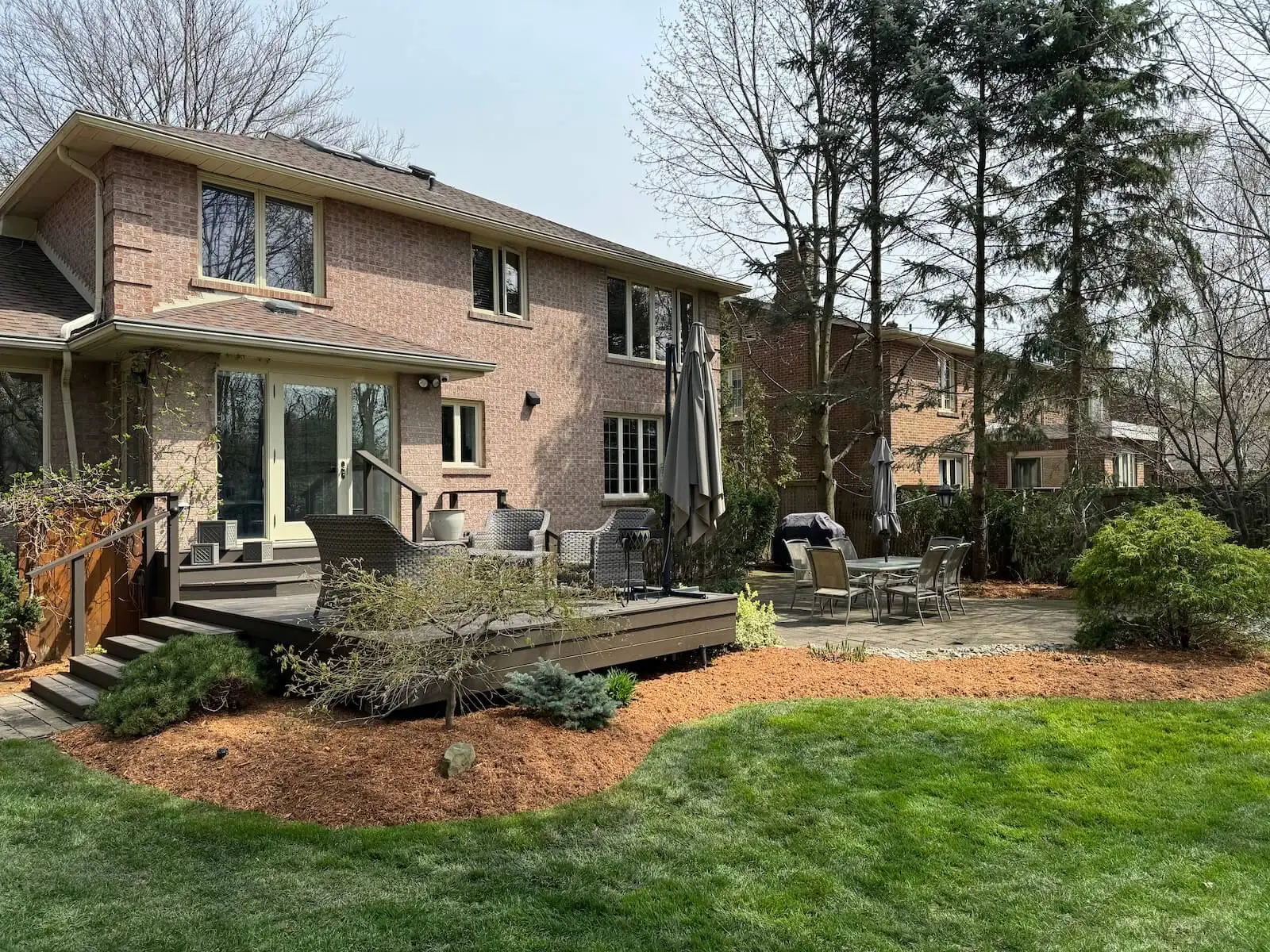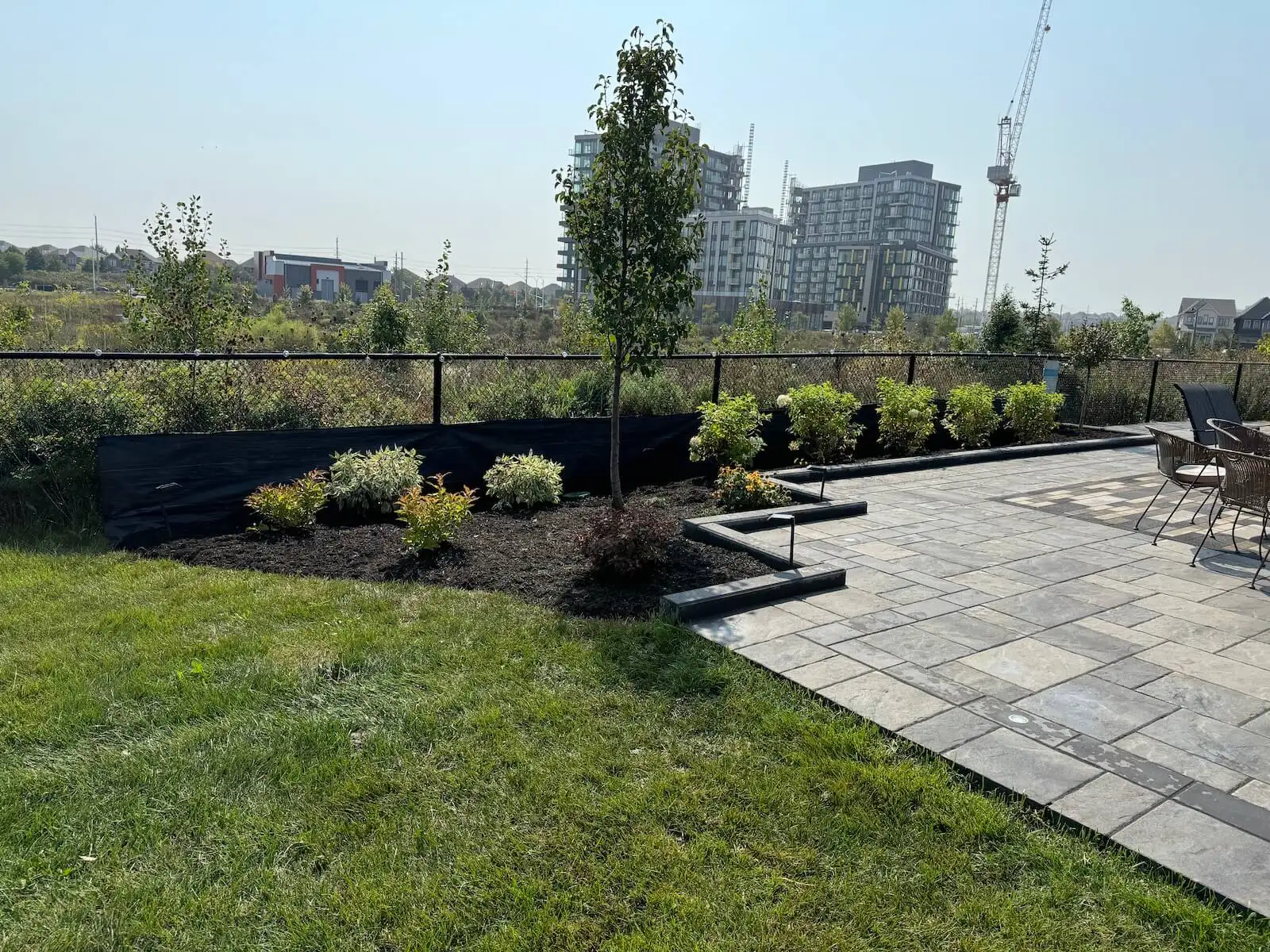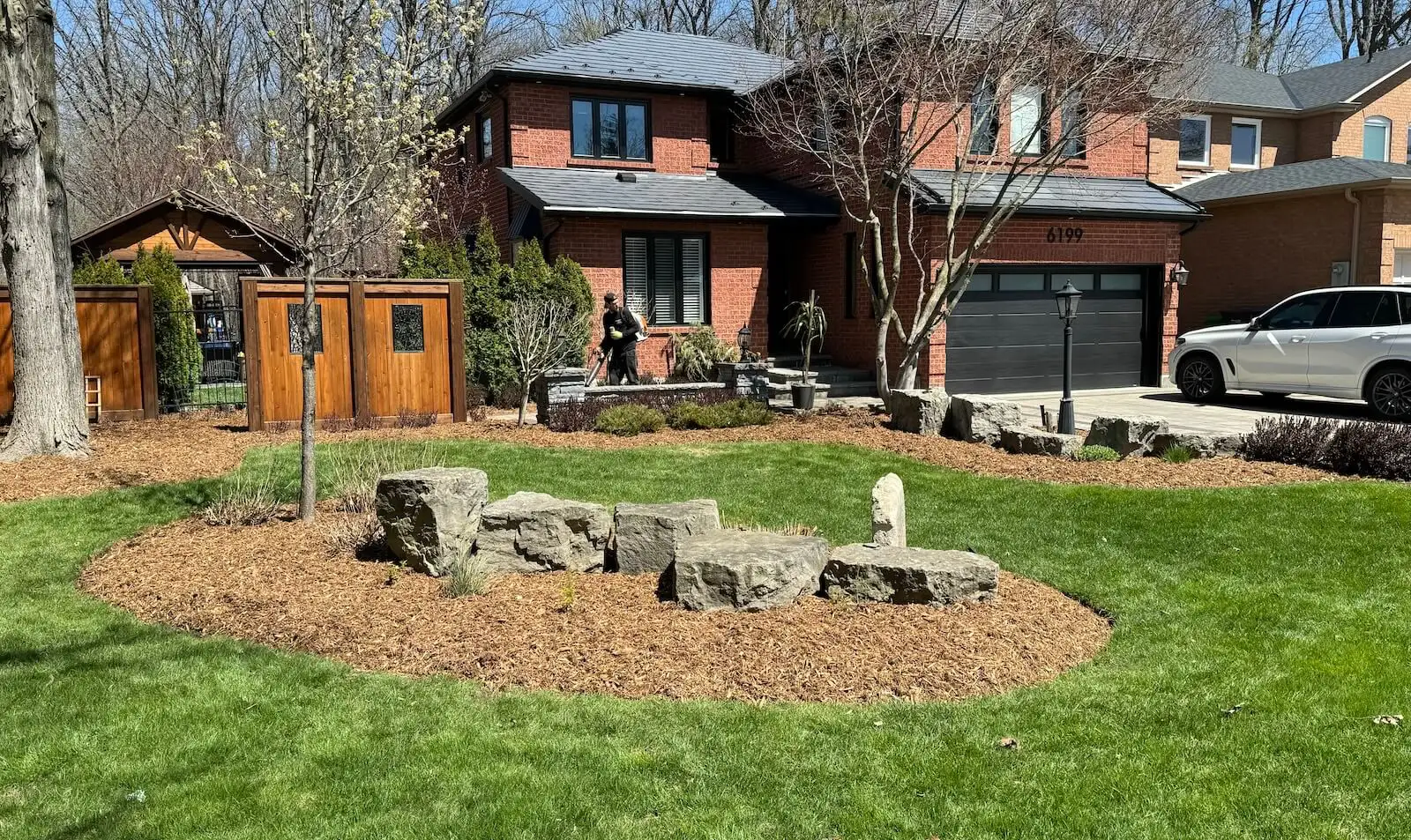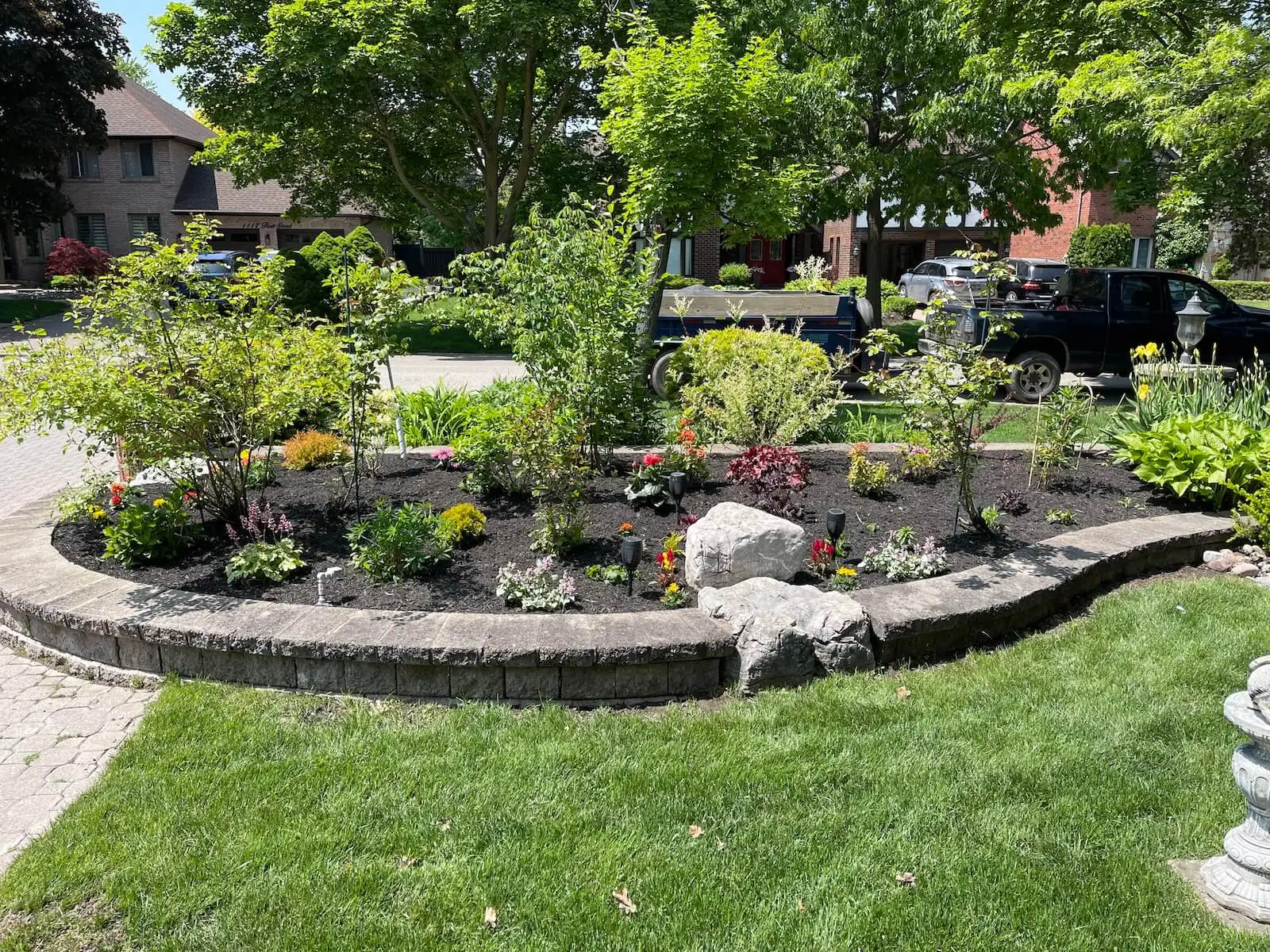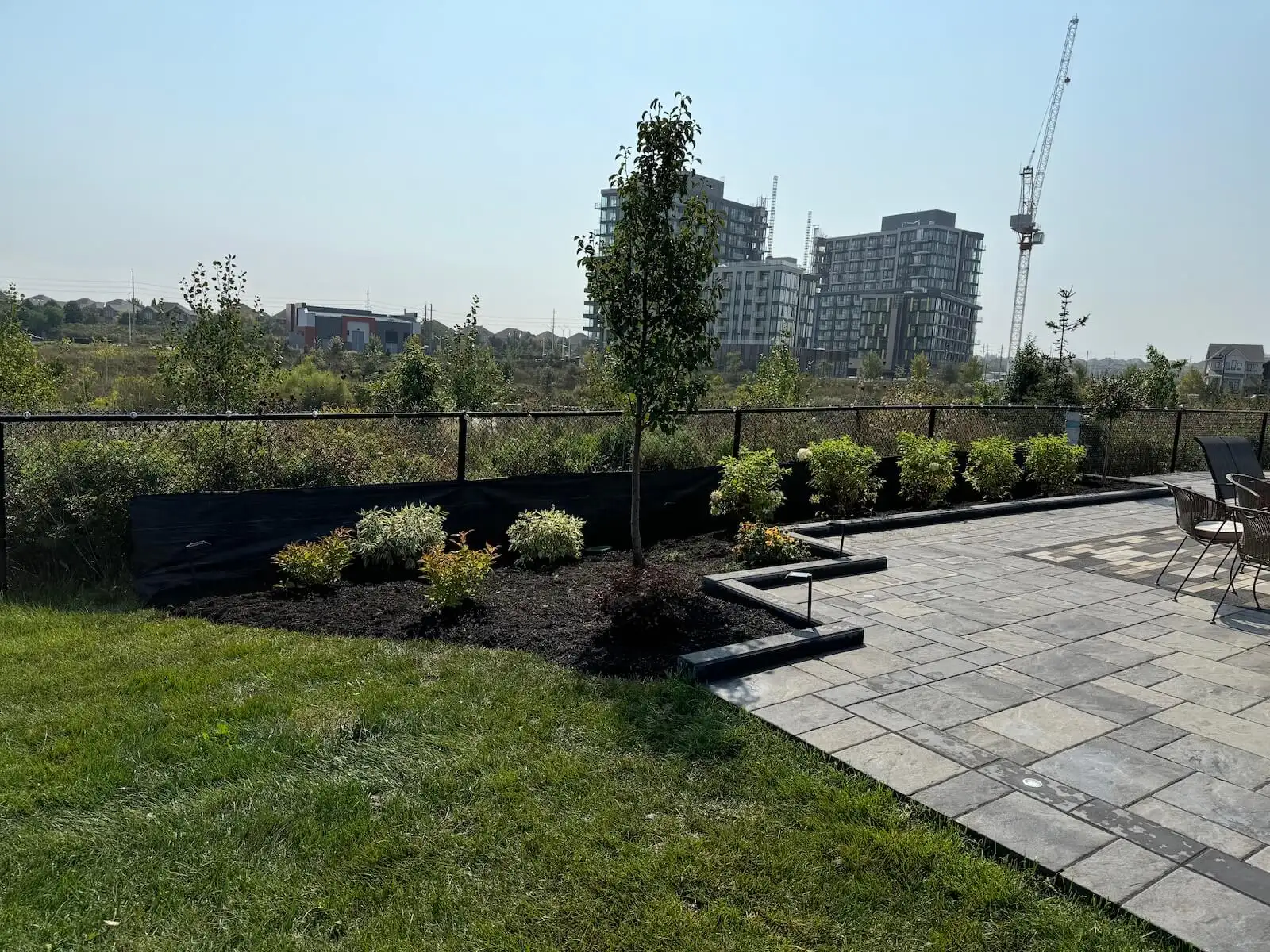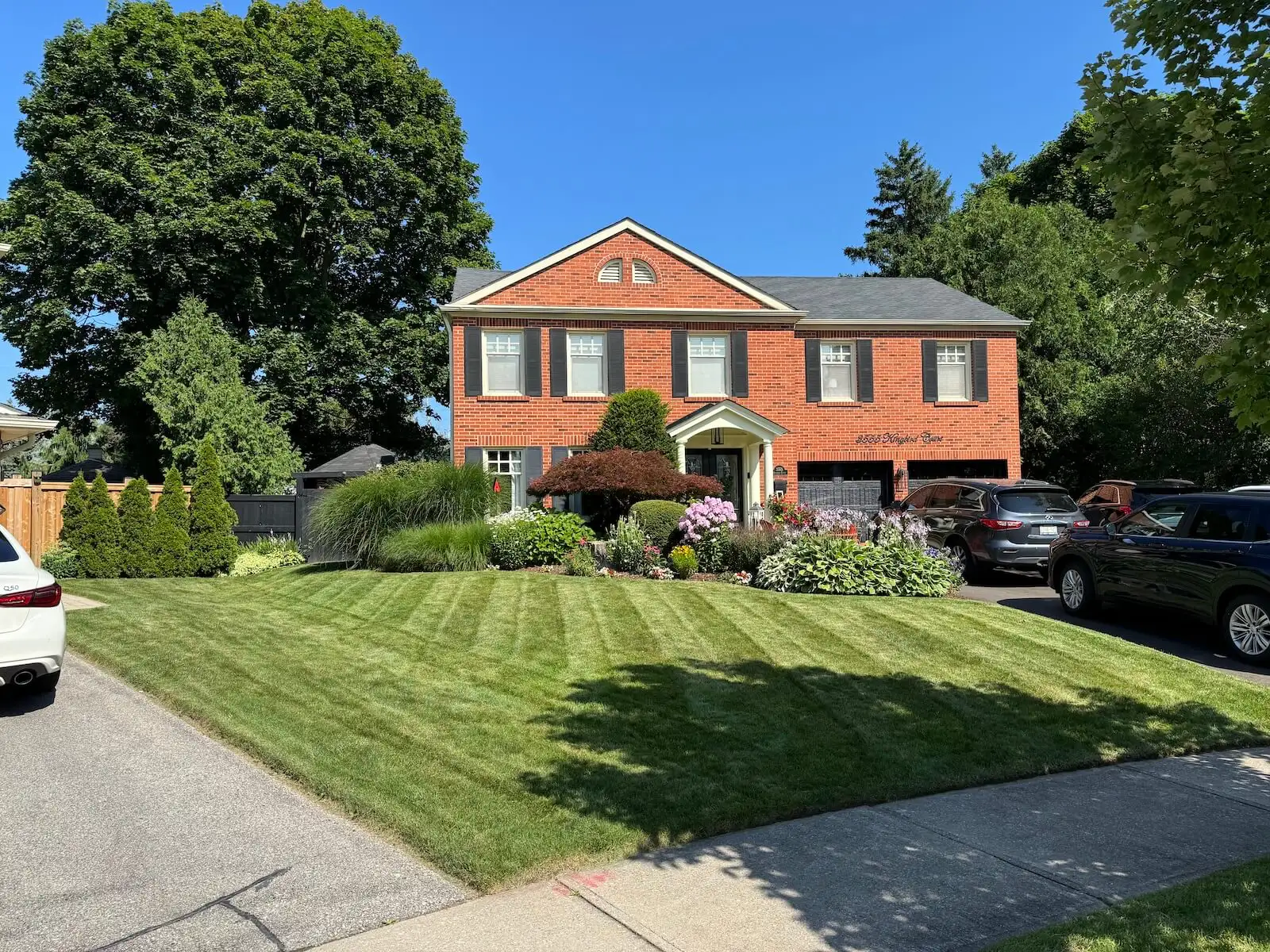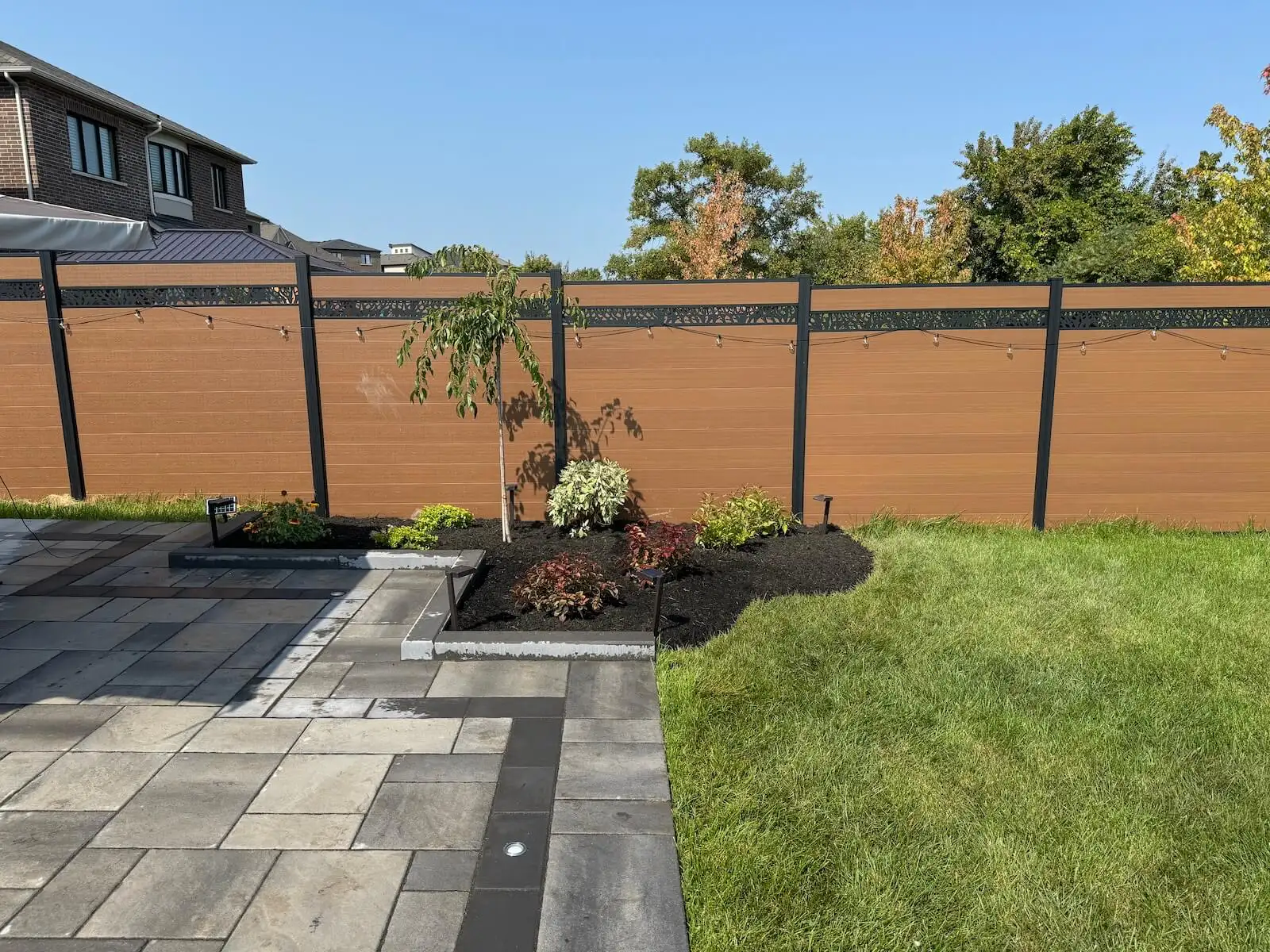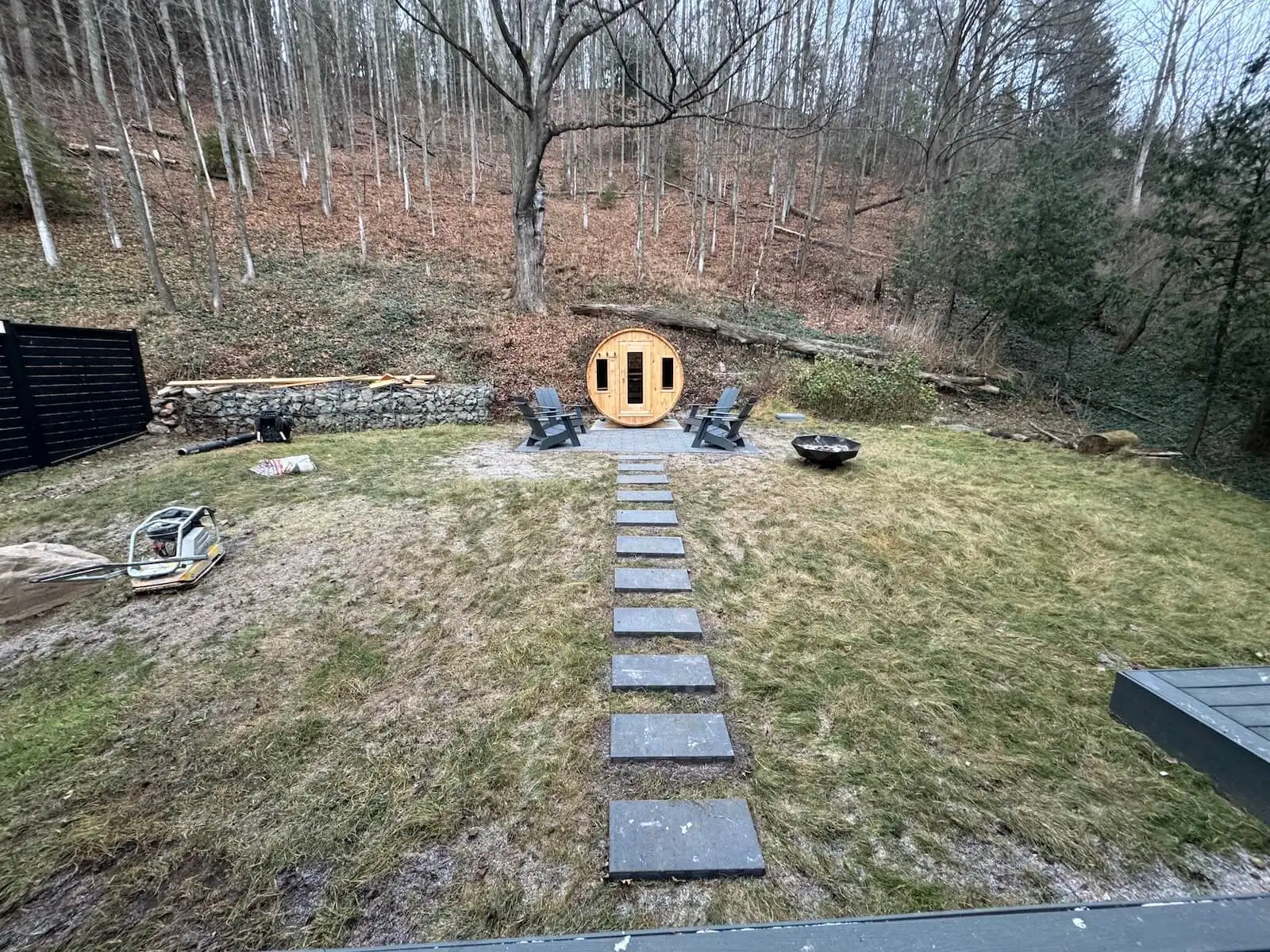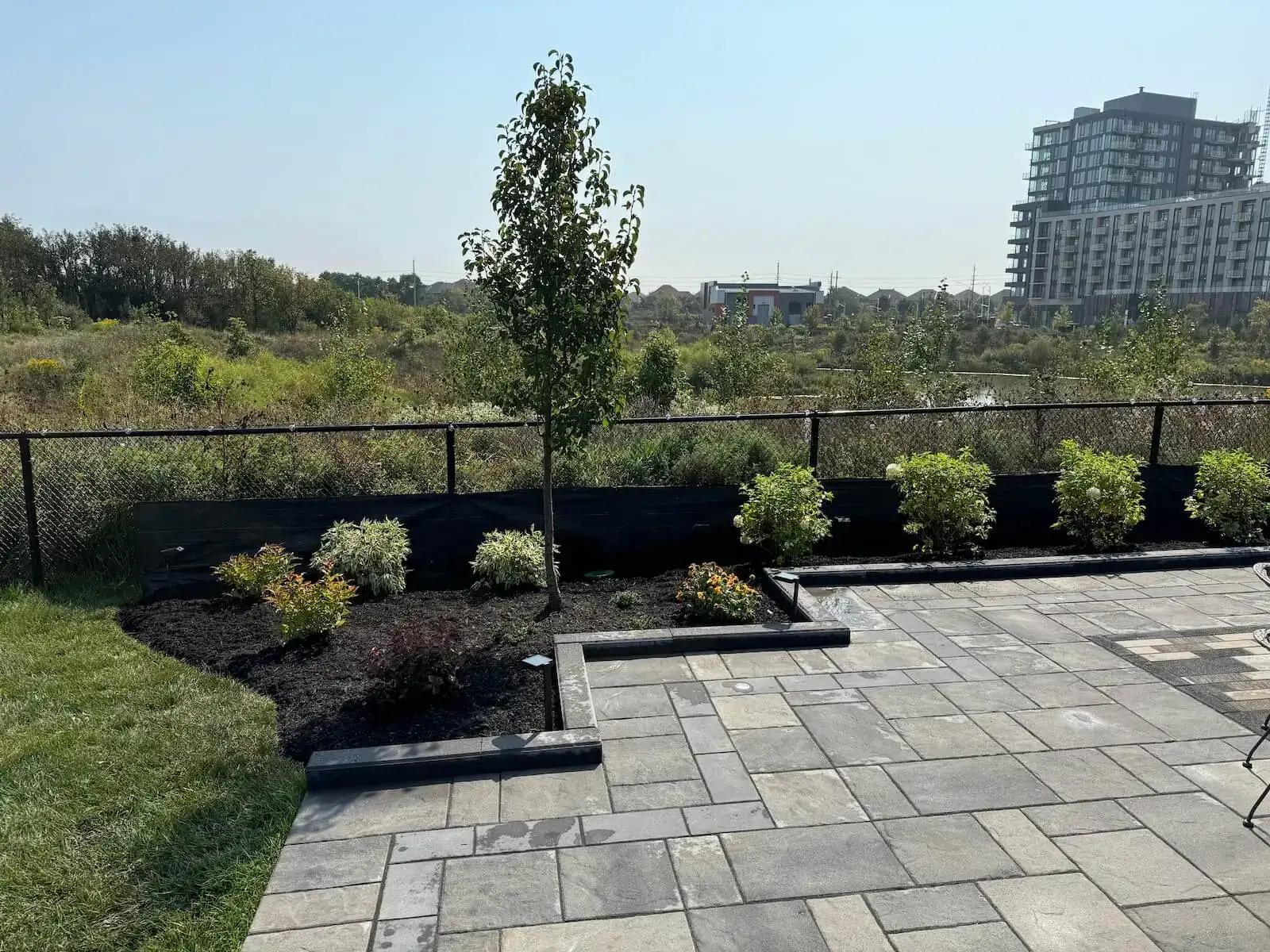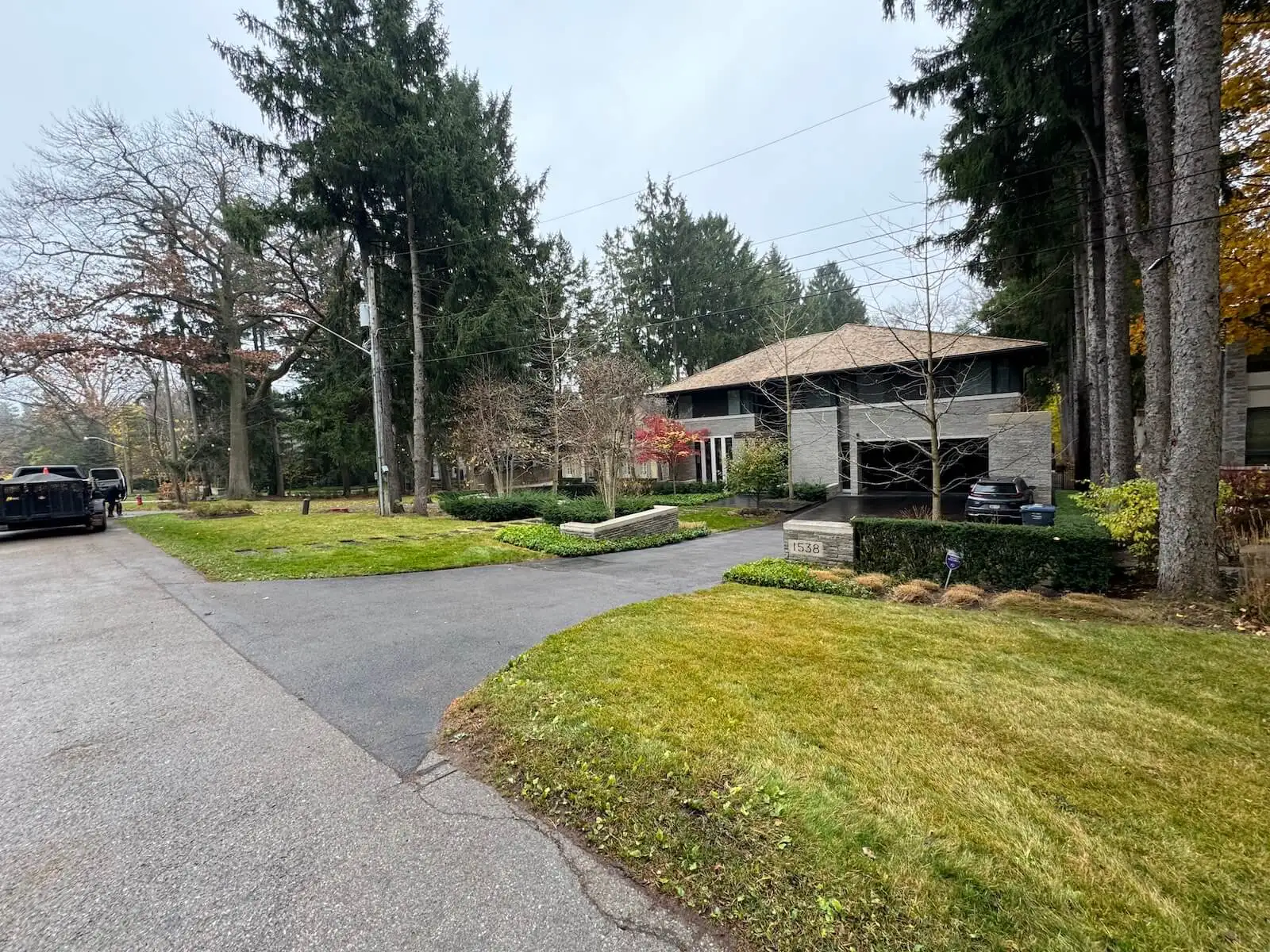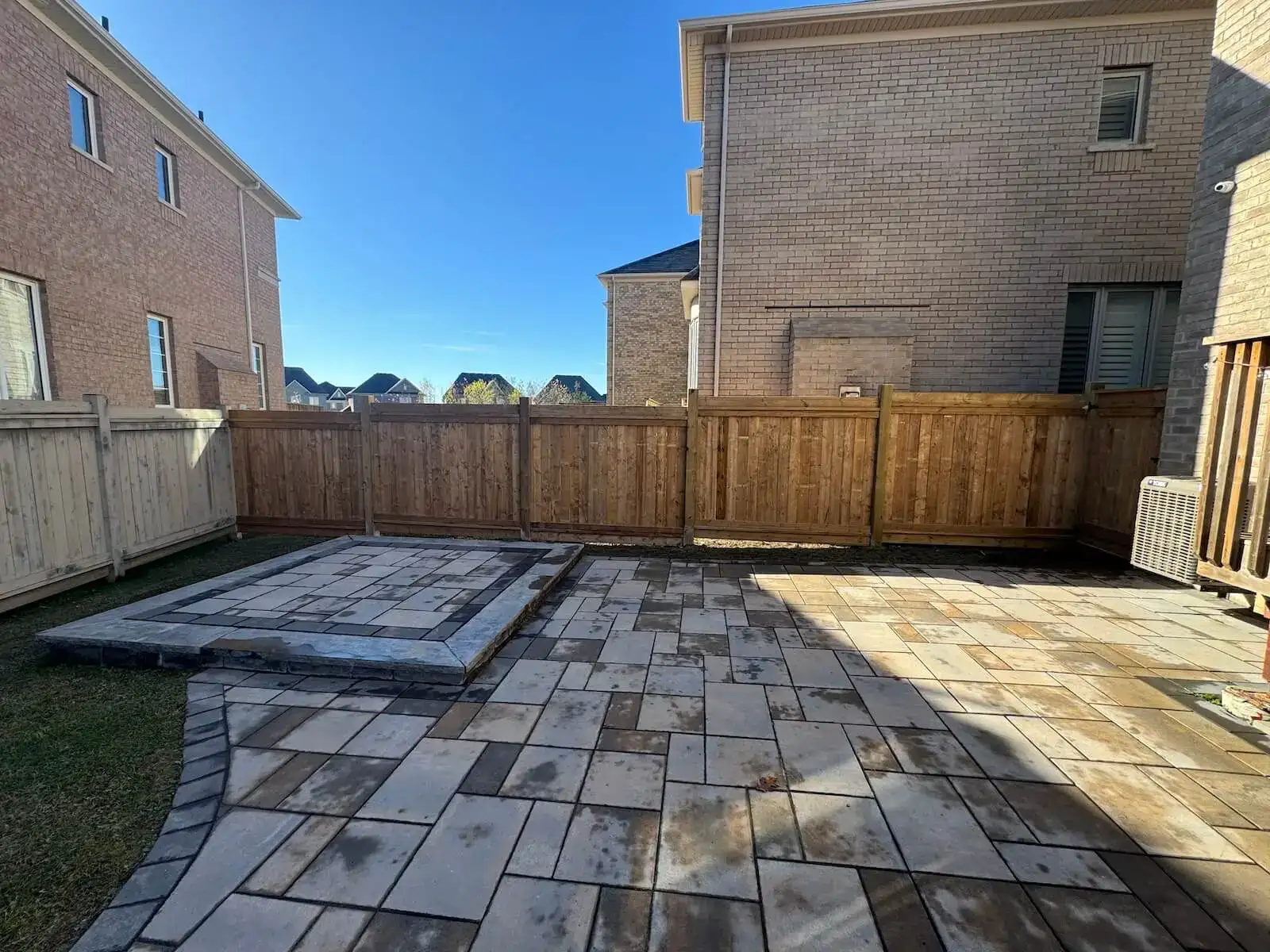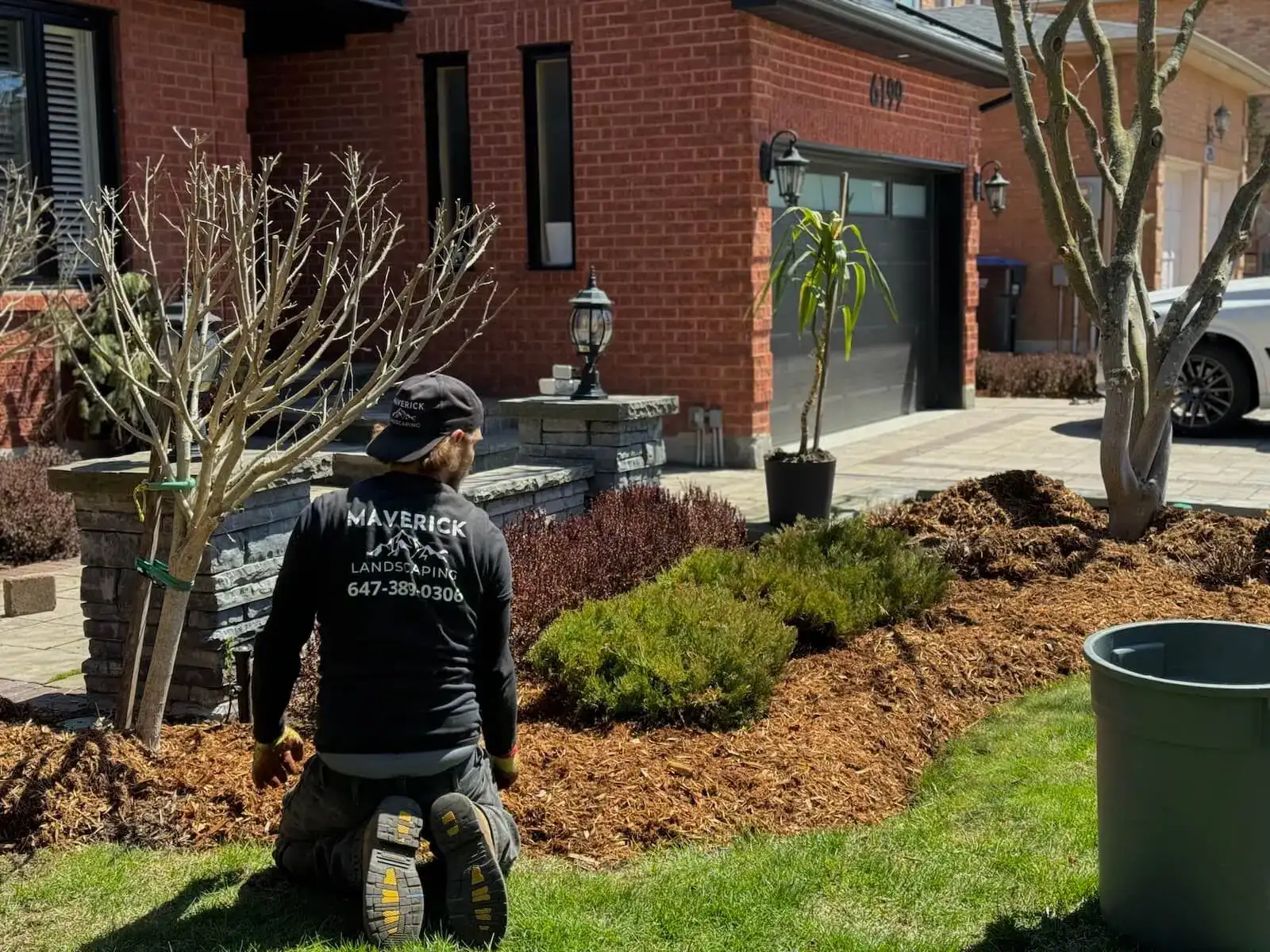









Most homeowners think small yards need small ideas. They’re wrong. The best terraced house backyard ideas use fewer moves, better layout, and tighter material choices so a narrow plot feels bigger, calmer, and easier to live with.
Quick answer: the best terraced house backyard ideas at a glance
The strongest terraced house yard ideas usually combine 8–10 simple moves rather than one big feature. The right mix depends on width, depth, sun, overlooking, access, drainage, and how much upkeep you will tolerate.
- Zone the yard into 2–3 clear uses instead of one flat rectangle.
- Put seating near the door and a focal point at the back.
- Use diagonal or offset paving to reduce the corridor feel.
- Pick one main surface if the plot is very small.
- Use no-grass finishes in shaded or heavy-use yards.
- Add vertical planting with trellis, wires, or climbers.
- Build storage into a bench or one side wall.
- Layer privacy at eye level around the seating zone first.
- Use fewer, larger pots instead of lots of small containers.
- Keep the colour palette to 2–4 tones so the yard reads bigger.
Start with the constraints: what makes terraced house yards tricky
Small terraced plots are hard because they usually squeeze 3–5 problems into one footprint. The common ones are narrow width, long depth, overlooking from upper windows, shade, damp corners, poor storage, and access only through the house on some properties.
Large-garden ideas usually fail here because they eat width fast. A pair of deep borders, a lawn strip, and loose furniture can make a 5–8 metre width feel tight in one afternoon.
A useful plan starts with four notes, not shopping. Measure the yard, track the sun for one full day, stand inside and mark the main sightlines, and decide the single most important use before buying anything.
Layout ideas that make a small terraced backyard feel bigger
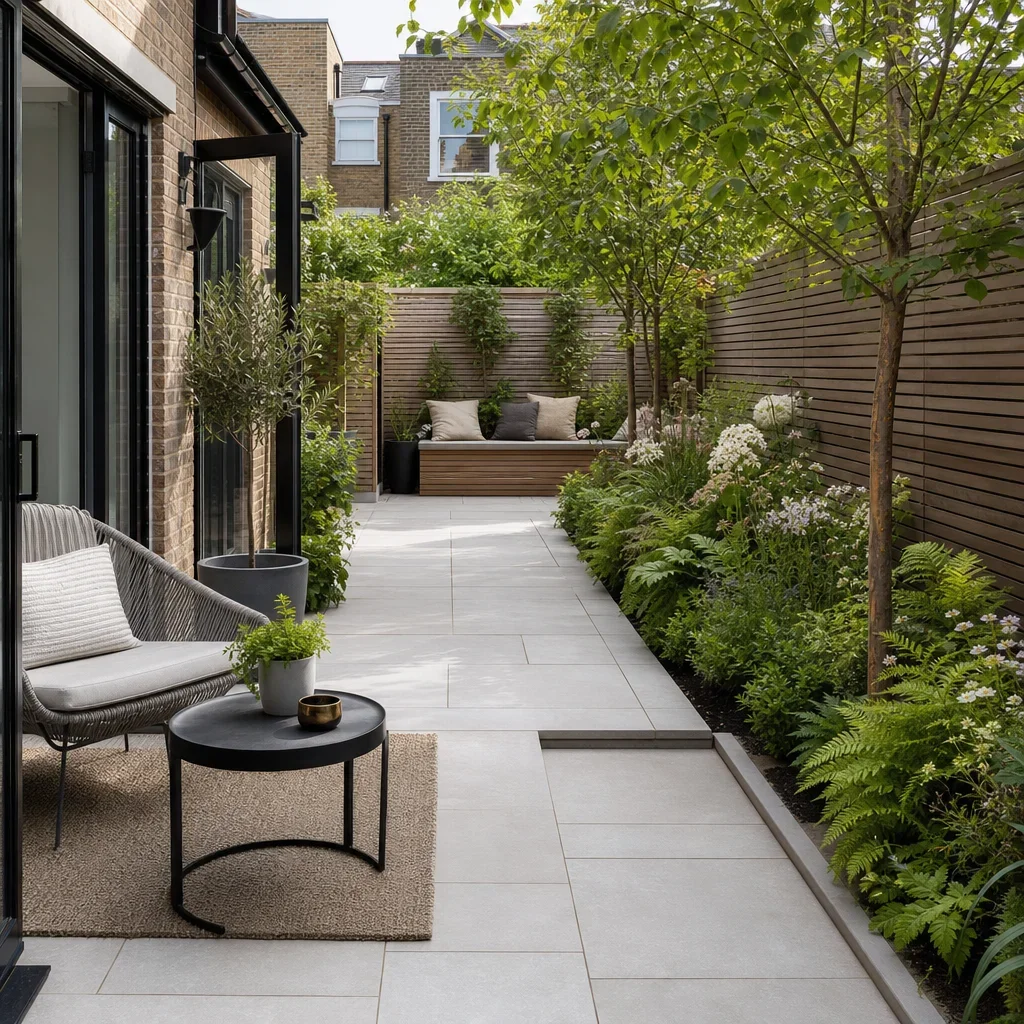
A small yard feels larger when the layout pulls your eye across and outward, not straight down the middle. I use 2–3 zones most often: a dining or coffee spot by the back door, a transition strip through the middle, and a planting or bench feature at the rear.
Diagonal paving can visually widen a narrow plot because it breaks the straight tunnel line. A 45-degree laying pattern is a standard visual trick in small-space design, but I only use it when the cut lines and material suit the yard.
Long, narrow plots read better when you offset the edges. A slim bed on one side, then a bench on the other, then a rear planting pocket works better than two matching side strips because symmetry often exaggerates the corridor effect.
Fewer, larger elements almost always beat lots of tiny ones in a micro plot. One bench, one large planter group, and one focal wall can do more than 12 scattered accessories.
Three layout templates cover most modern terraced house backyard ideas. A long narrow yard works well with offset zones and a rear focal point, a square plot benefits from curves or a corner bench, and a micro plot around 6×6 to 6×8 metres needs one seating area and concealed storage.
Terraced house backyard ideas by plot type
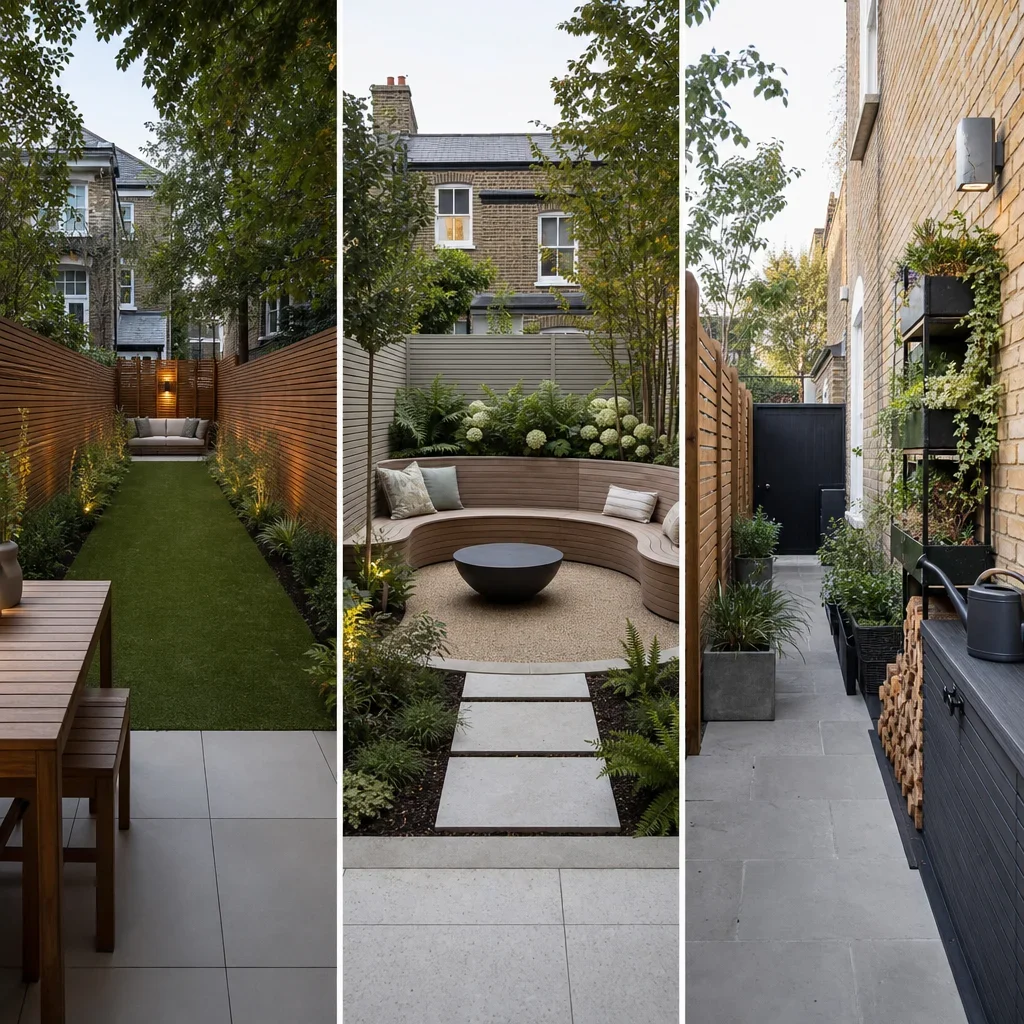
Long, narrow yards work best when the width does the visual work. Use paving lines that cross the space, keep borders slim, and stop the eye on one strong rear feature like a bench, small tree, or painted wall.
Square plots need movement more than width tricks. Circular tables, curved bed lines, and corner seating break up the boxy feel and give the space more energy.
Side-return spaces need wall-based design because floor area disappears fast. Slim paving, fold-down seating, wall planters, and one full-height storage wall make these awkward strips usable.
Tiny courtyard-style spaces need discipline more than decoration. The best simple terraced house yard ideas for these plots are one material, one seating style, one planting palette, and no dead corners.
Privacy ideas for overlooked terraced gardens
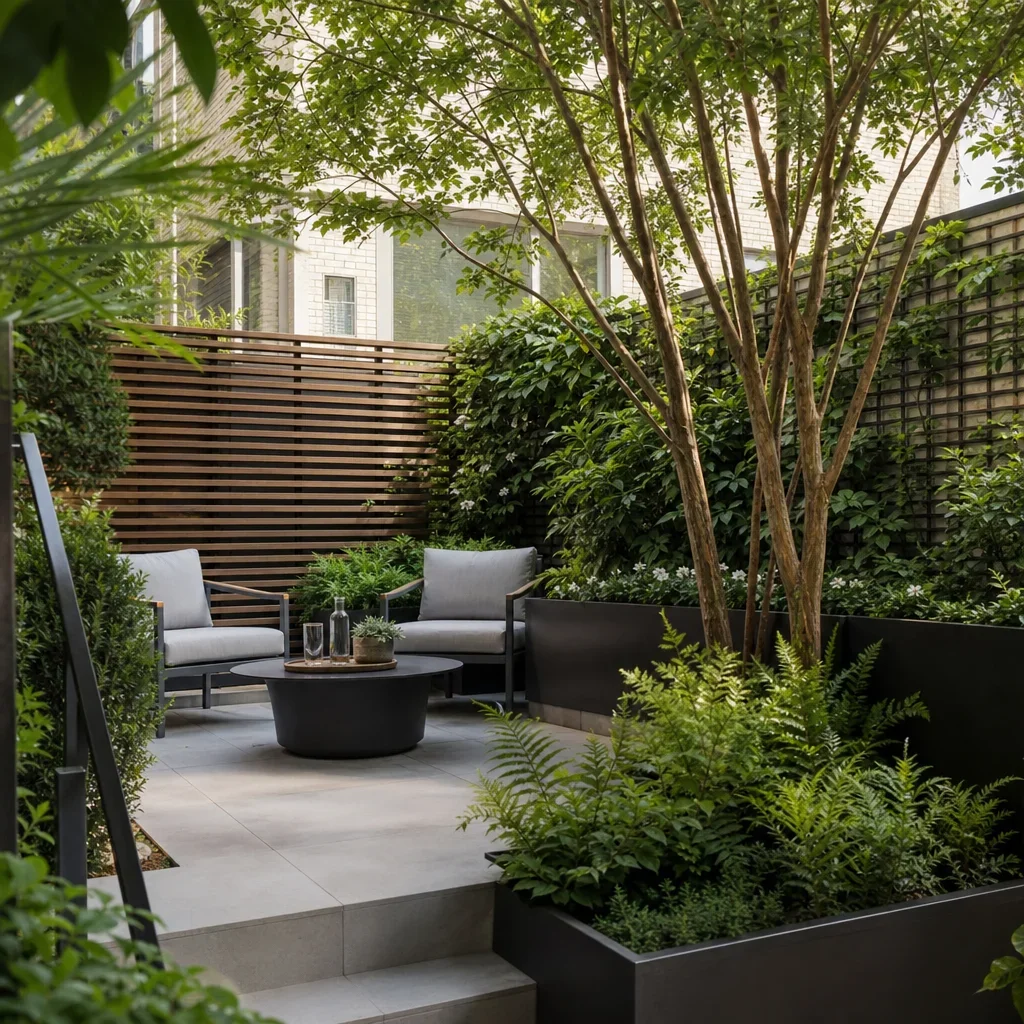
Privacy works best in layers, not one solid barrier. I start with the seating zone because that is where you actually feel exposed, then add boundary treatment, trellis, climbers, taller planting, or a pergola where it earns its place.
Blocking direct sightlines matters more than sealing every edge. A slatted screen, open trellis with climbers, or small multi-stem tree can interrupt upper-window views without turning the yard into a dark box.
Soft enclosure usually feels better than a wall of fencing. Climbers, tall containers, and trained plants at eye level create privacy while still letting light and air move through the space.
Sound is part of privacy too. Dense planting, textured timber, and a small water feature can soften street or neighbour noise, though none of them truly soundproof a yard.
Rules for fences, screens, pergolas, and raised features are location-specific, and the local authority confirms what applies to your property. Anything structural, unusually tall, or close to a boundary should be checked before you build.
The best materials for a terraced house yard: patio vs decking vs gravel vs lawn
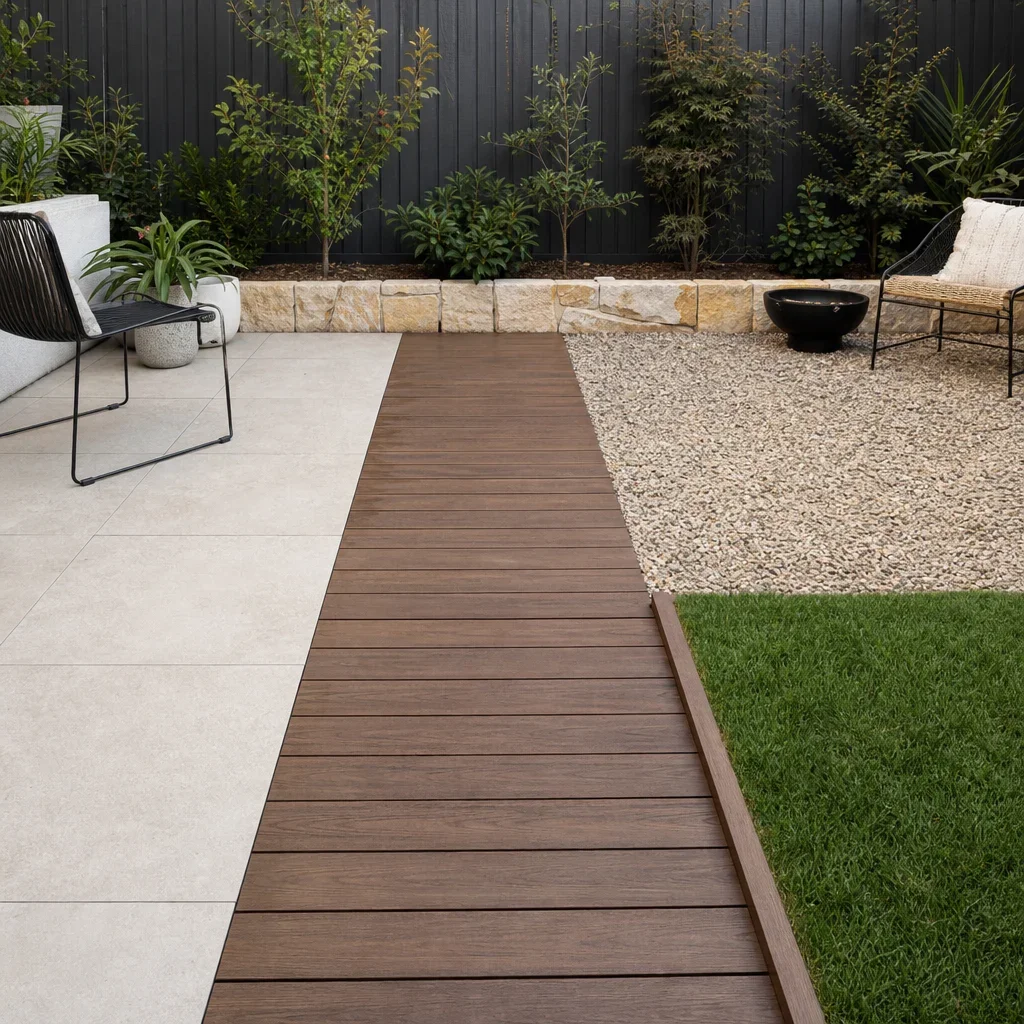
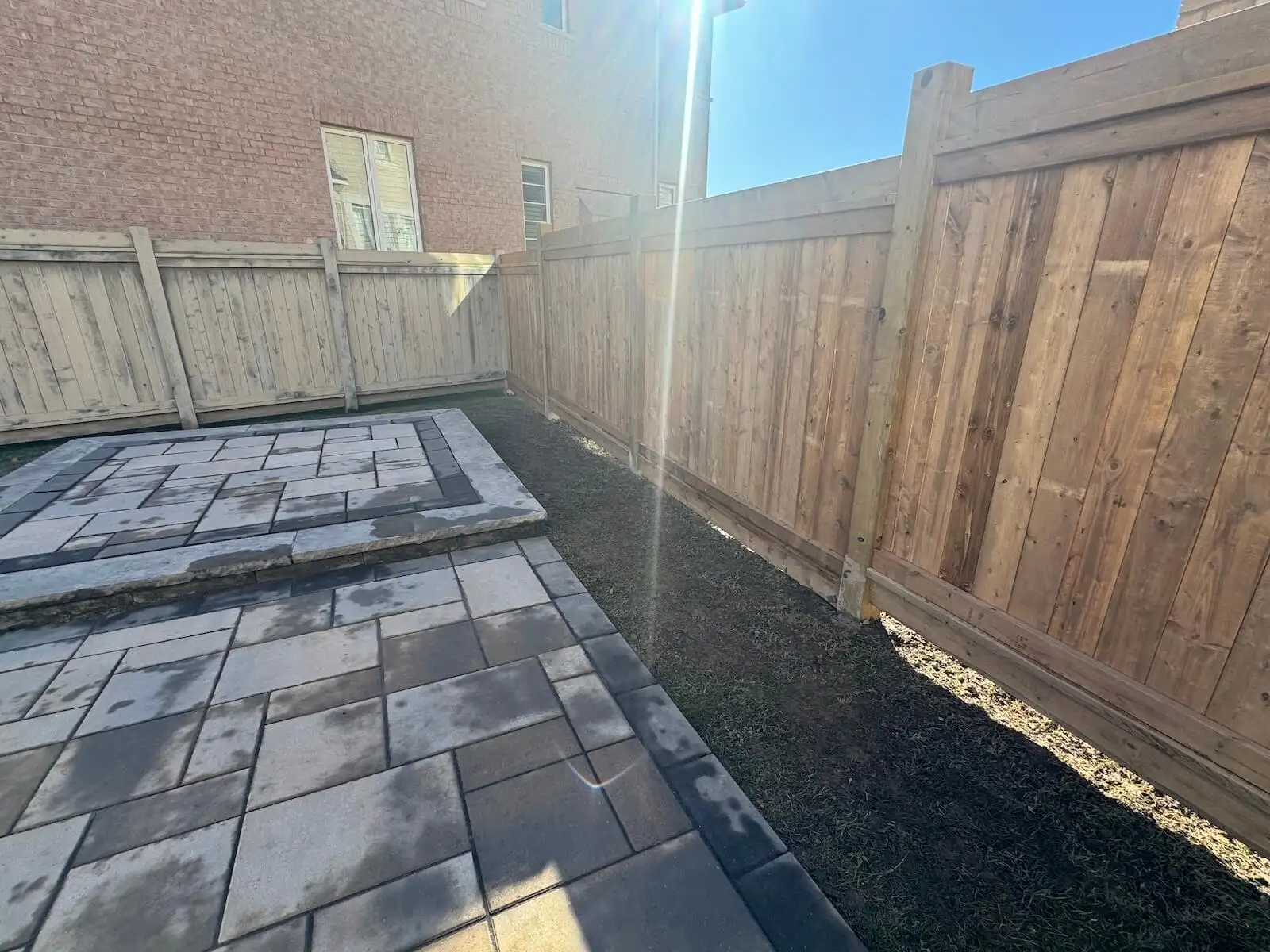
No one surface is always best, but patios and paving solve the most problems in small urban yards. They stay usable in wet weather, support furniture well, and suit both classic and modern terraced house yard ideas.
Decking feels warmer underfoot than stone, but it needs more maintenance and can become slippery in shade if detailing is poor. I also avoid raising it without reason because added height can complicate thresholds, drainage, and edge detailing.
Gravel is one of the strongest terraced house backyard ideas no grass when the budget is tight and drainage matters. It is forgiving, visually soft, and easy to phase, but loose gravel is less comfortable for dining chairs and can migrate into the house.
A small lawn only makes sense when you truly want soft play space or a green look that paving cannot replace. In narrow shaded yards, grass often struggles because wear, shade, and damp soil work against it.
Permeable pavers and free-draining gravel help water soak through the surface instead of pooling. That matters in compact plots where hardscape takes up most of the yard and runoff has fewer places to go.
Mixing two materials can help zoning, but mixing three or four usually makes a tiny yard look busy. In most small plots, a low, mid, and high budget choice is enough for decision-making: gravel or simple slabs at the low end, concrete or standard pavers in the middle, and porcelain or premium stone at the upper end.
| Surface | Budget band | Maintenance | Drainage | Comfort | Best use |
|---|---|---|---|---|---|
| Patio or paving | Mid to high | Low to medium | Good if detailed properly | Firm underfoot | Dining, lounging, modern layouts |
| Decking | Mid to high | Medium | Needs careful detailing | Warm underfoot | Raised thresholds, softer look |
| Gravel | Low to mid | Low to medium | Very good | Less stable for chairs | Budget refresh, informal style |
| Small lawn | Low to mid install, higher upkeep over time | Medium to high | Variable by soil and shade | Softest surface | Kids, pets, green look |
Planting ideas by sunlight and maintenance level
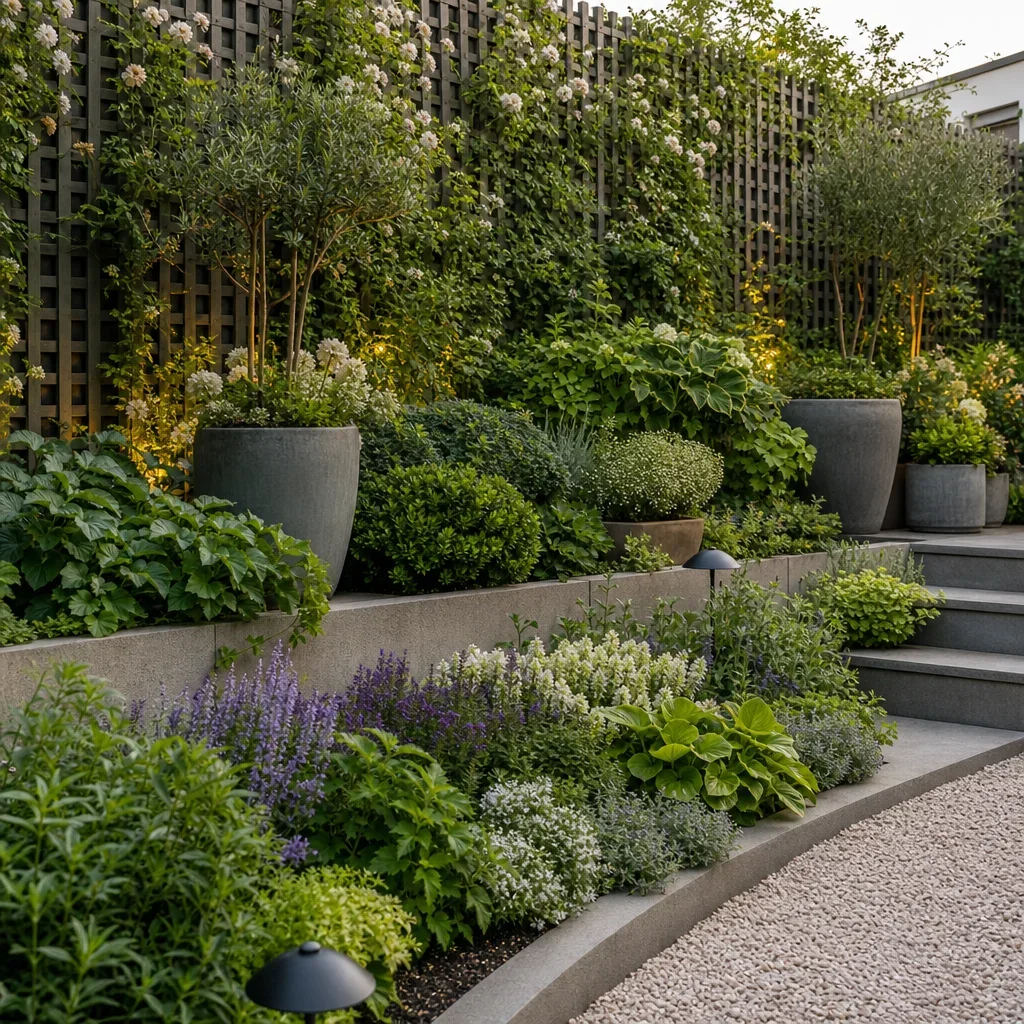
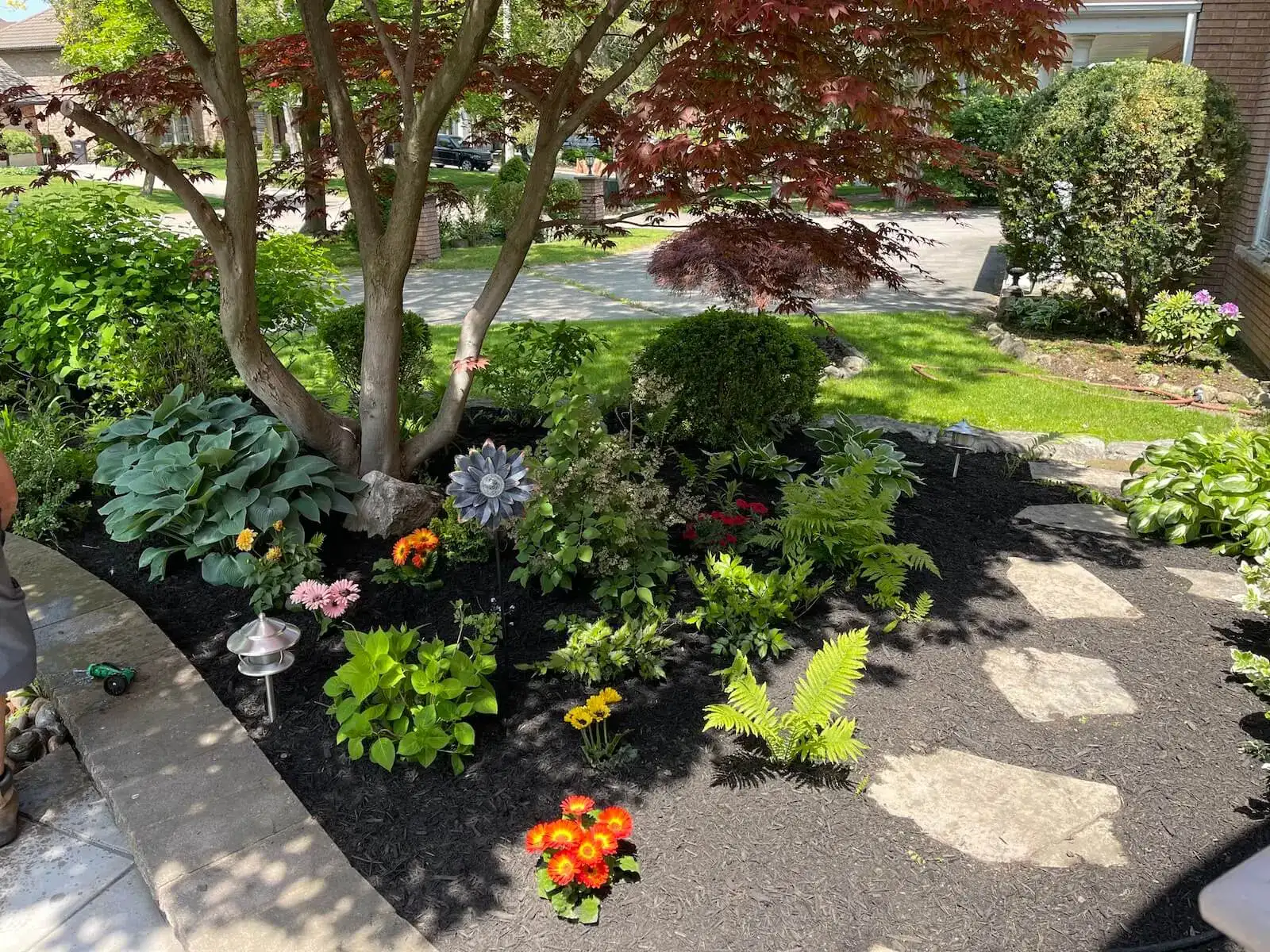
Planting works best when structure comes first. I build small gardens with an evergreen backbone, then climbers for height, then seasonal plants for colour so the yard still looks finished in winter.
Full-sun yards suit tougher, cleaner planting palettes. Good options include lavender, salvia, nepeta, rosemary, allium, sedum, and ornamental grasses, usually in groups of 5–8 repeating plants rather than one-offs.
Part-shade plots need plants that hold shape without sulking. Heuchera, hydrangea, astrantia, geranium, fern, skimmia, and hakonechloa are useful because they give colour, texture, and season without needing constant replacement.
North-facing or heavily shaded yards still have strong options. Ferns, hosta, hellebore, ivy, sarcococca, japonica types, and shade-tolerant climbers are dependable choices, though slugs and damp soil can be bigger issues here.
Privacy planting should layer height from low to high instead of making one thick hedge. Climbers on trellis, taller shrubs in large containers, and one small feature tree can screen views while keeping the footprint light.
Large pots are usually better than many tiny ones in small terraced house garden ideas. They dry out more slowly, look calmer, and give roots enough room to hold up through summer stress.
For GTA readers, I still design to Zone 5/6 hardiness because winter survival matters as much as summer colour. Material and plant choices that look fine in a mild climate can fail here after one freeze-thaw season.
Vertical planting and wall ideas that save floor space
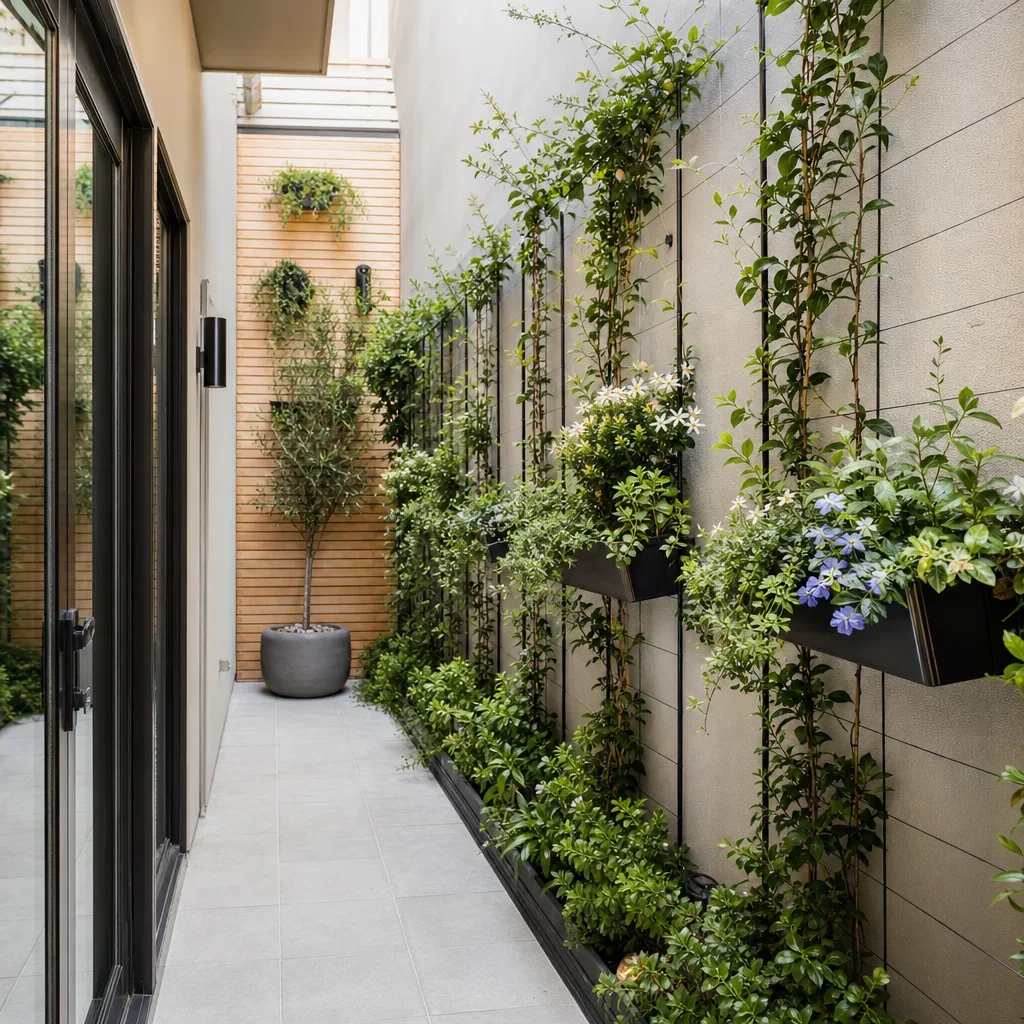
Vertical planting is one of the best ways to add softness without sacrificing usable width. Trellis panels, wire systems, climbers, espalier forms, and wall planters all shift greenery onto vertical surfaces where a narrow yard can afford it.
Trellis and cable systems are the most practical DIY terraced house backyard ideas for renters or budget-conscious owners with permission. They are lighter, cheaper, and easier to phase than building deep raised beds along both sides.
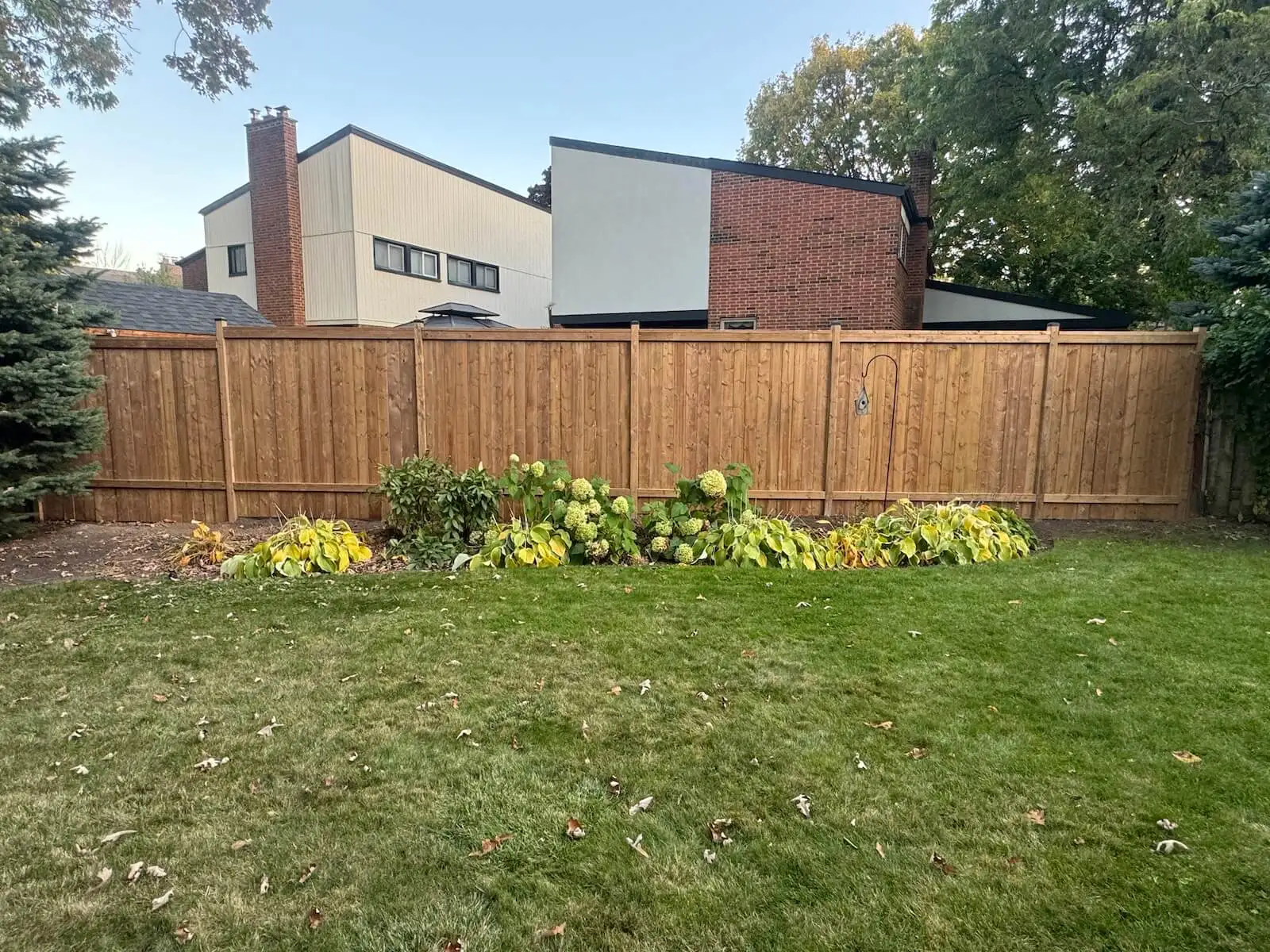
Climbers can do three jobs at once. They add privacy, soften hard boundaries, and make a short fence feel taller without adding a bulky structure in front of it.
Overloading both sides with raised planters usually backfires in a tight yard. I have seen 600–900 millimetre deep beds on each side leave almost no comfortable circulation in the middle.
Any wall-mounted system needs suitable fixings and a sound surface. If you are adding heavy shelving, masonry anchors, or large loaded planters, the wall condition matters more than the planter style.
Seating, dining, and storage for tiny terraced backyards
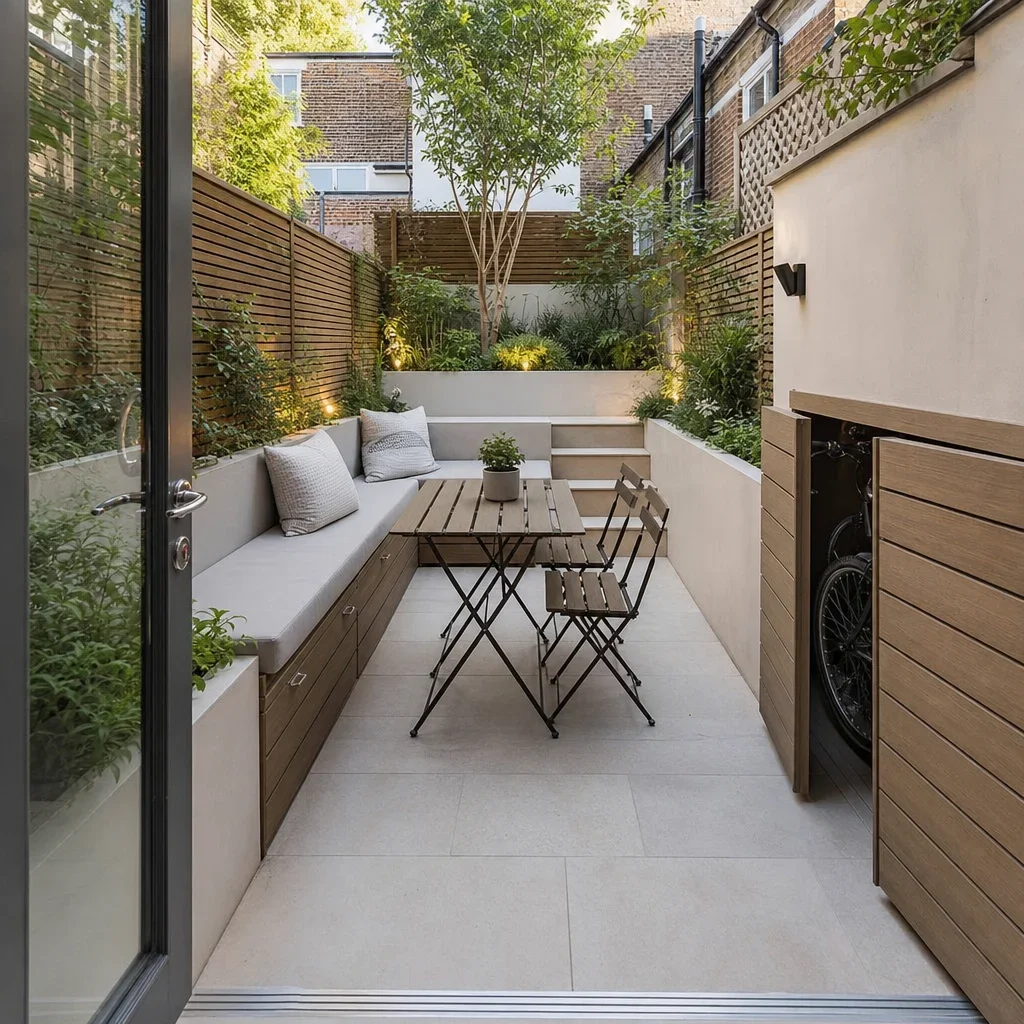
Built-in bench seating is usually the hardest-working move in a tiny yard. It can seat more people than loose chairs, define the layout, and hide storage for cushions, toys, or garden tools in the same footprint.
Foldable furniture works best when the yard has to switch functions fast. A bistro set, slim bench, or stackable dining chairs can free circulation space the moment you are done using them.
Storage should sit on one side or one end, not in little pieces all over the yard. Bike storage, bin screening, and a bench-height box look better when they read as one built element.
Clear circulation matters more than people think. A straight, usable route from the back door to the rear of the garden keeps a small yard feeling practical even when the footprint is tight.
Pet-friendly and child-friendly layouts need durable surfaces, secure boundaries, and plant choices that suit where people actually move. Thorny plants, unstable stepping stones, and deep water features are poor choices right beside play routes.
Budget-friendly and DIY terraced house backyard ideas
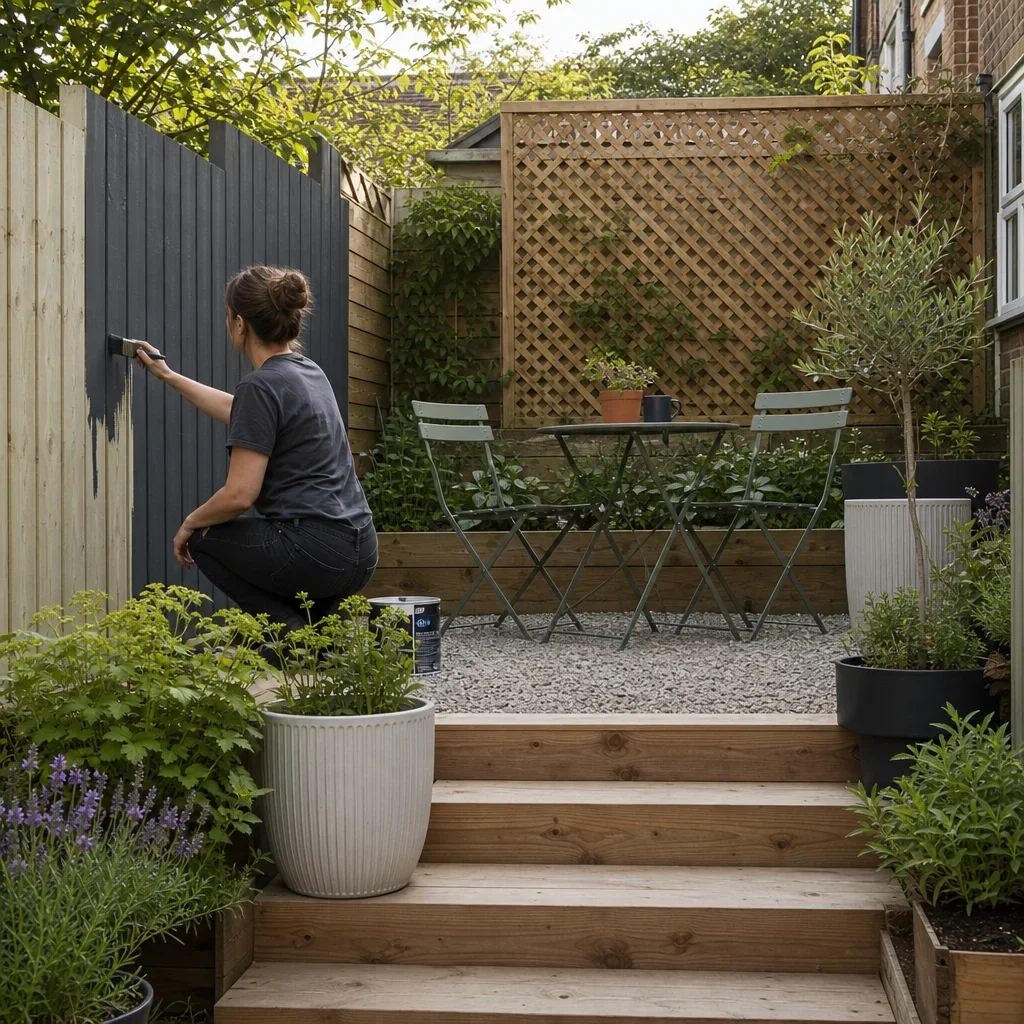
The cheapest wins usually come from layout, paint, and planting, not from adding more stuff. For terraced house backyard ideas on a budget, start with privacy, one surface, and a tighter furniture plan before spending on premium finishes.
Low-budget upgrades are usually cosmetic but effective. Fence paint, grouped pots, gravel, climbers, plug-in or solar lighting, and a simple DIY bench can change the feel of a yard in one weekend to a few weeks.
Medium-budget upgrades usually improve function as well as looks. A small patio refresh, a planter-bench combo, new screening, and cleaner lighting can make the yard work better every day.
Higher-budget work usually starts when drainage, levels, retaining, or full hardscape replacement enters the picture. That is where design-build planning matters because access, waste removal, and hidden ground conditions start driving cost.
Phasing is the smartest budget move in small gardens. I would rather see a homeowner complete the yard in 2–3 clear stages than buy six mismatched fixes that all get ripped out later.
Low-maintenance ideas that still look designed
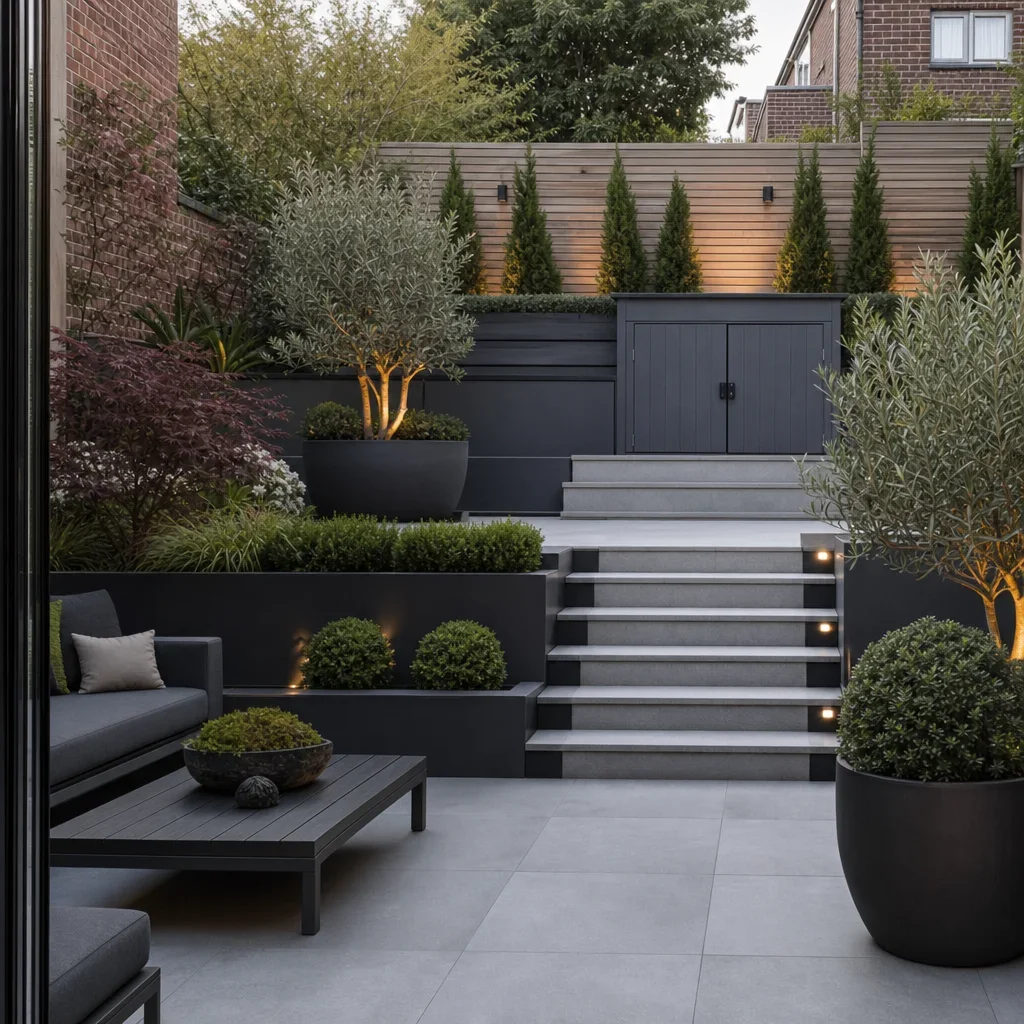
Low maintenance means reducing chores, not eliminating them. Even the best low maintenance terraced house yard ideas still need sweeping, pruning, feeding, drain checks, and occasional refresh work through the year.
No-grass schemes are often the best answer for tiny urban yards. Paving, gravel, evergreen structure, and larger containers cut mowing, edge trimming, muddy patches, and reseeding.
Simple palettes are easier to maintain and usually look better longer. Repeating 3–5 plant types, using one or two surface materials, and choosing easy-clean furniture keeps the yard controlled instead of busy.
Storage is maintenance control in disguise. If cushions, toys, tools, and hoses have a place to disappear, the yard looks tidier all year with less effort.
A light-touch seasonal checklist is usually enough for a well-planned yard.
- Spring: prune winter damage, feed containers, top up mulch, and clear drains.
- Summer: deadhead, water pots deeply, sweep hardscape, and tie in climbers.
- Autumn: cut back where needed, clear leaves, protect tender pots, and check joints or boards.
- Winter: inspect drainage, tidy storage, brush slippery surfaces, and plan next season’s edits.
Style directions: modern, cottage, Mediterranean, urban jungle, and minimalist
Five style directions cover most modern terraced house backyard ideas and classic alternatives without overcomplicating the design.
Modern style suits small plots because it uses restraint well. Large-format paving, slatted screens, architectural planting, and a tight palette make the space read clean and wider.
Cottage-soft urban style works when you want warmth over sharp lines. Painted fences, brick or gravel details, climbers, and looser mixed planting make a terraced yard feel softer and more lived in.
Mediterranean-inspired schemes rely more on mood than strict climate copying. Warm paving tones, terracotta pots, olive-look forms, herbs, and sun-loving textures can work if the plant choices are realistic for your region.
Urban jungle style uses layered foliage and dark backdrops to create enclosure. It suits overlooked plots well because dense leaves, climbers, and moody lighting make the yard feel cocooned.
Minimalist design is about editing, not emptiness. One bench, one strong material, and evergreen planting can make a tiny yard feel expensive without filling it up.
Real example layouts: before-and-after style plans for terraced yards
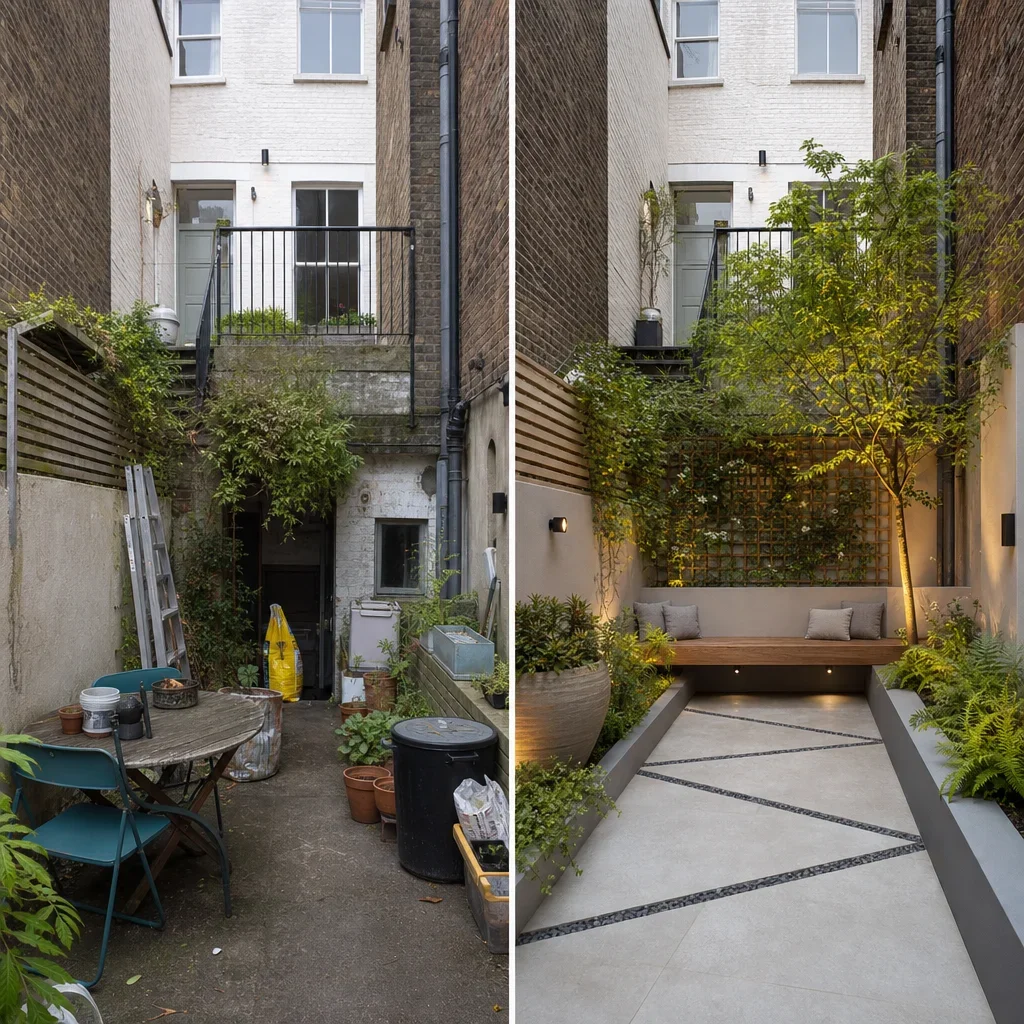
A long narrow overlooked yard can be fixed with geometry and privacy, not more features. One layout I would use is diagonal paving, a bench at the rear boundary, trellis with climbers on one side, and one statement multi-stem tree to stop direct views from upper windows.
A no-grass low-maintenance yard works best when the materials carry the design. Porcelain or concrete-look paving, one raised bed, slim storage, layered lighting, and evergreen planting give a small plot year-round structure without a lawn.
A budget DIY refresh can still feel planned. Painted fences, a gravel zone, grouped large pots, a foldable bistro set, and one trellis privacy screen solve the main problems without pretending to be a full rebuild.
The pattern in all three is the same. They solve 3 core issues first, usually layout, privacy, and clutter, before they add decorative extras.
Practical checks before you build: access, drainage, levels, and permissions
Access can change the entire job scope in a terraced property. If every slab, timber length, soil bag, and waste bin has to pass through the house, labour time, protection work, and material choice all change.
Drainage matters more in small hardscaped yards because there is less room for error. Finished surfaces should fall away from the house, and permeable options can help where runoff and pooling are a concern.
In Toronto, a minimum 1.5% slope is a known lot-grading benchmark in some residential contexts, but the City confirms what your lot needs and whether a lot-grading plan applies.
Level changes need design before materials. A sloped plot may need regrading, steps, or a retaining wall, and anything structural or permit-triggering is priced separately because soil, height, and drainage loads matter.
Permissions are not one-size-fits-all. Fences, pergolas, drainage changes, front-yard paving, taller screens, and raised structures can all trigger location-specific rules, so local planning guidance or municipal review should come first.
Nine times out of 10 a failed patio comes back to bad base prep or drainage. I have torn out frost-heaved pavers where the surface stone looked fine, but the compacted base underneath was too thin, too wet, or pitched the wrong way.
Front garden ideas for terraced houses that improve kerb appeal
The front garden should be tidy, durable, and easy to maintain because it gets used hard. Neat paving, controlled planting, screened bins, clear house numbers, and one or two seasonal containers do more than an overcrowded border.
A front garden looks better when it matches the logic of the backyard. Repeating one material tone or planting style makes the whole property feel more considered, even if the spaces are very different in size.
Drainage matters at the front as much as the back if paving replaces planting. Local rules can affect front-yard hardsurfacing and access changes, so check before covering everything in non-permeable material.
What adds value and what to avoid in a terraced house backyard
Usable, attractive, low-maintenance outdoor space usually adds appeal, but no honest contractor should promise a fixed return. What helps most is a yard that feels easy to use, easy to maintain, and free of obvious defects.
The features that tend to help are practical ones. Good drainage, a proper seating area, privacy where you sit, tidy storage, lighting, healthy boundaries, and coherent materials all make a property show better.
The features that drag a yard down are usually visible failures. Broken paving, pooling water, clutter, unsafe level changes, rotting timber, and neglected planting suggest future cost to the next owner.
If you want value from a redesign, build for broad use. A clean patio, slim storage, and simple planting usually age better than highly custom features that only suit one household.
FAQ
What are the best terraced house backyard ideas for a small space?
The best ideas are zoning, built-in seating, vertical planting, one clear focal point, no-grass surfaces where appropriate, layered privacy, and concealed storage. In most small plots, 2–3 strong moves beat a long list of little ones.
How do I make a narrow terraced garden look wider?
Use diagonal or crosswise paving lines, offset the borders, avoid a straight central runway, and place a focal point at the back. Keep the palette tight and use fewer larger items so the eye reads the whole width at once.
What is the best low-maintenance surface for a terraced house yard?
Patio paving and gravel are usually the easiest low-maintenance options. The better choice depends on whether you need stable dining space, stronger drainage, or the lowest upfront cost.
What can I use instead of grass in a small terraced backyard?
Paving, gravel, permeable pavers, raised planting, or a full no-grass scheme with pots and climbers all work. Shaded, damp, or heavy-use plots often function better without a lawn.
How do I add privacy to an overlooked terraced garden?
Start around the seating zone, then layer screens, trellis, climbers, and taller planting to interrupt direct views. Soft screening usually works better than trying to make every boundary solid.
Which plants suit a north-facing terraced house garden?
Ferns, hellebores, hostas, ivy, skimmia, and other shade-tolerant plants usually perform well. The real constraint is often dampness and slug pressure, not just lack of sun.
Can I redesign a terraced backyard if there is no side access?
Yes, but access changes labour, waste handling, and material choice. On these jobs, I design around transport through the house, smaller equipment, and realistic staging.
What are the cheapest ways to improve a terraced house backyard?
Fence paint, grouped containers, gravel, climbers, better lighting, decluttering, and one compact seating setup usually give the fastest visual gain. Start with privacy and layout before decorative extras.
What adds the most value to a backyard?
Usability usually matters more than luxury. A clean seating area, good drainage, privacy, lighting, and low-maintenance finishes tend to help more than novelty features.
What should I check before adding a fence, pergola, or raised structure?
Check local planning or municipal rules, boundary conditions, drainage impact, and whether the feature becomes structural. If levels, retaining, or major fixings are involved, get the design right first.
If you’re sketching ideas now, start with a measured plan, a short must-have list, and one honest budget range. That will tell you very quickly which simple terraced house backyard ideas, privacy upgrades, and material choices actually fit your yard.