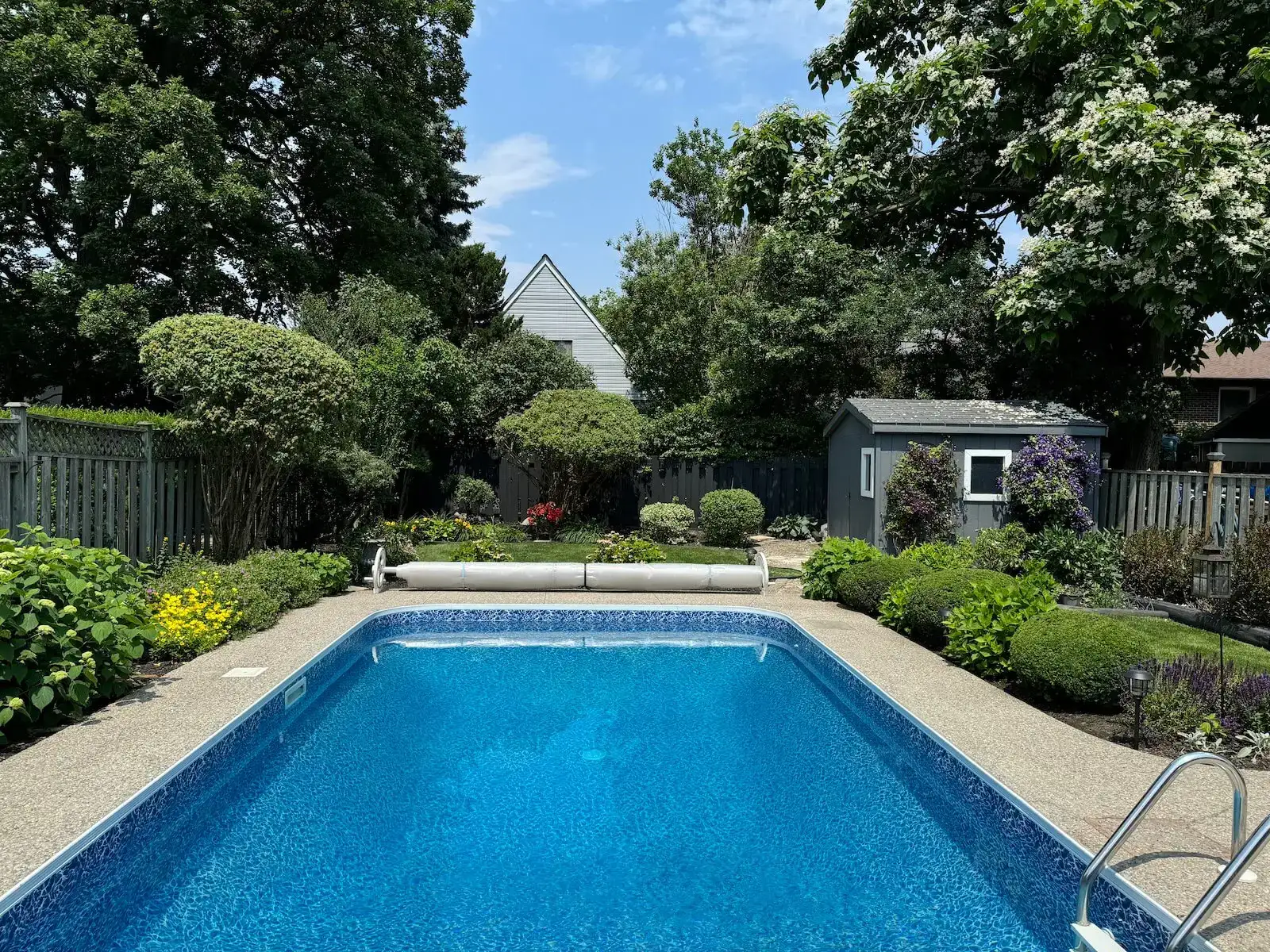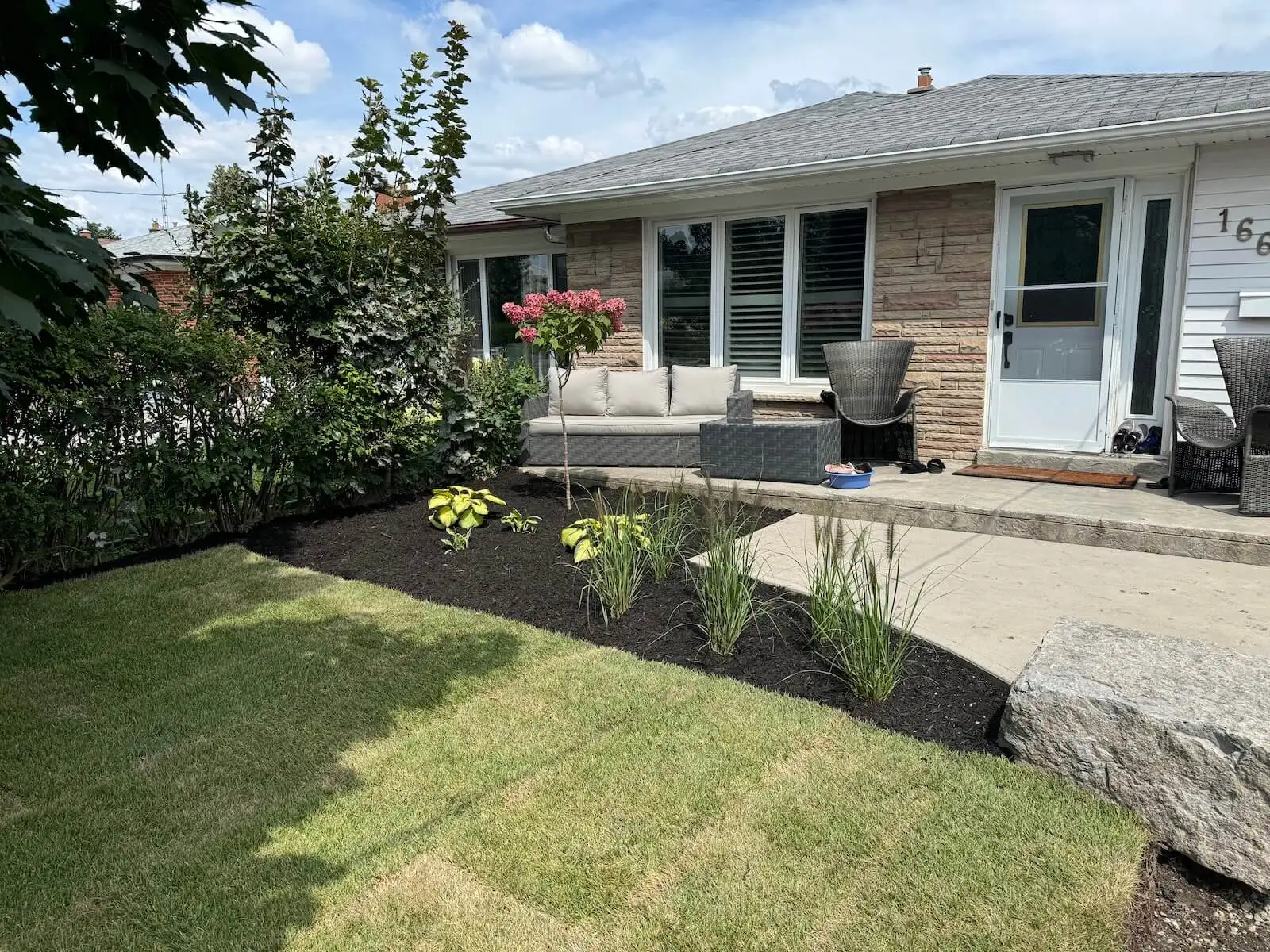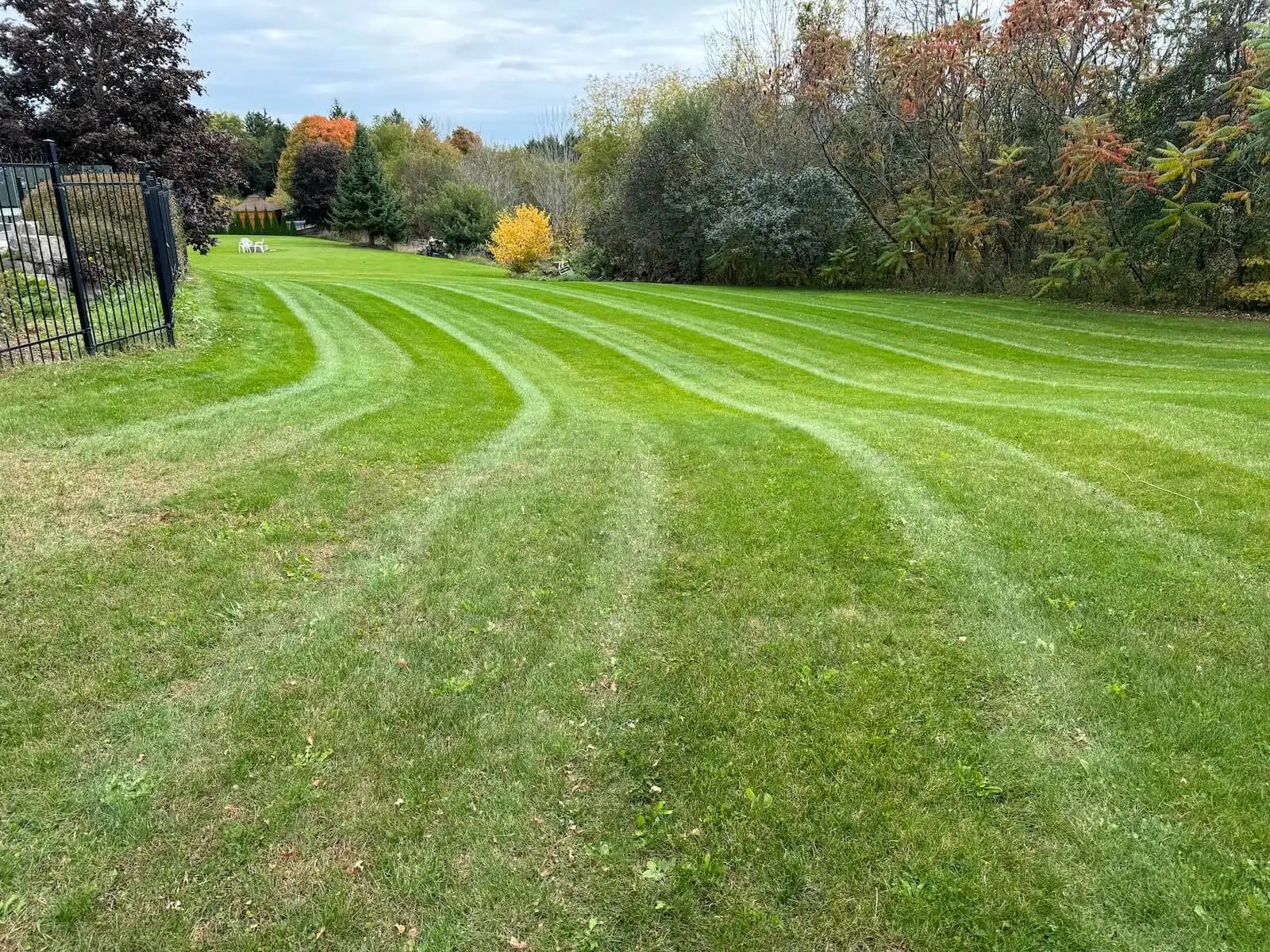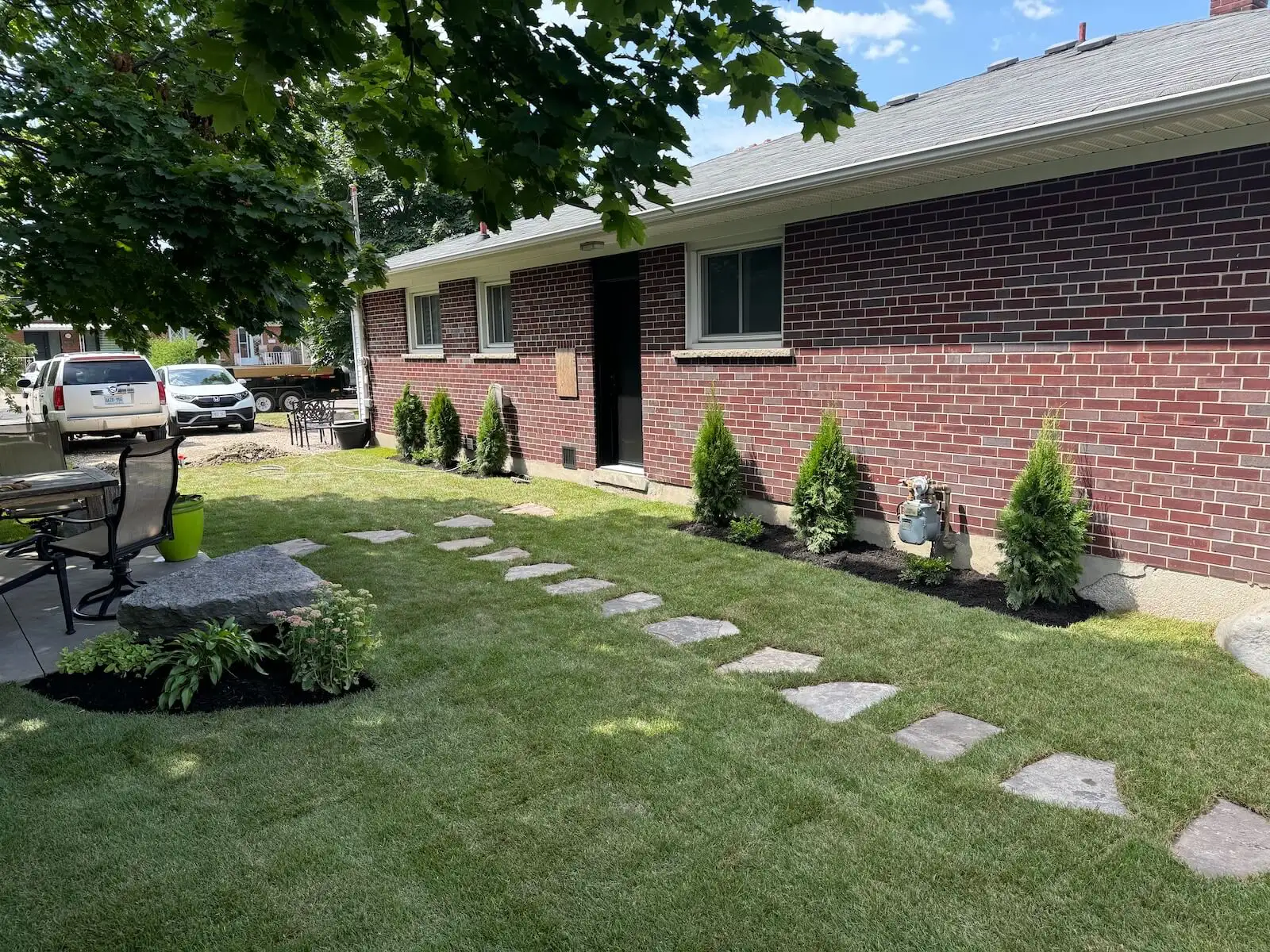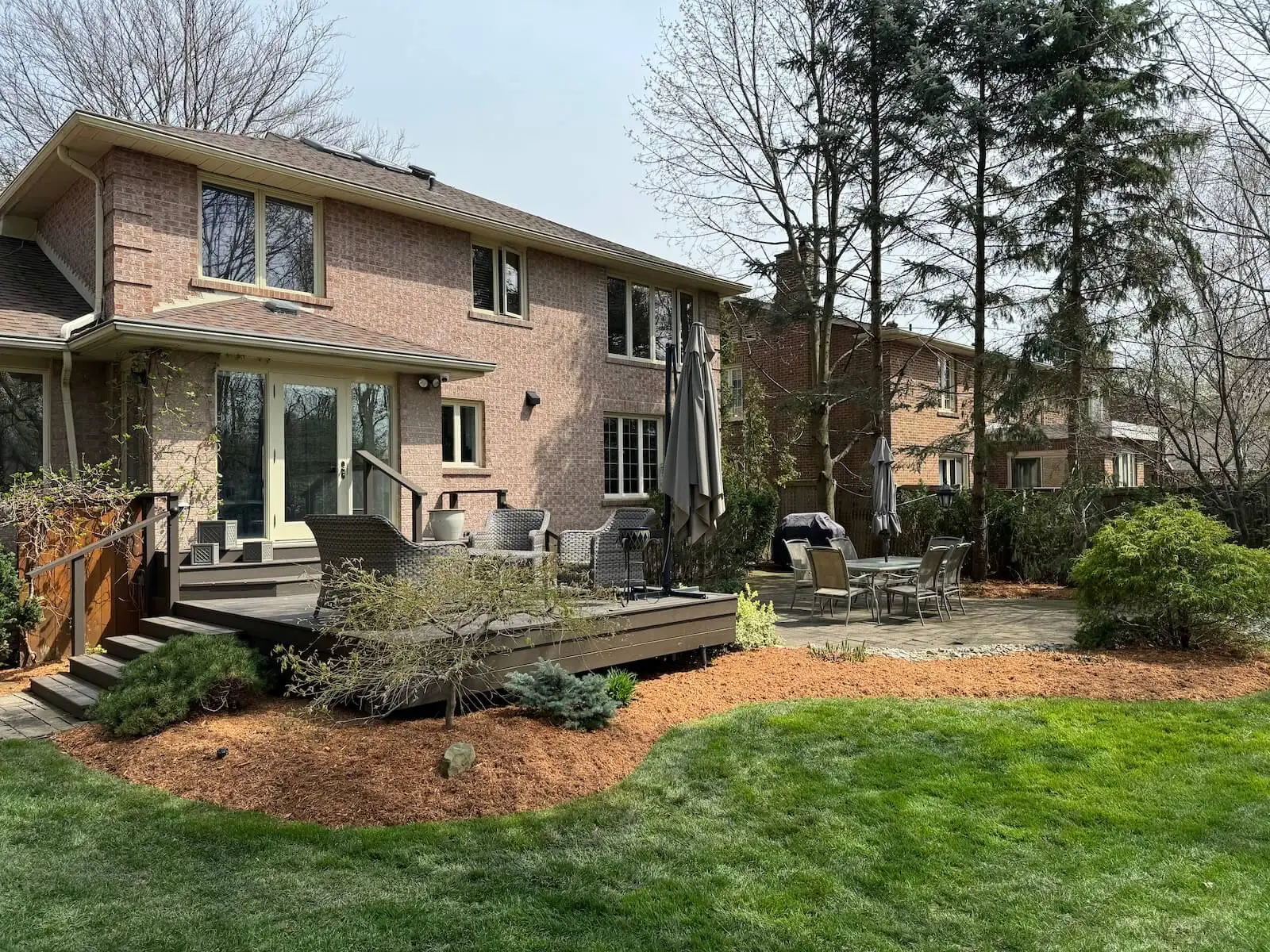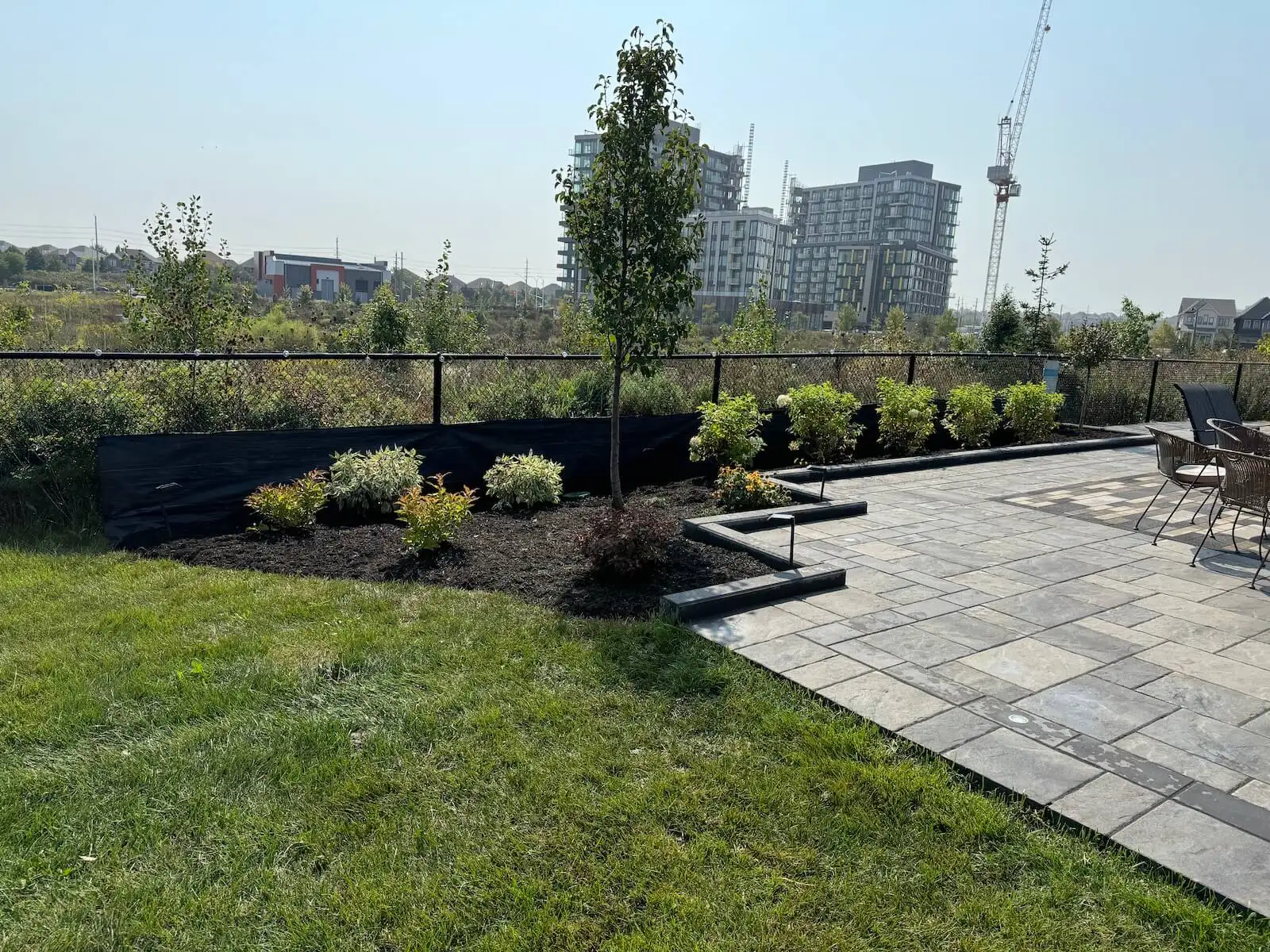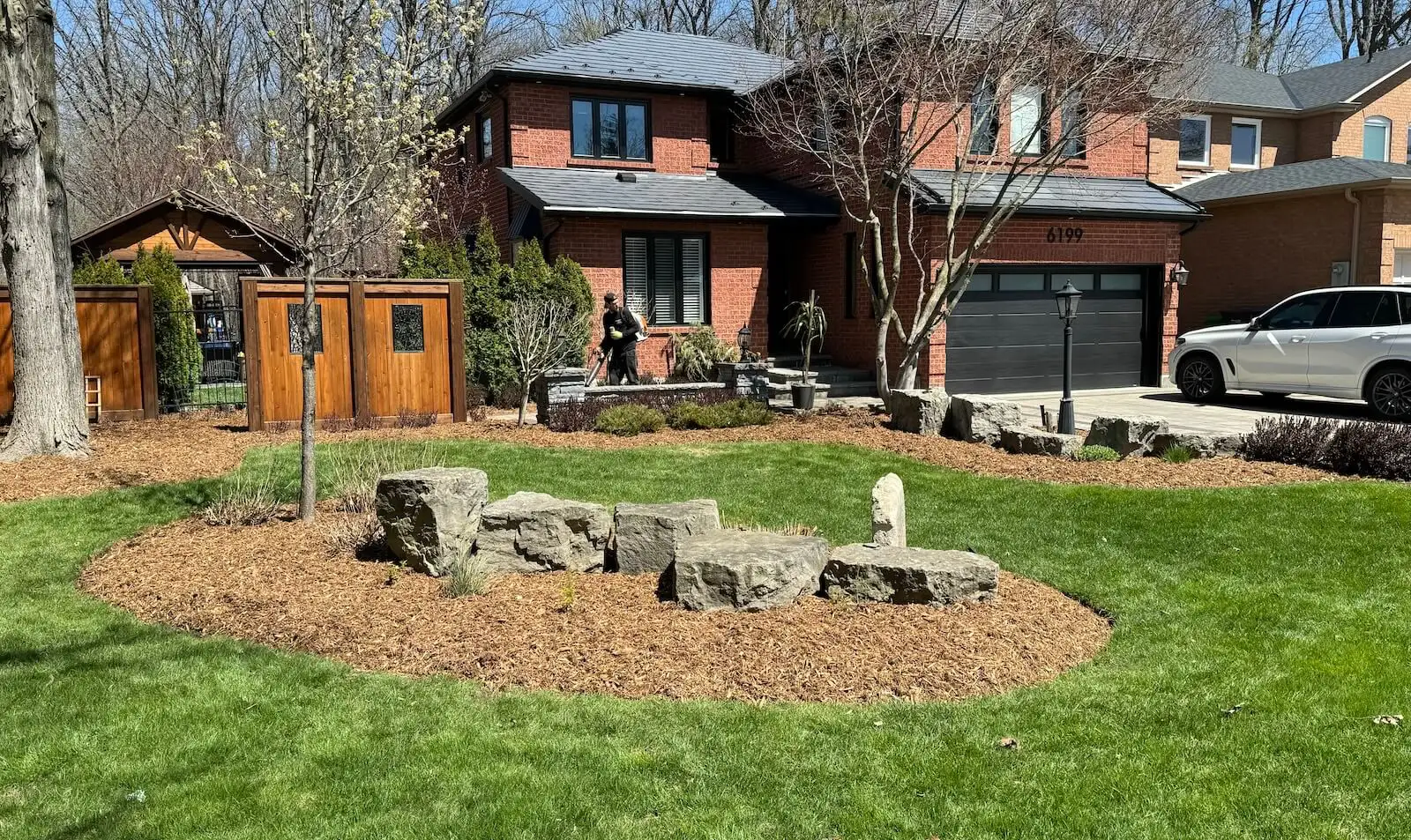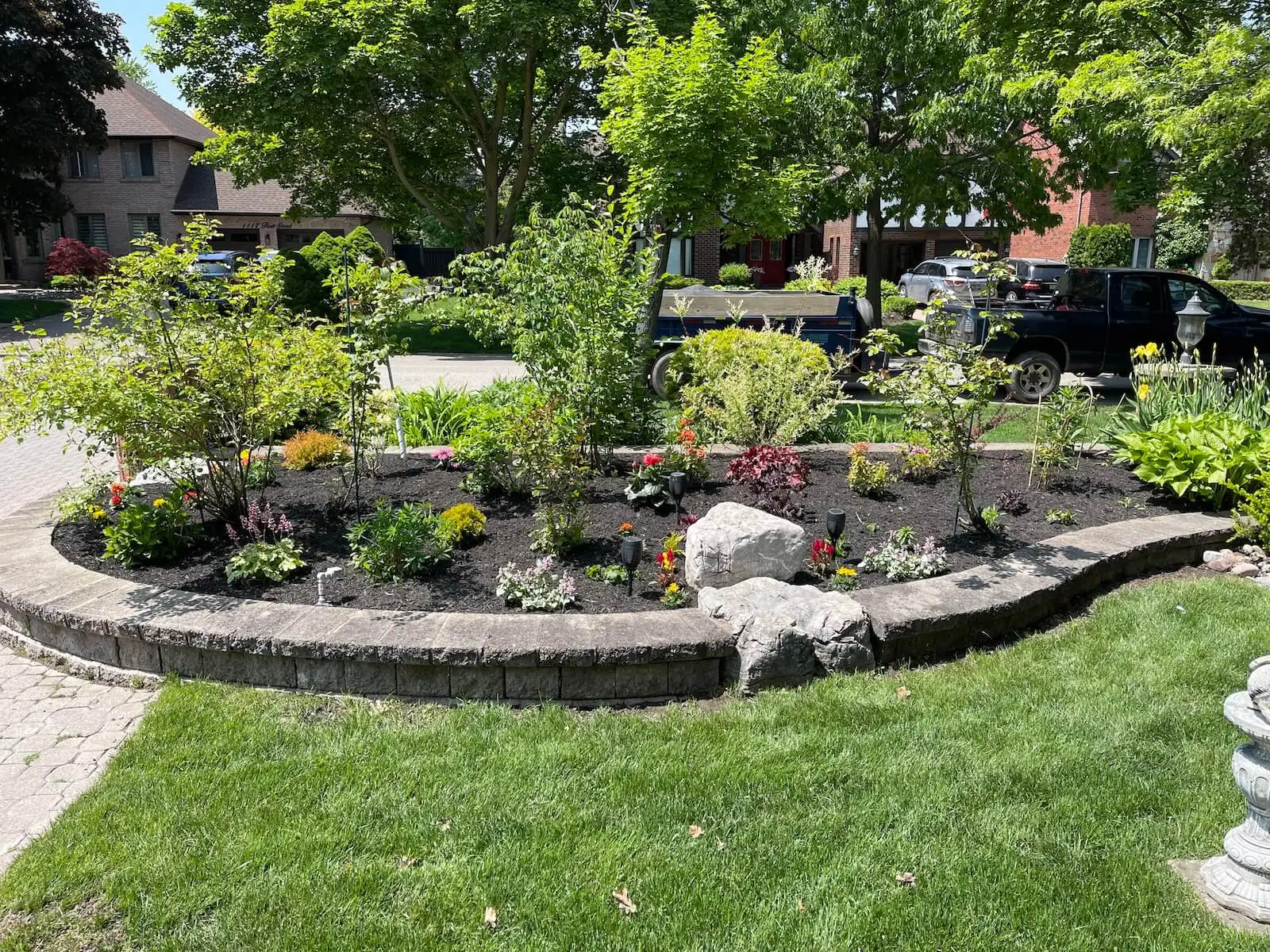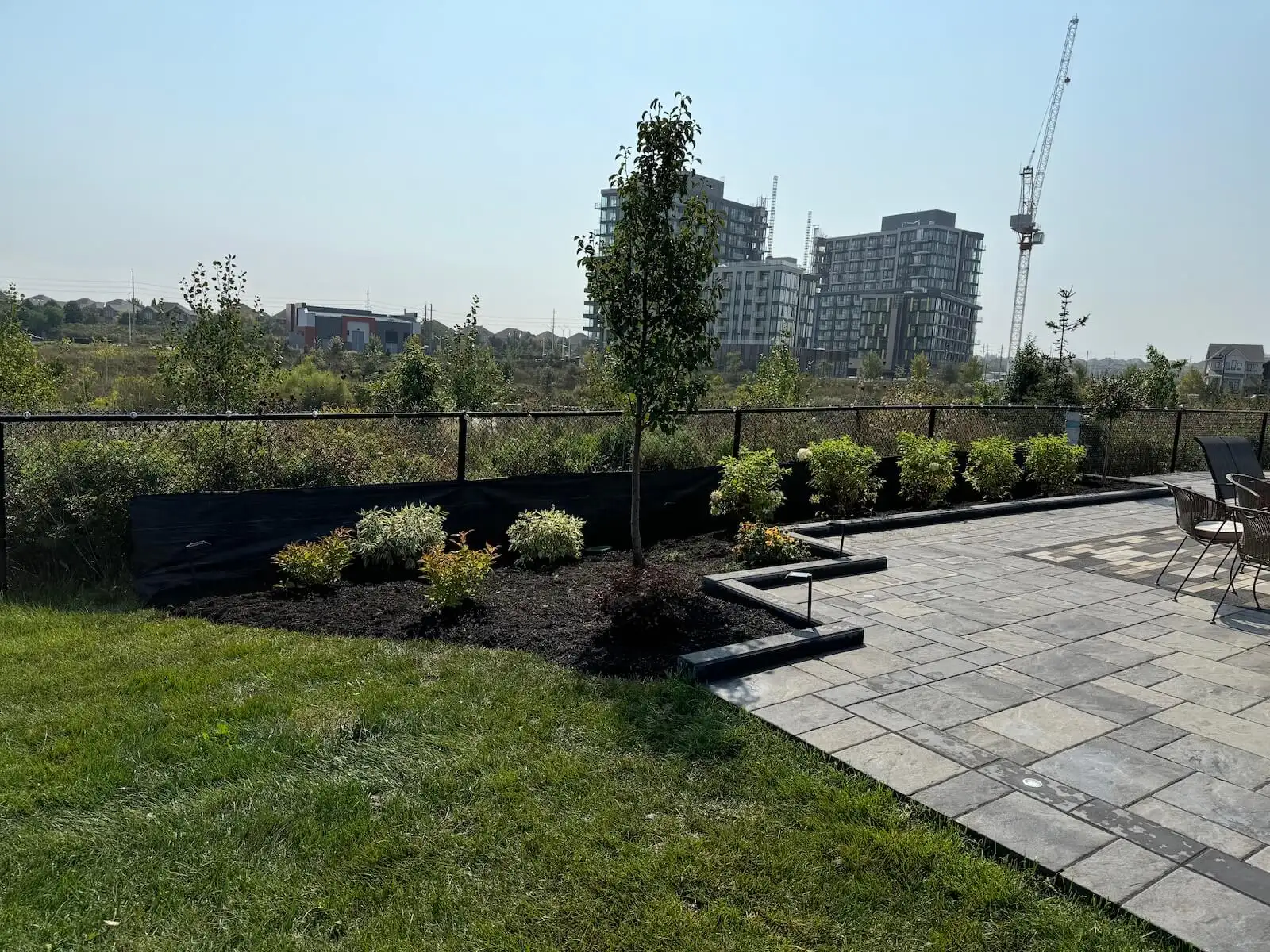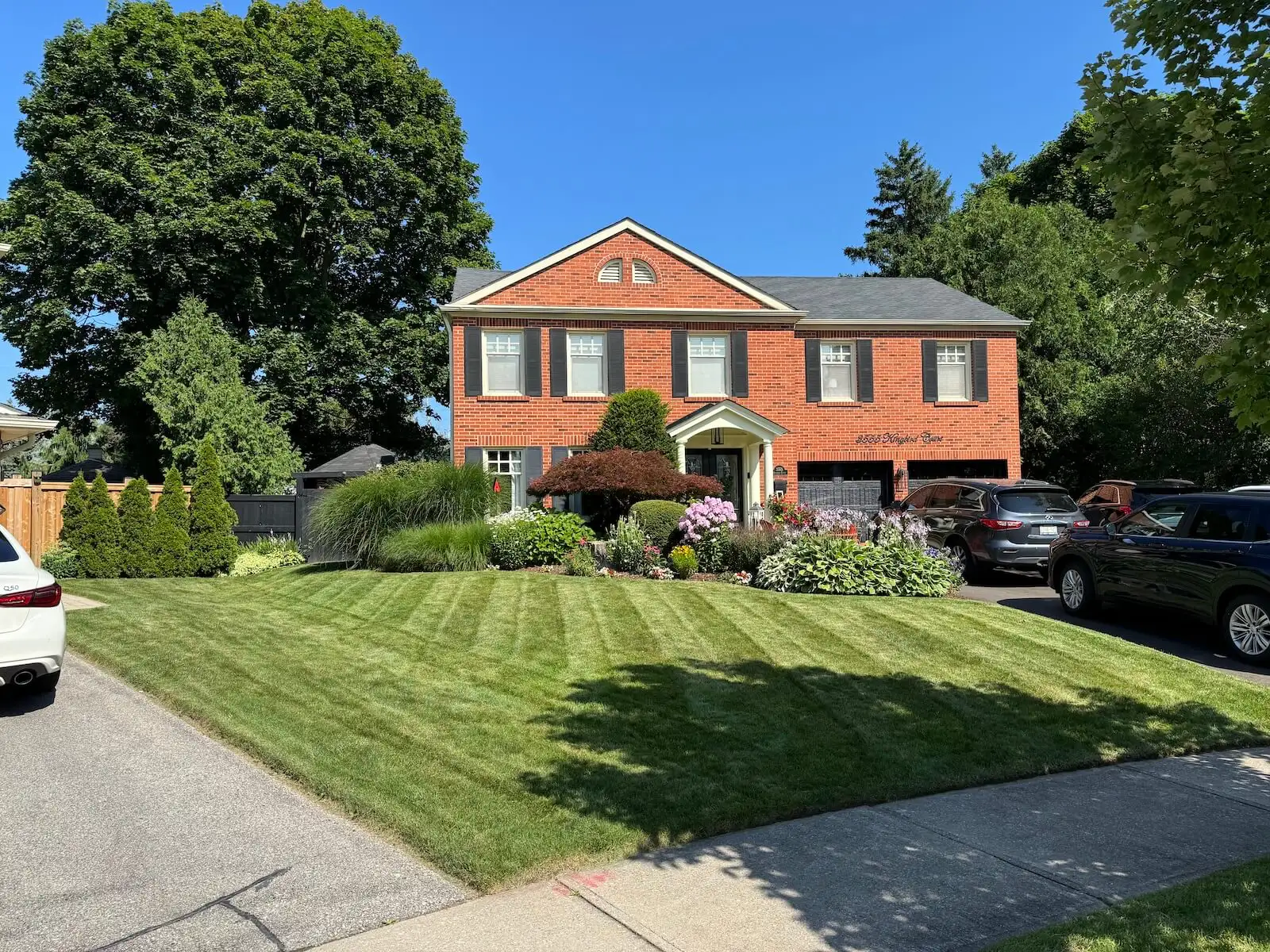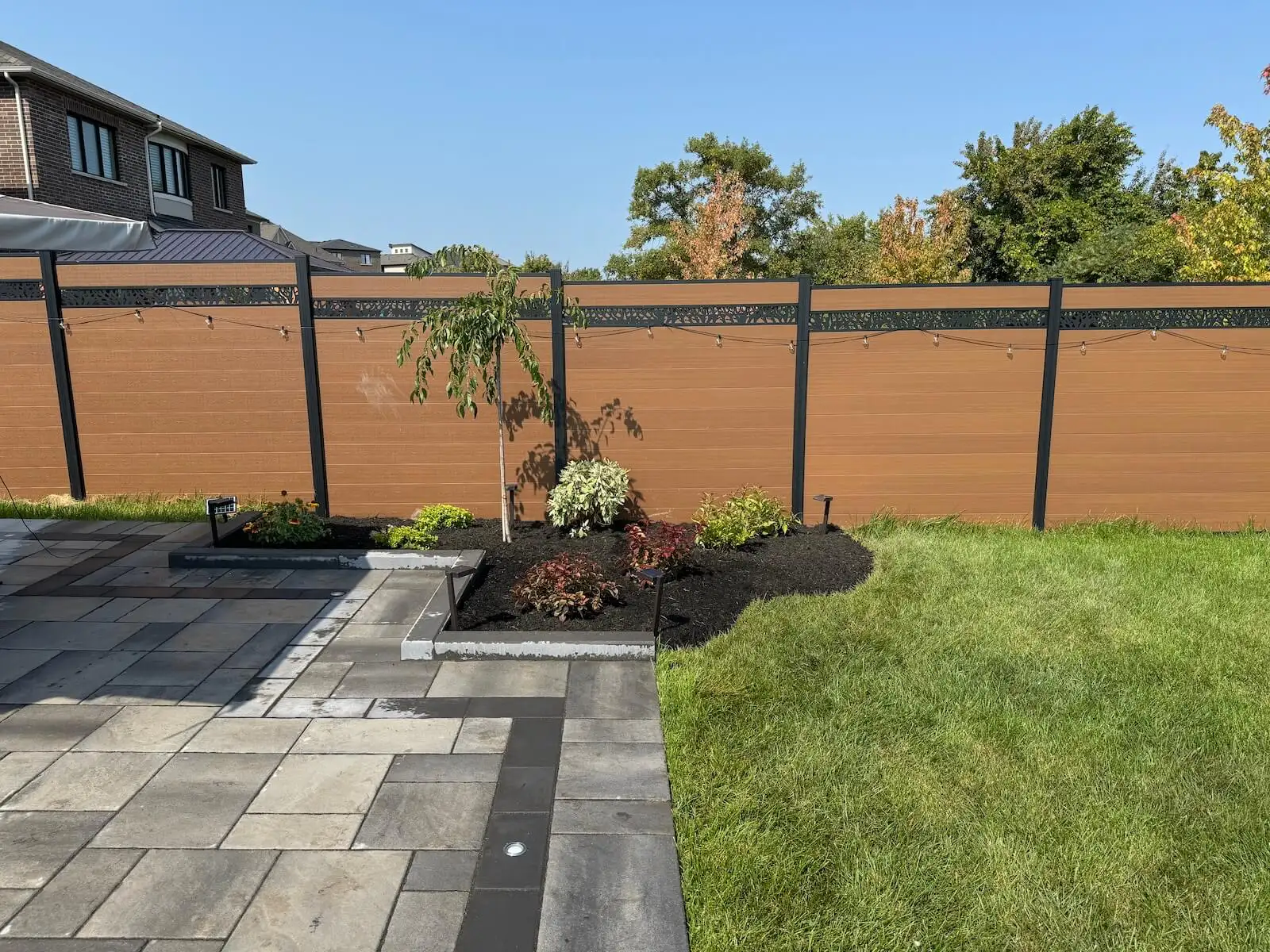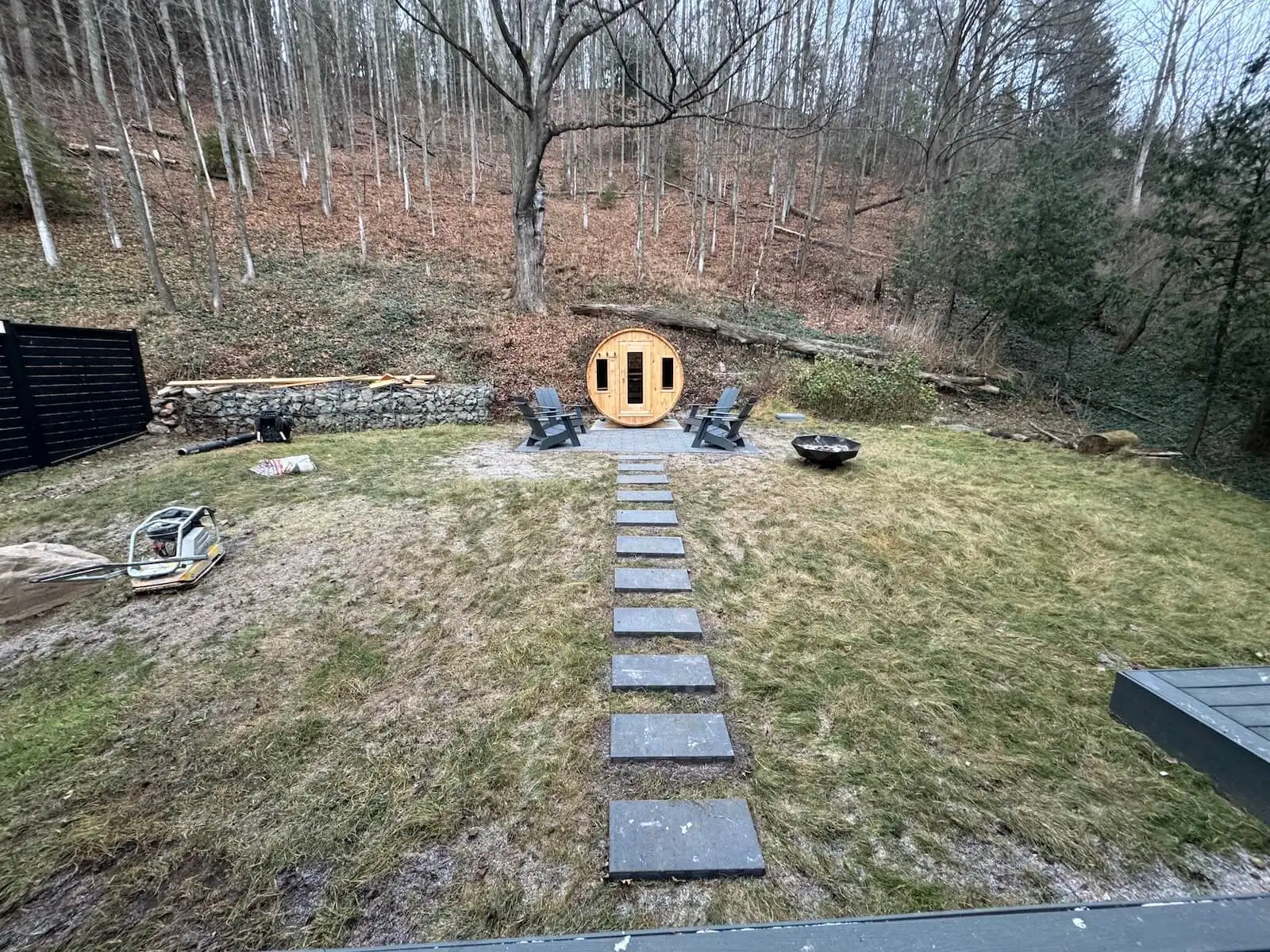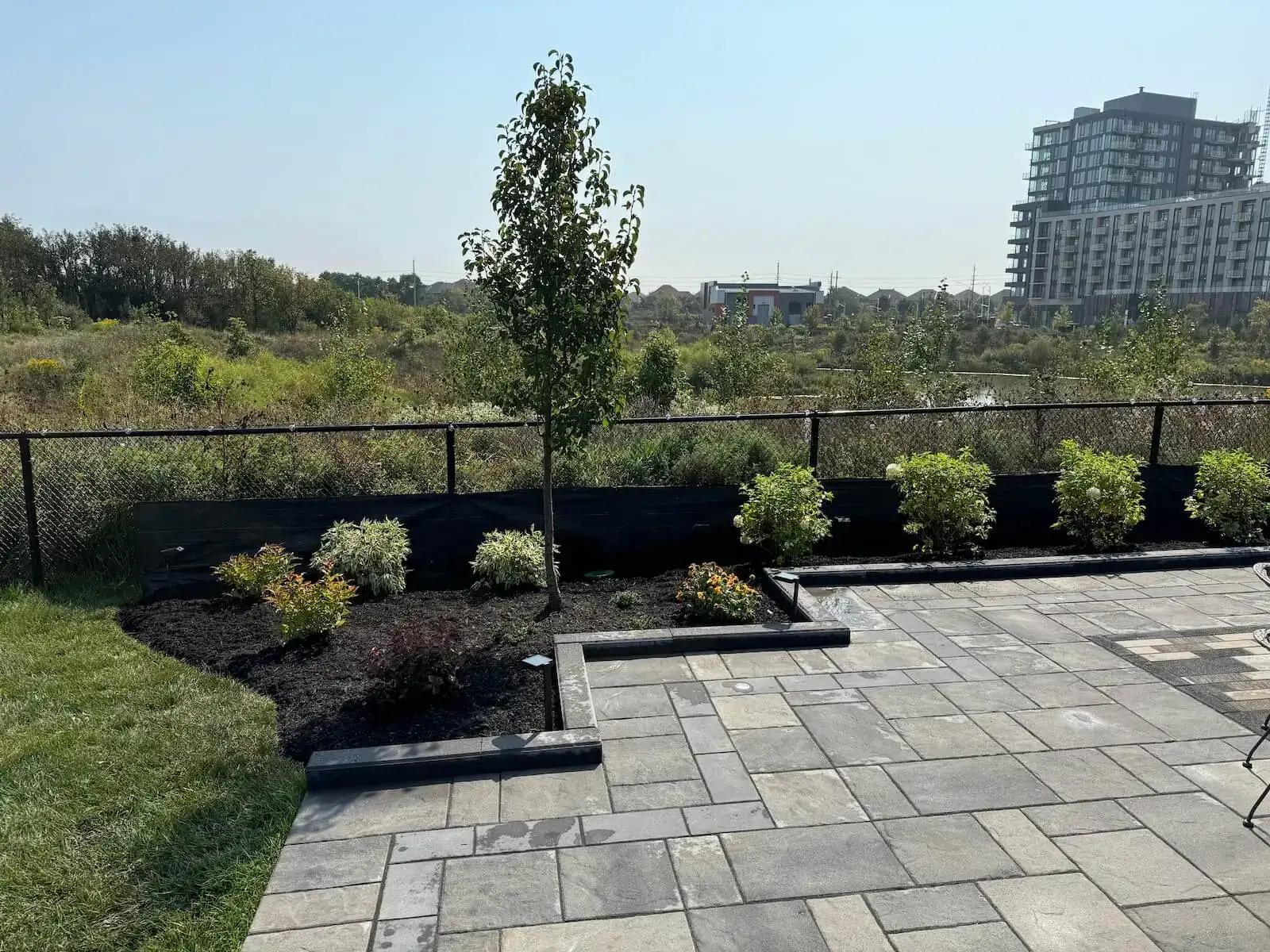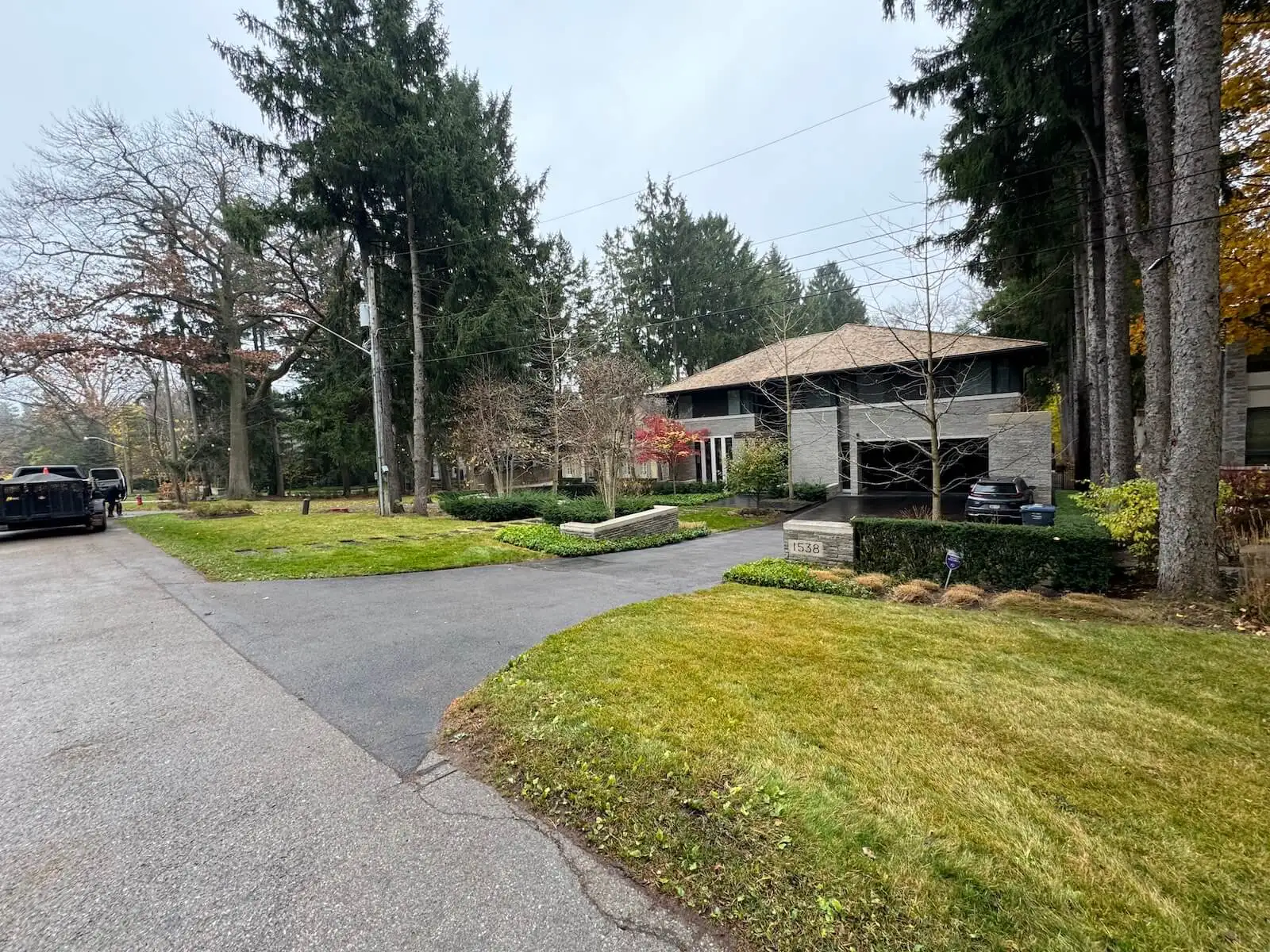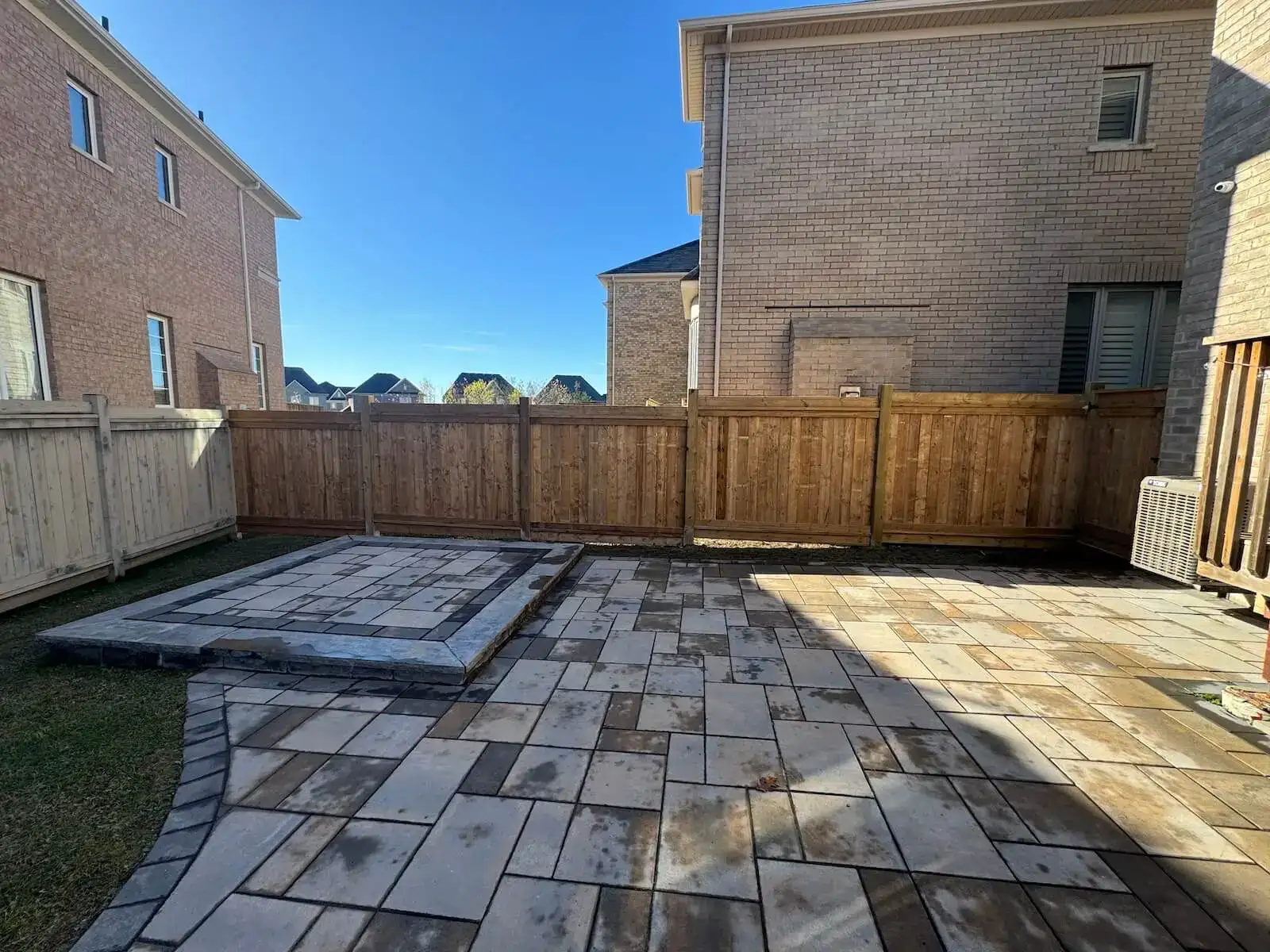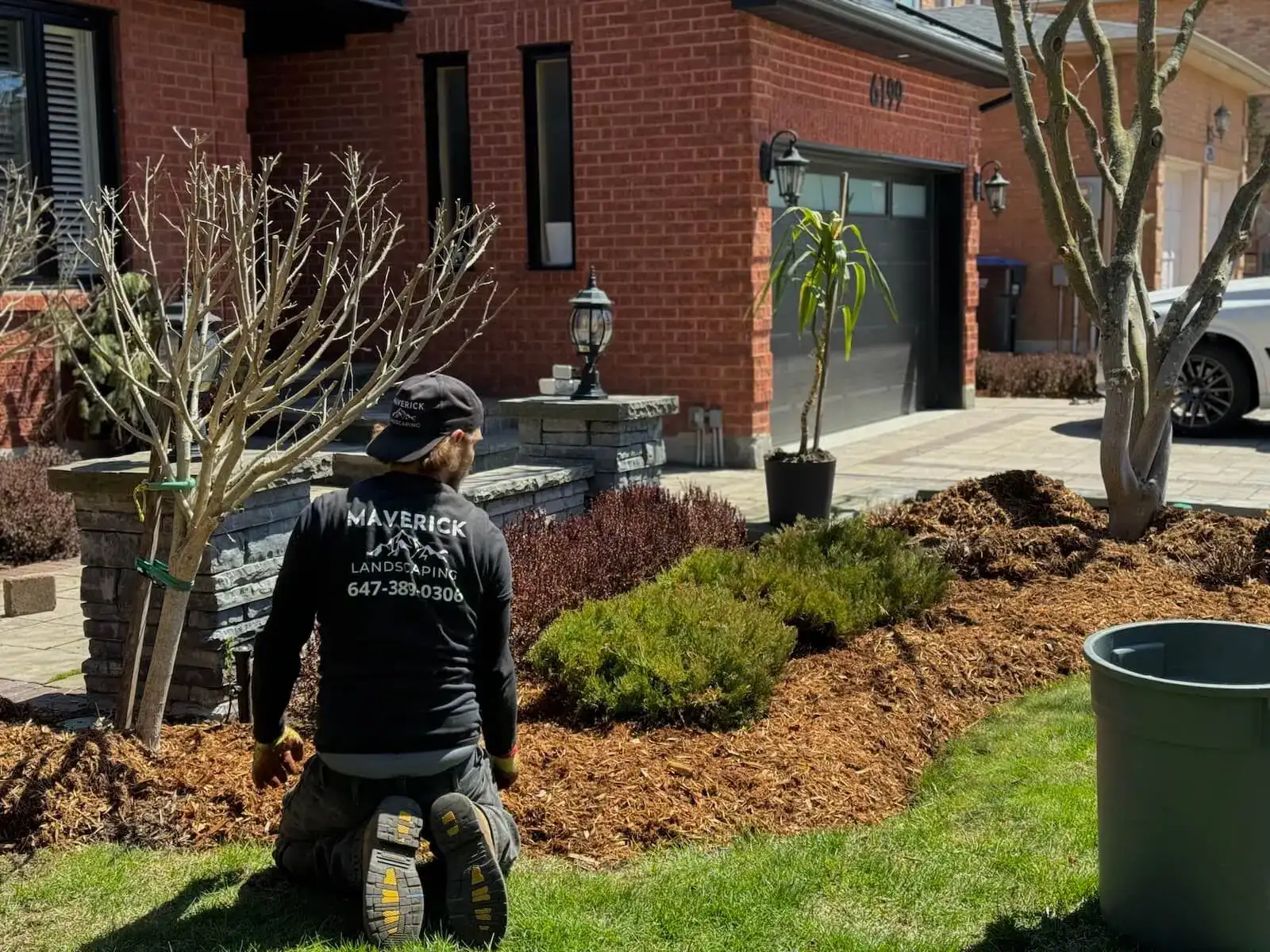









The best back porch landscape ideas are rarely the busiest ones. Back porch landscaping looks expensive when the layout is clear, the materials suit the house, and the planting can handle GTA freeze-thaw cycles, spring runoff, and summer heat off masonry.
Back Porch Landscape Ideas: What Works Best Around GTA Porches
The right design starts with function, not decor. A porch-adjacent landscape has to handle snow storage, spring melt, reflected heat, foot traffic, and drainage near the house in Ontario’s Zone 5–6 range .
The strongest layouts usually combine three to five elements, not ten. The usual mix is layered planting beds, one hardscape expansion such as a landing or path, privacy screening, lighting, and containers or seat walls for finish.
A premium result comes from restraint. Repeating one paver family, one edging style, and a tight plant palette makes simple back porch landscape ideas look more refined than a yard full of unrelated accents.
How to Design Your Back Porch in 7 Steps
A good design begins with how you use the space. List the real functions first: dining, lounging, grilling, pool access, dog access, kids’ play, storage, or a route into the yard.
A plan works better when you map the site before choosing materials. Track sun and shade, wind, neighbour sightlines, runoff paths, and the views from kitchen and family room windows over at least one full day.
A porch should act as either a destination or a transition. If people stay there, give it comfort and privacy; if people move through it, protect circulation and keep beds from pinching the route.
Active circulation needs room to breathe. Walkways around dining or entertaining areas usually work best at about 3–4 ft wide , while porch-adjacent planting beds often land around 3–8 ft deep depending on lot size and foundation height .
A cohesive plan usually sticks to one hardscape family and one plant character. Modern homes tend to suit cleaner lines and massed planting, while traditional homes usually carry slightly softer bed lines and more layered textures.
Privacy works best in layers, not walls of greenery. A mix of low planting, mid-height shrubs, and one vertical element such as a hedge, screen, or small ornamental tree softens the porch without blocking circulation.
The longest-lasting projects solve infrastructure before finishes. Lighting, drainage, irrigation sleeves, and downspout routing should be planned before soil, pavers, or planting go in.
> Tip: design the porch from both directions. It should look right from inside the house and from the yard.
Start With the Porch Type: Covered, Screened, Open, or Raised
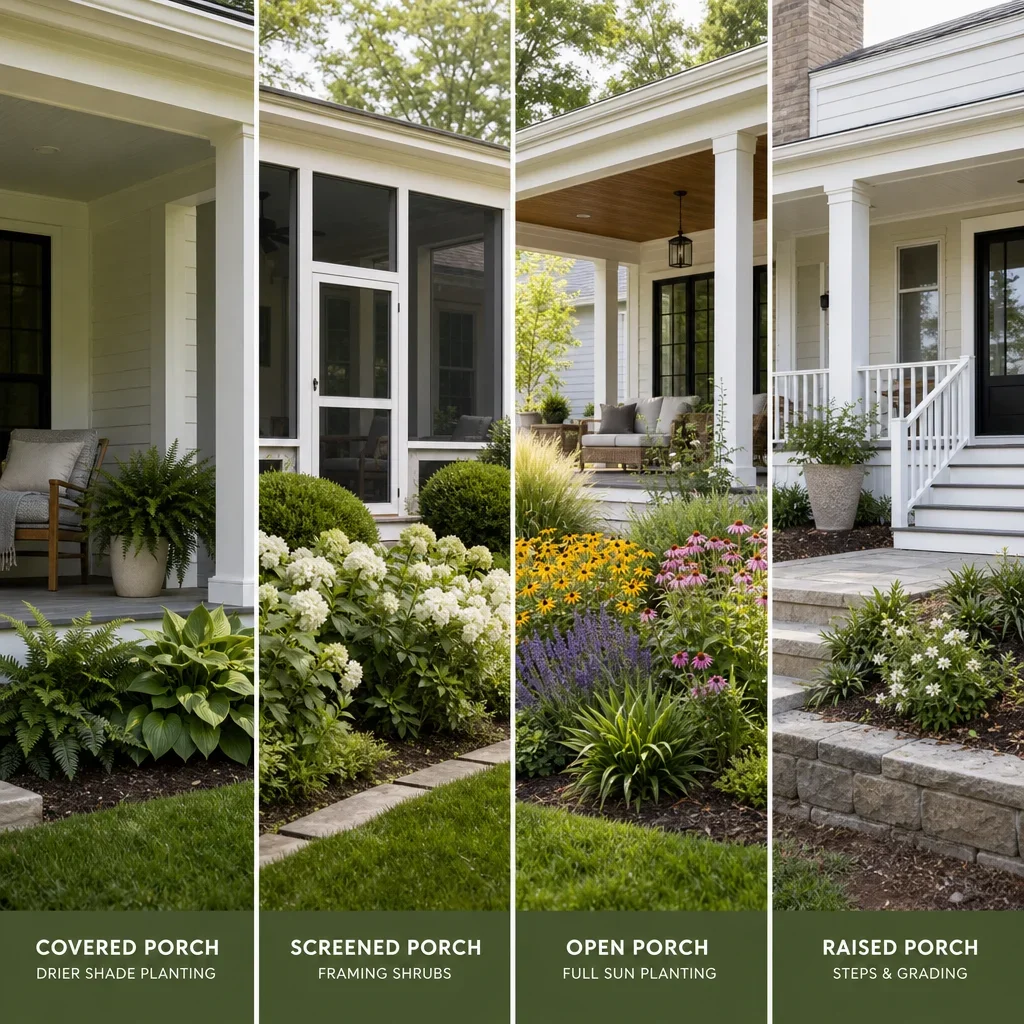
Covered porches need tougher dry-shade planning than most homeowners expect. Beds under a roof get less natural rainfall, so low maintenance back porch landscaping there often depends on irrigation, drought-tolerant plants, and mulches that do not dry out too fast.
Screened porches look better when the planting frames the outward view. Keep taller shrubs away from the screen line so airflow stays open and the room does not feel boxed in.
Open porches and patios can carry bolder planting and more durable paving. Those areas take full rain, stronger sun, and more snow exposure, so larger plant masses and hardscape with proper base prep usually perform better.
Raised porches need grading and step safety to lead the design. The landscaping has to manage erosion beside stairs, preserve visibility at treads and landings, and avoid trapping water at the base of the structure.
Deck-adjacent areas need access and drainage underneath respected. Skirting, storage access, and airflow under the deck all matter, especially where snowmelt and leaf debris collect.
The 5 Best Back Porch Layouts for Function and Flow
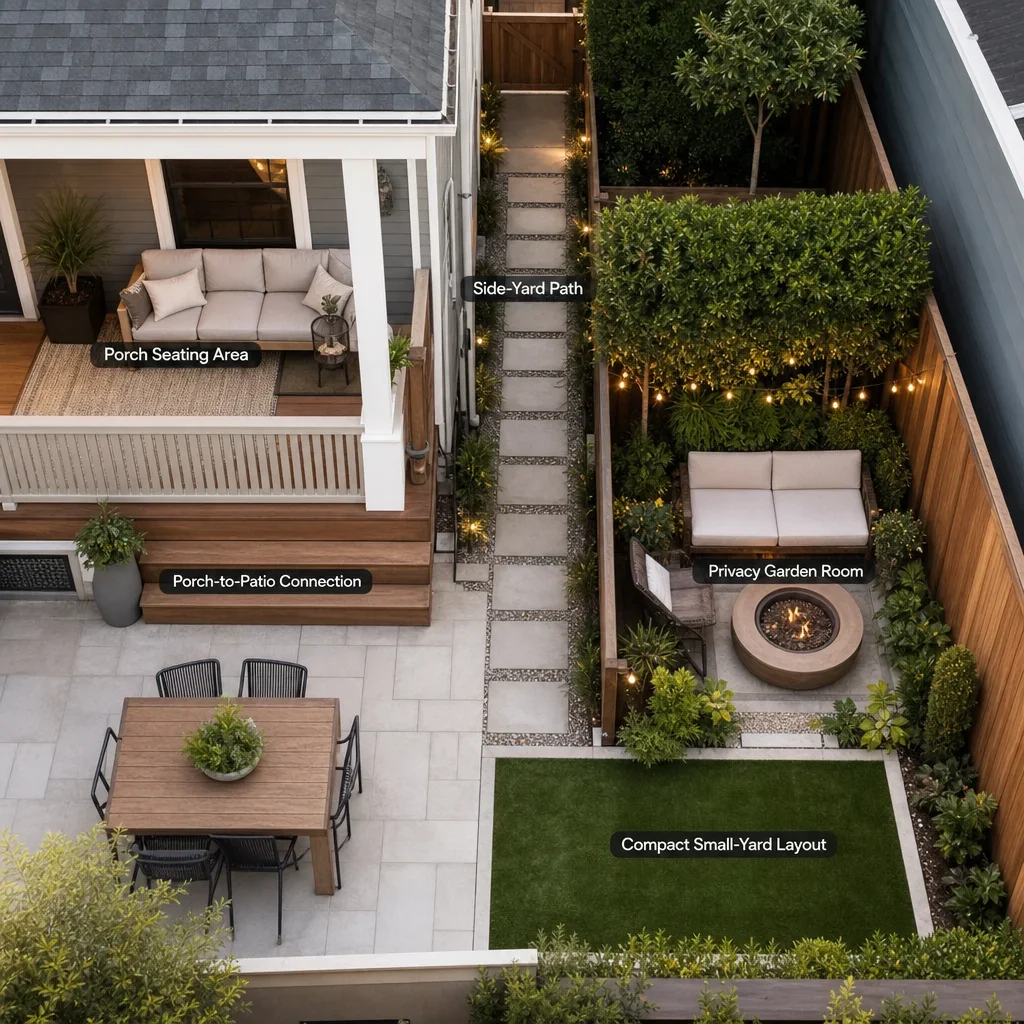
A porch can read as an outdoor living room when the planting stays at the perimeter. This layout works best when furniture sits on the porch itself and the surrounding beds soften the edges without cutting off the yard.
A porch-to-patio connection is one of the most useful backyard landscaping designs for entertaining. A landing near the steps, a direct paver run, and a dining zone beyond keep traffic off the lawn and make the backyard feel intentional.
A porch linked to a side-yard path and one focal point gives the yard direction. This works well on deeper GTA lots where a tree, fire feature, specimen planter, or pergola can pull the eye outward.
A privacy garden room fits homes with tighter rear setbacks. A hedge, screen, or pergola near the porch creates enclosure without making the whole backyard feel shut in.
A small porch usually works best with fewer moves. One built-in bench or compact dining set, grouped containers, and minimal lawn often outperform crowded beds and scattered decor in small back porch landscape ideas.
Curves suit softer architecture and wider yards. Rectilinear layouts usually look sharper against modern or transitional homes with stronger horizontal lines.
Planting Plans by Sun Exposure for GTA Conditions
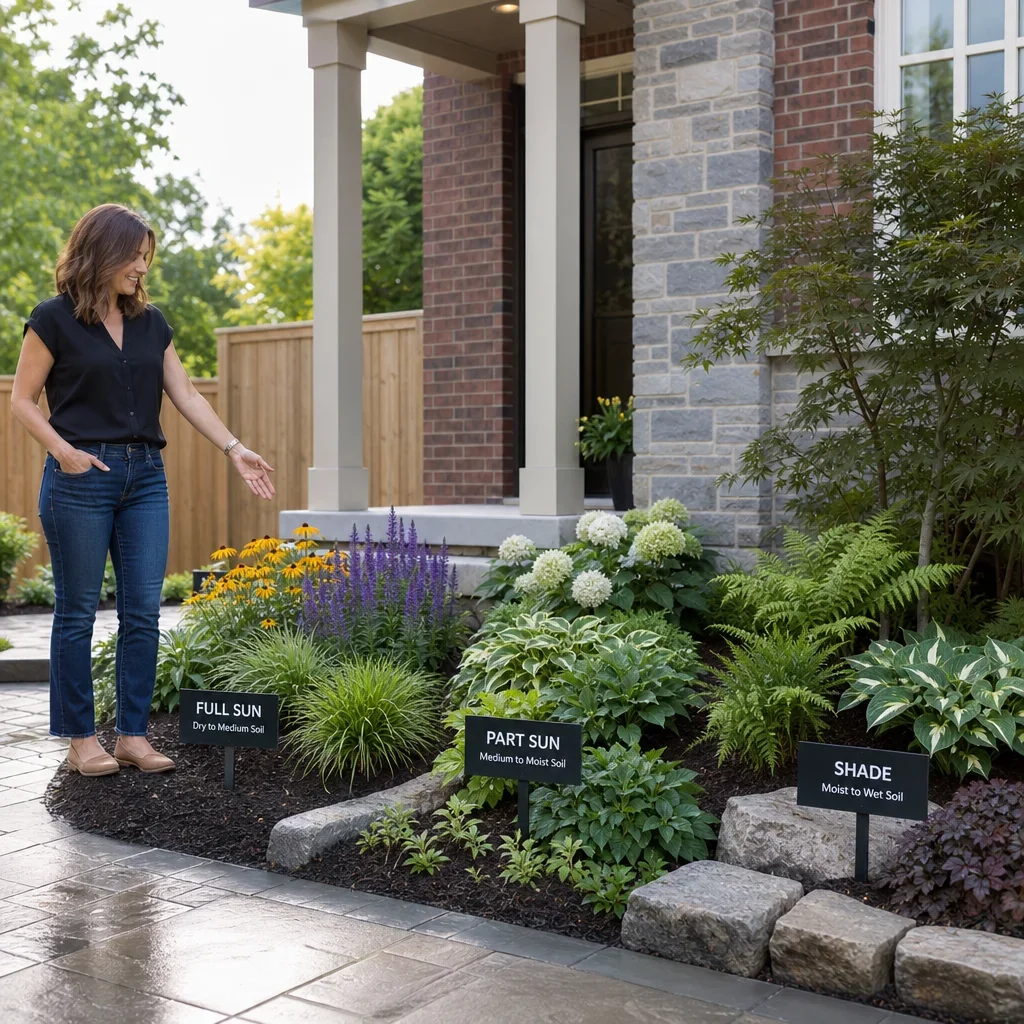
Plant selection should start with light, not colour. In the GTA, full sun, part sun, and shade create different moisture and heat conditions around porches, patios, and decks, especially near stone and brick.
Full-sun beds usually perform best with a four-layer mix. Use an anchor such as boxwood, panicle hydrangea, or upright juniper; a mid-layer like nepeta, salvia, or spirea; an edge of thyme or low sedge; and one container accent for seasonal height. Zone 5–6 hardiness is the baseline in this region .
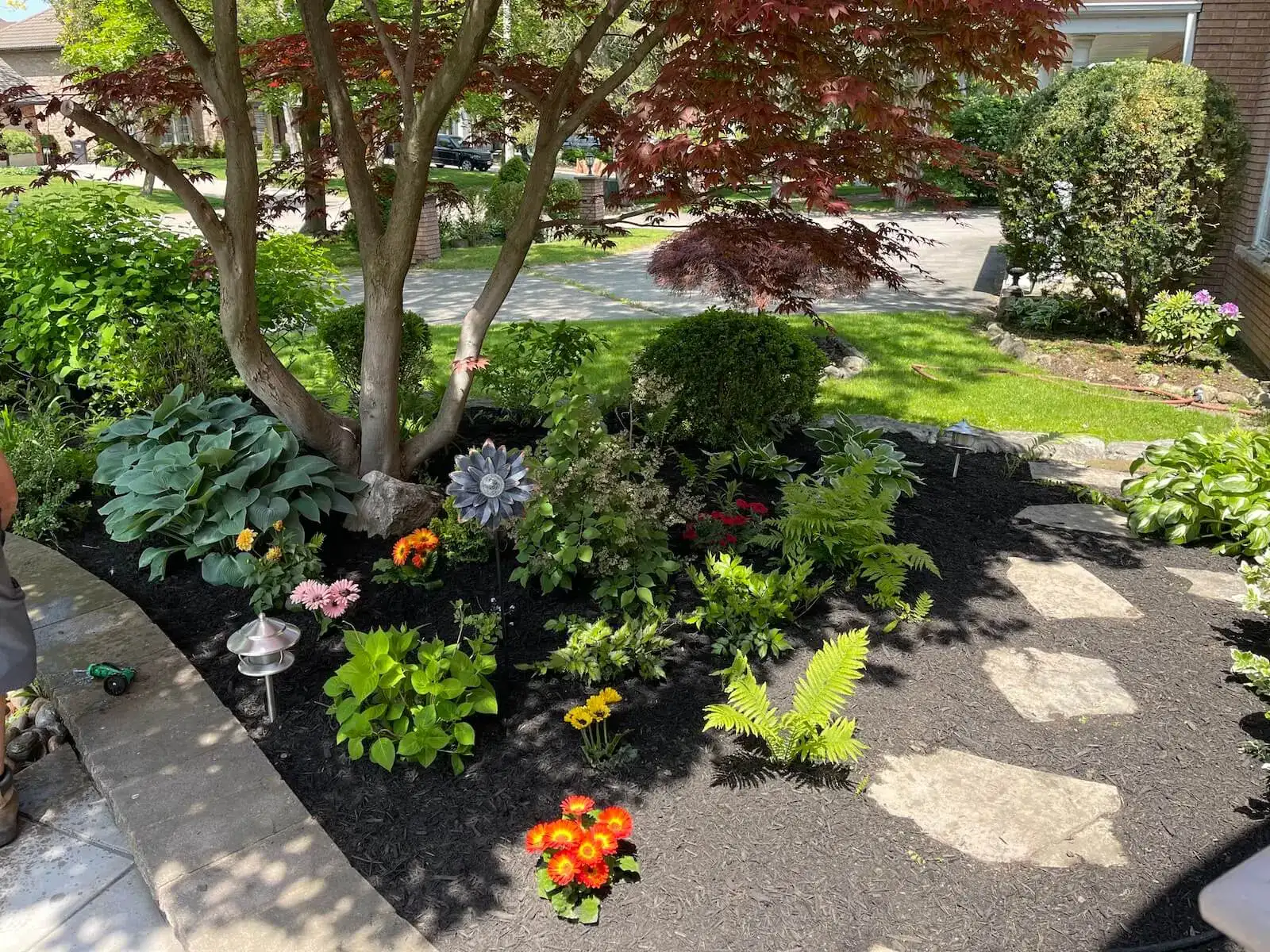
Part-sun beds tend to be the easiest to balance. A combination such as hydrangea, heuchera, hakonechloa, and hosta gives leaf contrast, reliable structure, and a softer look around a porch or backyard living area.
Shady back porches need texture more than flowers. Yew or boxwood for structure, plus hosta, fern, brunnera, and carex at ground level, creates depth without depending on nonstop bloom.
Salt exposure changes plant choice near walks and steps. Beds beside de-iced routes usually do better with tougher shrubs, ornamental grasses, and perennials known for urban tolerance rather than delicate leaf plants.
Style should guide the final list. Modern spaces usually use fewer species repeated in masses, while classic gardens carry more layered flowering plants and naturalistic spaces allow looser drifts.
Exact Plant Ideas for Foundation Beds, Privacy Screens, and Containers
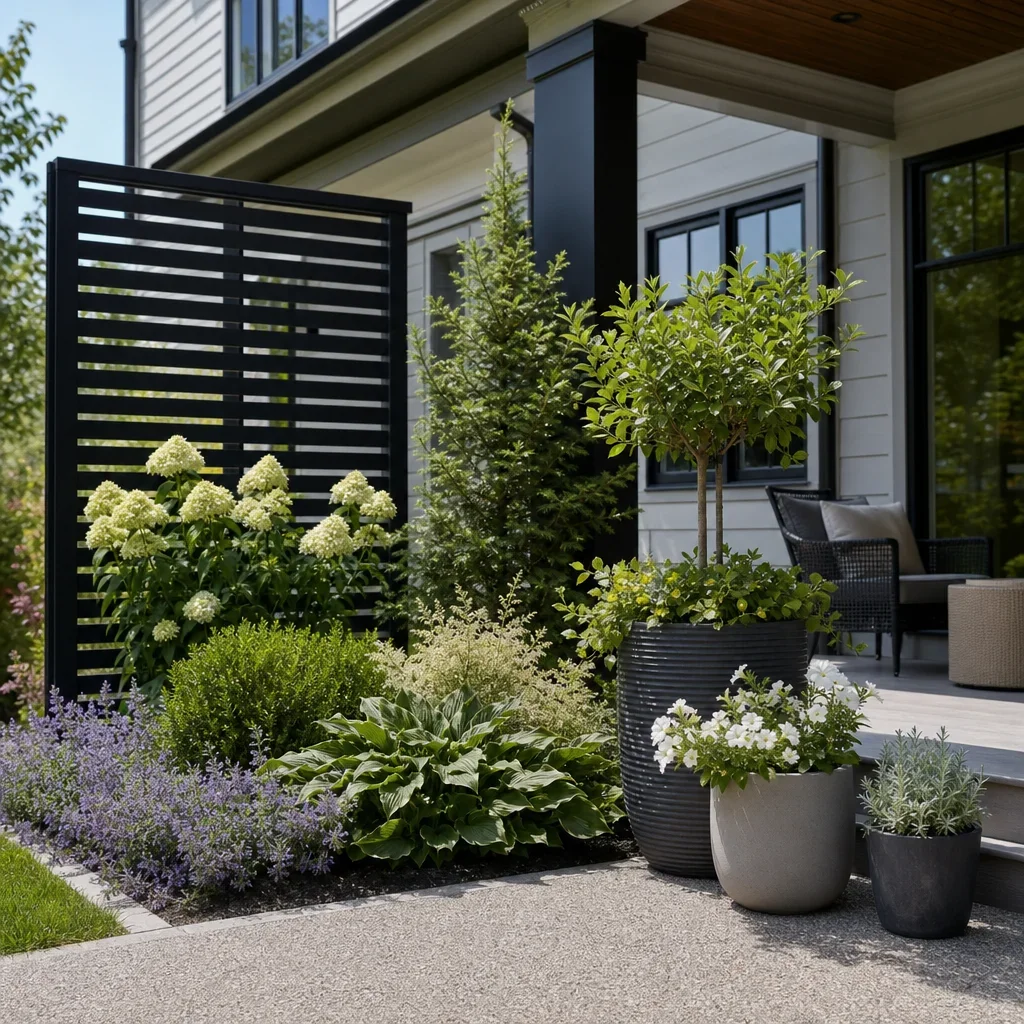
Foundation beds look cleaner when shrubs are sized for maturity, not just the install day. As a cautious rule, keep larger shrubs and small trees several feet off the foundation, and avoid aggressive roots near drains, steps, and paving edges .
A reliable sunny foundation mix for GTA homes is boxwood or low juniper, panicle hydrangea, catmint, and a trailing edge plant. That combination gives evergreen structure, summer bloom, and a disciplined shape that suits many home styles.
A reliable shady foundation mix is yew, hosta, Japanese painted fern, and carex. It softens the base of the house and reads polished from interior windows as well as from the yard.
Privacy screening works best when you match the screen type to the space. Columnar evergreens fit narrow lots, mixed hedges look softer on wider lots, and trellis or decorative panels are useful where you need privacy without the depth of a full hedge.
Container groups look more finished when they follow a simple structure. The classic thriller-filler-spiller method still works, but premium porches usually use fewer containers, larger sizes, and one evergreen or branch element for winter presence.
Sightlines matter as much as the plant list. Beds near the back porch should frame the view from inside the home rather than blocking the first look into the yard.
How to Make a Back Porch Look Expensive Without Looking Tacky
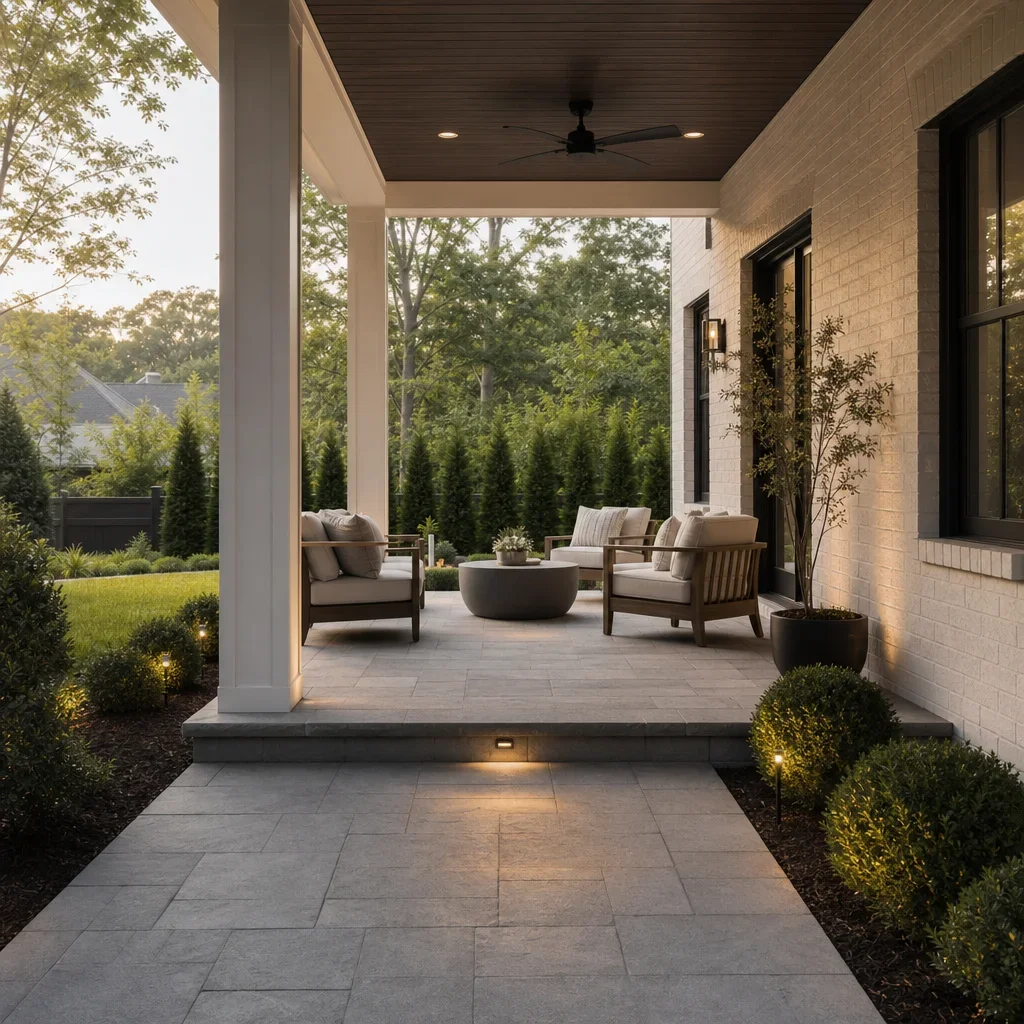
The expensive look comes from scale, repetition, and cleaner detailing. Larger-format pavers, disciplined plant repetition, layered lighting, and hidden utility lines usually read better than adding more ornaments.
Most tacky yards suffer from too many small decisions. Mismatched finishes, undersized beds, plastic edging, cluttered decor, and fake symmetry where the architecture does not support it make the porch feel cheaper, not richer.
Simple back porch landscape ideas usually look more upscale because the eye can read them quickly. One material family, two or three dominant plant forms, and a restrained colour palette create a calmer result.
River rock is often overused in the wrong places. It can work as an accent in modern backyard landscaping designs, but full beds of loose stone near leaves, snow shovelling, and seating areas often look messy fast.
Low-Maintenance Back Porch Landscaping Ideas That Still Look High-End
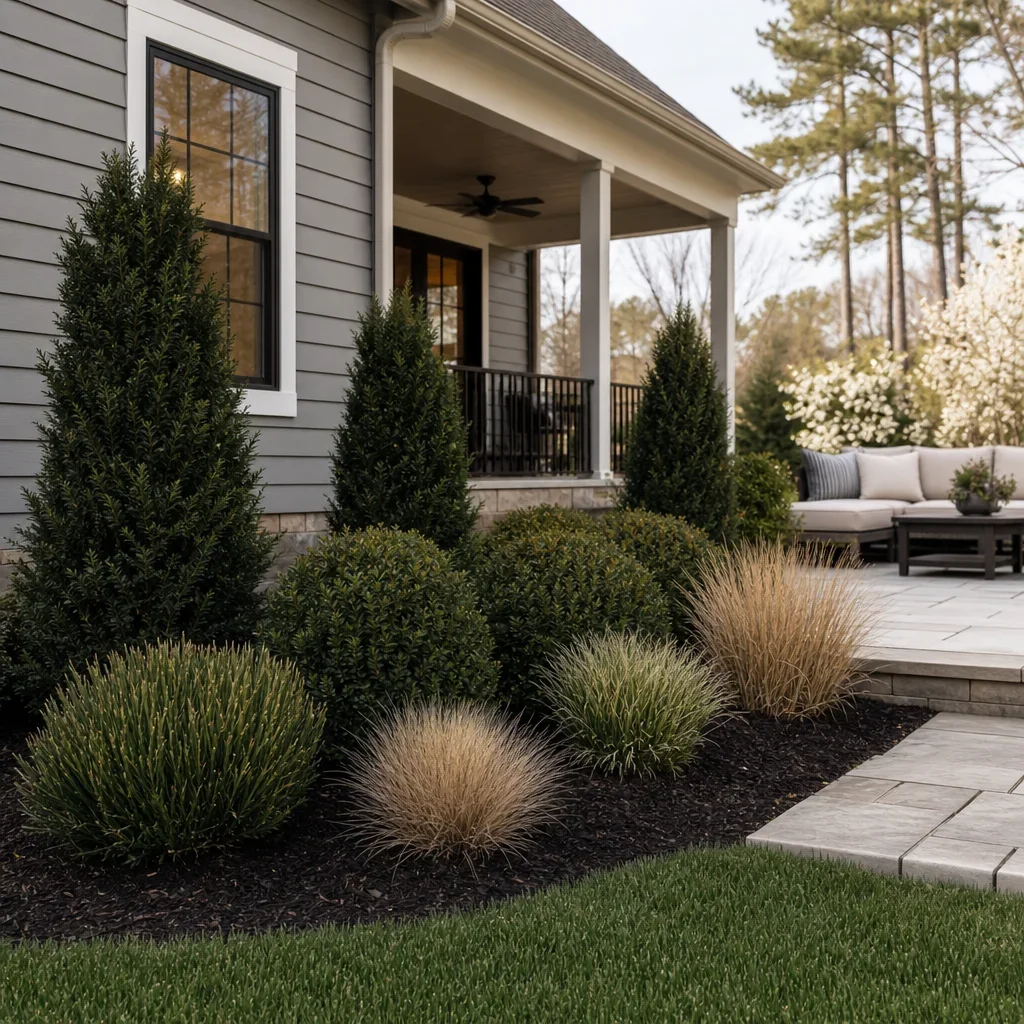
Low maintenance means fewer recurring tasks, not no tasks at all. The best low maintenance back porch landscape ideas reduce pruning cycles, annual replanting, finicky lawn edging, and weed-prone details.
Evergreen structure does more work than seasonal clutter. Boxwood, yew, juniper, and other durable backbone plants keep the space looking finished in all four seasons.
Massed planting is easier to maintain than mixed one-offs. Repeating one grass, one shrub, and one perennial in larger groupings cuts visual noise and simplifies care.
Small lawn fragments near the porch are usually high-maintenance dead weight. Replacing those strips with beds, paving, or gravel only where it suits the design reduces mowing and awkward edging.
Good drainage is a maintenance strategy. Water that sheds properly from the porch, steps, and patio lowers weed pressure, reduces splashback, and protects both planting and hardscape.
Mulch vs Gravel vs River Rock Around a Back Porch
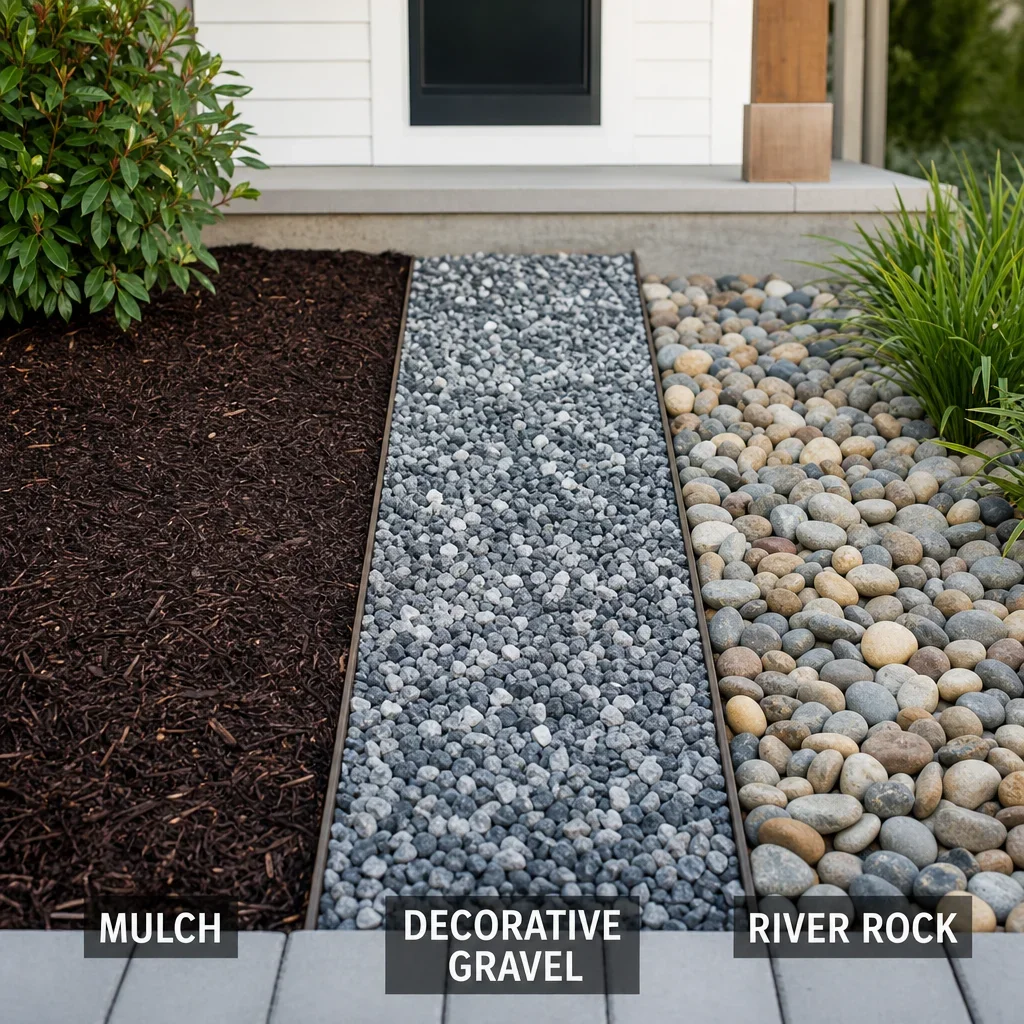
Mulch is usually best for planted beds. A mulch layer around 2–3 in deep helps moderate soil temperature, supports plant health, and is easier to refresh than full stone beds .
Decorative gravel works best in controlled, modern areas with clean edges. Installed at about 2–3 in deep, it can look sharp around architectural planting, but it needs stable borders and can shift under traffic or snow clearing .
River rock is best used sparingly, not as a default finish. It drains well and can suit a dry creek or accent zone, but it traps leaves, reflects heat, and can feel uncomfortable underfoot for kids and pets.
Mulch usually wins near shrubs and perennial beds because it improves the growing environment. Gravel or river rock make more sense where you want a non-plant surface, a drainage expression, or a stronger modern line.
Loose stone is a poor choice where runoff, heavy leaf drop, or shovel traffic constantly moves material. Around a busy back porch, displaced stone can become a cleanup problem fast.
| Material | Best use | Strength | Watch-out |
|---|---|---|---|
| Mulch | Planted beds | Better for soil and roots | Needs periodic refresh |
| Gravel | Modern dry beds, accents | Crisp look, good drainage | Migrates without edge restraint |
| River rock | Accent bands, swales | Durable visual texture | Debris trap, heat, harder cleanup |
Best Hardscape Materials Near a Back Porch in Freeze-Thaw Climates
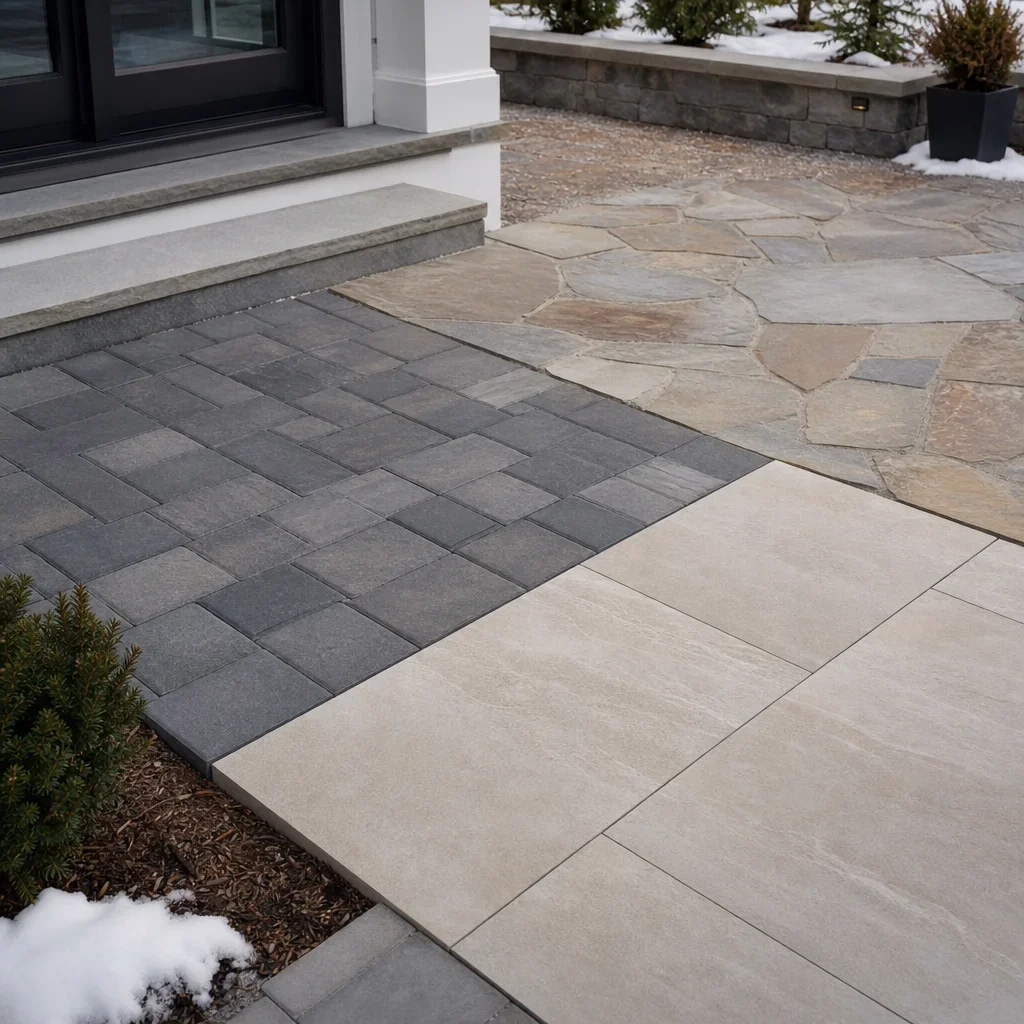
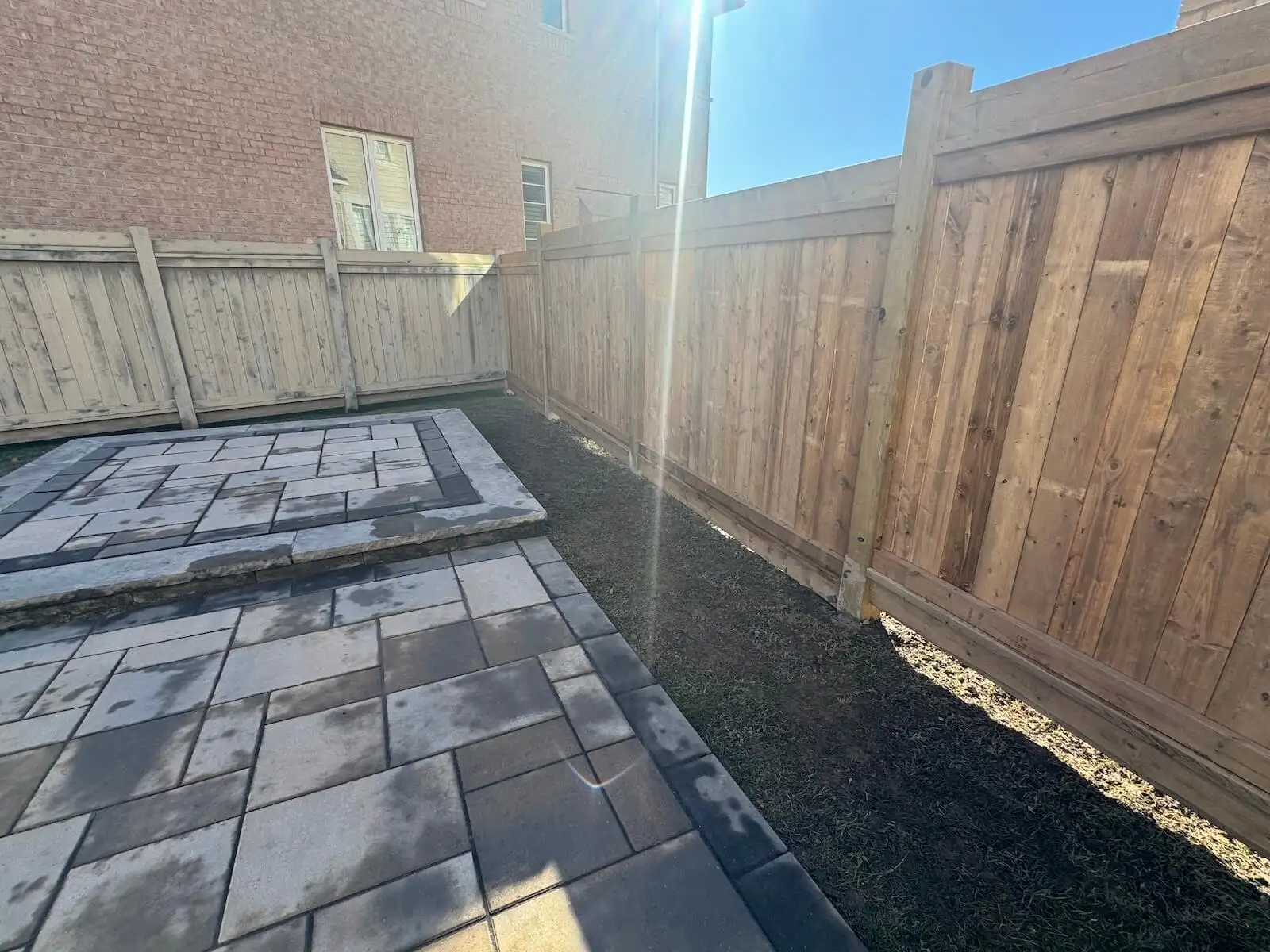
A hardscape near the house should be chosen for base performance first. In Ontario freeze-thaw conditions, interlocking concrete pavers, natural stone, and some porcelain systems can work well when the base, drainage, and edge restraint are done properly.
Pavers should not be laid directly on dirt if you want them to last. Without a compacted base, the surface is much more likely to settle, heave, spread, and hold water after thaw cycles.
Pedestrian paver installations commonly need a compacted base in roughly the 6–10 in range depending on soil and application , but the right depth depends on site conditions and should be confirmed in the design and build plan.
Slip resistance matters near porches and steps. Materials that look refined in summer still need to handle rain, snow, and de-icing products in shoulder seasons and winter.
The best material usually matches the architecture. Contemporary homes often suit large-format pavers or porcelain, traditional homes lean toward natural stone or classic interlock, and transitional homes can bridge both.
| Material | Best fit | Main advantage | Main caution |
|---|---|---|---|
| Interlocking concrete pavers | Patios, landings, walks | Repairable and versatile | Base prep must be right |
| Natural stone | Premium patios and steps | Rich texture, timeless look | Material variation and cost |
| Porcelain pavers | Modern spaces | Clean lines, low absorption | System and support details matter |
| Poured concrete | Simple pads and modern forms | Strong, clean appearance | Cracks are harder to disguise |
Privacy Ideas: Screens, Hedges, Pergolas, and Layered Planting
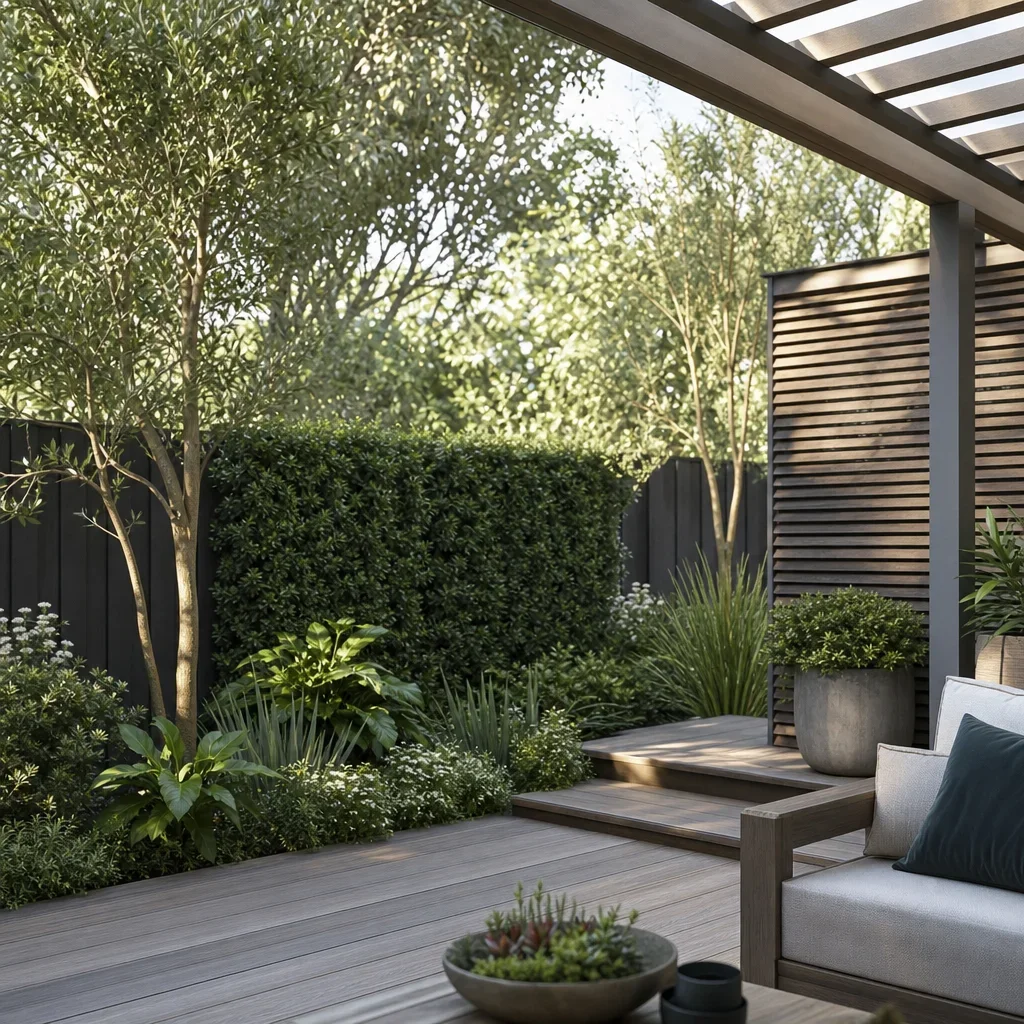
Privacy should be tailored to the sightline you are blocking. Some porches need only a side screen near seating, while others need a deeper layered buffer from rear neighbours.
A hedge gives the most natural long-term privacy. Evergreens provide winter screening, and mixed borders soften the fence line better than one flat row alone.
A decorative screen or pergola works well where planting depth is limited. These features create privacy faster than a hedge and can be paired with vines or lower planting to avoid a bare wall effect.
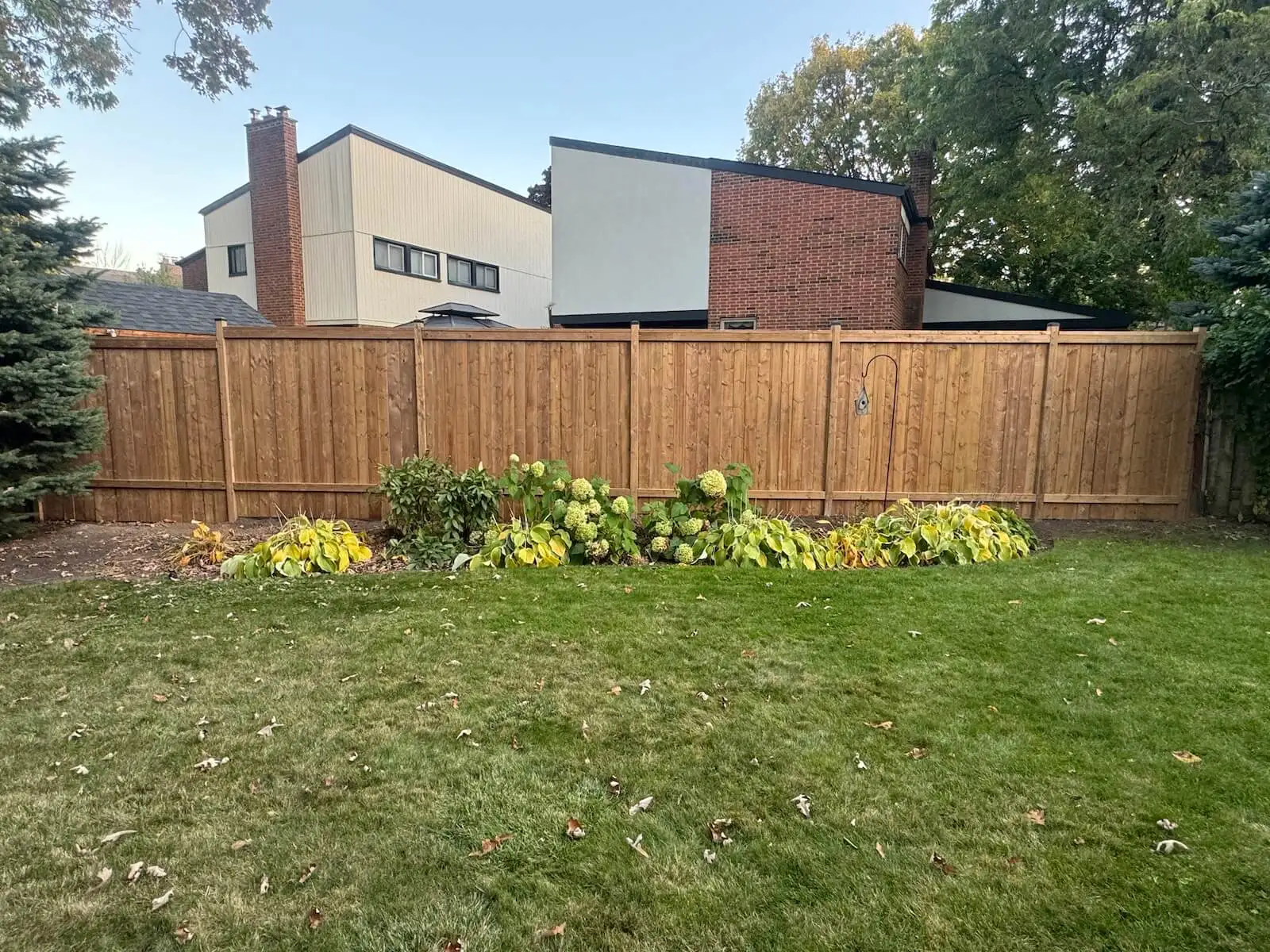
Backyard landscape ideas along fence lines work better when the fence is treated as a backdrop, not the whole solution. Layering shrubs, grasses, and one small tree in front of it gives depth and reduces the boxed-in look.
Narrow side yards near the back porch need slimmer privacy tools. Columnar evergreens, screens with horizontal slats, and climbing structures usually fit better than broad shrubs there.
Small Back Porch Landscape Ideas to Make the Space Feel Bigger
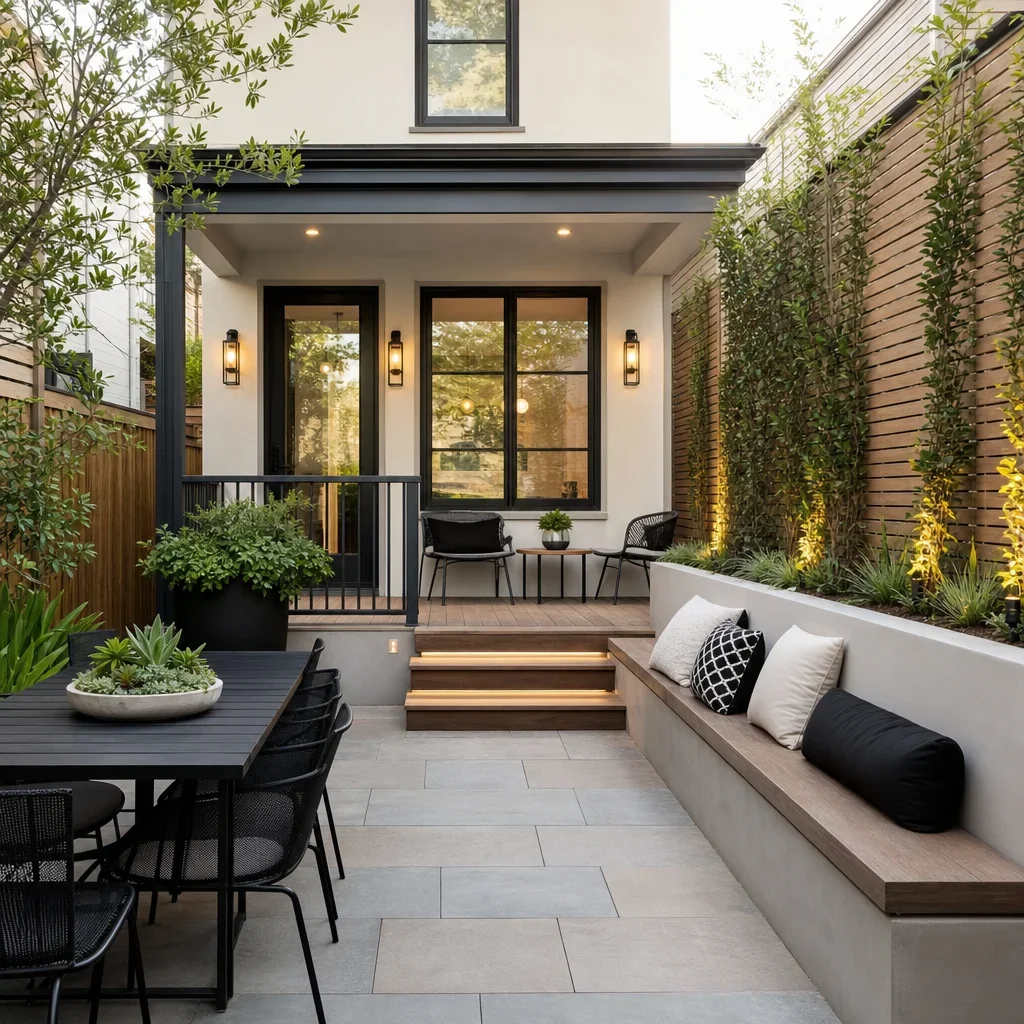
Small spaces feel larger when the layout is simpler. One strong focal point, one paving language, and cleaner bed lines make a tight porch area read as deliberate instead of cramped.
Continuous paving helps visually stretch the footprint. Carrying the same surface from the porch landing to a small patio makes the area feel more connected and more functional.
Vertical planting frees floor area. Trellises, narrow privacy screens, and slim columnar plants add enclosure without stealing the few usable feet you have.
Integrated seating usually beats extra furniture in compact yards. A bench edge, seat wall, or planter ledge can reduce clutter and improve circulation.
A limited palette makes a porch look bigger. Fewer plant varieties, calmer colours, and repeated forms create a composed view from inside the house.
Drainage Solutions Near Back Porch Foundations, Steps, and Patios
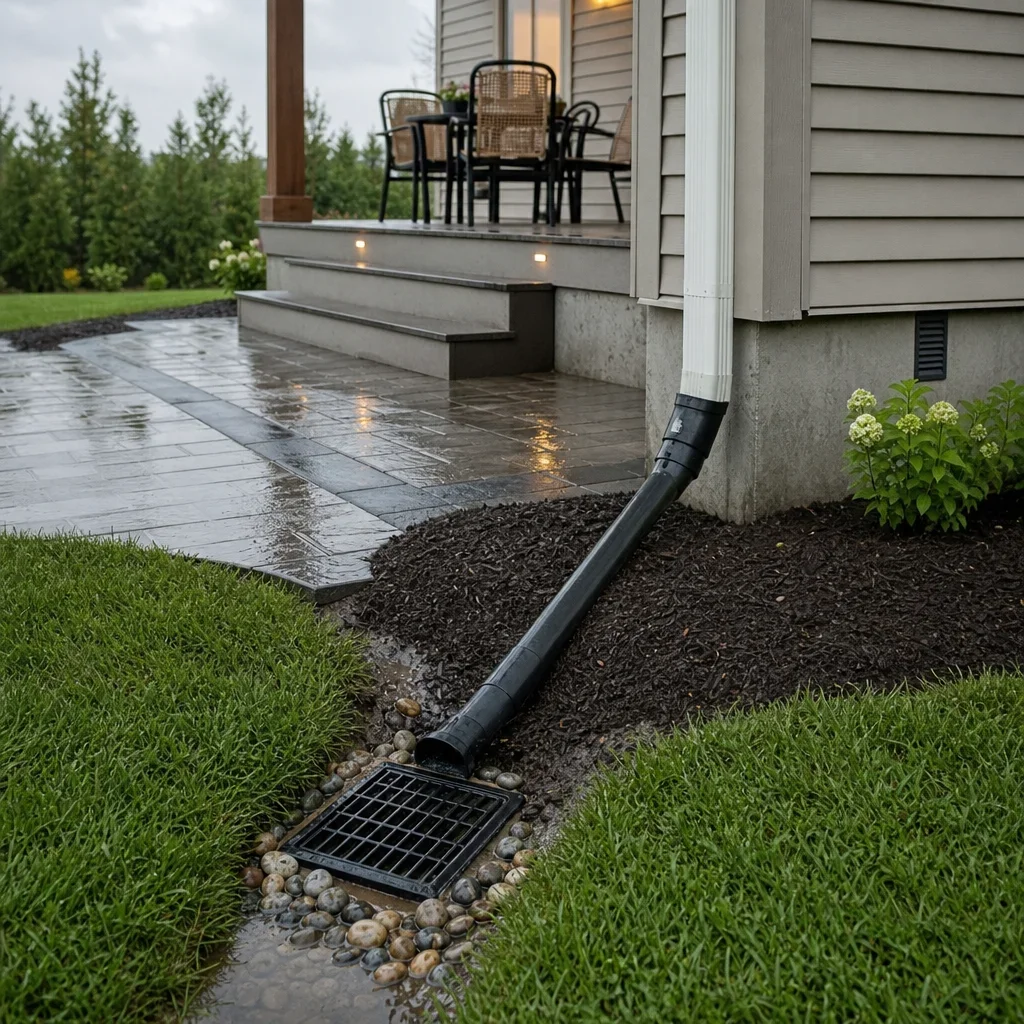
Drainage should be solved before the planting plan is finalized. Pooling at step landings, splashback on siding, erosion beside stairs, and water moving toward the foundation are design problems first, not decoration problems.
Positive grading is the first line of defence. As a general rule, the ground should slope away from the house, commonly around 5% over the first several feet where conditions allow .
Hardscape near the porch needs water collection planned at the same time. Catch basins, channel drains, swales, downspout extensions, and permeable zones can all play a role depending on the site.
Raised beds and heavy edging can create drainage failures when they trap water against the home. This is a common mistake around porch foundations and stairs.
GTA spring thaw makes drainage details more important than they look on install day. Snowmelt, frozen soils, and repeated wet-dry cycles expose weak grading fast.
Back Porch Lighting Layouts for Safety and Ambiance
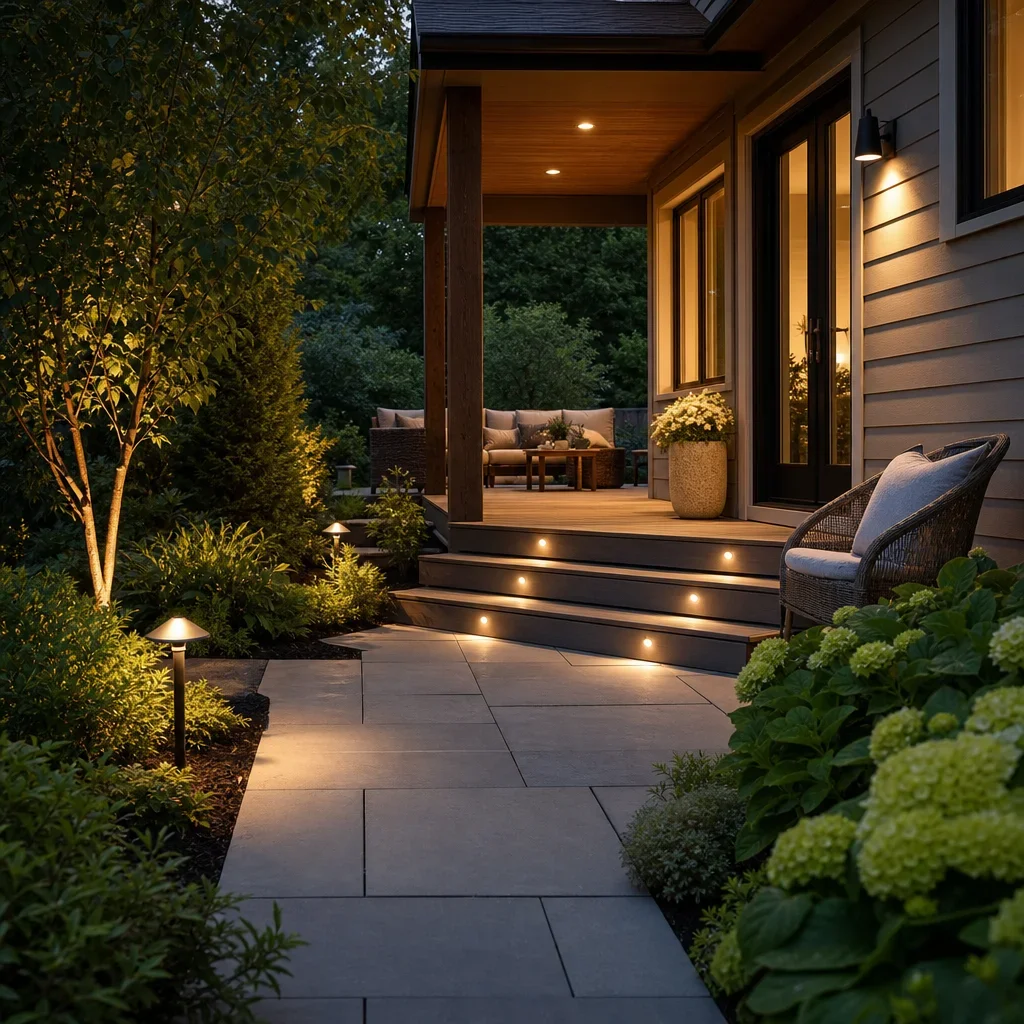
Good lighting uses layers, not one bright fixture. A premium porch usually combines step lighting, path lighting, soffit or wall lighting, and selective accent lights on trees or feature planting.
Path lights are best used to guide, not spotlight. Low-voltage fixtures often space out around 6–10 ft apart depending on beam spread and brightness , and wider spacing usually looks more refined than runway-style rows.
Step and landing lights matter most where grade changes occur. They improve safety in winter darkness and help define the route from porch to patio or lawn.
Warm light tends to look richer in residential landscapes. Around 2700K–3000K is the range most designers use for a comfortable exterior feel .
Glare control is part of good design. Fixtures should light surfaces and planting, not shine directly into seating areas, interior windows, or neighbouring yards.
Pet-Friendly and Child-Safe Back Porch Landscaping Ideas
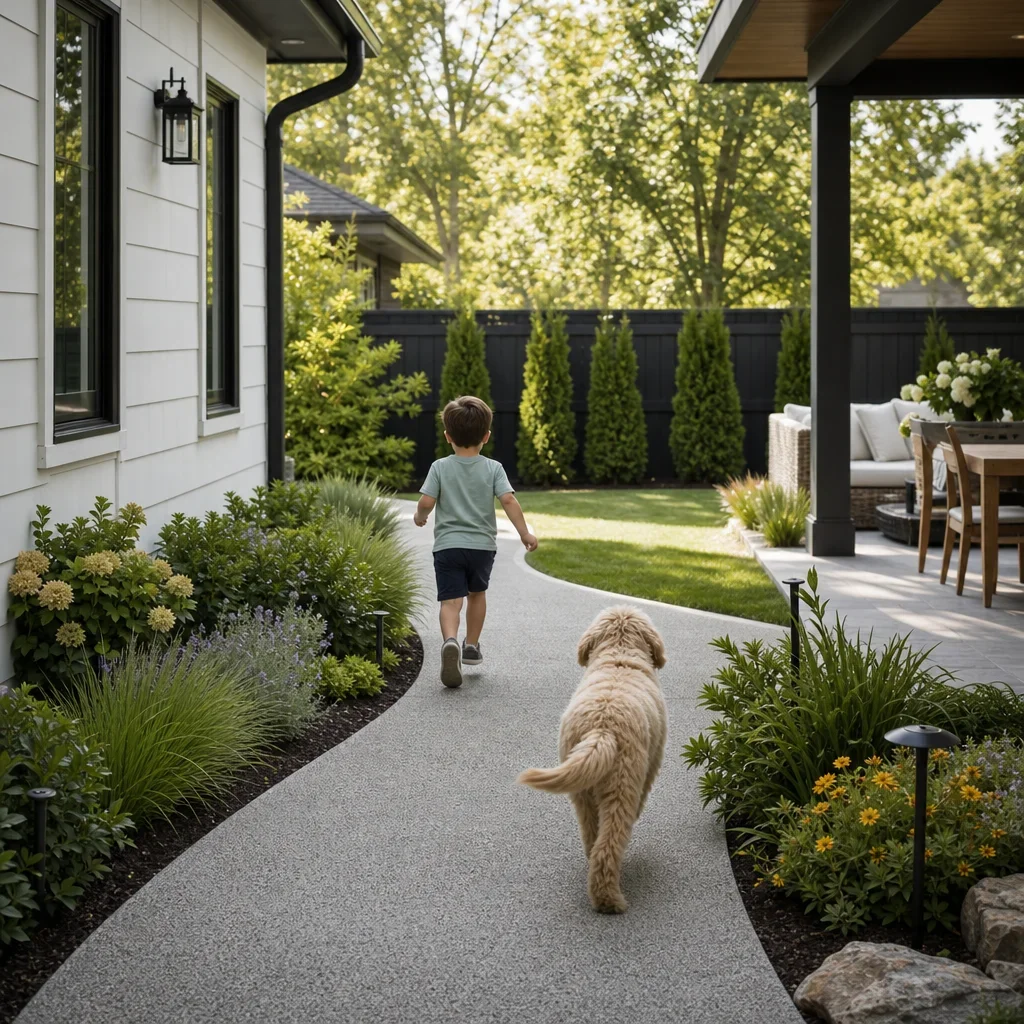
Safety starts with plant and surface choice. Avoid thorny or toxic plants near seating entries, play paths, and pet routes, and confirm plant safety for your household before final selection.
Slip-resistant paving is worth prioritizing near steps and patios. Smooth materials can look elegant, but textured surfaces usually perform better around wet shoes, paws, and Ontario weather.
Loose materials should be used carefully where children and pets play. Small stone can migrate into turf, scatter onto steps, or become a chewing hazard for some dogs.
Good layouts protect visibility. Clear sightlines, sensible gate placement, and fewer blind corners help families supervise movement between porch, yard, and any pool or water feature.
Shade and durable routes matter for pets. Repeated traffic from door to lawn usually needs a stable path or tougher planting strategy rather than hoping the grass survives.
Back Porch Landscaping Ideas on a Budget: Where to Save and Where Not To
Budget-friendly does not mean shortcut construction. The smartest back porch landscape ideas on a budget phase the work and spend first on layout, drainage, grading, and the structural parts that are expensive to redo.
The best places to save are repetition and phasing. Fewer material transitions, repeated plant groupings, targeted lighting, and containers before custom built-ins can keep a project controlled without making it look cheap.
The worst places to cut are what you cannot easily see later. Base prep, drainage, retaining work, steps, and core hardscape support should be done right the first time.
A cosmetic refresh might include bed cleanup, mulch, selective planting, and containers, while a partial update may add a small paver landing, lighting, or a privacy screen. A full redesign usually combines layout changes, hardscape, drainage, lighting, and complete planting replacement.
Broad GTA project costs can range from a few thousand dollars for a focused planting refresh to tens of thousands for porch-adjacent hardscape and privacy work, and substantially more for full premium redesigns with drainage and structures . Exact pricing depends on access, grading, materials, and scope.
What Adds the Most Value to a Backyard Near the Porch
Usable outdoor living space usually adds more practical value than scattered features. A well-sized patio, better circulation, privacy, and lighting improve daily use and buyer appeal more than novelty elements on their own.
Drainage correction is one of the most underrated upgrades. A yard that sheds water properly protects the house, preserves hardscape, and makes the landscape easier to maintain.
Cohesive design matters more than feature count. Buyers and homeowners both respond better to a backyard that feels complete than to one with too many disconnected upgrades.
Overbuilding niche features can narrow appeal. A project should fit the house, lot, and likely use pattern rather than forcing a trend that dominates the whole yard.
Latest Backyard and Porch Trends That Still Age Well
The strongest current trend is the outdoor room. Homeowners want porch and patio spaces that feel furnished, lit, and connected to the home rather than left as empty transition zones.
Cleaner lines are staying power, not a short fad. Large-format surfaces, darker accents, restrained plant palettes, and integrated privacy features continue to fit both modern and transitional homes.
Naturalistic planting is popular when it is controlled. Layered grasses and perennials can look current and soft, but they still need structure so the space does not feel unkempt.
Wellness and retreat features are growing too. Quiet seating areas, shade, subtle water, and better night lighting are more durable trends than novelty decor.
Common Mistakes to Avoid Before Starting a Back Porch Landscaping Project
The biggest mistake is choosing materials before the layout works. If circulation, drainage, and privacy are unresolved, even expensive finishes will disappoint.
Undersized entertaining areas create regret quickly. Seating, dining, and grill zones all need room around them, not just room for the furniture footprint itself.
Planting too close to the house causes avoidable maintenance and moisture issues. Mature size, airflow, and service access should all be considered before the install plan is finalized.
Winter use should be part of the design from day one. Snow placement, shovel routes, salt exposure, and step visibility all shape what will still look good in February.
Permits and approvals may apply for some structures, pools, grading changes, or retaining work. Those rules vary by municipality and project, so confirm the triggers before construction starts.
Planning the whole yard, even if you build in phases, prevents rework. A phased plan usually saves money compared with solving each piece in isolation.
Pre-project checklist
- Define how the porch and yard will actually be used.
- Map sun, drainage, and neighbour sightlines.
- Decide on one hardscape family and one plant style.
- Solve grading and water movement before finishes.
- Confirm whether permits or approvals may be needed.
- Plan lighting and service routes early.
- Build in phases only if the full master plan is clear.
Seasonal Maintenance Calendar for Ontario Back Porches and Beds
Spring maintenance should focus on reset and inspection. Clean beds, edge lines, refresh mulch where needed, and check drainage after thaw before new growth hides problems.
Summer maintenance should be light and consistent. Monitor irrigation, weed early, deadhead only where the plant benefits, and keep containers watered because porch-adjacent pots dry faster.
Fall work is about protection and cleanup. Manage leaves, top up water for evergreens before freeze-up, and decide which perennials stay standing for winter structure.
Winter maintenance should protect both access and materials. Keep snow piles away from delicate shrubs where possible, watch salt exposure near beds, and keep steps and path edges visible.
Mulch often needs refreshing every 1–2 years depending on exposure and breakdown rate , while pruning frequency depends on plant type and should follow the growth habit of the species in the bed.
FAQ
How do I design my back porch?
Start with use, then map sun, privacy, drainage, and circulation. Most successful plans size walkways around 3–4 ft wide and porch-side beds around 3–8 ft deep, then narrow the material palette so the space feels cohesive .
How do I landscape around a back patio?
Use the patio as the hardscape anchor, then soften the edges with planting, lighting, and privacy elements. Drainage, grading, and traffic routes should be planned before you choose pavers or plants.
What plants work well around a back porch in Ontario?
Plants that handle Zone 5–6 conditions, reflected heat, and the porch light level tend to perform best. Common choices include boxwood, yew, hydrangea, hosta, grasses, nepeta, ferns, and carex depending on sun exposure .
What is the most maintenance free landscaping?
The lowest-maintenance landscapes usually combine evergreen structure, repeated planting masses, simple bed shapes, and less fragmented lawn. Zero maintenance is not realistic, but good drainage and fewer fussy details reduce the workload.
What are some cheap backyard landscaping ideas?
The least expensive improvements are usually cleanup, mulch, repeated planting, containers, and phased upgrades. The cheapest long-term strategy is avoiding shortcuts on base prep and drainage that have to be rebuilt later.
Can I lay pavers directly on dirt?
No durable installation should rely on dirt alone. Pedestrian pavers typically need a compacted base in roughly the 6–10 in range depending on site conditions to resist settling and freeze-thaw movement .
How do I make my back porch more private?
Use the privacy tool that fits the sightline. A hedge, slatted screen, pergola, or layered fence-line planting can all work, and evergreens help preserve privacy through winter.
What makes a back porch look expensive?
Consistent materials, larger-scale elements, restrained planting, and layered lighting create the premium look. Fewer better features usually outperform more decorative clutter.
What design mistakes make a backyard look tacky?
Too many small unrelated elements, mismatched finishes, plastic edging, and poor maintenance are the usual culprits. Crowded layouts also make the porch feel smaller and cheaper.
What adds the most value to a backyard?
Usable outdoor living space, privacy, lighting, professional hardscape, and drainage correction usually contribute the most practical value. The best return is a yard that works well and feels finished.
How do I landscape around a raised porch?
Prioritize grading, erosion control, and safe visibility at steps and landings. Raised porches usually need stronger edge definition and careful drainage planning beside the stairs.
Is mulch or gravel better around a back porch?
Mulch is usually better for planted beds because it supports soil and roots, while gravel works better in controlled modern accents or low-plant zones. Both are typically installed around 2–3 in deep when used properly .
When to Hire a Professional for Back Porch Landscaping
Professional help makes the biggest difference when the project involves grade changes, drainage concerns, premium hardscape, integrated lighting, privacy structures, or a full layout redesign. Those are the projects where sequencing and detailing decide whether the finished yard still performs five winters from now.
A design-build approach usually reduces coordination gaps. One team can connect layout, material selection, drainage, planting, and phasing before the first shovel goes in.
For GTA homeowners who want clarity before they commit, RockLeaf offers a free 3D design and quote, line-by-line pricing, a 5-year total warranty, a plant-survival guarantee, and a 14-day start promise on eligible projects; conditions apply, ask an agent .
If your porch area has drainage issues, awkward grading, or too many competing ideas, the next step is simple: get the layout right on paper before you build anything.