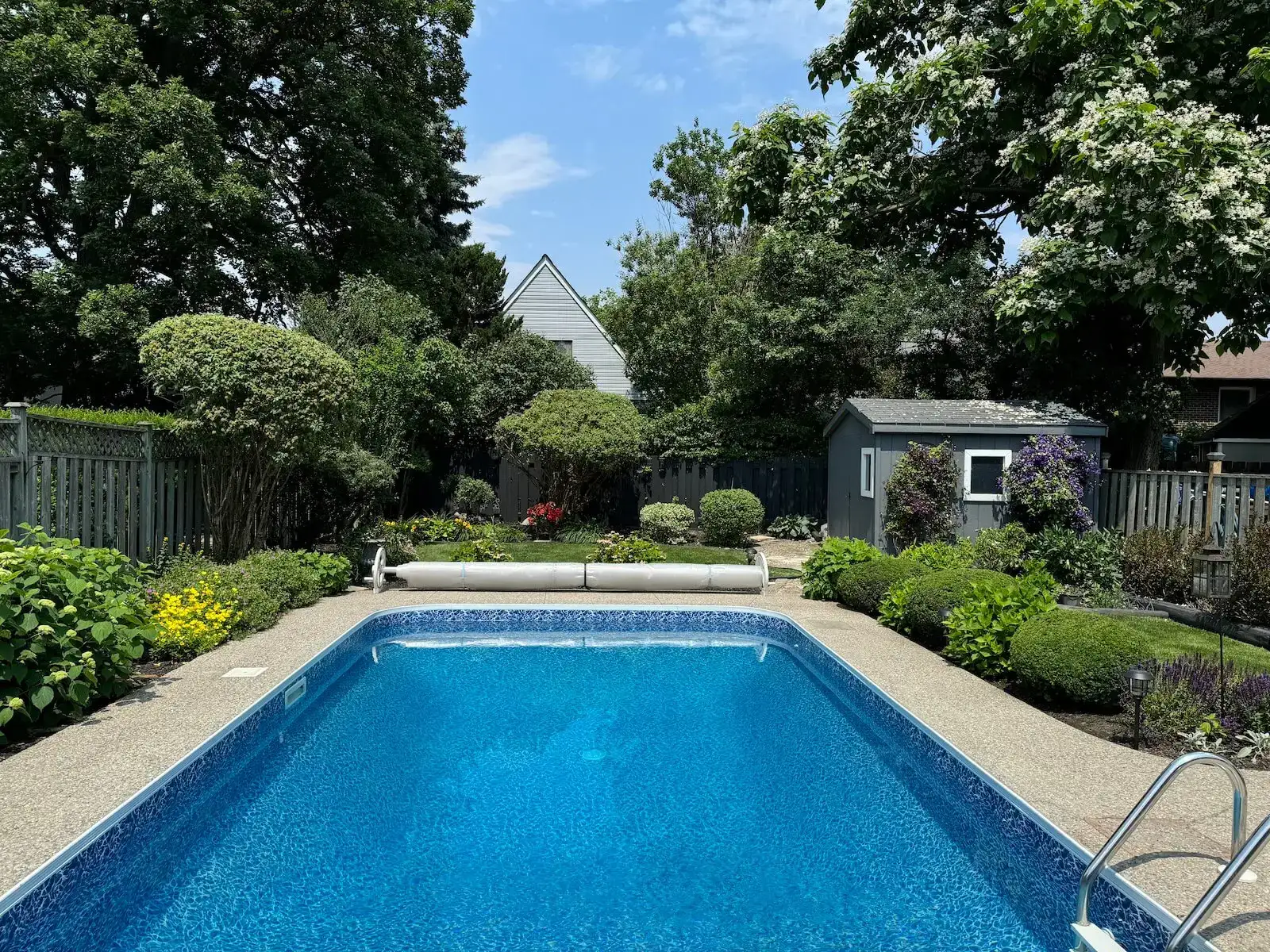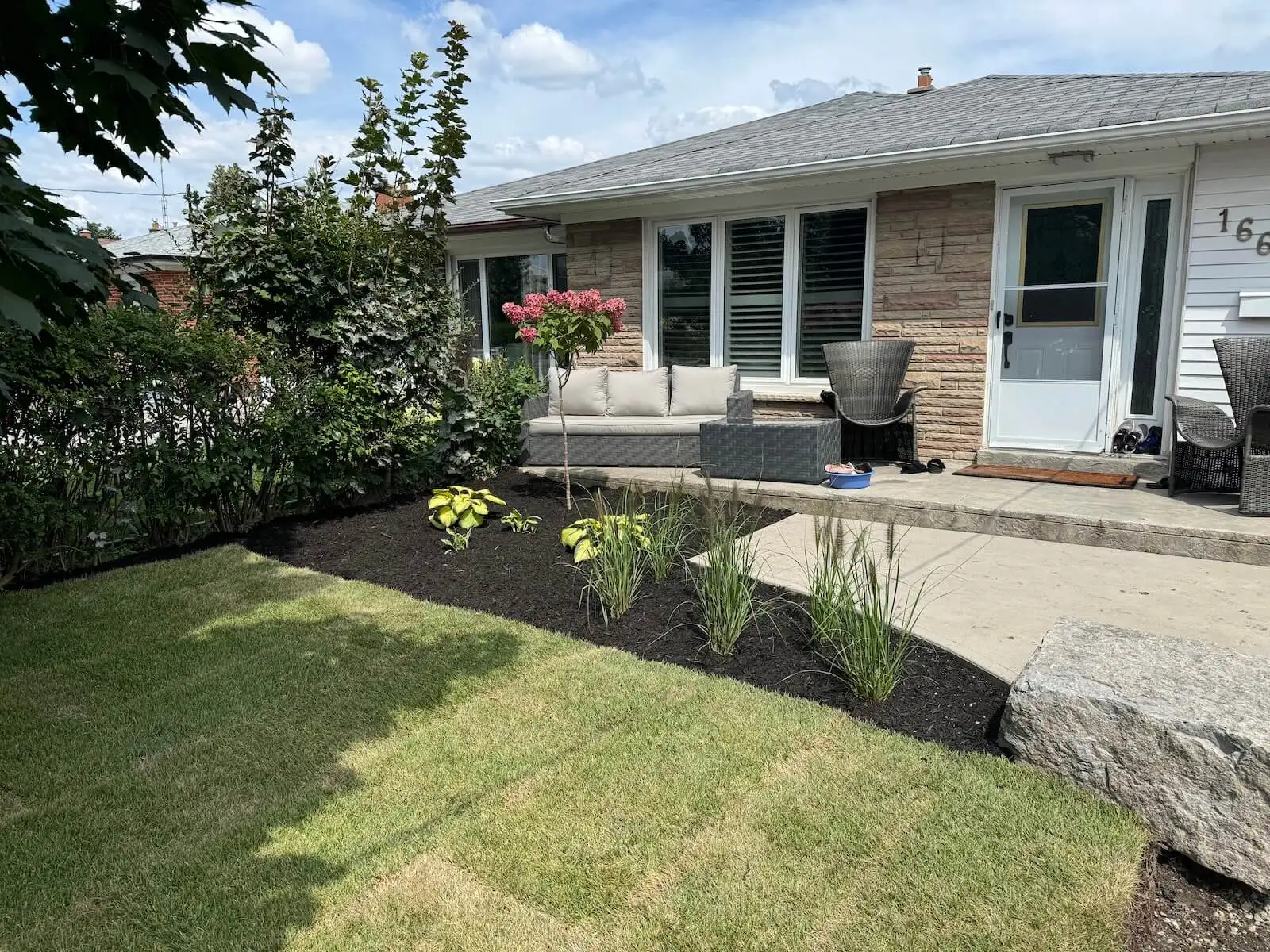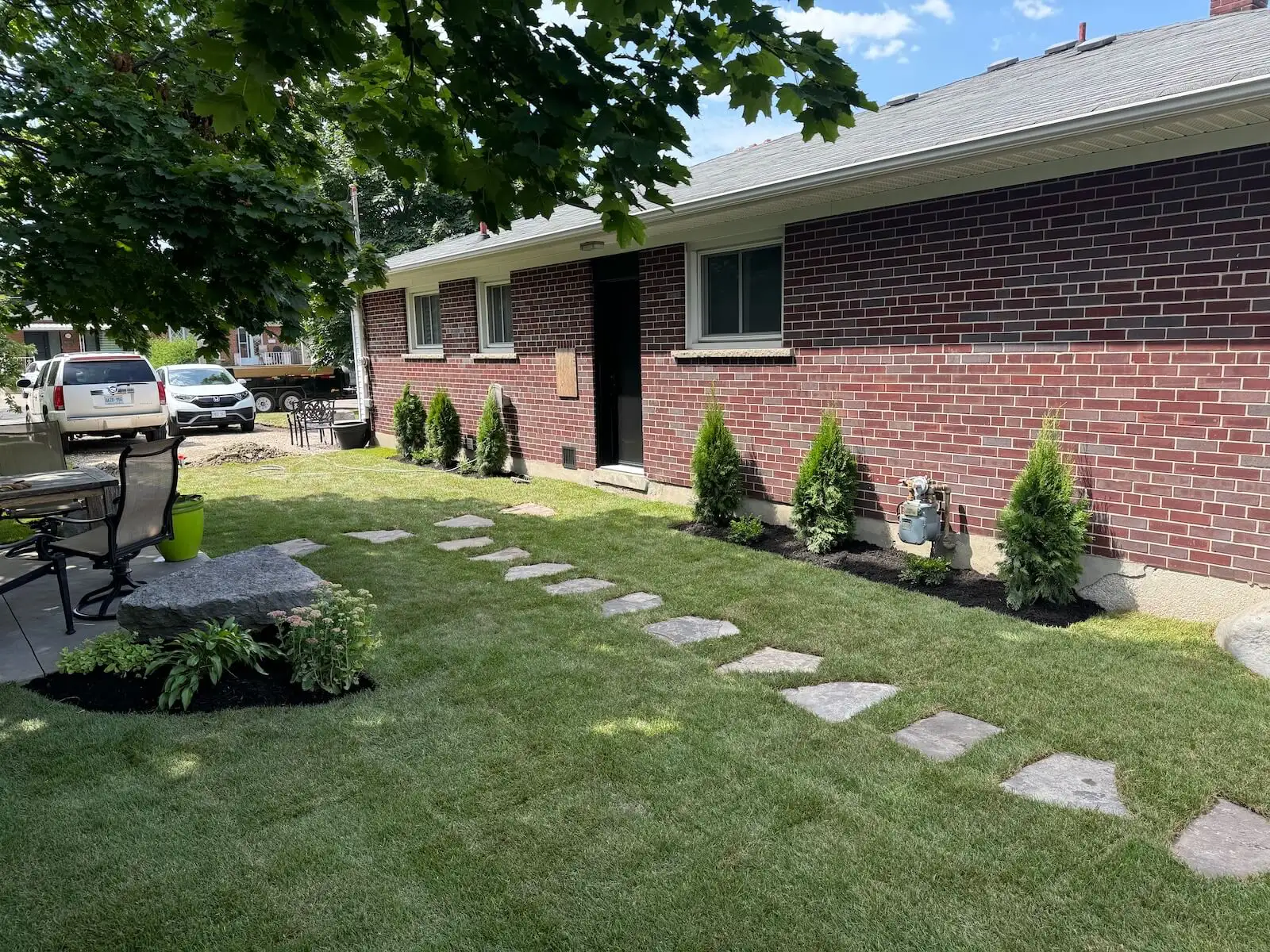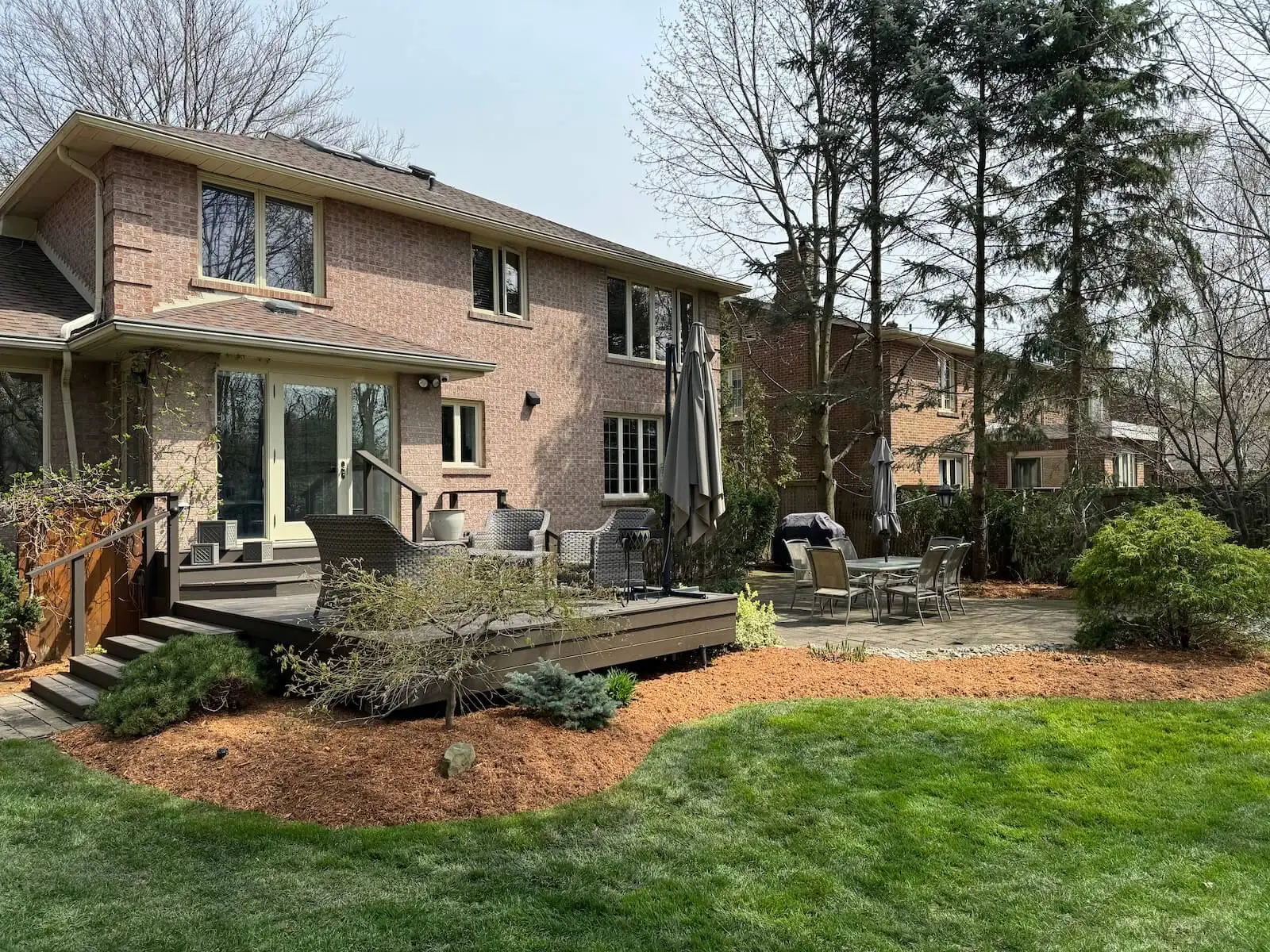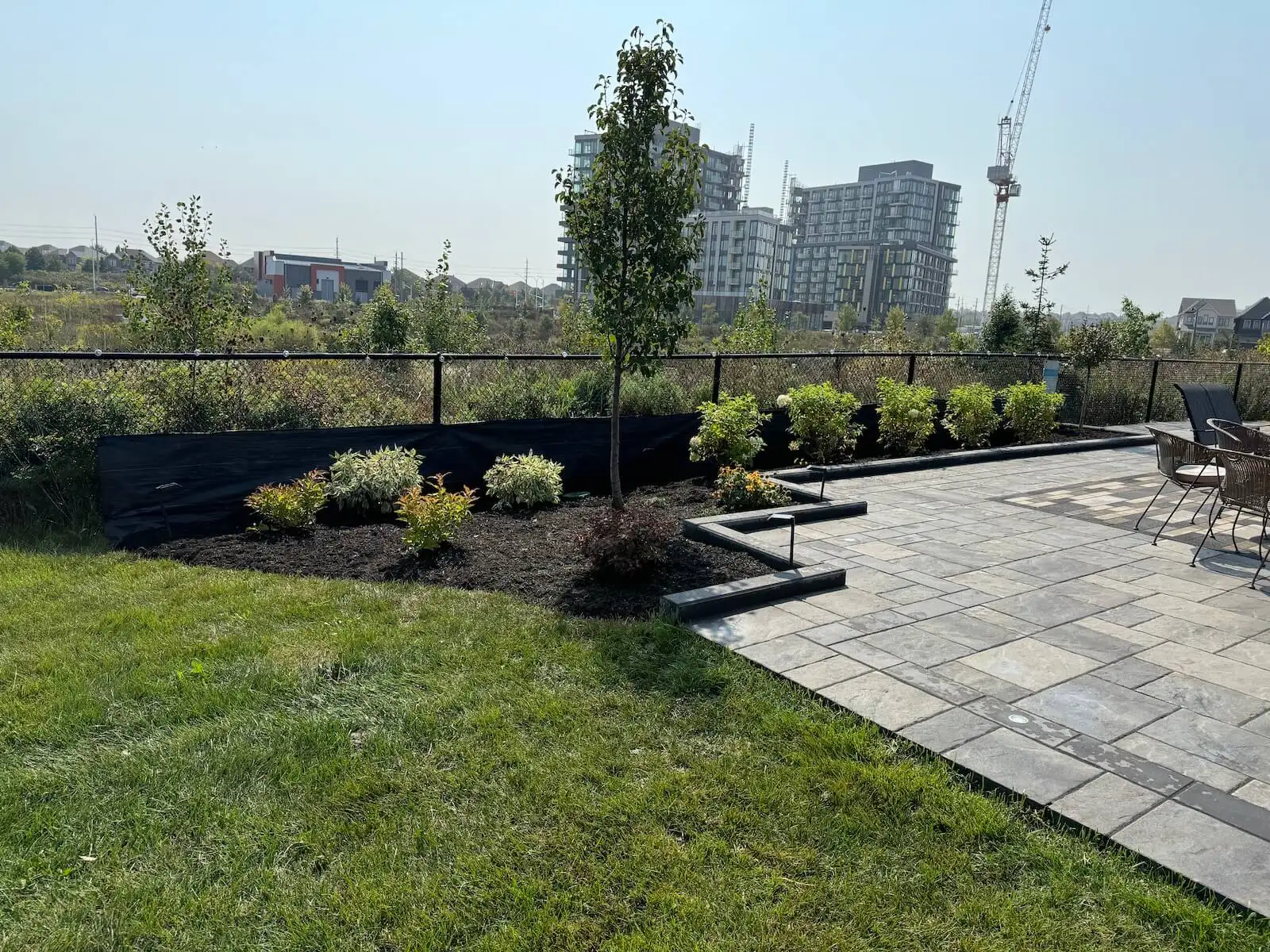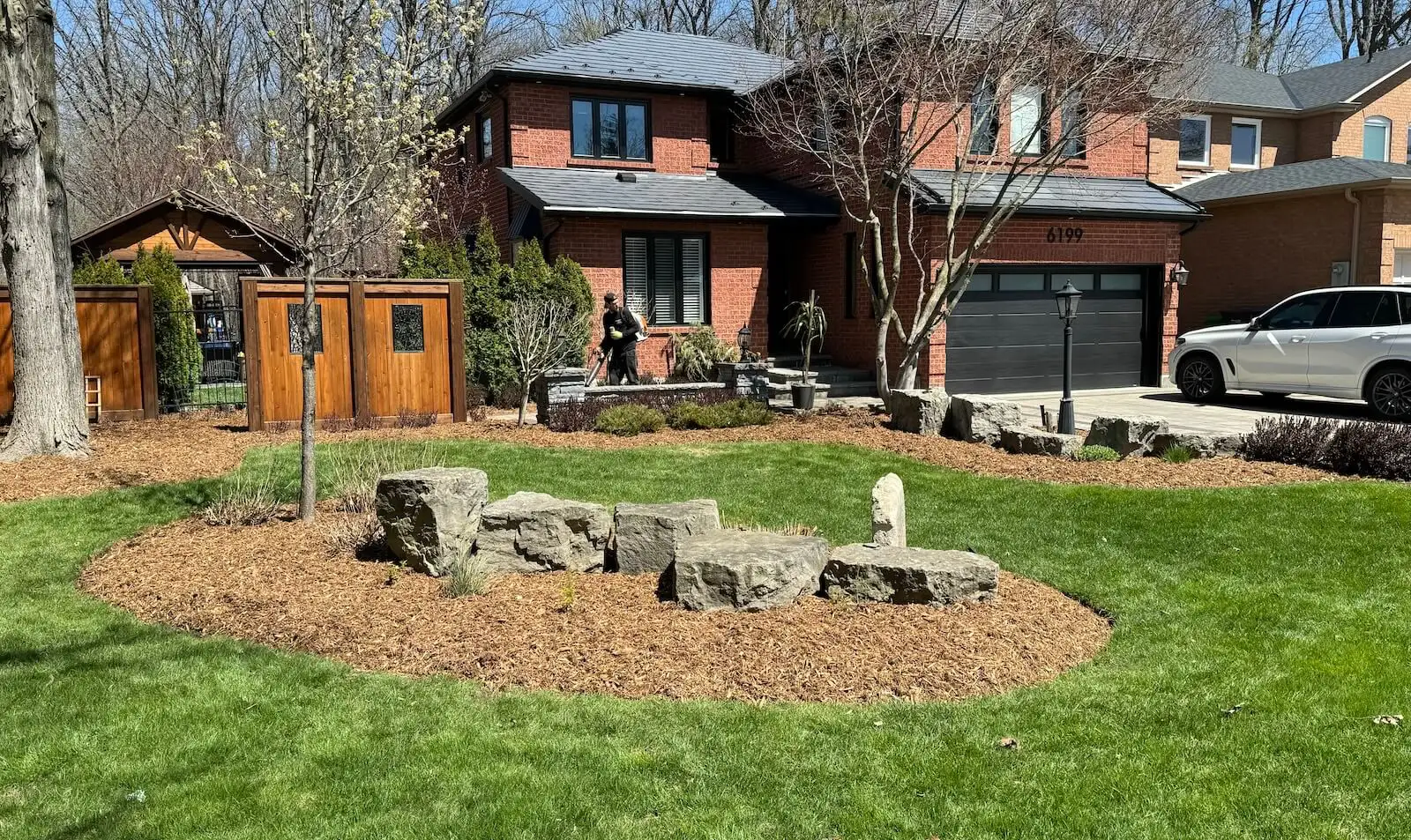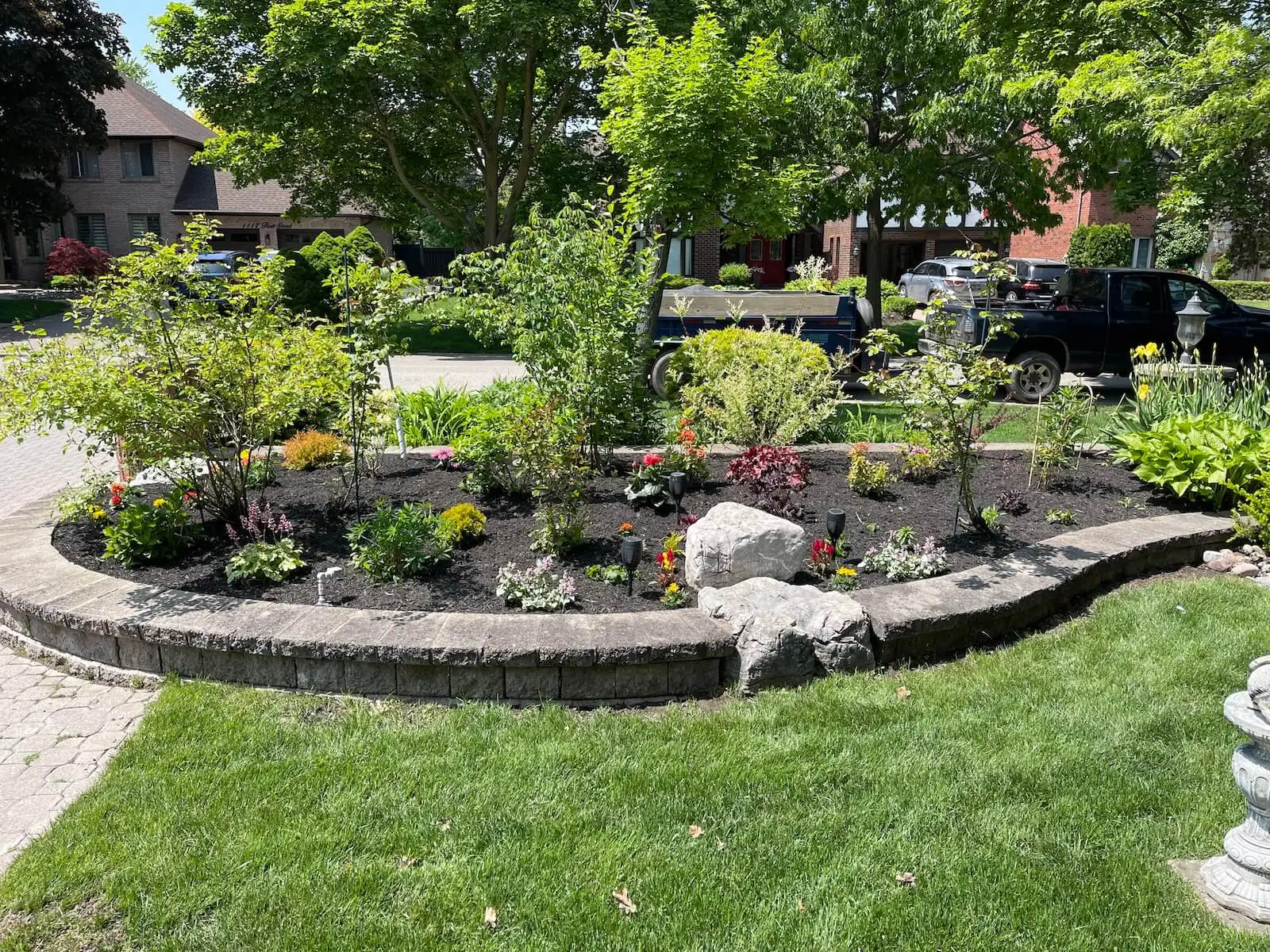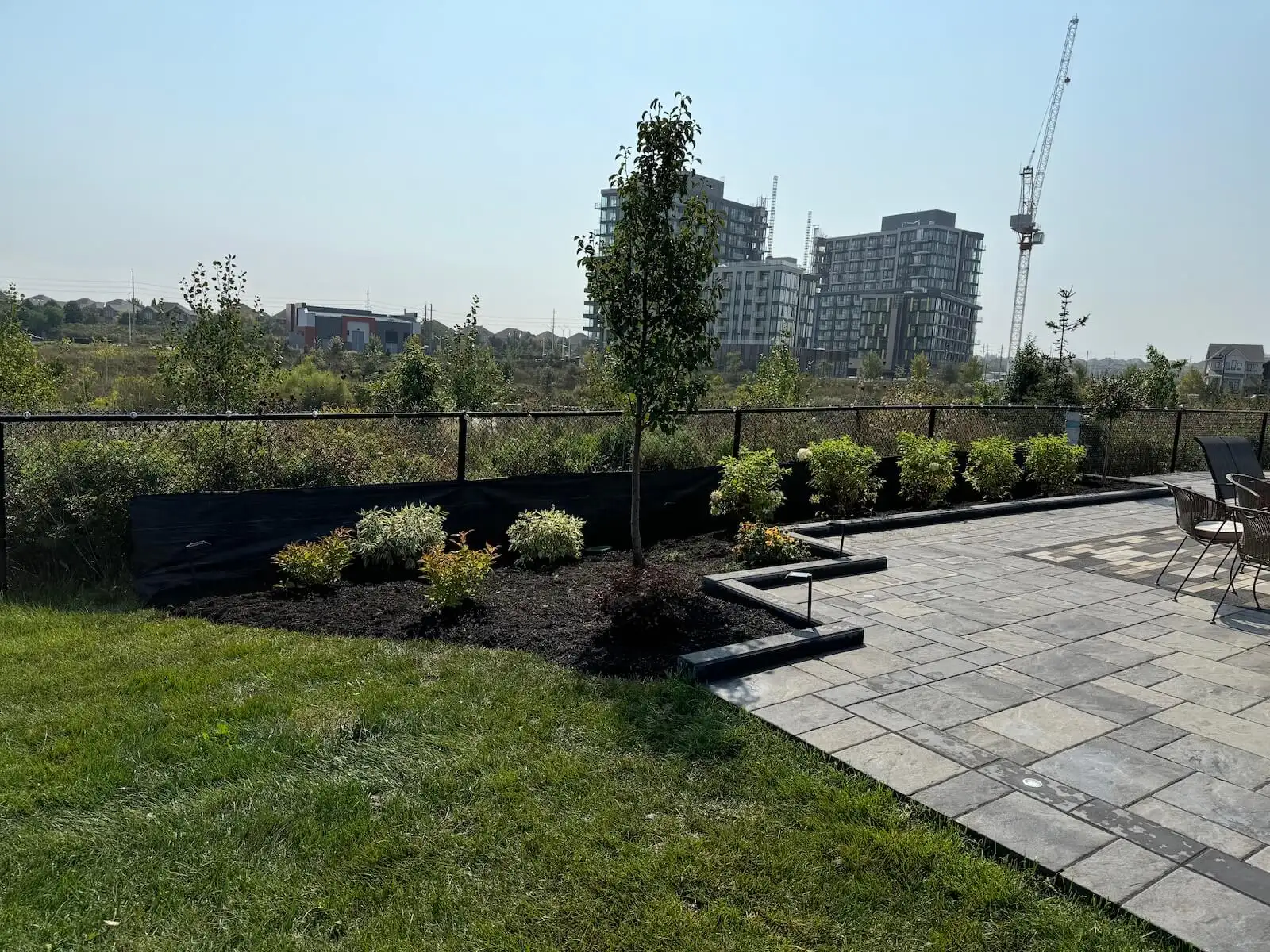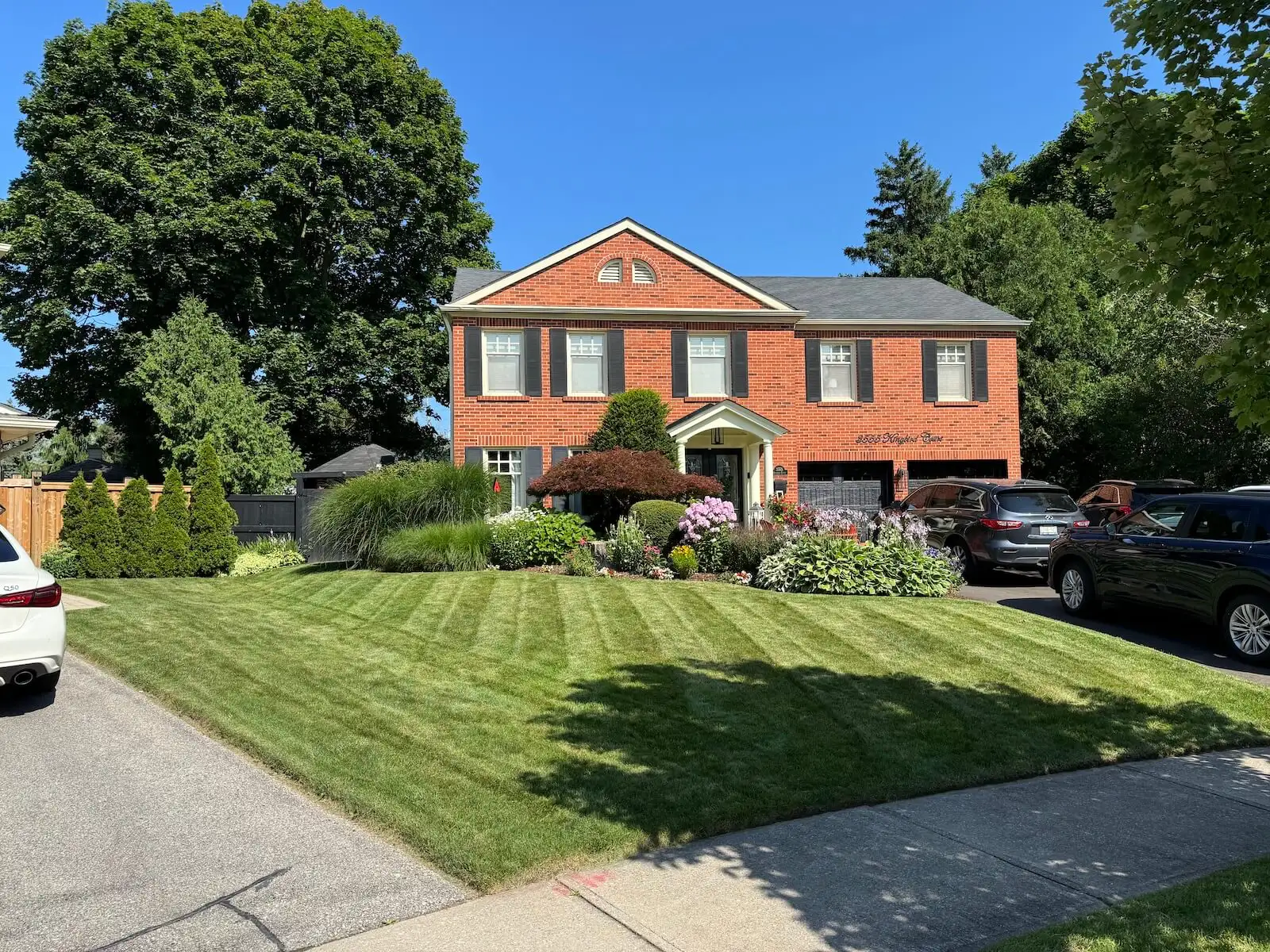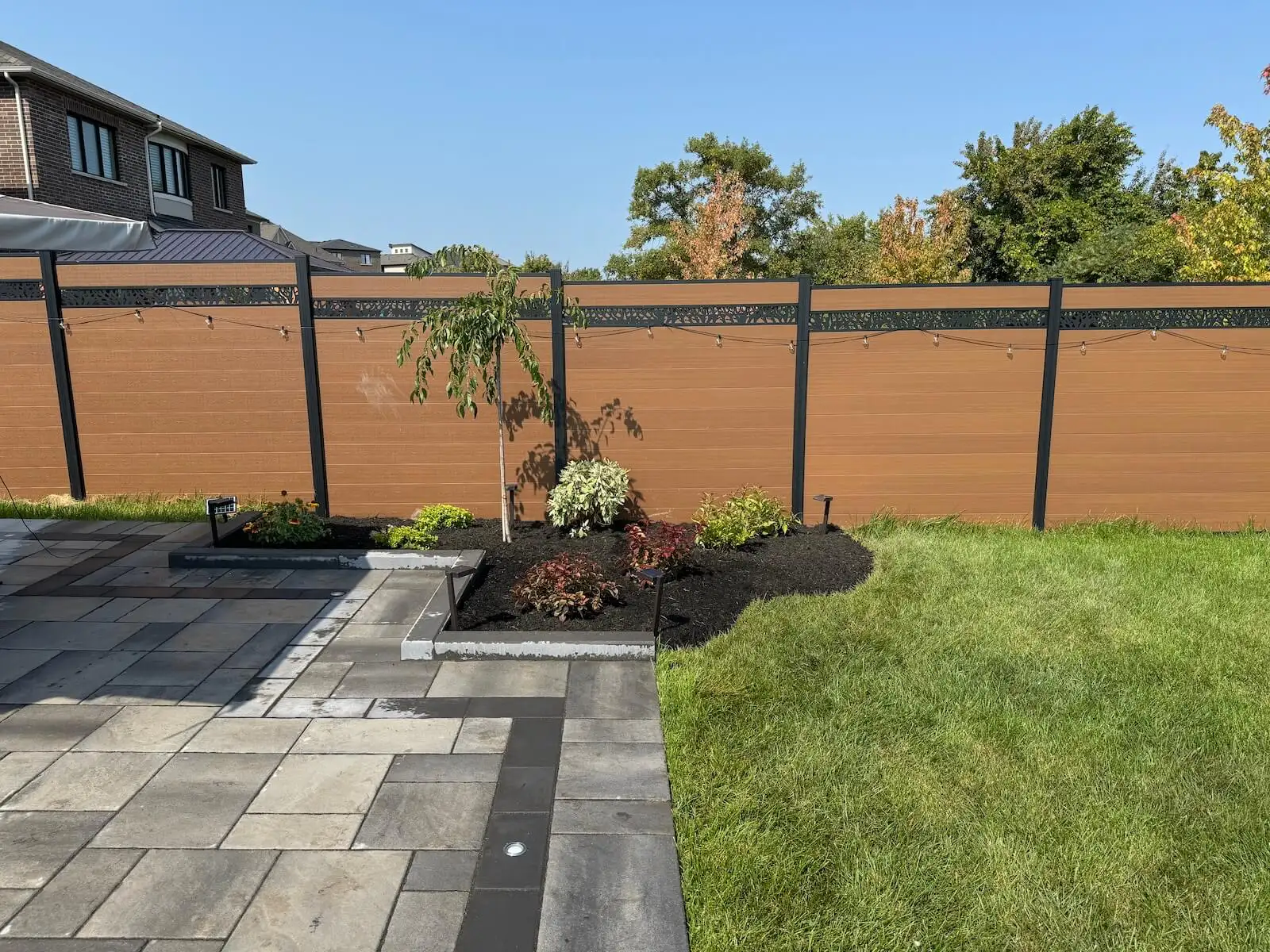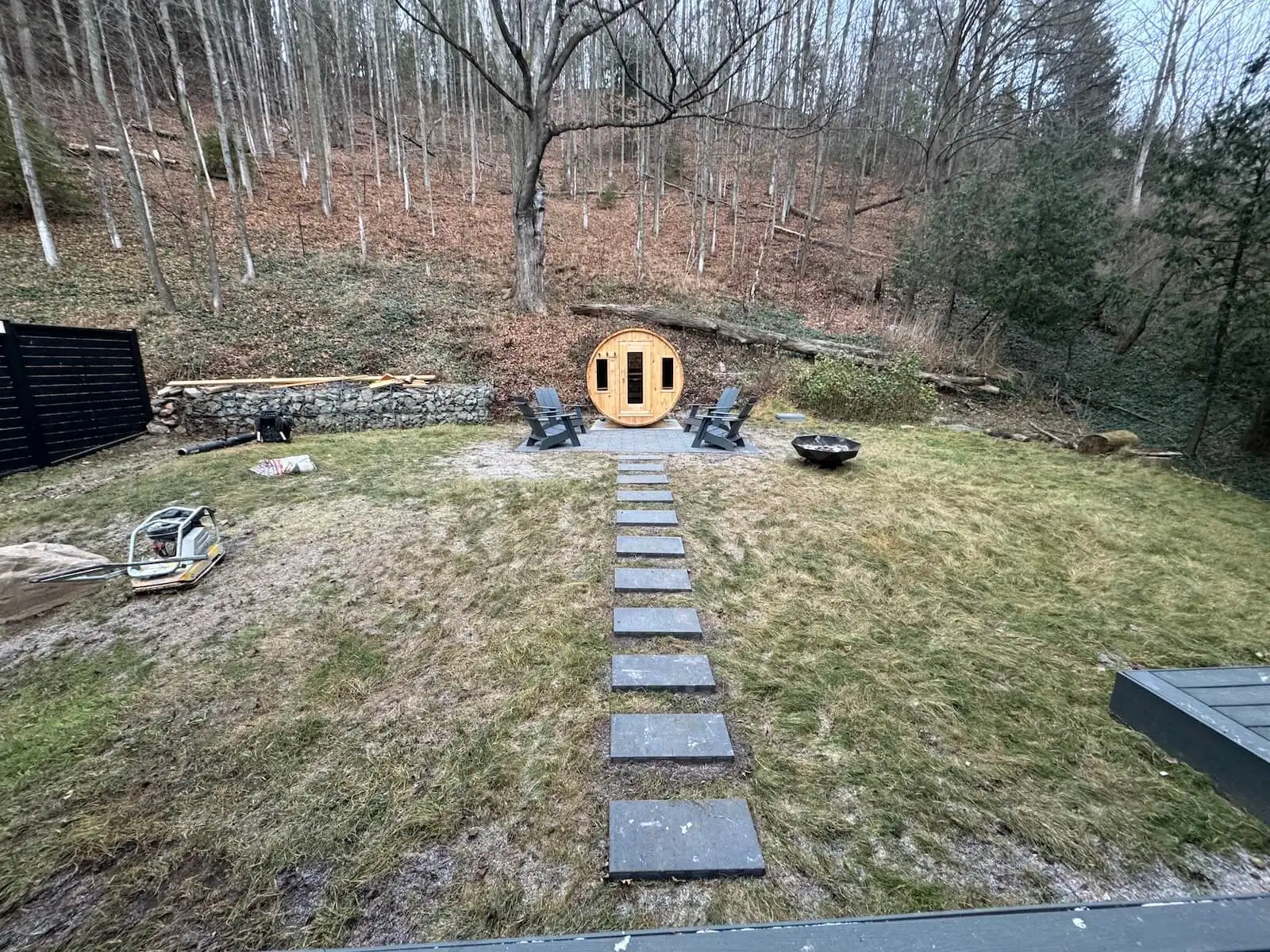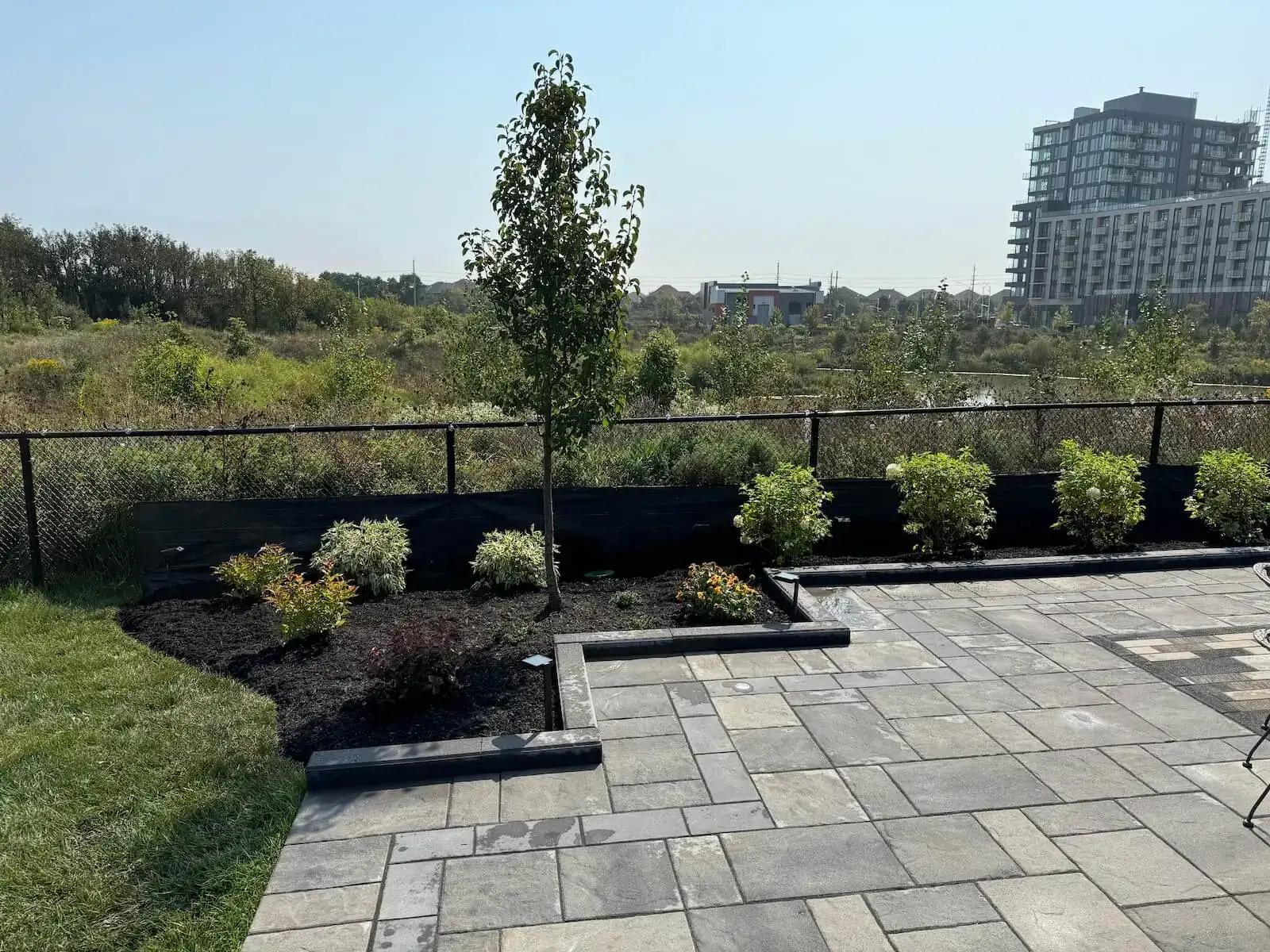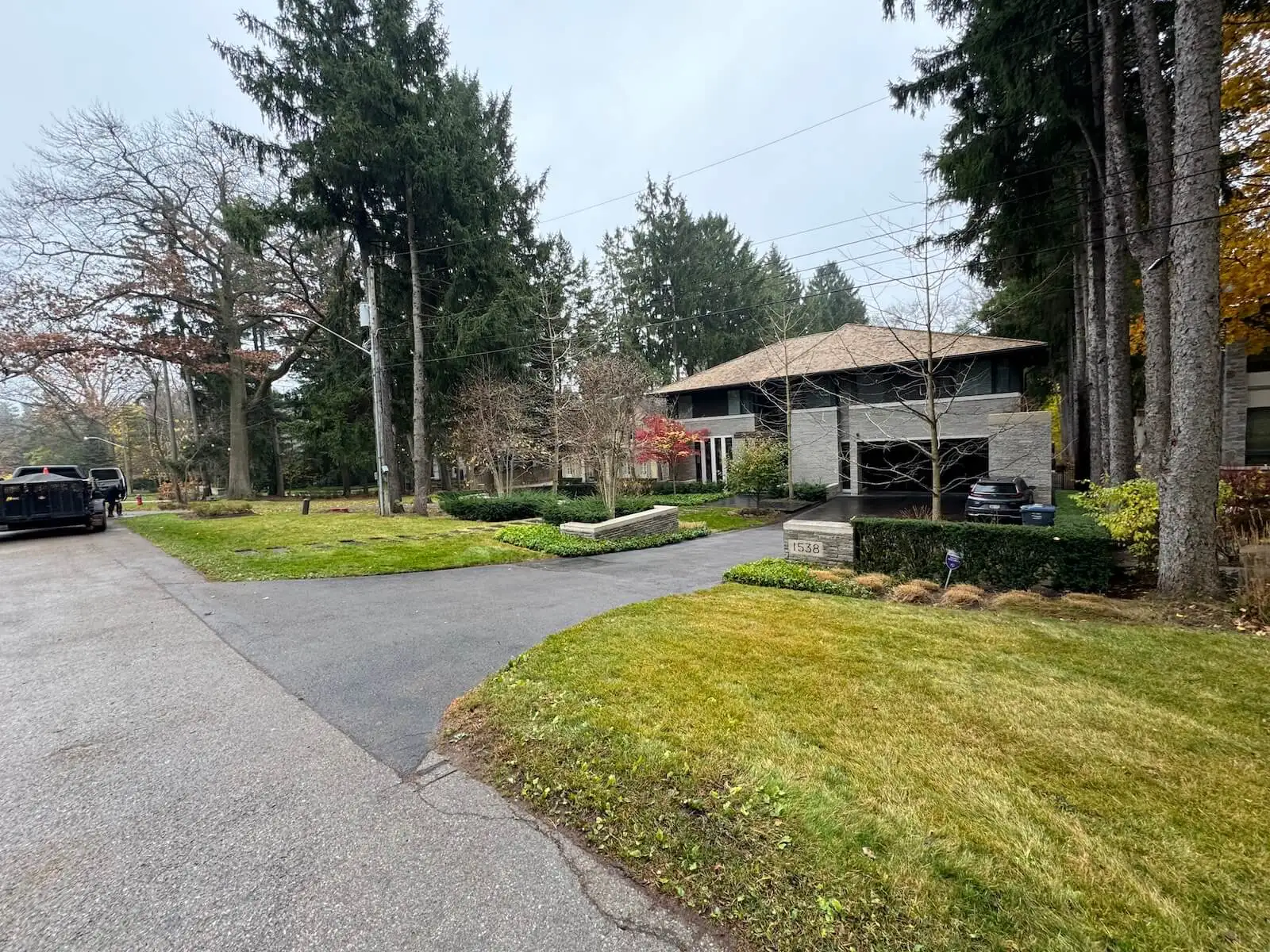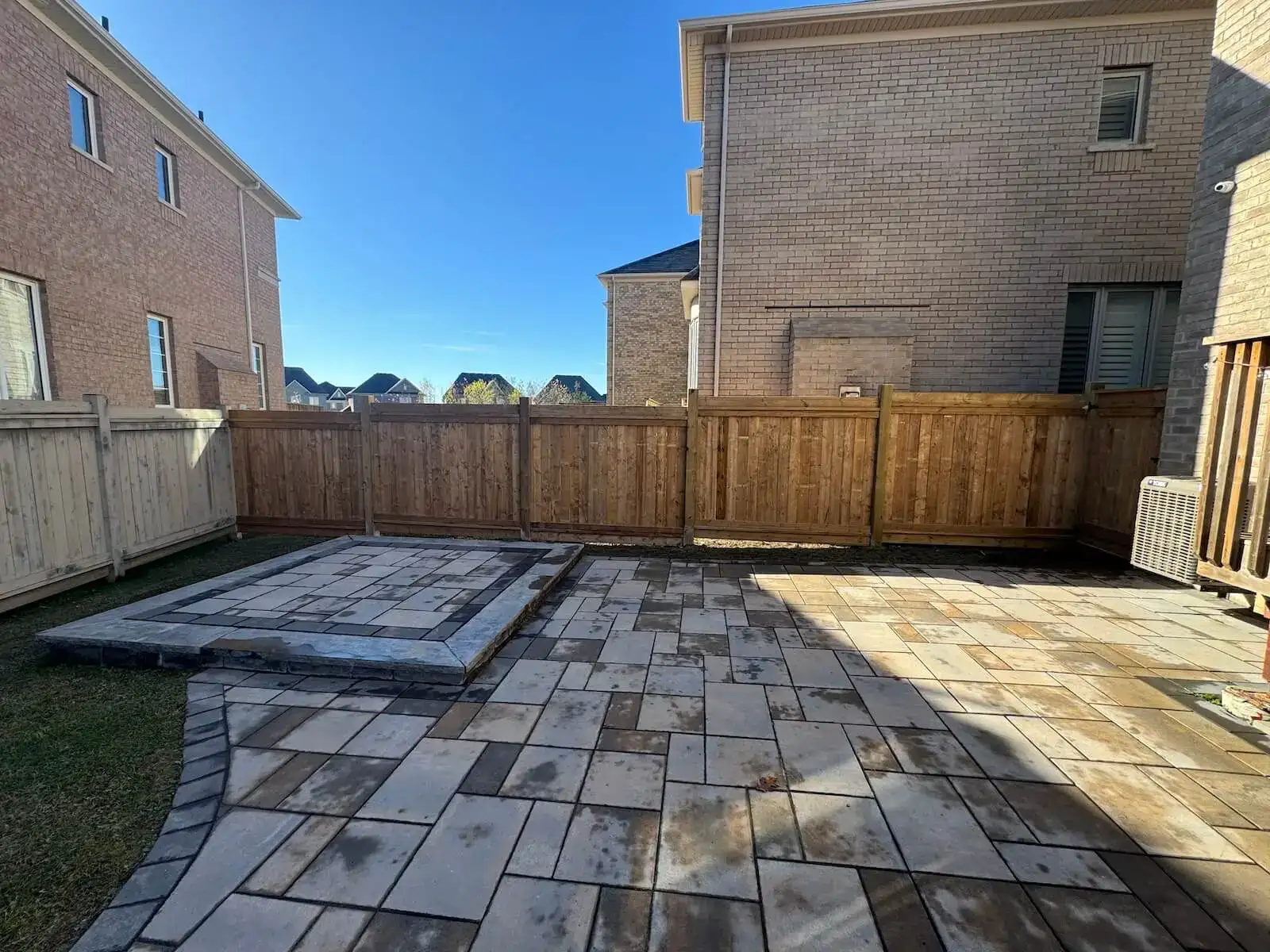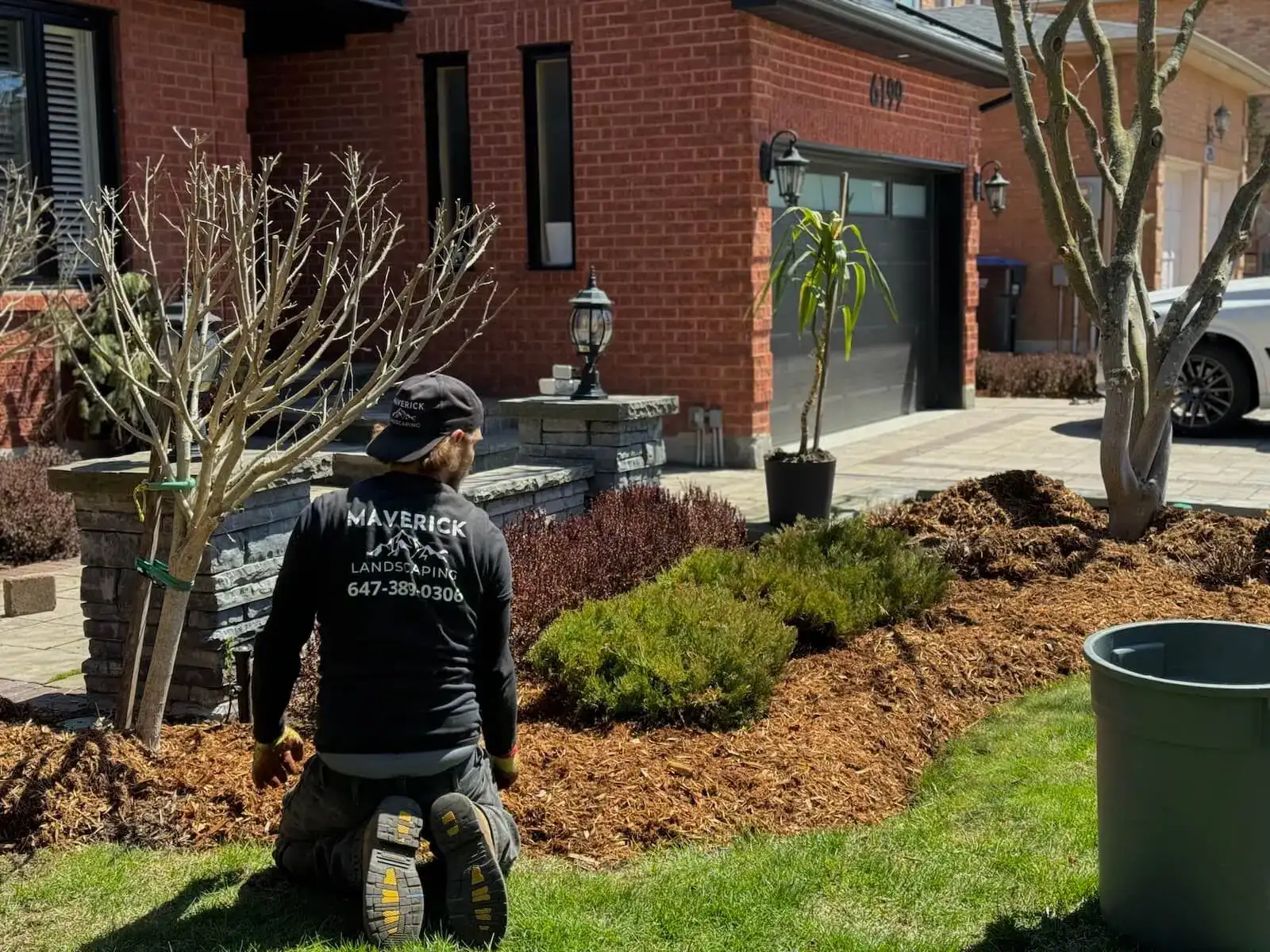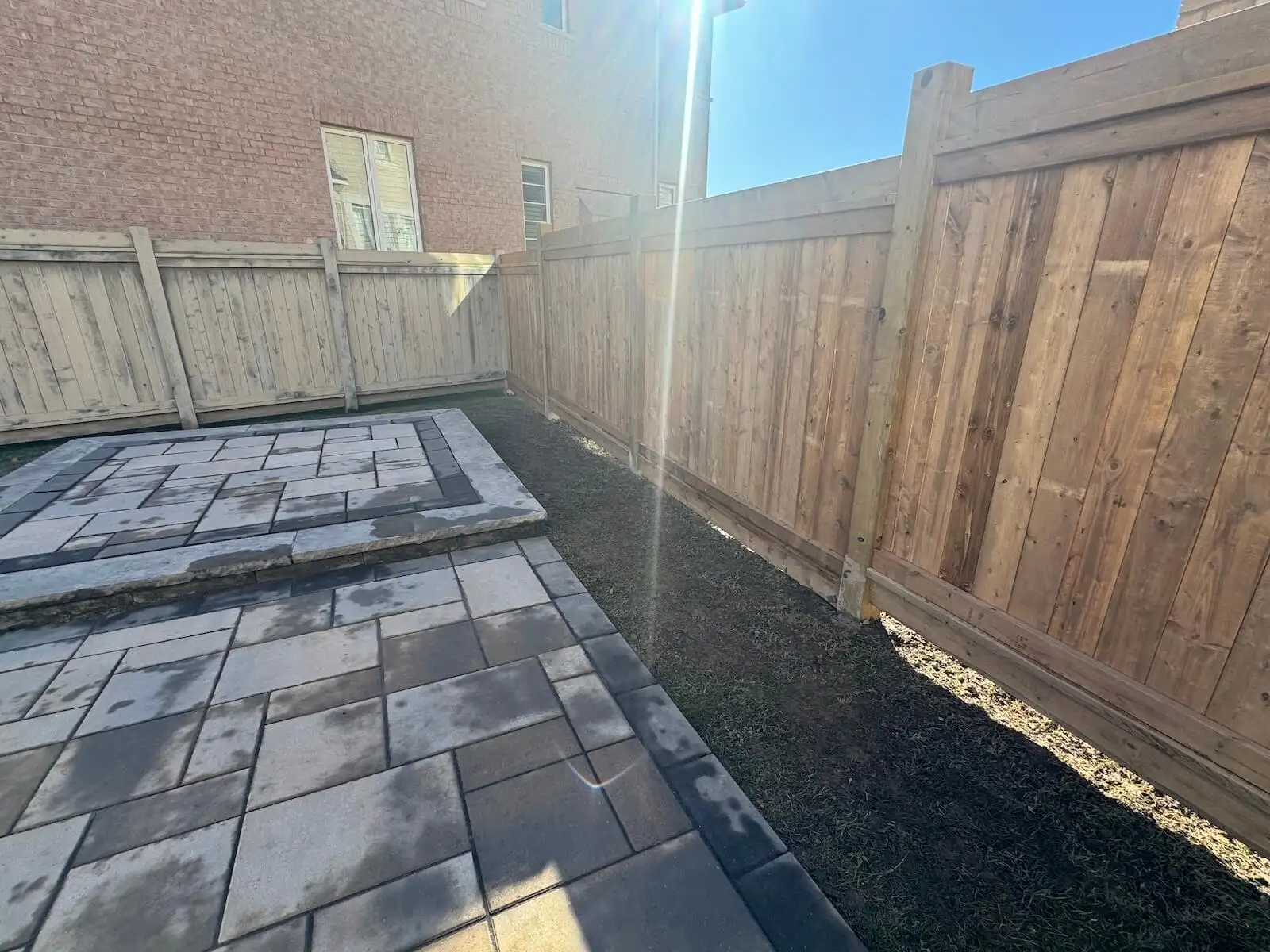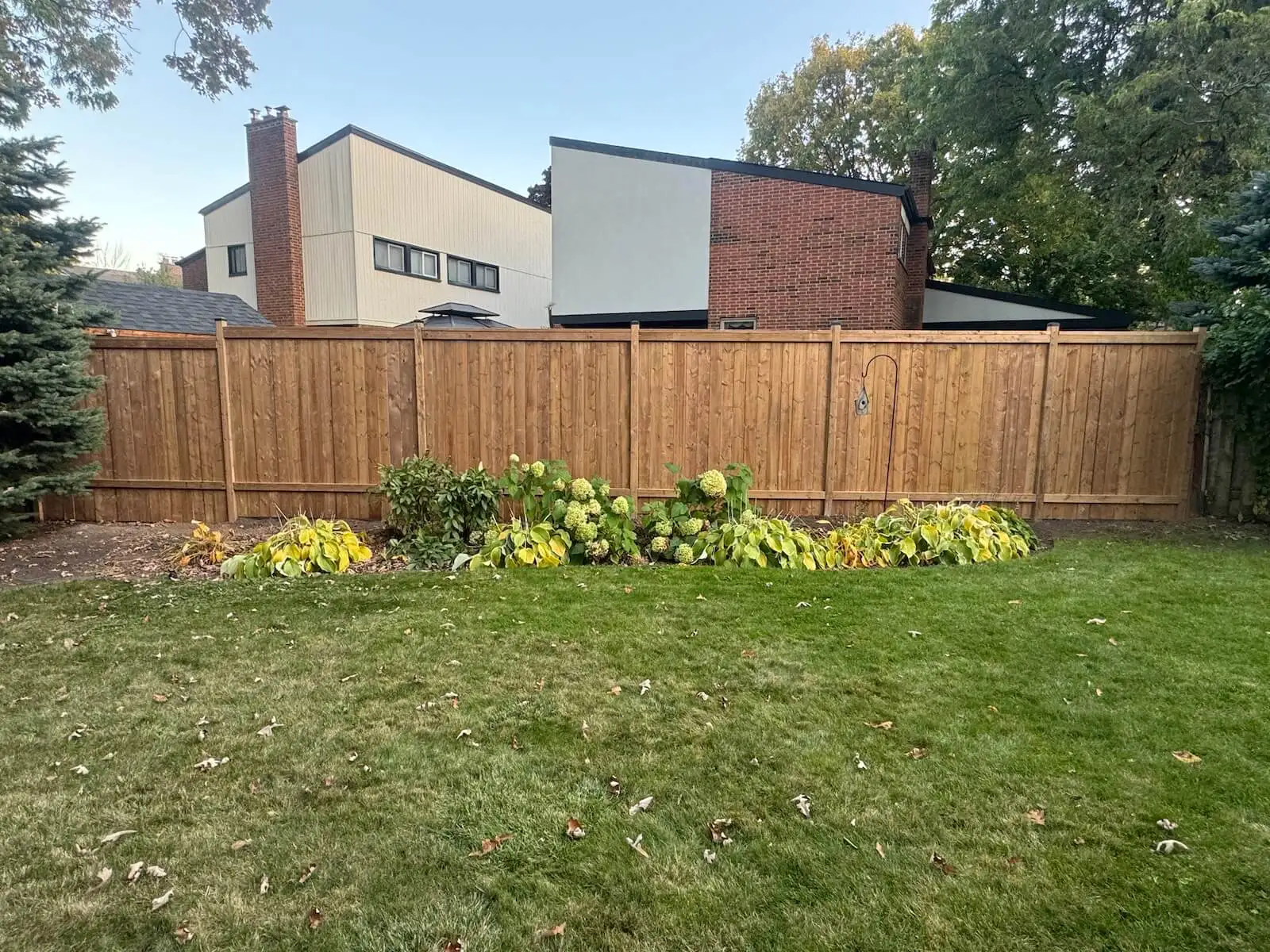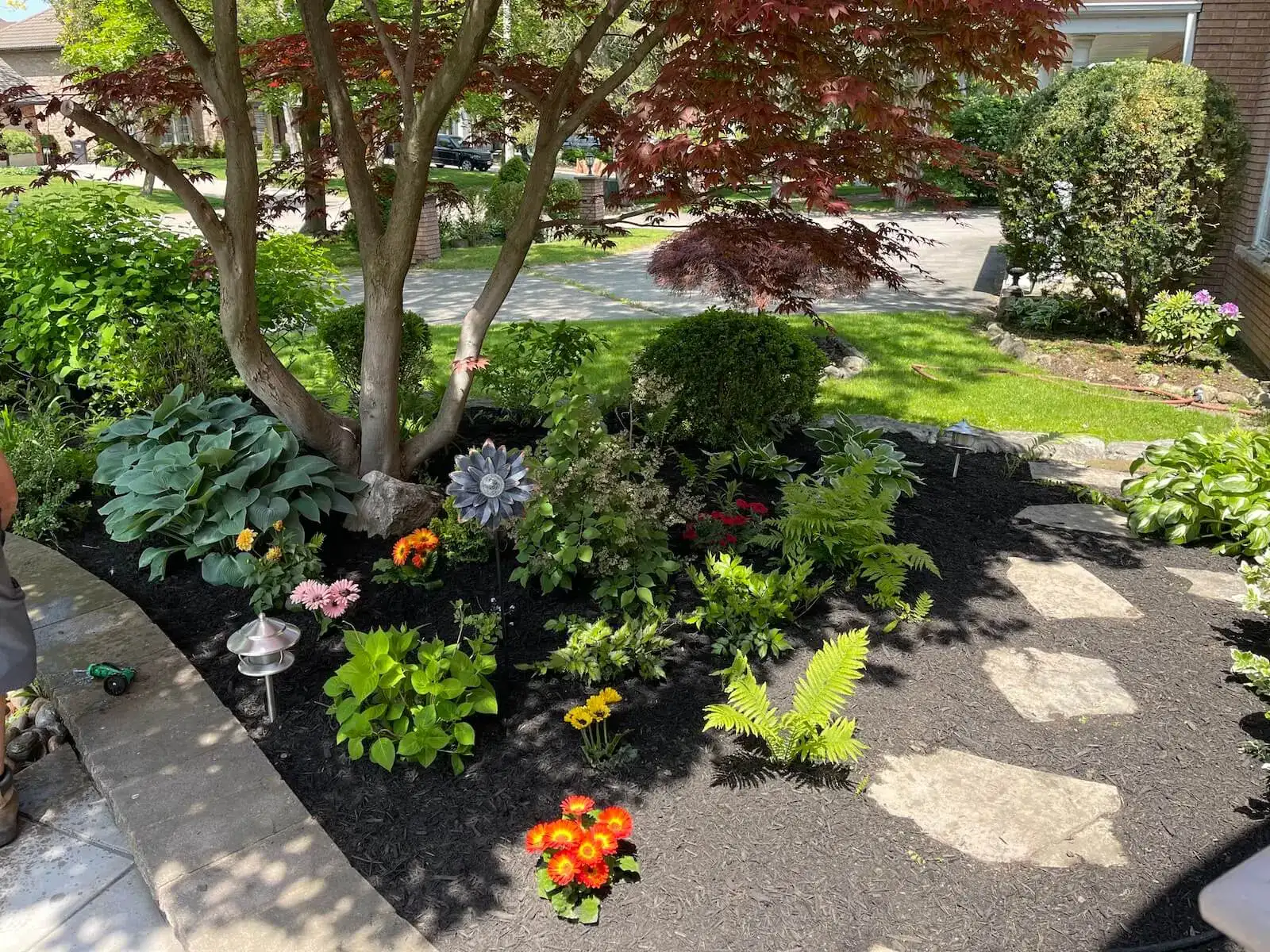









The best above ground pool landscape design starts with layout, not decor. If the pool fits but the yard stops working, the project will still feel temporary, crowded, and unfinished.
Start With a Small-Backyard Plan Before You Add Anything Around the Pool
A polished pool area starts with four zones: entry, lounging, service, and privacy. That simple layout keeps a small above ground pool landscape design from feeling random, and it stops homeowners from wrapping every side with features that eat up usable yard.
A workable circulation zone around the pool is usually about 3 to 6 feet depending on use, yard shape, and site conditions . That is broad guidance, not a bylaw or manufacturer rule. We tell GTA homeowners to confirm local requirements and pool maker instructions before building, especially on narrow lots.
A round pool usually suits a central layout, while an oval or rectangular one is easier to align with a fence, patio, or side-yard run. That matters in above ground pool ideas for small yards because one straight edge can free up more seating space and make the yard feel less cluttered.
A simple planning sequence works better than shopping for finishes first. Measure the yard, mark the pool footprint, reserve one access path, place one seating area, set aside one equipment zone, and then decide on borders, screens, and plants.
Small yards look better when one side becomes the focal side and the other sides stay quiet. That is why a partial deck, one privacy wall, and one planting bed usually outperform a full ring of decking, stone, furniture, and planters.
Sloped yards and freeze-thaw sites need more than cosmetic planning. In the GTA, spring runoff, soil movement, and winter heave can shift pavers, wash out mulch, and create muddy traffic paths if grading and drainage were not solved first.
Small-yard planning checklist
- Measure the full yard before choosing pool size
- Mark one clear entry point
- Keep one lounging zone only
- Reserve a service side for pump and filter access
- Place privacy where neighbouring sightlines are strongest
- Plan drainage before plants or decorative stone
- Treat sloped yards as grading projects, not decorating projects
The Best Above Ground Pool Border Options, Compared
The best border depends on whether you want low maintenance, better barefoot comfort, lower cost, or a more built-in look. No single edge detail wins every time, which is why above ground pool landscape ideas need to start with function first.
Pavers give the most finished look and the best control over drainage and mud. They also create a stable walking surface, pair well with patios, and suit GTA freeze-thaw conditions better than loose materials when the base is built properly.
Gravel and river rock can be budget-friendlier and drain well, but they migrate, hold debris, and can be rough under bare feet. They also should not be piled directly against the pool wall unless the manufacturer allows that condition.
Mulch works best outside the immediate splash zone, not right at the wall. It softens the look, supports planting, and costs less than hardscape, but it can float, wash, stain, and decompose faster around chlorinated splash areas.
Planted beds look intentional when they are set back from the pool instead of pressed against it. That separation protects the wall, keeps inspection possible, and leaves room for maintenance.
Wood decking gives warmth and can visually lower the apparent height of the pool. Composite decking costs more upfront but usually reduces staining, repainting, and splinter concerns over time.
Mixed-material borders often work best in small yards. A tight paver or deck entry can handle wet traffic, while a secondary planting bed or gravel strip can solve the visual transition without making the entire surround expensive.
| Border option | Best for | Barefoot comfort | Drainage behaviour | Maintenance level | Should touch the pool wall? |
|---|---|---|---|---|---|
| Pavers | Premium, built-in look | Good if kept clean | Good when base is built properly | Low to moderate | No, keep separation unless manufacturer guidance says otherwise |
| Gravel or river rock | Budget edge, visual contrast | Fair to poor | Good, but stone can migrate | Moderate | No |
| Mulch | Planting beds away from splash | Good | Fair, can wash out | Moderate to high | No |
| Planted bed | Softening and privacy | Not a walking surface | Depends on grading | Moderate | No |
| Wood deck | Warm look, entry and lounging | Good | Good if framed and drained properly | Moderate | Built near, not forced against walls without design review |
| Composite deck | Low-maintenance premium finish | Good, depends on product heat and texture | Good if framed and drained properly | Low | Built near, not forced against walls without design review |
| Mixed border | Small yards needing balance | Varies by material | Usually best when detailed well | Moderate | Depends on each material |
What to Avoid Putting Directly Against an Above-Ground Pool Wall
The safest rule is simple: do not trap wet material, abrasive material, or hidden pressure directly against the pool wall unless the manufacturer specifically permits it. Steel, resin, and aluminum wall systems can respond differently to moisture, abrasion, and freeze-thaw contact, so the pool maker’s guidance matters here.
Direct contact can cause trapped moisture, abrasion, corrosion, staining, blocked inspection, and winter pressure from frozen material. That risk is one reason we do not treat above ground landscaping ideas low maintenance as a rock-piled-against-the-wall shortcut.
Loose stone should usually be separated from the wall rather than banked tight against it. Stone can shift, hold dirt, and rub coatings or finishes over time.
Mulch should stay out of direct contact with the pool wall. It retains moisture, can stain the lower wall, and breaks down fastest where splash and shade are constant.
Pavers should be detailed as a nearby walking or patio surface, not as a hard edge jammed into the wall without clearance planning. A rigid edge can complicate service access and inspection if the wall ever needs repair.
Unconventional barrier materials like tar paper or roofing rubber should not be used unless the pool manufacturer specifically approves them. I would not endorse a workaround that traps moisture or voids a warranty just to hide a gap.
A better decision tree is straightforward. If cost matters most, use a separated mulch or stone bed. If barefoot comfort matters most, use pavers or decking nearby. If hiding the wall matters most, add skirting or screening and keep plants set back.
What to avoid checklist
- Rock or gravel packed tight against the pool wall
- Mulch touching the wall
- Shrubs planted too close for inspection or service
- Heavy edging that traps runoff against the pool
- DIY barriers not approved by the pool manufacturer
- Full wraps that block skimmers, hoses, or equipment access
How to Hide the Sides of an Above-Ground Pool and Make It Feel More Built-In
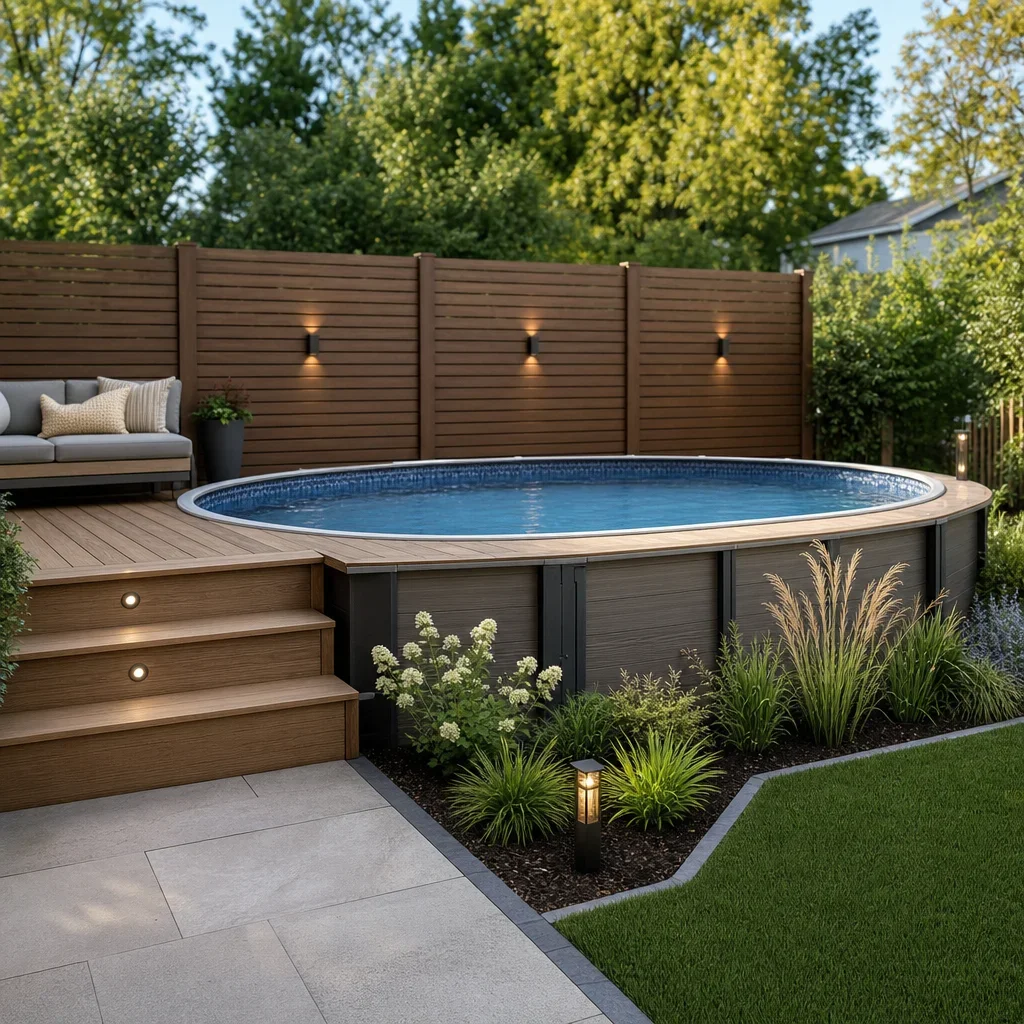
The best way to hide exposed sides is not full camouflage. It is selective integration. One well-designed focal side can make an above ground swimming pool idea for backyard spaces look intentional without crowding the entire yard.
A partial deck is usually the strongest upgrade for a small backyard. It improves entry, creates lounge space, and visually lowers the pool height without the cost and bulk of a full wraparound deck.
Skirting works when the pool itself is structurally sound and the goal is to hide the exposed lower section. Horizontal slat screens, coordinated panels, or simple woodwork can clean up the look if they still allow ventilation and service access.
Raised planting beds should sit back from the wall rather than lean on it. They soften the hard edge, add depth, and can make the pool feel closer to an in-ground installation when paired with a matching patio material.
Round pools usually benefit from one feature zone, such as a deck and privacy wall on the house-facing side. Oval and rectangular pools often take stronger linear treatments, including a long planter bed, narrow deck, or screen wall along one side.
Equipment should be hidden with screening, not buried in landscaping. Pumps, filters, hoses, and storage need airflow and service access, so decorative panels or fenced utility nooks work better than dense shrubs packed around machinery.
Coordinated materials make the difference between decorated and designed. When steps, patio stone, privacy screens, and planters share the same colour family or detailing, the whole pool area reads as one project.
Best Plants Around an Above-Ground Pool in Ontario
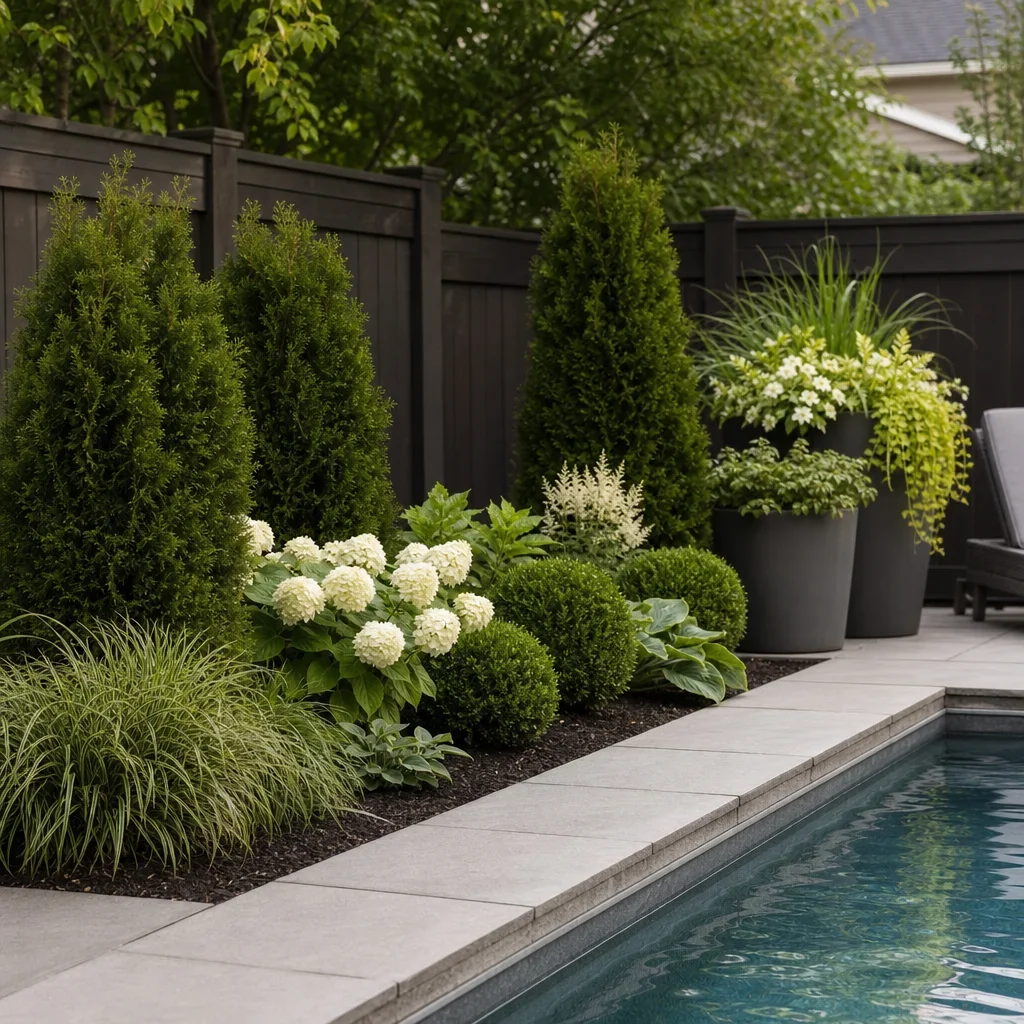
The best poolside planting in Ontario is simple, durable, and set back from heavy splash. In Zone 5 to 6 conditions, freeze-thaw movement, spring runoff, and shorter growing windows reward stronger plant masses over fussy mixed borders .
Evergreen screening is one of the most useful moves for privacy and year-round structure. Upright evergreens can block sightlines and anchor the pool area through winter, when deciduous shrubs disappear and exposed pool walls look harsher.
Compact shrubs work best when they stay off the pool edge and out of the skimmer path. Compact hydrangeas, tidy spireas, and similar low-litter shrubs can soften the scene if mature size, sun exposure, and splash tolerance are checked first.
Ornamental grasses can add movement and soften hard lines, but they are not always the cleanest choice right beside water. In a small yard, we use them more carefully because seed heads and cutback debris can end up in the pool.
Perennials should support the design, not create a maintenance problem. Tough, lower-mess perennials are better in nearby beds than at the immediate edge where traffic, splash, and debris control matter most.
Containers are often the smartest choice closest to the pool. They keep roots away from walls, let you move plants seasonally, and are one of the safest ways to add greenery in very tight spaces.
Avoid thorny plants, heavy-shedding trees, invasive roots, fruiting plants that attract pests, and anything that drops sticky litter into the water. Those choices cost homeowners time in skimming, sweeping, and repairing nearby finishes.
Premium planting around a pool usually means fewer species, larger groupings, and cleaner lines. Busy borders make a small backyard above ground pool idea on a budget look crowded faster than they make it look lush.
Ground Prep and Drainage: The Part Most Above-Ground Pool Guides Skip
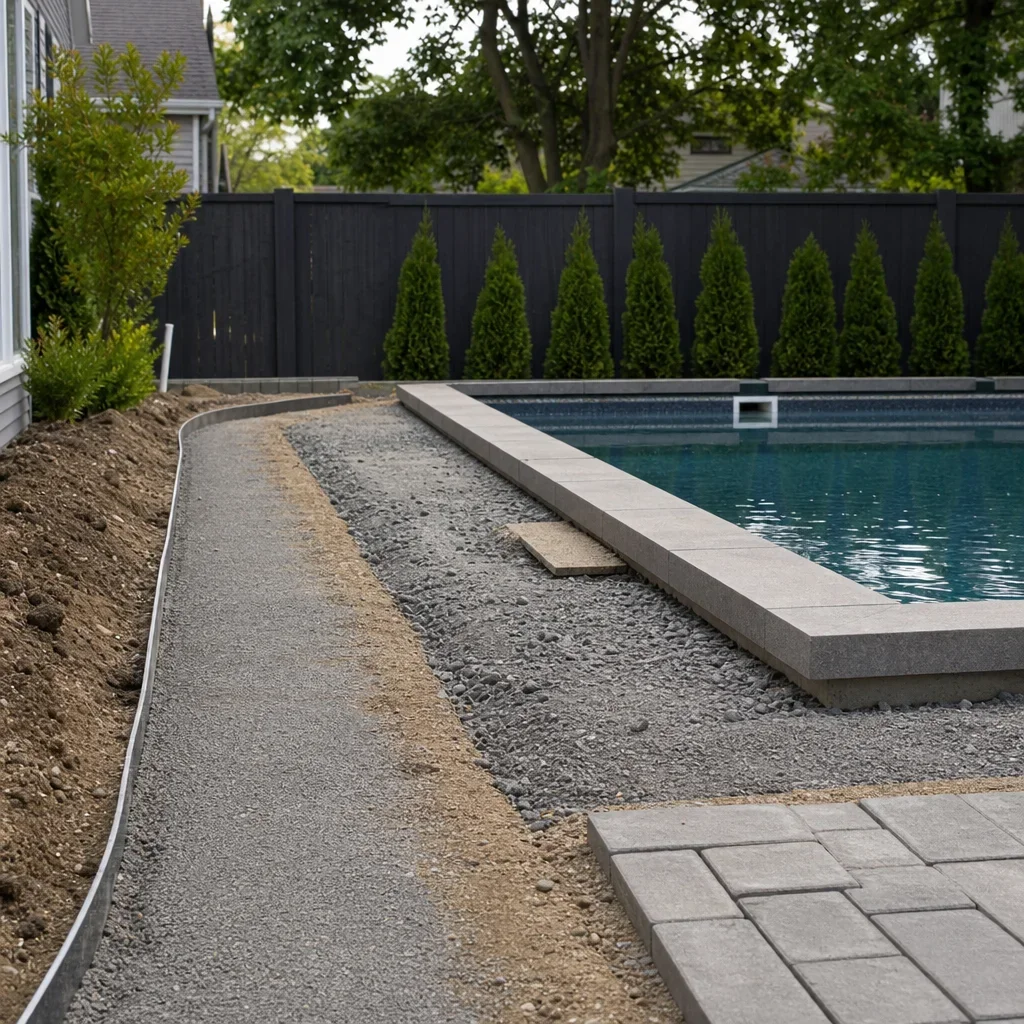
The base under the pool must be stable, level, and approved by the pool manufacturer. That is the first rule for what to put under an above ground swimming pool, and it matters more than any decorative border you add later.
We do not recommend guessing the underlayment system. Manufacturers can require specific base preparation, pad materials, and installation steps, so homeowners should follow the pool maker’s instructions or ask a qualified installer.
The ground beside the pool should move water away, not trap it at the edge. Good above ground pool landscape design uses grading, edging restraint, and proper material transitions so splash water and rain do not create mud, washouts, or rust risk.
Compacted base layers matter under pavers, steps, and patio zones because freeze-thaw cycles can shift poorly built surfaces. In the GTA, spring melt exposes weak prep quickly through settling, puddling, and edge failure.
Loose stone should be separated from the wall and contained with proper edging. Without that restraint, stone migrates into paths, planters, and mowing zones.
Warning signs of drainage trouble are easy to spot. Standing water, algae on shaded edges, washed-out mulch, settling pavers, rust marks, and muddy walking lines all point to water going where it should not.
Sloped yards need more than DIY touch-ups. They may require grading changes, retaining walls, drainage upgrades, or engineered transitions before a pool surround becomes safe and durable.
Deck, Patio, and Entry Ideas That Work in Small Yards
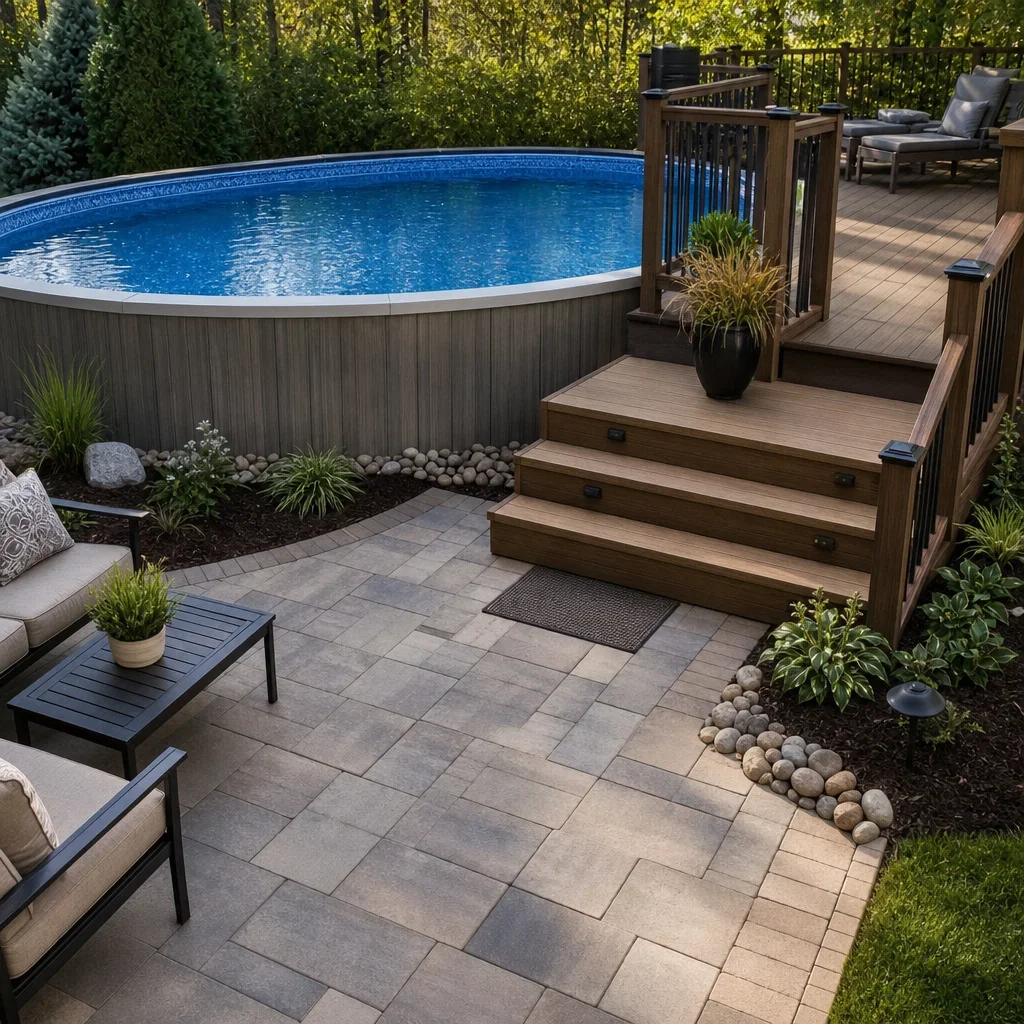
A small yard does not need a full wraparound deck to function well. In fact, above ground pool ideas with deck usually look cleaner when the deck solves one problem well instead of trying to do everything.
An entry-only platform is the most compact option. It improves access, gives swimmers a dry step area, and takes up far less room than a full lounge deck.
A partial deck with a small sitting zone is the sweet spot for many homeowners. It creates a stronger destination, hides part of the pool wall, and leaves enough open yard for circulation.
A deck-plus-patio combination often works best where entertaining matters. The deck handles entry and visual integration, while a paver patio carries dining, loungers, or a small fire feature away from the splash zone.
Wood decking has a warm look and can be cost-effective at first, but it needs staining, cleaning, and closer maintenance over time. Composite reduces routine upkeep, though product selection still matters for heat, texture, and slip resistance.
Non-slip transitions matter at every step, landing, and patio edge. Wet feet, sunscreen, and tracked splash water make smooth surfaces riskier, especially around stairs.
Railings, gates, and child-safety barriers should be designed into the layout instead of added as an afterthought. Requirements vary by municipality, so homeowners need to verify local pool enclosure and guard rules before building.
Privacy, Shade, and Safety Around an Above-Ground Pool
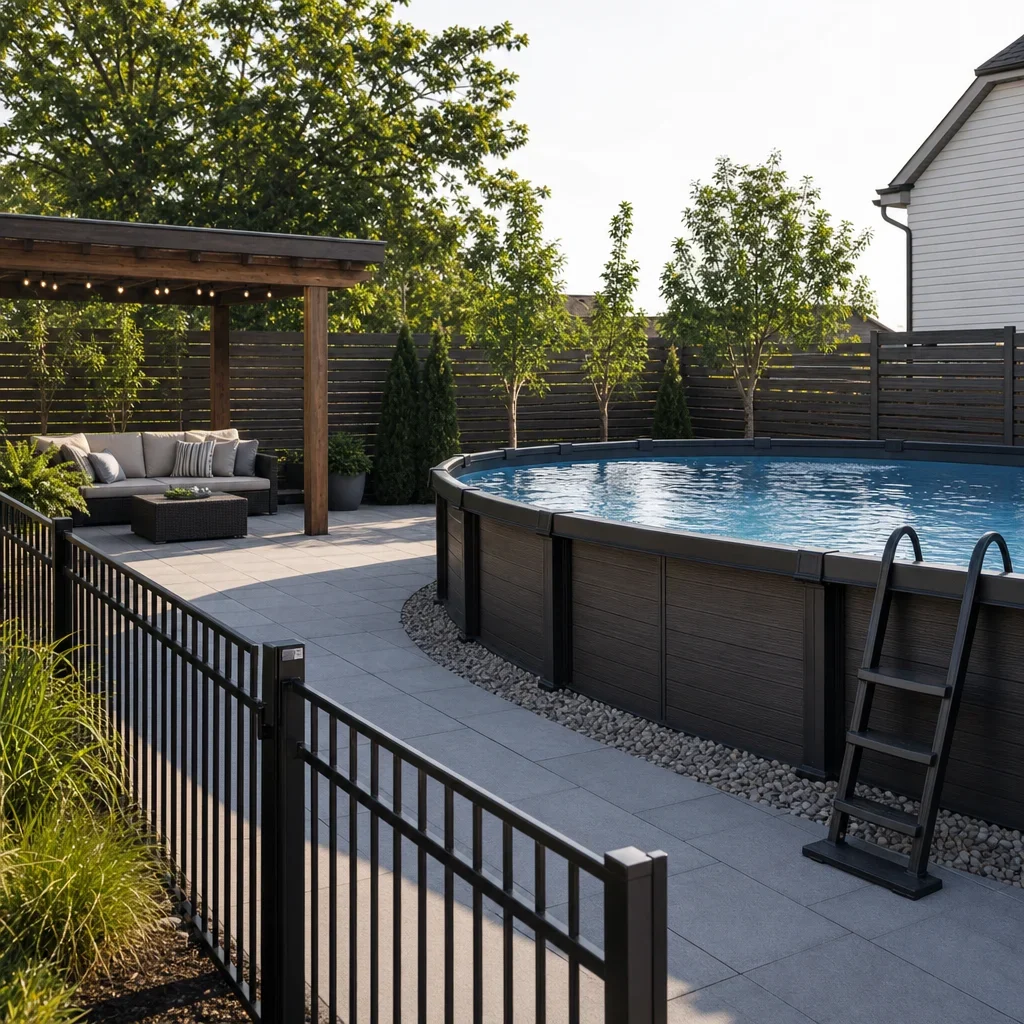
Privacy should be placed where sightlines actually hit the yard, not scattered evenly on every side. In a small backyard, that usually means screening the neighbour-facing side, the seating side, and the storage or changing side first.
Fences give the strongest visual enclosure and often do double duty for safety. Decorative panels, slatted screens, and evergreen hedges can then soften the look without turning the pool into a boxed-in corner.
Pergolas and shade structures work best near the seating zone rather than overloading the whole pool perimeter. That keeps the yard open while still adding a resort feel.
Safety design is not separate from landscape design. Controlled access, non-slip walking routes, visible entry points, and clear gate placement all make the area safer and more usable.
Local enclosure requirements vary by municipality, so the legal details must be checked before building. That is especially true in Toronto, Markham, and across the GTA, where fencing, gates, grading, and permit needs are not identical.
12 Above-Ground Pool Landscape Design Ideas by Style and Budget
These above ground pool landscape ideas work best when the style matches the yard size, maintenance tolerance, and budget tier. The goal is not more features. The goal is a pool area that feels intentional.
1. Modern minimal border. Best for small yards. Use a crisp paver pad, one slim planter, and one privacy panel. Maintenance level: low. Budget tier: mid-range.
2. Budget gravel plus planters. Best for a cosmetic refresh. Use contained gravel, two or three oversized planters, and a screened equipment corner. Maintenance level: low to moderate. Budget tier: budget.
3. Partial deck focal side. Best for homeowners wanting above ground pool designs for small yards that feel more permanent. Use a compact deck, matching steps, and one lounge zone. Maintenance level: moderate. Budget tier: mid-range to premium.
4. Privacy-first courtyard. Best for overlooked lots. Use fencing or screens, evergreen structure, and a small paver sitting area. Maintenance level: low to moderate. Budget tier: mid-range.
5. Natural stone and planting mix. Best for softer landscapes. Use a nearby stone patio, set-back shrubs, and mulch outside the splash edge. Maintenance level: moderate. Budget tier: mid-range to premium.
6. Container-garden surround. Best for renters or cautious upgraders. Use large movable pots, solar lighting, and simple edging. Maintenance level: low. Budget tier: budget.
7. Family-friendly deck entry. Best for frequent use. Use a safe stair sequence, railings, a dry-off zone, and screened storage. Maintenance level: moderate. Budget tier: mid-range.
8. Compact entertaining patio. Best for narrow lots. Use one patio adjacent to the pool, a bench wall or planters, and integrated lighting. Maintenance level: low. Budget tier: mid-range.
9. Sloped-yard transition. Best for grade changes. Use retaining, steps, and terrace-style planting or hardscape. Maintenance level: low to moderate. Budget tier: premium.
10. Low-maintenance evergreen frame. Best for four-season structure. Use upright evergreens, hardscape edging, and restrained planting. Maintenance level: low. Budget tier: mid-range.
11. Small backyard refresh on a budget. Best for small backyard above ground pool ideas on a budget. Use one equipment screen, one tidy border, and better lighting before adding bigger features. Maintenance level: low. Budget tier: budget.
12. Evening-lighting upgrade. Best for homeowners who already like the layout. Use path lights, deck lights, and a lit privacy backdrop. Maintenance level: low. Budget tier: budget to mid-range.
Budget-Friendly Upgrades That Make the Biggest Difference First
A polished result does not start with decor. It starts with drainage, circulation, and the ugliest sightlines. That is the right order for above ground pool ideas on a budget.
A very small budget usually covers cosmetic improvements, not a full transformation. I would not tell a homeowner that $1,000 builds a complete small-yard pool surround. It may cover a limited refresh like planters, basic edging, simple lighting, or a modest equipment screen, but not full drainage work, a proper patio, and structural deck construction.
The best first spend is usually the walking edge and mud control. If wet feet are tracking dirt, the yard never feels finished no matter how good the plants look.
The second best spend is visual cleanup. Hiding equipment, screening one exposed wall, or refining the entry often changes the whole impression faster than adding more décor.
The third spend is privacy and planting. A few larger pieces, especially screens or evergreen structure, usually outperform lots of small nursery purchases.
Ambiance features come last. Lighting, pillows, decorative pots, and styling details work better after function is solved.
DIY-friendly upgrades include movable planters, simple mulch beds set back from the wall, solar lights, and non-structural screening. Pro work is the better route for grading, pavers, retaining, structural decks, electrical lighting, and anything that affects drainage or safety.
Common Problems With Above-Ground Pools and How Good Landscaping Solves Them
Most above-ground pool complaints are design problems around the pool, not the water itself. Good landscaping fixes muddy edges, exposed walls, poor privacy, awkward entry, and visible equipment.
Exposed sides are solved with a focal deck, skirting, or screened planting set back from the wall. Trying to hide every inch often makes a small yard feel more cramped.
Muddy edges are solved with drainage, stable walking surfaces, and controlled splash zones. Decorative stone alone is not a drainage plan.
No privacy is solved with strategic screening, not random shrubs. One fence run, one panel wall, or one evergreen edge can change the whole feel.
Ugly equipment is solved with ventilation-friendly screening and better zone planning. It should disappear visually without becoming impossible to service.
Difficult entry is solved with a proper stair, landing, and dry-off space. That is one reason partial decks outperform cosmetic borders in high-use yards.
Cramped circulation is solved by reducing features, not adding them. One clean route and one seating zone beat a ring of furniture around the pool.
Above-ground pool lifespan is often cited in a broad range of about 7 to 15 years depending on type, build quality, installation, climate, and maintenance . That is one reason I tell homeowners to match the landscape investment to the expected life of the pool itself.
What About Cowboy Pools, Stock Tanks, and Other Small Pool Alternatives?
A cowboy pool or cowboy tub usually refers to a stock-tank-style small pool used for cooling off rather than full swimming . It is a compact option, but it still needs a stable base, safe access, and a plan for drainage and privacy.
Inflatable pools, frame pools, and stock tanks need lighter-touch landscaping than a long-term above-ground pool. Simple patios, screens, planters, and mud control usually make more sense than heavy permanent construction around temporary products.
The same design rules still apply. Even a very small pool looks better with one entry point, one clean edge, and one visual backdrop.
Can You Put an Above-Ground Pool in Your Yard in Ontario?
Often yes, but the site has to work. Placement, fencing, grading, drainage, utility clearances, and local enclosure rules all need to be checked before you commit to a pool for a small backyard.
We would not treat municipal rules as one-size-fits-all because they are not. Homeowners need to verify bylaws, permit requirements, and enclosure standards with their municipality before building.
Lot grading matters as much as legal permission. In the GTA, rear-yard drainage patterns, easements, tight side yards, and proximity to structures can all affect whether a pool location is practical.
A site review is worth doing early, especially for premium projects. It is easier to redesign on paper than to fix a pool surround after the yard starts holding water.
When to DIY and When to Hire a Pro
DIY above ground pool landscaping ideas work best when the task is cosmetic, movable, and low-risk. Planters, basic mulch beds set back from the pool, solar lights, and simple screens are reasonable homeowner projects.
Moderate work includes non-structural edging, loose decorative materials with proper separation, and simple layout updates. Even then, the pool wall should stay protected and service access should remain clear.
Pro-only work includes grading, drainage systems, paver patios, structural decks, retaining walls, electrical lighting, railings, and integrated outdoor living features. Those jobs affect safety, longevity, and how the yard handles water.
In GTA yards, I take a clear position on this: if the project changes grade, holds people up, or moves water, do not treat it as a beginner DIY. That is where failures get expensive.
FAQ
What is the best border for an above-ground pool?
The best border depends on the goal. Pavers are usually best for a finished look, barefoot comfort, and drainage control. Gravel can work for lower-cost projects, and planting beds work well when they are set back from the wall.
What should you not put directly against an above-ground pool wall?
Do not place mulch, piled rock, or improvised moisture-trapping materials directly against the wall unless the manufacturer specifically allows it. Direct contact can trap moisture, cause abrasion, and block inspection.
What plants should you not plant next to a pool?
Avoid thorny plants, heavy-shedding trees, invasive-root plants, fruiting plants, and anything that drops sticky debris into the water. Clean, low-litter plant choices save time and protect finishes.
How do you make an above-ground pool look more expensive?
Use one strong upgrade instead of many small ones. A partial deck, coordinated paver entry, privacy screen, and restrained planting palette usually look better than a crowded ring of inexpensive add-ons.
What is the best thing to put under an above-ground pool?
Use a stable, level, manufacturer-approved base system. The exact underlayment should follow the pool maker’s requirements rather than a generic online recipe.
How long do above-ground pools usually last?
A broad range often cited is about 7 to 15 years depending on pool type, installation quality, climate, and maintenance . Temporary products may last less, and better-built permanent models may last longer.
Can you landscape around an above-ground pool on a budget?
Yes, but the budget should go to the biggest visual and functional problems first. Start with mud control and access, then hide equipment or exposed sides, then add privacy and plants.
Do you need drainage around an above-ground pool?
Yes. Without proper grading and water movement, splash water and rain can create mud, settling, algae, erosion, and edge failure around the pool.
Can you put an above-ground pool in a small backyard?
Often yes, if the layout leaves enough room for entry, circulation, equipment access, and any required barriers. Smaller yards usually benefit from one focal side and one compact lounging zone instead of a full surround.
Is a deck or paver patio better around an above-ground pool?
A deck is usually better for integrated entry and making the pool feel more built-in. A paver patio is usually better for flexible seating, durable walking space, and low-maintenance entertaining areas. Many small yards benefit from both.
If you want your above ground pool landscape design to feel more built-in, lower-maintenance, and better suited to GTA winters, start with a real plan before you buy finishes. For homeowners who want help with a pool surround, patio, privacy planting, drainage upgrade, or a full backyard transformation, RockLeaf offers a free 3D design and quote with line-by-line pricing, a 14-day start promise, and a 5-year total warranty .