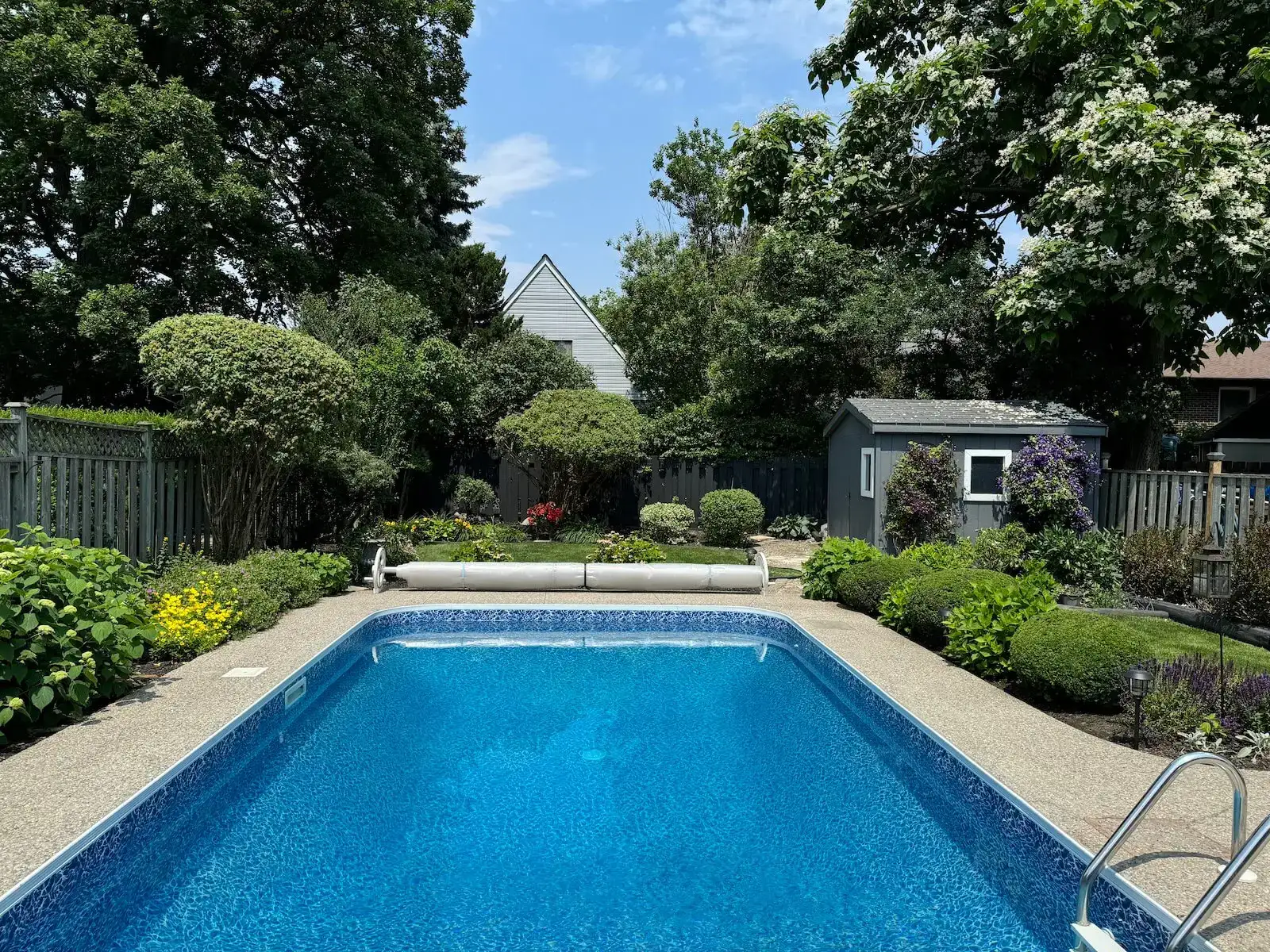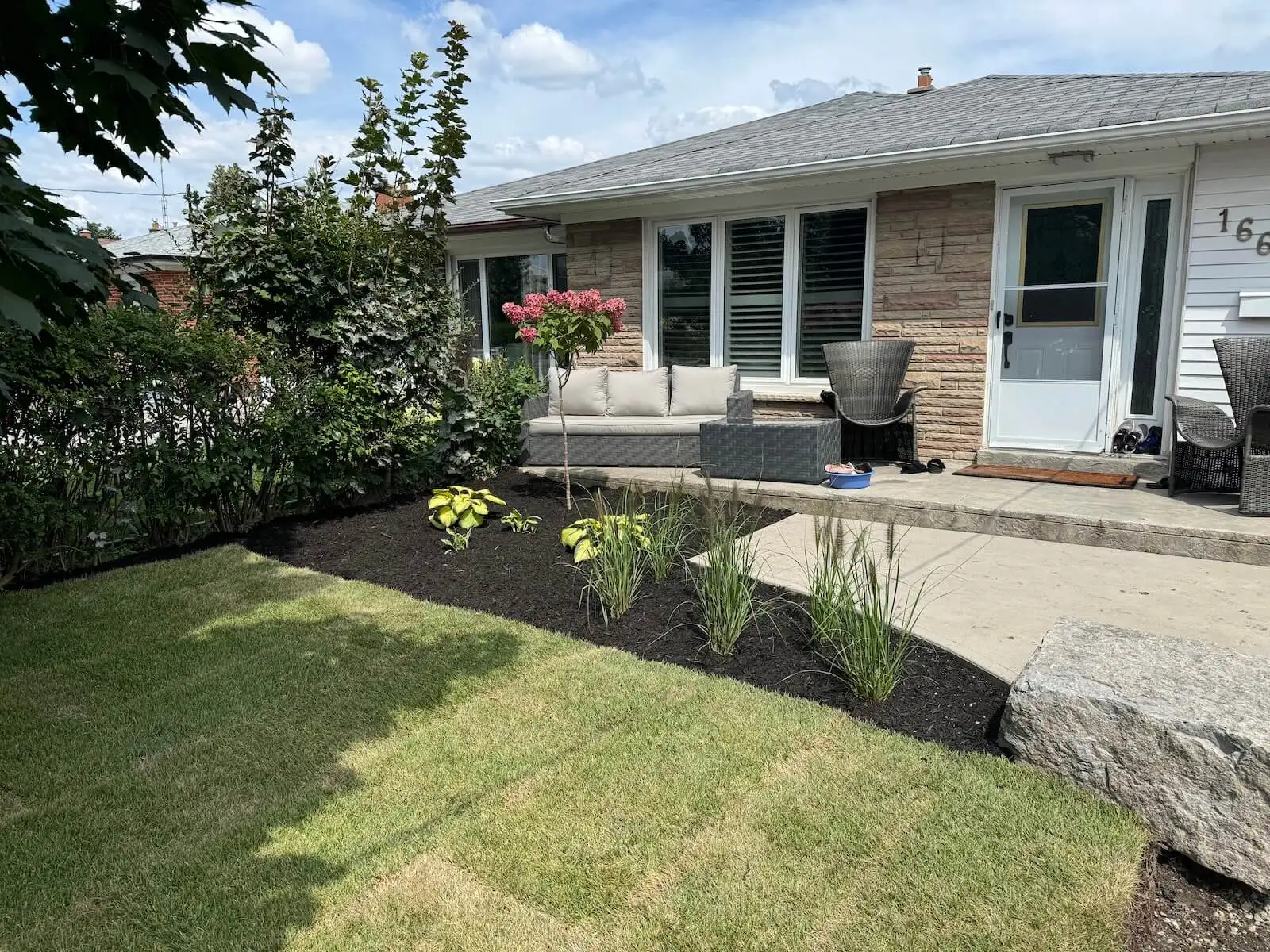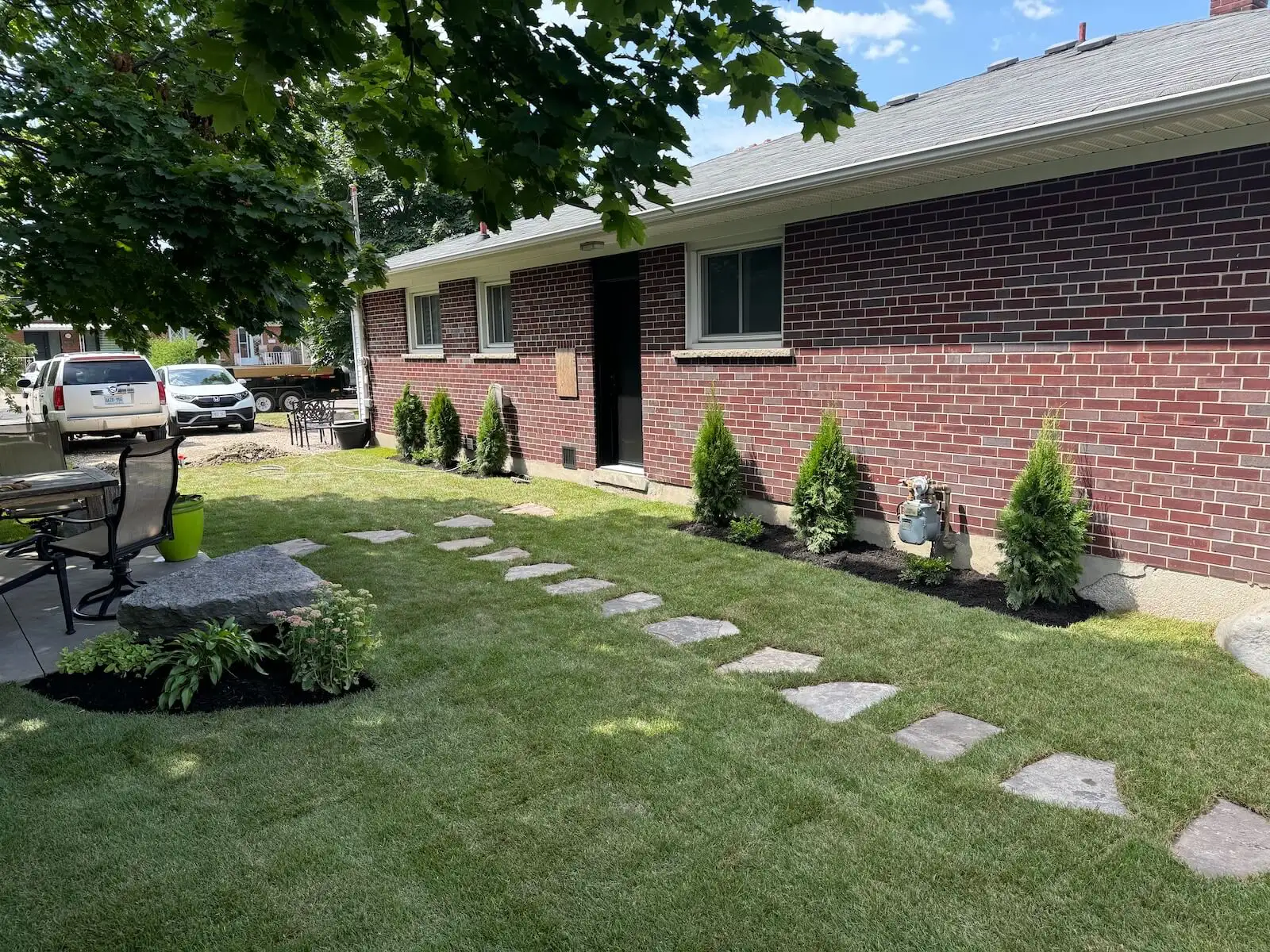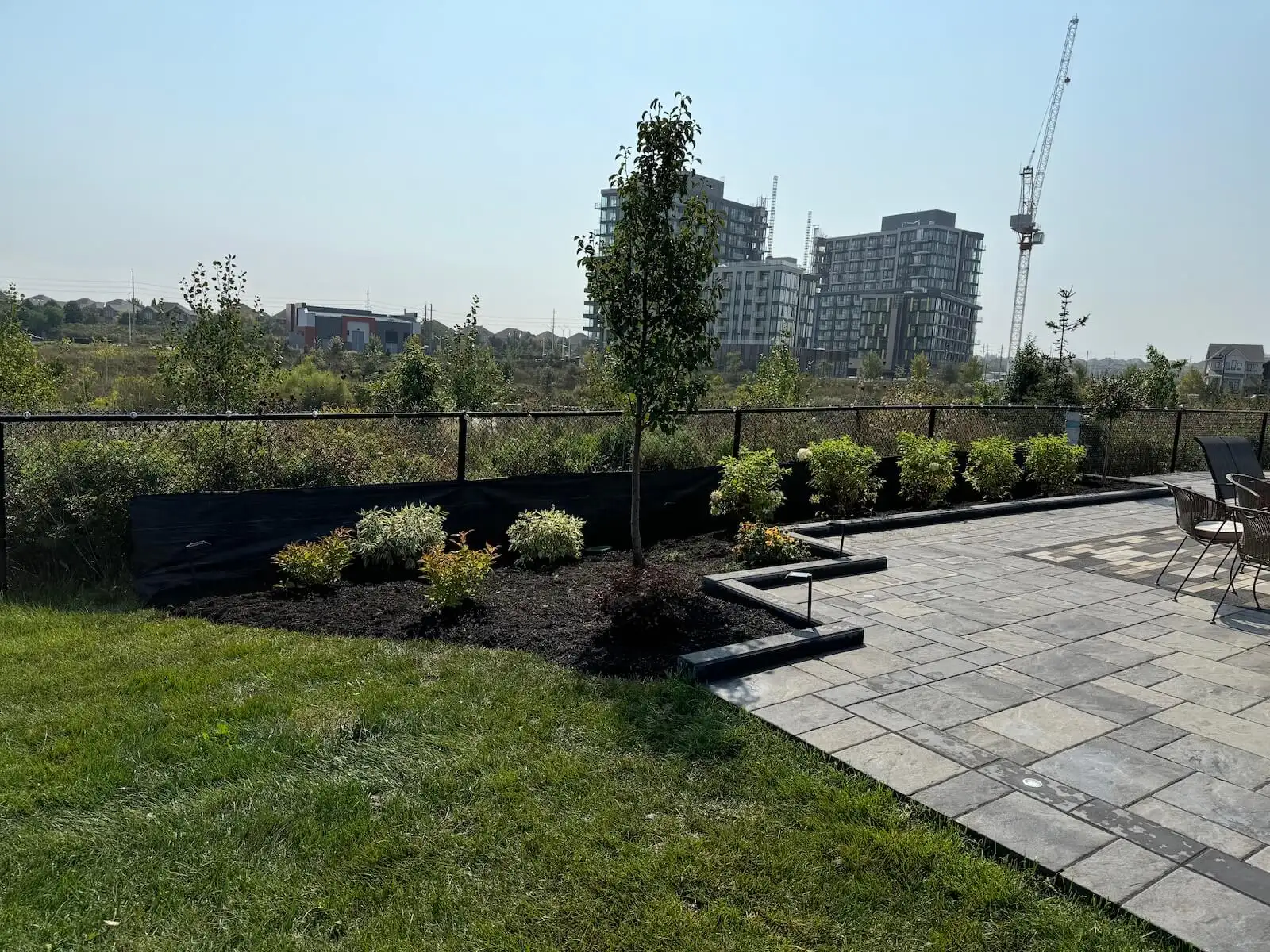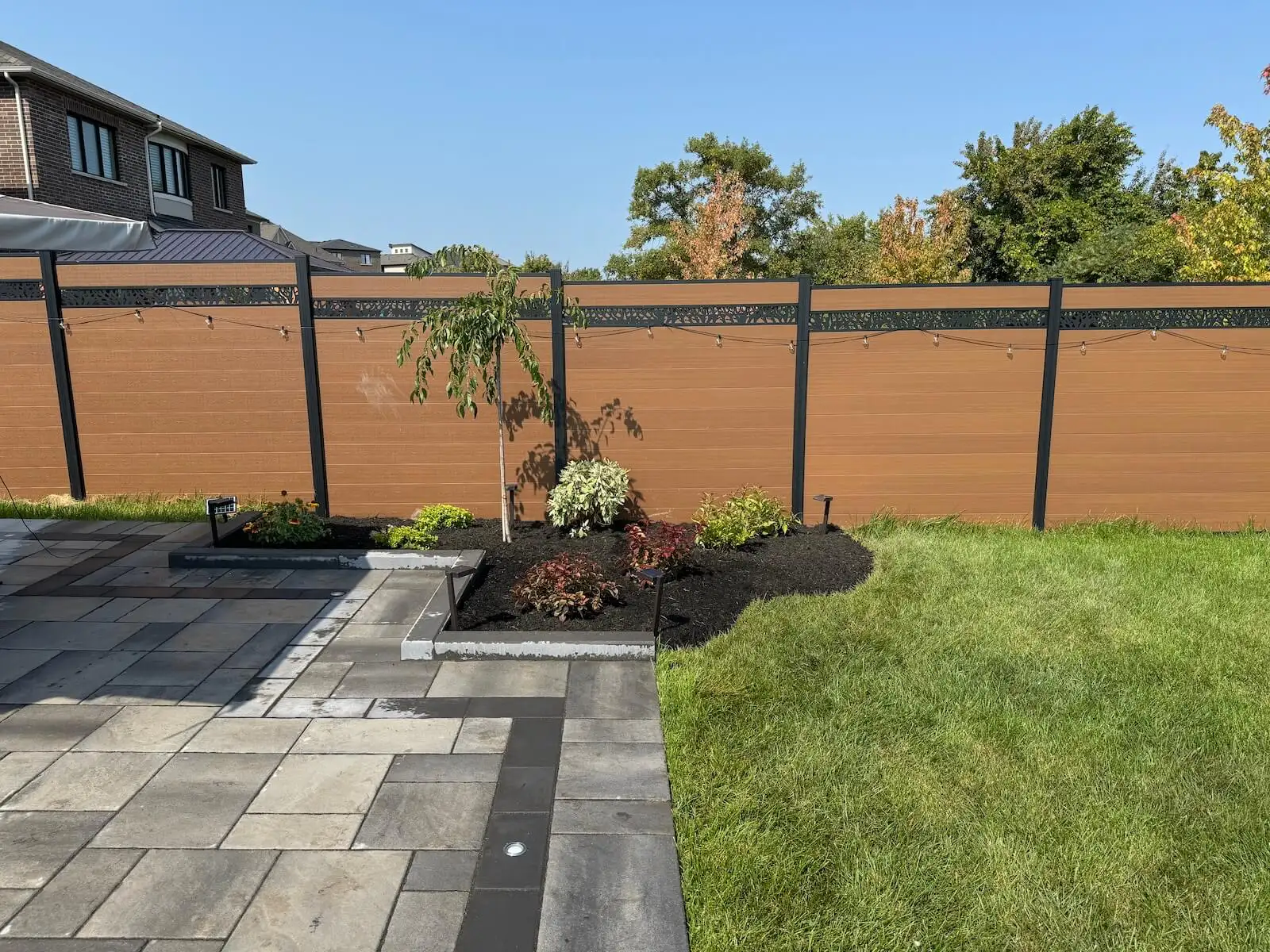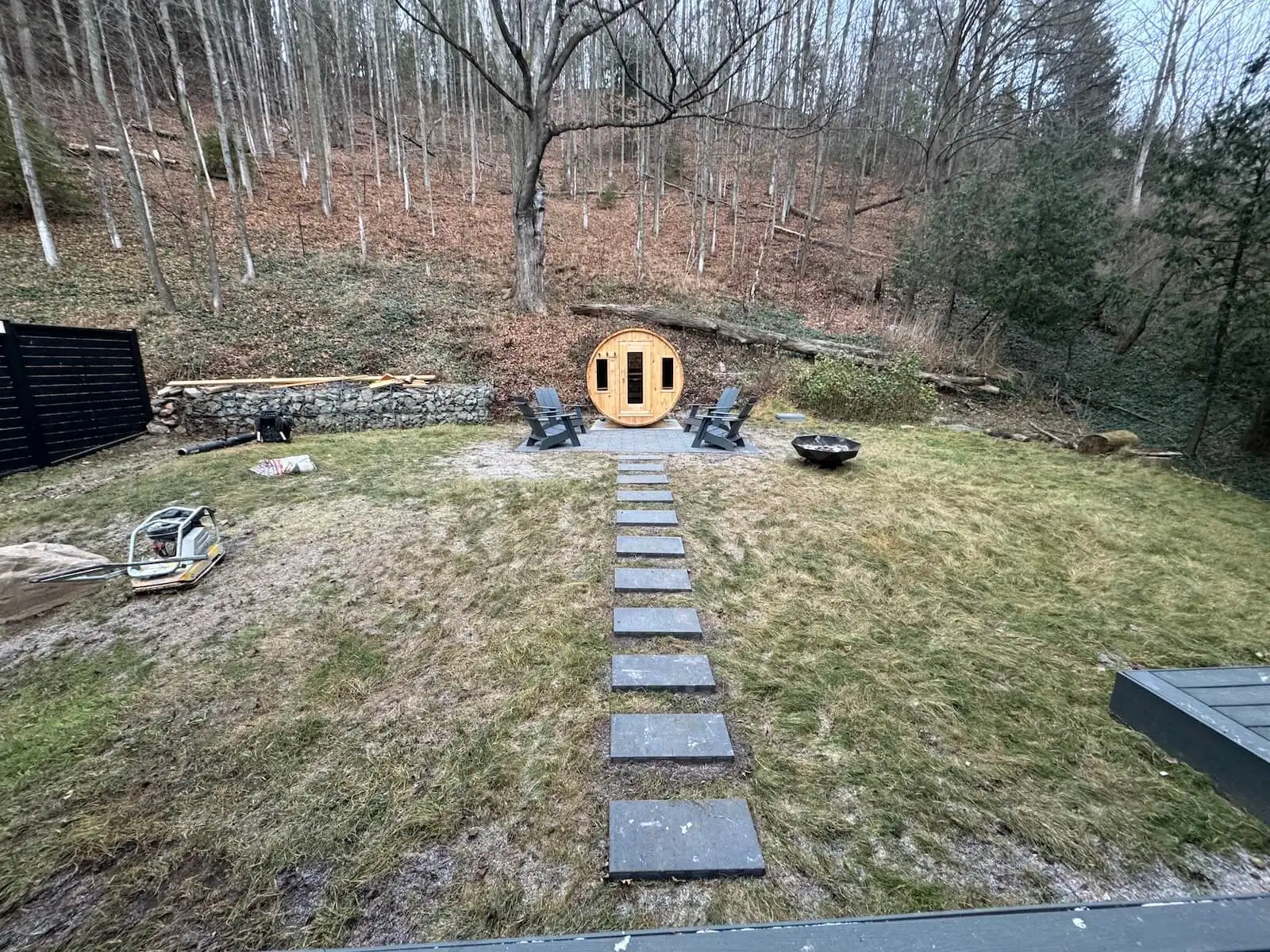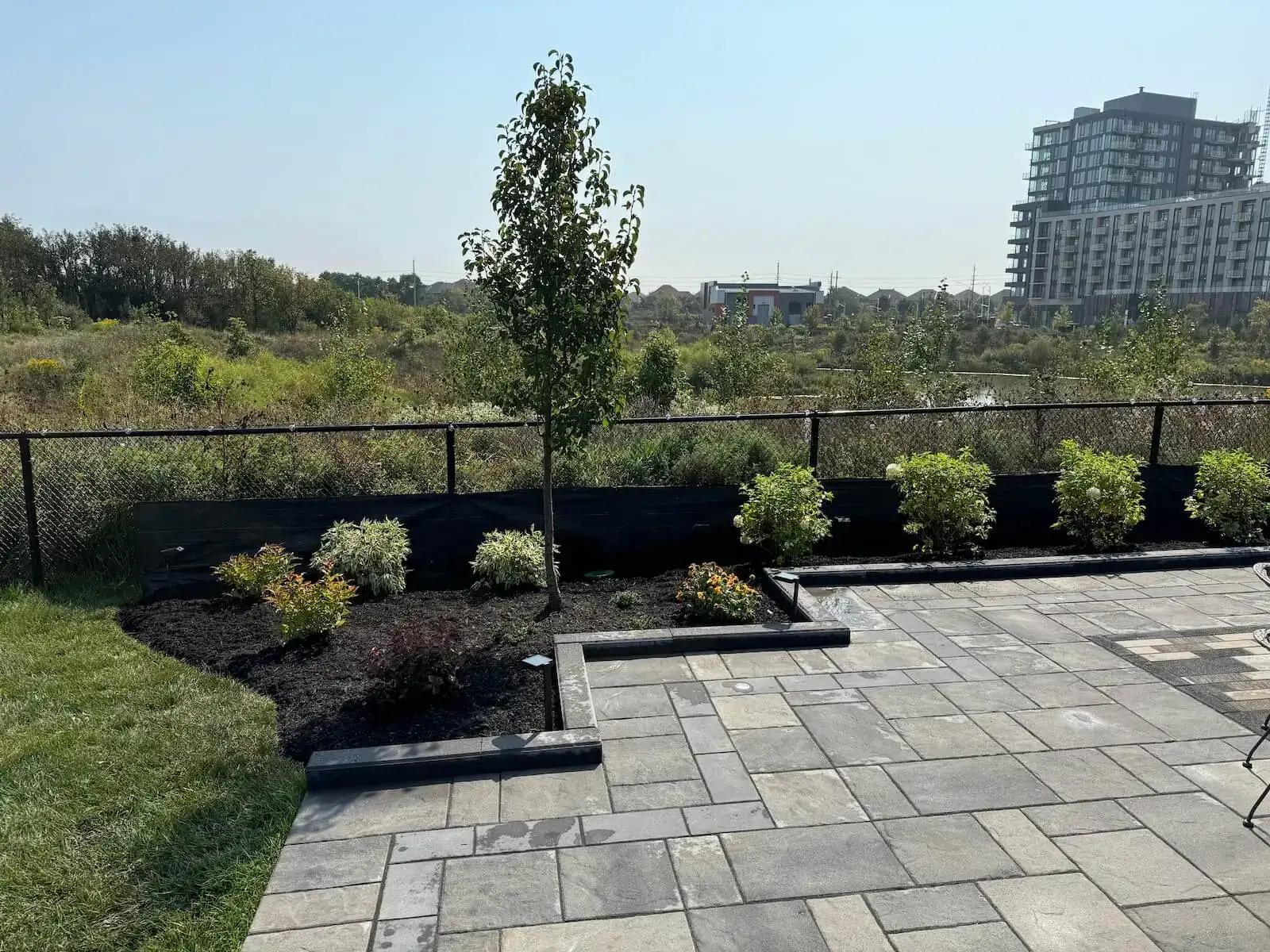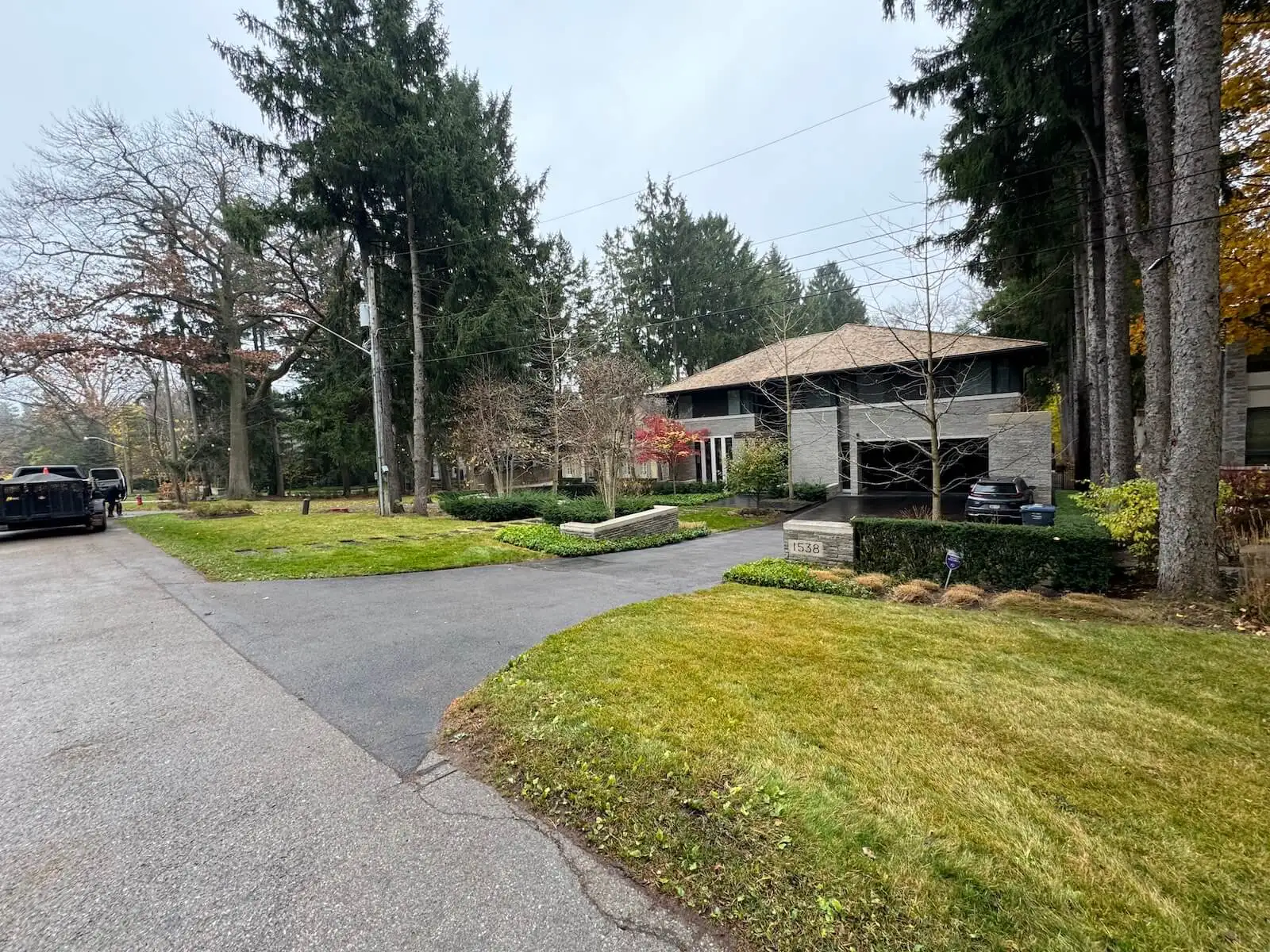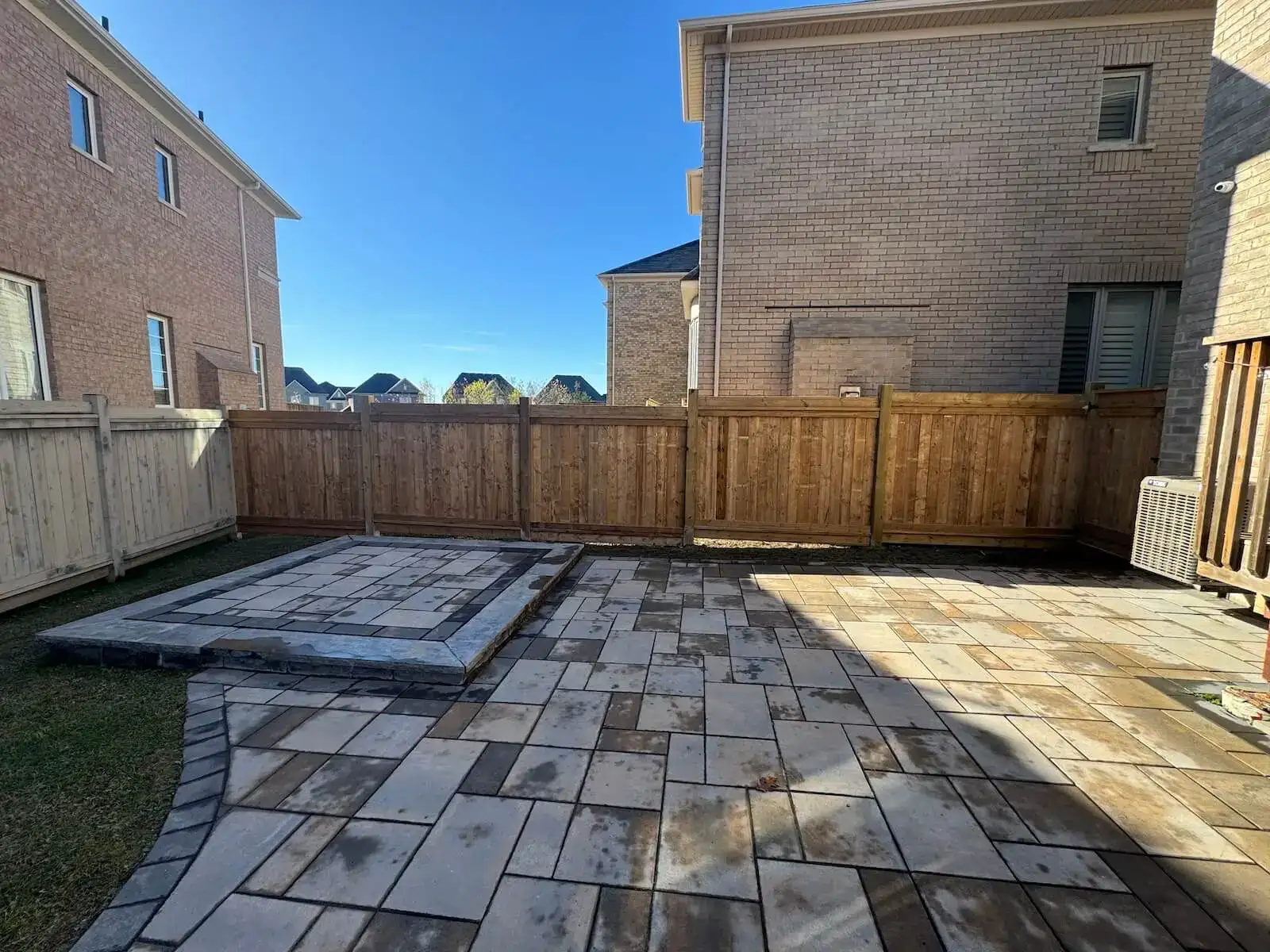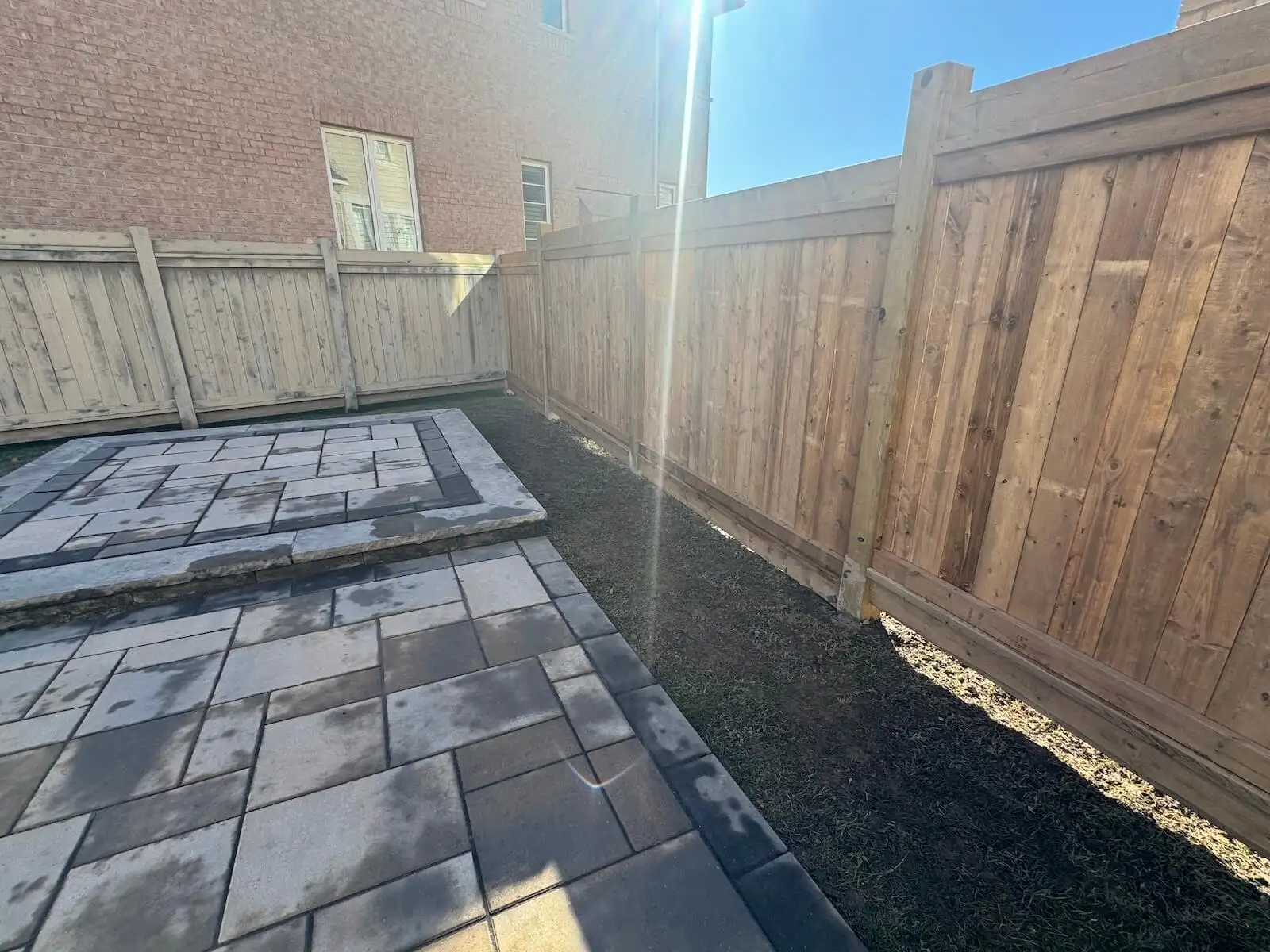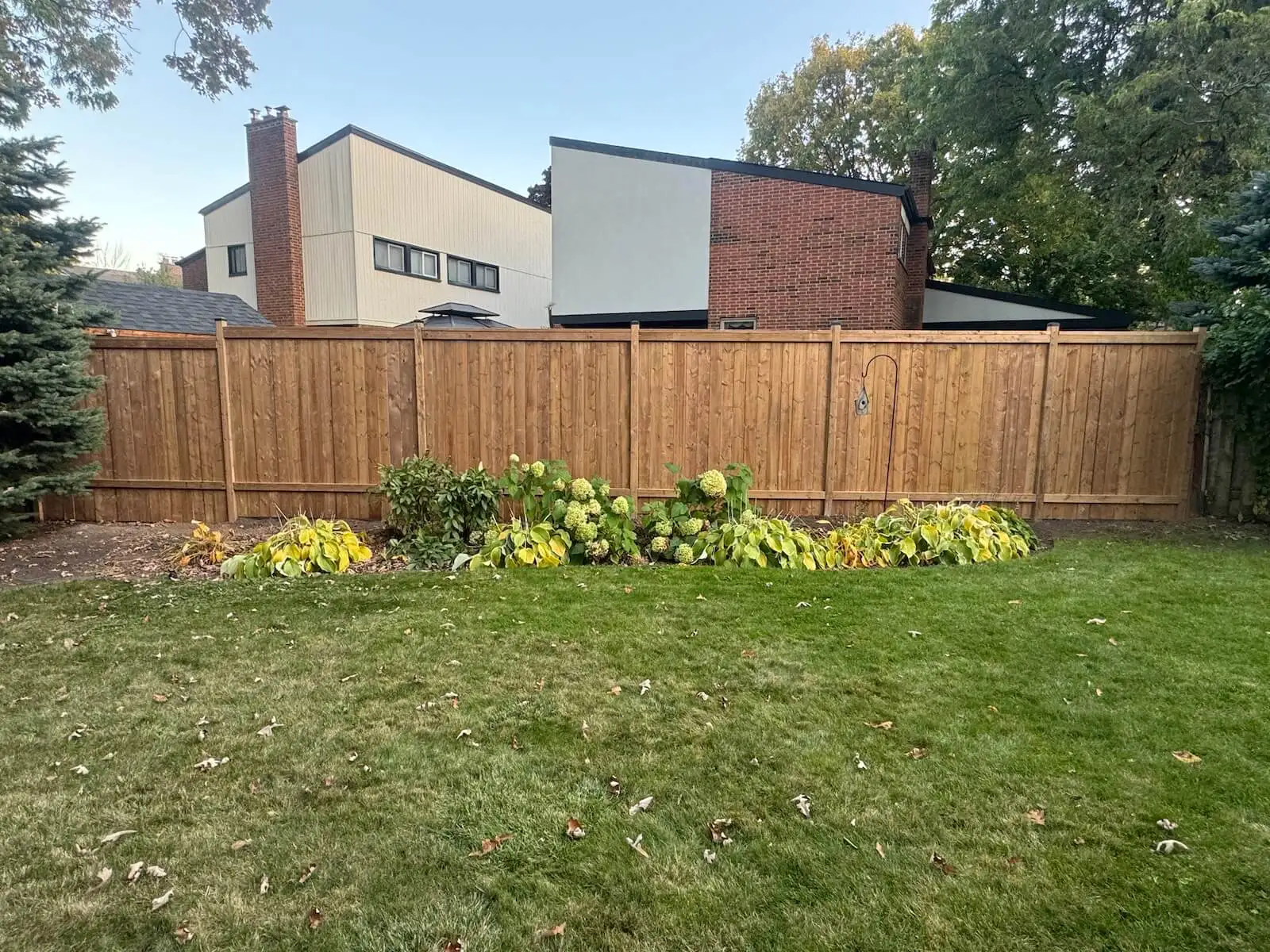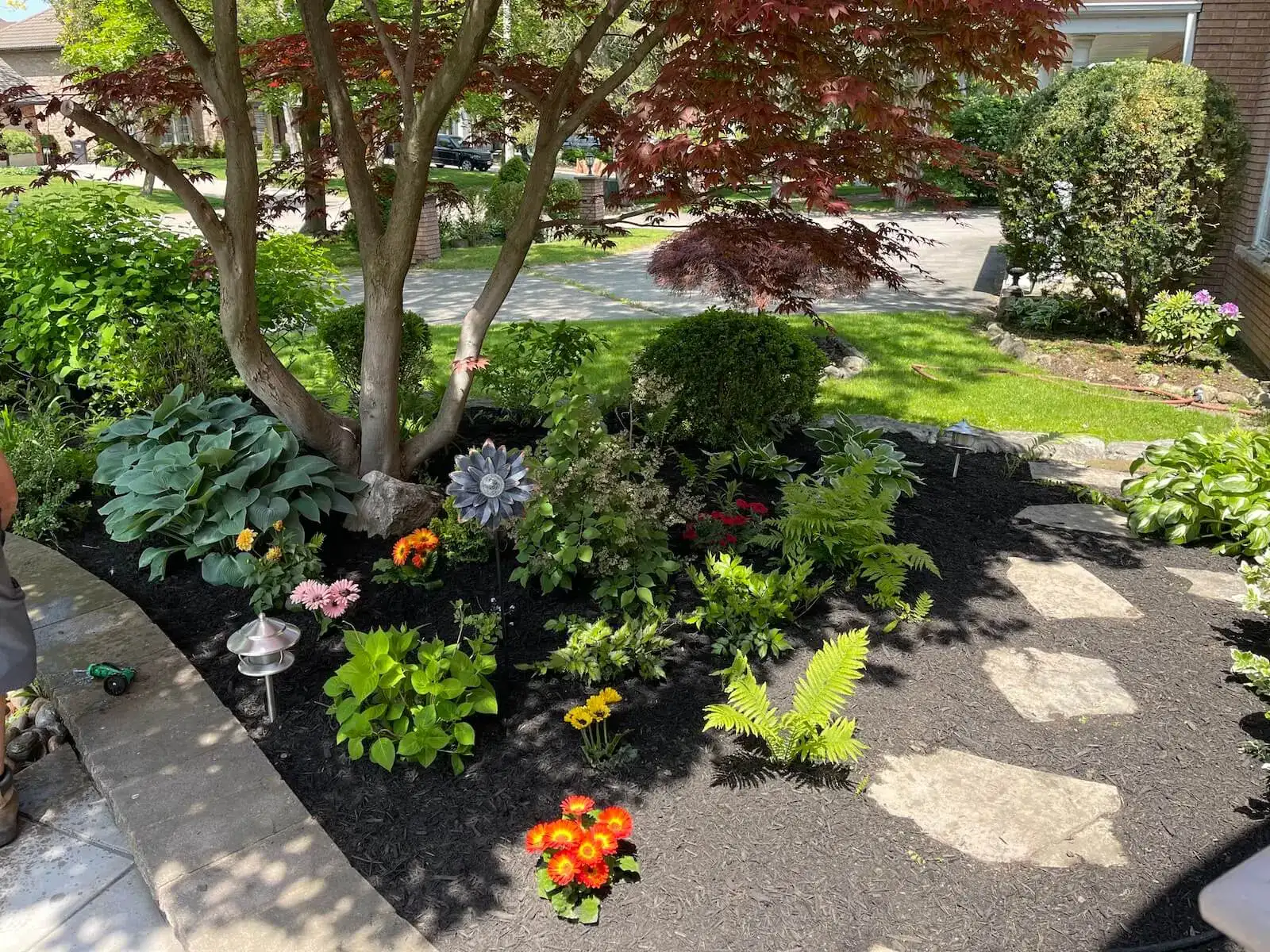









The best pool designs for small backyards are rarely the ones with the most features. They are the ones that use limited space on purpose, protect drainage, respect setbacks, and still leave room to live outside.
Small-yard pool projects in Toronto and the GTA need more than inspiration photos. Freeze-thaw winters, lot grading, permit review, equipment placement, and safe circulation matter just as much as the water itself. This guide covers compact backyard pool designs, layout options, materials, landscaping, and the planning details that usually get missed.
A free 3D design and quote can help when the yard is tight and every foot matters. RockLeaf offers that with line-by-line pricing, a 5-year total warranty, and a plant-survival guarantee. Conditions apply.
Small Backyard Pool Designs: Start With the Right Pool Type
The best small backyard pool depends on how you plan to use it. A plunge pool suits cooling off and visual impact, a cocktail pool or spool suits lounging and entertaining, a lap pool suits exercise, a swim spa suits year-round hydrotherapy and constrained access, and a compact standard pool suits flexible family use.
A small inground pool is usually defined by footprint, not by one fixed number. In practice, homeowners should judge the full poolscape area, including coping, deck paths, fencing, seating, drainage, and mechanical space, because those elements can consume nearly as much planning attention as the water area itself.
Limited yards make layout more important than raw size. A premium result comes from choosing one primary use, preserving one secondary function like dining or planting, and avoiding feature overload that makes the yard feel cramped.
GTA conditions change what works. Pool and backyard designs here need durable base preparation, proper runoff control, slip-resistant surfaces, and permit and setback review that can vary by municipality and lot conditions.
Plunge Pool vs Cocktail Pool vs Spool vs Lap Pool vs Swim Spa
These pool types solve different problems, so comparing them early saves redesign work later. Plunge pools are best for cooling off, hydrotherapy, and a compact luxury look; cocktail pools and spools are best for social use with benches and heating options; lap pools suit narrow lots and exercise; swim spas work when excavation limits or year-round use matter most; compact standard pools offer the most flexible all-around use.
Typical compact plunge or cocktail pools often fall under roughly 200–400 square feet, while lap pools generally need a longer uninterrupted run and swim spas vary by manufacturer size. Those are planning references, not permit rules, and the right footprint still depends on setbacks, access, and circulation.
| Pool type | Best for | Typical footprint | Pros | Compromises | Maintenance burden | Feature fit |
|---|---|---|---|---|---|---|
| Plunge pool | Cooling off, hydrotherapy, visual luxury | Often under roughly 200–400 sq ft | Small footprint, strong design impact | Limited swim length | Lower to moderate | Benches, jets, water wall |
| Cocktail pool / spool | Entertaining, soaking, heating | Often under roughly 200–400 sq ft | Social seating, spa-like use | Not ideal for active swimming | Moderate | Jets, spillover spa feel, lighting |
| Lap pool | Exercise, narrow lots | Longer linear footprint | Efficient for fitness, clean geometry | Less lounge area | Moderate | Simple deck, privacy screens |
| Swim spa | Hydrotherapy, year-round use, constrained sites | Manufacturer-dependent | Smaller install zone, strong therapy use | Different look than classic inground pool | Moderate to higher | Covers, steps, compact decks |
| Compact standard pool | Family use, flexible recreation | Varies by layout | Most versatile use | Needs more yard than plunge formats | Moderate to higher | Steps, bench, shallow play zone |
The lowest-maintenance direction is usually the simplest one. A plain geometric pool with restrained planting and few water features is generally easier to maintain than a raised spa combo with heavy landscaping, multiple pumps, and complicated edges.
A full pool is not always the right answer. In some small yards, a swim spa, hot-cold plunge setup, or a premium entertainment terrace with a water feature can deliver more usable value than forcing in a pool that leaves no room for seating or movement.
What Shape Pool Is Best for a Small Yard?
Rectangular and geometric shapes usually work best in a small yard because they maximize usable swim area and deck efficiency. Straight lines fit furniture better, simplify coping and paving layouts, and usually preserve cleaner circulation paths around the pool.
Freeform shapes can soften the look of a compact yard, but they often reduce layout efficiency. Curves can create leftover wedges where furniture, planters, or circulation do not work as well, especially in tighter urban lots.
Round and circular concepts are usually style-led rather than space-maximizing. They can look strong in courtyard settings or as a focal plunge element, but they are not always the most efficient answer for backyard pool designs for small yards where every edge matters.
The cheapest pool shape is usually the simplest one to form and finish, but shape alone does not decide cost. Excavation access, retaining needs, engineering, finish materials, water features, and deck construction can outweigh shape savings very quickly.
Architecture should guide the final form. Modern homes usually suit crisp geometric lines, while traditional homes can suit softened rectangles, Roman ends, or more formal courtyard-inspired layouts.
How Small Can a Backyard Pool Be? Size, Depth & Minimum Space Planning
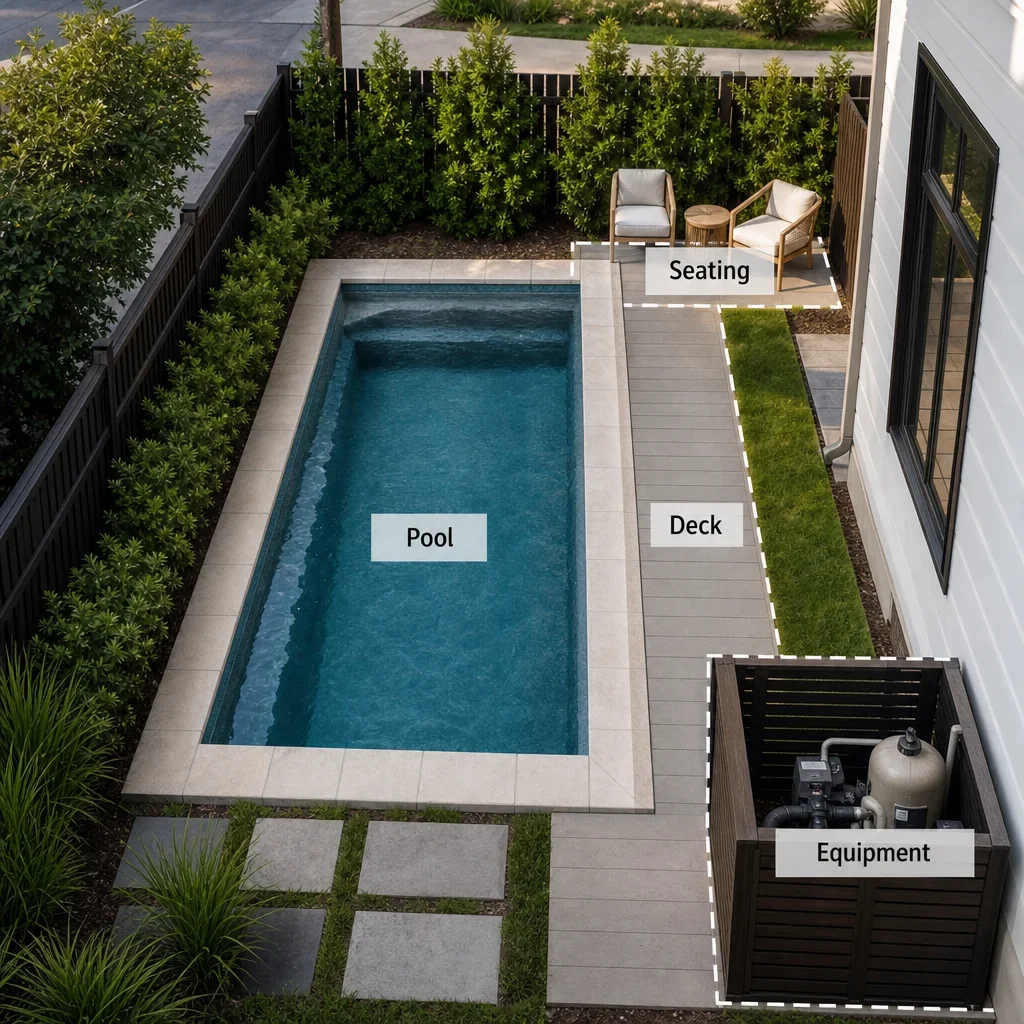
The smallest practical backyard pool depends on intended use plus local constraints. Setbacks, access for construction, equipment area, required fencing, and deck movement paths all affect what can actually be built on a given lot.
Many compact inground pools often land around 10×16 to 10×20 feet as a broad planning reference, but that is not a universal rule and not a permit shortcut. A visual plunge pool may be smaller, while a family-friendly compact pool may need more room to feel functional.
Depth should match use, not ego. Shallow lounging profiles and mixed-depth compact pools usually make better use of limited space than deep water, because deep zones reduce standing area, social use, and visual openness unless a specific activity demands them.
A shallow lounge pool is often around 4 feet or more as a broad concept reference, but actual depth should be designed around use, safety, and the structure chosen. Diving boards and slides are generally poor fits for small pools because they need depth and safety clearances that work against tight-yard planning.
The right way to test size is to plan the full footprint first. Water shape, coping, a service path, a seating zone, drainage swales, and mechanical screening all need room, so the best size pool for a backyard is the largest one that still leaves the yard functional.
4 Smart Layouts for Small, Narrow, Corner and Sloped Yards
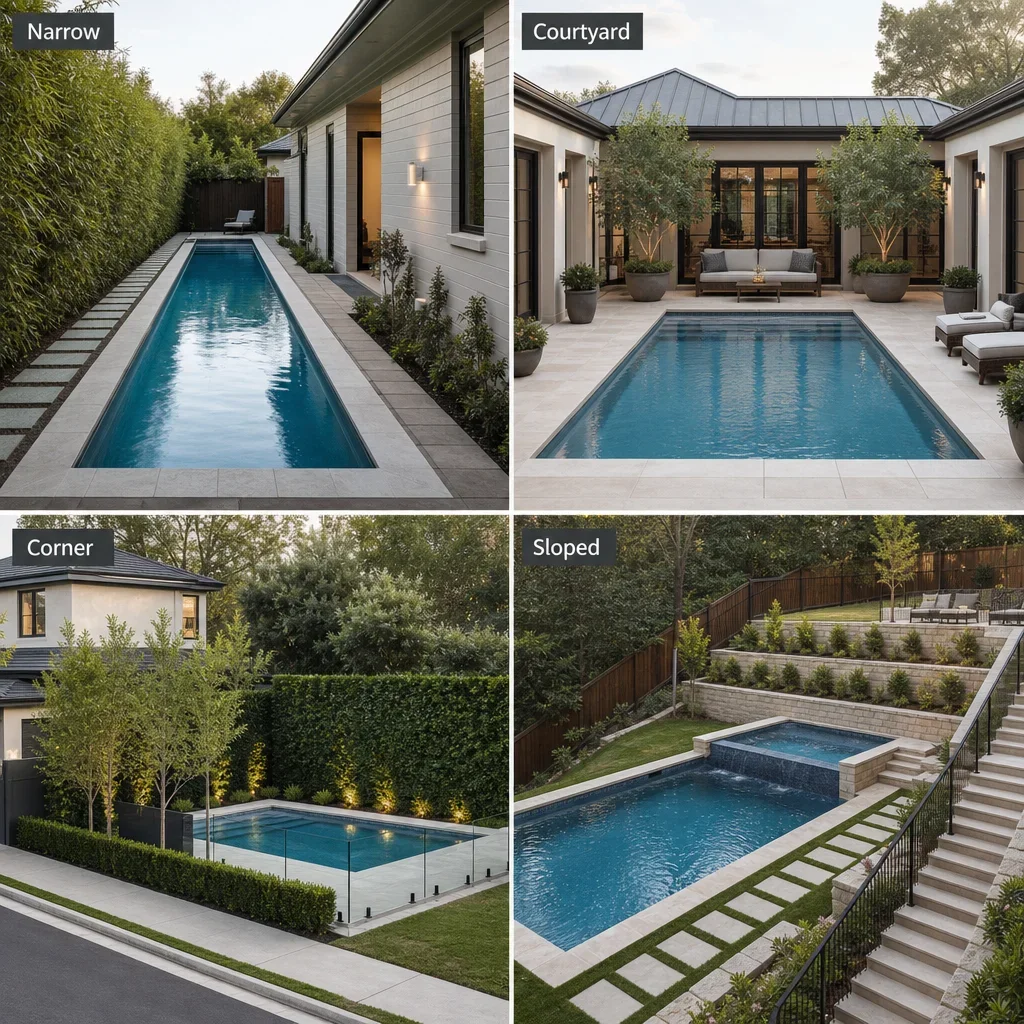
Long narrow lots work best with linear zoning. Place the pool along one side or on axis with the house, keep a clear circulation path on one long edge, and use the opposite side for bench seating, privacy planting, or a slim dining terrace.
Courtyard yards work best when the pool becomes the focal point. A compact rectangle or plunge basin centered on main sightlines from interior windows can make a small space feel intentional, especially when hardscape materials continue from indoors to outdoors.
Corner lots work best when privacy and orientation are solved together. A geometric pool tucked into the quieter corner can free the central yard for movement, while screens, hedging, and a seat wall soften exposure without boxing in the space.
Sloped yards often need retaining and grade transitions to feel integrated. A well-designed retaining wall, terrace step, or raised edge can make the pool look anchored instead of squeezed in, but grading, drainage, and base preparation become core engineering issues in GTA freeze-thaw conditions.
Every awkward yard should preserve one non-pool function. That can be a lawn strip, kids’ play zone, dining table, or planted garden, because a small poolscape feels premium only when the yard still supports real outdoor living.
How to Make a Small Pool Look Expensive
A small pool looks expensive when the design uses fewer, better choices. Clean geometry, one restrained material palette, precise edge details, and a strong focal feature usually create more luxury than stacking multiple competing add-ons.
Full-width steps or a generous bench can elevate compact small backyard pool designs because they add symmetry and social function at the same time. Integrated spa edges, a carefully chosen waterline tile, and concealed cover solutions can further sharpen the look where feasible.
Oversized pavers, natural stone accents, architectural screens, and layered evergreen planting make a pool area feel finished. They reduce visual clutter and give a compact yard the same design discipline seen in larger resort-style spaces.
Current poolscape ideas lean toward minimalist lines, darker or more natural water tones, low-profile water features, and controlled lighting rather than bright, busy effects. Those trends suit small yards because they emphasize calm and proportion.
Here are five design recipes that work well in limited space:
- Modern Courtyard Retreat: geometric plunge pool, porcelain deck, slatted privacy screen, uplighting, and clipped evergreens.
- Family Compact Entertainer: compact standard pool, wide entry steps, bench seating, dining terrace, and durable pavers.
- Wellness Plunge Garden: heated plunge pool, spa jets, privacy hedge, composite deck zone, and low-litter planting.
- Narrow Lap Escape: slim lap pool, linear coping, cantilever umbrella, and a single long planting bed.
- Resort Spool Lounge: spool with bench perimeter, fire feature viewed from a distance, and layered stone textures.
Pool Patio Landscape Ideas: What to Put Around a Pool
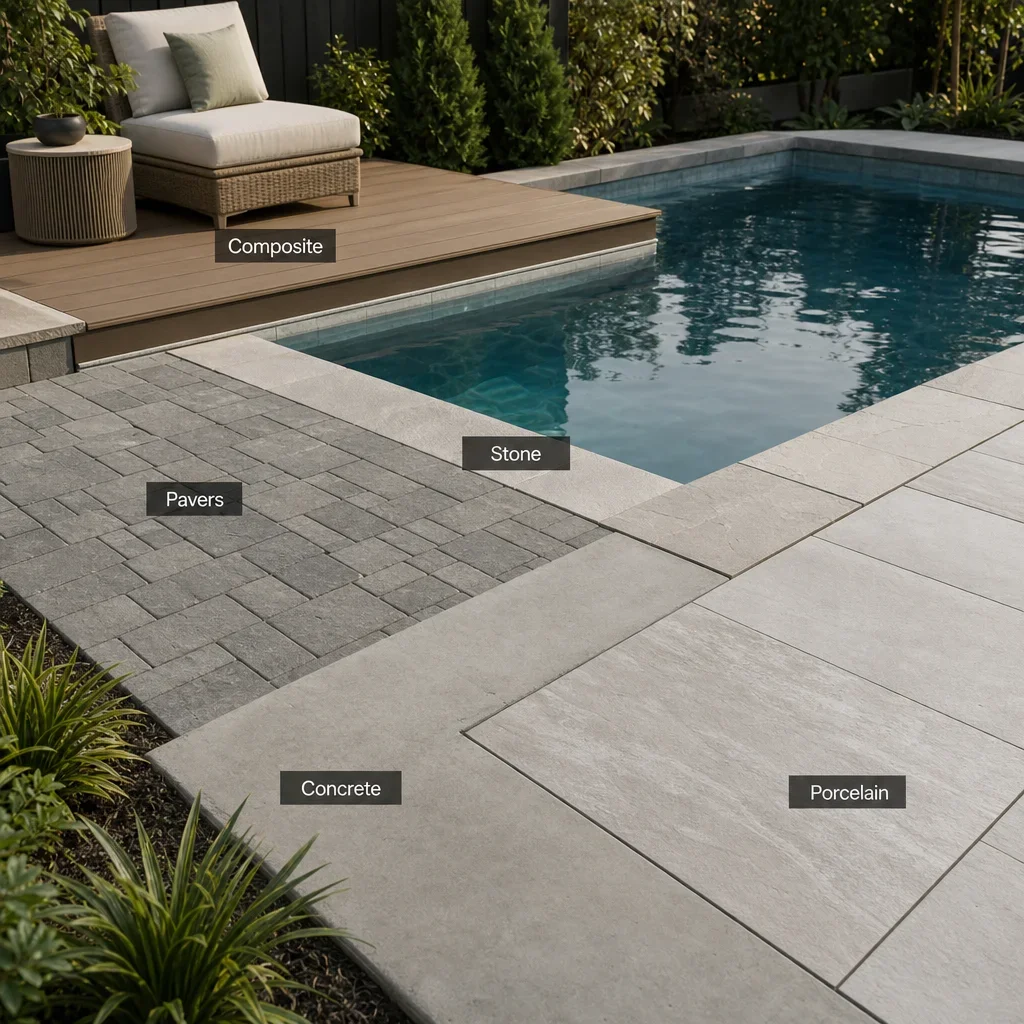
The best material around a small pool balances slip resistance, heat comfort, drainage, freeze-thaw durability, and style. In the GTA, that usually means comparing pavers, natural stone, porcelain, poured concrete, wood, and composite by performance, not just by appearance.
Pavers are popular because they handle movement well and can be repaired in sections. Natural stone offers premium character but needs the right stone choice and detailing. Porcelain gives a clean modern finish. Poured concrete can work visually but needs strong drainage and winter detailing. Wood and composite suit lounge zones more than full wet-circulation zones.
| Material | Strengths | Trade-offs | Best use around small pools |
|---|---|---|---|
| Pavers | Sectional repair, design flexibility, good freeze-thaw performance when properly installed | Joint maintenance and base quality matter | Main deck and circulation areas |
| Natural stone | Premium look, rich texture | Material choice and detailing matter for weather performance | Feature zones, coping accents, luxury decks |
| Porcelain | Sleek look, consistent finish | Needs correct substrate and installation system | Modern pool patios and clean-lined designs |
| Poured concrete | Simple visual field, broad finish options | Cracking and drainage detailing matter | Larger deck fields when engineered well |
| Wood | Warm underfoot look | Ongoing maintenance near water | Raised lounge or pergola zones |
| Composite | Lower upkeep than wood, modern appearance | Heat and finish selection matter | Seating terraces and transition zones |
If you want pool patio landscape ideas no grass, use mixed hardscape with planted pockets instead of one surface everywhere. Decorative gravel in non-circulation edges, composite lounging areas, pavers for movement zones, and evergreen planting beds can create a clean low-maintenance poolscape without turning the yard into a hard slab.
The cheapest option around a pool is not always the best long-term value. Repairability, drainage performance, winter movement, and barefoot comfort usually matter more than the lowest initial material cost in a premium project.
What Plants Look Good Next to a Pool, and What Not to Plant
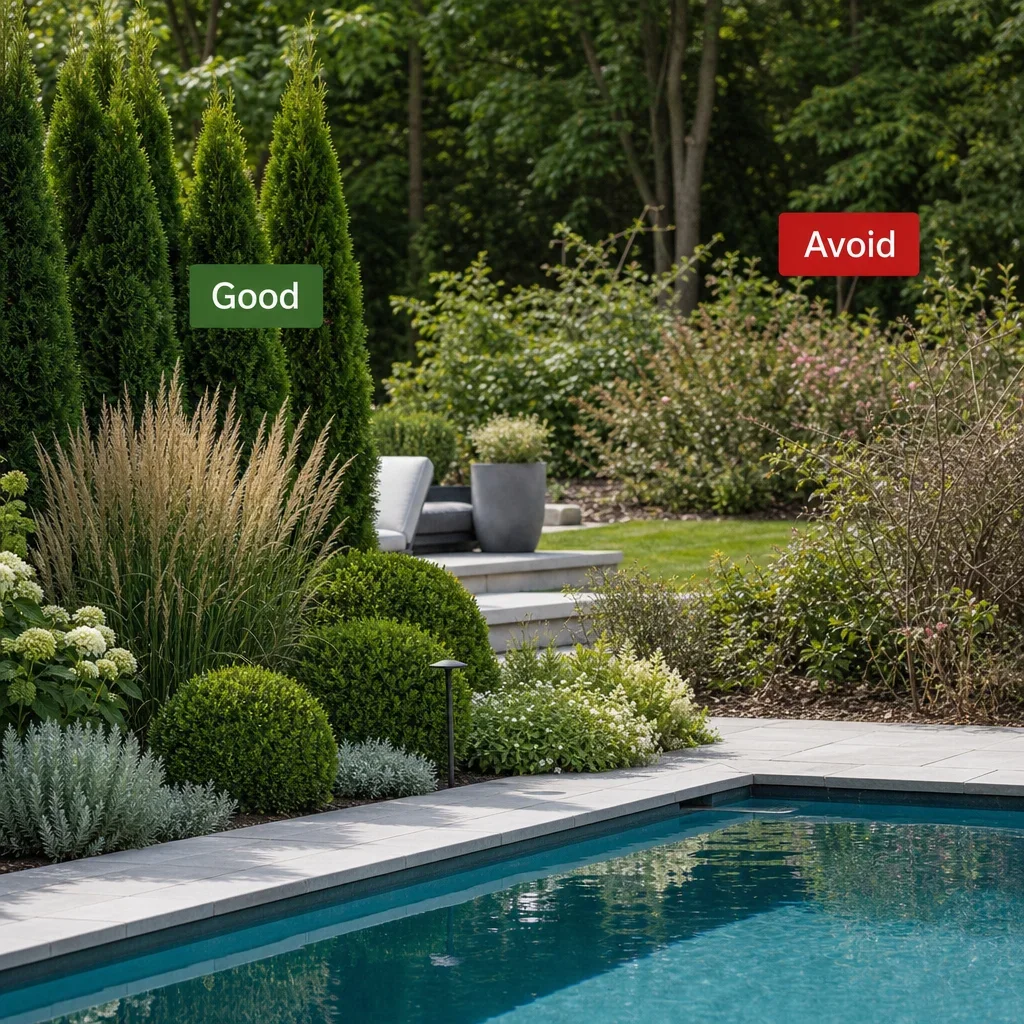
The best poolside plants have predictable habits. Low litter, non-invasive roots, manageable mature size, low thorn risk, and four-season structure matter more than flower colour when the planting sits beside water and paving.
For GTA Zone 5–6 conditions, layered evergreens, ornamental grasses, structural shrubs, and select perennials are usually the safest design direction, but plant selection should still be reviewed for the exact site, sun exposure, water chemistry, and maintenance goals.
Plants should provide privacy without closing in the yard. Upright evergreens, airy grasses, and clipped shrubs can frame the pool and soften fences while keeping sightlines open from the house.
| Plant this | Why it works | Avoid this | Why it causes problems |
|---|---|---|---|
| Layered evergreens | Four-season privacy and structure | High-litter trees | Leaves and debris increase cleanup |
| Ornamental grasses | Soft movement and compact root behaviour | Thorny shrubs near entries | Safety and comfort issues |
| Structural shrubs | Clean form and repeatable massing | Messy fruiting plants | Debris and staining risk |
| Select perennials | Seasonal accent with control | Aggressive root systems | Potential hardscape and utility conflicts |
What not to plant around a pool is usually more important than what to add. Avoid species that drop heavy petals, seed heads, or fruit into the water, and avoid thorny or sprawling plants near walking edges and swim entry points.
Privacy, Shade and Lighting Ideas for a Small Pool Area
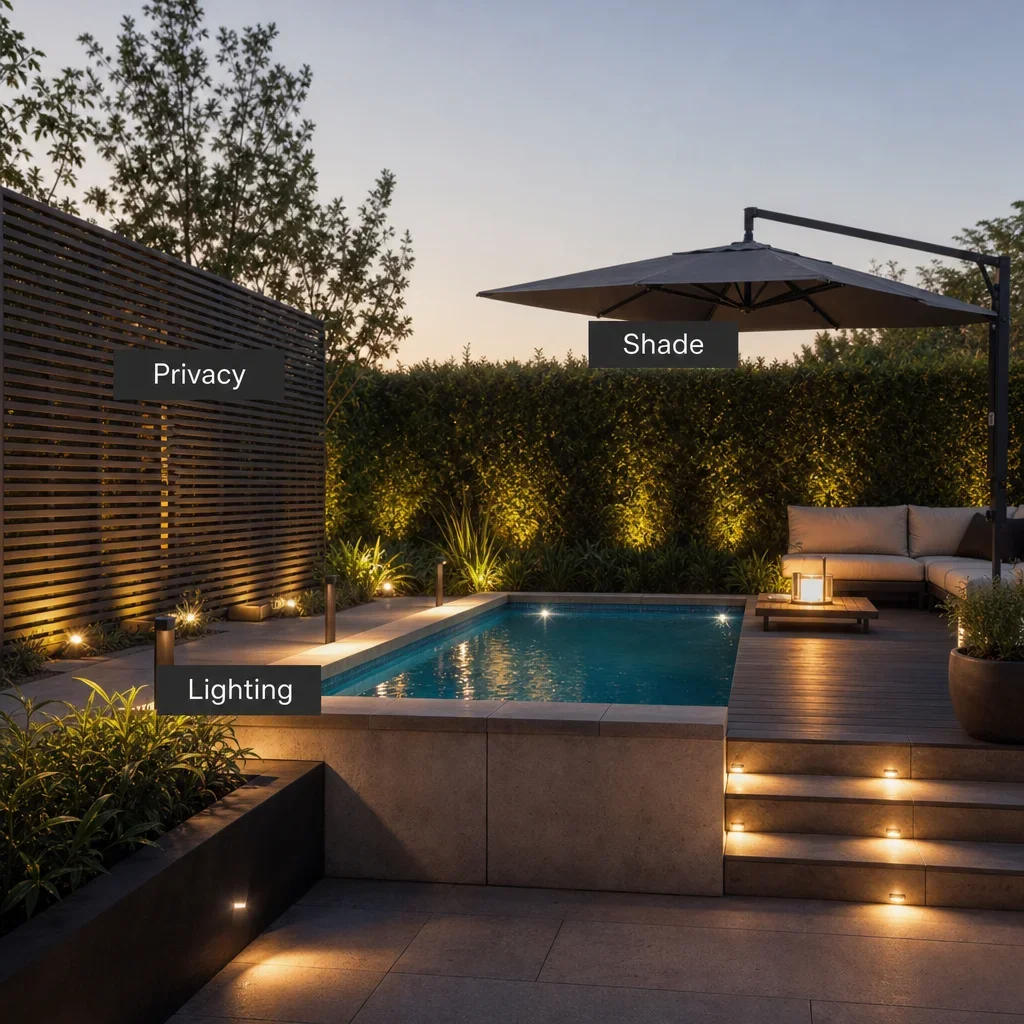
Privacy works best in layers, not walls of one material. Fences, masonry elements, hedges, slatted screens, and pergolas can each help, but combining two or three lighter moves usually protects privacy without shrinking the visual footprint.
Shade should target where people stay, not just where the pool sits. Pergolas, cantilever umbrellas, and small cabana-style seating zones often deliver more usable comfort than trying to cast permanent shade across the whole water surface.
Lighting should be restrained and zoned. Underwater LEDs, step lights, path lighting, subtle uplighting, and warm dining illumination create a premium look while supporting safety and nighttime circulation.
A small pool area looks best when one lighting layer leads and the others support it. Too many bright fixtures can flatten the space and make a compact pool feel commercial rather than resort-like.
Small Pool Features Worth Adding, and Which Ones to Skip
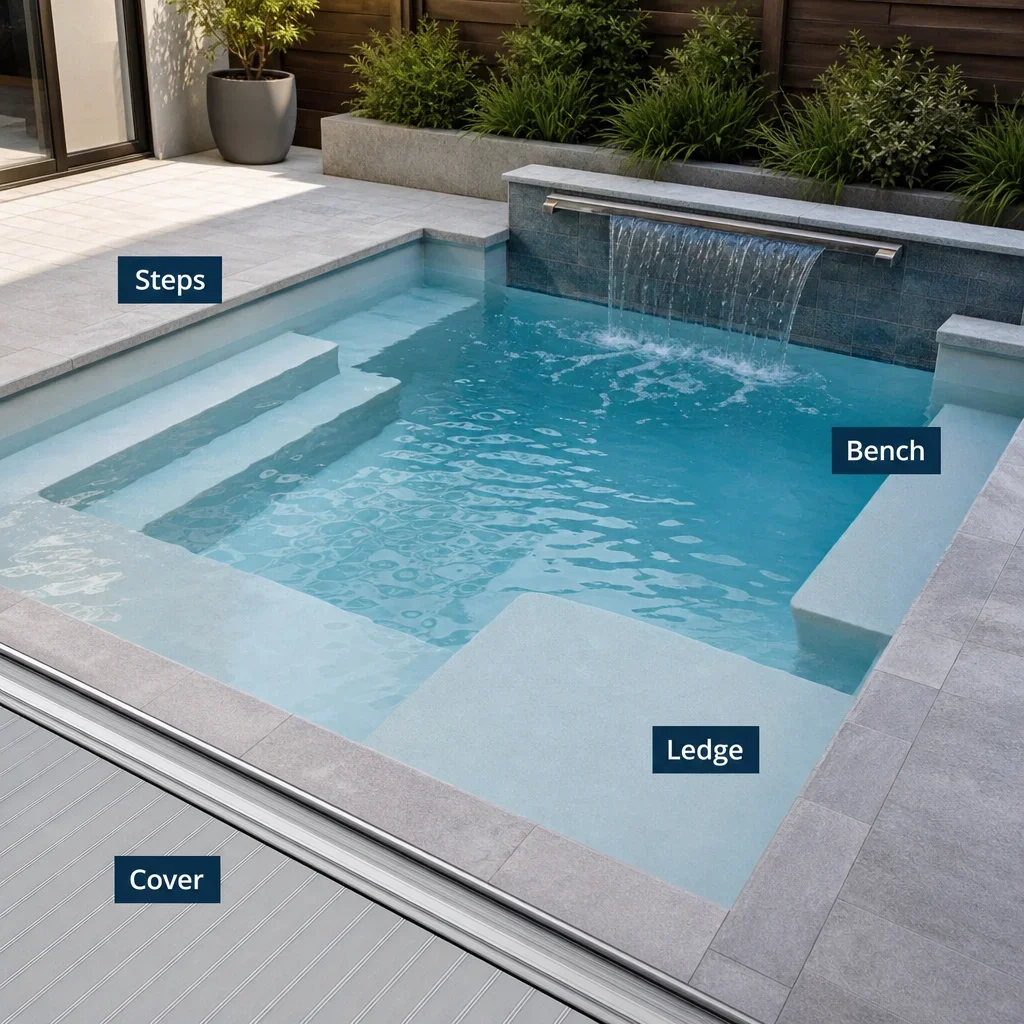
The best features in a small pool do double duty. Bench seating, wide entry steps, an integrated ledge, a compact water wall, an auto cover, and seat walls around the deck can improve both function and appearance.
A tanning ledge or Baja shelf is worth the footprint only if lounging is a priority. In very small basins, that feature can consume too much swim area and leave the water feeling decorative rather than usable.
Compact water features usually suit small spaces better than large waterfalls. Scuppers, bubblers, and thin water walls add movement and sound without overwhelming the yard or dominating maintenance.
Family-friendly design comes from visibility and circulation. Gradual entries, clear sightlines from the house, slip-aware deck materials, and uncomplicated movement routes tend to matter more than novelty features in tight yards.
Pet-friendly planning should focus on durable surfaces, sensible entry and exit paths, and avoiding sharp or heat-intensive materials in pet travel routes. Accessibility planning should consider stable routes, wider entries where possible, seating ledges, and handrail planning if needed.
Low-Maintenance Pool Design: Water Care, Surfaces, Covers and Equipment Placement
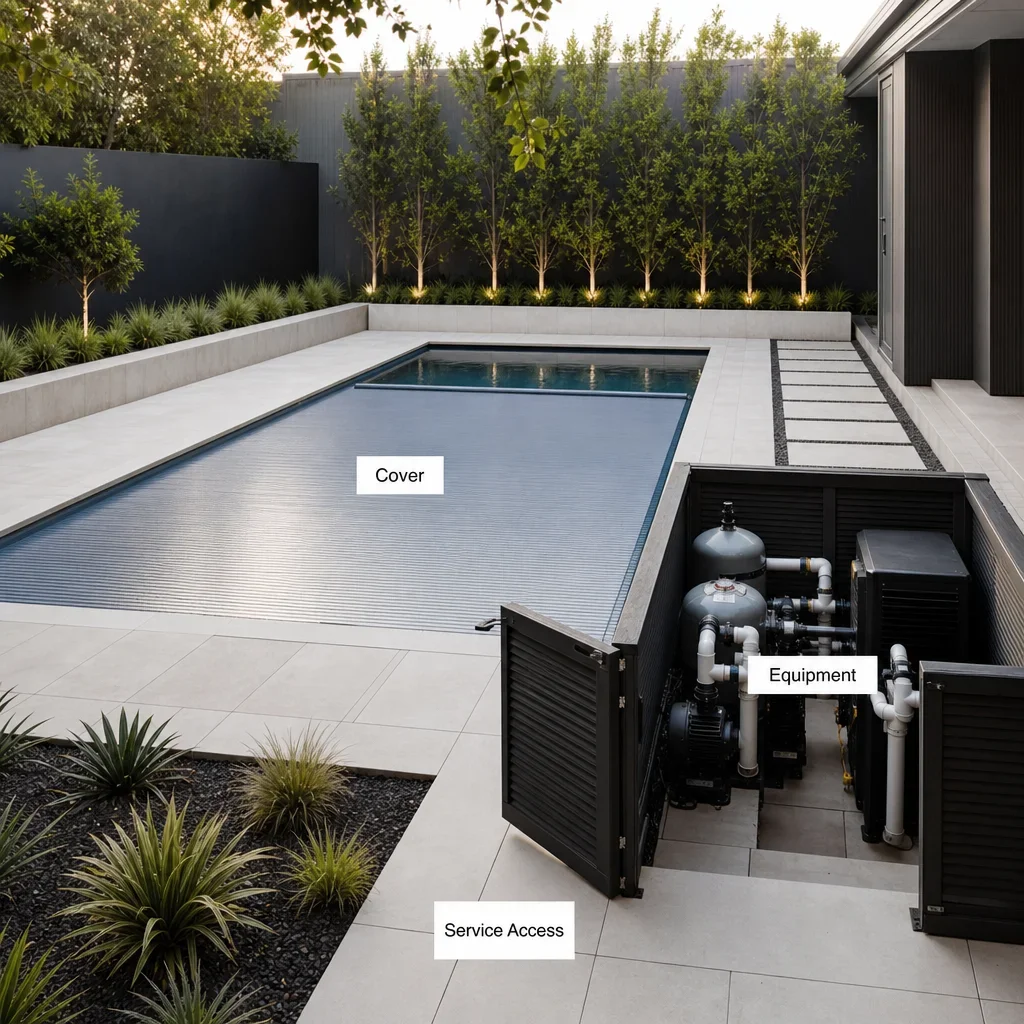
Low maintenance starts at design stage, not after installation. Simple geometry, easy-clean hardscapes, reduced lawn edges, lower-litter planting, efficient filtration, and an automatic cover can cut ongoing work more effectively than any styling trick.
Maintenance burden rises as systems become more complex. A simple rectangle with limited planting is generally easier to care for than a raised spa combination with multiple pumps, dense garden beds, and several water effects.
Equipment placement matters more in a small yard because noise, service access, ventilation, drainage, and visual screening all compete for limited space. Mechanical equipment should be easy to reach for service and should not be hidden so tightly that airflow or maintenance access is compromised.
Some routine water loss is normal, but an inch a day may indicate a problem depending on heat, wind, humidity, splash-out, and whether the pool is covered. That is a service issue to diagnose, not a design assumption to ignore.
The common 3 C’s of pool care usually refer to circulation, cleaning, and chemistry. Baking soda is sometimes used to affect total alkalinity, but this is a planning guide, not a chemical-treatment manual, so specific water care should follow the pool professional or manufacturer responsible for the system.
Small Backyard Pool Costs: Budget by Tier, Not by Hype
The honest way to budget a small backyard pool is by cost drivers, not by internet headline pricing. Pool type, excavation complexity, access, retaining and drainage needs, soil conditions, heating, finish materials, deck area, fencing, lighting, planting, and permit or engineering requirements all move the number.
A compact project can be planned in tiers even when no flat rate is appropriate. An essential compact pool focuses on the basin, basic deck, and code-driven site work; an upgraded lifestyle poolscape adds stronger materials, better lighting, and design-forward planting; a premium resort-style small yard transformation layers architecture, integrated features, and custom detailing throughout.
The cheapest backyard pool alternatives are usually above-ground units, stock-tank concepts, or a cowboy pool, which is a stock-tank-style plunge setup. Those options are not direct substitutes for an engineered inground poolscape built for long-term drainage performance, durability, and integrated landscape design.
The cheapest pool shape is often the simplest geometric form, but that should never be read as a fixed price promise. In the GTA, site access and construction complexity can outweigh shape choice by a wide margin.
Line-by-line pricing is the only useful way to compare proposals. It shows where money is going and helps you judge whether the investment is in structure, finishes, drainage, equipment, or landscape elements rather than vague allowances.
Permits, Setbacks, Drainage and Winter-Proofing in Toronto & the GTA
Local rules vary by municipality and property, so permit, fencing, setback, grading, utility locate, and drainage requirements need to be confirmed before the design is finalized. No reputable builder should present one municipality’s rules as universal across the GTA.
Lot grading and runoff control are core pool-design issues in this region. Deck slope, subsurface drainage, stable base preparation, and water management around the pool and adjacent hardscape matter because freeze-thaw cycles expose weak details quickly.
Tight pool decks need careful circulation and drainage planning. A premium finish is not just about the material itself; it is also about where water sheds, how edges transition, and how safely people move barefoot through the space.
Draining an inground pool can create structural and hydrostatic risk in some conditions, which is why it should not be treated as a casual DIY task. Groundwater pressure can affect an empty shell, and the right procedure depends on the pool structure and site conditions.
Some GTA projects need surveys, grading plans, or engineering depending on slope, retaining requirements, lot conditions, and municipal review. That is why small-yard projects benefit from design-build coordination early, not after the layout is already fixed.
How to Plan a Small Backyard Pool Step by Step
A successful small pool project follows a sequence, and skipping steps usually costs time later. Start by defining the main use, then measure the yard, map constraints, choose the pool type, preserve one non-pool function, set the material palette, place the equipment, plan drainage, privacy, and lighting, review permits, and finalize the design before pricing.
App-based inspiration can help with ideas, but a backyard pool design app or a generic plans PDF cannot solve grading, service access, winter detailing, or municipal review. Those issues need real site planning.
The most useful things to bring to a design consultation are yard photos, a survey if you have one, rough dimensions, inspiration images, and a clear priority list for use, style, and maintenance. That gives the design team enough information to test what fits before anyone talks finishes in detail.
A practical pre-design checklist should include: home style, who will use the pool, desired seating and dining space, privacy needs, maintenance tolerance, equipment screening ideas, and whether you want lawn, planting, or a no-grass concept.
Small yards benefit the most from expert layout and drainage planning because there is less room to hide mistakes. If you are comparing pool design ideas for small backyards in Markham, Toronto, or the wider GTA, start with a 3D layout that shows the whole poolscape, not just the pool.
FAQ
What is the best pool design for a small backyard?
The best design is the one that matches the yard’s main use and still leaves room for circulation and at least one secondary function. In a small space, simple geometry usually performs best.
What shape pool is best for a small yard?
A rectangular or geometric pool is usually the most efficient shape. It preserves usable swim area and works better with furniture and paving layouts.
How small can a backyard pool be?
A backyard pool can be very compact, but the smallest practical size depends on setbacks, access, mechanical space, fencing, and intended use. The full poolscape footprint matters more than the water shape alone.
What is considered a small inground pool?
A small inground pool is generally a compact pool built for a limited yard footprint rather than one fixed dimension. Many planning concepts start around roughly 10×16 to 10×20 feet, but the right size depends on the site and use.
What is the best size pool for a small backyard?
The best size is the largest pool that still leaves the yard functional. If the pool consumes the seating, access, and planting zones, it is too large for the space.
What is the best depth for a small backyard pool?
Shallow or mixed-depth profiles are usually the most useful in compact yards. Deep water is rarely the best use of a very small pool unless a specific activity requires it.
How do I make a small pool look expensive?
Use fewer materials, cleaner geometry, better lighting, and stronger edge detailing. One focal element and a disciplined palette usually look more luxurious than adding many features.
What can I put around my pool instead of concrete?
Pavers, natural stone, porcelain, composite deck zones, and decorative gravel in non-circulation areas are common alternatives. The right choice depends on slip resistance, winter durability, heat, and drainage.
What plants should you not plant around a pool?
Avoid high-litter trees, thorny shrubs near entries, messy fruiting plants, and aggressive root systems. Those create cleanup, comfort, and long-term hardscape risks.
What are low-maintenance plants for pool landscaping?
Low-litter evergreens, ornamental grasses, structural shrubs, and carefully selected perennials are usually the safest categories. Exact species should be matched to the site and the GTA climate zone.
What is a cowboy pool or cowboy tub?
A cowboy pool is a stock-tank-style plunge setup. It is usually discussed as a low-cost alternative, not as a substitute for a permanent inground poolscape.
Can a small pool still have a spa or water feature?
Yes, but the feature should earn its footprint. Compact benches, jets, spillover edges, thin water walls, and small scuppers usually work better than oversized add-ons.
What is the cheapest pool shape to build?
The simplest geometric shape is usually the most cost-efficient to form and finish, but actual pricing still depends heavily on site access, excavation, drainage, and finishes.
What should I consider before building a pool in Toronto or the GTA?
Confirm permit review, setbacks, fencing, grading, drainage, utility locates, equipment placement, and freeze-thaw construction details before finalizing the design. Those issues can affect the layout as much as style does.
Can a pool lose an inch of water a day?
It can happen under some weather conditions, but an inch a day may also indicate a leak or another issue depending on splash-out and cover use. That needs diagnosis, not guessing.
Will an inground pool pop out of the ground if drained?
In some conditions, draining an inground pool can create hydrostatic risk. That is why draining should be handled with professional guidance based on the structure and site conditions.
Compare the whole layout before you compare finishes. In a small backyard, the smartest decision is usually the one that protects movement, drainage, privacy, and year-round durability first.