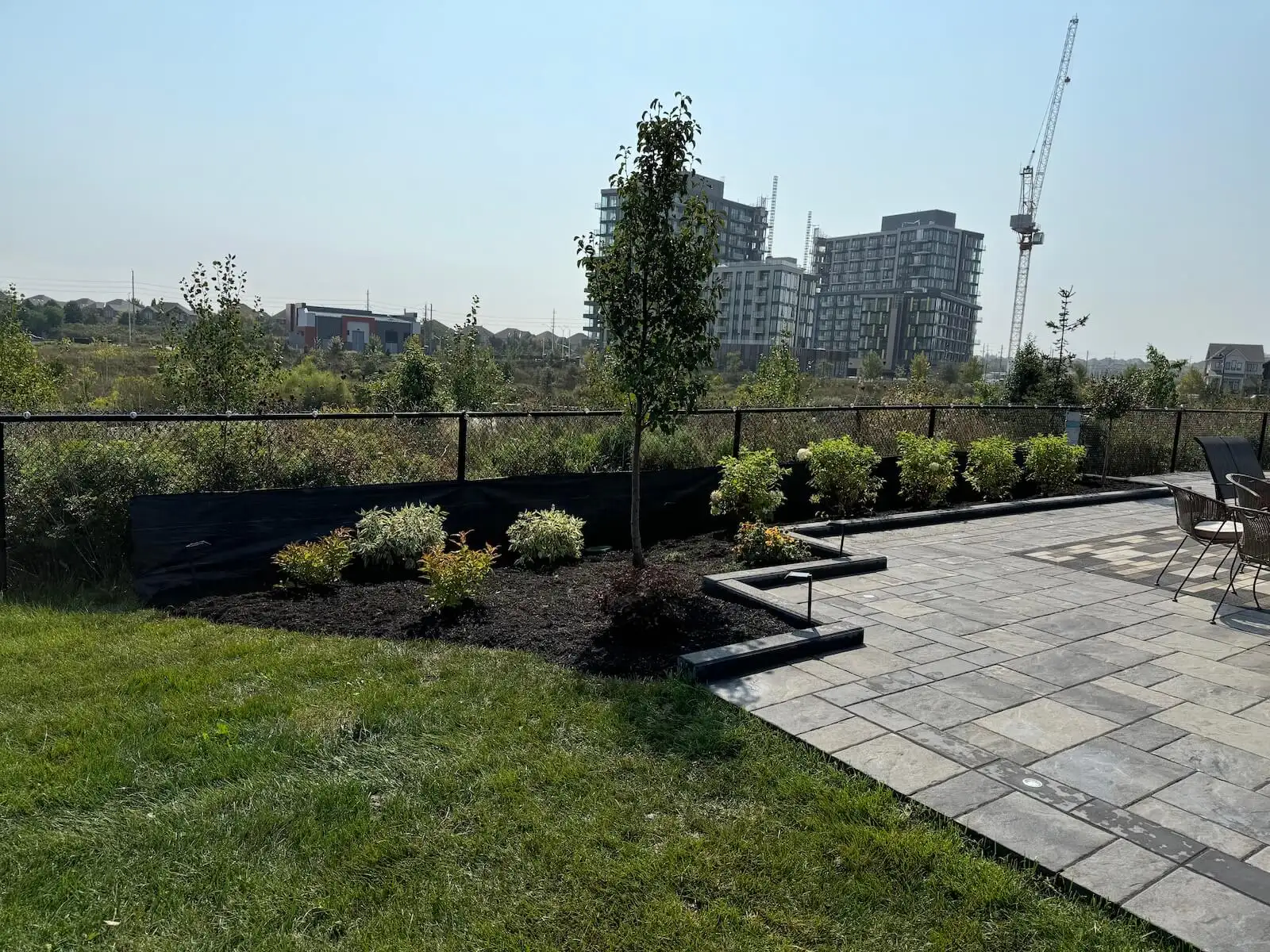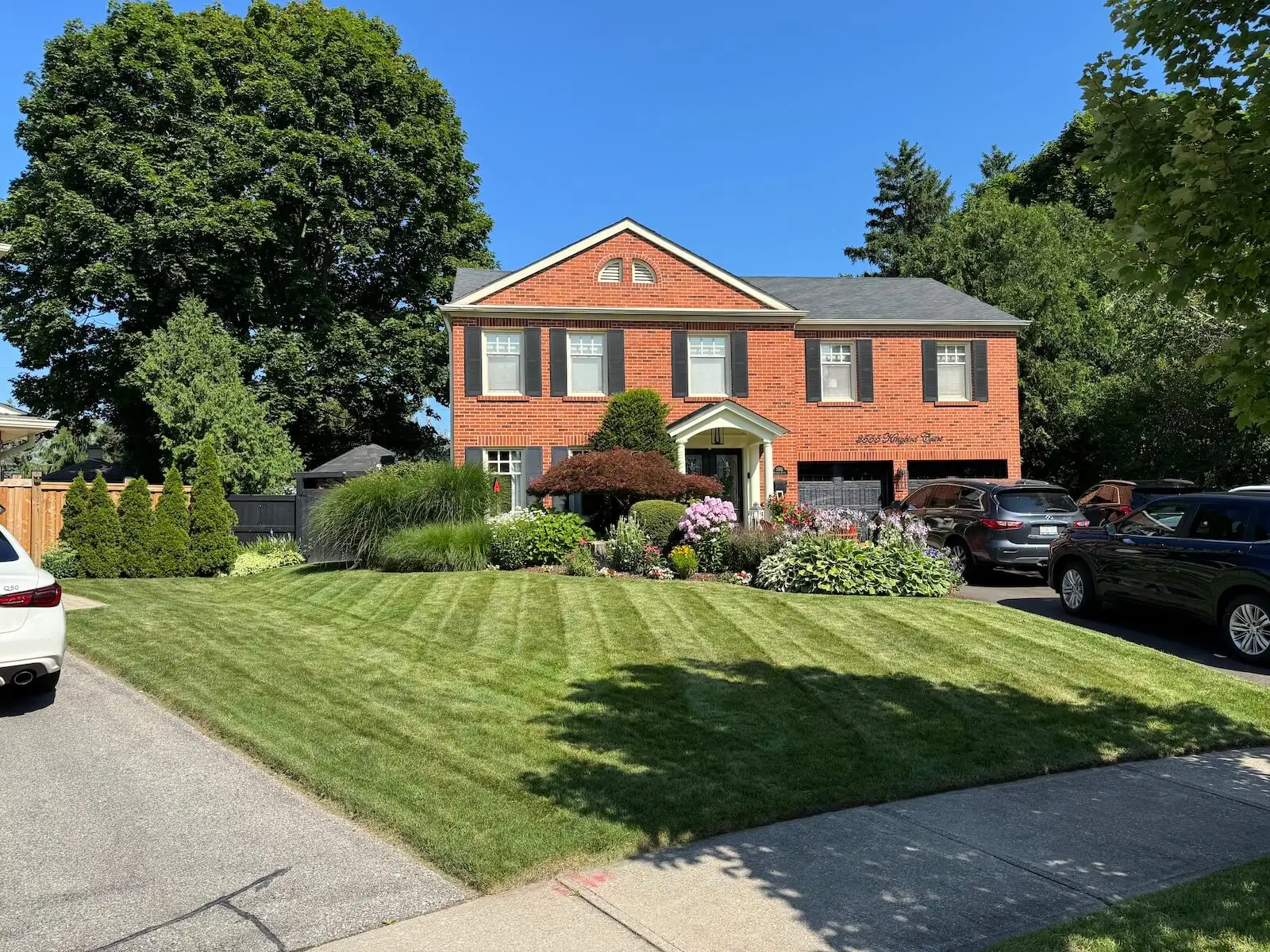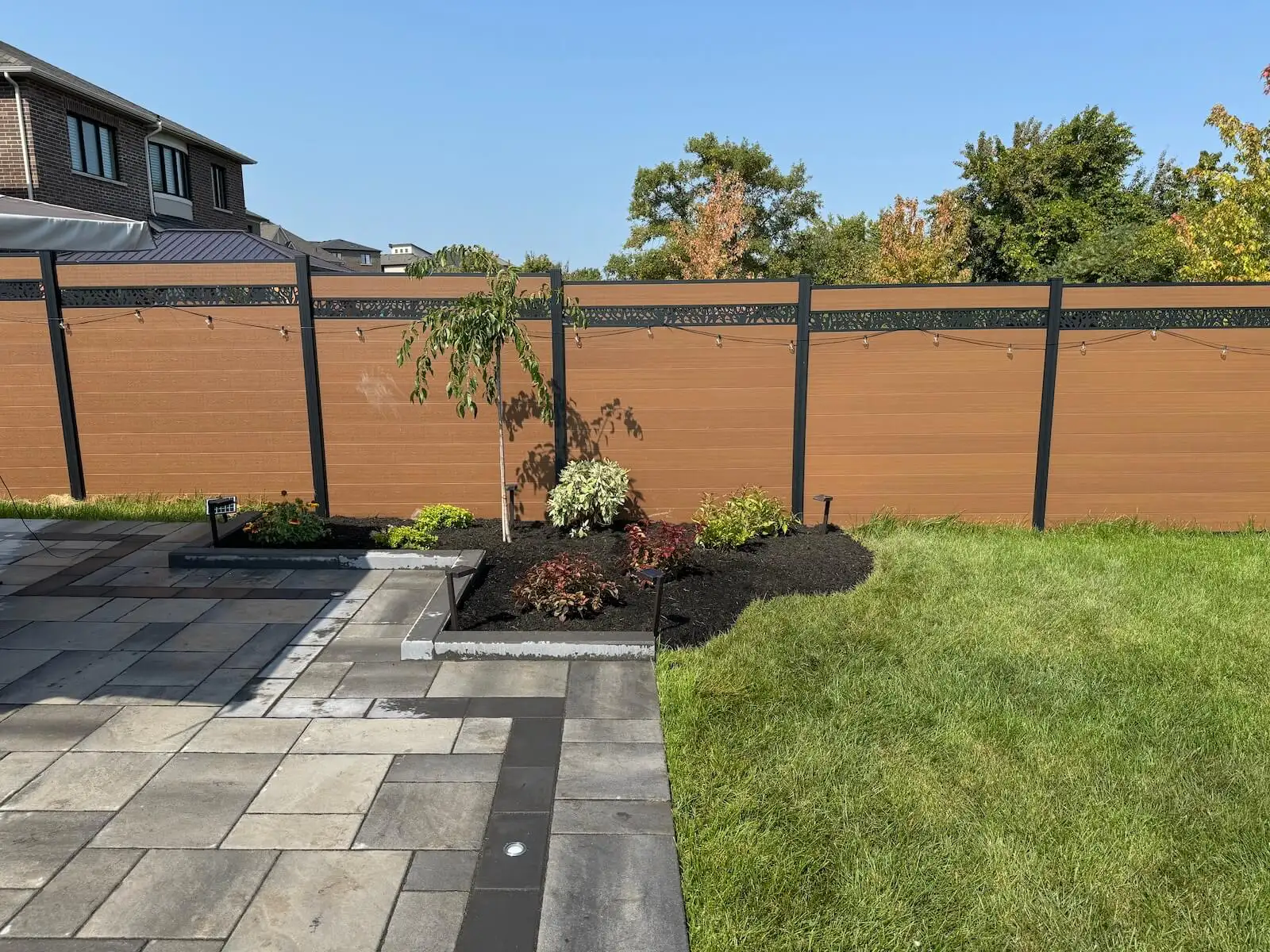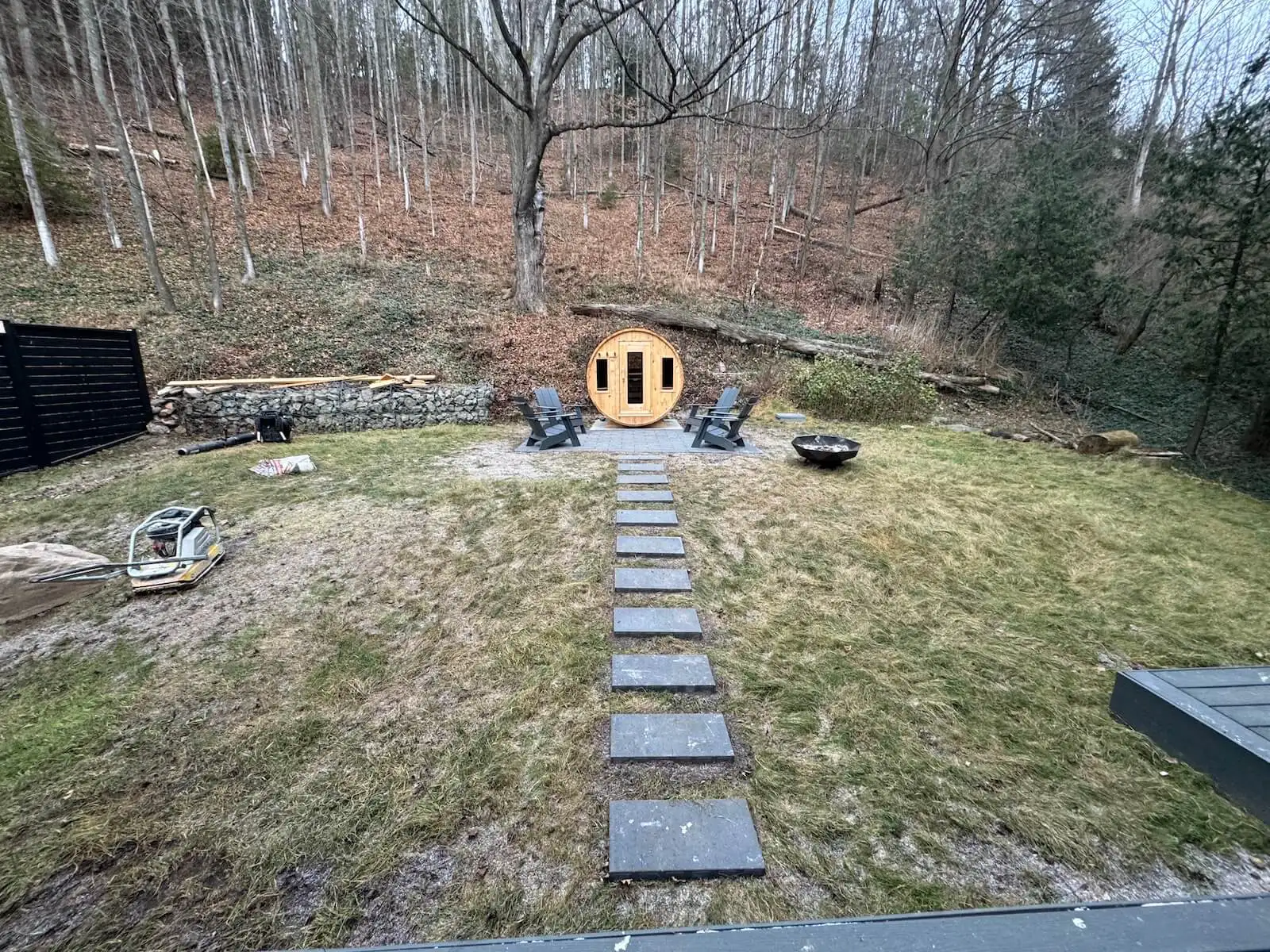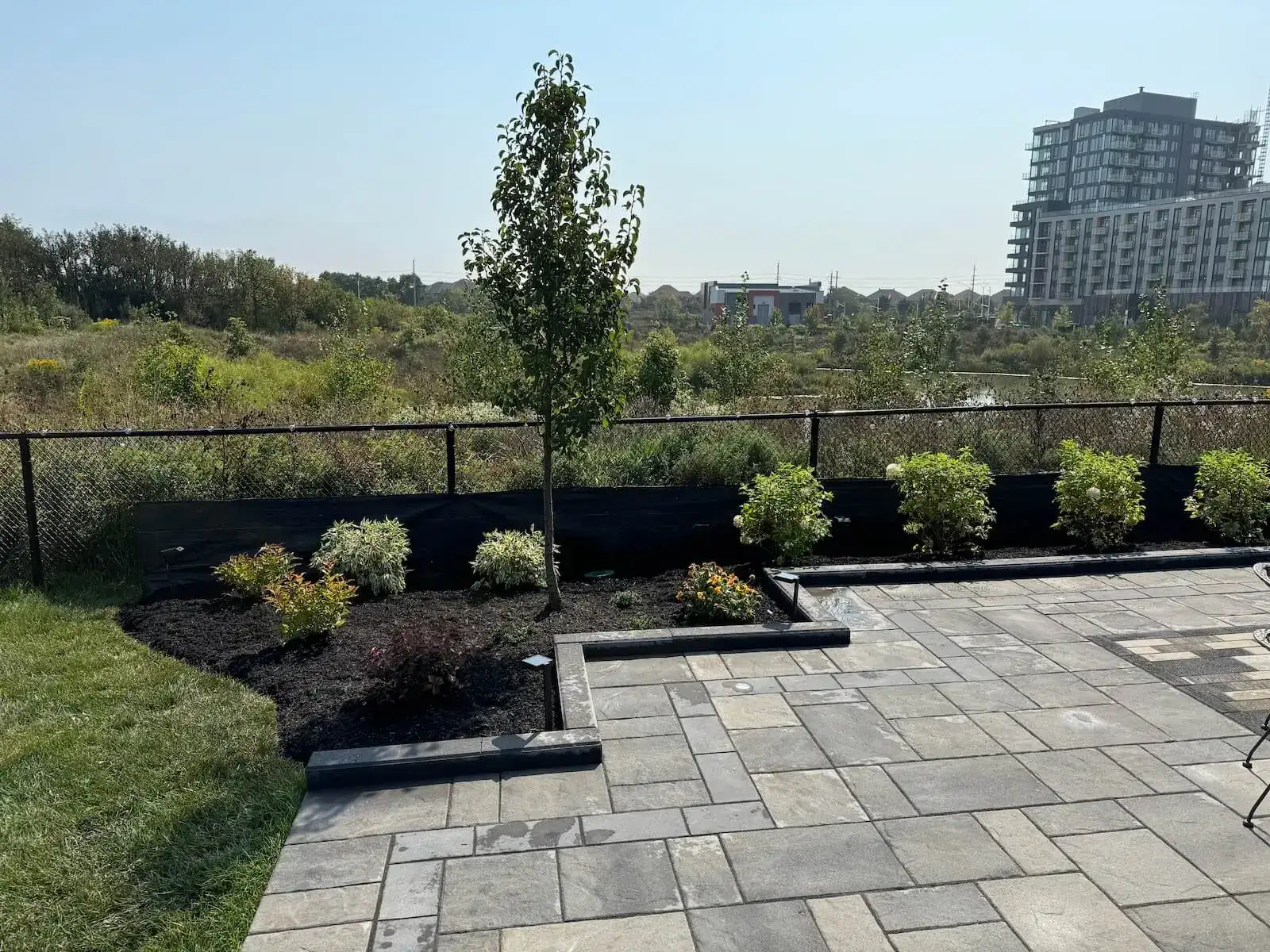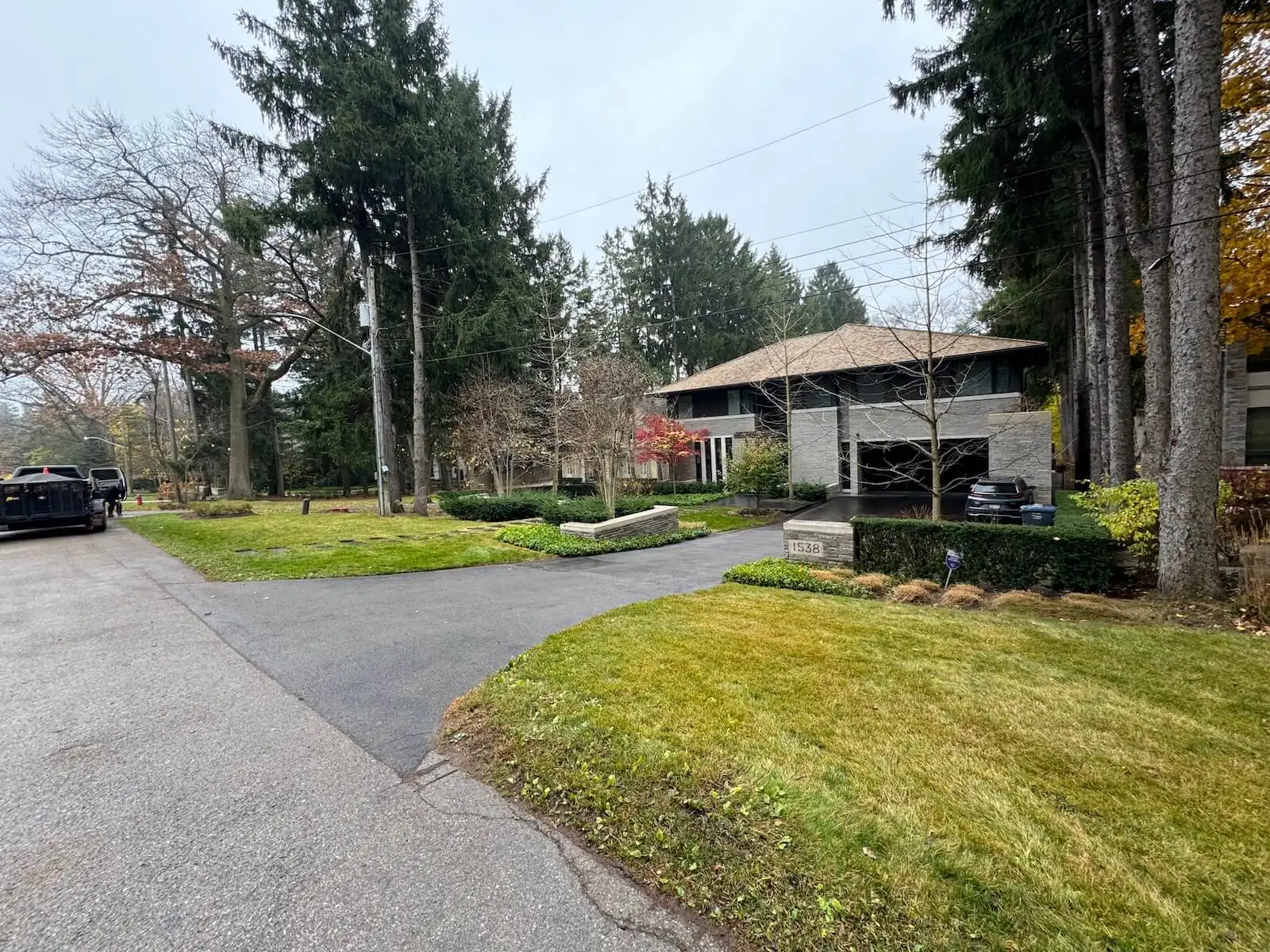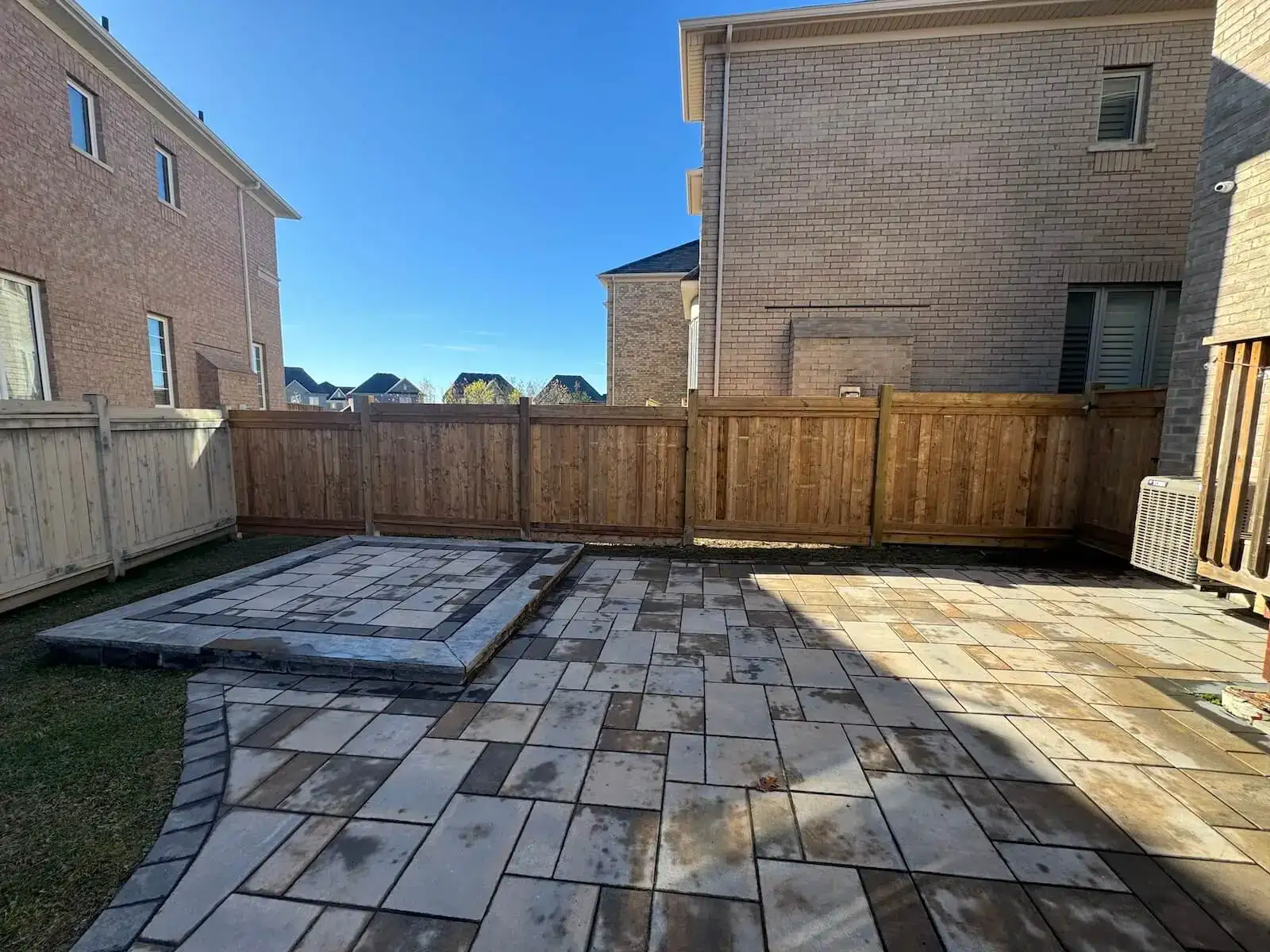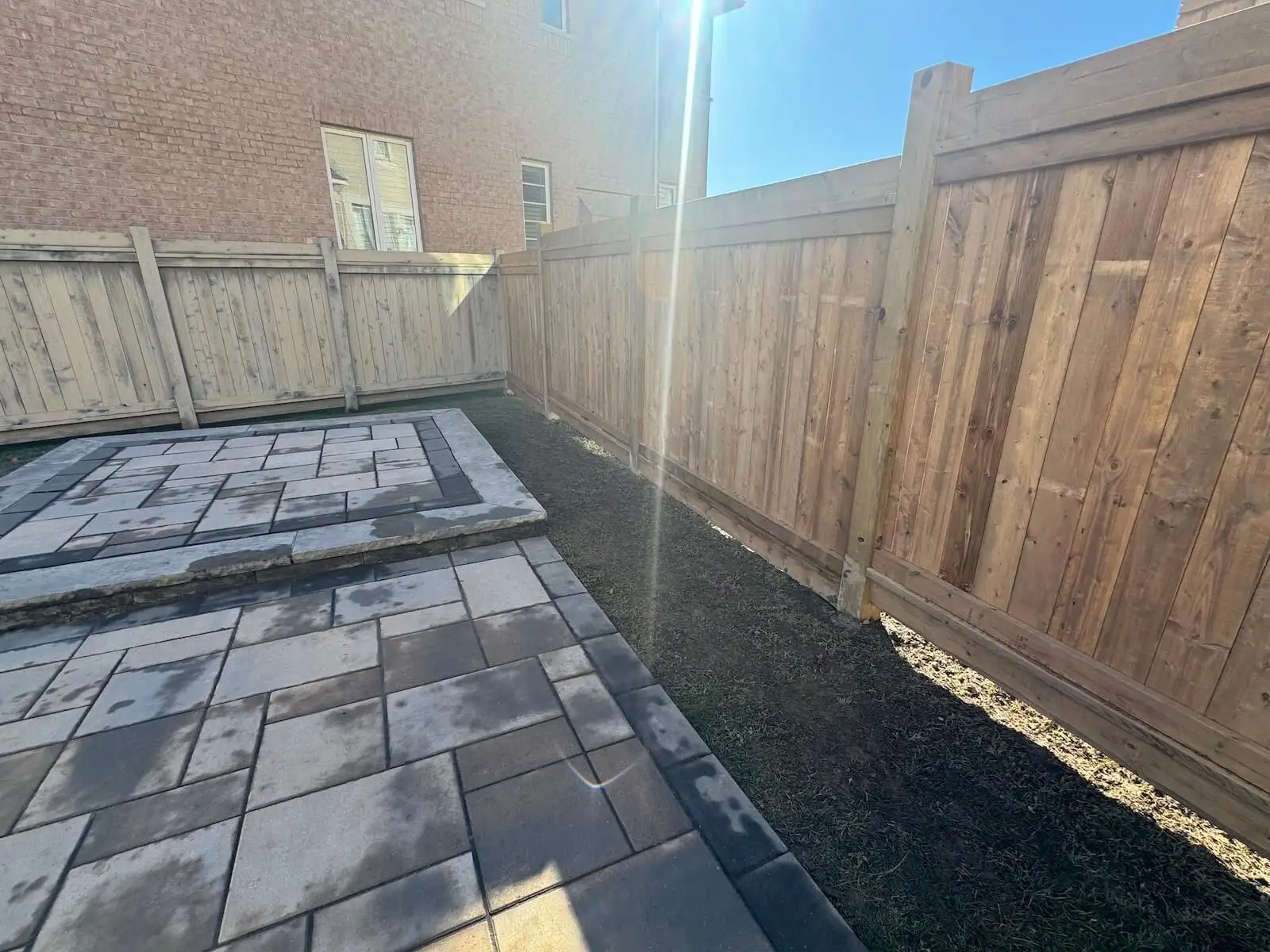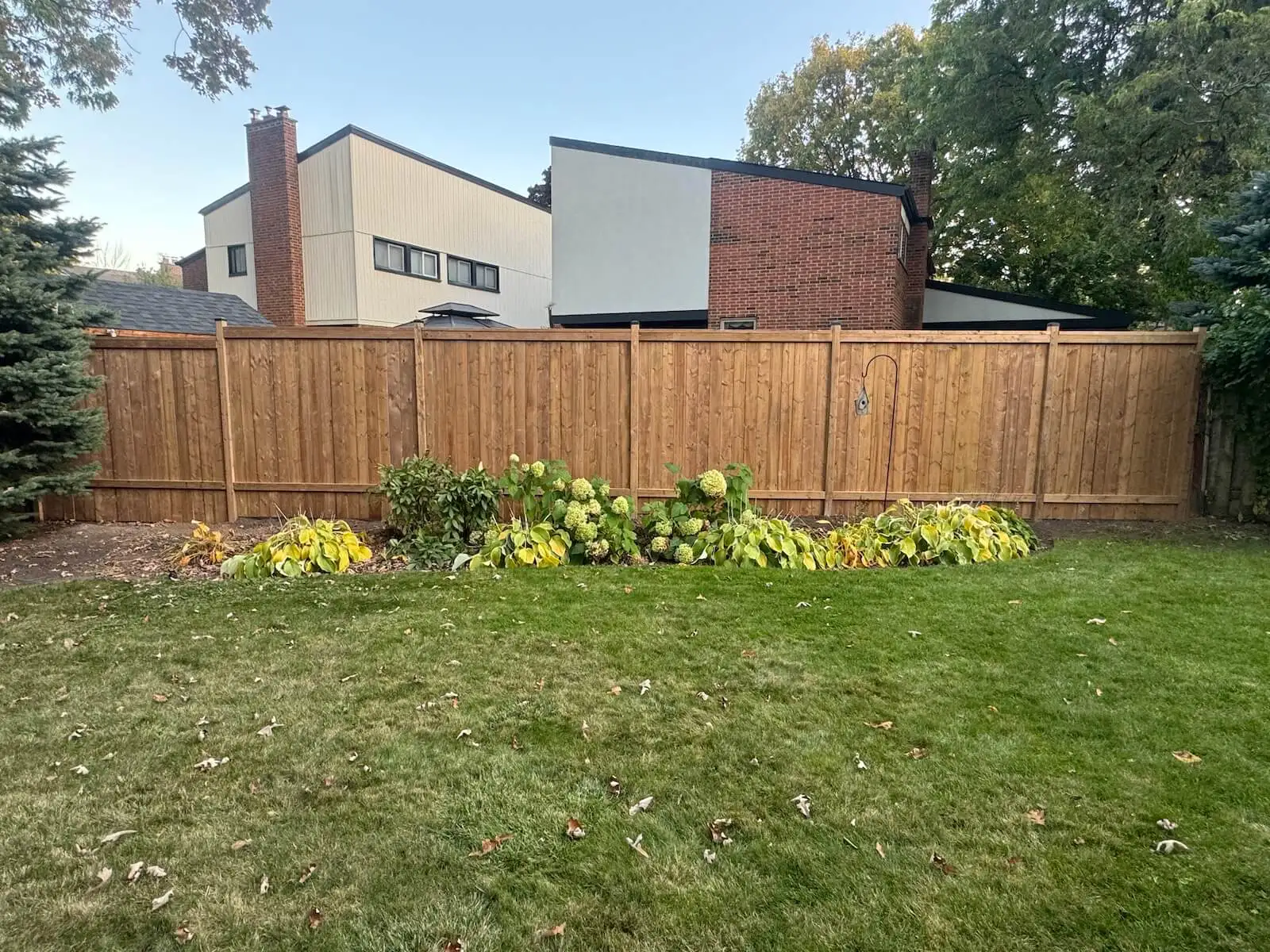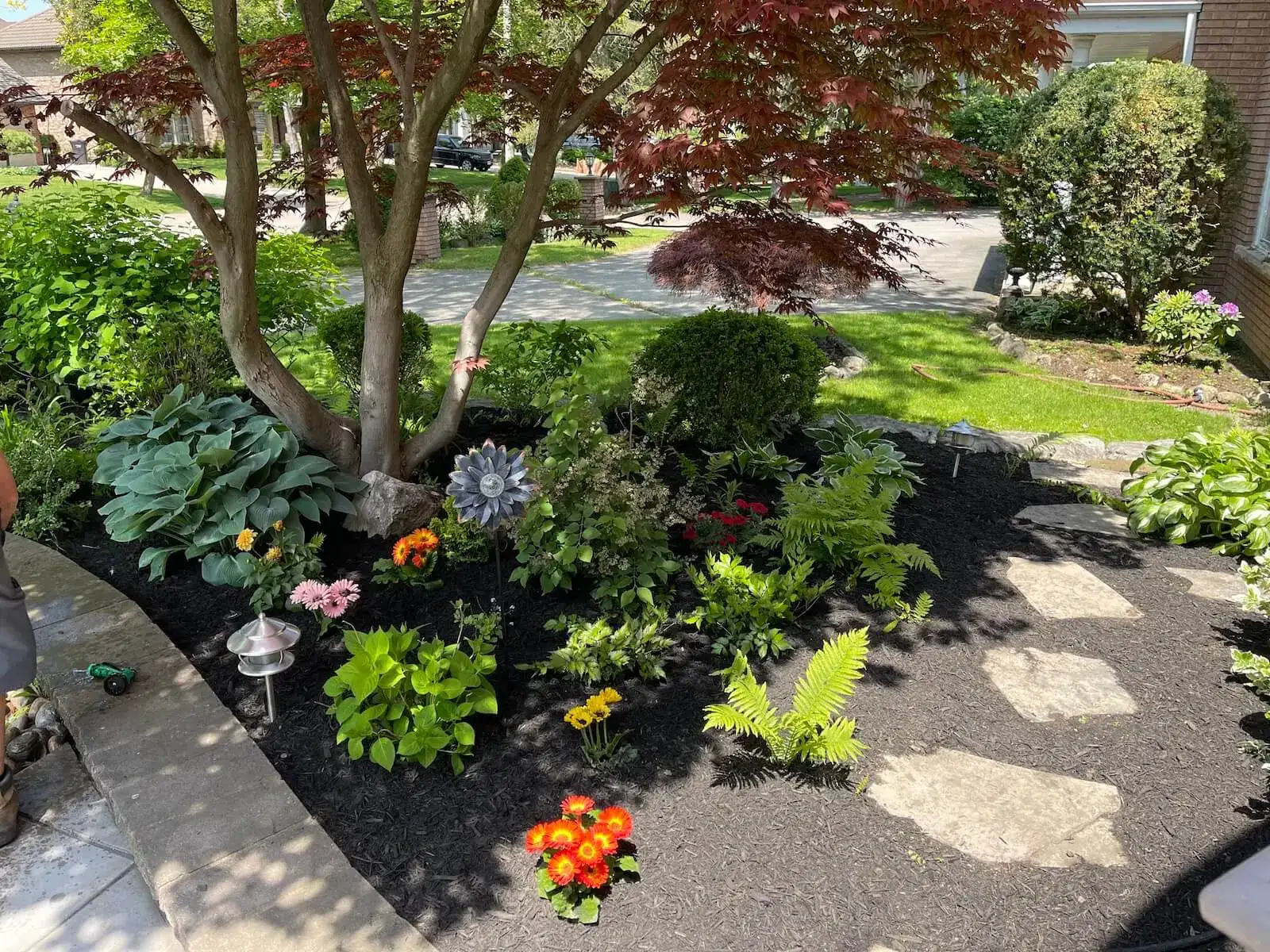









Can a polished GTA backyard work for dogs without becoming a muddy, worn-out exercise pen? Yes. Backyard landscaping for dogs works best when the yard gives dogs clear places to run, rest, relieve themselves, dig, and stay cool.
Start With Your Dog, Yard, and Daily Routine
The strongest dog-friendly backyard uses separate zones for movement, toileting, rest, play, planting, and human entertaining. Dogs repeatedly use the same routes, especially fence lines, gates, patio doors, and viewing points. Design should redirect those habits instead of expecting a dog to avoid attractive garden beds without barriers or training.
Start by recording your dog’s size, age, mobility, coat type, energy level, chewing, digging, fence-running, and outdoor supervision needs. A puppy, senior dog, mobility-limited dog, and active multi-dog household place different demands on paths, surfaces, shade, and gates.
Study the property before choosing materials. Note sun, shade, mature trees, roof runoff, downspouts, low areas, slopes, compacted soil, property lines, gates, existing lawn damage, and the routes your dog already follows.
GTA yards need durable drainage planning because snowmelt, spring thaw, heavy rain, clay-heavy soils in some neighbourhoods, and freeze-thaw cycles can turn high-traffic routes into mud. Surface finishes only work when water has somewhere appropriate to go.
Use this pre-design checklist before changing a dog-friendly yard:
- Observe where your dog runs, pauses, digs, patrols, and eliminates.
- Mark wet spots after rain and spring thaw.
- Identify plants, mulch, fertilizers, ice melt, and compost products within reach.
- Check gates, fence bases, latches, and sightlines that trigger barking or escape attempts.
- Separate human dining, grilling, pool, and garden areas from regular dog traffic.
15 Backyard Landscaping Ideas for Dogs
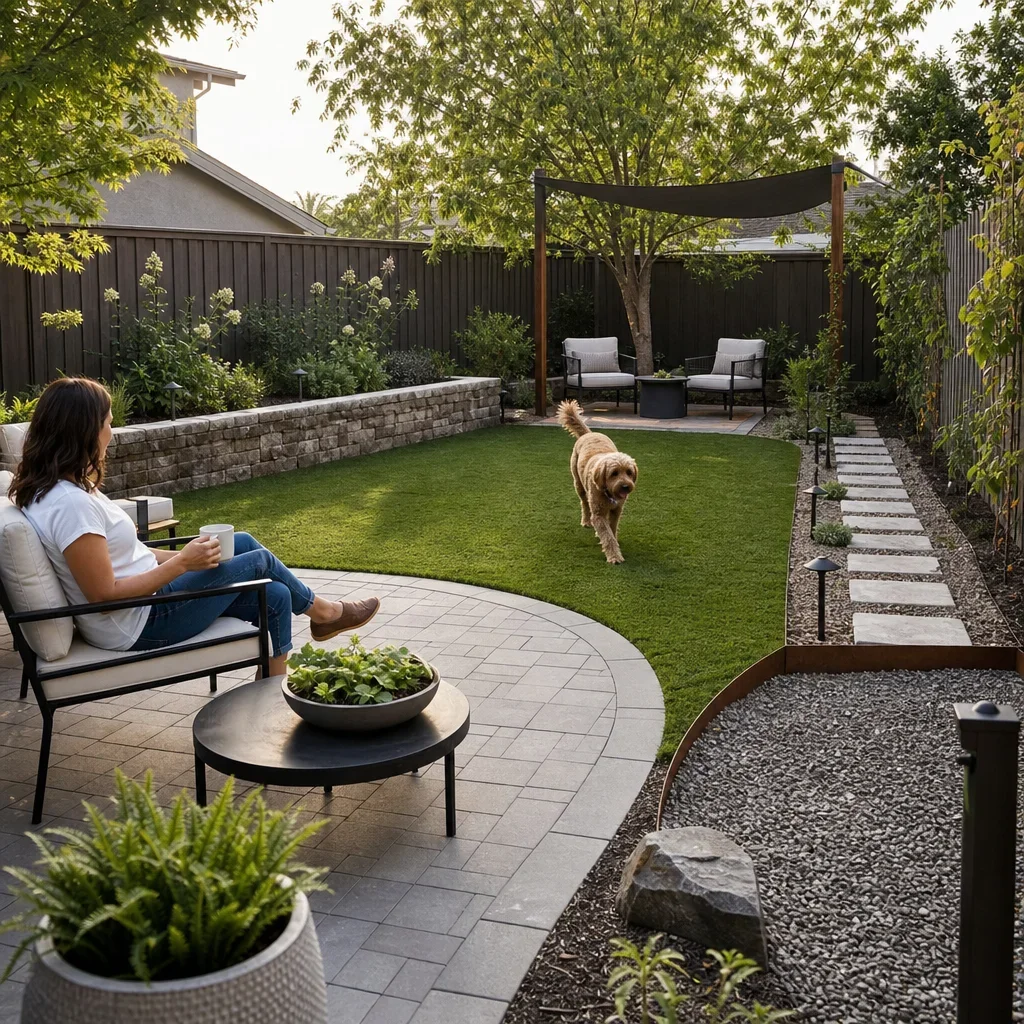
A mixed-surface design usually gives dogs better comfort and gives homeowners a more refined landscape. These dog-friendly backyard ideas can be completed in phases, but grading, drainage, electrical work, pools, structural fencing, and hardscape bases need qualified design and construction.
- Create a dedicated dog run. A dog run landscaping zone gives active dogs a durable route without sacrificing the full lawn or patio. Use a surface your specific dog will not chew or swallow, and include drainage and shade.
- Build a looping perimeter path. A path along a preferred fence route prevents repeated lawn wear where dogs naturally patrol. Permeable pavers, stable stone, or professionally specified compacted surfaces can work when edges and drainage are properly built.
- Set aside a defined dog potty area. A discreet, accessible potty zone concentrates cleanup and reduces random urine spots across the lawn. Place it away from outdoor dining and where drainage and waste pickup are practical.
- Protect planting with raised beds or low barriers. Raised planters, edging, and low decorative fences keep dogs from cutting through planting beds. Physical separation works better than repeatedly replacing trampled plants.
- Keep one resilient lawn or turf play zone. A contained play surface gives dogs room to move while preserving the rest of the landscape. The right choice depends on traffic, shade, drainage, heat exposure, and cleanup habits.
- Use a paver patio for people-first space. A properly built patio creates a clean entertaining area that is easier to sweep than lawn. Choose finishes with stable joints and textures that suit paws, furniture, winter conditions, and accessibility.
- Add a shaded rest area. Mature tree canopy, pergolas, and properly designed shade structures give dogs a cooler place to rest. Shade structures in Ontario must account for wind, snow, and site conditions.
- Install a fresh-water station. A dedicated water location reduces repeated trips through the house and makes supervision easier. Fresh drinking water should remain available whenever dogs spend time outdoors.
- Offer a contained digging area. A supervised digging zone can redirect digging behaviour for dogs that enjoy it. Keep it away from irrigation, utilities, tree roots, toxic products, and fragile retaining edges.
- Add an enrichment corner. A simple enrichment area can include durable toys, a sheltered resting point, or room for supervised training. Avoid placing agility equipment near hard edges, pools, fences, or unstable surfaces.
- Screen utility areas. Garbage bins, hose connections, air-conditioning equipment, and storage can be screened with fencing or planting. Screening should still leave safe maintenance access.
- Use protected planting borders. A dog-friendly garden can stay lush when planting is treated as a visual feature, not a running surface. Layer plants behind edging, low barriers, or raised soil elevations.
- Install low-glare pathway lighting. Path and entry lighting improves cleanup visibility and reduces trip hazards after dark. Wiring and fixtures need placement that avoids chewing, mowing, and foot traffic.
- Correct drainage before replacing lawn. Regrading, downspout management, swales, catch basins, or permeable surfaces may be needed where water repeatedly collects. Drainage work must protect the home foundation and comply with local requirements.
- Use a secure gate sequence. A second gate, enclosed transition area, or carefully designed entry can reduce escape risk during arrivals and departures. Gate security depends on latch quality, fence condition, and the dog’s behaviour.
Choose the Best Dog-Friendly Ground Surface
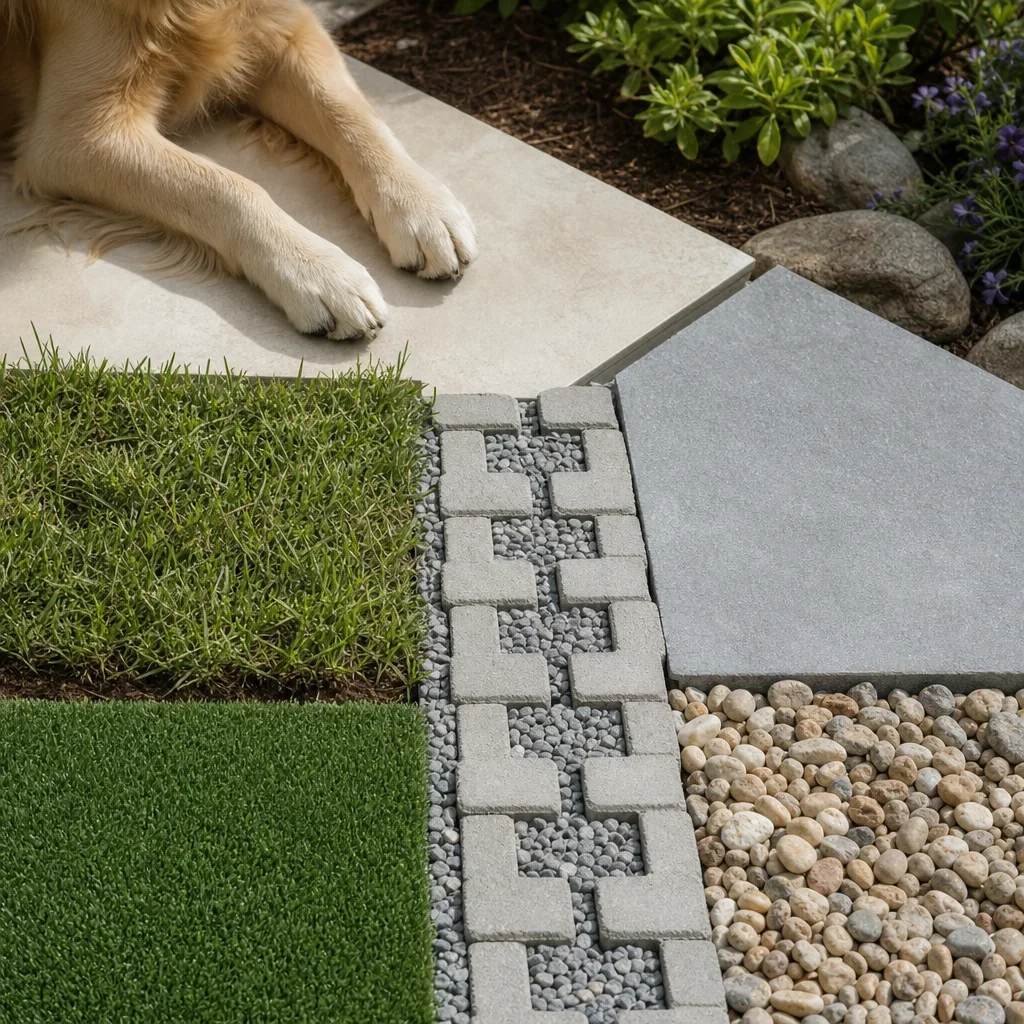
No dog-friendly ground cover is best for every dog. The practical answer is usually a surface mix: a comfortable rest area, a durable traffic route, a defined potty surface, and protected planting.
| Surface | Best use | Traffic durability | Drainage need | Paw and heat considerations | Cleanup and dog cautions | GTA winter consideration |
|---|---|---|---|---|---|---|
| Natural grass | Play and cooling | Moderate under repeated traffic | Good soil drainage matters | Cooler than hardscape in sun | Urine, digging, traffic, and compaction can damage turf | Thaw can create mud in compacted routes |
| Resilient lawn mix | General lawn zone | Moderate | Good grading and soil preparation | Soft underfoot | Performance depends on sun, traffic, irrigation, and dog behaviour | Repair may be needed after winter wear |
| Clover or alternative ground cover | Lower-traffic softscape | Site-dependent | Soil and sunlight dependent | Can be soft but is not a universal lawn substitute | Confirm plant suitability for your dog and household | Winter survival depends on species and location |
| Artificial turf | Concentrated play or potty zone | High when correctly installed | Critical | Can become hot in direct sun | Requires waste removal, debris removal, rinsing, and odour management | Base and drainage must handle freeze-thaw conditions |
| Permeable pavers | Paths and patios | High | Designed joint and base drainage | Stable when professionally installed | Avoid loose or damaged units that create trip hazards | Proper base preparation resists movement |
| Stone or concrete patio | Human entertaining zone | High | Surface runoff must be directed properly | Can heat up in direct sun | Use stable, paw-friendly finishes and monitor surface temperature | Joints, base, and drainage need freeze-thaw planning |
| Pea gravel | Some potty or drainage zones | Moderate | Good containment and drainage needed | Loose underfoot | Avoid if your dog mouths or swallows stones | Can track into the home and shift with use |
| Larger rounded gravel | Limited traffic zones | Moderate | Good containment needed | Less comfortable for some dogs | Avoid for dogs that chew or ingest rock | Snow clearing can be difficult |
| Cedar chips or wood mulch | Protected planting beds | Low for active routes | Drainage and edging needed | Softer than stone | Do not assume natural mulch is safe for every dog; confirm product and behaviour risks | Mulch can shift during thaw and rain |
Loose materials are not automatically unsafe, but they are wrong for dogs that chew, swallow, or aggressively dig in them. Ingestion concerns require veterinary guidance, not an internet material list.
Hardscape needs edge restraint, a stable granular base, drainage planning, and workmanship suited to freeze-thaw conditions. A paver surface can look premium on day one and still fail early if water, soil movement, and base preparation are ignored.
Is Artificial Turf Good for Dogs?
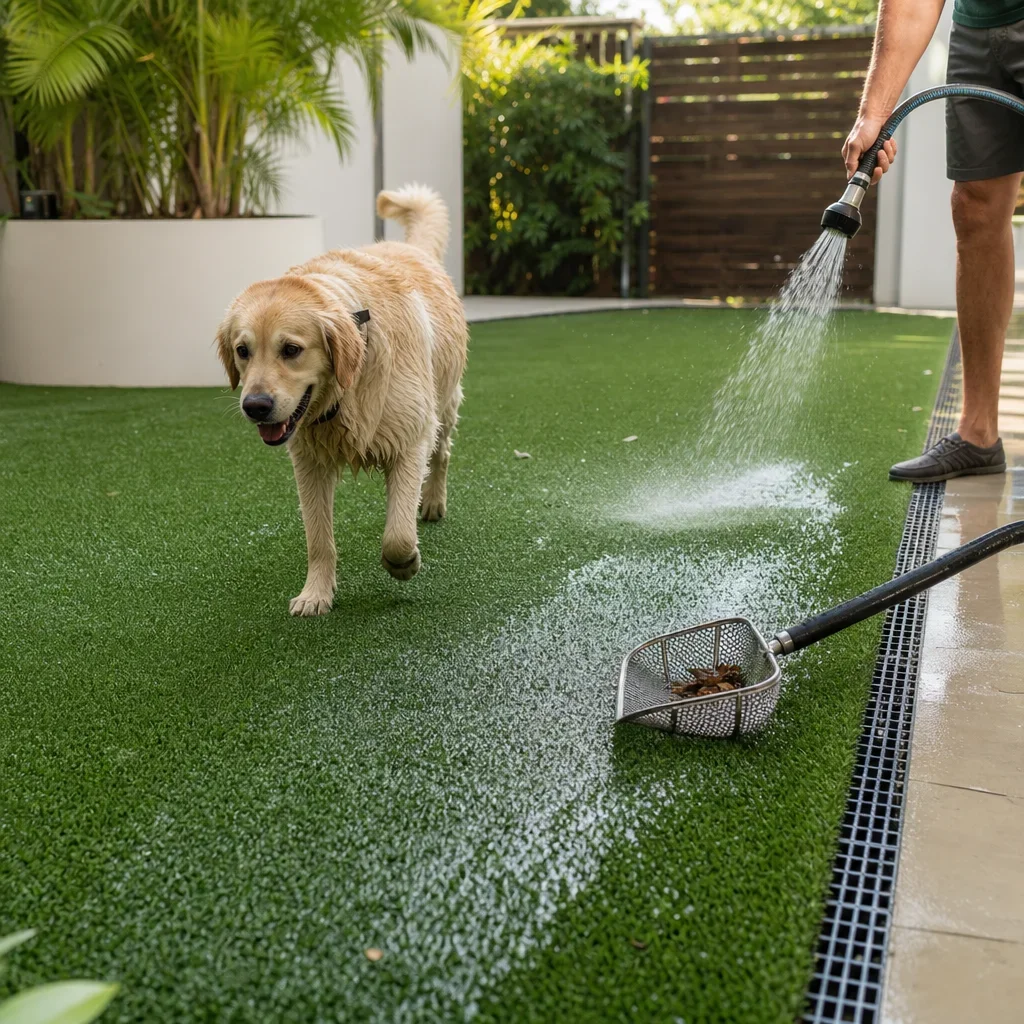
Artificial grass for dogs can work well in a concentrated high-use zone, but it is not maintenance-free. It can reduce mud and eliminate urine-burn lawn spots, yet drainage, heat, debris, odour control, and cleaning determine whether the installation stays usable.
Artificial turf decision box
Choose turf when: you need a defined play or potty area with concentrated traffic, can maintain it regularly, and can install a pet-drainage system suited to the site.
Choose natural lawn or mixed surfaces when: lower surface temperature, living planting, soil health, and a softer planted landscape matter more than maximum traffic durability.
Pause before installing near mature trees: turf, excavation, compaction, and drainage changes can affect roots. A qualified landscape or arborist assessment should guide work near significant trees.
Artificial turf odours develop when urine, organic debris, and poor drainage remain in the system. Remove solid waste promptly, clear leaves and debris, rinse only as appropriate for the product and drainage design, and use manufacturer-approved cleaners labelled for the intended use.
Persistent odour is a drainage or maintenance problem to investigate, not something to cover with fragrance. Check for compacted infill, blocked drainage, accumulated debris, poor rinsing access, and a surface that receives more pet use than it was designed to handle.
Create Zones That Protect Lawns, Plants, and Hardscapes
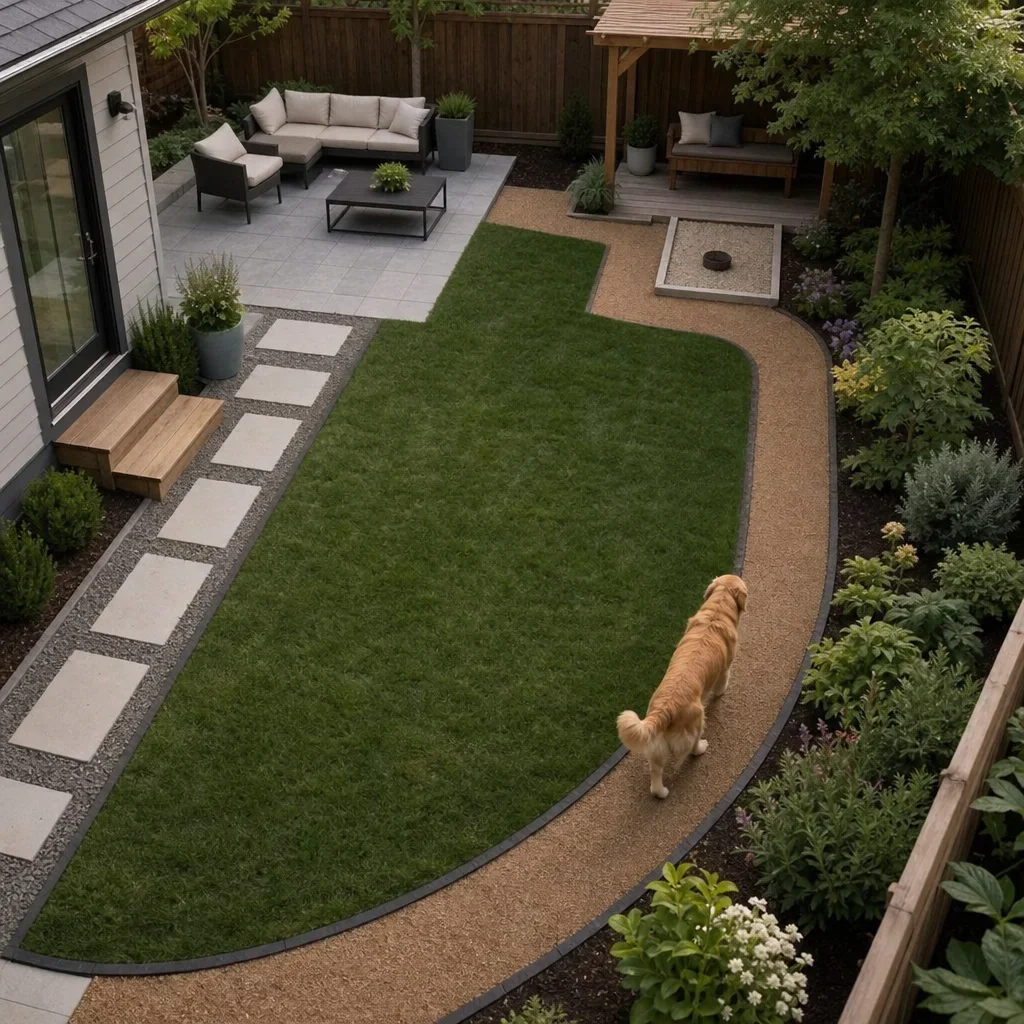
A dog-friendly backyard stays attractive when traffic has a planned route. Place the movement corridor where your dog already patrols, then reserve lawn, planting, patios, and seating for the activities they serve best.
A complete layout usually includes an entry transition, movement corridor, potty zone, active play zone, rest-and-shade zone, human patio zone, and protected planting zone. Clear circulation prevents dogs from repeatedly cutting through the same lawn corner or garden bed.
A designated dog potty area works when it is easy to reach, easy to clean, and used consistently. Put it in a discreet location with suitable drainage, choose a surface your dog accepts, keep waste tools nearby, use the same verbal cue, reward the desired behaviour, and maintain the zone.
Multi-dog households need stronger surface planning because repeated traffic and waste loading are concentrated. Separate rest spaces can also reduce conflict where dogs guard toys, food, shade, or access points.
Dogs that dig need containment and supervision rather than punishment through landscape materials. A digging area should not cover irrigation lines, utility routes, vulnerable roots, retaining-wall drainage, or soil treated with garden products.
Dog-Safe Plants, Mulch, and Garden Products
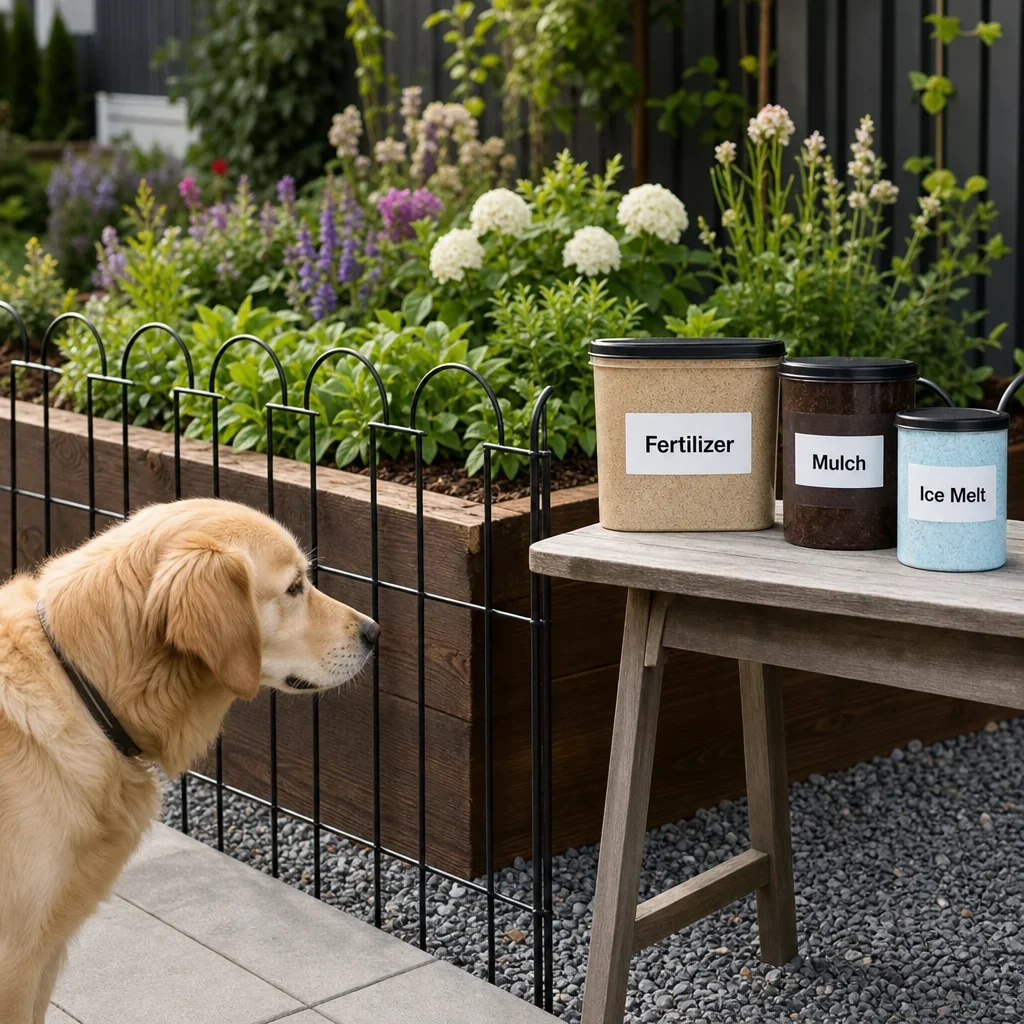
No plant or mulch is universally harmless for every dog, dose, or behaviour pattern. Plant toxicity can depend on the plant part, amount eaten, and individual animal, so confirm every purchase through a veterinarian, animal poison resource, or an authoritative source such as the ASPCA toxic-and-non-toxic plant database.
| Category | Use in a dog-friendly garden | Examples and action |
|---|---|---|
| Confirm before planting | Suitable only after checking the exact species and household risk | Use a local nursery and a verified animal-safety resource for plant identification |
| Use caution | Keep behind barriers and monitor chewing behaviour | Any loose bark, wood chips, decorative gravel, compost, fertilizer, or newly planted material |
| Avoid or verify urgently | Do not rely on appearance or “natural” labels | Azaleas, lilies, foxgloves, tulips, iris, wisteria, clematis, and lily of the valley are commonly listed in veterinary toxic-plant references; verify the exact plant before purchase |
| Product caution | Follow the exact product label and veterinary advice | Fertilizers, herbicides, pesticides, compost additives, and ice-melt products can create exposure risks |
Cocoa mulch deserves special caution because cocoa products can contain compounds harmful to dogs if ingested. Do not use mulch selection as a substitute for supervision or for checking the exact product ingredients.
Garden beds should sit behind physical separation where dogs run or patrol. Raised beds, fencing, substantial edging, and route planning protect both plants and paws without making the yard look like a kennel.
If you suspect your dog has eaten a toxic plant, mulch, or garden product, contact a veterinarian or animal poison resource promptly. Bring the product label or accurate plant identification if possible.
Solve Mud, Drainage, Urine Spots, and Wear Before They Ruin the Yard
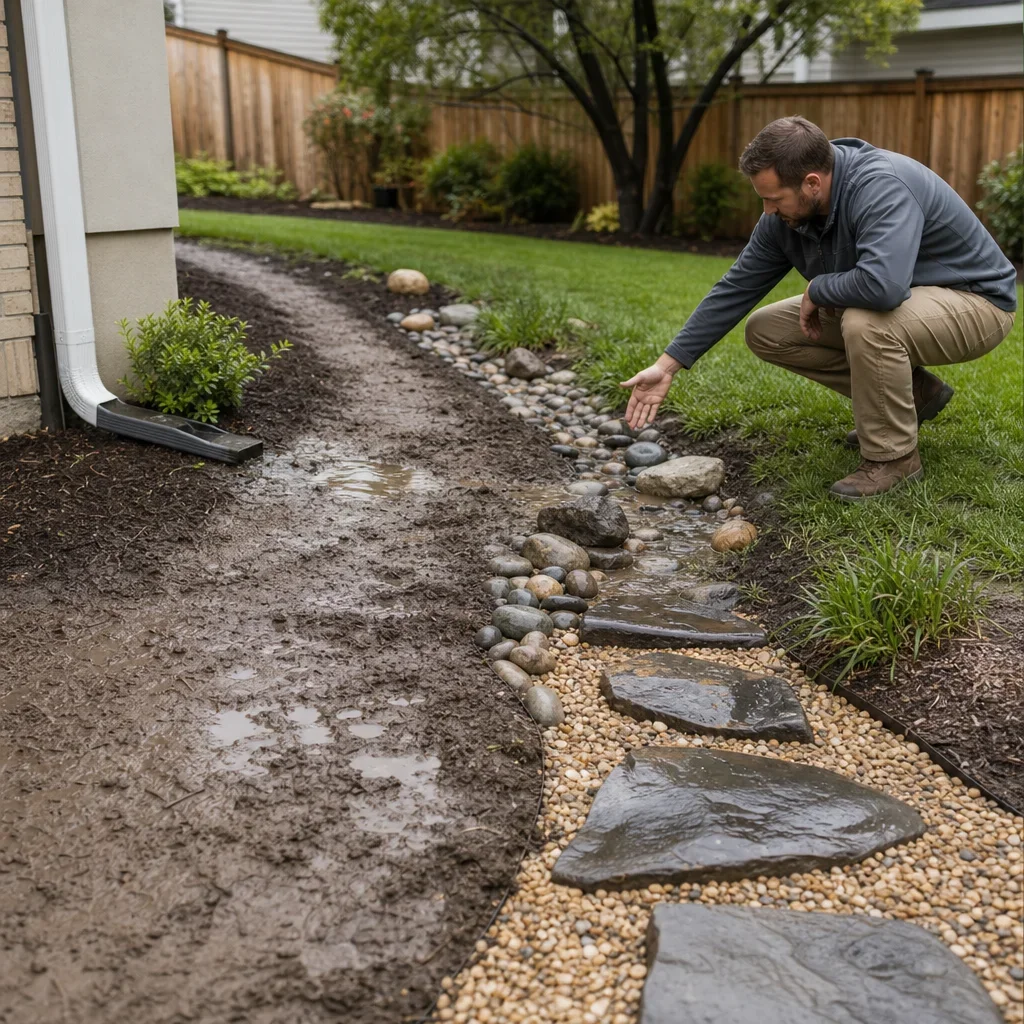
Mud is usually a water-and-traffic problem before it becomes a lawn problem. Compacted soil, roof runoff, low spots, poor grading, downspout discharge, thaw cycles, and repeated dog routes can all create the same muddy patch.
Start by observing where water travels after rain and snowmelt. Protect the home foundation and neighbouring properties first, then select a drainage and surface solution suited to the actual source of water.
Professional drainage solutions may include regrading, swales, catch basins, French drains where appropriate, permeable surfaces, downspout management, and rebuilding high-traffic zones. Drainage discharge, lot grading, and exterior alterations can be governed by municipal rules, so GTA homeowners should confirm local requirements before construction.
Dog urine can contribute to lawn discolouration, but brown or yellow grass is not automatically a urine problem. Drought, soil compaction, disease, insects, salts, and poor drainage can create similar symptoms.
Prompt waste pickup and regular surface cleaning are core landscape hygiene. Avoid unverified chemical remedies, especially around dogs, plants, and drainage routes.
Add Shade, Water, Fencing, and Lighting for Safer Outdoor Time
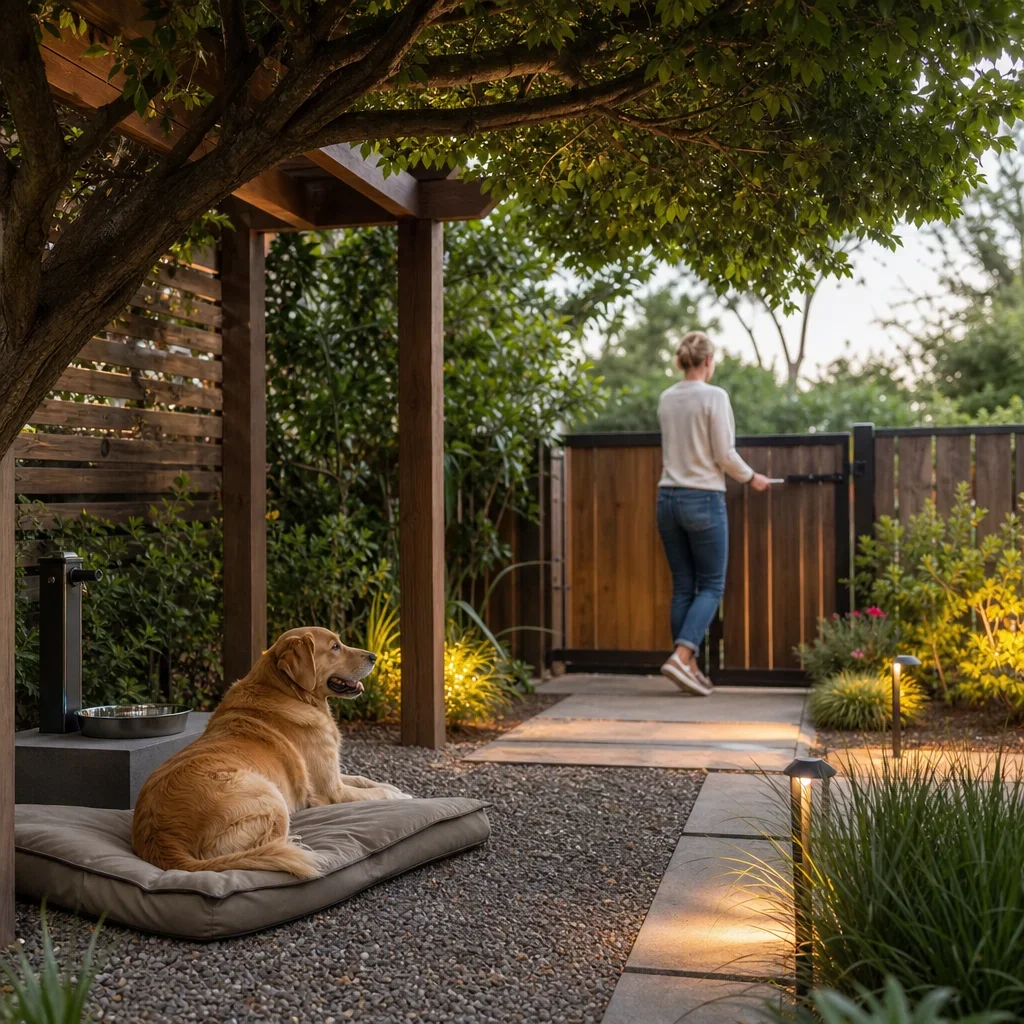
Shade and fresh water improve outdoor comfort, but they do not replace supervision. Retained tree canopy, pergolas, and shade structures can create cooler resting areas when designed for local wind, snow, and site conditions.
Pools, ponds, splash features, and standing water need active safety planning. A water feature does not make a backyard dog-safe by itself, and dogs should not be assumed to know how to exit water safely.
Fencing should address escape behaviour, gate security, digging at the fence base, sightline triggers, and local bylaws. A fence that contains one dog may not contain another dog with different climbing, jumping, chewing, or digging behaviour.
Low-glare lighting improves human navigation, waste cleanup, and gate visibility after dark. Outdoor wiring, transformers, and fixtures should be installed and protected to avoid chew, trip, mowing, and weather hazards.
Accessibility matters for puppies, senior dogs, and mobility-limited dogs. Stable non-slip surfaces, gentle transitions, reduced trip hazards, shade near resting areas, and avoidance of difficult routes support safer everyday use.
Three Complete Dog-Friendly Backyard Layouts
Layout 1: Small or Narrow Urban Yard
This small dog-friendly backyard layout uses a perimeter path, compact potty zone, protected vertical planting, a modest patio, shade, and a secure gate sequence. It suits narrow GTA lots where the dog needs movement space without losing the entire yard to lawn.
| Zone | Where it goes |
|---|---|
| Secure gate | Directly off the house / patio |
| Perimeter path | From the gate around the edge of the yard |
| Shade rest | At the far end of the path |
| Protected raised planting | Beside the gate, away from the dog’s route |
| Potty zone | Off the path, near the shade rest |
The key is to place the walking route where the dog already moves, then protect planting with raised forms or barriers. Permeable paths, drainage, gates, and hardscape details merit professional planning where grades or runoff are involved.
Layout 2: Family Entertaining Yard
This layout separates people-first and dog-first activity without making either area feel secondary. It suits households that want an outdoor dining patio, a lawn or turf play zone, concealed potty access, protected planting, and a durable traffic corridor.
| Zone | Where it goes |
|---|---|
| Dining patio | Next to the house |
| Protected planting | Beside the patio |
| Play lawn / turf | Below the patio |
| Traffic path | Between the play area and the planting |
| Concealed potty zone | At the far end of the traffic path |
The patio remains clean because the dog route bypasses dining furniture and planting beds. Keep grilling, food preparation, pools, and outdoor storage separated from routine dog activity.
Layout 3: Large or Active-Dog Yard
This layout gives active dogs a loop route, resilient play surface, shade, drainage planning, and a controlled digging or enrichment area. It suits larger yards where a dog repeatedly creates worn paths around the perimeter.
| Zone | Where it goes |
|---|---|
| House / patio | Start of the loop, next to a rest and shade spot |
| Loop path | Around the yard, linking every zone |
| Protected garden | Along one side of the loop |
| Play surface | Mid-yard, beside the dig / enrichment zone |
| Potty zone | Far end, next to a screened utility area |
A large yard still needs intentional zones because open lawn alone does not control traffic, digging, mud, or garden damage. Multi-dog homes may need more resilient surfaces, separate resting space, and stronger cleanup access.
Budget and Build in Phases
The first money should go into drainage, safe access, durable high-traffic routes, and surface preparation before decorative finishes. Decorative planting cannot solve a grading, runoff, or compaction problem.
Quick upgrades can include waste stations, barriers around planting, shade, gate improvements, and a temporary training-focused potty area. These changes help identify how the dog actually uses the yard before permanent construction begins.
Targeted zone upgrades can include a rebuilt dog run, permeable path, protected planting beds, turf zone, patio connection, or drainage correction. The scope depends on access, demolition, soil, existing grades, and material selection.
A full dog-safe backyard design can combine grading, drainage, retaining, hardscape, lighting, fencing, planting, lawn or turf, and outdoor woodwork. Major cost drivers include demolition, site access, drainage, retaining needs, hardscape area, mature plant material, lighting, fencing, and turf-system specifications.
For GTA homeowners, a detailed design and line-by-line quote is the practical way to compare scope and identify hidden site-work costs. RockLeaf offers a free 3D design and quote process for qualifying landscaping projects, with conditions that should be confirmed before proceeding.
Dog-Friendly Backyard Maintenance Checklist
A dog-friendly yard stays functional through regular inspection, cleanup, and seasonal adjustments. Maintenance should follow the selected surface, product instructions, dog behaviour, and the property’s drainage pattern.
After use
- Remove solid waste and check the water station.
- Inspect the potty zone, paths, and gate area for digging, damage, or loose material.
- Remove chewed plant material, toys, or debris that could create a hazard.
Weekly
- Clear leaves and debris from turf, drains, pavers, and mulch beds.
- Check fencing, latches, edging, and barriers around plants.
- Watch for worn routes, compacted soil, standing water, or new odours.
Seasonally
- Inspect drainage during spring thaw and after heavy rain.
- Check shade and surface temperature during summer heat.
- Remove autumn leaf buildup before it blocks drainage or turf infill.
- Review winter ice-management products and follow exact product labels around pets.
Persistent standing water, unstable hardscape, recurring turf odour, or drainage near the home needs a landscape professional’s assessment. Health concerns, ingestion, skin irritation, or mobility changes need veterinary guidance.
FAQ: Backyard Landscaping for Dogs
What is the best ground cover for a dog-friendly backyard?
The best ground cover is usually a mix of surfaces matched to use. Natural lawn can suit cooling and play, pavers suit paths and patios, and artificial turf can suit concentrated high-traffic areas when drainage and maintenance are planned.
Is artificial grass good for dogs?
Artificial turf can work for dogs in a defined zone, but it needs pet drainage, waste removal, debris removal, odour management, and heat monitoring. It is not a maintenance-free replacement for lawn.
How do I make a backyard dog-friendly without killing the grass?
Give your dog a planned route, potty zone, and play surface instead of expecting one lawn area to handle every activity. Protect garden beds, improve drainage, and investigate brown patches before assuming urine is the only cause.
What mulch should not be used around dogs?
Avoid treating any mulch as automatically safe, especially if your dog chews or swallows loose material. Cocoa mulch requires particular caution, and every mulch product should be checked for ingredients, dyes, and dog-specific ingestion risk.
How do I create a dog potty area in my backyard?
Choose an accessible but discreet location, select a suitable surface, provide drainage and cleanup access, use a consistent cue and reward, and maintain the area daily. The right size and material depend on dog behaviour, household use, and site conditions.
How do I stop my dog from running through garden beds?
Use raised beds, low fencing, edging, dense planting behind barriers, and a more attractive alternative route. Dogs follow easy paths, so give them a durable corridor where they already prefer to travel.
What should I put in the yard for a dog that digs?
A contained, supervised digging area can redirect digging for some dogs. Keep it away from roots, utilities, irrigation, toxic products, and retaining-wall components, and seek behavioural advice if digging is severe or sudden.
How do I keep a dog-friendly backyard from getting muddy?
Identify the water source first, then correct drainage, compaction, runoff, and high-traffic surfaces. Replacing sod without fixing the underlying water or traffic issue usually repeats the problem.
What plants should I avoid in a backyard with dogs?
Verify every plant with a veterinarian or authoritative poison-control resource before planting. Commonly discussed toxic plants include azaleas, lilies, foxgloves, tulips, iris, wisteria, clematis, and lily of the valley.
How can a small backyard work for a large or active dog?
Use a perimeter route, compact potty zone, protected vertical planting, shade, and one durable activity surface. A small yard benefits more from clear circulation and zoning than from trying to fit every feature into open lawn.
How do I design a backyard for multiple dogs?
Plan for heavier traffic, more frequent cleanup, stronger drainage, and separate rest space where dogs compete over shade, toys, or access points. The surface plan should reflect how the dogs interact, not only the property size.
Do I need a permit for drainage, fencing, or a backyard structure in the GTA?
Requirements depend on the municipality, scope, lot grading, fence type, electrical work, pool enclosure, and structure. Confirm requirements with the applicable GTA municipality and qualified contractor before construction.
A good dog-friendly landscaping plan does not treat dogs as a problem to hide. It gives them durable places to be dogs while protecting the planting, patio, drainage, and design details that make a GTA backyard worth using.