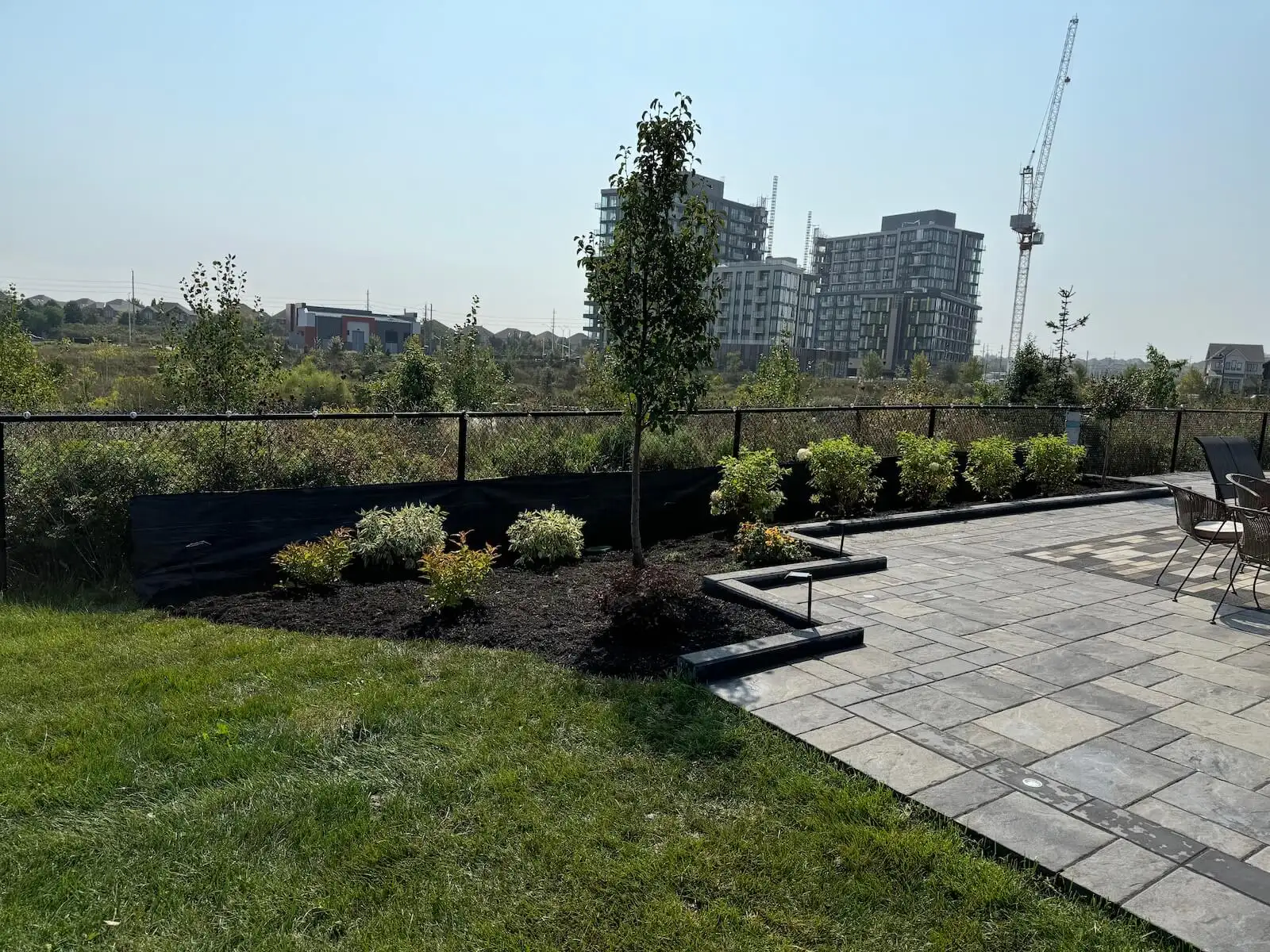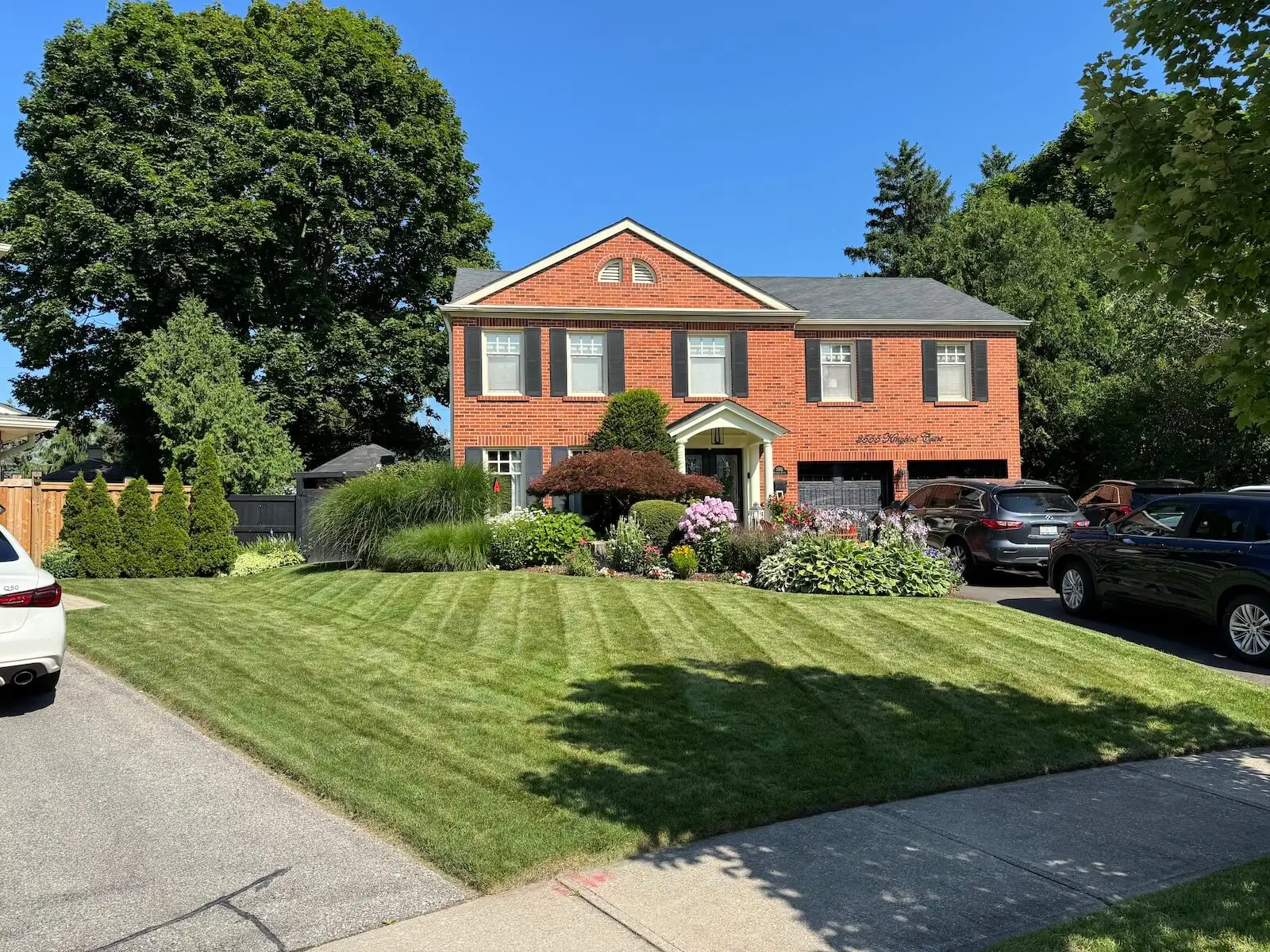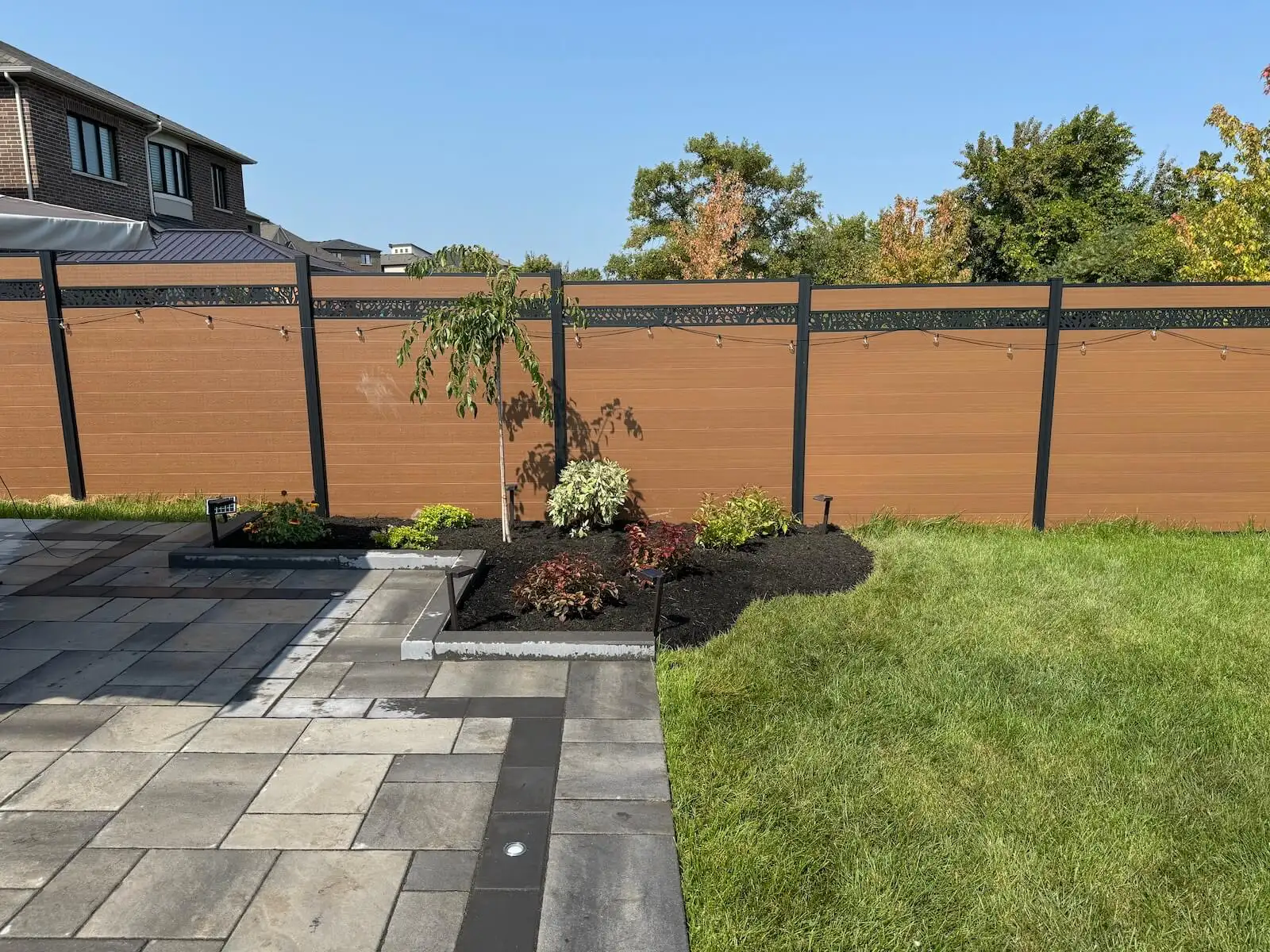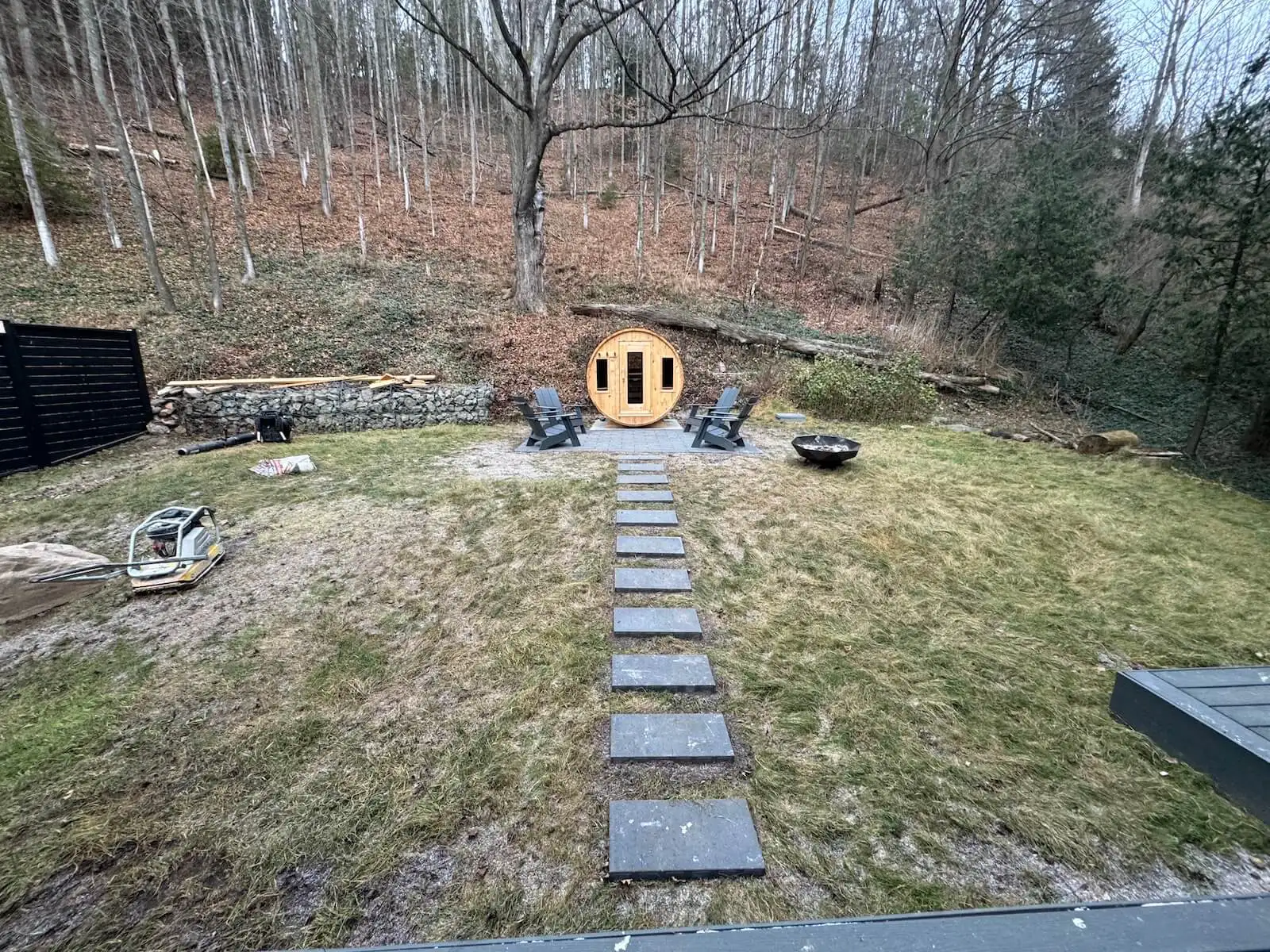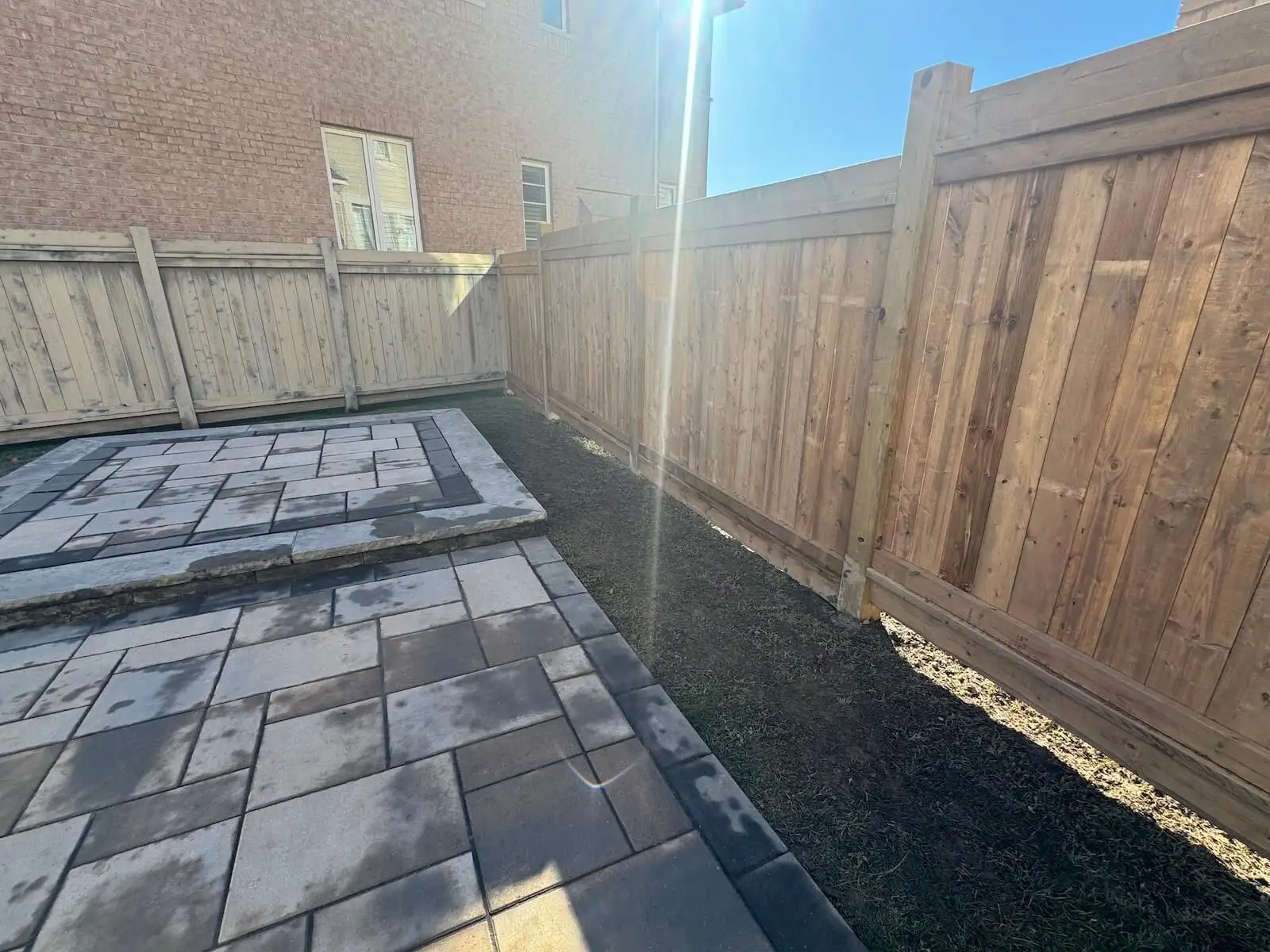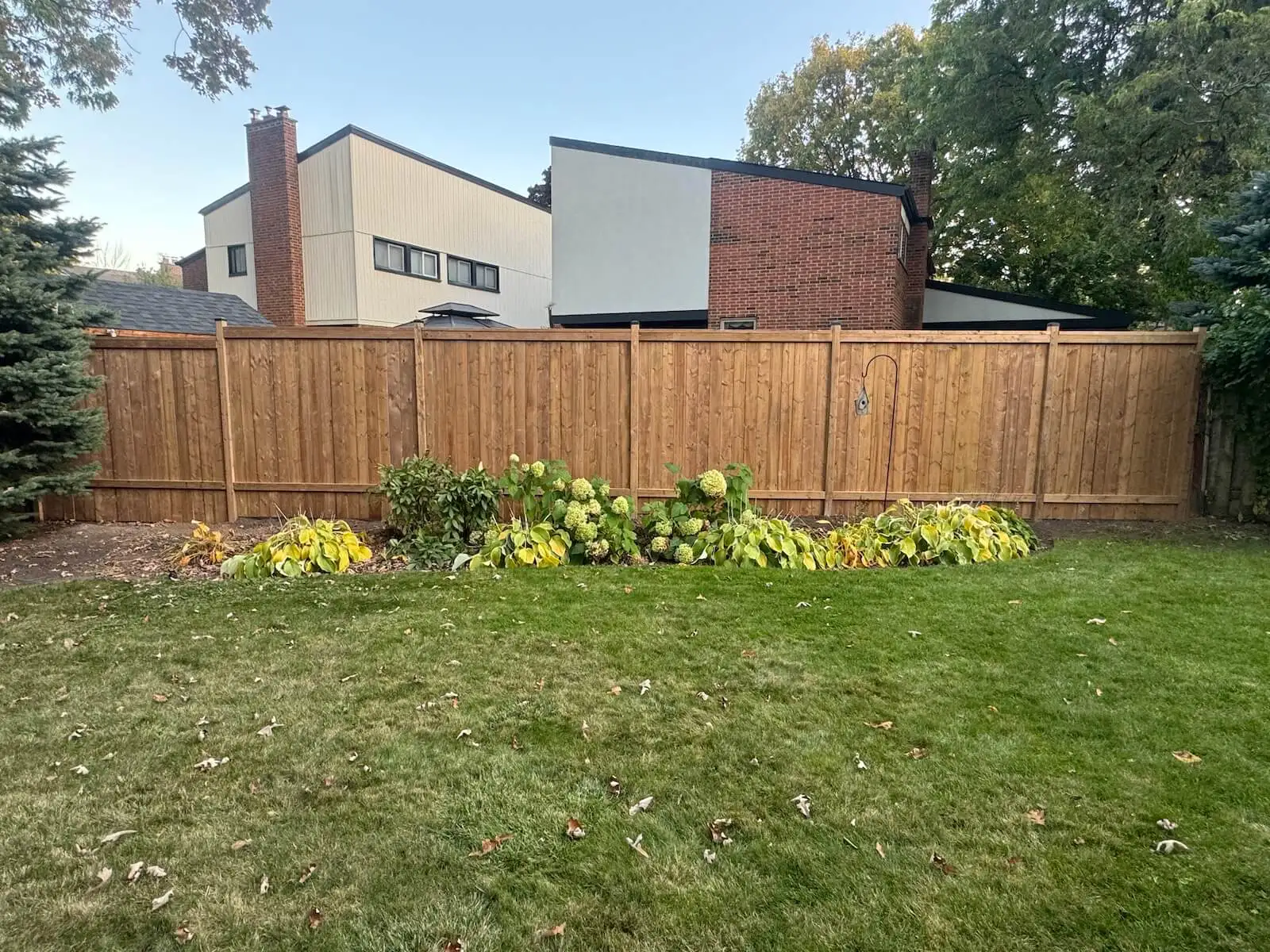









What looks like an awkward strip of grass can become the hardest-working part of your yard. Landscaping ideas for the side of a house with slope need to solve water, access, erosion, and winter safety before they add plants or stone.
A sloped side yard is different from an open backyard. It sits close to foundations, downspouts, fences, utility equipment, and neighbouring properties. In Toronto, Markham, and the wider GTA, freeze-thaw cycles and spring snowmelt can turn a small drainage issue into washed-out mulch, pooling water, or a slippery path.
Start With the Slope, Water Flow, and Access Constraints
The right design starts with water movement, not material selection. Watch the side yard during rain and snowmelt to see where water enters, crosses the slope, pools, and exits the property.
A side-yard assessment should record the slope direction, usable width, sun exposure, soil condition, downspout locations, gate access, utility equipment, fence condition, and intended use. These facts determine whether the yard needs planting, a path, steps, drainage work, or a combination of all four.
Foundation moisture needs attention before decorative landscaping. Standing water near the house, soil washing away, leaning fences, settled pavers, exposed roots, or visible slope movement are signs that drainage or grade should be assessed before new stone or planting goes in.
Ontario homeowners should request utility locates before excavation. Ontario One Call coordinates underground infrastructure locate requests before digging, which helps reduce the risk of damaging buried utility lines.
Site rule: Never direct runoff toward the foundation, a neighbouring property, or a public sidewalk. Lot grading and stormwater discharge rules are municipal matters, so verify requirements with the City of Toronto, Markham, or the applicable GTA municipality before changing grades or drainage routes.
Quick side-yard planning checklist
- Map roof runoff, downspouts, low spots, and visible water routes.
- Check whether the slope is stable or actively losing soil.
- Confirm access needs for bins, gates, lawn equipment, pets, and maintenance.
- Note shade from the house, fence, mature trees, and adjacent buildings.
- Locate meters, air-conditioning units, hose connections, and utility lines.
- Decide whether the priority is access, drainage, privacy, planting, or usable space.
Choose the Right Sloped Side Yard Solution
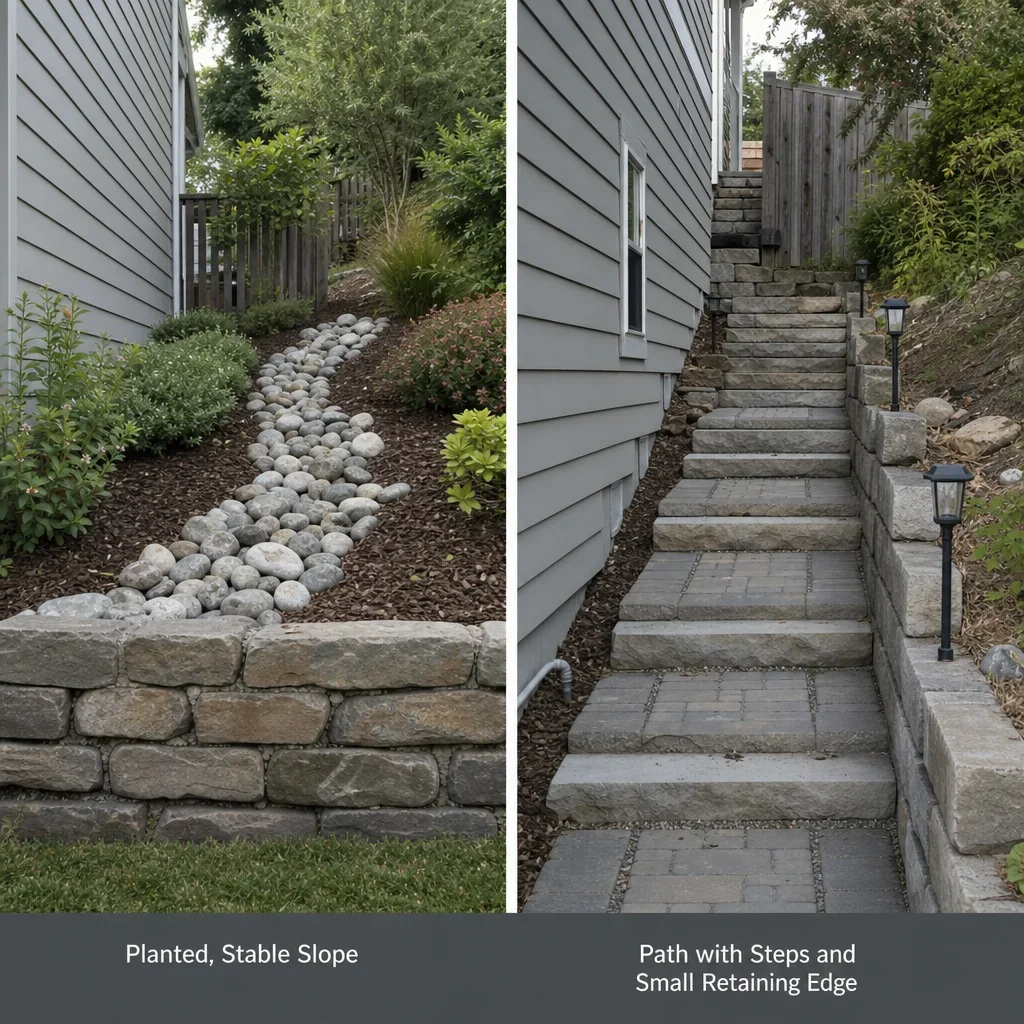
A planting-only design works best on a stable slope where appearance and lower mowing are the main goals. A path, steps, retaining work, or drainage system becomes more appropriate when access, water movement, soil loss, or safety is the main problem.
| Solution | Best fit | Main benefit | Main limitation | Professional design advisable? |
|---|---|---|---|---|
| Planting-only slope | Stable, mild grade with difficult turf | Covers soil and reduces mowing | Does not correct active drainage failure | Yes, if erosion is present |
| Defined path | Frequent front-to-back access | Creates a durable walking route | Needs drainage and edge restraint | Yes, near foundations or tight access |
| Steps and landings | Grade makes walking unsafe | Improves footing and circulation | Requires careful layout and drainage | Yes |
| Terraced planting beds | Need for smaller level planting zones | Breaks up a long visual slope | Requires stable retaining edges | Yes |
| Retaining wall | Soil must be held back to create a level area | Creates usable grade changes | Structural drainage and loads matter | Yes |
| Surface or subsurface drainage | Water crosses, pools, or erodes the side yard | Manages runoff before it causes damage | Must connect to a suitable receiving area | Yes |
Retaining walls hold soil back; they are not decorative covers for drainage problems. Water trapped behind a wall can add pressure and contribute to movement, which is why drainage, wall design, soil conditions, and surcharge loads need to be considered together.
Stone steps make sense where a continuous sloped walk would be slippery or awkward. Landings create natural pause points, improve access to gates, and provide a place to change direction on a narrow side yard.
15 Landscaping Ideas for the Side of a House With a Slope
1. Natural-stone side path
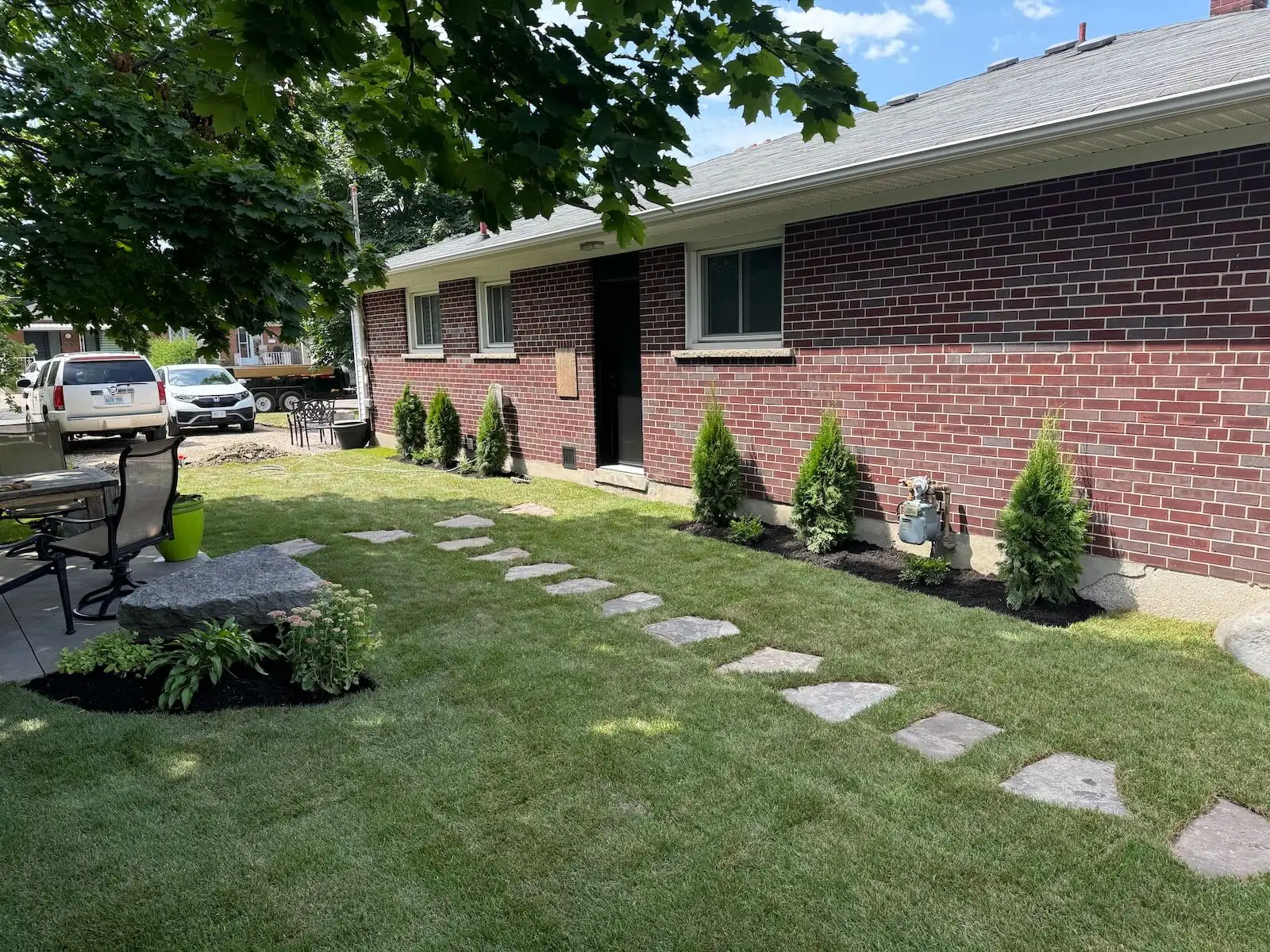
A natural-stone path suits a side yard that needs durable front-to-back access and a more organic look. Use it where drainage can move beside or beneath the path without washing out the base, and reserve professional installation for tight side yards or paths near foundations.
Image suggestion: Natural flagstone path beside a GTA brick home, with planting pockets and concealed drainage.
2. Interlocking path with clean edge restraint
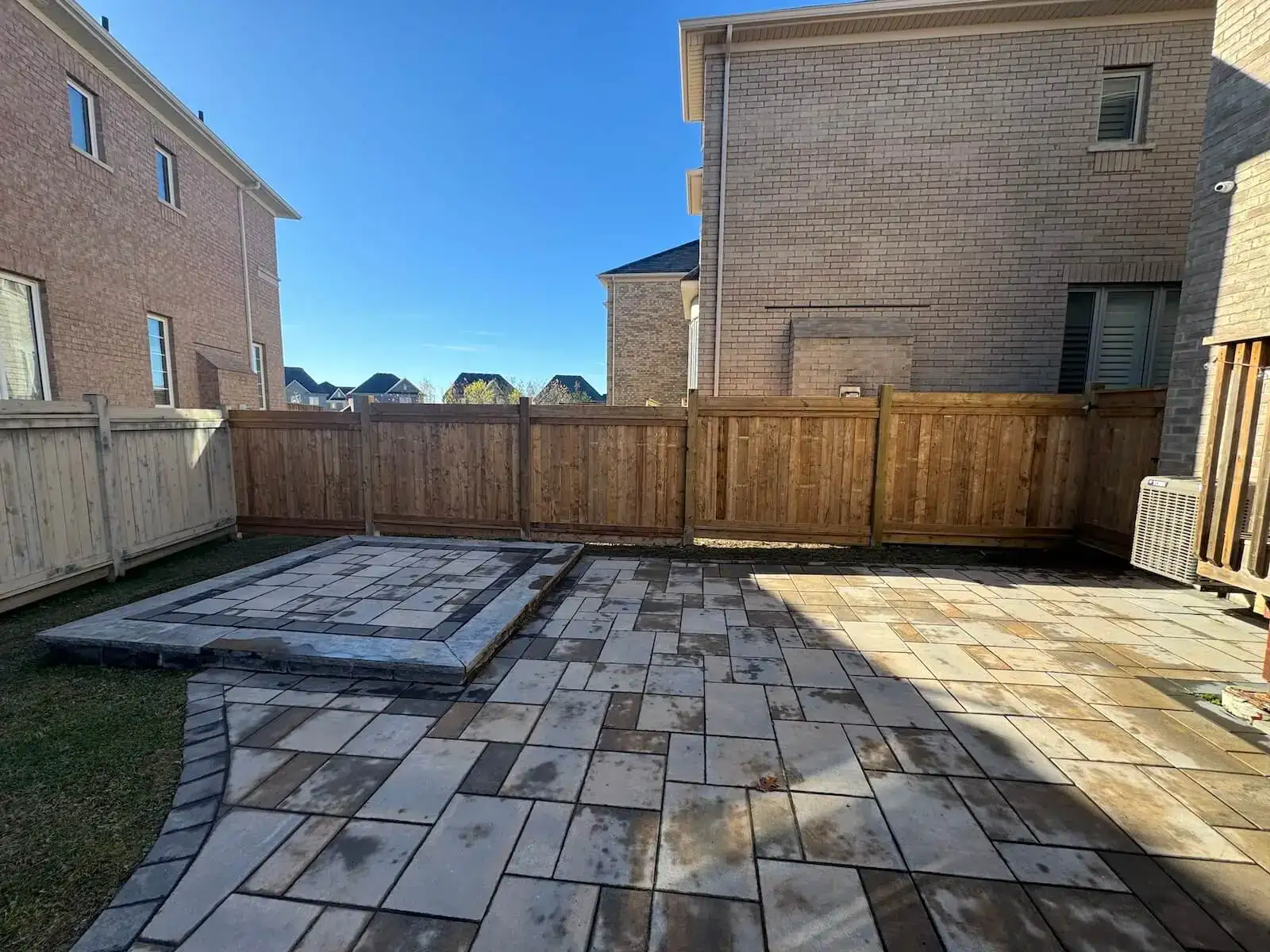
Interlocking stone creates a more formal, modern route through a narrow sloped side yard. Proper edge restraint keeps pavers from spreading, but edging alone does not stabilize a failing slope or replace drainage design.
Image suggestion: Linear pavers running from front gate to backyard with subtle pathway lighting.
3. Stone steps with landings
Stone steps work well when the grade changes too quickly for a comfortable path. Each landing should support safe movement, snow clearing, drainage flow, and access to nearby gates or utility equipment.
Image suggestion: Natural stone steps stepping down through layered shrubs and groundcover.
4. Layered groundcover and shrub slope
Layered planting is one of the simplest landscaping ideas for the side of a house with slope when the soil is stable. Groundcovers cover bare soil, shrubs add structure, and mulch should be contained so it does not migrate downhill during heavy rain.
Image suggestion: Low-maintenance hillside landscaping with groundcover, ornamental grasses, and compact shrubs.
5. Low retaining-wall garden tiers
Low garden tiers can turn one long slope into smaller planted zones. This approach works when the goal is visual organization rather than major grade change; larger retaining systems require site-specific structural and drainage planning.
Image suggestion: Contemporary retaining-wall tiers with evergreen planting and warm-toned stone.
6. Dry creek bed for visible runoff
A dry creek bed guides and slows surface water while adding a natural focal point. It is useful where runoff visibly crosses the side yard, but it is not automatically a complete drainage system for foundation water or persistent pooling.
Image suggestion: River stone dry creek bed leading through a shaded side yard toward a managed drainage area.
7. Boulder-and-gravel slope garden
Boulders and gravel create a low-maintenance visual structure on stable slopes with good drainage. Loose gravel needs containment and can become difficult on active slopes, pet runs, or routes that must be cleared in winter.
Image suggestion: Drought-tolerant planting between boulders and contained decorative gravel.
8. Shaded side-yard garden
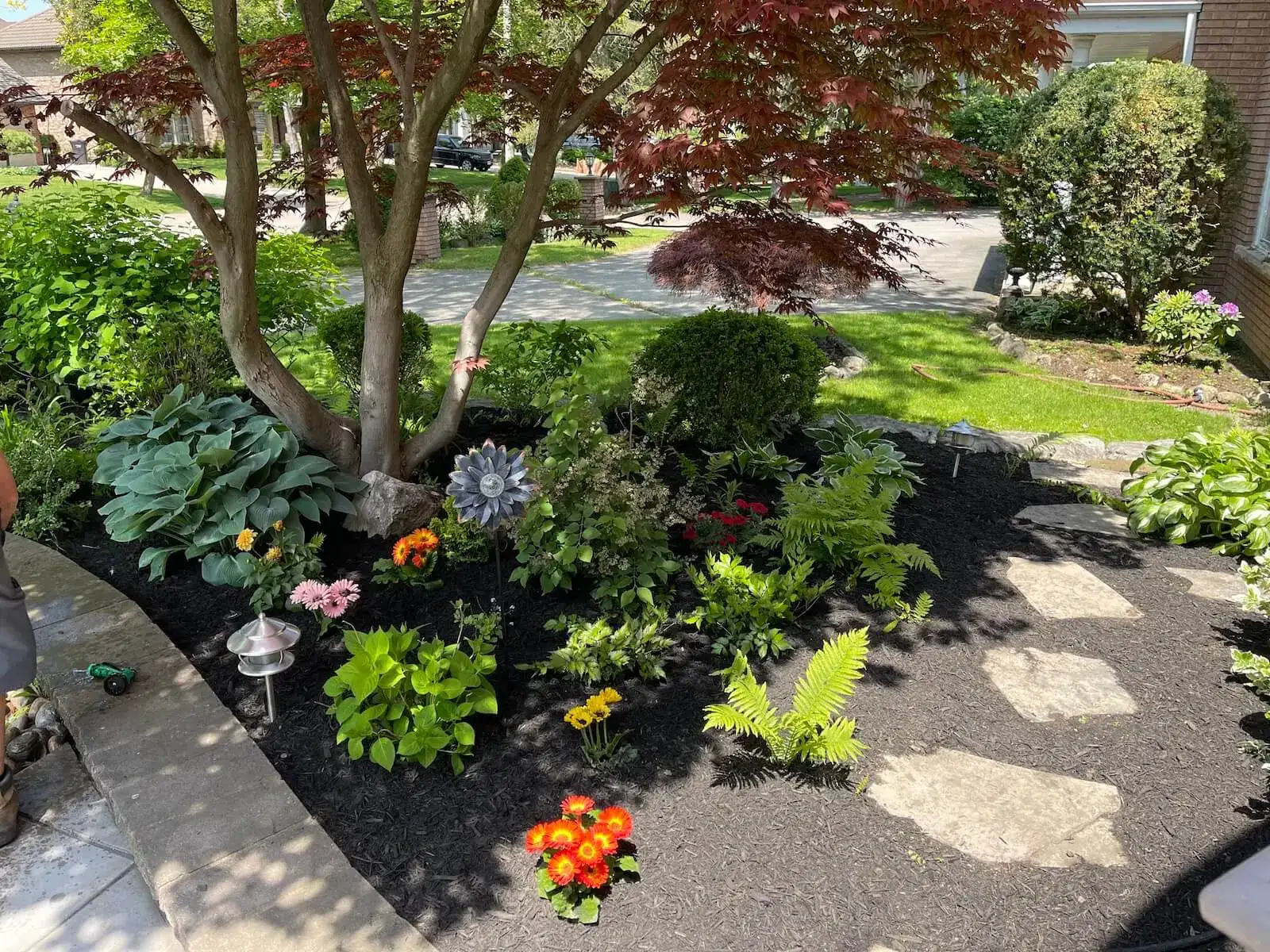
A shade garden suits the narrow side of a house where fences and walls limit direct sunlight. Choose plants based on actual moisture and shade conditions, because dry shade beside a foundation needs a different palette than a damp lower slope.
Image suggestion: Fern-textured planting, hosta-style foliage, stone mulch edging, and a stepping-stone route.
9. Modern linear-paver corridor
A minimalist corridor uses repeated pavers, restrained planting, and clean lines to make a narrow space look intentional. This is one of the strongest small landscaping ideas for side of house with slope when the yard mainly functions as a service route.
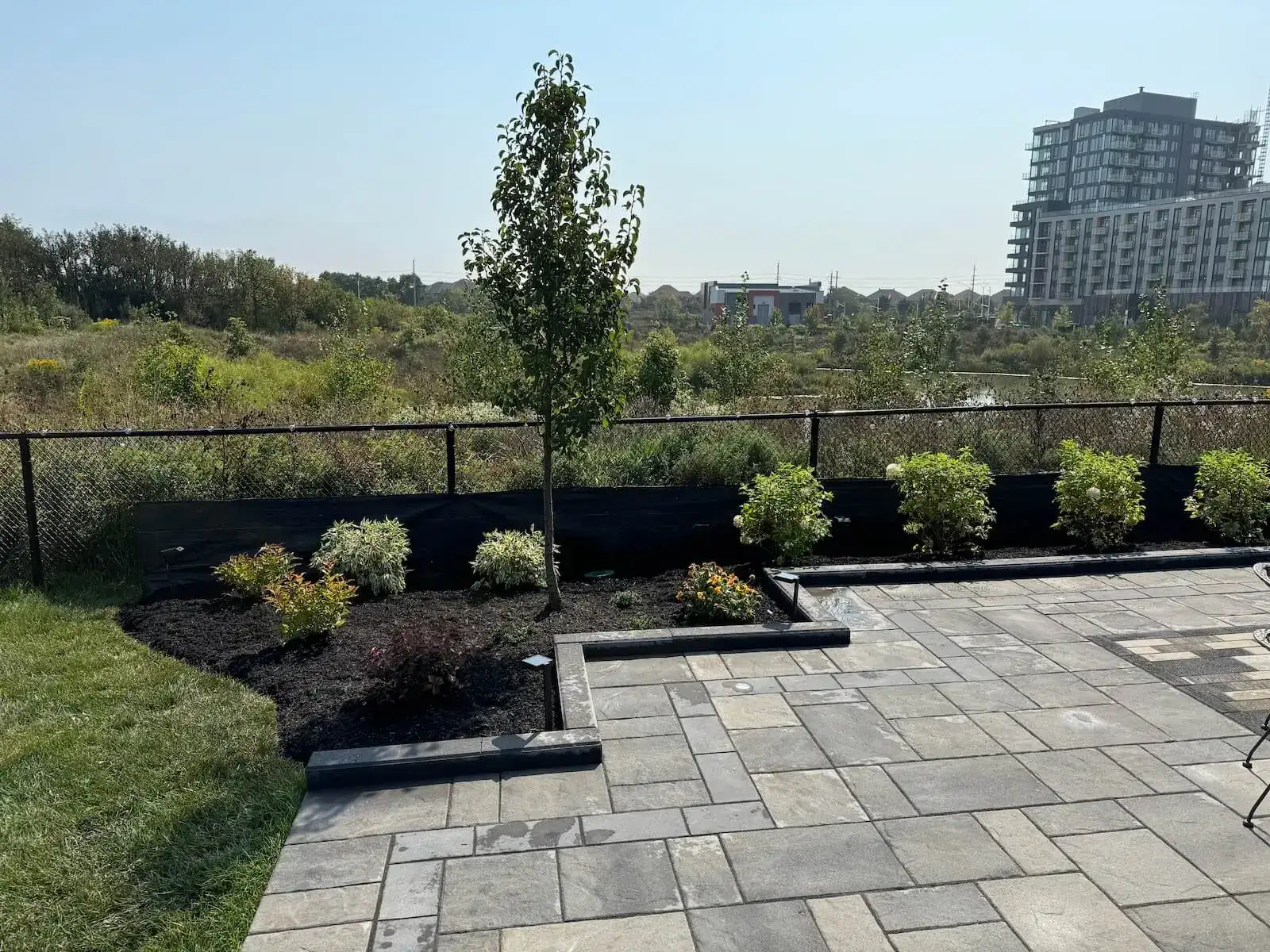
Image suggestion: Large-format concrete pavers with dark mulch beds and architectural evergreen planting.
10. Cottage-style naturalized planting
Naturalized planting softens a slope with layered textures and seasonal colour. It needs a clear maintenance plan, because self-seeding plants, weeds, and fallen leaves can make a narrow side yard look unmanaged if edges are not defined.
Image suggestion: Informal flowering perennials mixed with shrubs along a gently sloped fence line.
11. Raised planters at a level landing
Raised planters make a small level zone feel useful without trying to flatten the whole side yard. They work best beside a landing, gate, or seating nook where the surrounding grade is already stable.
Image suggestion: Cedar planters beside a stone landing with herbs and compact flowering plants.
12. Vertical garden or container zone
Containers and vertical planting add colour without major excavation. This is a practical choice for renters, narrow access routes, or stable slopes where permanent grading work is not necessary.
Image suggestion: Trellis-mounted planters and grouped containers beside a compact path.
13. Privacy screen with layered planting
A slatted screen, trellis, or carefully selected planting can create privacy without closing off the side yard. Keep screens clear of drainage paths, utility access, required equipment clearances, and gate movement.
Image suggestion: Horizontal privacy screen backed by shade-tolerant shrubs and climbing plants.
14. Pet-friendly access run
A pet-friendly side yard needs a stable walking surface, secure boundaries, manageable drainage, and a plant review for pet safety. Decorative loose stone can be uncomfortable underfoot and may shift on a slope, so choose materials around actual use.
Image suggestion: Secure side-yard run with a durable path, planting buffer, and latchable gate.
15. Small seating nook on a real level platform
A seating nook belongs only where a stable level platform can be created safely. A bench, compact bistro set, or reading corner can turn a pass-through into a destination, but it should not block access or sit on unsupported fill.
Image suggestion: Small stone patio landing with a bench, lighting, and privacy planting.
Drainage and Erosion Control Near a House Foundation
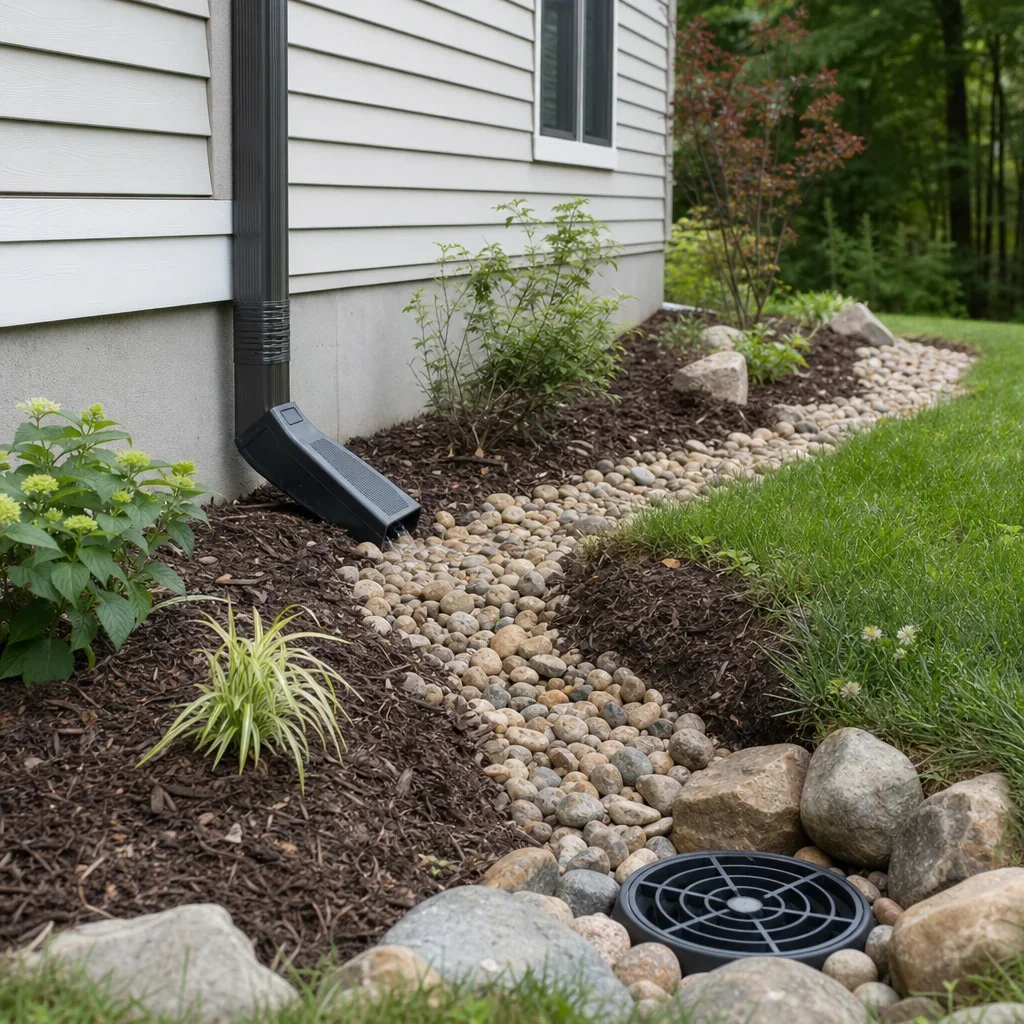
Side yard drainage works when it collects, directs, slows, infiltrates, or conveys water through a planned route. Surface water collection can use swales, channel drains, catch basins, or dry creek beds, while subsurface drainage may be appropriate where a designed system is needed below grade.
Downspouts should discharge into a managed drainage strategy, not onto a narrow slope beside the foundation. The correct approach depends on roof runoff, lot grading, soil conditions, municipal requirements, and the receiving area available on the property.
Erosion control for slopes uses layers rather than one product. Stable soil, selected plants, contained mulch or stone, and water routes that avoid cutting through beds work together to limit washout.
Plants can cover soil and reduce splash erosion, but they cannot reliably stabilize an actively failing slope. Visible soil movement, deep washouts, separated retaining blocks, or recurring water near the foundation should be assessed by a qualified landscape, drainage, or engineering professional.
- Roof runoff
- Downspout connection or extension
- Surface collection point, swale, channel or designed drain
- Managed receiving area that keeps water away from the foundation and the neighbour’s property
For Toronto and GTA homes with standing water, erosion, stairs, or retaining needs, solve the water route first. Stone, planting, and lighting belong after the grade and drainage strategy are clear.
Low-Maintenance Plants for Sloped Side Yards in the GTA
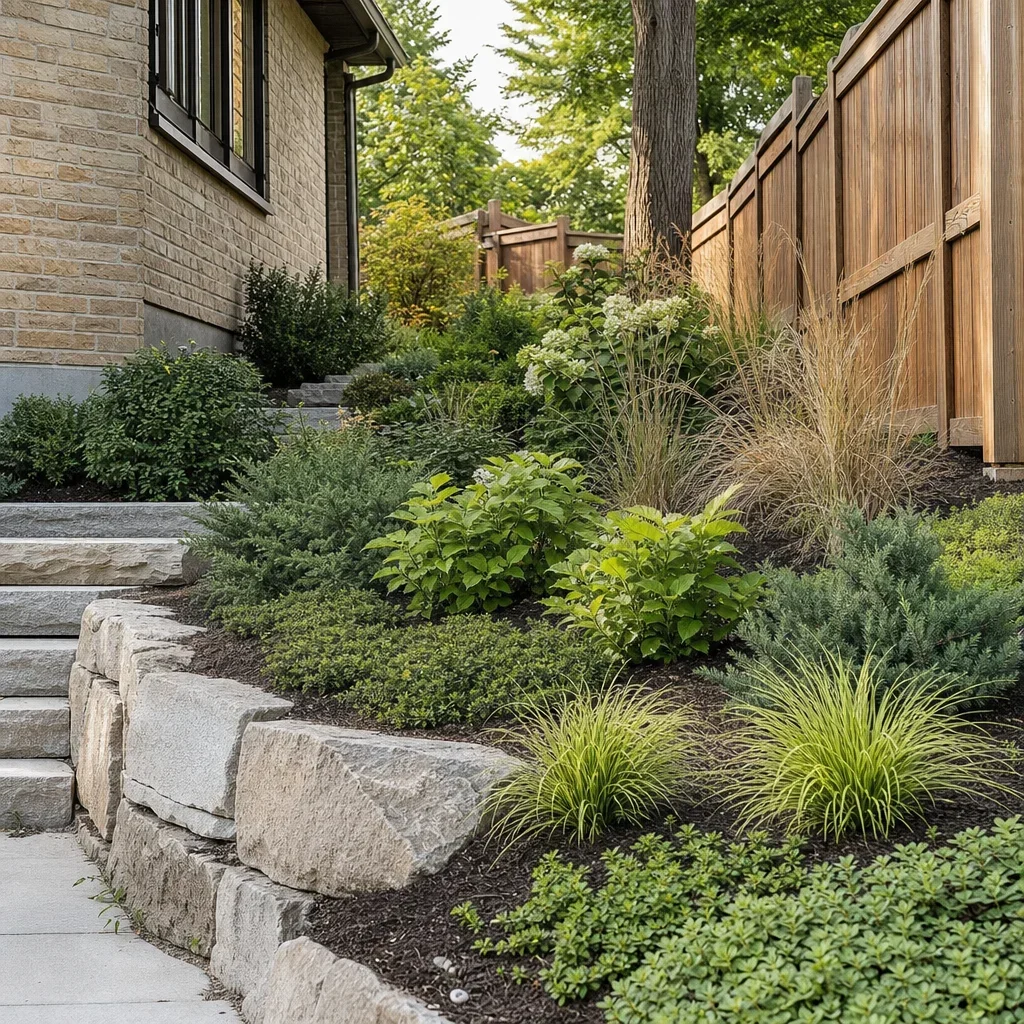
The best low-maintenance hillside landscaping matches plants to sun, moisture, soil, and slope stability. Turf is difficult to mow on a slope, so replacing part of the lawn with planted beds can reduce routine cutting and create stronger visual structure.
| Site condition | Planting approach | Maintenance focus | Drainage caution |
|---|---|---|---|
| Dry, sunny slope | Drought-tolerant groundcover, shrubs, and grasses | Water during establishment and weed early | Prevent loose mulch from moving downhill |
| Part-shade slope | Layered foliage plants and shrubs | Monitor moisture near walls and fences | Avoid trapping runoff behind dense beds |
| Deep shade beside house | Shade-tolerant foliage planting | Improve soil and manage dry shade | Check for roof runoff and poor air movement |
| Wetter lower slope | Moisture-tolerant planting | Inspect after storms and snowmelt | Confirm water has a safe outlet |
Fibrous-rooted groundcovers and layered shrubs can help hold surface soil in place. Their role is surface coverage and root reinforcement, not a substitute for structural slope stabilization where grade movement is active.
Mulch improves moisture retention and gives planting beds a finished look, but it can wash downhill on steeper grades. Dense planting, stable bed edges, and correctly planned water routes reduce that risk.
Privacy planting should be selected for the actual site, not chosen from a generic screen list. Mature size, winter exposure, shade, drainage, maintenance access, local availability, invasiveness, and pet safety should be checked before planting near a narrow property line.
Paths, Steps, and Edging That Work on a Slope
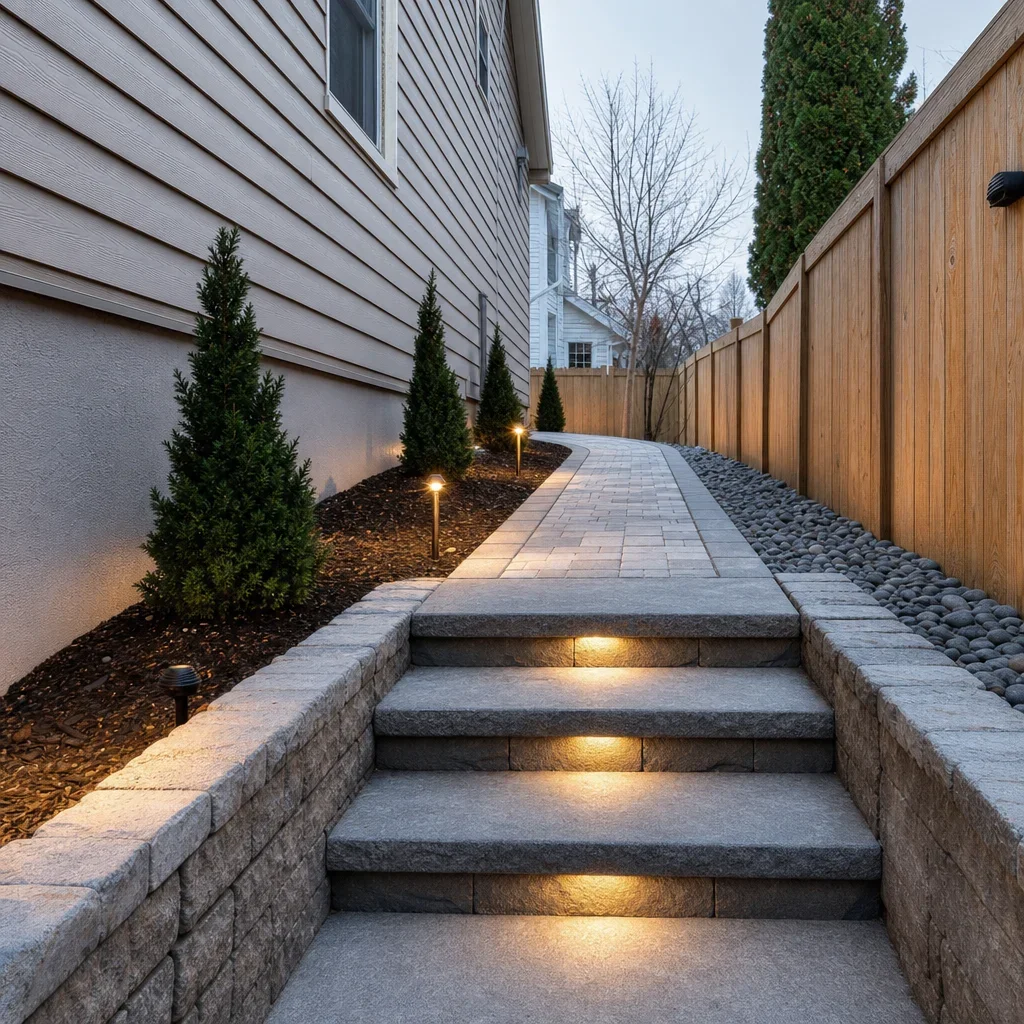
The best path material depends on winter traction, drainage, maintenance, style, and the amount of daily use. A side-yard path should also preserve access to gates, meters, air-conditioning equipment, and drainage components.
| Material | Best use | Winter and drainage considerations | Maintenance |
|---|---|---|---|
| Natural stone | Organic, premium garden path | Needs stable support and planned joints | Inspect movement and reset where needed |
| Interlocking stone | Formal path and frequent access | Requires base, edge restraint, and drainage planning | Sweep joints and monitor settlement |
| Poured concrete | Clean, continuous route | Can become slippery and needs controlled drainage | Inspect cracks and surface wear |
| Gravel | Informal, lower-cost stable areas | Can migrate on slopes and complicate snow clearing | Rake, contain, and top up |
| Mulch path | Light-use garden route | Not ideal for persistent runoff or winter access | Replenish and contain |
Stone steps, handrails, lighting, visual contrast, and secure edge conditions all improve safety on a sloped side yard. Exterior stair and guard requirements can vary by scope and municipality, so confirm applicable Ontario Building Code and local requirements before construction.
The so-called 3 inch edging rule is not a universal landscape standard. It may refer to a product detail, an installation preference, or a local practice, so follow the selected edging manufacturer’s specification and the project-specific design instead of treating one depth as a rule for every slope.
Landscape edging contains mulch, gravel, and pavers. It does not replace engineered retaining work, proper path base preparation, drainage design, or slope stabilization.
Budget-Friendly Ways to Landscape a Slope Without Ignoring Water Problems
The cheapest way to landscape a slope is usually to work with a stable grade rather than fight it. Removing difficult turf, planting in phases, adding defined edging, and creating a simple access route can improve a stable side yard without pretending that structural drainage or retaining needs are cosmetic.
| Budget approach | Suitable project type | First priority | Avoid |
|---|---|---|---|
| Refresh a stable slope | Existing grade is sound and water moves properly | Planting, mulch containment, simple path | Covering erosion with decorative rock |
| Improve access and drainage | Path is muddy, runoff crosses the yard | Water route and stable walking surface | Installing pavers before drainage is addressed |
| Rebuild a steep or unstable slope | Soil loss, grade change, wall needs, water issues | Professional design, drainage, stabilization | Unsupported walls and unplanned excavation |
Landscaping ideas for side of house with slope on a budget should be phased in the right order. Address drainage and access first, then add planting, privacy, lighting, and finishing details as the plan allows.
Loose gravel, unsupported railroad-tie walls, and decorative stone installed over active drainage problems can become false economies. They may shift, trap water, increase maintenance, or require removal when the underlying issue is finally corrected.
Project cost is driven by slope severity, site access, excavation, demolition, drainage scope, retaining requirements, materials, plant size, path length, steps, lighting, design, permits, and engineering where required. A site review is the only reliable way to price those conditions.
Privacy, Utility, and Lifestyle Ideas for a Narrow Sloped Side Yard
A narrow side yard can be useful without becoming crowded. A clear gate-to-backyard corridor, screened utility zone, potting nook, pet run, garden walk, or compact seating destination can each work when access and drainage remain open.
Privacy structures should not block equipment service access, emergency passage, utility meters, drainage routes, or gates. Fence-height, setback, and sightline rules vary between GTA municipalities, so confirm local requirements before installing a screen near a property line.
Repeated materials make a side yard feel connected to the rest of the property. Matching the front walk stone, planter finish, fence colour, or lighting style can visually link the front yard and backyard through a narrow corridor.
Child-friendly and pet-friendly designs need secure boundaries, stable surfaces, reduced trip hazards, and plant selections reviewed for safety. Grade changes still require supervision, even when steps and paths are well built.
DIY vs. Professional Installation: Where to Draw the Line
DIY work is best limited to stable, low-risk maintenance and cosmetic improvements. Seasonal cleanup, container planting, approved planting, mulch top-ups, and routine drainage monitoring are reasonable tasks when no excavation, foundation work, or structural support is involved.
Professional assessment is appropriate when drainage sits close to the foundation, erosion is noticeable, utilities conflict with the plan, stairs are needed, fences are compromised, soil is moving, runoff crosses property lines, or retaining walls are involved. These conditions can affect safety, water management, permits, and long-term performance.
A coordinated landscape design-build process sequences the work properly: site assessment, concept planning, drainage strategy, material selection, construction, and finishing planting. That sequence helps avoid installing a finished path or garden bed before the drainage route is resolved.
Seasonal Maintenance Checklist for a Stable, Low-Maintenance Side Yard
Low maintenance does not mean no maintenance. GTA landscapes need inspection after heavy rainfall, spring snowmelt, and freeze-thaw events because water and expanding ice can move mulch, gravel, edging, and paving.
| Season | Maintenance task | What to inspect |
|---|---|---|
| Spring | Clear debris and inspect drainage routes | Pooling water, rills, exposed roots, shifted edging |
| Summer | Weed, water new plants, and check soil cover | Bare soil, mulch movement, stressed planting |
| Fall | Remove leaves from drains and paths | Clogged catch points, blocked swales, settlement |
| Winter | Manage snow placement and use suitable de-icing practices | Ice buildup, blocked drainage, slippery steps |
Spring is the best time to inspect a sloped side yard after snowmelt. Look for washed-out soil, displaced stone, clogged drains, settled paths, water near the house, and fence movement before small problems become larger repairs.
Winter snow should not be piled where it blocks drainage routes or forces meltwater toward the foundation. Check product guidance before using de-icers around stone, concrete, planted beds, and drainage components because material compatibility differs by product.
Plan a Sloped Side Yard That Performs as Well as It Looks
The strongest sloped side yard landscaping follows a simple order: understand water and grade, choose the access and stabilization strategy, select durable materials and planting, then add privacy and finishing details.
Simple landscaping ideas for side of house with slope work best when they respect the actual site. The right plan depends on drainage, soil, sun, slope stability, side-yard width, utility access, winter conditions, and how the space needs to function.
For a GTA side yard with erosion, standing water, stairs, retaining walls, or difficult access, start with photos and a site assessment before choosing materials. A coordinated plan can show where drainage, paths, planting, and privacy features belong before construction begins.