








Most patio ideas look good online. Far fewer survive GTA winters. If you want real garden paving inspiration, start with the look you want, then design for drainage, traction, maintenance, and freeze-thaw performance.
Garden paving inspiration starts with the look, then the build
Good paving has to do two jobs at once. It has to look right for your home, and it has to handle clay-heavy soils, spring thaw, snowmelt, and de-icing salts across Toronto and the GTA. That is why strong garden design patio paving is never just about slab colour or pattern.
This guide covers patios, paths, courtyards, side yards, front entries, pool surrounds, and low-maintenance paved gardens. It also covers the parts many inspiration pages skip: slab sizing, drainage, base layers, slip resistance, mixed materials, and the mistakes that cost homeowners money later.
27 ideas for a paved garden
1. Large-format modern patio
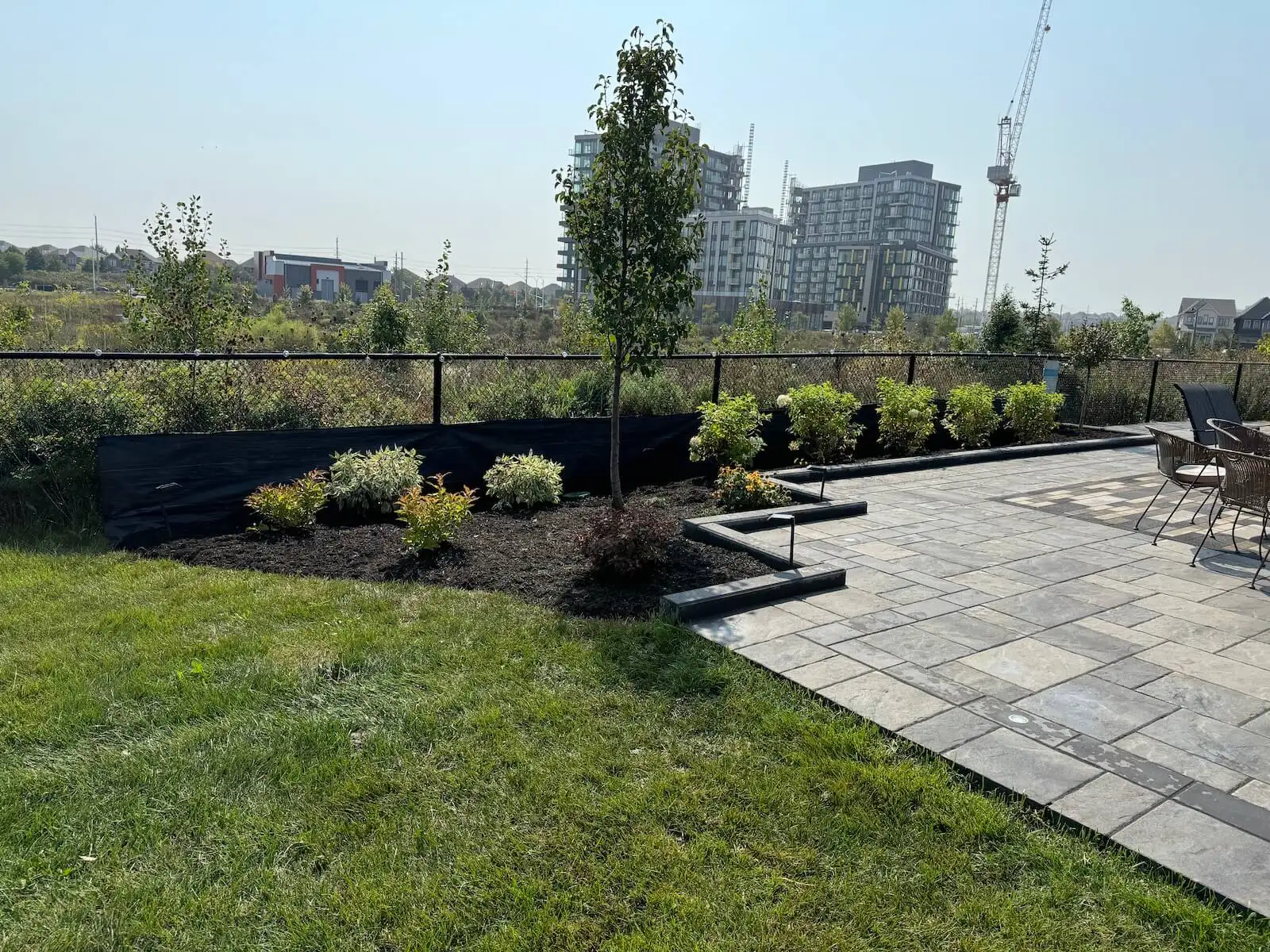
Large slabs create a calm, clean surface with fewer visible joints. This works best for newer homes, black-framed windows, and backyards where you want furniture to sit square and stable.
2. Mixed slab-and-gravel courtyard
A paved courtyard feels softer when solid slabs are broken up with gravel bands or planting pockets. This is one of the best ideas for a paved garden when you want drainage help and a less heavy look.
3. Dining terrace with border detail
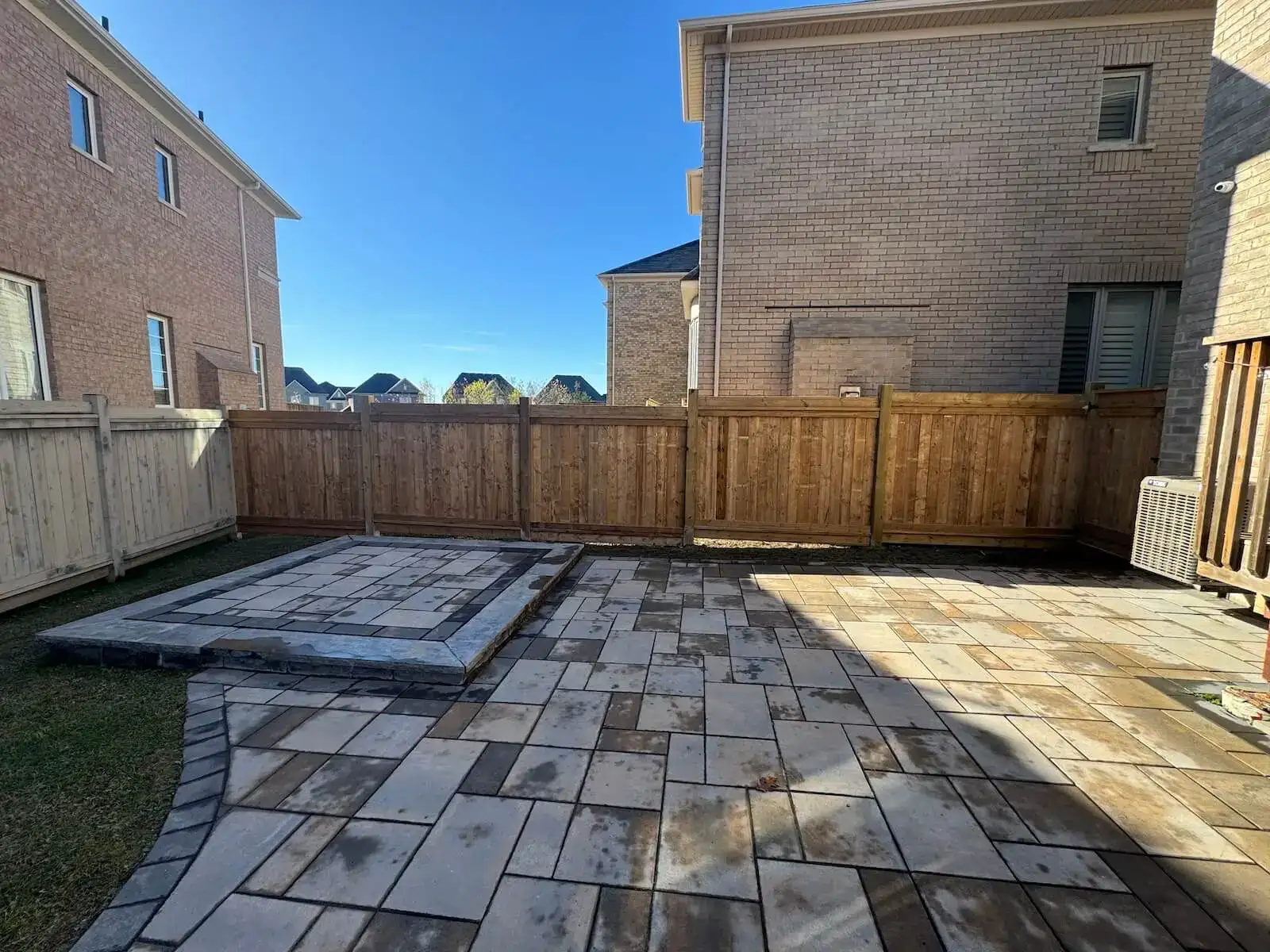
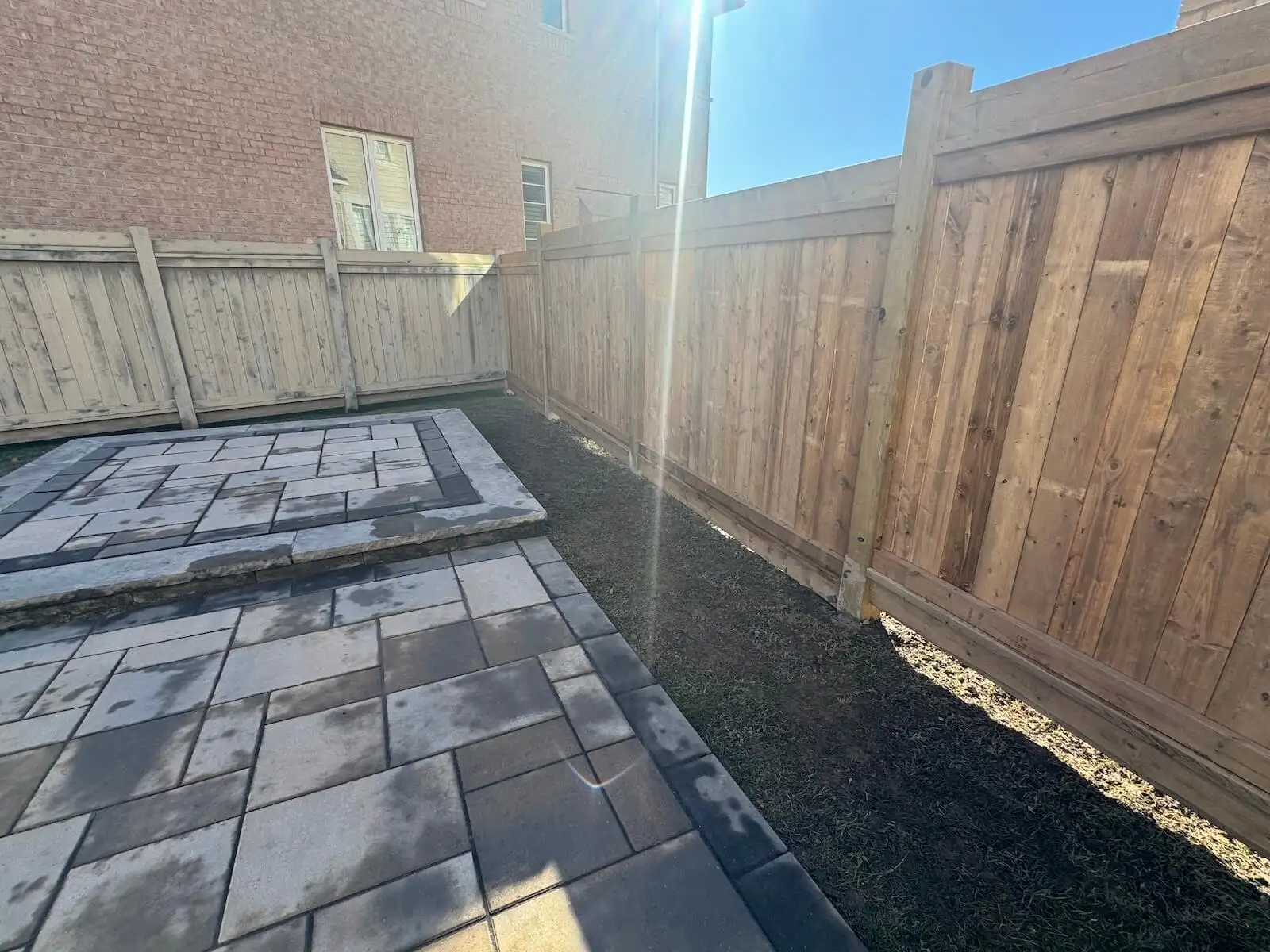
A main patio zone feels more finished when the field pattern is framed with a soldier-course border. The border creates definition without needing a second full paving material.
4. Stepping pads through lawn
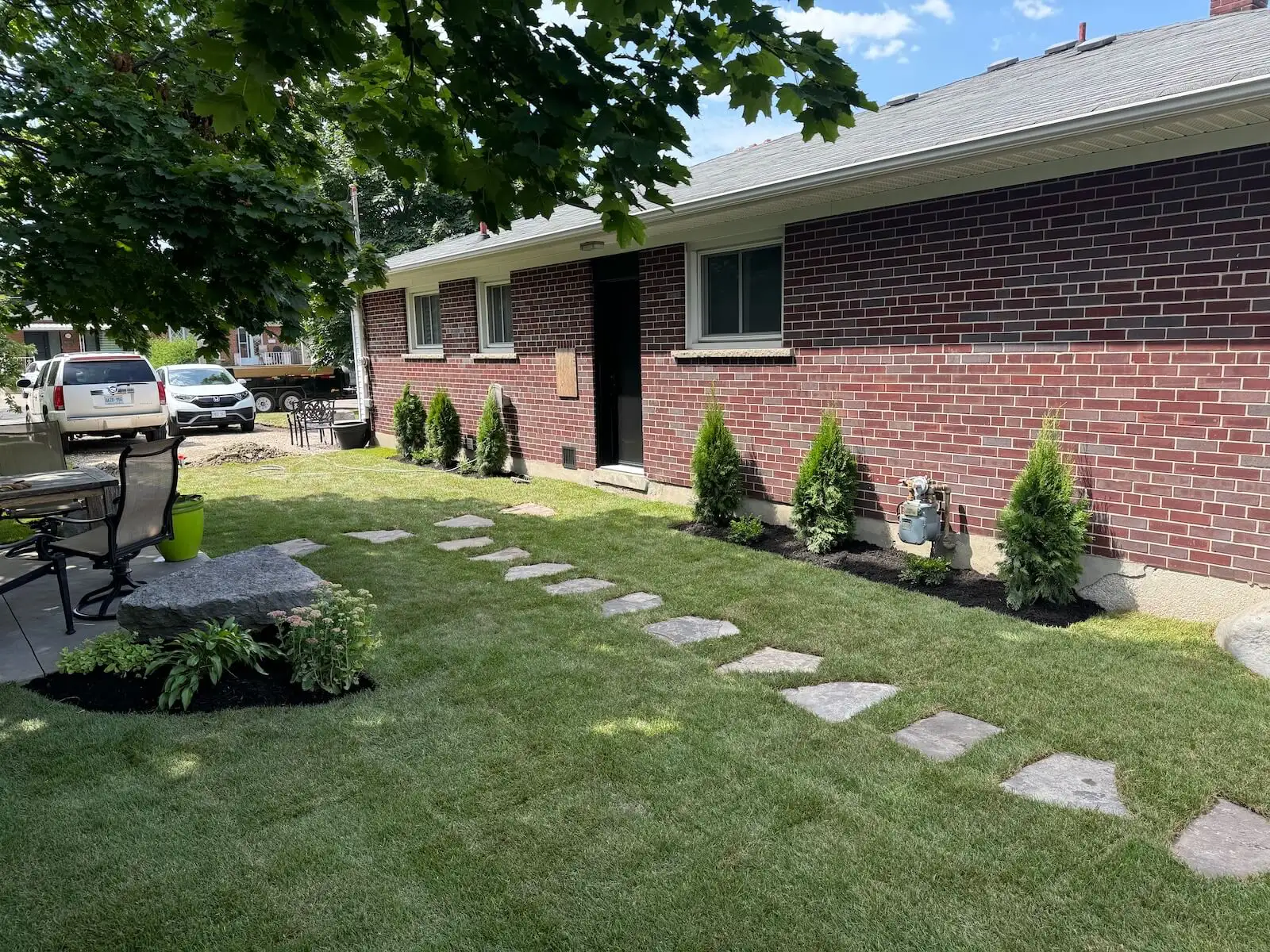
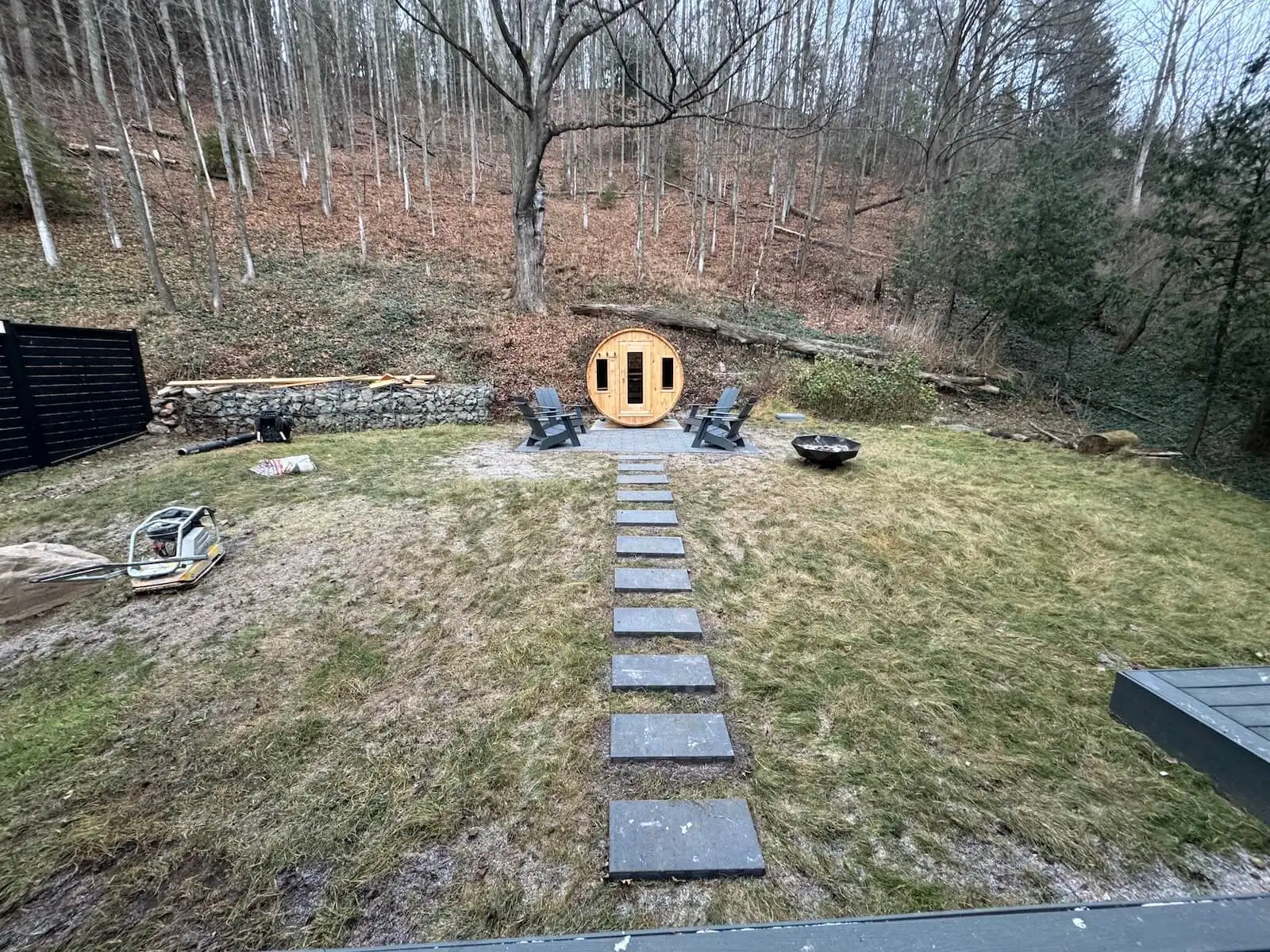
Stepping slabs add movement and reduce the amount of full paving you need. This is a smart fit for family yards where you want to keep some green space.
5. Narrow side-yard walkway
Long linear paving makes side yards feel intentional instead of leftover space. Repeating slab modules also make a tight access route feel longer and cleaner.
6. Front entry path with symmetrical layout
Straight paving lines suit traditional front elevations and give the entrance more presence. This is one of the simplest ideas for garden slabs when curb appeal matters most.
7. Rustic flagstone-style sitting area
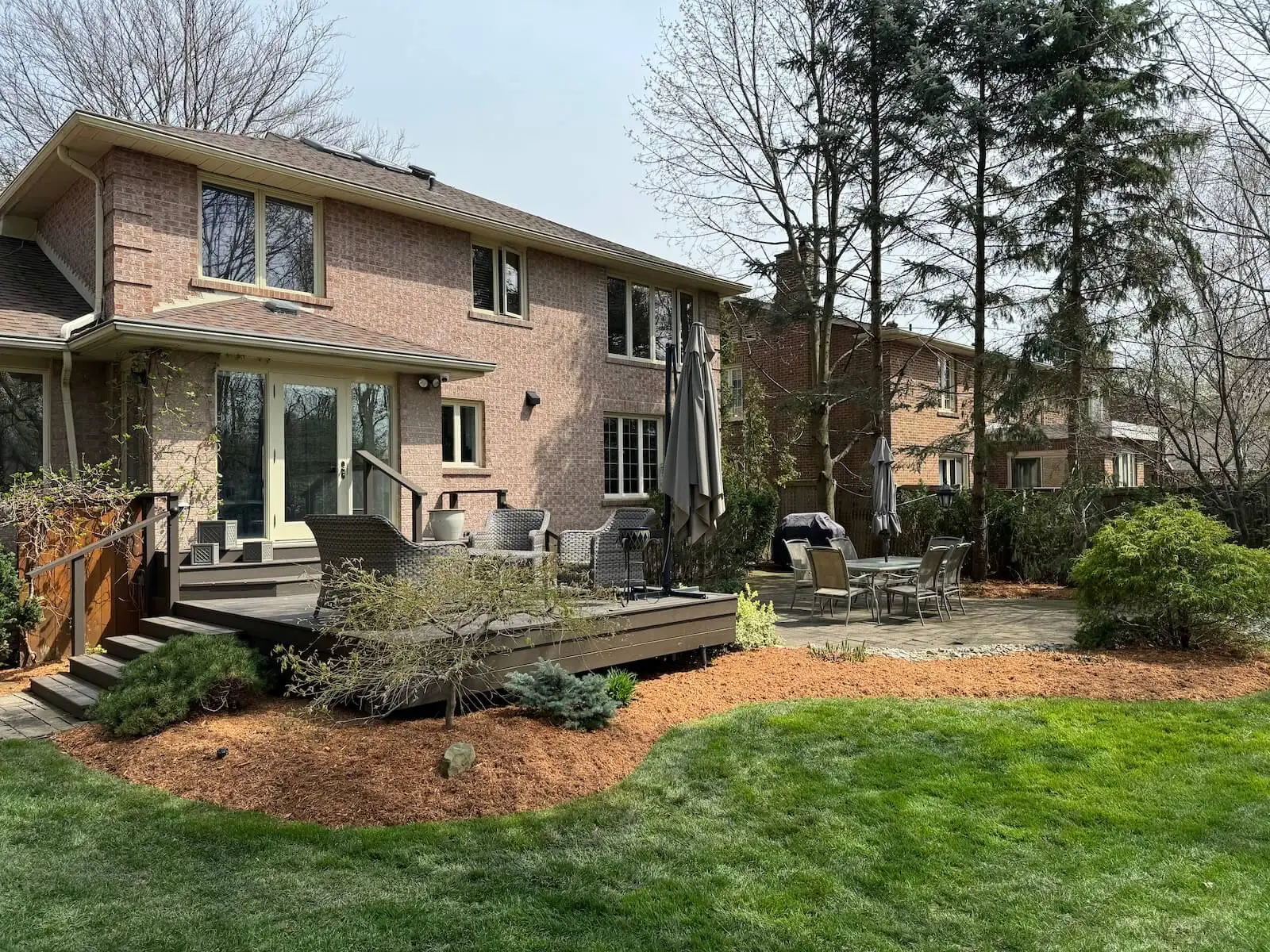
Irregular stone shapes create a relaxed, cottage-style look with more texture. It works well beside mature planting, older brick homes, and softer garden edges.
8. Porcelain entertaining patio
Porcelain suits modern backyards because the finish is crisp and colour-consistent. It also fits homeowners looking for low maintenance garden paving inspiration with a refined look.
9. Raised-bed paved courtyard
Raised planters break up a paved garden and add vertical structure. This is useful in urban backyards where the footprint is compact and every zone needs to work harder.
10. Firepit patio with circular accent
A circular detail creates a focal point without making the whole design busy. It works best when the rest of the paving stays simple.
11. Poolside paving with anti-slip texture
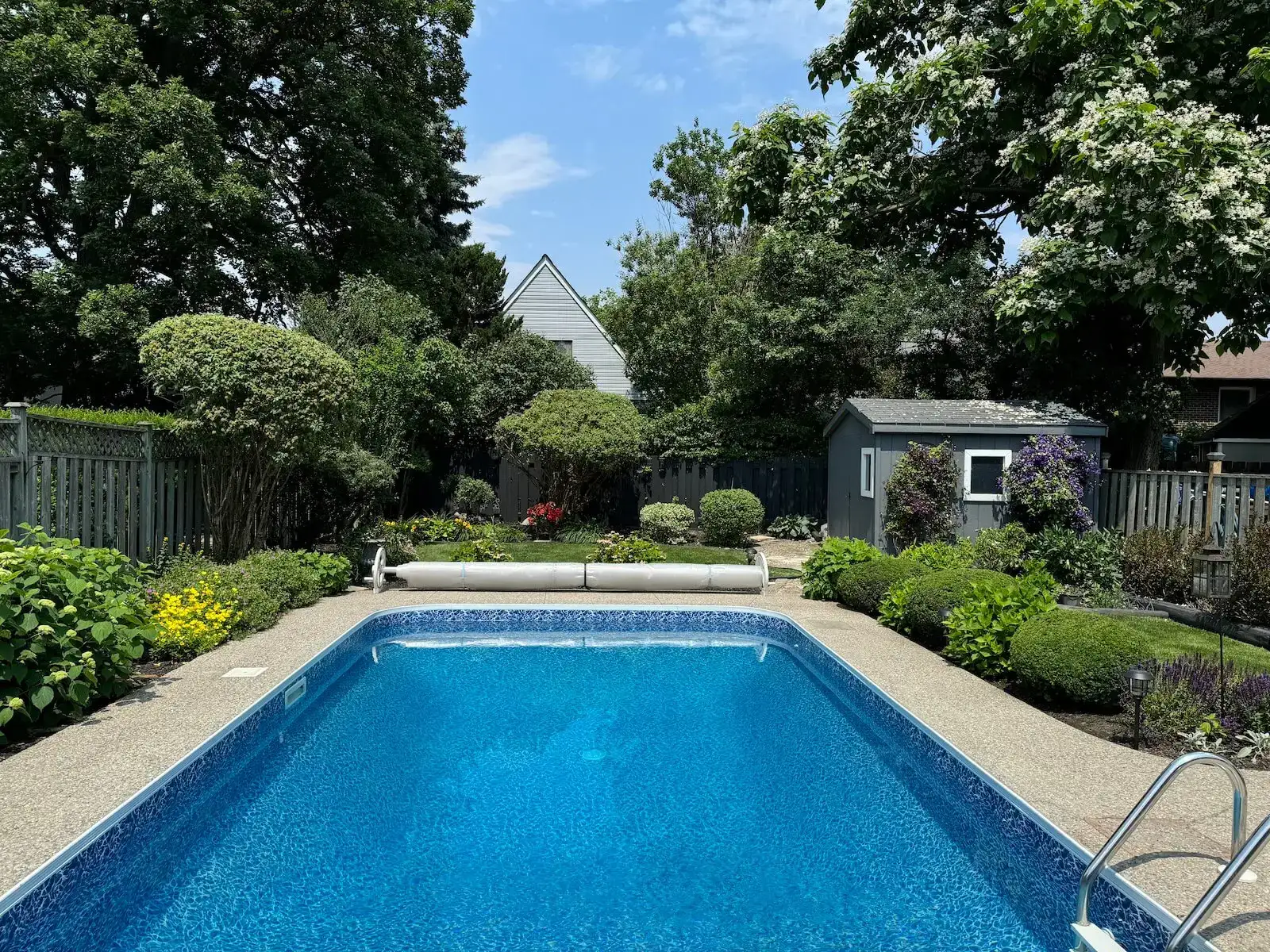
Pool surrounds need traction first, then style. Textured finishes matter more than polished looks around splashing water and wet feet.
12. Minimalist courtyard with concealed edges
A restrained palette and crisp joints make small courtyards feel intentional. This is strong small garden paving inspiration because fewer visual breaks usually make the space read larger.
13. Patio plus lawn transition
A hardscape zone feels less harsh when it opens into turf or planting. This layout also helps control budget by reducing the area that needs full slab coverage.
14. Gravel-joint slab garden
Spacing slabs with wider joints filled in gravel gives a lighter, more relaxed finish. It is useful when you want low maintenance ideas for a paved garden without covering every inch in stone.
15. Cottage garden terrace
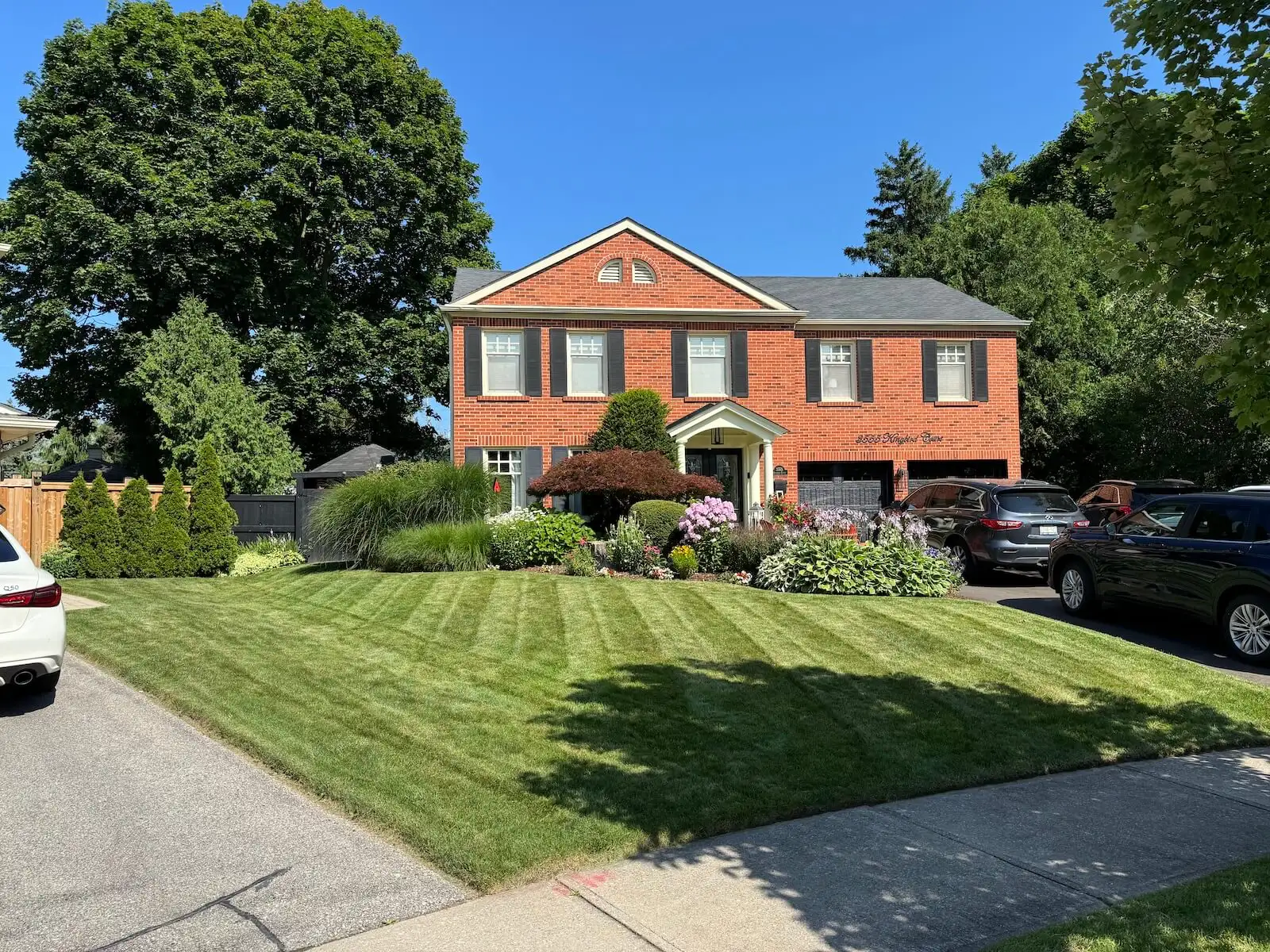
Tumbled or textured paving paired with dense planting gives a softer, lived-in feel. This style suits red brick, heritage-inspired homes, and informal backyards.
16. Linear path with integrated lighting
Low lighting along a paved route improves safety and makes the garden usable after dark. It also adds rhythm and guides movement through the space.
17. Sloped garden with terraced paving
Terracing makes a sloped yard more usable and safer. It can also create clear zones for dining, lounging, or planting instead of one awkward incline.
18. Front garden pad with planting frame
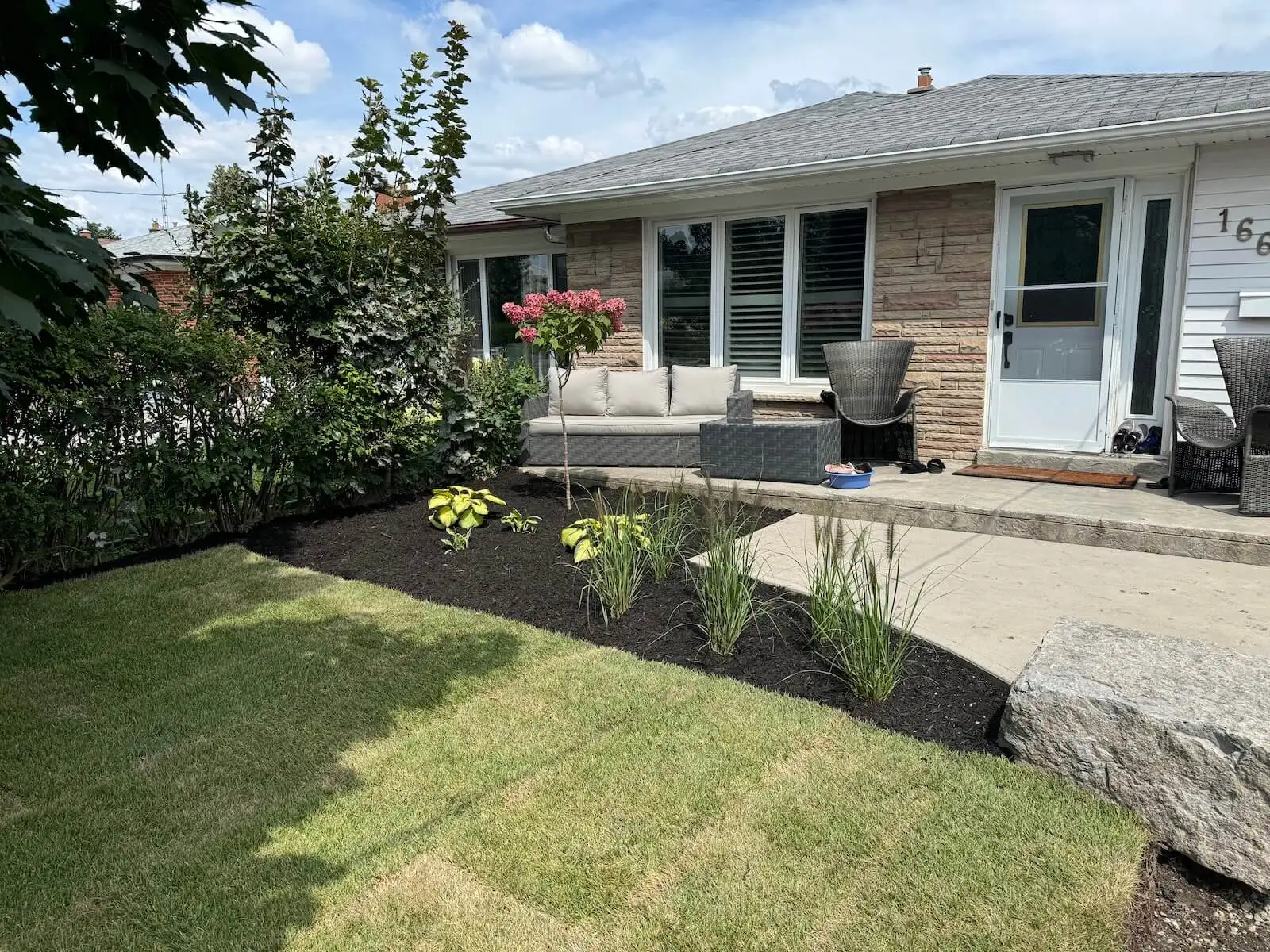
A front paved area looks better when softened by planting beds instead of stretching wall to wall. This approach helps the hardscape feel designed, not overbuilt.
19. Small urban patio with one slab size
One slab size and one main colour reduce visual noise. This is one of the best small ideas for a paved garden because too many cuts and borders can crowd a compact yard.
20. Courtyard with water feature focal point
A simple paved layout can carry a stronger focal feature in the centre or at the back edge. The paving should support the feature, not compete with it.
21. Side return with stepping rhythm
Alternating slab spacing creates movement in a narrow passage. It turns a utility zone into part of the garden experience.
22. Dining pad plus secondary lounge zone
Paving can create outdoor rooms by changing shape, orientation, or border treatment. Separate zones make medium-sized yards feel more functional without adding walls.
23. Mixed paving and decking composition
A wood accent can warm up a cool stone palette. This works well when you want contrast between a dining surface and a lounge edge.
24. Formal patio with herringbone inset
A herringbone field inside a simpler frame gives the patio character. This works especially well near traditional or transitional homes.
25. Shade garden with textured stone
Textured surfaces are safer in damp and shaded areas where algae and leaf drop are more likely. Smooth finishes can become a maintenance problem in those spots.
26. Compact courtyard with built-in bench edge
Built-in seating saves floor area and keeps furniture from cluttering a tight layout. That is one of the best small ideas for garden slabs when every foot matters.
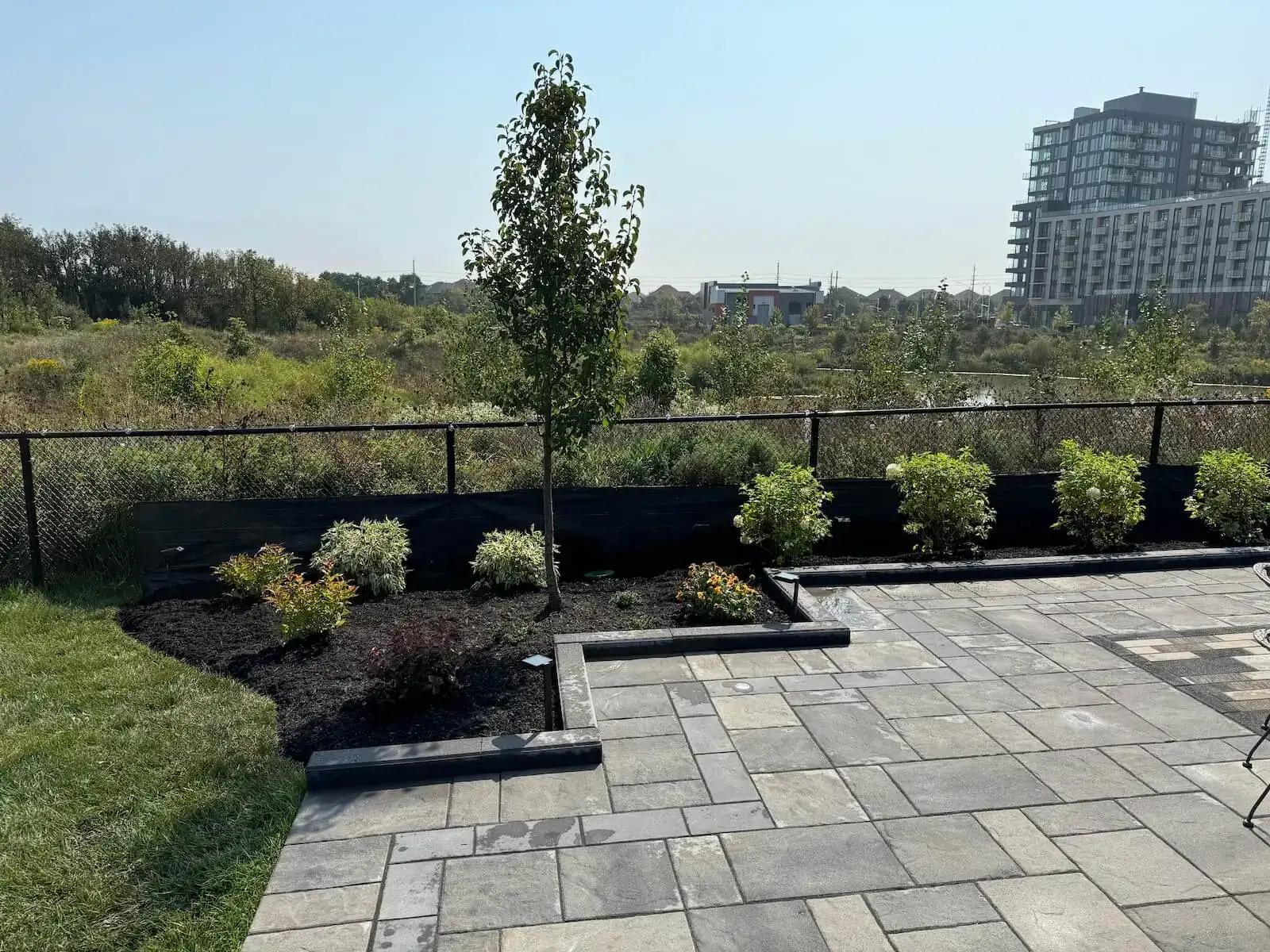
27. Paved garden with planting pockets and specimen tree
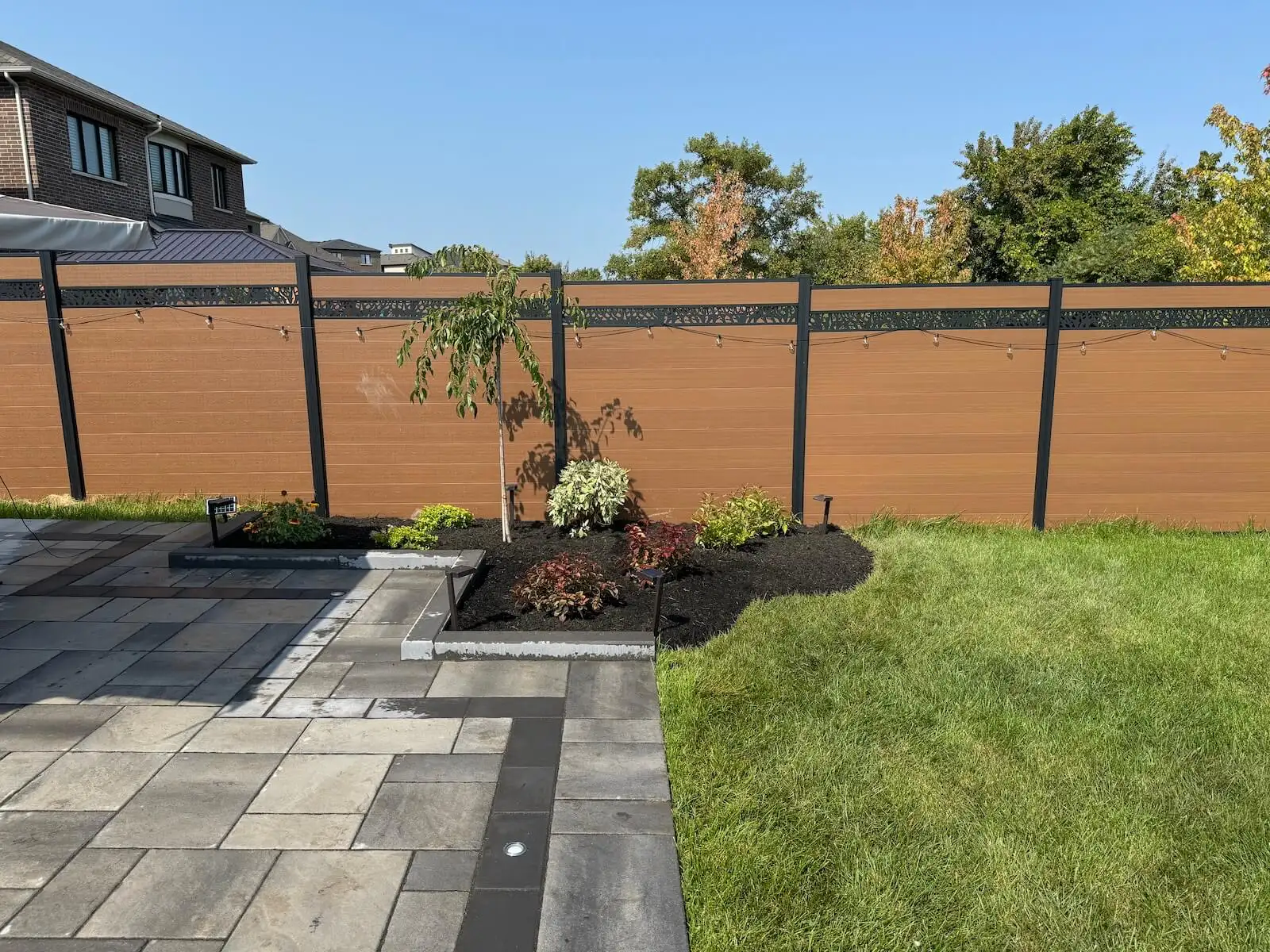
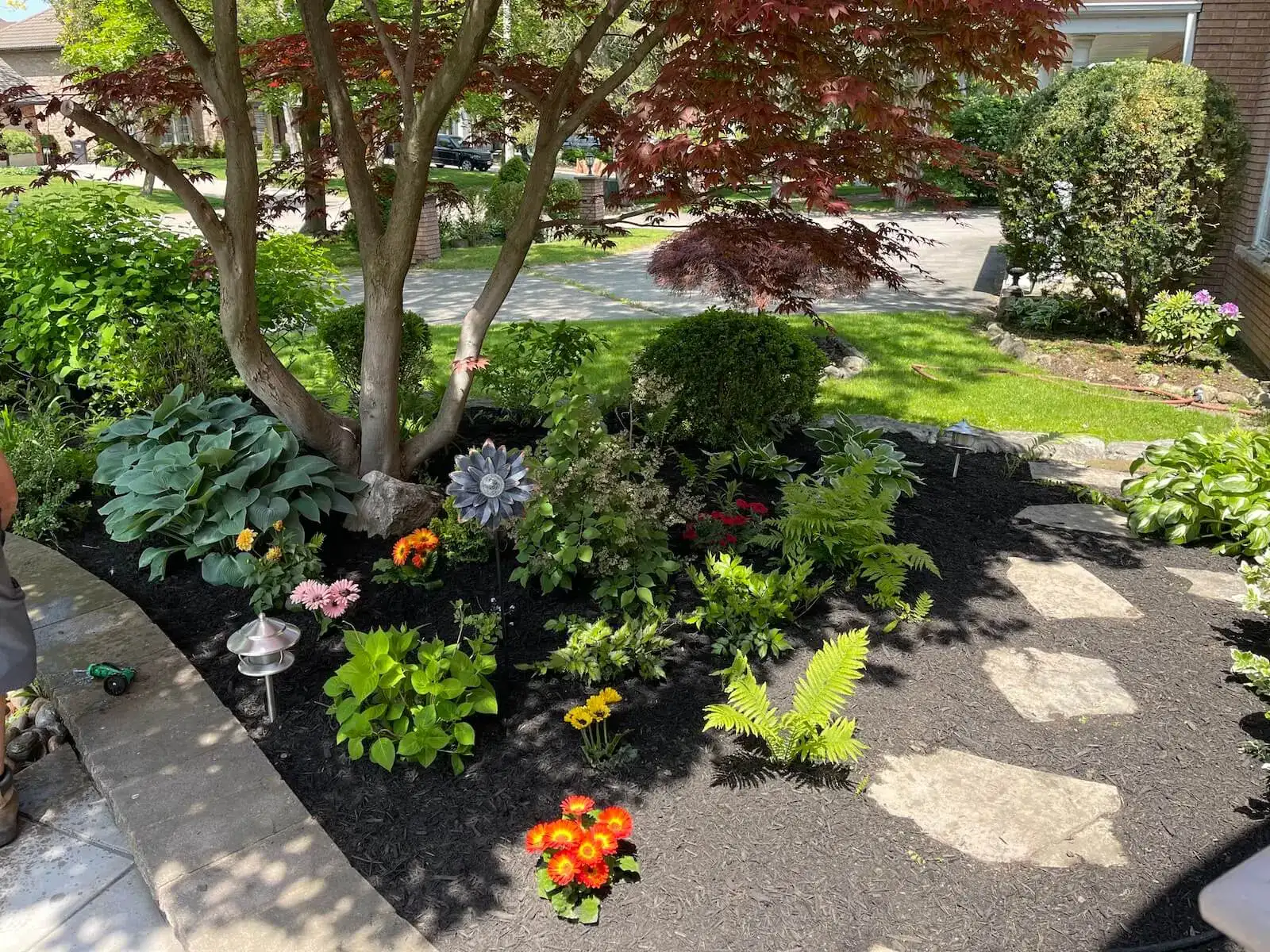
A mostly paved garden still needs softness and a focal point. Planting pockets stop the space from feeling flat and help the hardscape sit naturally in the landscape.
Latest trends in garden paving
Large-format slabs remain popular because they reduce visual busyness and suit modern architecture. They work best when the yard shape allows a clean layout with limited awkward cuts.
Warm neutrals are replacing colder greys in many projects. Taupe, beige, buff, and soft stone tones tend to sit more comfortably against red brick and mixed cladding.
Textured anti-slip finishes are gaining ground because they balance appearance with real-world safety. That matters in the GTA where rain, snowmelt, and shade can leave surfaces slick.
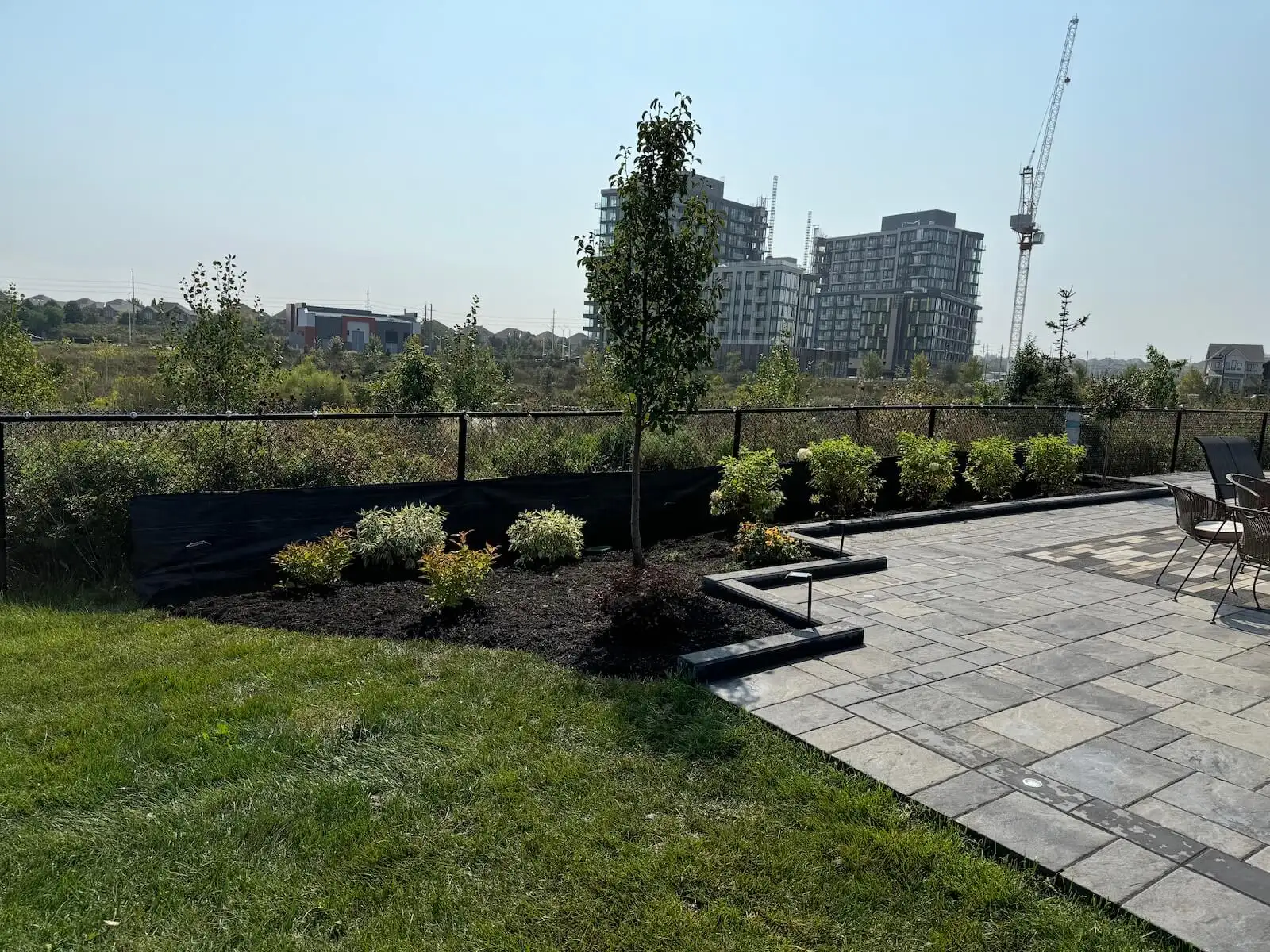
Mixed-material layouts are stronger than all-stone layouts in many backyards. Slabs paired with gravel, lawn, wood accents, or planting pockets add contrast and can improve drainage.
Permeable design is getting more attention because runoff matters. Even when the whole patio is not permeable, adding gravel bands, planting zones, or drainage planning improves performance.
Minimal linear patterns stay current because they age well. They usually outlast trendier layouts that depend on too many borders, insets, or high-contrast colours.
Organic edge details are showing up more often around planting beds. They can soften a hardscape-heavy yard, but they need careful layout so the design still feels intentional.
Integrated lighting is now part of the paving conversation, not an afterthought. It adds safety, highlights steps, and extends how long the garden can be used.
Indoor-outdoor continuity is still a strong idea, but it needs caution. Matching interior and exterior finishes too closely can backfire if the outside surface is too smooth for winter conditions.
If you are looking ahead to garden paving trends in 2026, the durable direction is clear. Homeowners still want cleaner lines and calmer palettes, but not at the cost of traction, drainage, or winter performance.
Choose the right paving style for your house
Modern paving usually means large-format porcelain or smooth concrete-look slabs, tight joints, and a restrained palette. It fits white render, black window frames, newer infill homes, and simple planting schemes.
Rustic paving relies more on texture, tonal variation, and softer edges. Natural stone, tumbled finishes, and irregular shapes pair well with older brick homes, cottage-inspired gardens, and layered planting.
Classic paving feels balanced and structured. Rectangular slabs, soldier-course borders, and symmetrical layouts suit traditional façades and formal front entries.
Minimalist paving uses fewer materials and lower contrast. It works best when the geometry is clean, drainage is well hidden, and the planting is simple and controlled.
Cottage-style paving looks more relaxed when joints are a little wider and edges are less rigid. It works well with herbs, grasses, flowering perennials, and natural colour variation.
Paving patterns that change the whole design
Stack bond creates a quiet, contemporary look because the joints line up cleanly. It suits large-format slabs and modern patios where you want the surface to feel calm.
Running bond, also called stretcher bond, adds a bit more movement without becoming busy. It works well on paths and mid-sized patios, especially when you want a classic layout.
Herringbone feels stronger and more dynamic. It is a common choice where the paving needs more visual energy or where the area connects to drive-adjacent spaces.
Basketweave brings a traditional, decorative feel. It suits smaller feature areas better than large minimalist patios.
Random modular layouts look natural and relaxed when the module set is well proportioned. They can suit rustic and transitional gardens, but they require more planning to avoid visual clutter.
Crazy paving creates strong character through irregular shapes and varied joints. It works best as a clear style decision, not as a filler pattern.
Soldier-course borders define space and make even simple paving look more finished. They are especially useful when you want one main slab field without adding a second major material.
Curved edges soften a garden and suit informal planting. Straight edges feel more architectural and are usually easier to detail cleanly near steps, walls, and furniture.
Simple straight layouts usually need about 5% to 10% extra material for cuts and waste, while diagonal, curved, or more complex layouts often need about 10% to 15% or more. That waste factor affects both ordering and budget.
What size slabs make a small garden look bigger?
Medium-to-large slabs usually make a small garden feel bigger because there are fewer joint lines breaking up the view. The mistake is going too large for the space and ending up with awkward perimeter cuts on every side.
The best slab size is the one that fits the yard proportionally and keeps the layout clean. In a condo-sized backyard or compact courtyard, fewer material changes usually matter more than chasing the biggest slab possible.
Directional laying changes how the space reads. Running the long side of the slab along a narrow yard can emphasize length, while a crosswise layout can make a skinny space feel broader.
Heavy borders can shrink a compact garden visually. For strong small garden design patio paving, keep the palette tight and let planting or furniture add interest instead.
How to choose slab colours for your house and light
Warm beige, taupe, buff, and soft sand tones are usually safer with red brick and traditional homes. They pick up the warmth in masonry instead of fighting it.
Cool greys and charcoals suit modern homes, dark brick, black window frames, and sharper architectural lines. They can look crisp, but they also show salt residue and dust more clearly.
Cream and very pale stone can brighten shaded gardens. In bright sun, those same tones can create glare and show staining faster.
Variegated natural stone tones hide dirt better than flat, uniform colours. They also blend more easily with mixed planting and softer garden styles.
Very dark paving can absorb more heat and make a sunny patio feel harsher in midsummer. Very light paving can feel cleaner at first, but it may show marks sooner in high-use areas.
Samples should always be viewed outside at the property. Check them in morning and afternoon light, and check them wet and dry, because water can deepen colour dramatically.
Best materials for a durable, low-maintenance paved garden
Porcelain is one of the lowest-maintenance choices because it is dense, consistent, and easy to clean. It suits modern spaces well, but installation needs precision and the surface finish must be chosen carefully for slip resistance.
Natural stone offers texture and character that many homeowners still prefer. Performance depends heavily on the stone type, finish, and installation quality, especially in freeze-thaw conditions.
Concrete pavers are versatile and practical. They come in many formats, can suit both contemporary and traditional homes, and are often a strong middle ground for value and durability.
Brick has classic appeal and works beautifully in older or traditional settings. It can be excellent for paths and feature areas, though the look is more specific than porcelain or large slab designs.
Gravel is not a direct slab replacement for every use, but it can be excellent in courtyards, side zones, and low-traffic areas. It lowers hardscape cost, improves permeability, and softens the overall scheme.
Mixed-material designs often outperform single-material designs visually. They can also support low maintenance ideas for garden slabs by limiting full paved coverage where it is not needed.
In Toronto winters, the right material still depends on the build under it. Frost performance is never just about the slab itself; base prep, drainage, and edge restraint do the heavy lifting.
Material comparison table
| Material | Look | Best style fit | Maintenance | Slip resistance when wet | Freeze-thaw suitability | Relative cost | Best locations |
|---|---|---|---|---|---|---|---|
| Porcelain | Crisp, clean, uniform | Modern, minimalist | Low | Good if textured | Strong when properly installed | Higher | Patios, courtyards, poolside with anti-slip finish |
| Natural stone | Varied, textured, organic | Rustic, classic, transitional | Moderate | Varies by finish | Good with correct stone selection and base work | Higher | Patios, paths, feature spaces |
| Concrete pavers | Flexible, broad style range | Modern to traditional | Low to moderate | Good with textured face | Strong with proper installation | Moderate | Patios, walkways, front entries |
| Brick | Warm, timeless, detailed | Traditional, cottage | Moderate | Usually good | Good with proper detailing | Moderate | Paths, front gardens, small patios |
| Gravel | Soft, informal, permeable | Rustic, courtyard, budget-mix | Moderate | Loose underfoot | Good if contained and drained well | Lower | Courtyards, side yards, filler zones |
| Mixed materials | Layered, custom, balanced | All styles | Varies | Varies | Often strong because drainage and zoning improve | Moderate to higher | Full-garden compositions |
For GTA winters, textured porcelain, quality concrete pavers, and well-chosen natural stone are usually the most dependable patio materials when the base and drainage are done properly. The wrong finish on the right material can still be a bad choice.
How to combine slabs with gravel, turf, planting, or decking
Slabs paired with gravel are one of the easiest ways to make a paved garden feel lighter. Gravel joints, side bands, or secondary seating zones reduce the amount of full paving while adding texture.
Slabs next to lawn work best when the transition is clean and the edge restraint is solid. This keeps the patio from creeping into the turf line over time.
Stepping pads through mulch or gravel are useful where a full patio would feel too heavy. They also fit simple ideas for a paved garden on a budget because you pave only where needed.
Raised planters and planting pockets prevent a paved scheme from feeling flat. That matters in low maintenance garden design patio paving, where too much stone can otherwise look hard and lifeless.
Decking accents can warm up cooler paving tones. Used carefully, wood or composite can define a lounge edge while the slab area handles dining and traffic.
Artificial grass can look neat in some layouts, but it has tradeoffs. Surface heat, drainage quality, edge detailing, and long-term appearance all need honest review before you use it as a filler material.
Ideas by space type
Small backyards work best with one main paving material, a restrained colour range, and vertical planting. That approach keeps the floor simple and stops the space from feeling crowded.
Narrow side yards benefit from repeating slab modules and texture. Lighting, gravel strips, or planting pockets can make the route feel designed instead of purely functional.
Courtyards need privacy, compact furniture planning, and surface choices that bounce light. A lighter paving tone can help enclosed spaces feel more open.
Front gardens need hierarchy. The path to the door should read clearly, and water should not be encouraged back toward the foundation by careless grading.
Sloped yards need more than a pretty slab. Terraces, steps, retaining features, and water management have to be resolved together before the paving style matters.
Poolside spaces need anti-slip finishes, comfortable footing, and careful detailing at edges and drains. This is one area where performance should outrank trend.
How to create a paved area in a garden
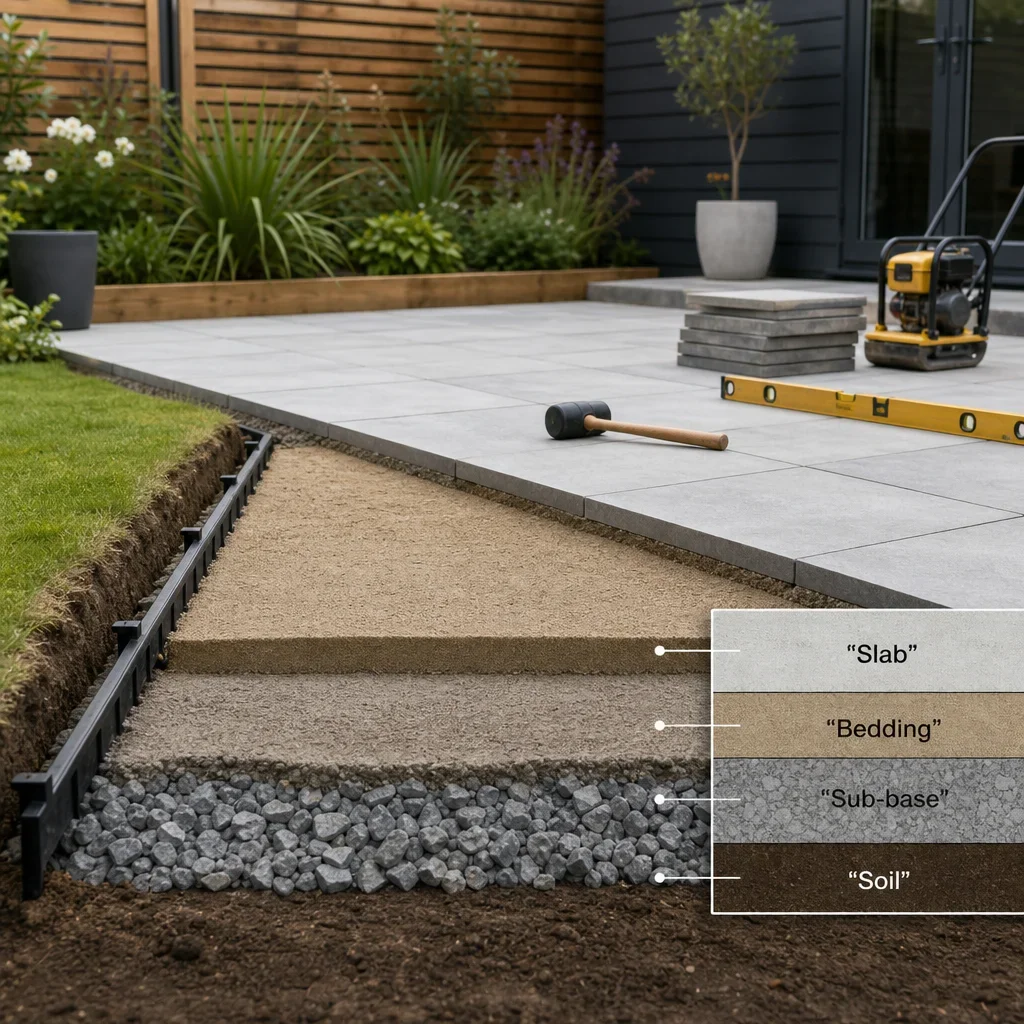
A durable paved area is built in layers, not just laid on top of the ground. The usual build-up includes excavation, a compacted sub-base, a bedding layer, edge restraint, the paver or slab surface, jointing, and a drainage strategy.
The exact depth of those layers depends on soil, material, load, drainage conditions, and whether the area is a path or a main patio. That is why we would not quote a build detail from a photo alone.
Gravel under pavers is not an optional extra in a lasting installation. The compacted aggregate sub-base helps support load, manage water movement, and reduce settlement and frost-related shifting.
If gravel or proper base prep is skipped, the usual problems are sinking, rocking, heaving, puddling, weed pressure, and edge spread. Those failures cost far more to fix later than base work costs upfront.
Pavers and slabs are not installed exactly the same way in every system. The right assembly depends on the product, the site, and how the finished area will be used.
Can pavers or slabs go directly on soil?
For a long-lasting patio or walkway, no. Pavers and slabs should not usually be laid directly on soil if you want stability, drainage control, and frost resistance.
Soil shifts with moisture and temperature. In freeze-thaw conditions, that movement can lift, tilt, or settle the surface unevenly.
Direct-to-soil installation is only reasonable for temporary stepping stones or very informal garden pads. It is not a sound approach for a finished entertaining patio, front walk, or side-yard route near the house.
If the paved area sits near foundations, retaining walls, pools, or grade-sensitive areas, professional design matters even more. Water movement is the hidden issue in many failed patios.
Drainage, slope, and lot grading matter more than most homeowners think
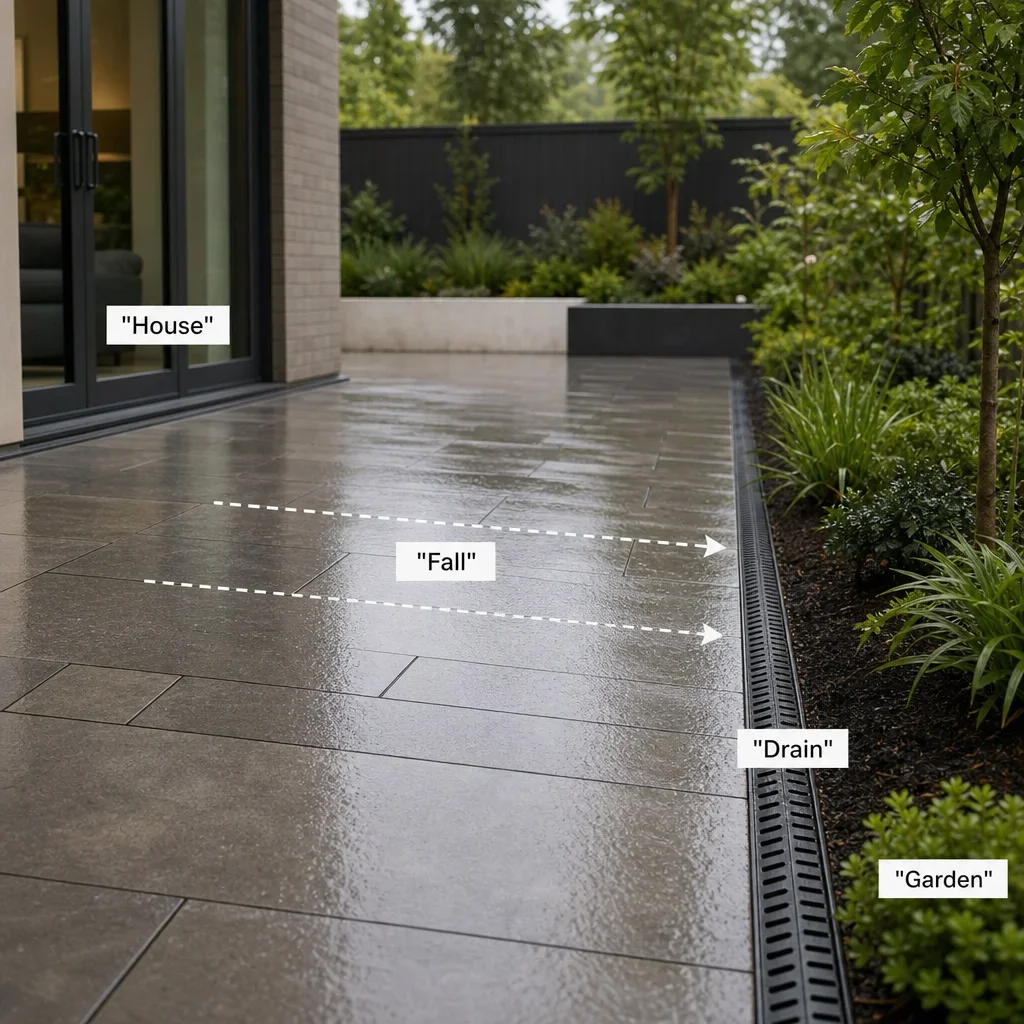
Drainage is what separates a patio that lasts from one that starts moving after a few seasons. In the GTA, spring thaw, heavy rain, clay soils, and snowmelt put real stress on paved surfaces and the layers below them.
Water should be directed away from the house, not trapped against it. Door thresholds, downspout discharge, grade changes, and nearby structures all affect how the paving should be designed.
A good drainage strategy may include careful surface fall, permeable adjacent zones, catch basins, channel drains, or rain-garden style planting areas. The right choice depends on the site, not the trend board.
Lot grading and permit requirements can come into play depending on the municipality and the scope of work. That is one reason broad online advice can be risky when you are paving around a real GTA home.
This is where professional planning earns its keep. RockLeaf designs for Toronto-area freeze-thaw conditions and offers free 3D design and quote support, line-by-line pricing, a 5-year total warranty, a plant-survival guarantee, and a 14-day start promise. Conditions apply.
Common mistakes when laying slabs or choosing paving
Poor sub-base prep is the mistake that causes the most expensive failures. Surface problems often start below the slab, not on top of it.
Laying directly on soil is a false shortcut. It saves time only until the first season of settling, puddling, or frost movement.
Choosing a slippery finish for shade, poolside areas, or north-facing spaces creates avoidable safety issues. Wet traction should be part of the material decision from the start.
Using too many patterns, borders, and colours in a tiny yard makes the space feel smaller. Compact gardens usually look better with fewer design moves, not more.
Ignoring drainage near the house can create bigger problems than an ugly patio. Water management should be designed before material selection is finalized.
Picking a slab colour that fights the house weakens the whole project. The paving should support the architecture, not compete with it.
Weak edge restraint shortens the life of the installation. Without proper containment, pavers can spread and joints can open over time.
Over-paving the whole yard leaves nowhere for the design to breathe. Planting pockets, borders, or soft transitions usually improve both appearance and drainage.
Underestimating waste can delay a project or leave you with mismatched reorders. Simple layouts often need about 5% to 10% waste, while more complex ones can need 10% to 15% or more.
Skipping visualization leads to expensive second thoughts. Samples and layout previews are cheaper than changing the patio after it is built.
How to make a paved garden safer, more accessible, and easier to maintain
A safer garden starts with level changes that are easy to read and easy to walk. Textured surfaces, clear edges, and good lighting usually matter more than decorative extras.
Wide, direct paths are easier for strollers, mobility aids, and everyday carrying. Around homes, practical path widths are often planned in the 1.0 to 1.5 metre range depending on use and site limits.
Trip edges should be minimized at transitions between patio, path, lawn, and thresholds. Clean detailing helps both safety and long-term maintenance.
Low-maintenance paving usually means fewer narrow joints, durable edging, and enough access for snow clearing tools. Dense planting that spills aggressively onto the path can make even good paving harder to maintain.
Lighting at steps, corners, and side-yard routes improves safety after dark. It also makes the paved layout feel more intentional.
Accessibility needs vary by household, so the right layout should be customized. This is general information, not a design recommendation for your exact property.
Budget-friendly paving ideas and cheaper alternatives to slabs
The cheapest-looking patio is often not the best-value patio. A budget-friendly design should lower unnecessary cost without stripping out the parts that keep the surface stable.
Simpler layouts usually cost less because they reduce cutting, labour time, and waste. Straight runs and repeated modules are easier to build cleanly than complicated curves and insets.
A smaller paved zone with larger planting beds can cut costs and improve the look at the same time. That is smarter than paving wall to wall just to maximize hard surface.
Mixing slabs with gravel is one of the strongest garden patio ideas on a budget because it preserves the finished look while reducing the amount of premium material required.
Phasing the project can also help. Build the main patio first, then add side paths, raised planters, or a second lounge zone later.
Refreshing a sound existing patio can be cheaper than full replacement. Cleaning, re-jointing, selective repairs, new borders, lighting, or updated furniture can change the look without rebuilding the whole area.
Concrete pavers, gravel, and stepping-stone layouts are often lower-cost alternatives to premium large-format slabs. The catch is that the base work still cannot be treated as optional.
What can you use instead of slabs?
Gravel is one of the most common alternatives because it is permeable, flexible in shape, and usually lower in material cost. It works best in contained areas with solid edging.
Concrete pavers are a practical alternative when full slabs feel too expensive or too formal. They offer strong durability and a wide design range.
Brick is a good substitute where you want a warmer, more traditional finish. It is especially effective on paths, front entries, and smaller patios.
Stepping stones are useful for informal routes and garden connections. They are not a substitute for a fully stable main patio where dining furniture needs a solid surface.
Mulch or planted paths can work in ornamental garden areas with low foot traffic. They are not ideal in wet, high-use, or winter-heavy access routes.
Mixed-material designs are often the strongest answer. An alternative to slabs does not have to replace slabs everywhere; it just has to be used where it makes sense.
Before you buy: measuring, quantities, and planning waste
Measure the full area first, then measure the parts that affect design. Door thresholds, steps, downspouts, utilities, trees, fences, and grade changes all shape the paving plan.
Pattern choice affects waste and labour. Straight layouts often need about 5% to 10% extra material, while diagonal, curved, or highly cut layouts often need 10% to 15% or more.
Furniture footprint should be planned before materials are ordered. Dining tables, lounge seating, grills, and circulation space can change the ideal patio shape more than homeowners expect.
Snow-shovelling routes matter in the GTA. A design that looks clean on paper can become annoying in winter if there is no practical way to clear it.
Samples should be checked beside brick, siding, coping, fencing, and planting colours before you commit. One slab that looks perfect in a showroom can look flat or too cold at home.
A practical before-you-buy checklist includes site measurements, photos, drainage review, access constraints, sample testing, and municipal review where scope may affect grading or front-yard rules. That planning saves revisions later.
How to preview how paving will look before buying
The best first step is to view full-size samples at your own property. Check them in sunlight, shade, and wet conditions because the same slab can read very differently across those moments.
Samples should be seen against the fixed elements you cannot change easily. That includes brick, siding, fences, pool coping, steps, and the planting palette.
A 3D rendering helps when you are comparing slab sizes, patterns, border details, or mixed-material layouts. It lets you test ideas before excavation starts.
This is where a design process becomes more than a mood board. A free 3D design and quote can help you compare options with real site context instead of guessing from simple garden paving ideas pictures online.
Maintenance, cleaning, sealing, slip resistance, and frost performance
Not all paving needs sealing. Whether sealing makes sense depends on the material, finish, porosity, and the look you want to maintain.
Porcelain is usually one of the easiest materials to keep clean because it is less porous than many stone products. Natural stone may need more attention depending on the stone type and finish.
Pressure washing should be done carefully. Too much pressure can damage joints, disturb jointing material, or mark some surfaces.
Slip resistance matters most in rain, shade, snowmelt, and pool areas. A textured finish is usually the safer choice than a smooth decorative one where winter moisture is part of normal use.
Frost performance is tied to installation quality as much as material choice. Even an expensive slab can fail if water sits beneath it and freezes repeatedly.
Winter care is simple but important. Use the right snow tools, be cautious with de-icing products, and inspect for movement or drainage issues early in spring.
Should you DIY or hire a pro for garden design patio paving?
Small informal stepping-stone projects can be DIY-friendly. Finished patios near the house are different because grading, base prep, cutting, drainage, and detailing all affect long-term performance.
Hire a pro when the paved area is large, slopes are involved, drainage is questionable, or the design includes retaining walls, pool surrounds, steps, or premium materials. Those are the jobs where mistakes get expensive fast.
A professional installation is also the safer call when municipal grading concerns, access limits, or complex layouts are involved. Good paving is built from the ground up, not just chosen from a sample board.
The best next step is simple. Save the ideas you like, measure the space, and compare the look with the build details before you buy anything.