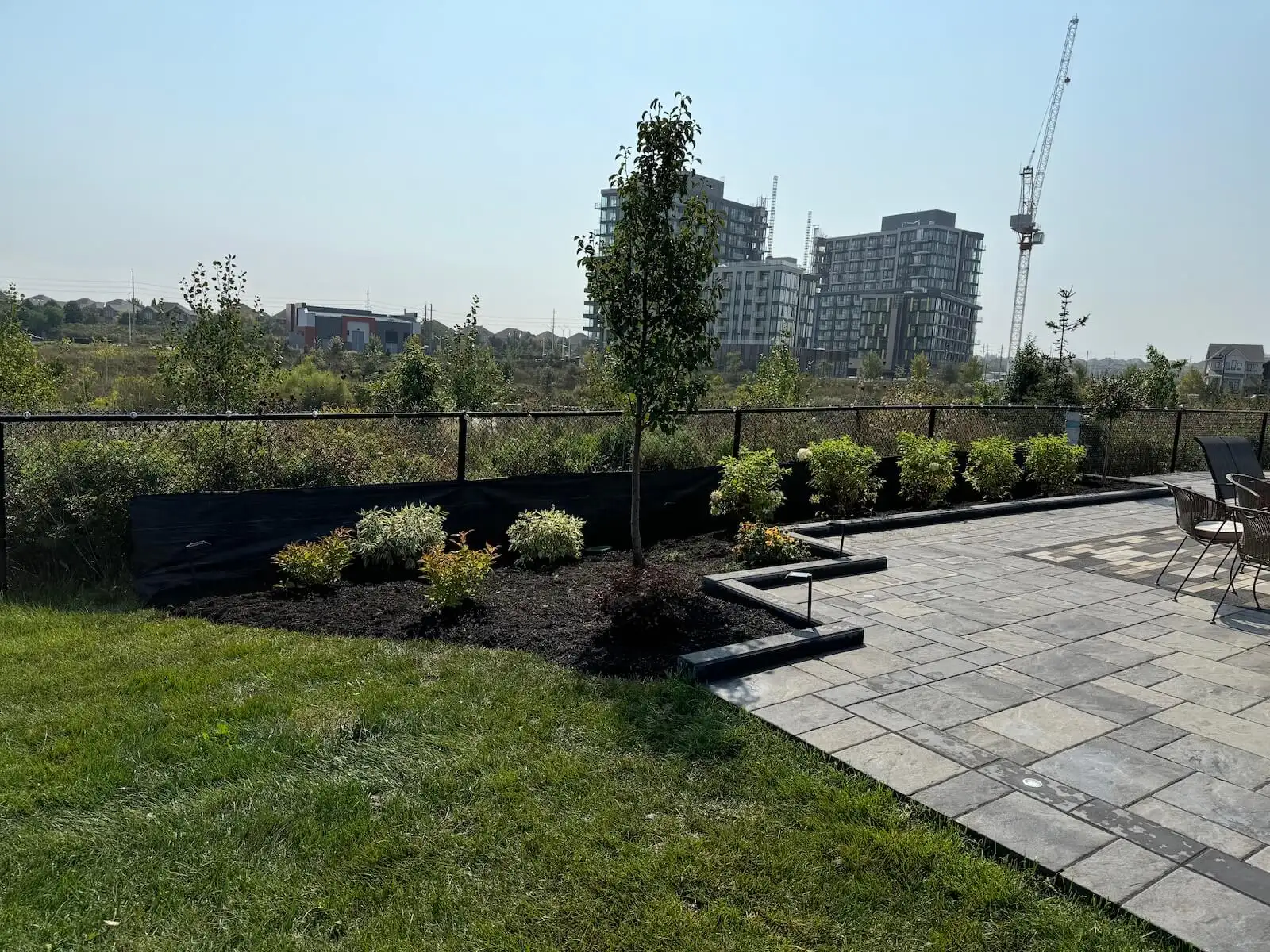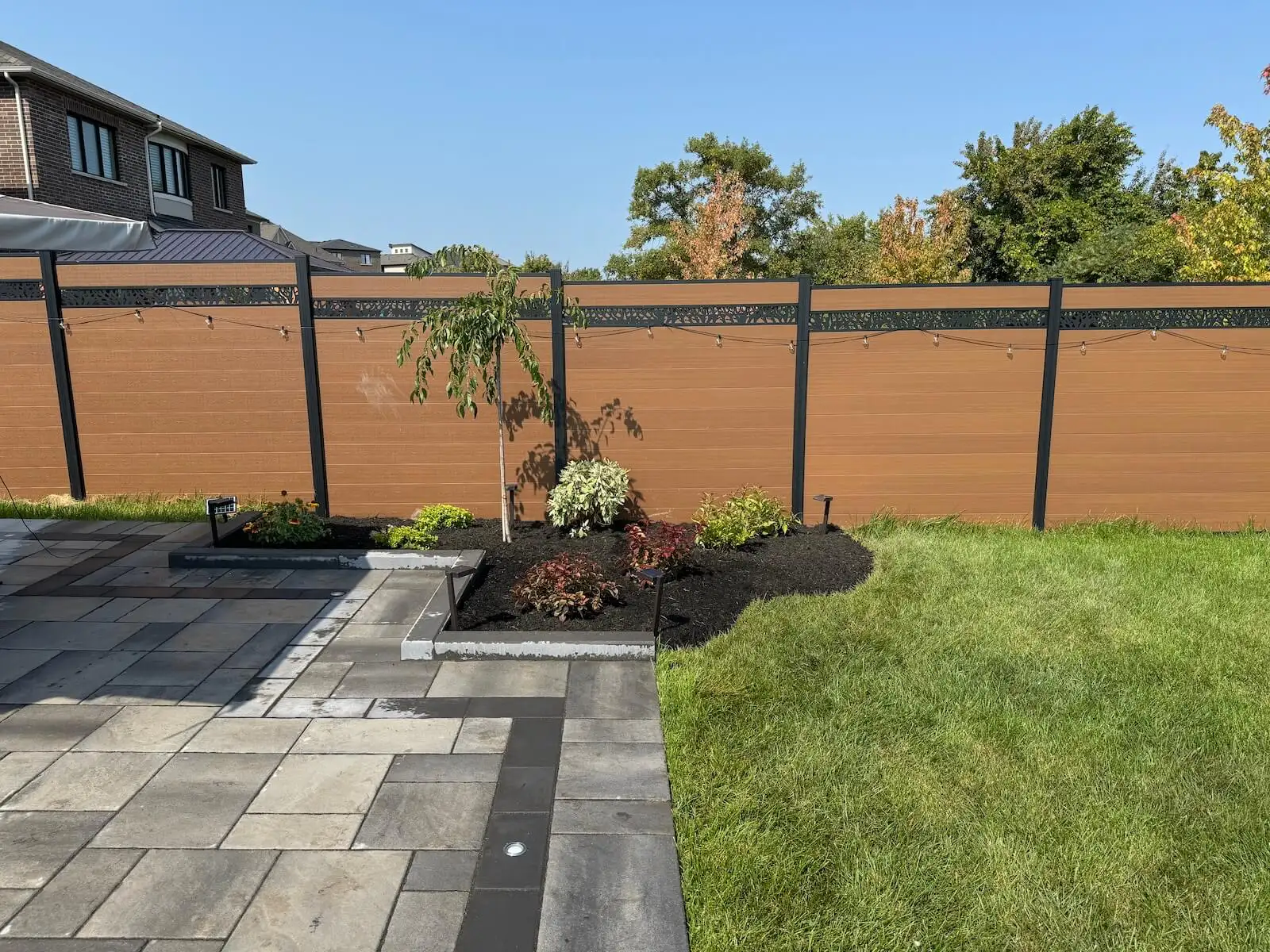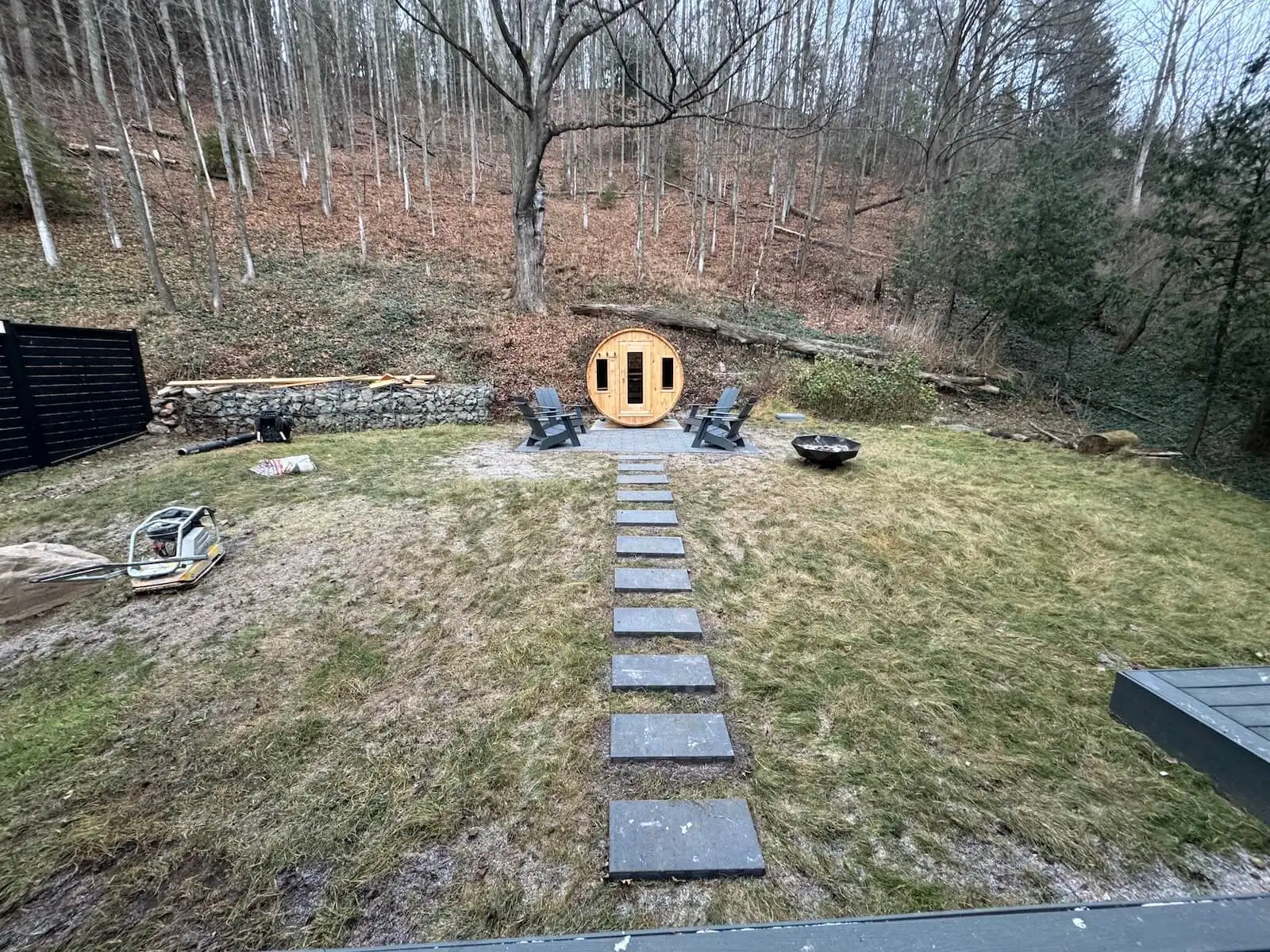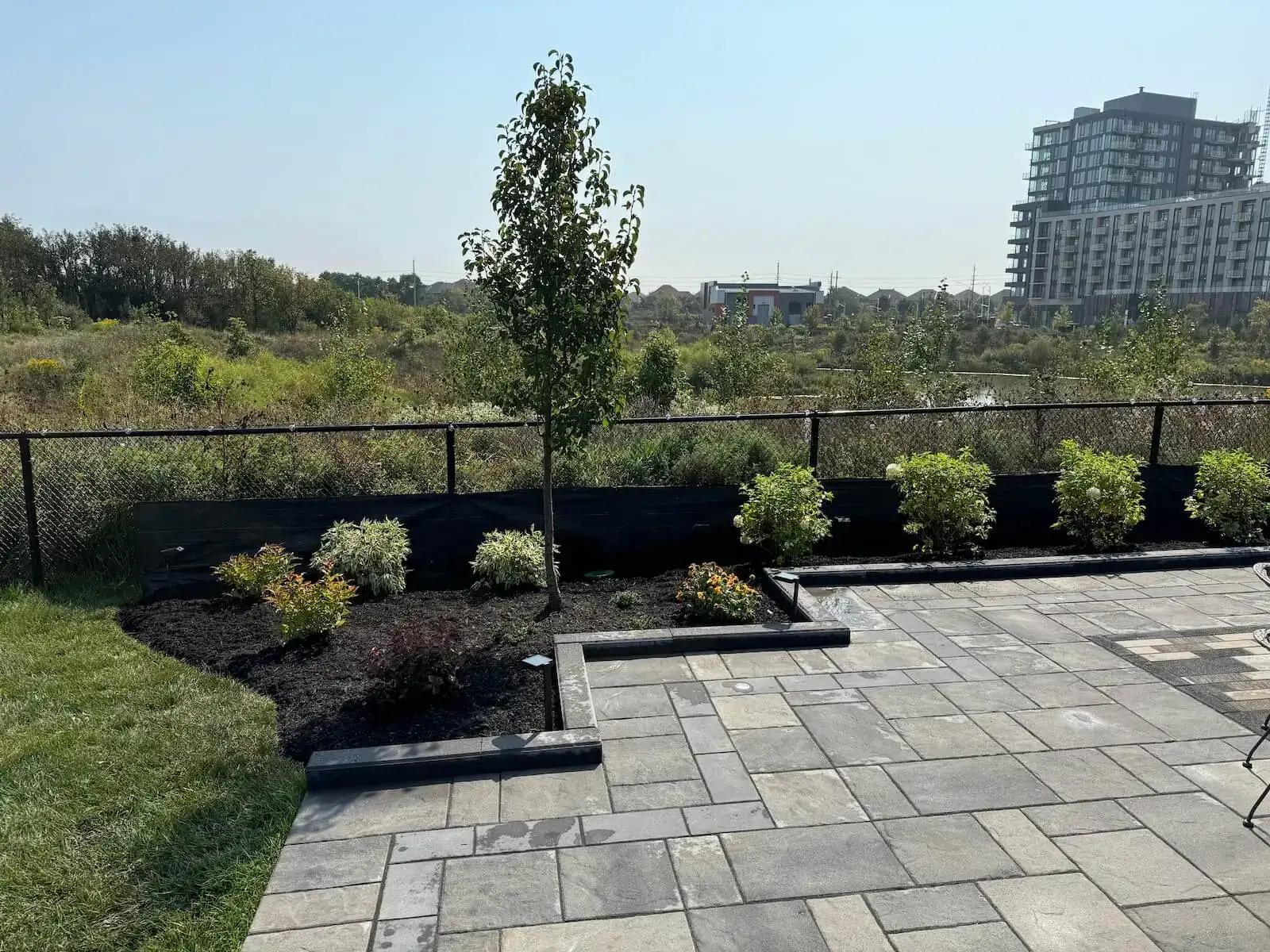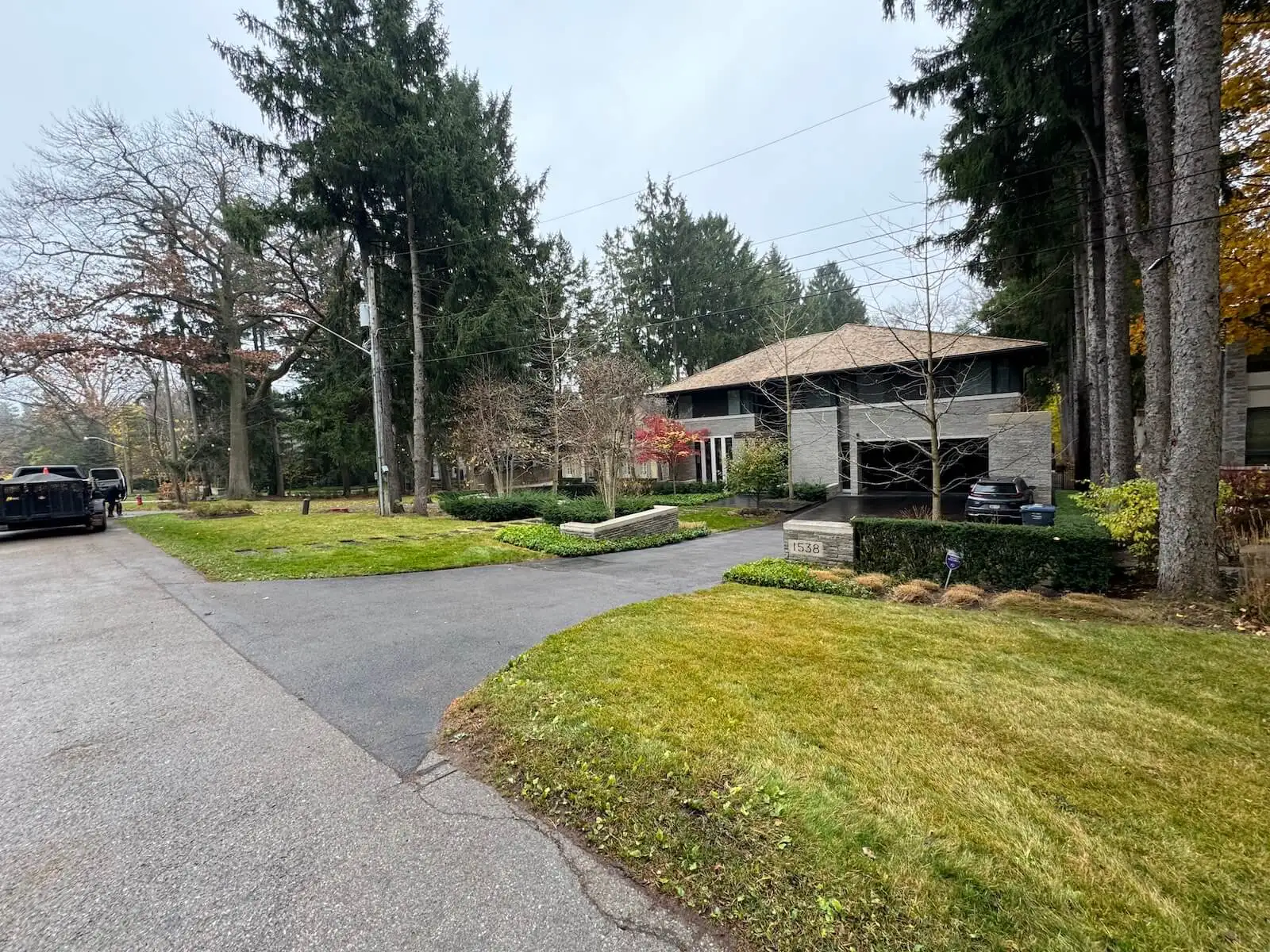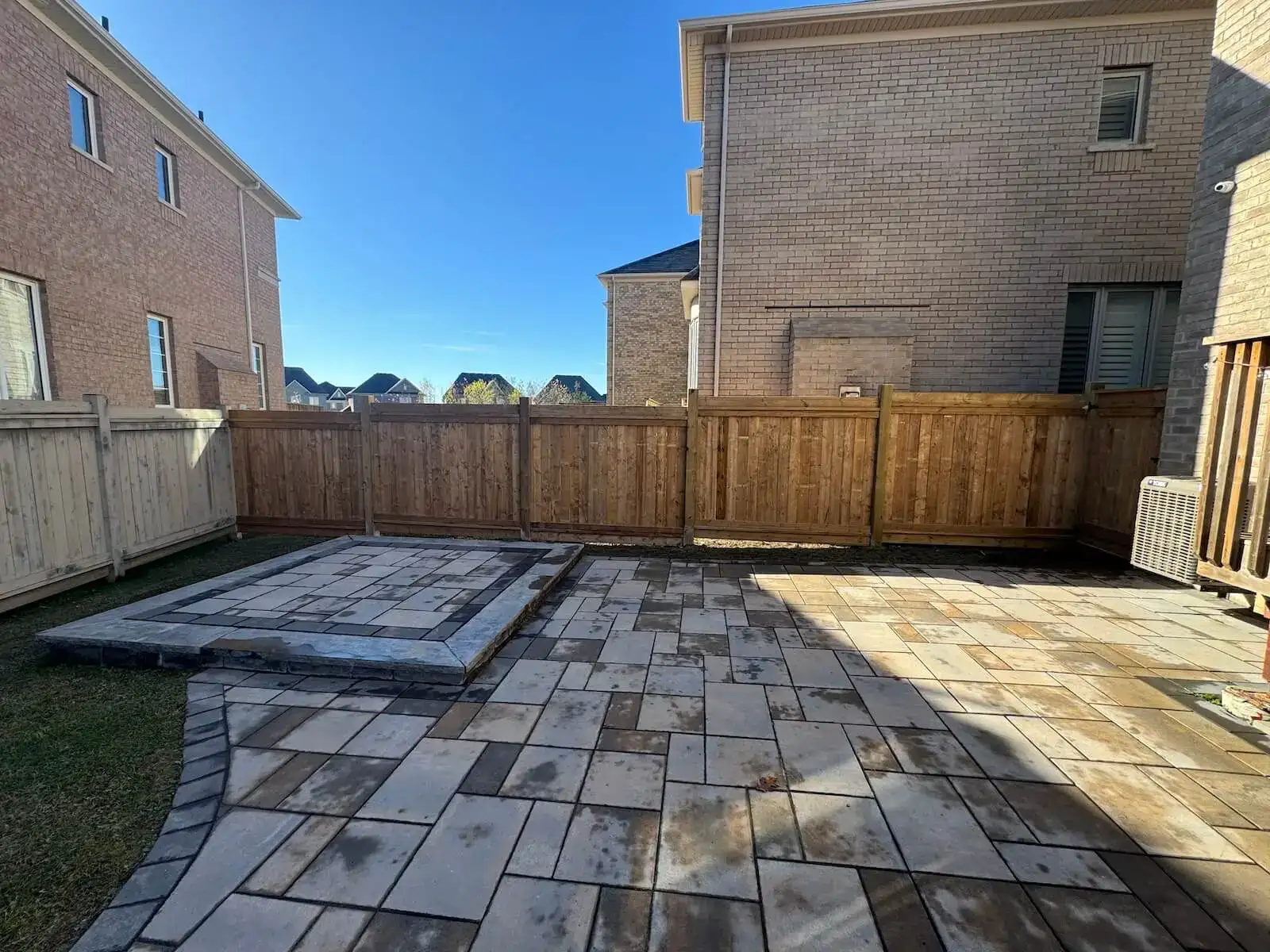









Most homeowners think a fire pit is the easy part. They’re wrong. Good backyard fire pit ideas start with the surface, drainage, seating radius, fuel type, and local rules, then the look comes after.
Backyard fire pit ideas at a glance: how to choose the right setup
The right setup depends on four things first: yard size, fuel choice, maintenance tolerance, and whether you want a portable or permanent feature. A portable pit fits a small or flexible layout, while a built-in fire feature makes more sense when you are already building a patio or full outdoor room.
Simple backyard fire pit ideas work best when the pieces match each other. A wood-burning pit usually needs log storage, ash cleanup, and more open air, while propane and natural gas setups suit cleaner, lower-maintenance seating areas with fewer loose parts.
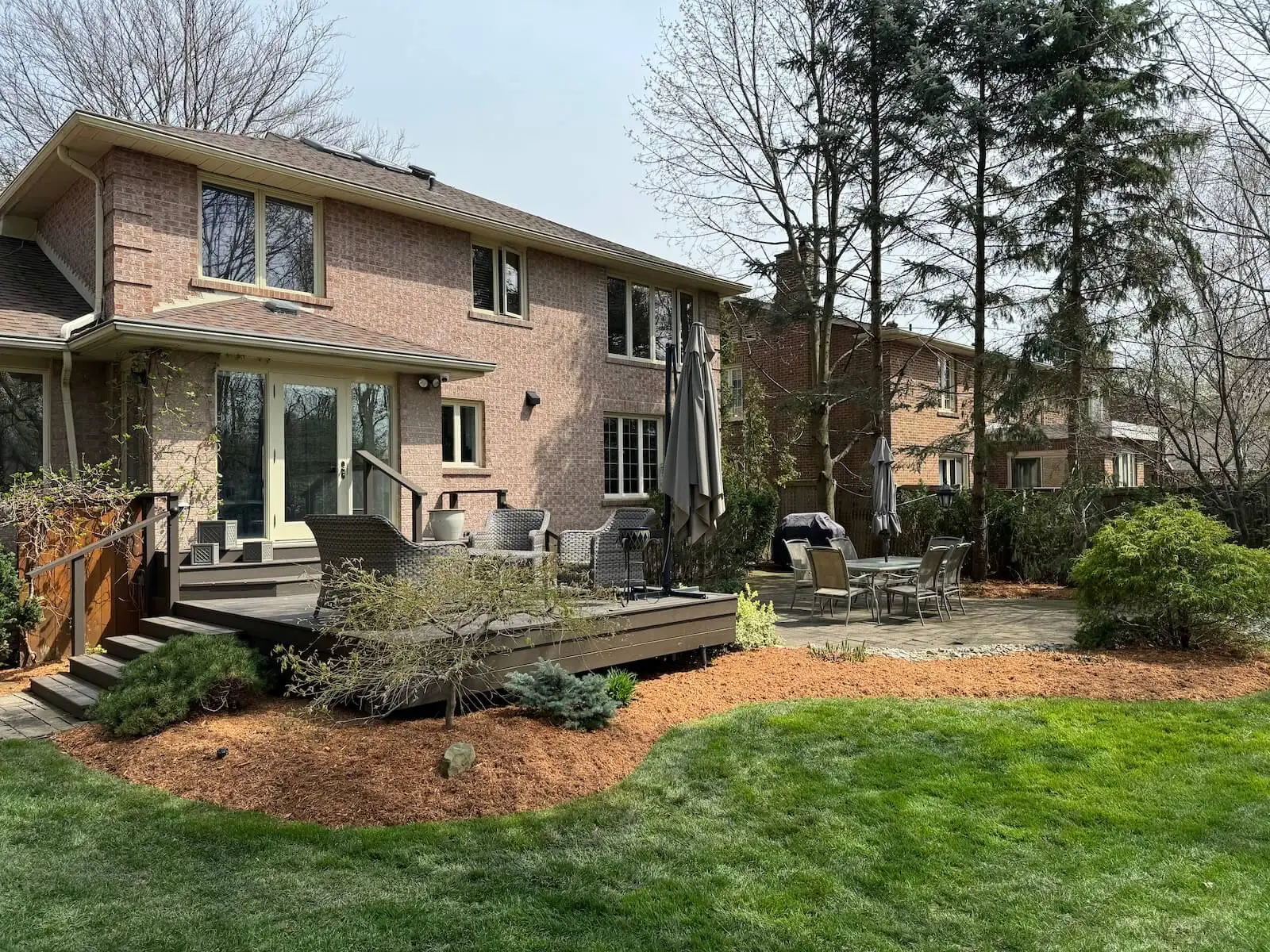
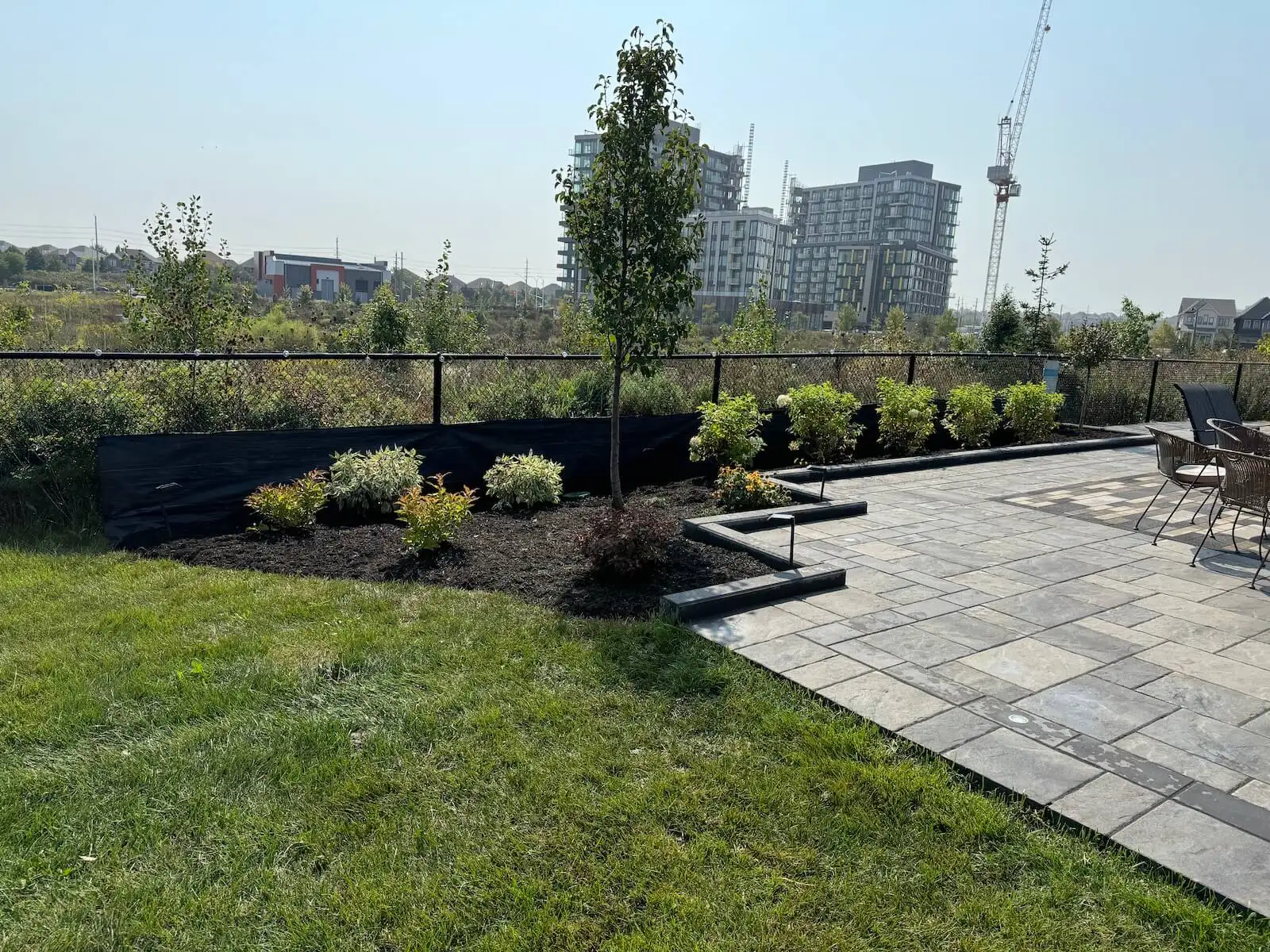
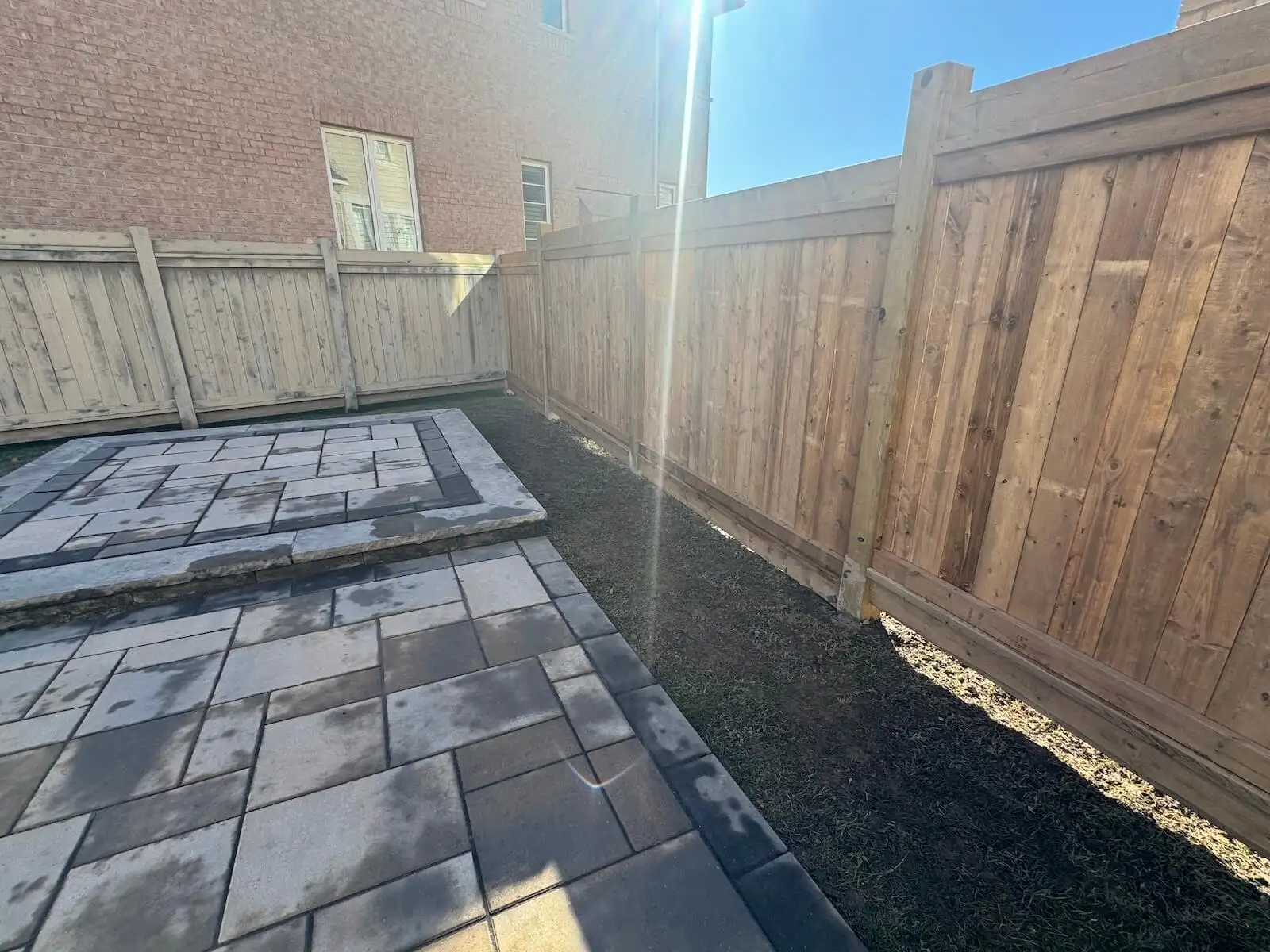
Backyard fire pit area ideas feel finished when the fire pit is tied to a defined base. That base can be gravel, pavers, natural stone, or concrete, but open lawn around chairs usually feels temporary and wears out fast under foot traffic.
Most homeowners should choose by scenario, not by photo. A small yard usually suits a compact portable or smokeless fire pit, a budget build suits a gravel pad and movable chairs, a design-led patio suits a built-in gas feature, and a family gathering zone often works best with a wider hardscape surface and flexible seating.
Manufacturer clearances and municipal rules override any generic layout advice. That matters more than style, especially if you are thinking about an in-ground pit, a gas line, or anything close to a deck, fence, pergola, or planting bed.
20+ backyard fire pit area ideas by layout and style
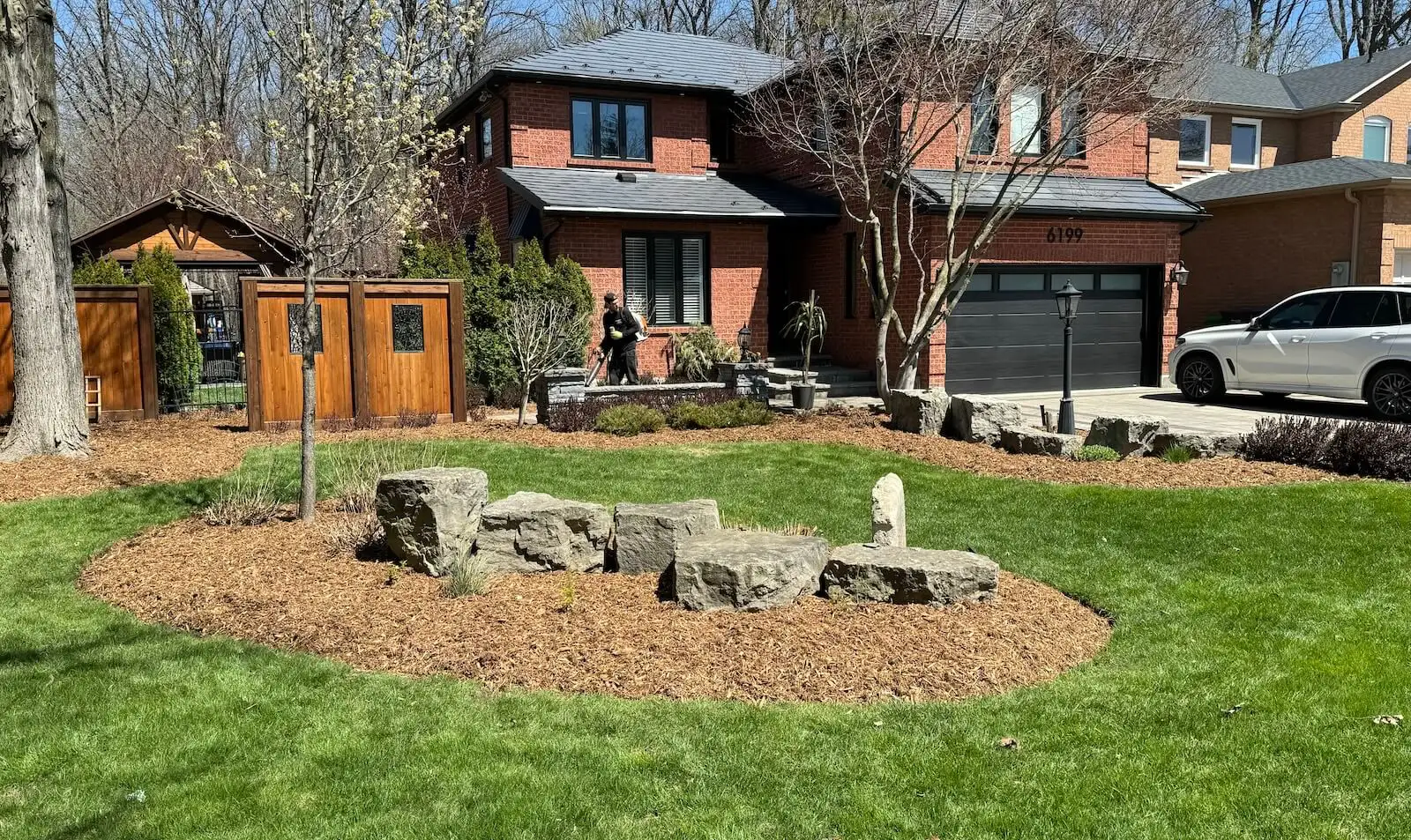
- A circular patio with four to six chairs is the easiest layout to copy because it balances heat, conversation, and circulation in one move. It suits classic, cottage, and modern yards depending on whether you finish it with smooth pavers, natural stone, or rustic fire pit ideas like weathered armour stone and timber accents.
- A gravel seating circle is one of the cheapest layouts to build and one of the most forgiving for DIY. It works best in casual yards, rural properties, and backyard fire pit ideas landscaping on a budget where a full paver patio is not in the numbers yet.
- An in-ground look can work visually, but backyard fire pit ideas in ground need more care than most photos suggest. A dug-out bowl can trap water, erode at the edges, and become messy through freeze-thaw if it is not lined, drained, and separated properly from surrounding soil.
- A sunken lounge feels sheltered and intimate, especially on windy sites, but it costs more because excavation, drainage, retaining walls, and step details all add complexity. I only like this move when the whole yard is being designed together, not as a one-off feature dropped into a lawn.
- A modern square or rectangle fire table fits clean-lined patios and mixed-use spaces. It works well when you want dining and lounging nearby because the geometry reads well against straight patio edges, planters, and low-voltage lighting.
- A rustic stone ring fits informal properties and wood backyard fire pit area ideas where the fire itself is part of the atmosphere. It looks best when the materials around it feel honest too, like gravel, split-face stone, wood benches, and less polished planting.
- A fire pit set into a larger patio works best for homeowners who actually entertain. It lets you connect cooking, dining, and lounging in one hardscape zone instead of scattering small features across the yard.
- A pergola-adjacent layout can frame the space well, but overhead structures need clearance and product-specific review before anything is built nearby. I do not treat open flame under or near structure as a styling decision first; it is a safety and permitting decision first.
- A corner layout is one of the best small backyard fire pit ideas because it frees up the middle of the yard. Done well, it creates a defined nook with two to four chairs, a low planting edge, and just enough hardscape to feel complete.
- A side-yard fire pit can work in a narrow property if the path is wide enough and smoke will not be a problem for the house or neighbours. In tight urban lots, gas or a smokeless fire pit usually makes more sense than a traditional wood setup.
- A fire pit plus dining zone is one of the most practical backyard fire pit area ideas if you host often. The trick is keeping clear circulation between the two uses so chairs do not block movement when people stand up or carry food.
- A fire table with built-in bench seating saves room and can make a compact yard read bigger. I still like movable chairs mixed in, because built-in seating alone can lock you into one social pattern and one furniture layout.
- A cottage-style fire pit area feels right with irregular stone, softer planting, lantern light, and looser furniture. It is less about symmetry and more about texture, but the base prep still needs to be tight if you want it to survive GTA winters.
- A farmhouse version leans on simple geometry, wood seating, black fixtures, and muted hardscape colours. That look stays strong when the materials are restrained and the area is not overcrowded with decor.
- A tropical-inspired setup depends more on furniture, lighting, and foliage shape than on the fire pit itself. In the GTA, plant choice has to respect Zone 5/6 hardiness or be treated as seasonal, because tender material will not carry that look year-round.
- A classic layout uses a round pit, balanced chairs, clipped planting, and simple path lighting. It suits almost any house style because it is based on proportion more than trend.
- An eclectic layout works when one material leads and the others support it. Without that restraint, backyard fire pit ideas with lights, pillows, planters, gravel, and mixed chairs can turn cluttered fast.
- Current fire pit trends lean toward cleaner lines, lower-smoke experiences, layered lighting, and integrated outdoor rooms rather than stand-alone pits. I see more homeowners asking for fewer loose pieces and more durable hardscape that works in shoulder seasons.
- A cowboy fire pit usually means a simple camp-style or ranch-style open-fire setup, not one fixed product type. The term varies by seller and region, so I treat it as a style cue rather than a technical specification.
How to make a fire pit seating area in your backyard
A good fire pit seating area is built in this order: choose the fire feature, pick the location, define the base, set the seating, add lighting, then soften it with planting and accessories. When people reverse that order, they usually end up with chairs that do not fit, drainage that was never solved, or a pit stranded in the middle of a lawn.
The best location is the one that keeps the fire pit connected to the house and separate from obvious hazards. I want a clear walking path, a comfortable sightline from inside, and enough surrounding room that chairs can move without backing straight into walls, grade changes, or planting.
- The base should define the whole zone, not just the pit itself. Hardscape means the built surfaces like pavers, stone, gravel, or concrete, and that hardscape should feel like an outdoor room instead of a loose circle dropped into grass.
- Seating should match how you actually use the yard. Two to four seats suit a quiet conversation nook, four to six seats suit most families, and larger groups usually need a bigger patio and better circulation to avoid crowding .
- Lighting should support movement first and mood second. I plan the approach path, edge definition, and any nearby step lights before I think about string lights or lantern styling.
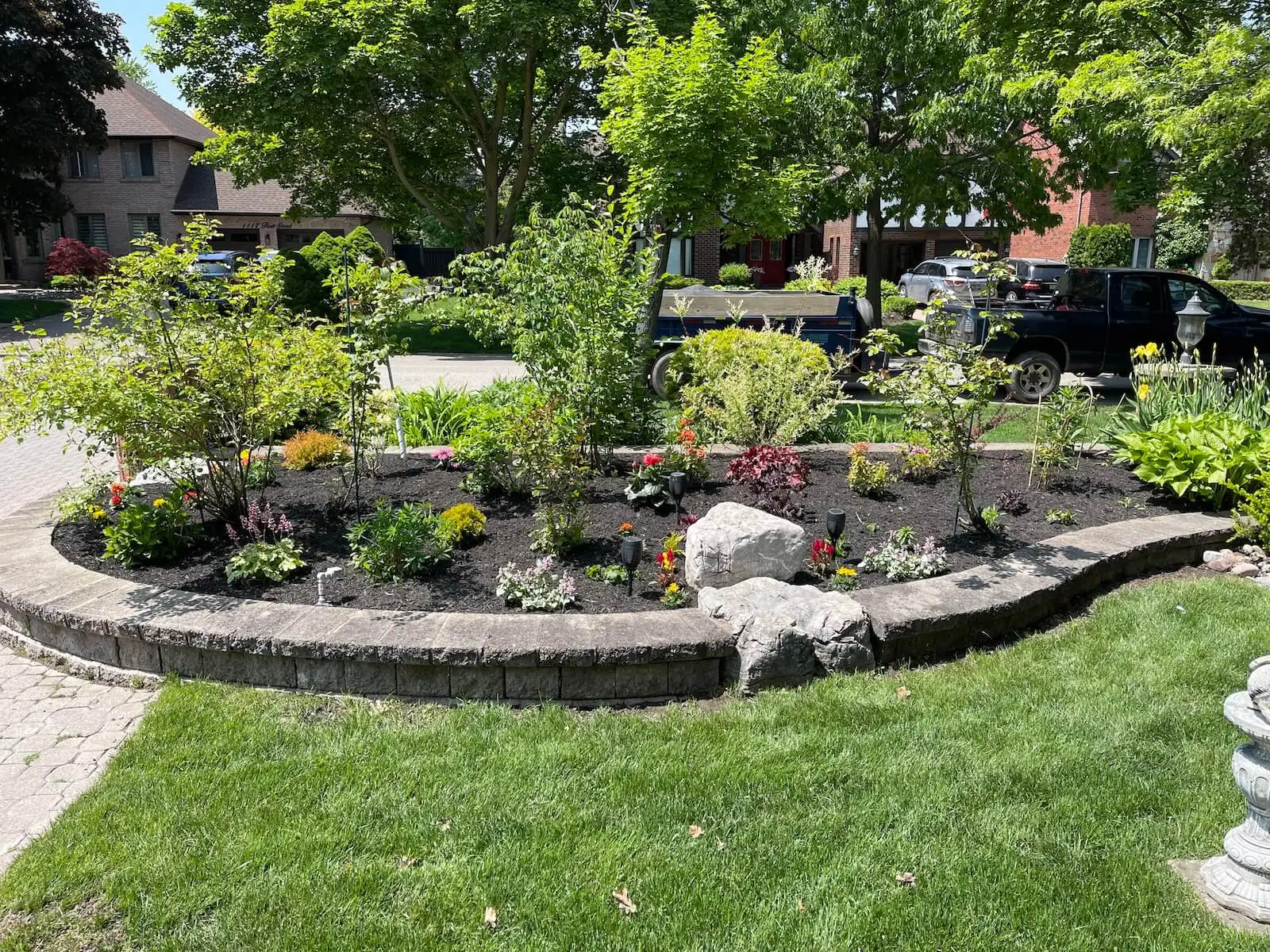
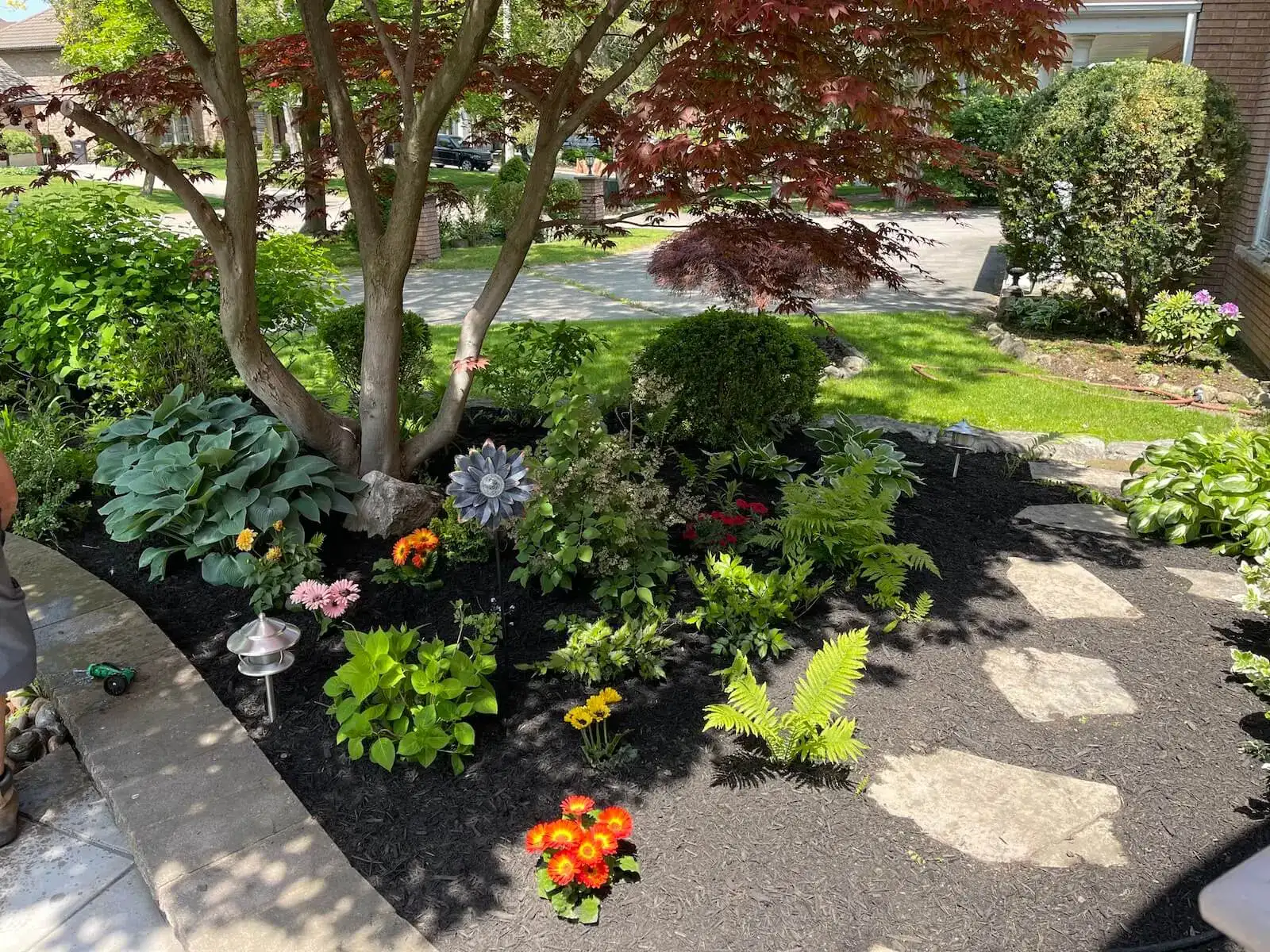
- Planting should frame the area, not smother it. I keep the inner ring cleaner and more durable, then place fuller shrubs or ornamental grasses farther out where heat, sparks, and traffic are less direct.
- A quick sketch saves money before any material is ordered. Even a simple plan with the house wall, doors, grade direction, seating count, and intended fuel type will catch mistakes early.
Wood-burning, gas, propane, natural gas, or smokeless: which fire pit type fits your yard?
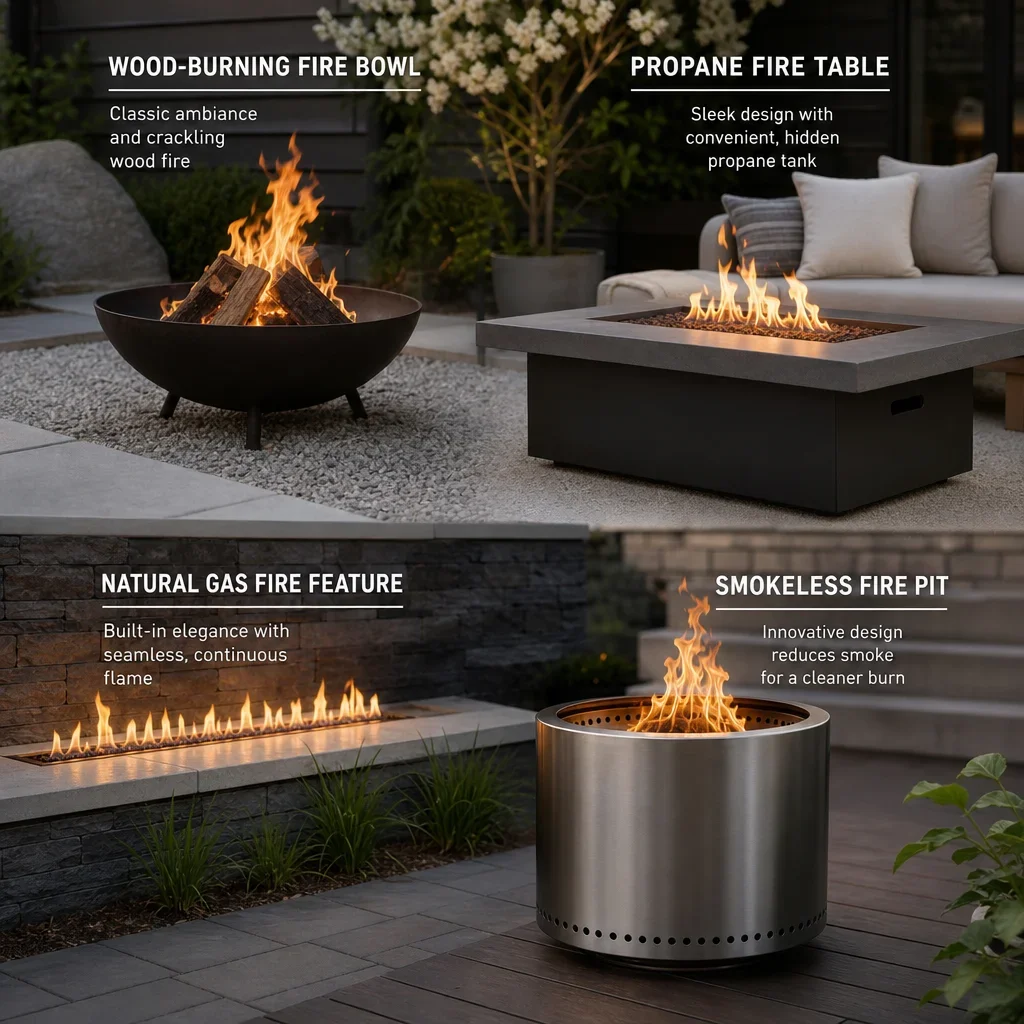
- Wood-burning pits give you the strongest campfire feel and usually the most radiant heat, but they also bring smoke, ash, wood storage, and more cleanup. They fit larger yards and homeowners who value ambience enough to accept the maintenance.
- Propane pits are the easiest low-commitment choice because they start fast, shut off cleanly, and do not need a permanent gas connection. They work well in patios that need flexibility, though the tank has to be stored or concealed properly.
- Natural gas suits permanent built-in fire features best because the fuel supply is steady and there are no tanks to swap. The trade-off is higher installation complexity and licensed utility work, which is priced separately on any proper build.
- A smokeless fire pit reduces smoke by improving airflow through the fire chamber, but it is not smoke-free. It is a good middle ground for homeowners who want real flame with less irritation, especially in tighter seating layouts.
- Portable, semi-permanent, and fully built-in models each solve a different problem. Portable units suit renters or homeowners testing a layout, semi-permanent units suit phased backyard upgrades, and fully built-in fire features make sense when the patio, drainage, and lighting are all being built together.
- Fuel choice changes the whole design around it. Wood backyard fire pit area ideas need space for wood, ember awareness, and more open breathing room, while gas and propane layouts can feel cleaner and more furniture-driven.
Fire pit layout rules: diameter, seating radius, and circulation
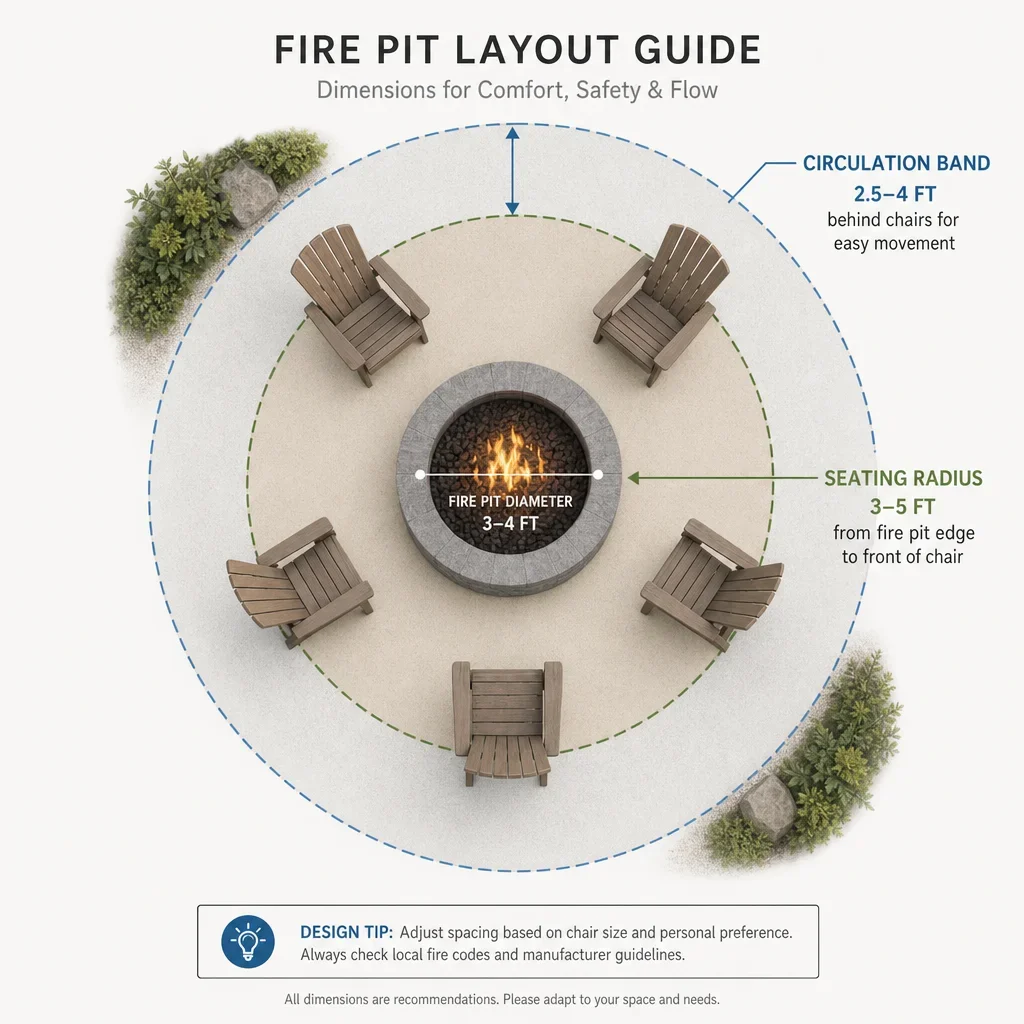
- Most residential fire pits land in the 30–48 inch diameter range . Smaller than that can feel underpowered for group seating, and larger than that can push people too far back unless the patio grows with it.
- Comfortable seating is usually planned about 3–5 feet from the fire edge, depending on the pit size and heat output . Closer feels intense with larger wood fires, and farther apart can kill the conversation.
- You need room behind chairs, not just in front of them. A circulation band of about 2.5–4 feet behind seating keeps the area usable and safer when people pull chairs back or walk around with drinks or blankets .
- A full circle works best when the fire pit is the only destination in that zone. A semi-circle works better when the area backs onto a wall, a hedge, a grade change, or a larger patio that already handles circulation on one side.
- Square layouts suit modern patios, but they are less forgiving than circular ones in small spaces. Corners can become dead space unless the furniture and access points are planned tightly.
- Built-in bench layouts save room, but they need enough depth and approach space to stay comfortable. I usually favour one fixed edge plus movable chairs, because that gives you flexibility without losing structure.
- Narrow yards benefit from corner placement, a fire table, or a compact two-to-four-seat arrangement instead of forcing a full ring. In small backyard fire pit area ideas, restraint usually looks better than trying to squeeze in extra seats.
What is the best base for a fire pit seating area?
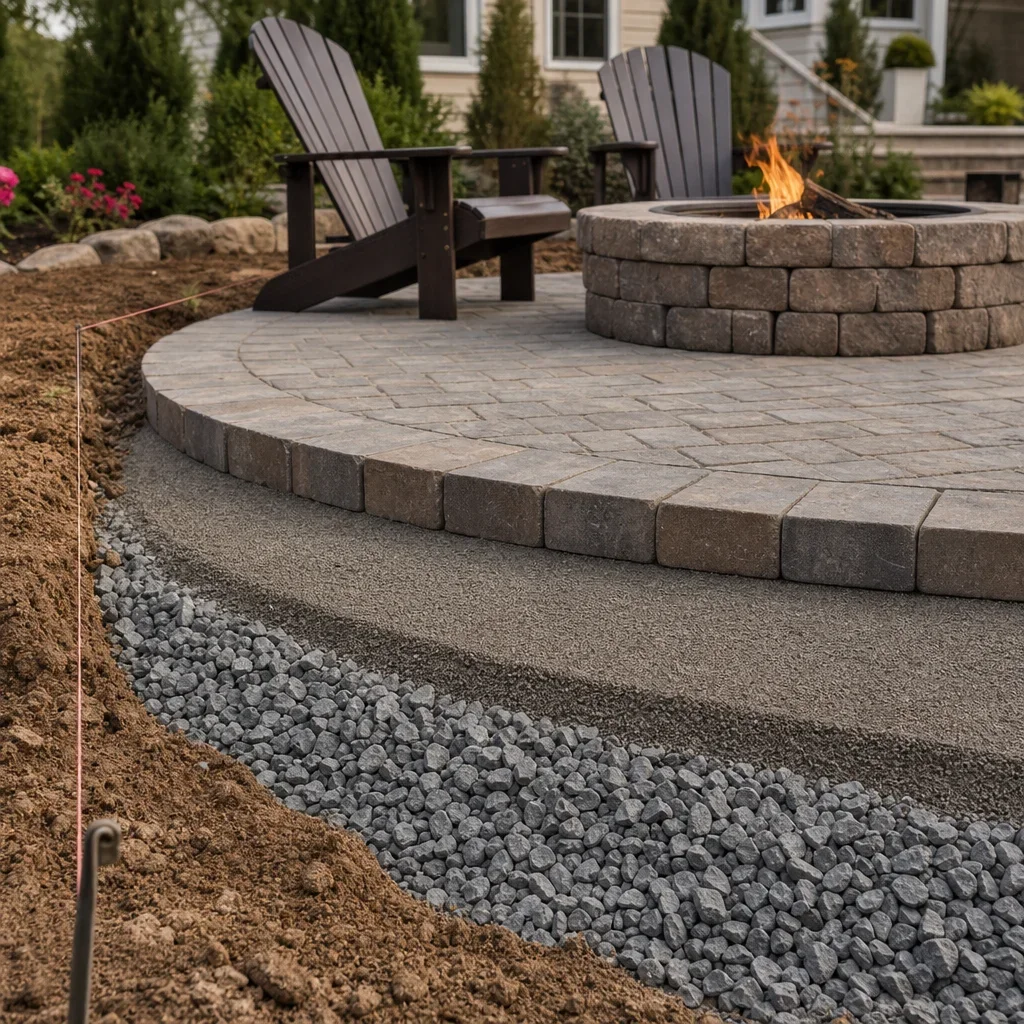
- The best base is the one that stays stable, drains properly, and suits the type of fire feature you are using. For most homeowners, that means compacted gravel for lower-cost builds or pavers and natural stone for more finished permanent spaces.
- Gravel or crushed stone is the most budget-friendly base and one of the easiest to install. It drains well, hides minor movement, and suits simple backyard fire pit ideas, but loose stone is less comfortable under furniture legs and less accessible than a firm surface.
- Interlock pavers give you a cleaner, more stable patio if the base prep is right. Base prep means the compacted granular foundation under the finished surface, and in freeze-thaw climates, that hidden work is what decides whether the patio stays flat or starts to heave.
- Natural stone looks premium and handles a broad range of styles, but it costs more and needs thoughtful laying patterns to avoid awkward furniture wobble. I like it for full patios more than for tiny DIY pads.
- Poured concrete can work for a clean modern pad, but cracking risk and finish quality matter more in climates with repeated freeze-thaw cycles. If drainage is poor or the sub-base is weak, concrete shows that failure clearly.
- Lawn-adjacent setups are fine, but chairs should not sit half on sod and half on loose soil. That always turns muddy, and it never feels intentional.
- A bare hole in the ground is usually not the best answer for in-ground fire pit ideas. Without proper drainage, edge support, and a heat-appropriate liner where required by the product, it becomes a maintenance problem faster than a design feature.
- A basic DIY build often starts with shallow excavation around 4–6 inches for the base layer, but the exact section depends on soil, frost exposure, and the product you are using . I would need to see the grade and soil to tell you whether that is enough on your yard.
Best materials for the fire pit and surround
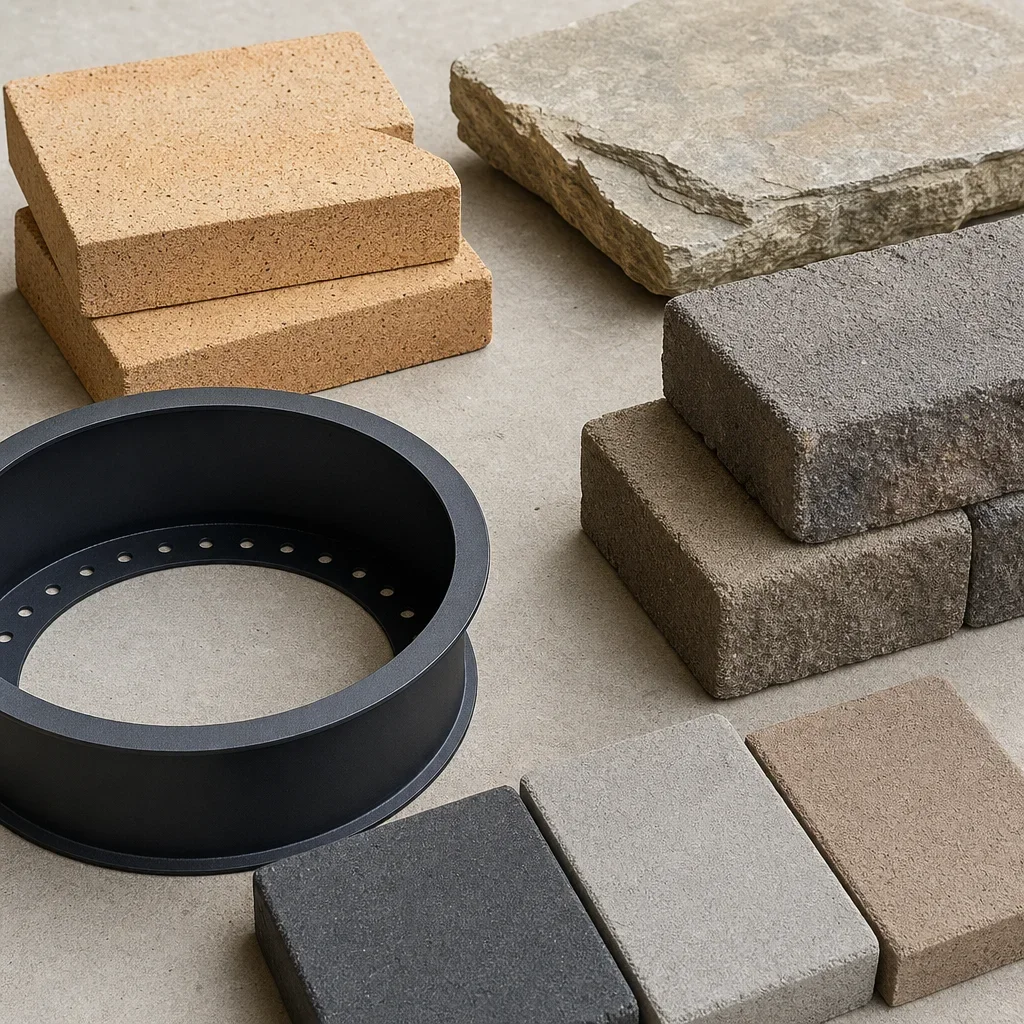
Not every masonry product belongs inside the fire chamber. The inner chamber needs heat-appropriate materials, while the outer surround and the patio can use a wider range of stone, block, or paver finishes.
- Retaining wall blocks are common for DIY builds because they are affordable, stack quickly, and look tidy. They are only a good fire pit material if the specific product is approved for that use by the manufacturer, because some concrete units are not meant for direct high heat.
- Fire brick or a fire-rated liner is the safer bet for the inner chamber where flames and concentrated heat are strongest. That inner layer protects the outer surround and helps the fire pit last longer.
- Steel rings or inserts are useful in many DIY backyard fire pit ideas because they help hold shape and protect surrounding masonry. They are especially practical when the outer material is decorative rather than truly heat-rated.
- Natural stone makes a strong outer surround and can suit rustic, cottage, and premium builds well. The look is excellent, but the stone selection still has to suit the application and local climate.
- Clay brick can create a classic look, but brick type and assembly matter. I would not assume any brick you can buy at a yard is suitable for direct flame contact.
- Concrete pavers are best treated as patio material unless the manufacturer says otherwise for fire exposure. I do not like gambling with heat on decorative products.
- Gravel is not a fire pit wall material, but it is a good surround material when you want drainage, lower cost, and a looser visual edge. It also makes phased projects easier because you can expand or refine the area later.
| Material | Best use | Pros | Cons | Cost level | Heat suitability | Maintenance |
|---|---|---|---|---|---|---|
| Retaining wall block | Outer surround | Affordable, easy to stack | Product approval matters | Low to medium | Outer use only unless approved | Low |
| Fire brick / fire-rated liner | Inner chamber | Handles direct heat better | Hidden cost in DIY budgets | Medium | High for chamber use | Low |
| Steel ring / insert | Inner support | Protects shape, practical for DIY | Industrial look if exposed | Low to medium | High when product-rated | Low to medium |
| Natural stone | Outer surround / patio | Premium look, durable | Higher material and labour cost | Medium to high | Varies by application | Low |
| Clay brick | Classic surround | Timeless appearance | Product choice matters | Medium | Varies by product | Medium |
| Concrete pavers | Patio surface | Stable, many styles | Not for direct flame unless approved | Medium | Patio use | Low |
| Gravel / crushed stone | Base / surround | Low cost, drains well | Loose under chairs | Low | Good around pit, not chamber | Medium |
How to build a fire pit area on a budget
The cheapest complete setup is usually a portable fire pit on a compacted gravel pad with two to four movable chairs. That can land in the few-hundred-dollar range for a basic DIY setup, while a simple hardscape zone with a block pit and better seating usually moves into the low thousands .
A more polished fire pit patio with pavers, lighting, and upgraded furniture usually lands in the several-thousand-dollar range, and a custom built-in zone can go much higher once gas lines, retaining walls, drainage, and premium stone enter the scope .
Hardscape size drives cost more than most homeowners expect. An extra ring of pavers, a wider seating radius, or a proper path connection often changes the project more than the fire pit itself.
Drainage and grade also move the budget fast. If the area needs excavation, import base, a drainage swale, or a retaining wall to hold grade, those are site-work costs, not decor costs.
The best savings usually come from simplifying the surface and the seating. Gravel instead of full pavers, movable chairs instead of built-in benches, phased planting instead of full beds, and solar lighting instead of immediate low-voltage wiring can cut the first-phase cost without ruining the plan.
A minimum viable cozy setup is small on purpose. Think one defined pad, two comfortable chairs, one fire feature, one side table, and soft lighting rather than trying to build a whole resort on a starter budget.
DIY can save labour, but only if the assembly is safe and the base is built properly. Nine times out of ten, the hardscape failures I tear out are base prep or drainage mistakes, not bad taste .
DIY basics: what you need for a simple backyard fire pit
A simple DIY fire pit usually needs a marked layout, shallow excavation, compacted base material, a level setting layer where appropriate, approved blocks or stone, and a heat-appropriate ring or liner if the product calls for it. The seating area around it also needs a defined surface, even if that surface is just compacted gravel.
The high-level build sequence is straightforward: mark the circle, excavate, compact the base, level the first course, build the surround, install any liner required, finish the surrounding area, and test it safely. The exact assembly still has to follow the product instructions.
A basic residential pit is often about 3 feet across for DIY builds . That size suits two to four seats well without overwhelming a modest yard.
You cannot assume any retaining wall block can be dry-stacked into a safe fire pit. Some systems need adhesive, some should not see direct flame, and some rely on a liner to keep heat off the outer units.
You also cannot just dig a hole and call it done. Soil edges collapse, water sits in the bottom, smoke behaviour can be poor, and local burn rules still apply whether the pit is above grade or in grade.
In-ground ideas can be practical only when drainage is solved first. In the GTA, freeze-thaw and frost heave punish shortcuts, so an unlined bowl in clay soil is usually a short-lived idea.
Anything involving gas, electrical, structural walls, or permit-triggering work should be treated as separate professional scope. DIY is fine up to the point where safety, utility work, or city compliance enters the build.
Backyard fire pit seating ideas: chairs, benches, and seating walls
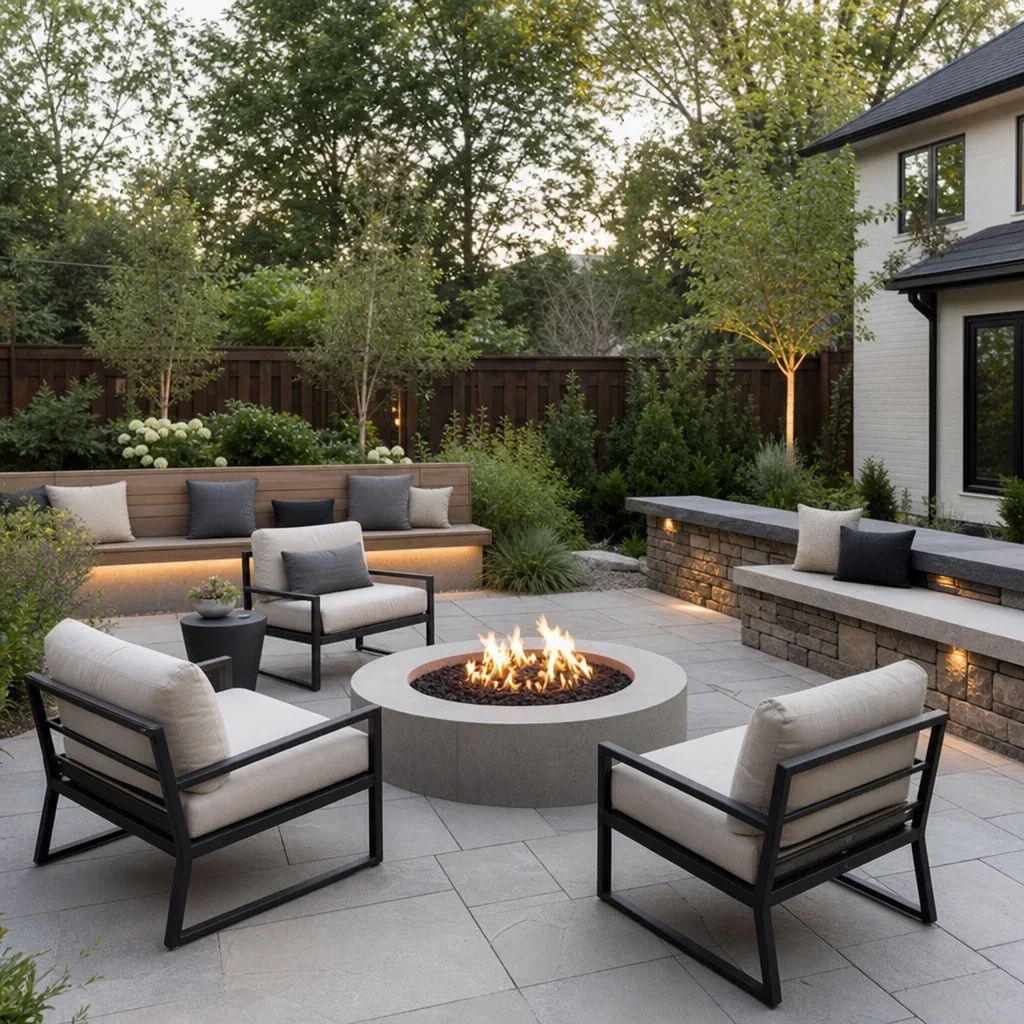
Movable chairs are the best starting point for most homeowners because they are flexible, easier to store, and easier to replace. They also let you adjust the circle after the first few uses, which matters because the right seating distance is often learned in real life.
Adirondack chairs create a relaxed look and work well in rustic and cottage layouts, but they take up a lot of footprint. In compact patios, upright lounge chairs or slimmer outdoor club chairs usually use space better.
Benches are efficient, but they are less comfortable for long evenings unless you add cushions and side tables. They make more sense as a supplemental edge than as the only seating.
Built-in seating walls save room and create a polished look, especially around paver patios and retaining-wall style hardscape. They also raise the cost because the wall needs footing, drainage, coping, and more labour than loose furniture.
Dining-height chairs around a fire table work well if the fire feature has a broad top and the zone doubles as a casual eating space. That is often one of the smartest small backyard fire pit ideas because one furniture set does two jobs.
A two-to-four-seat layout fits compact yards, a four-to-six-seat layout fits most family patios, and six-to-eight-plus seats usually needs a dedicated larger entertaining zone . If the footprint is not there, fewer better seats always beats too many cramped ones.
How to style a fire pit area so it feels finished
A finished fire pit area has seven layers: base, fire feature, seating, side surfaces, lighting, backdrop, and a few soft accessories. If one of those layers is missing, the space usually reads incomplete.
Modern styling comes from cleaner paver lines, muted colours, lower-profile furniture, and fewer objects overall. It is less about buying expensive pieces and more about editing hard.
Rustic fire pit ideas lean on texture instead of polish. Rough stone, timber, darker metals, lantern light, and simpler seating all support that direction without over-designing it.
Cottage and classic looks rely more on soft planting, curved edges, and balanced furniture placement. The trick is keeping the decor light enough that circulation still works safely around the flame.
Farmhouse styling usually means restrained black accents, simple wood pieces, and neutral fabrics. It works well when paired with a square or round pit on a straightforward paver field.
Tropical or eclectic looks need more discipline than people expect in a four-season climate. In the GTA, I would use the look through furniture, containers, and seasonal planting rather than betting the whole design on tender material that will not hold up.
Wood storage niches can look great around wood-burning pits, and hidden tank strategies clean up propane setups. Those practical details often do more for the final look than extra throw pillows ever will.
Landscaping around a fire pit: plants, privacy, and heat-smart design
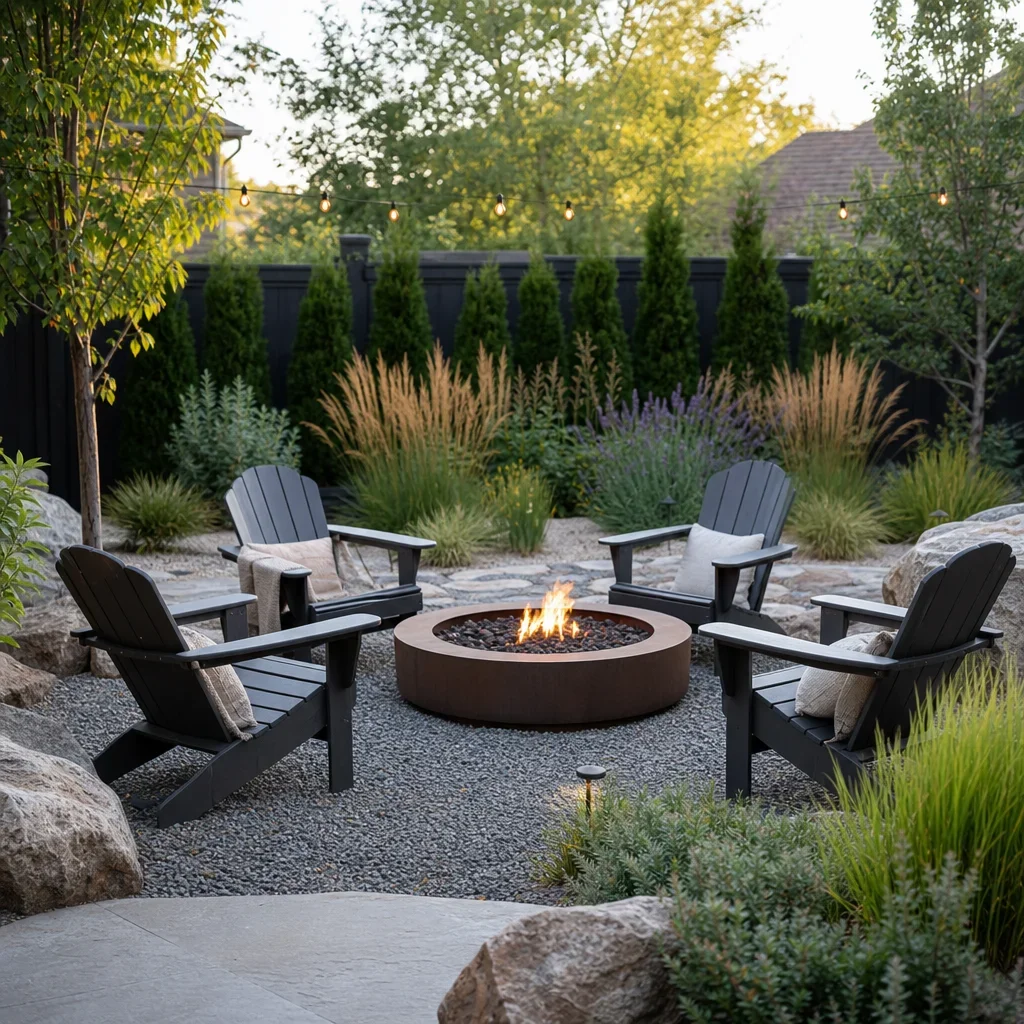
The best planting around a fire pit starts with distance, not species. I keep the inner zone more mineral and durable, then shift into shrubs, grasses, and perennials farther out where heat and foot traffic are lower.
A hardscape buffer near the pit helps with safety and maintenance. That can be gravel, stone, or a wider patio edge, and it keeps mulch, fallen leaves, and soft planting from crowding the flame area.
Privacy works best when it is layered instead of walled off. One low foreground layer, one mid-height planting band, and one taller screen usually feels better than a solid hedge tight against the seating.
Budget planting can still look deliberate. A gravel band, two or three structural shrubs, one ornamental grass grouping, and a clean edge often outperform a cheap overloaded bed.
Plant choice should respect Zone 5/6 hardiness in the GTA and the specific heat exposure of the site. I avoid promising one universal plant list because wind, reflected heat, irrigation, and municipal restrictions all change what actually performs.
Mulch-free or reduced-mulch inner zones are often smarter around fire features. Cleaner stone or gravel close to the patio edge is easier to maintain and usually reads more intentional.
Lighting plan for a backyard fire pit area
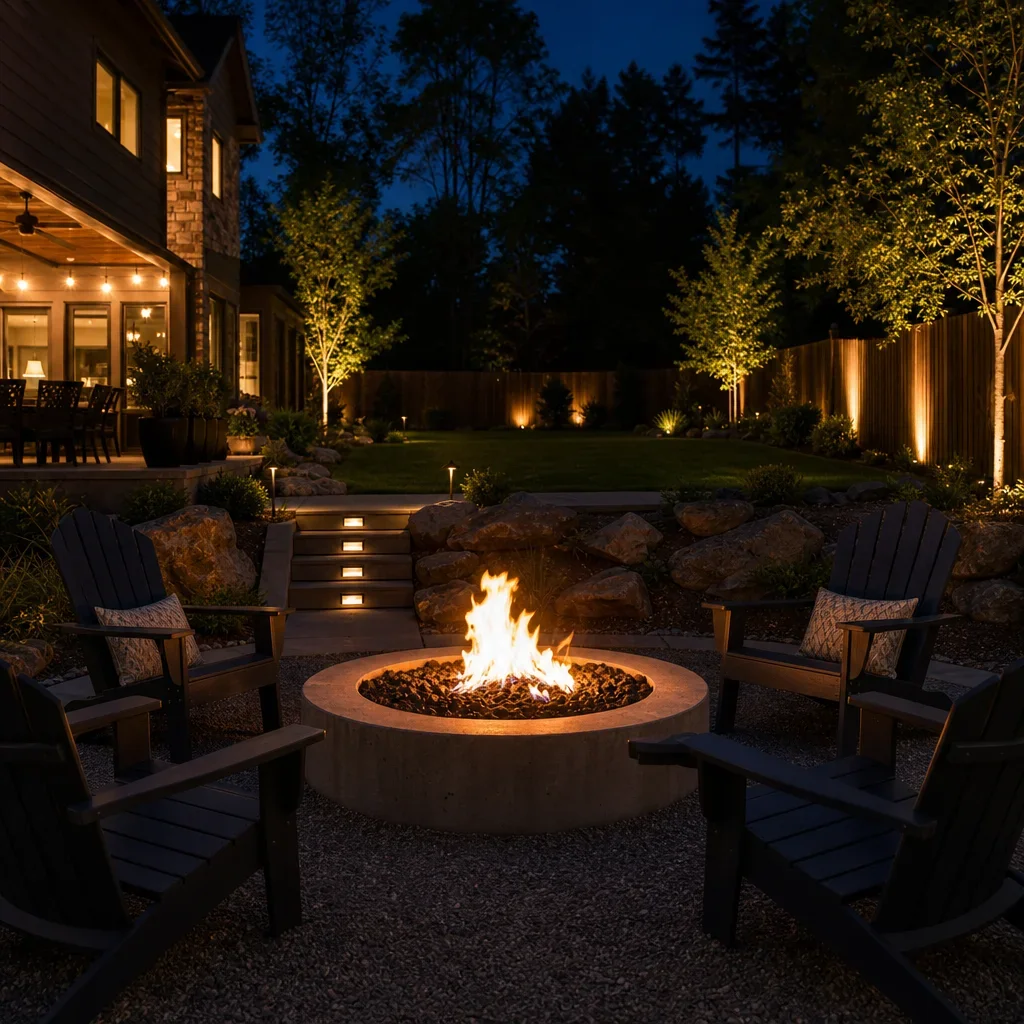
Good lighting around a fire pit should be dimmer than most homeowners first imagine. The fire is already a light source, so the job of the lighting plan is safe navigation, edge definition, and a bit of atmosphere.
Start with path lights on the approach. If guests cannot find the seating area safely from the house, the rest of the lighting does not matter.
Add low ambient lighting around the perimeter, not in your line of sight. Low-voltage fixtures, shielded wall lights, or subtle accent lights on nearby planting usually work better than bright overhead floods.
Use task lighting only where the site needs it, like steps, a nearby cooking area, or a grade change. Too much task light around the seating itself washes out the flame and makes the whole zone feel flat.
String lights can work visually, but they need safe placement and clearance from open flame, structures, and branches based on the specific condition and product. I treat them as decorative support, not the main light source.
Lanterns and candles can add warmth, but open secondary flames should be used carefully around kids, pets, textiles, and wood storage. In many builds, warm low-voltage light gives the same mood with less risk.
The easiest way to avoid over-lighting is to light the route, the edge, and one backdrop feature, then stop. Backyard fire pit ideas with lights look better when the darkest point in the composition is still the night around the flame.
Small backyard fire pit ideas that actually work
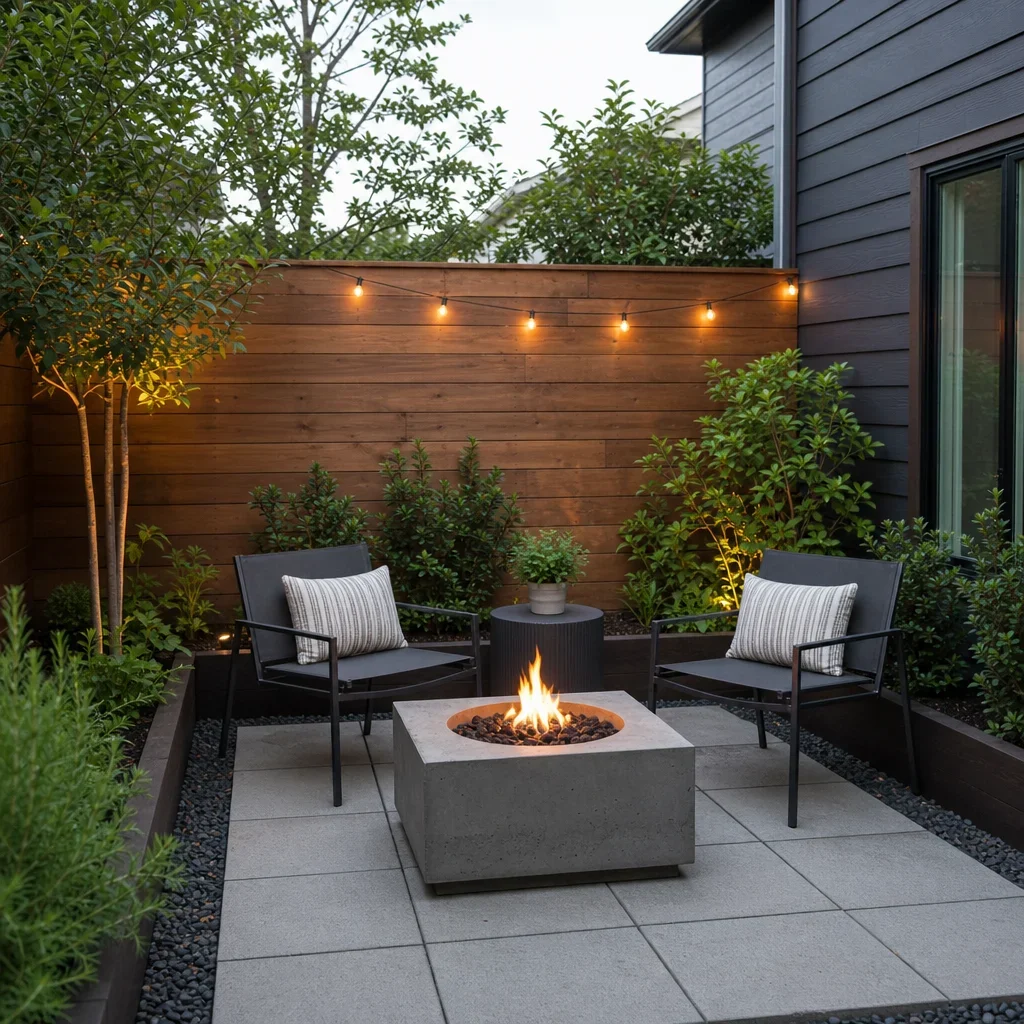
Small yards work best with tighter layouts, fewer furniture pieces, and one strong focal point. A compact pad with two chairs and a portable or smokeless fire pit often feels better than a cramped full ring of seating.
Corner layouts are efficient because they preserve the centre of the yard for circulation or lawn. They also let planting and fencing do some of the enclosure work for free.
A fire table paired with dining chairs is one of my favourite small backyard fire pit area ideas because the same footprint can handle coffee, drinks, and casual meals. That is smarter than dedicating scarce square footage to one use only.
Built-in edge benches can save room, but they need a stable hardscape base and careful spacing so the area does not feel pinned in. In very small spaces, one bench plus two movable chairs often lands better than a full built-in horseshoe.
Light-coloured pavers, simpler furniture, and fewer larger elements help small spaces read cleaner. Too many small accessories make a compact yard feel busier and smaller.
Neighbour proximity matters more in tight lots than in wide suburban yards. That usually pushes the fuel decision toward propane, natural gas, or a smokeless fire pit instead of open wood burning.
Townhouse and narrow-lot layouts need special attention to smoke, fencing, access, and local rules. In those yards, I would confirm the location first and buy materials second.
Fire pit ideas for windy, rainy, snowy, and drought-prone climates
Wind changes fire pit performance more than style magazines admit. On exposed sites, orienting seats off the strongest wind line, using planting or screens as windbreaks, and avoiding oversized flames makes the area more usable.
Rainy sites need drainage built into the plan from day one. A slightly sloped hardscape surface, free-draining joints or aggregate where appropriate, and covers for burners and furniture all matter more than decorative extras.
Snowy climates need tougher materials and better base prep. In the GTA, freeze-thaw cycles and frost heave are the two big hardscape killers, and a cheap base usually fails before the pavers themselves do.
Any patio surface around a permanent fire feature should shed water away from the seating area and avoid low spots where meltwater can sit. Lot grading means controlling how surface water moves, and even a small fire pit zone should respect the overall drainage pattern of the yard.
Drought-prone conditions shift the design toward lower-water planting, less dust-prone loose material, and awareness of any seasonal burn restrictions. A pretty wood pit is not much use if local air-quality or burn rules regularly limit it.
Rust-resistant metals, removable cushions, and stackable furniture all help in climates with hard shoulder seasons. Durability is not glamorous, but it is what keeps the space usable after year two.
Safety, permits, and where not to put a backyard fire pit
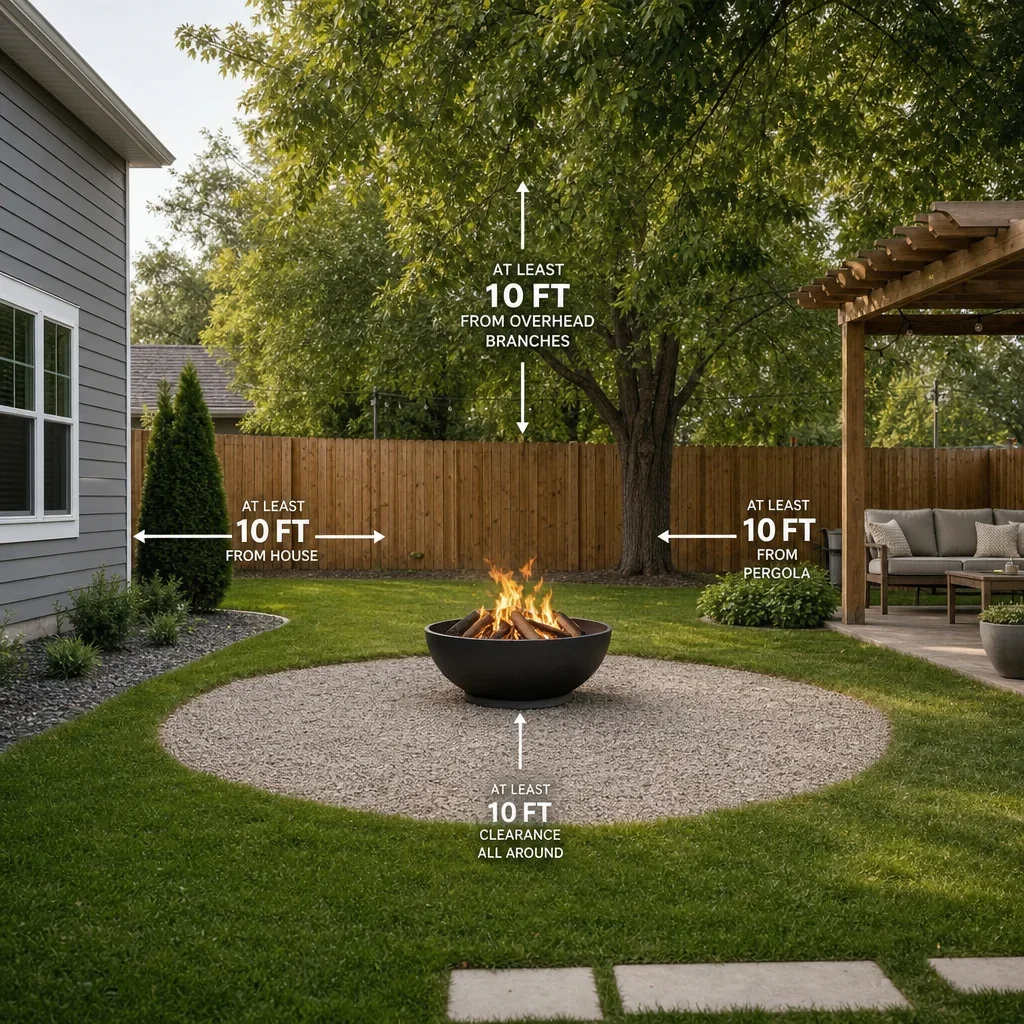
You need to check local regulations, manufacturer instructions, and sometimes your insurer before building a fire pit. Municipal rules, acceptable fuel types, and setback expectations vary by property and municipality, so I never treat one internet diagram as universal permission.
The obvious no-go spots are near structures, low branches, fences, pergolas, dry planting, enclosed spaces, or combustible surfaces that are not approved by the manufacturer for that use. Portable pits still need those checks; portability does not cancel clearance requirements.
An in-ground pit is not automatically safer than an above-grade one. It can still concentrate heat, collect water, and create a trip edge if the design is sloppy.
Gas lines and electrical work should be handled by licensed professionals where required. That is not where DIY savings belong.
Retaining walls, major grade changes, and lot-grading plan requirements can also enter the conversation if the fire pit area is part of a larger patio or backyard build. We confirm permit and grading requirements when we design the project, because those are property-specific decisions.
If your first-choice location is close to the house, under a structure, or near a property edge, verify it before you buy anything. It is cheaper to move a sketch than to rebuild a finished patio.
Maintenance and winterization
Permanent fire pit areas last longer when the maintenance is simple and consistent. Wood-burning pits need ash removal and periodic cleaning, while gas systems need burner inspection, cover use, and clear vents or ports.
Hardscape around the pit should be checked seasonally for movement, joint loss, cracking, or low spots that hold water. Those are early signs of base or drainage trouble.
Portable components should be covered or stored through winter when the product allows it. Cushions, blankets, and lighter furniture always last longer when they are not left to absorb freeze-thaw moisture.
Drainage paths need to stay open. A blocked swale, clogged joint, or settled edge can leave water pooling around the fire feature and damage the surrounding patio over time.
A simple seasonal checklist works best:
- Remove ash and debris.
- Inspect any steel parts for rust.
- Clean burner areas and covers.
- Check pavers or stone for movement.
- Refill joint material if needed.
- Store soft goods before deep winter.
- Confirm nearby planting is not overgrown into the fire zone.
Accessibility and comfort upgrades
The most comfortable fire pit areas are easy to enter, easy to move through, and stable under foot. That usually means a firm surface, step-free access where possible, and chairs with arms rather than deep low loungers only.
Loose gravel is usually less accessible than pavers, natural stone, or tightly compacted fines because wheels, canes, and even chair legs sink or drag more easily. If accessibility matters, I lean hard toward stable hardscape.
Clear edges and gentle lighting matter at night. A path that is obvious in daylight can disappear completely once the fire becomes the brightest point in the yard.
Side tables, blanket storage, and one or two higher-backed chairs make the area more usable for older adults and anyone who struggles with low seating. Comfort is not just cushion depth; it is entry, support, and reach.
If the yard has grade changes, solve those first with proper steps, landings, or a regraded route. A beautiful fire pit zone nobody can reach comfortably is not a finished design.
Backyard fire pit planning checklist
A buildable plan starts with decisions, not purchases. If you work through the checklist below first, you will avoid most of the expensive mistakes.
- Choose the fuel type: wood, propane, natural gas, or smokeless.
- Confirm whether the feature is portable, semi-permanent, or built-in.
- Pick the location based on access, wind, drainage, and local rules.
- Define the surface: gravel, pavers, natural stone, or concrete.
- Count the seats you actually need.
- Leave room for circulation behind chairs.
- Plan path lighting and any nearby step lighting.
- Add a hardscape buffer and a simple planting plan.
- Decide how wood, propane tanks, covers, or cushions will be stored.
- Check manufacturer clearances and municipal requirements.
- Separate DIY scope from licensed or structural work.
- Set a maintenance plan before the first season starts.
FAQ
How to make a fire pit seating area in your backyard?
Start with the fire feature and location, then build the base, place the seating, add lighting, and finish with planting. The key is making one complete zone instead of dropping a pit into open grass.
How to build a fire pit area on a budget?
Use a portable or simple block pit, keep the surface compact, choose gravel over a full patio, and use movable chairs instead of built-in seating. A few-hundred-dollar DIY setup is possible, while more finished hardscape versions usually move into the low-thousands range .
What is the best base for a fire pit seating area?
Compacted gravel is the most budget-friendly base, and pavers or natural stone are the best finished options for a permanent setup. The real answer depends on drainage, furniture stability, and the type of fire feature.
How to style a fire pit area?
Use layers: base, fire feature, seating, side tables, lighting, backdrop planting, and a few textiles. Good styling is usually more about restraint than adding more decor.
Can I just dig a hole in the ground for a fire pit?
Usually, no. A bare hole can collect water, erode, smoke poorly, and ignore product or municipal requirements. In-ground builds need drainage and proper material decisions to be practical.
What is the current trend in fire pits?
The strongest trend is cleaner, lower-smoke, lower-maintenance setups tied into full patios or outdoor living zones. I also see more demand for layered lighting and seating that does more than one job.
What is a cowboy fire pit?
It usually means a simple rustic camp-style open-fire setup, not one universal technical product. The term is more style language than build specification.
Should I choose a portable or permanent fire pit?
Choose portable if you want flexibility, lower cost, or you are testing the layout. Choose permanent if the fire feature is part of a larger patio, lighting, and landscaping plan.
Should I choose wood-burning, gas, or a smokeless fire pit?
Choose wood for ambience and stronger campfire character, gas for convenience and cleaner operation, and smokeless if you want real flame with less smoke but still some wood-fire experience. The best choice depends on yard size, neighbours, maintenance tolerance, and whether utility work is realistic.
How far should seating be from a backyard fire pit?
A common planning range is about 3–5 feet from the fire edge, depending on the pit size and heat output . Hotter or larger features usually need more distance.
What plants work around a fire pit area?
Plants that suit your climate, exposure, and maintenance level work best, but I keep them farther from the flame and use a more durable stone or gravel buffer near the pit. In the GTA, Zone 5/6 hardiness is the starting filter .
Do I need a permit to build a backyard fire pit?
Sometimes you may need approvals tied to fuel type, utility work, grading, or the larger project around the fire feature. The city, the manufacturer, and your property conditions decide that, so verify before building.
If you already have a few favourite backyard fire pit ideas saved, the next step is turning them into one buildable plan with the right layout, base, lighting, and material choices for your yard. I would start with a simple sketch, a few site photos, and an honest budget range before you buy a single block.