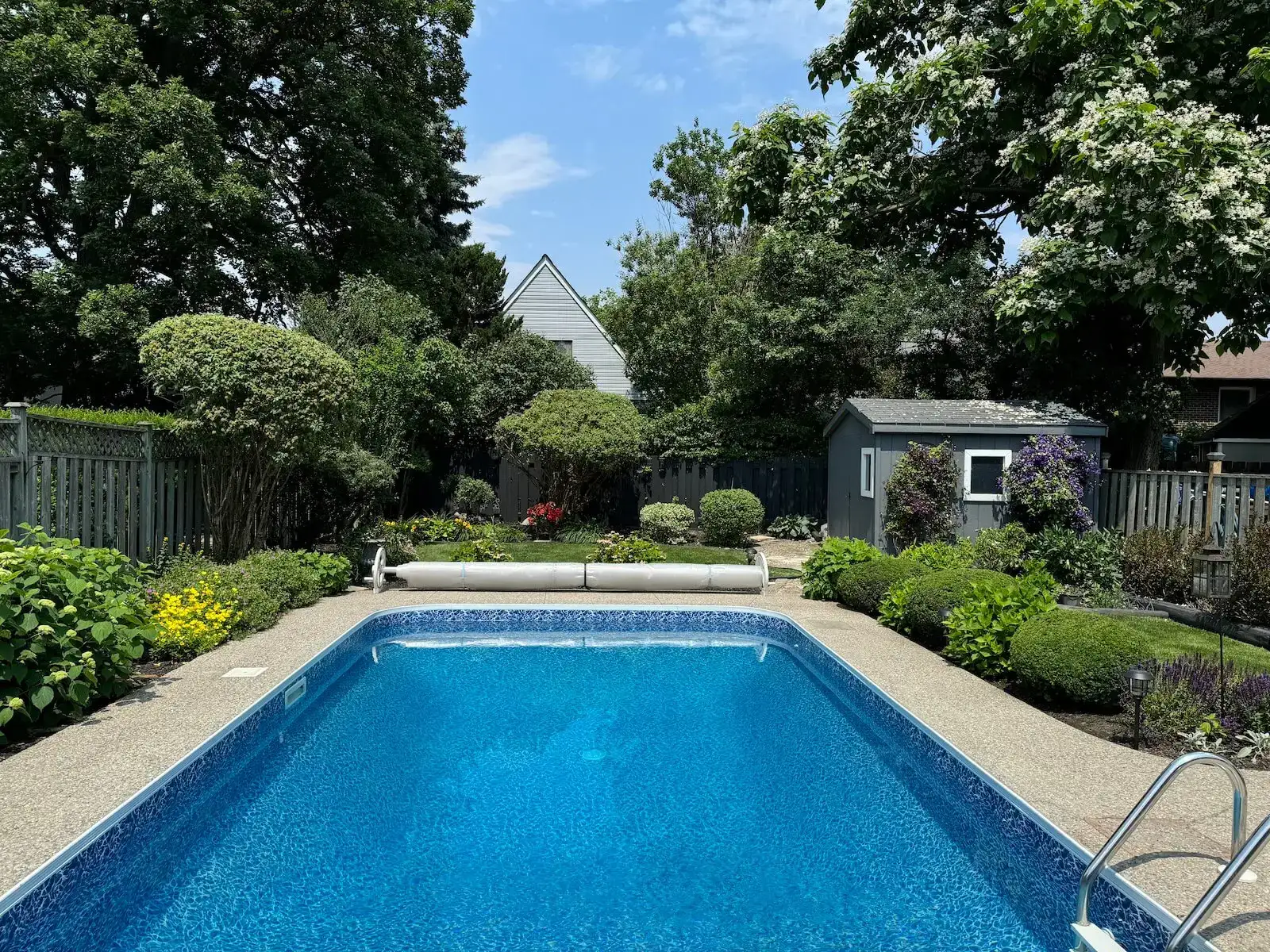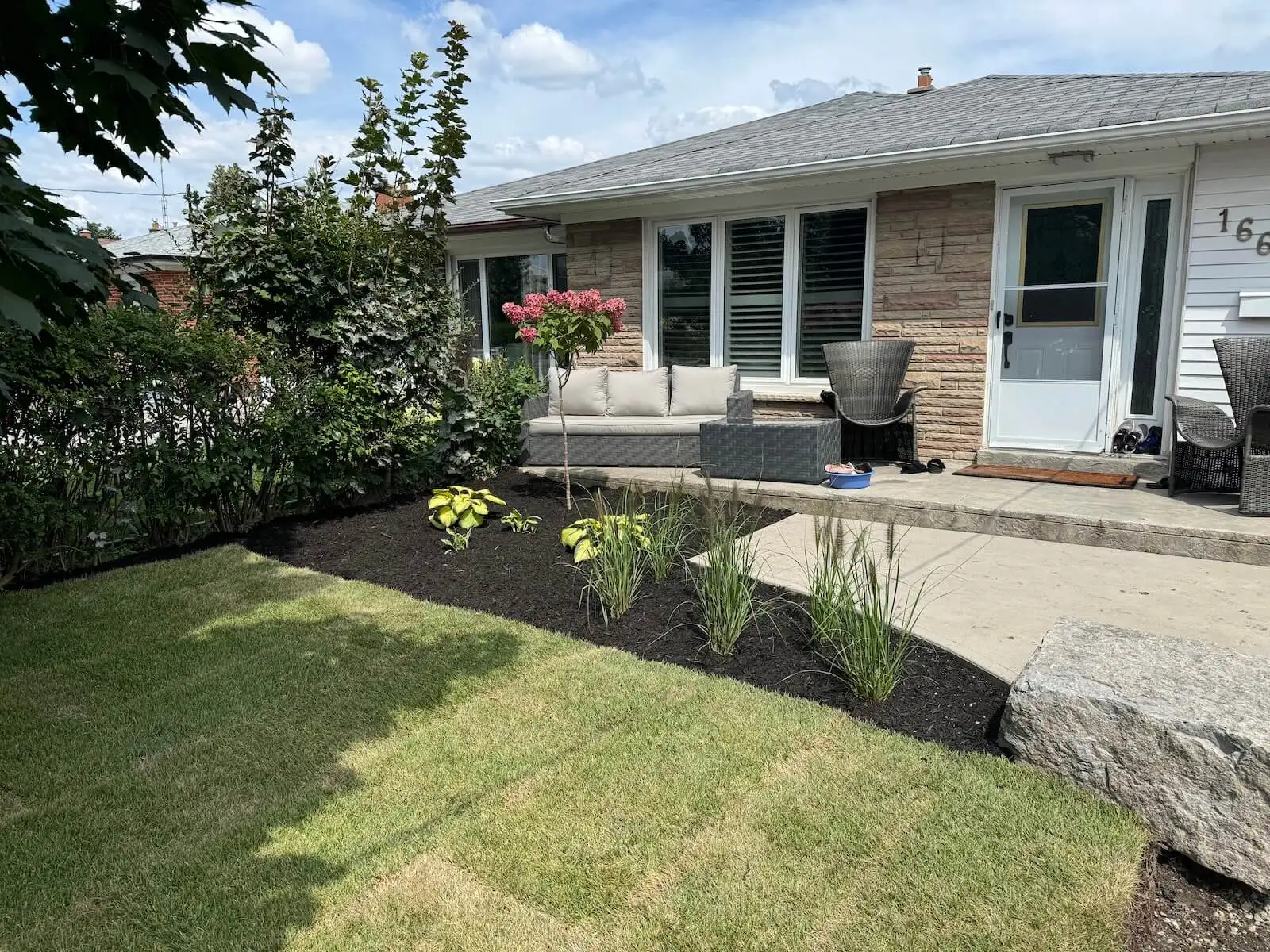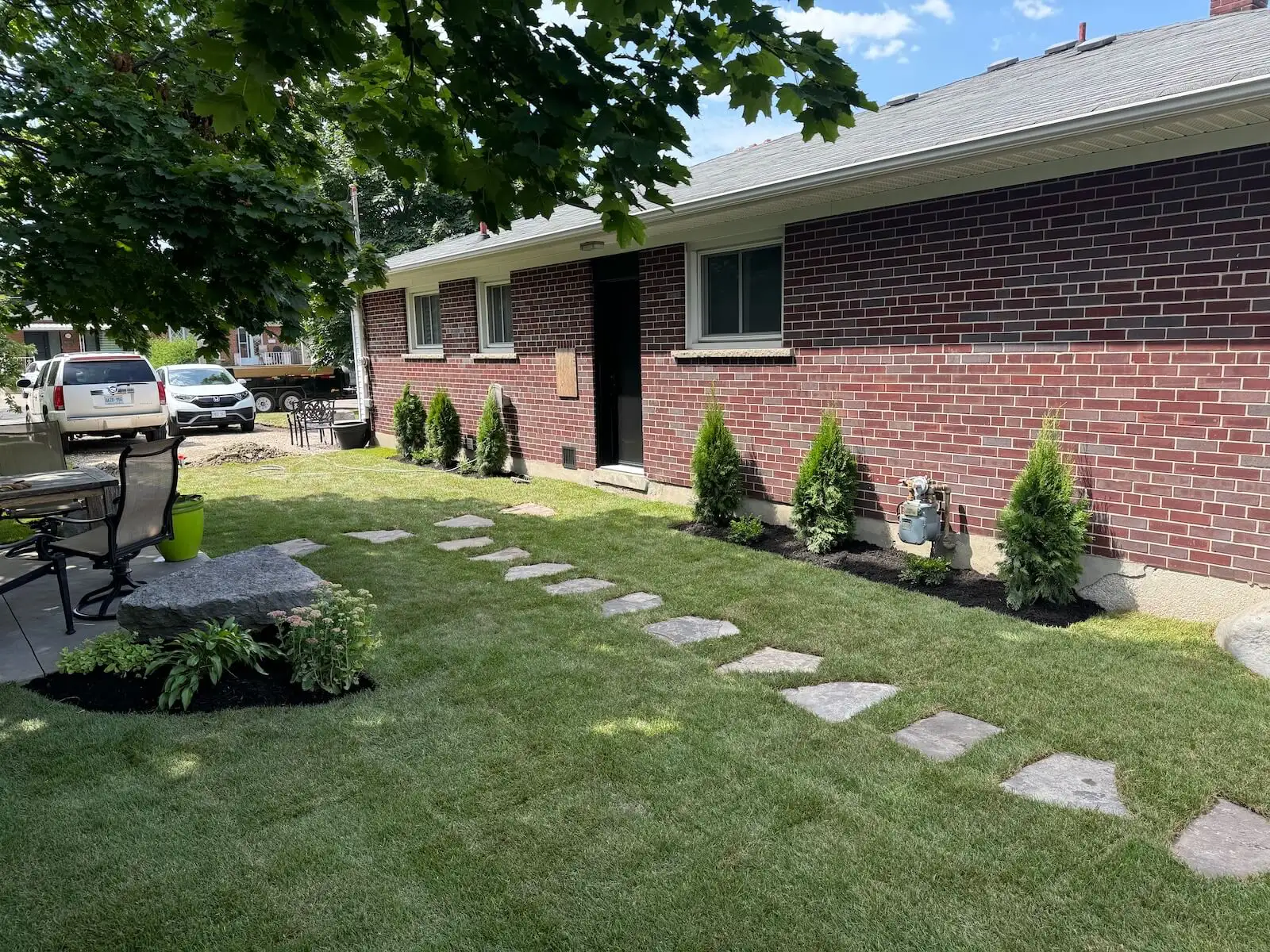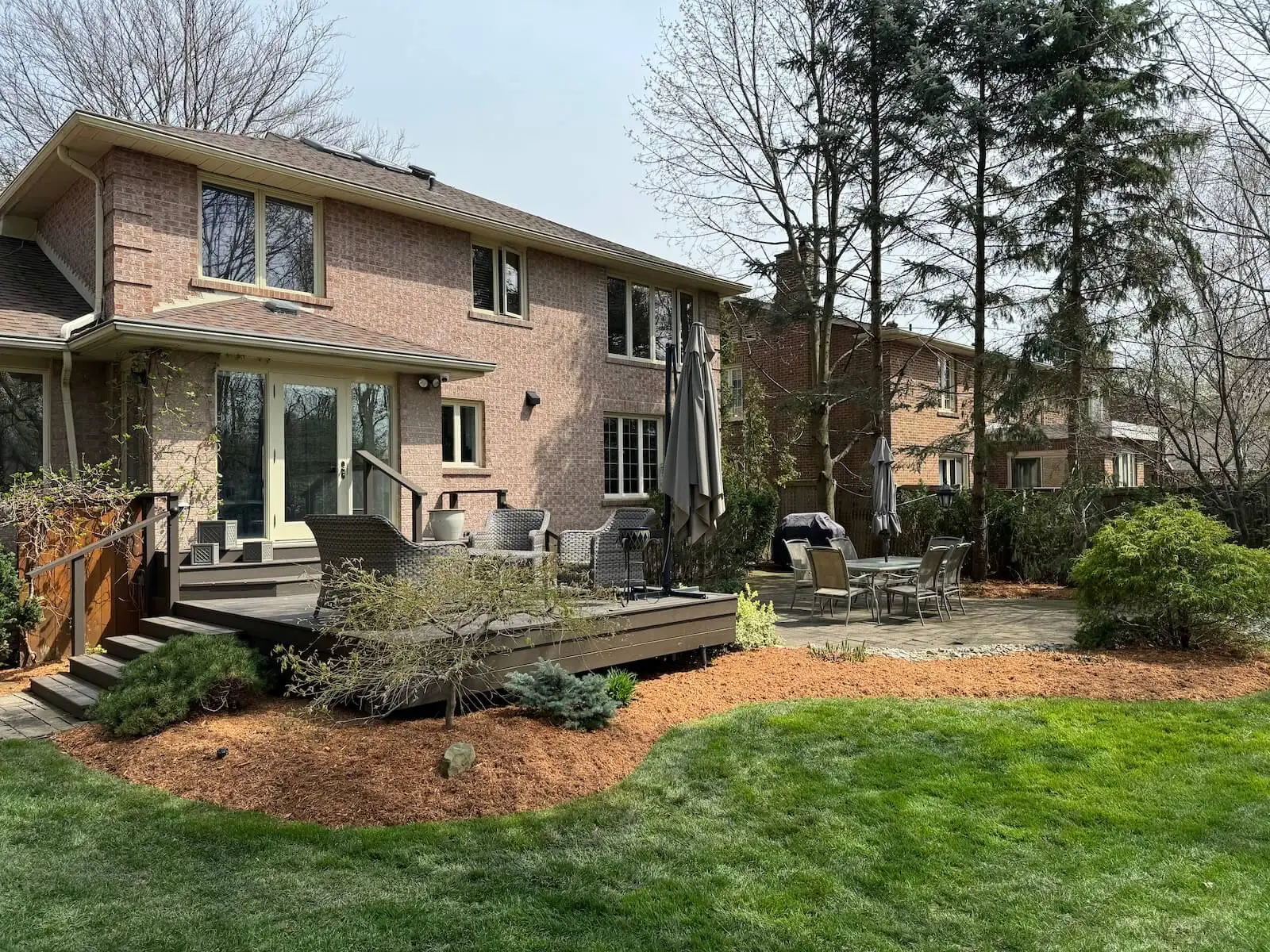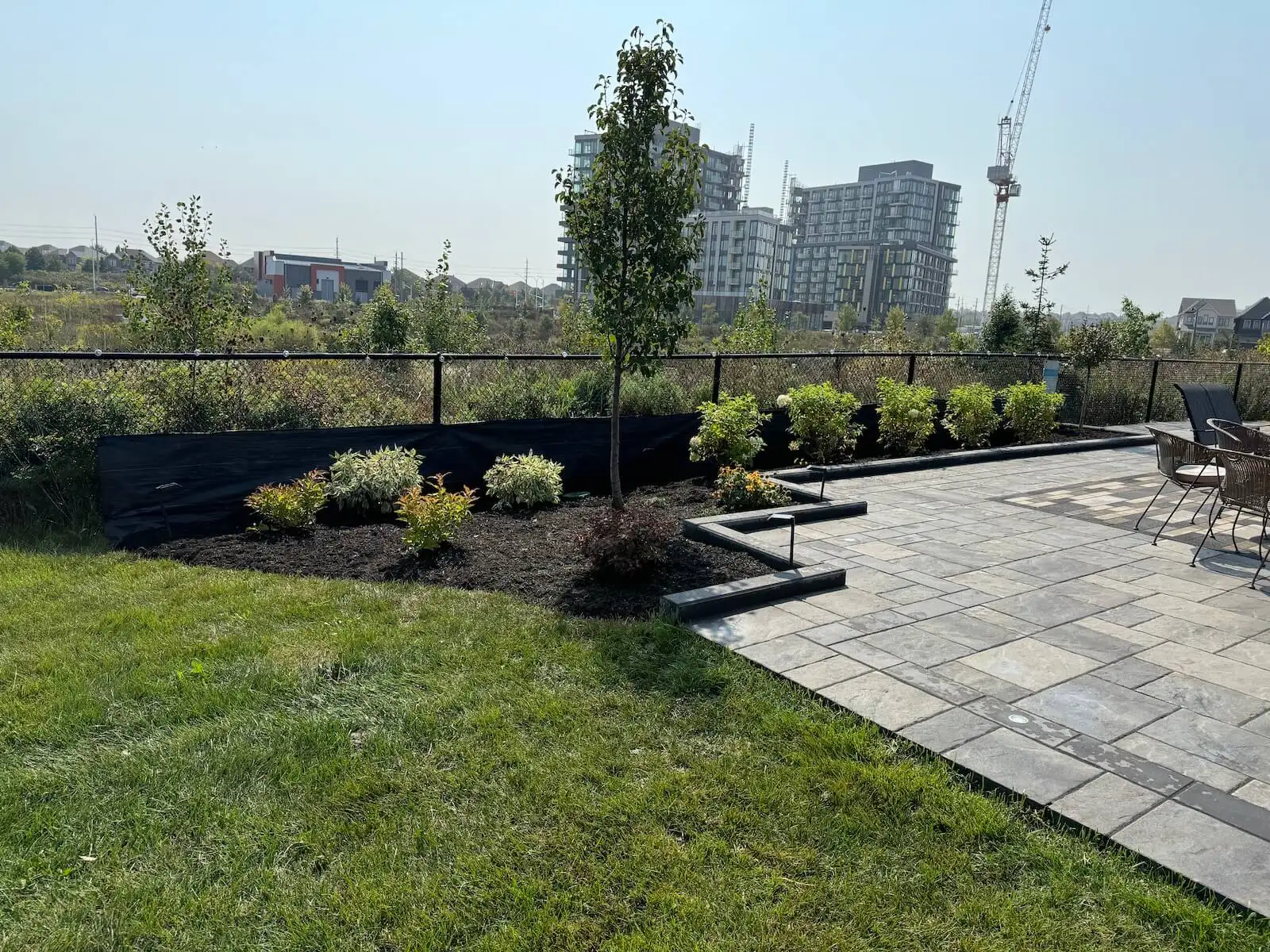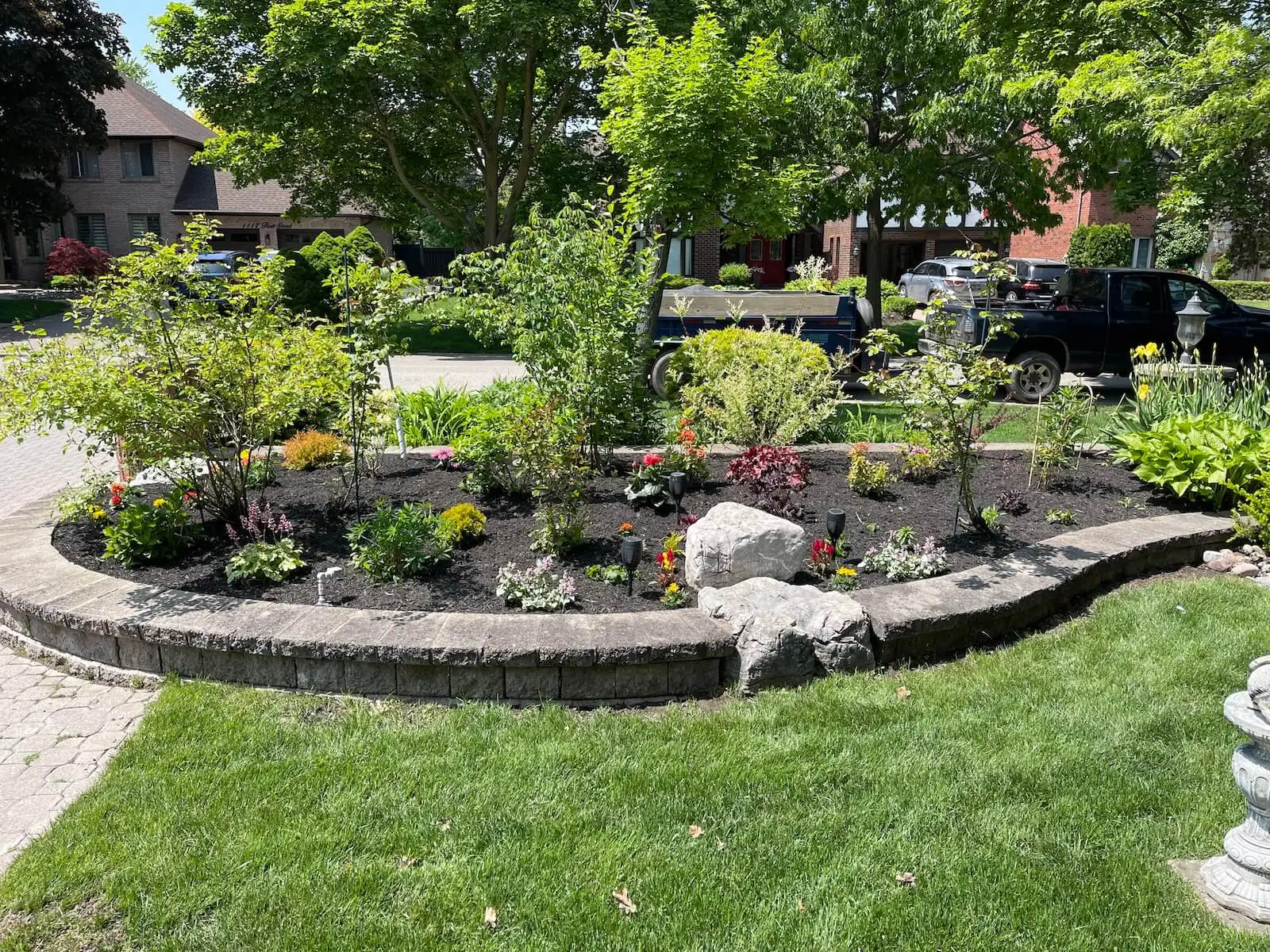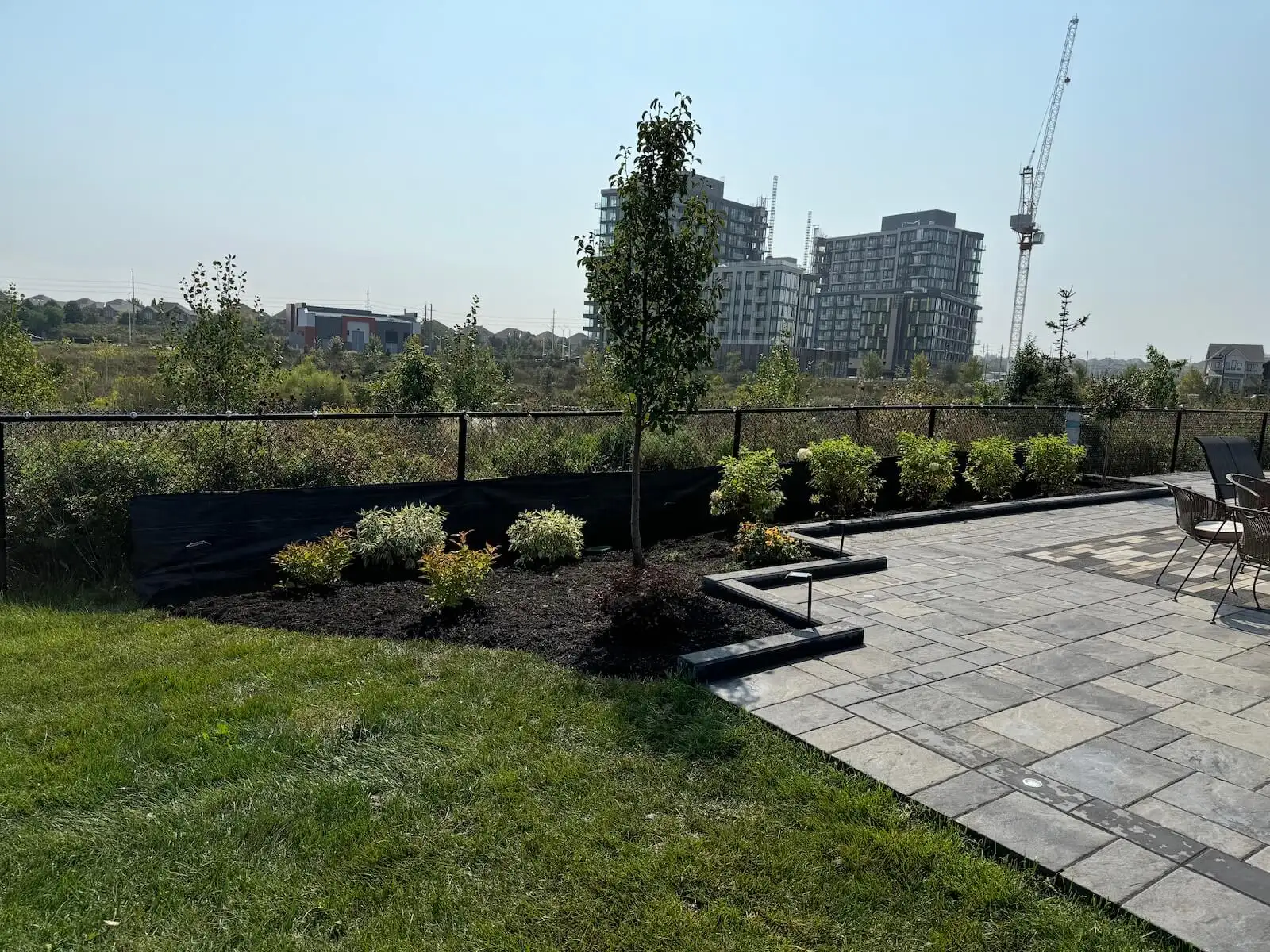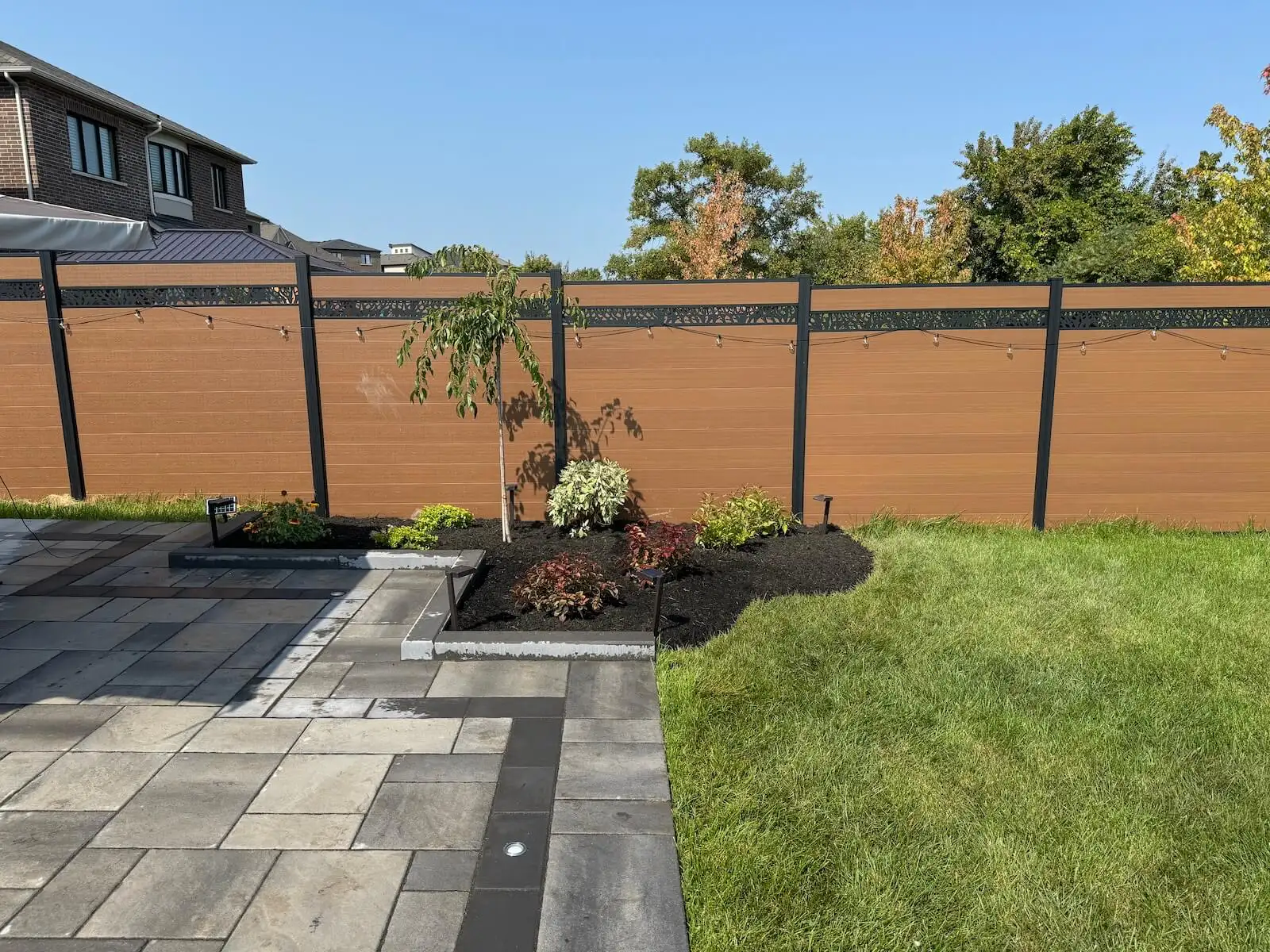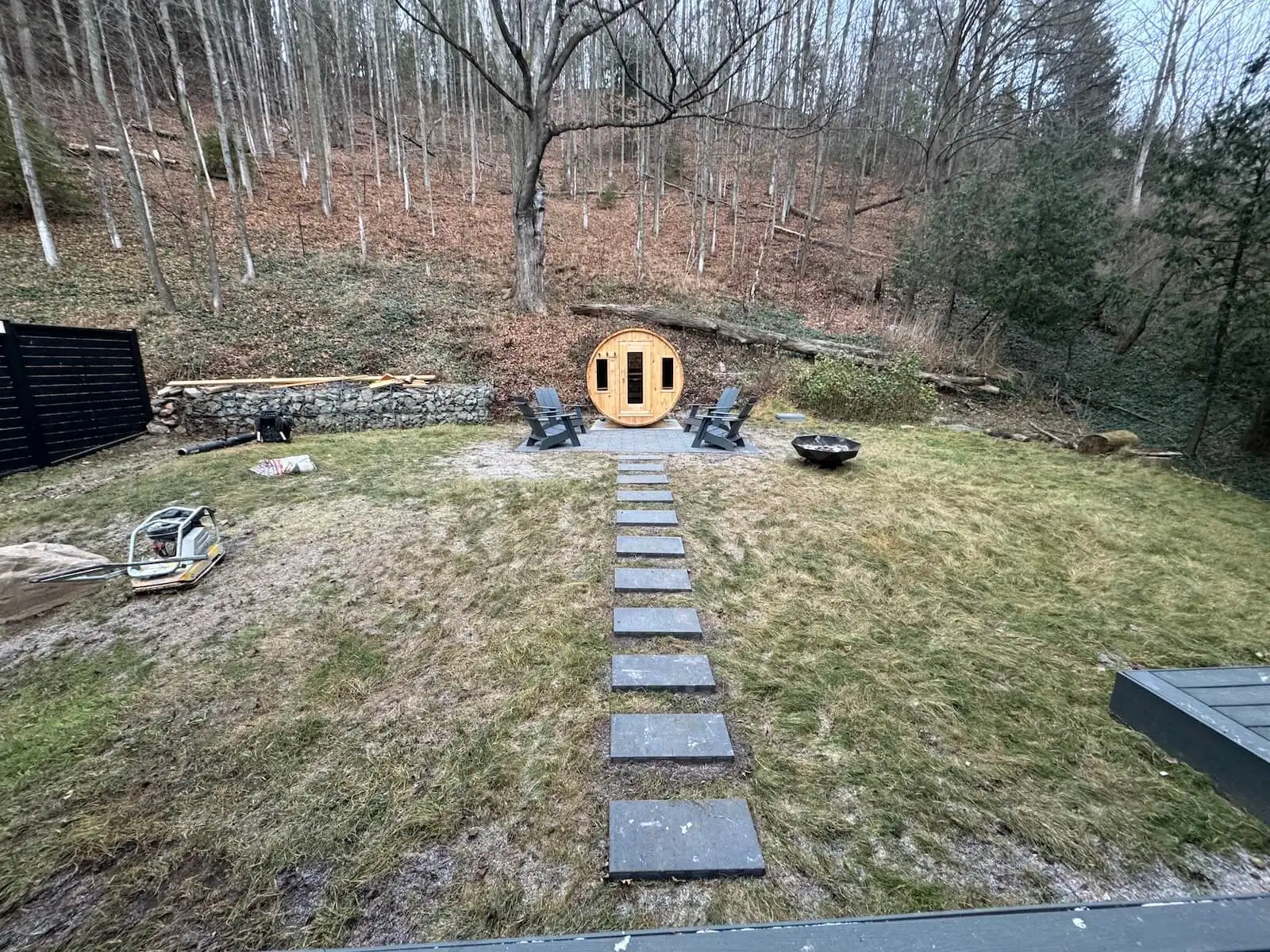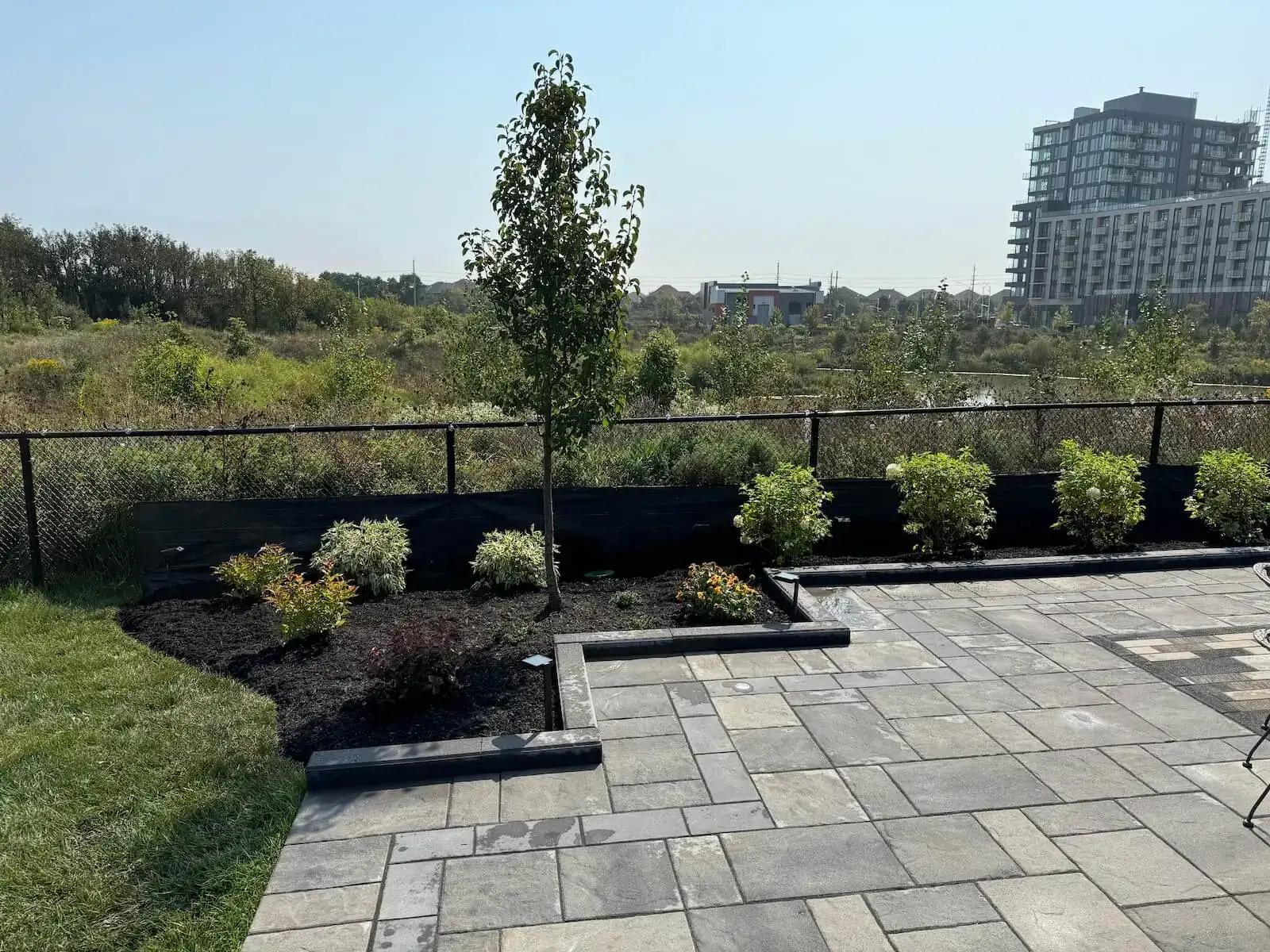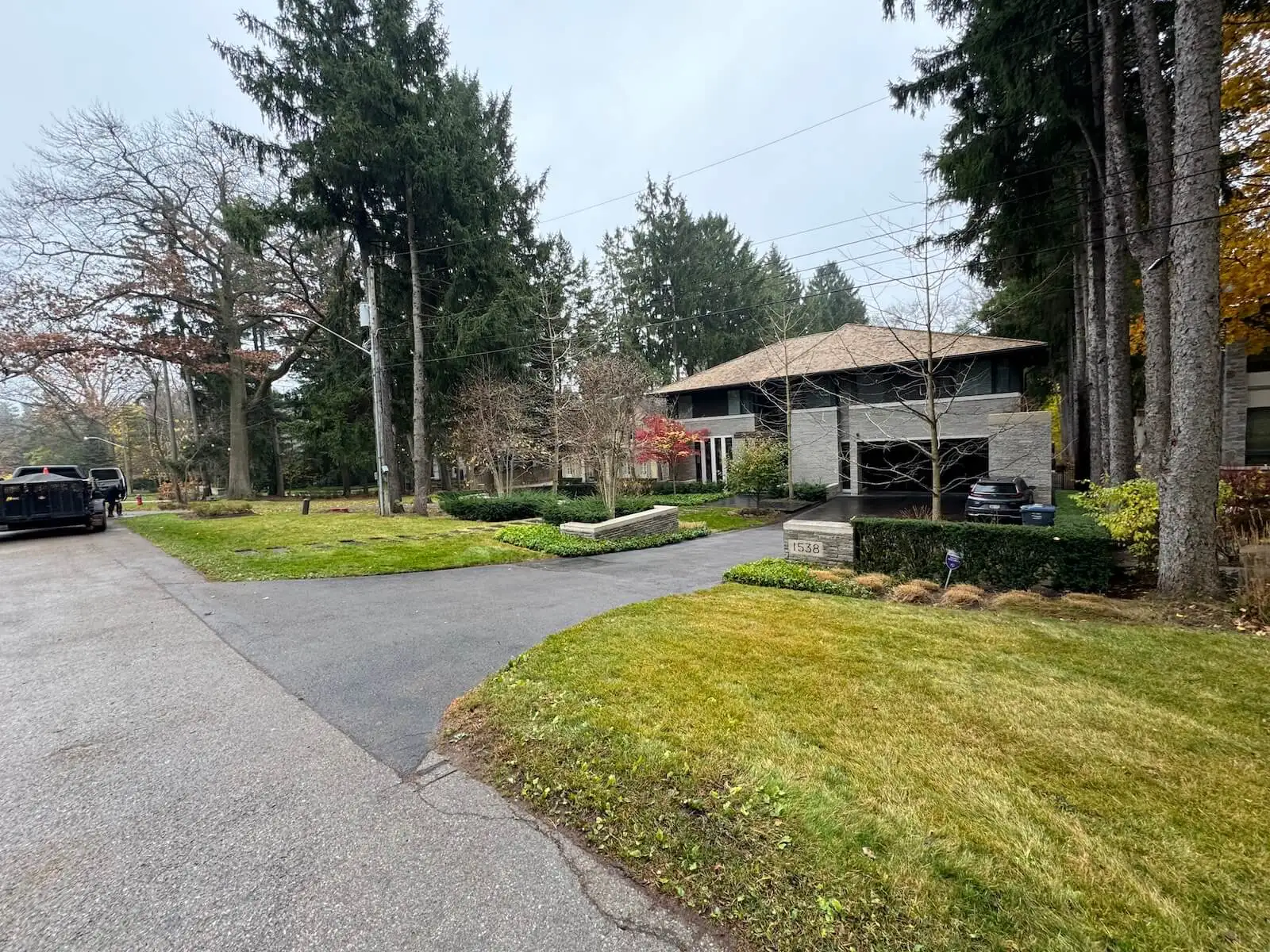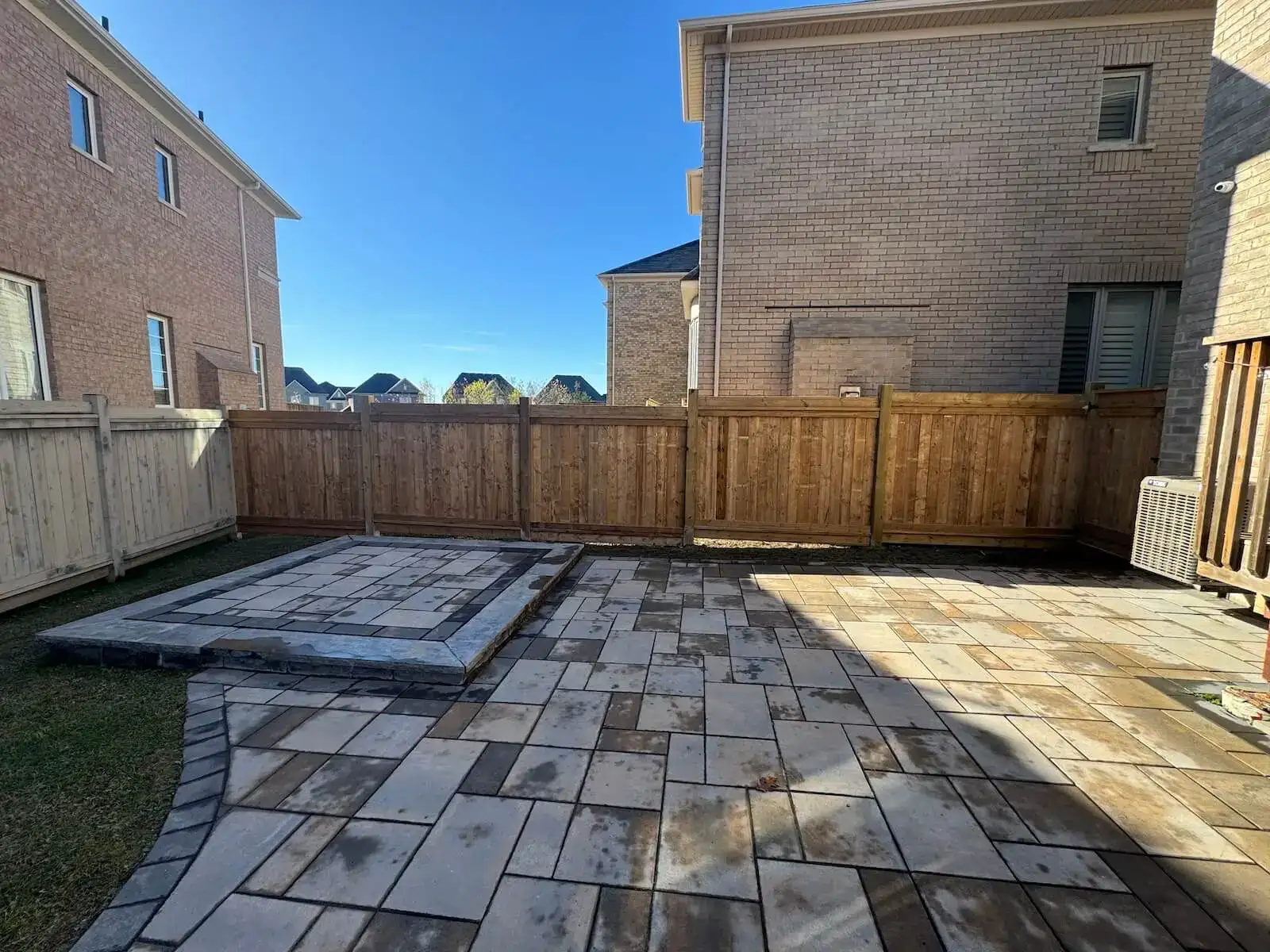









Most patios are over-lit, not under-lit. The best backyard patio lighting ideas use a few softer layers, not one harsh fixture, so the space feels upscale, safe, and usable through GTA evenings and long winters.
Backyard Patio Lighting Ideas: Start With a Simple Design Formula
The best patio lighting combines 4 layers: ambient, task, accent, and safety . That mix gives you mood for lounging, enough light for dining and grilling, and clear visibility on paths, steps, and grade changes.
A patio looks more expensive when light comes from several points at different heights. One bright ceiling light flattens stone, wood, planting, and furniture, while layered outdoor patio lights create depth and control glare.
A practical starting formula is simple: add 1 ambient source, 1 task source where people work, 1 or 2 accent moments, and dedicated safety lighting at edges and level changes . That is usually enough to make a patio feel finished without turning the yard into a parking lot.
Fixture quality matters more in the GTA than homeowners expect. Freeze-thaw cycles, wet springs, snow, and seasonal debris all put pressure on lenses, mounts, seals, and wire connections, so lighting should be planned as part of the patio build, not added as an afterthought.
The Best Outdoor Patio Lights by Job: Quick Comparison Table
The best outdoor patio lighting fixtures depend on the job, not the trend. A premium patio usually mixes built-in lighting with one decorative layer and keeps visible hardware to a minimum.
| Fixture type | Best for | Visual effect | Brightness control | Install difficulty | Maintenance | Best fit |
|---|---|---|---|---|---|---|
| Patio string lights | Open patios, pergolas, casual dining | Warm canopy glow | Good with dimmable systems if compatible | Low to medium | Medium | Relaxed entertaining |
| Wall sconces | Privacy walls, covered patios, entries | Vertical glow | Good | Medium | Low | Clean architectural patios |
| Pendant lights | Covered dining areas, outdoor kitchens | Focused overhead light | Good | Medium to high | Low | Covered patio lighting ideas |
| Recessed step lights | Stairs, seat walls, level changes | Low-glare safety light | Moderate | High | Low | Premium hardscape builds |
| Path lights | Walkways, connectors, garden edges | Soft wayfinding | Moderate | Medium | Medium | Low voltage landscape lighting plans |
| Uplights | Trees, columns, stone walls | Drama and depth | Good | Medium | Medium | Landscape accents |
| Downlights | Pergolas, trees, soffits | Natural moonlight effect | Good | Medium to high | Low to medium | Designer backyard lighting ideas |
| Under-cap lights | Seat walls, retaining walls, planters | Hidden linear glow | Good | High | Low | Modern and upscale patios |
| Portable lanterns | Small patios, renters, temporary styling | Cozy pockets of light | Limited | Low | Medium | Flexible setups |
| Solar patio lights | Quick no-wire add-ons | Decorative glow | Limited | Low | Medium to high | Sunny spots only |
| Smart fixtures and controls | Full backyard systems | Scene-based control | High | Medium to high | Low | Integrated premium projects |
Low-voltage and integrated hardscape lighting usually deliver the cleanest finished result. Solar patio lights are easy to add, but they are less reliable in shaded yards and during low-sun winter stretches because charging depends on daily sun exposure, panel angle, battery condition, and snow cover.
How to Light Up a Backyard Patio: The 4-Layer Lighting Plan
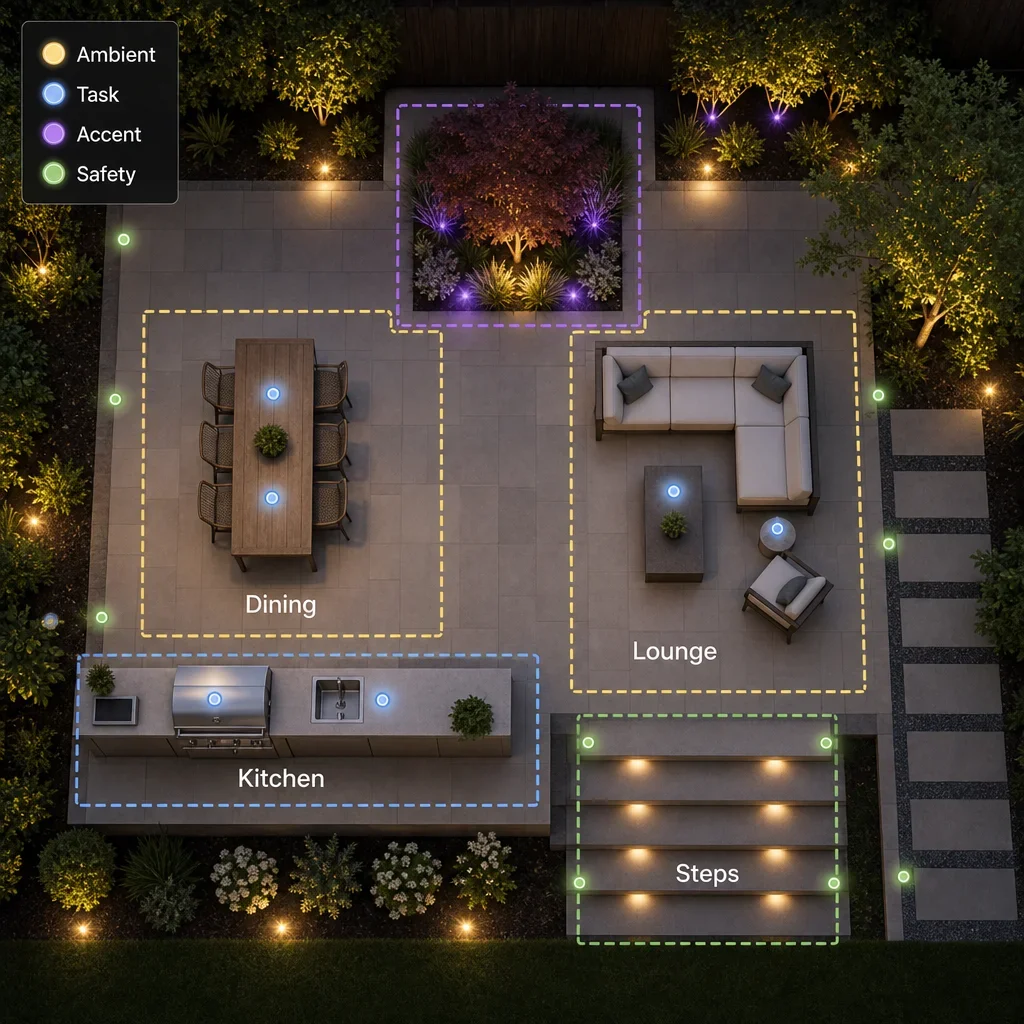
The easiest way to light up a backyard patio is to divide it into zones first. Start with dining, lounging, cooking, circulation, steps, edges, and one or two garden focal points, then assign the right layer to each one.
Ambient light sets the overall mood. This is your soft base layer, and it usually comes from string lights, pendants, downlights, wall sconces, or concealed perimeter lighting rather than a single bright flood.
Task light belongs where people need to see clearly. Dining tables, outdoor kitchens, bar counters, prep surfaces, and grills all need more direct light than seating corners because people are reading plates, serving, cooking, and cleaning there.
Accent light gives the patio its designer look. Uplighting an ornamental tree, washing a stone privacy wall, or adding under-cap glow to a seat wall creates contrast and depth without raising light levels everywhere.
Safety light should be the last layer you map but the first one you protect in the budget. Steps, stair noses, path turns, gate entries, deck transitions, retaining wall edges, and grade changes need clear definition so guests can move safely after dark.
The rule of thumb is to light destinations, not every surface. We use that approach in larger GTA backyards because balanced contrast looks calmer, photographs better, and keeps the yard from feeling flat or overbuilt.
25 Backyard Patio Lighting Ideas by Patio Zone and Feature
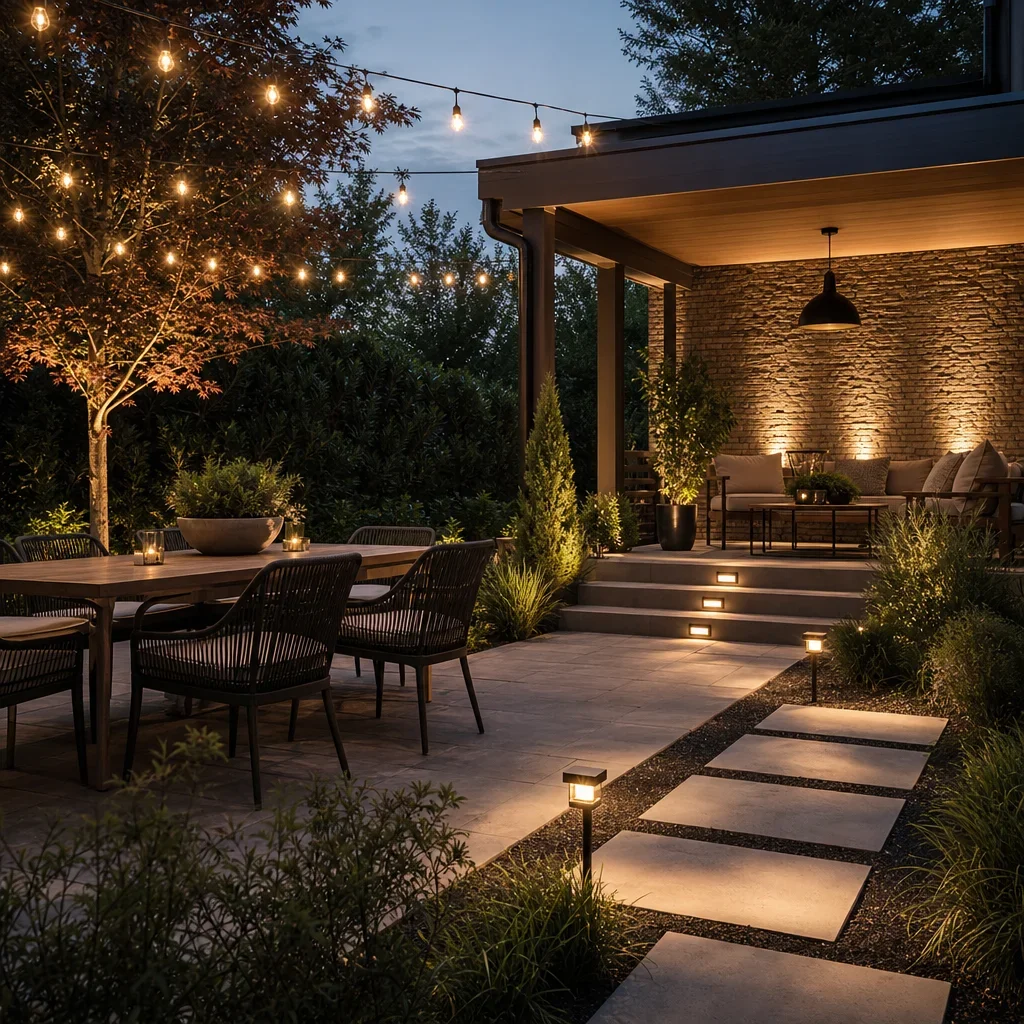
The best backyard patio lighting ideas are the ones tied to how the space is used. These 25 setups work across patios, pergolas, poolscapes, and compact GTA yards.
- Drape patio string lights over an open dining zone for a soft ceiling effect. This works best when the spans are clean and the wires do not sag into sightlines.
- Hang a pair of pendants over a covered outdoor dining table. This gives focused table light without flooding the whole ceiling.
- Add wall sconces to a privacy screen or masonry wall. Vertical light helps define the patio edge and makes fences feel less flat.
- Use recessed step lights on every stair run. They improve safety and look much more integrated than clip-on fixtures.
- Install under-cap lights beneath seat walls. Hidden glow makes retaining walls and built-in benches look custom.
- Uplight one ornamental tree near the patio. One strong focal point can anchor the whole yard at night.
- Downlight a lounge area from a pergola beam. This keeps the source higher and reduces eye-level glare.
- Wash a natural stone wall with soft grazing light. Texture reads better with angled light than direct frontal light.
- Place low-glare path lights on a route from patio to gate. Guests need to read turns and edges, not just the final destination.
- Use discreet under-counter lighting in an outdoor kitchen. Prep areas need task visibility after dark.
- Add toe-kick lighting at a bar or serving station. It gives form to the structure and improves circulation nearby.
- Frame a pool patio with edge lighting outside the waterline. Reflection can do a lot of the visual work if glare is controlled.
- Light the back of a pergola with concealed linear glow. This adds depth and keeps the structure from turning into a dark silhouette.
- Use lantern clusters on side tables in a lounge zone. This is one of the easier diy backyard patio lighting ideas for seasonal entertaining.
- Illuminate planter beds beside the patio with a few LED landscape lighting accents. Planting reads fuller and more intentional at night.
- Add slim sconces to posts or columns at a covered patio entry. Entries should be legible from the house and from the yard.
- Light deck-to-patio transitions with riser or side-mounted fixtures. Mixed surface heights are easy to miss at night.
- Tuck mini lights into a retaining wall stair return. This makes multi-level hardscaping safer and more architectural.
- Use moonlighting from a mature tree over a seating area. The dappled effect feels natural and softer than direct overhead light.
- Add perimeter glow behind a privacy screen on a small patio. Vertical light makes tight spaces feel deeper.
- Place one sculptural pendant over a bistro table in a covered nook. Small patio lighting ideas work best when they stay simple.
- Highlight a water feature or specimen shrub beside the patio. One accent can replace several unnecessary fixtures.
- Use bollard or path lighting to connect a pool, patio, and side yard. Multi-zone backyards need clear nighttime wayfinding.
- Light the underside of stair caps or coping where details allow. Concealed sources usually look more expensive than exposed lamps.
- Combine one overhead layer, one wall layer, and one landscape layer for a complete patio scene. Most outdoor patio lighting ideas pictures that look polished follow that same three-part composition.
Best Patio Lighting Ideas by Layout: Small, Covered, Open, Poolside, and Multi-Level
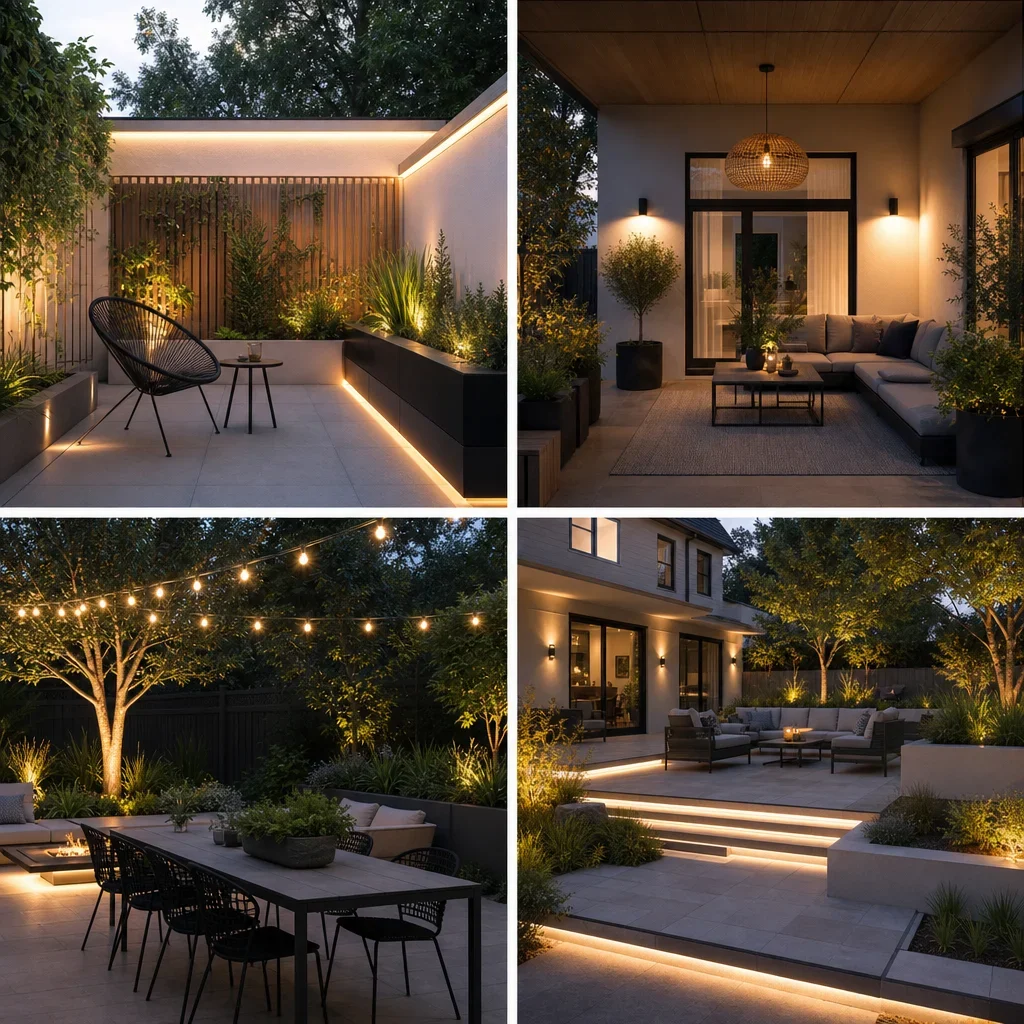
Small patios look larger at night when you light vertical surfaces and the perimeter instead of the centre. One focal point, one clear circulation route, and concealed sources usually outperform a crowded mix of decorative fixtures.
Covered patios need softer overhead planning than homeowners expect. A good mix is a decorative pendant or ceiling fixture for style, plus sconces or perimeter glow for balance, because rows of bright recessed lights can make the ceiling feel harsh and lower.
Open patios need structure where no roof exists. That usually comes from string light spans, nearby tree lighting, low-voltage path lights, and a few planted accents that create a visual room around the hardscape.
Poolside patios need edge definition more than raw brightness. Reflections amplify light on water and paving, so too much output near the pool can cause glare and reduce comfort from seating areas.
Multi-level yards need each grade change to read clearly after dark. Retaining walls, stair runs, terrace edges, and transitions between deck, pool, lawn, and patio should each get their own lighting logic rather than one blanket solution.
Where Should Patio Lights Go? Placement Tips for Dining, Lounging, Grilling, Paths, and Steps
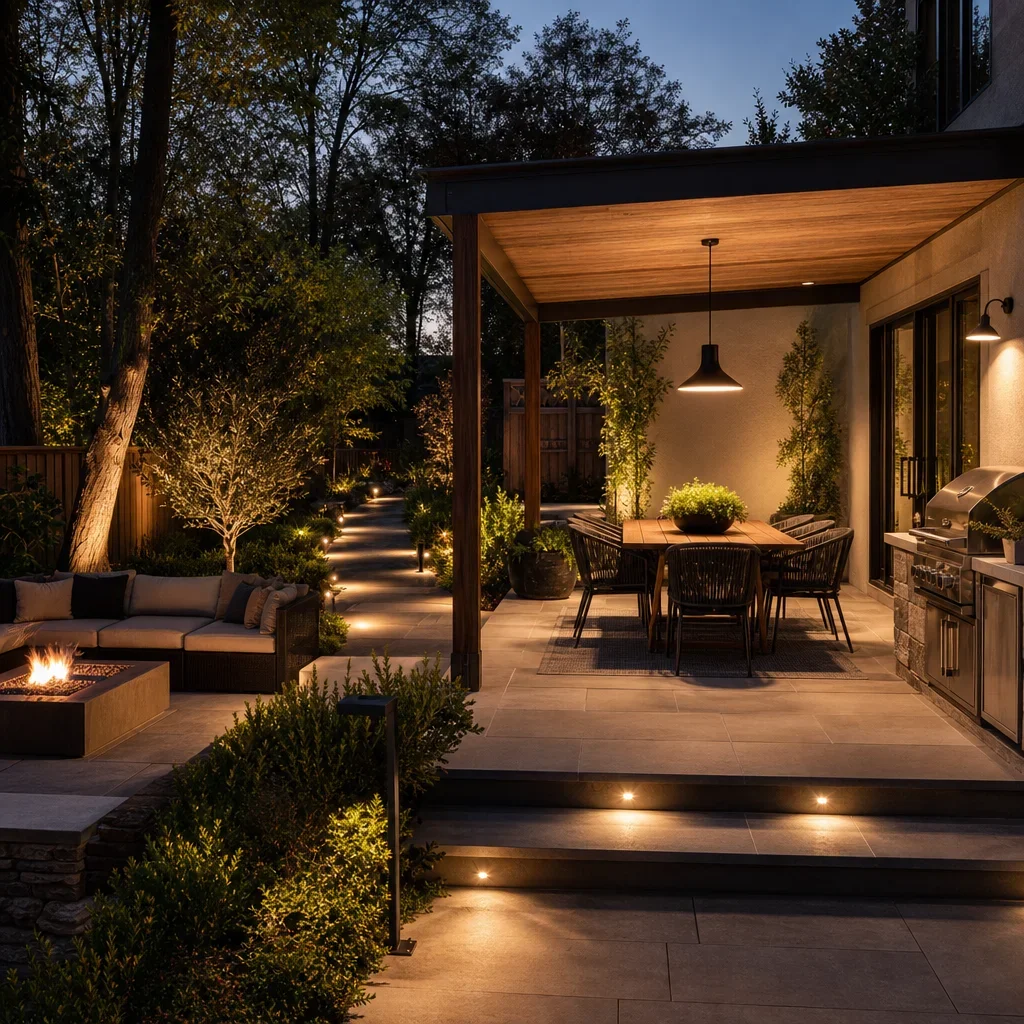
Dining light should hit the table surface, not people’s eyes. Pendants, downlights, or covered-patio fixtures work best when they centre on the table and shield direct glare from seated positions.
Lounging zones need lower, softer light than dining zones. We usually favour perimeter glow, lanterns, wall washing, or nearby planting accents so conversation areas feel calm instead of exposed.
Grilling and outdoor kitchen zones need direct task visibility. Prep counters, grill surfaces, and service areas should be lit by outdoor-rated fixtures placed to avoid casting your own shadow across the work area.
Circulation routes should define edges and turns. Paths, side-yard connectors, gates, and patio exits need enough light to make movement legible without making the whole yard uniformly bright.
Steps and level changes need dedicated lighting, not spill light from somewhere else. Recessed stair lights, riser lights, side-mounted fixtures, or nearby path lights should make each transition readable from both directions.
Focal-point lighting should be selective. Trees, specimen planting, columns, stonework, and water features only need enough accent to hold the eye and support the patio composition.
String Lights, Solar, LEDs, and Smart Systems: Which Patio Lighting Option Fits Your Project?
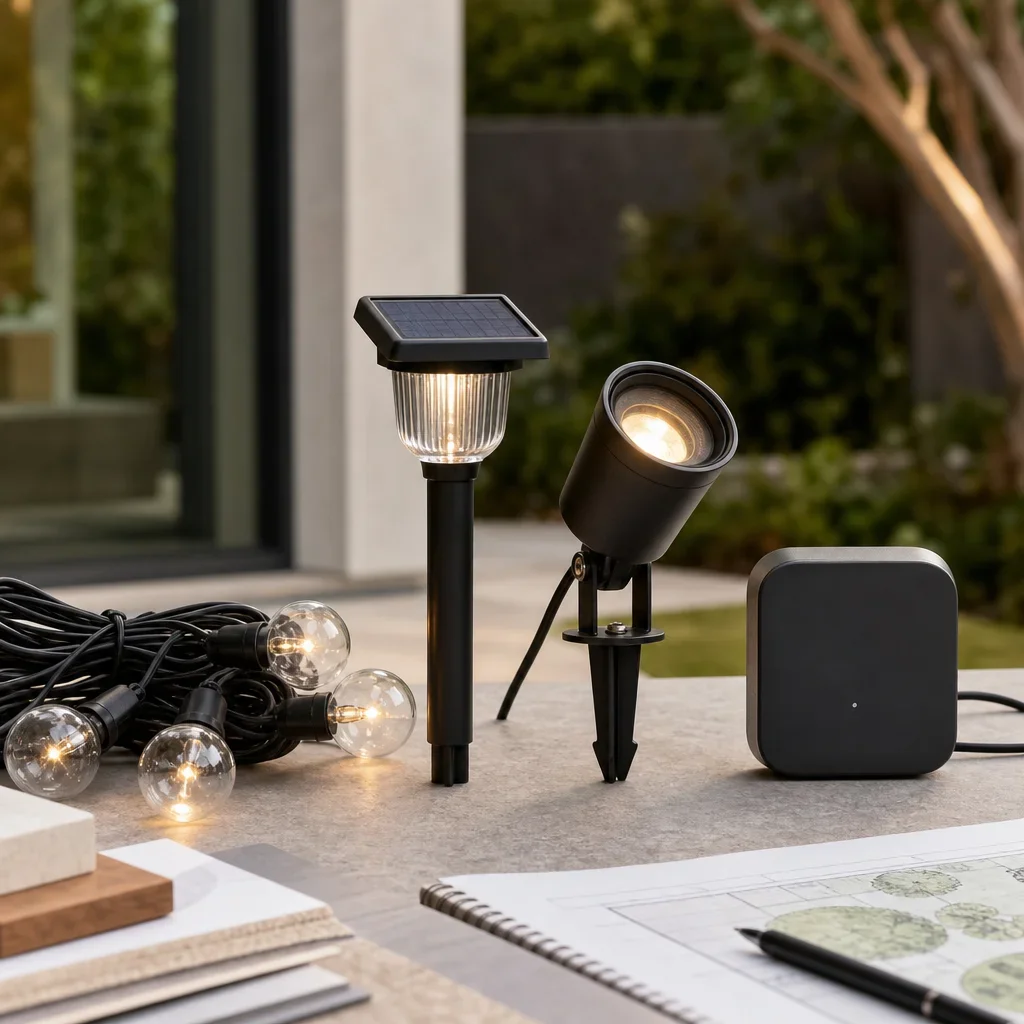
Patio string lights are the fastest way to add atmosphere. They are popular because they can define an open patio overhead without major construction, but the finished look depends on clean attachment points, proper tension, and cord management.
Low-voltage landscape lighting is the usual choice when homeowners want a built-in result. It supports path lights, uplights, under-cap fixtures, step lighting, and compact accent lights through one coordinated system with a cleaner visual finish than multiple plug-in products.
Solar patio lights work best as selective add-ons, not the whole plan. They are useful for sunny edges, tabletops, or temporary decoration, but output and runtime can drop in shade, cloudy stretches, winter conditions, or spots where panels get dirty or snow-covered.
LED landscape lighting is now the standard for most premium outdoor systems because it offers compact fixture sizes, better control, and less maintenance than older lamp types. Your actual product performance depends on fixture quality, optics, heat management, and installation, not just the LED label.
Smart outdoor lighting makes bigger patios easier to use. Scheduling, dimming, scenes, and app-based control are practical when a backyard includes a dining area, pool patio, pathways, and multiple entertaining zones.
The best projects usually combine technologies instead of choosing only one. We see this across design-build backyards in Markham and the wider GTA: built-in low-voltage lighting for structure, then one decorative layer like string lights or pendants for mood.
Color Temperature, Brightness, and Mood: How to Get a Cozy Patio Without Harsh Glare
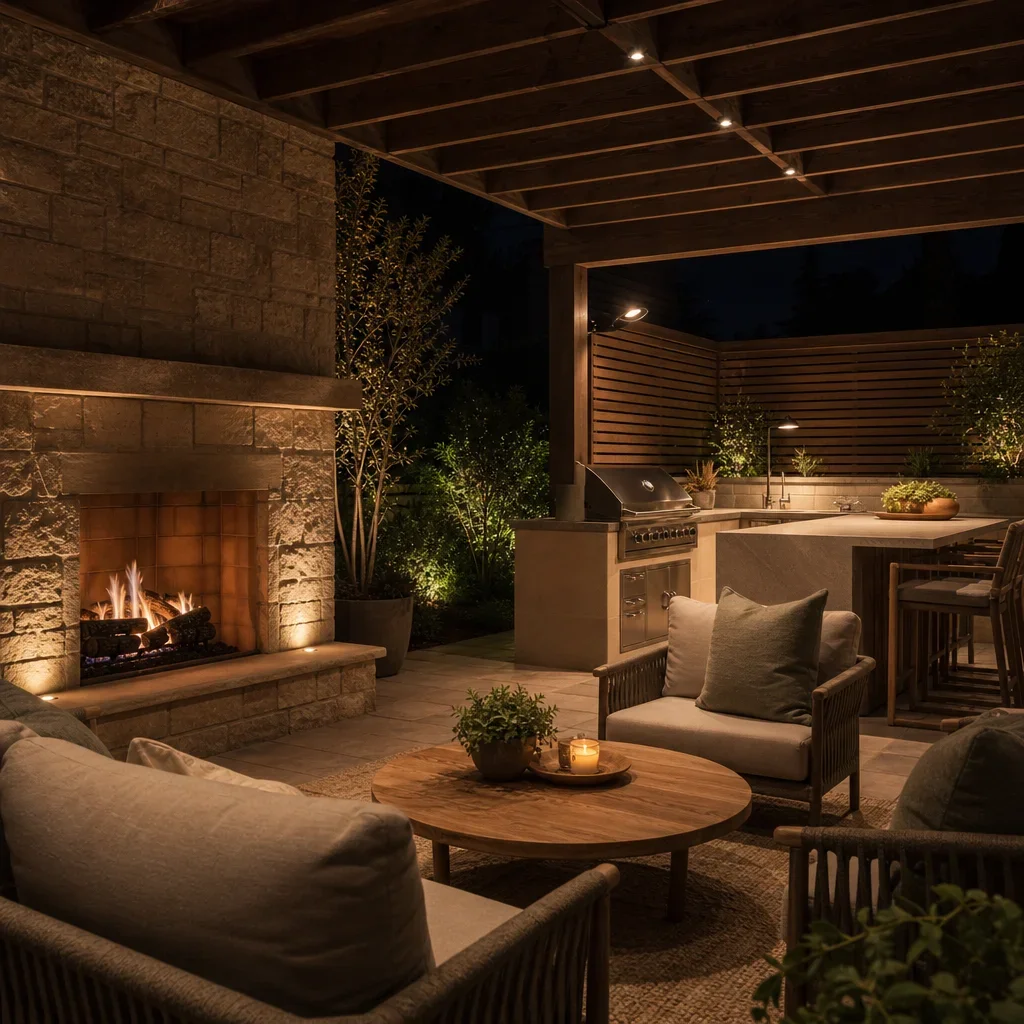
Warm light is usually the best starting point for patios. A colour temperature around 2700K to 3000K is the range most designers use for outdoor living areas because it flatters stone, wood, planting, and skin tones without feeling cold .
Slightly cooler light can help in task zones, but restraint matters. If you use a cooler lamp at a grill or prep counter, keep the rest of the patio warmer so the yard still feels cohesive.
Matching colour temperature across the visible patio matters more than chasing brightness. Mixed lamp colours are one of the fastest ways to make a high-end hardscape look pieced together.
Brighter is not better for ambiance. Too much light kills texture, increases glare, and makes people feel watched rather than relaxed, which is why a layered patio lighting ideas plan nearly always beats a single-output approach.
Outdoor Lighting Rules of Thumb and Safety Basics for GTA Homes
The basic rule of thumb for outdoor lighting is simple: layer light, shield glare, and prioritize steps, edges, and entries first. Good patio lighting supports movement and mood at the same time instead of trying to turn night into daylight.
The so-called 5’7″ lighting rule is not a standard we would tell homeowners to rely on. If you see internet shorthand like that, verify it with a qualified installer or electrician before you build around it, because fixture location, beam spread, mounting height, and voltage all affect whether an idea is safe or effective.
Outdoor-rated fixtures are not optional in exposed locations. Use products designed for weather exposure, proper connectors, and safe power or transformer locations, especially where snow, standing water, splash zones, or irrigation can affect the system.
Water adds another layer of caution. Requirements can change near pools, spas, fountains, and wet zones, so homeowners should confirm location-specific electrical and safety rules with a licensed electrical professional and local code requirements before installation.
Low-Voltage Wiring Basics, Transformer Placement, and When to Hire a Pro
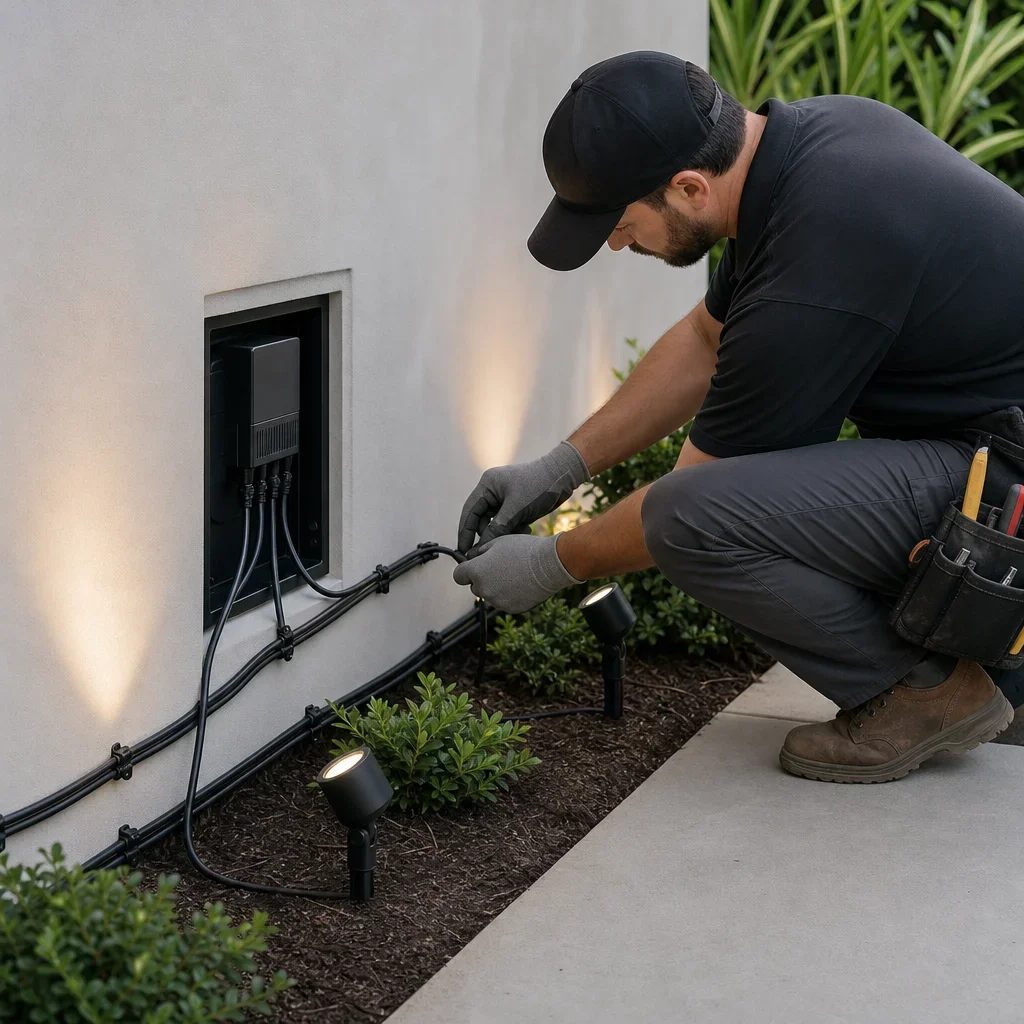
There are four common setup types: plug-in, solar, low-voltage, and line-voltage. Plug-in and solar are easier for temporary or simple decorative use, while low-voltage and line-voltage are better suited to integrated patio and landscape systems.
Low-voltage landscape lighting is popular because it balances flexibility and finish quality. It can power multiple fixture types across a patio and garden plan while keeping the hardware smaller and the visual result cleaner.
Transformer placement should be planned early. The power source, cable routes, fixture grouping, maintenance access, and visibility of wires all affect how polished the final patio looks.
Visible cords are one of the easiest ways to undermine expensive stonework. We tell homeowners to think about cable routing before patios, seat walls, steps, pergolas, and planters are built, because concealed pathways are easier to create during construction than after it.
Professional installation is worth it when the system ties into masonry, steps, retaining walls, pool areas, trenching, or permanent electrical work. That is where design coordination matters most, especially when lighting also needs to work with drainage, planting, and grade changes.
If you are planning a full backyard upgrade, integrate lighting into the larger design package. RockLeaf offers a free 3D design and quote for complete outdoor projects, with line-by-line pricing and a 5-year total warranty; conditions apply on project details .
Common Outdoor Lighting Mistakes to Avoid
The biggest mistake is using one bright source to light the entire patio. That creates glare, hard shadows, and a flat look that makes good materials read cheap.
Lights placed directly in seated sightlines cause discomfort fast. If guests can see the lamp instead of the effect, the fixture is probably too exposed, too high-output, or aimed poorly.
Skipping step and edge lighting is a safety error, not just a design miss. Spill light from a wall or string span rarely defines each stair or level change clearly enough.
Solar fixtures are often overused in shady backyards. When trees, fences, rooflines, or winter conditions cut charging time, the result is weak or inconsistent performance right where homeowners expected reliability.
Mixing colour temperatures makes patios feel patchy. Warm stone, wood ceilings, and planting usually look better under a consistent warm-light palette than under a blend of amber, neutral, and cool-blue lamps.
Exposed cords and adapters make even good lighting look temporary. Hide routes early, use outdoor-rated connections, and avoid draping cables across circulation paths.
LED-specific mistakes usually come down to glare and compatibility. Visible diodes, poor optics, or dimming setups that do not match the fixture can all make a system feel cheap even when the patio itself is high-end.
Installing lighting too late in the project costs homeowners design options. The cleanest outdoor patio lights are often the ones built into walls, stairs, coping, pergolas, and planting beds before surfaces are finished.
How to Make a Small Patio Feel Bigger and More Usable at Night
Small patio lighting ideas work best when the layout stays disciplined. Fewer fixture types, less visible hardware, and one clear nighttime focal point usually make a compact space feel calmer and larger.
Perimeter glow makes a small patio feel wider than a central overhead blast. Lighting the edges helps define the outdoor room and leaves the middle open for furniture, circulation, and conversation.
Vertical lighting stretches the space visually. Fences, privacy screens, trellis panels, and narrow planting beds all help push the apparent boundary outward when they are lit softly.
Multi-use fixtures are especially effective in compact yards. A light integrated into a step, seat wall, planter edge, or screen can do the work of two separate fixtures while reducing clutter.
Maintenance and Seasonal Care: Keeping Patio Lighting Looking Great Through Toronto Winters
Outdoor lights hold up better in Toronto winters when the system is built for moisture movement, not just weather exposure. Lens sealing, material quality, drainage, stable mounting, and protected connections all matter as much as the fixture style.
Freeze-thaw cycles can shift soil, loosen stakes, and stress poorly supported fixtures. That is one reason integrated lighting in masonry, steps, and retaining walls should be planned with the hardscape details from the start.
Seasonal checks help catch small issues before they become failures. Inspect lenses, alignment, exposed wiring, damaged stakes, and timer or smart-control settings about 1 to 2 times per year .
Spring is usually when hidden problems show up. Meltwater, debris, soil movement, and plant growth can block light output or expose weaknesses that were not obvious in dry weather.
Maintenance access should be built into the design. Even premium waterproof outdoor lights need occasional cleaning, aiming, and service, so avoid layouts that bury every connection behind finished surfaces.
Backyard Patio Lighting Ideas for GTA Style: Modern, Natural Stone, and Resort-Inspired Looks
Modern patios look best with restraint. Slim sconces, concealed linear glow, under-cap lighting, and a few precise accents usually suit clean lines better than decorative clutter.
Natural stone patios benefit from angled light that reveals texture. Wall washing, grazing, and low uplighting bring out variation in stone better than a broad wash of overhead brightness.
Resort-inspired backyards usually combine reflection, layering, and softness. Pool patios, loungers, planting masses, and feature walls all work better with controlled edge light and selective focal points than with uniform brightness.
Classic entertaining patios often want warmth and familiarity. Pendants over dining zones, lanterns near seating, sconces on privacy walls, and subtle planting accents create that welcoming after-dark feel.
If you are collecting outdoor patio lighting ideas pictures, pay attention to what the photo is not showing. The best designer layouts usually hide the source, repeat only a few fixture families, and let materials and planting stay the focus.
FAQs About Patio Lighting
What lighting is best for a patio?
The best patio lighting uses 4 layers: ambient, task, accent, and safety . For most patios, that means soft overhead or perimeter light, direct light at dining or grill zones, and dedicated lighting for paths, steps, and edges.
How do I light up a backyard patio without making it too bright?
Use several lower-glare sources instead of one bright fixture. Light the table, steps, and key routes first, then add one or two accents rather than trying to brighten every square foot.
Are string lights enough for a patio?
String lights are enough for atmosphere, but usually not enough for a complete plan. They rarely replace proper task lighting at a grill or dining table, and they do not usually light steps or level changes well on their own.
What are the best outdoor patio lights for a covered patio?
Covered patios usually work best with a mix of pendants or a ceiling fixture, wall sconces, and soft perimeter or accent lighting. The goal is to avoid a harsh ceiling effect while still giving enough light for dining and circulation.
What are the best small patio lighting ideas?
Use perimeter glow, vertical lighting on screens or fences, and concealed fixtures built into steps, walls, or planters. Small patios feel larger when you reduce clutter and keep the centre of the space visually open.
Should I use solar or low-voltage patio lighting?
Use solar for simple, sunny, no-wire add-ons. Use low voltage landscape lighting when you want a more reliable, built-in result across paths, walls, steps, planting, and patio zones.
What color temperature is best for outdoor patio lights?
About 2700K to 3000K is the usual warm-light range for patios . Your exact choice depends on materials, style, and whether a task zone needs slightly crisper light.
How do I make my backyard feel cozy at night?
Keep the light warm, low-glare, and layered. Focus on edges, seating, texture, and one or two focal points instead of making the whole yard equally bright.
What are common outdoor lighting mistakes to avoid?
Common mistakes include over-lighting, visible glare, skipped step lighting, exposed cords, mixed bulb colours, and relying too heavily on solar fixtures in shady areas. The cleanest fix is usually fewer fixtures, better placement, and more integrated sources.
Do outdoor lights need to be waterproof?
They need to be rated for the exposure they will face. In exposed locations, use outdoor-rated fixtures, weather-resistant materials, and proper connections suited to moisture, splash, snow, and seasonal debris.
When should I hire a professional for patio lighting?
Hire a pro when the project includes permanent wiring, pool areas, trenching, low-voltage planning across multiple zones, or lighting integrated into masonry, steps, pergolas, or retaining walls. That is where design quality and safe installation matter most.
How do I protect outdoor lighting in Toronto winters?
Choose durable fixtures, plan drainage, keep connections protected, and inspect the system seasonally. In our climate, long-term reliability depends on installation quality just as much as fixture choice.
A good patio lighting plan should make the yard feel better, not brighter. If you are redesigning a patio, pool area, or full backyard, build the lighting into the layout early so the stonework, planting, drainage, and nighttime use all work together.