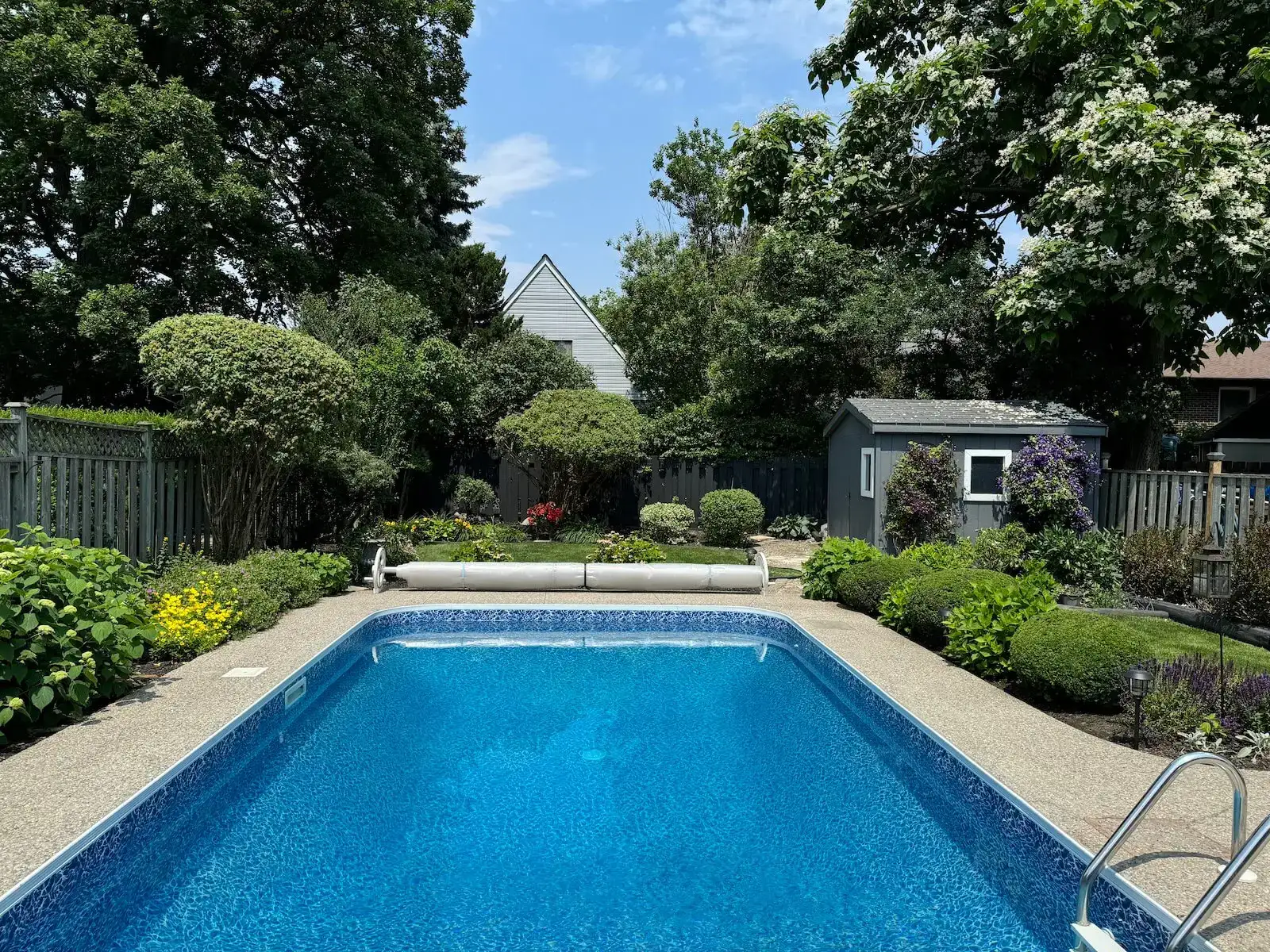









The prettiest backyard fish pond design is usually not the one with the lowest build cost. It is the one sized, filtered, and detailed properly from day one, so fish stay healthier and the pond still looks right after a few Ontario winters.
A pond can be a great backyard feature. It can also become a maintenance problem fast if you treat it like a hole with water. In the GTA, the build has to handle freeze-thaw movement, runoff, leaf drop, drainage, and winter care.
What to Decide Before You Build a Backyard Fish Pond
A backyard pond is a good idea when you want a focal point with sound, movement, and habitat, and you accept regular seasonal care rather than a zero-upkeep feature. Decorative ponds, fish ponds, koi ponds, and planted water gardens are not the same thing, and the right fish pond design at home starts with choosing the right category.
A decorative pond is usually shallower and built more for reflection, stone, and plants than for fish health over winter. A fish pond is designed around water quality, circulation, and safe depth. A koi pond design usually needs more water volume, stronger filtration, and deeper refuge zones because koi grow larger and produce more waste than goldfish.
A planted water garden puts more visual weight on lilies, marginal plants, and naturalized edges, while a true fish pond puts more design weight on oxygen, filtration access, and predator protection. If you want both, the build needs to balance plant shelves with open swim volume.
A pond may be the wrong feature in a very tight yard, under heavy leaf-drop trees, beside unsupervised play space, or in a yard where all snow and salt-laden meltwater dump into one corner. Premium pond work in the GTA should tie into grading, drainage, stonework, and planting instead of sitting apart from the rest of the landscape.
Best Backyard Fish Pond Design Types for Small, Modern, and Natural Yards
The best layout depends less on trend and more on how much room, maintenance, and fish load you want to carry. Small backyard fish pond design works best when the water feature is scaled to patio circulation, sightlines from the house, and winter snow storage rather than pushed into leftover space.
A compact courtyard pond suits small backyard fish pond design ideas because it uses crisp lines, tighter planting, and often one strong viewing edge from a deck or patio. This style can read modern and clean, but it leaves less room for stocking mistakes because small water volumes swing faster in temperature and water quality.
A naturalistic pond uses curved edges, mixed stone sizes, marginal plants, and softer transitions into beds. It fits larger suburban backyards better and can hide equipment more easily, though natural-looking edges still need proper liner support and stable stone placement.
A modern backyard fish pond design usually uses rectilinear shapes, stone or concrete coping, darker interior finishes, controlled planting, and integrated lighting. It looks sharp beside contemporary homes, but formal ponds expose bad construction faster because every line is visible.
A koi-centered layout puts fish health ahead of lush planting and usually reserves more uninterrupted swim depth, stronger circulation, and easier clean-out access. A wildlife-style water garden does the opposite and suits lighter fish loads, softer planting, and a more natural look.
| Pond style | Visual character | Maintenance level | Fish suitability | Best fit |
|---|---|---|---|---|
| Compact courtyard pond | Clean, space-efficient, framed by patio | Moderate | Better for lighter fish loads | Small urban yards |
| Naturalistic pond | Soft edges, boulders, layered plants | Moderate to higher | Good for mixed planted ponds | Larger suburban lots |
| Modern formal pond | Straight lines, architectural coping | Moderate | Good if filtration is hidden well | Contemporary homes |
| Koi-focused pond | Open water, deeper volume, strong systems | Higher | Best for koi if depth and filtration fit | Owners committed to fish care |
| Waterfall spillway pond | Sound and movement, feature-led | Moderate to higher | Good if splash loss is controlled | Entertaining backyards |
Where to Put a Pond: Sun, Shade, Wind, Trees, and Safety Setbacks
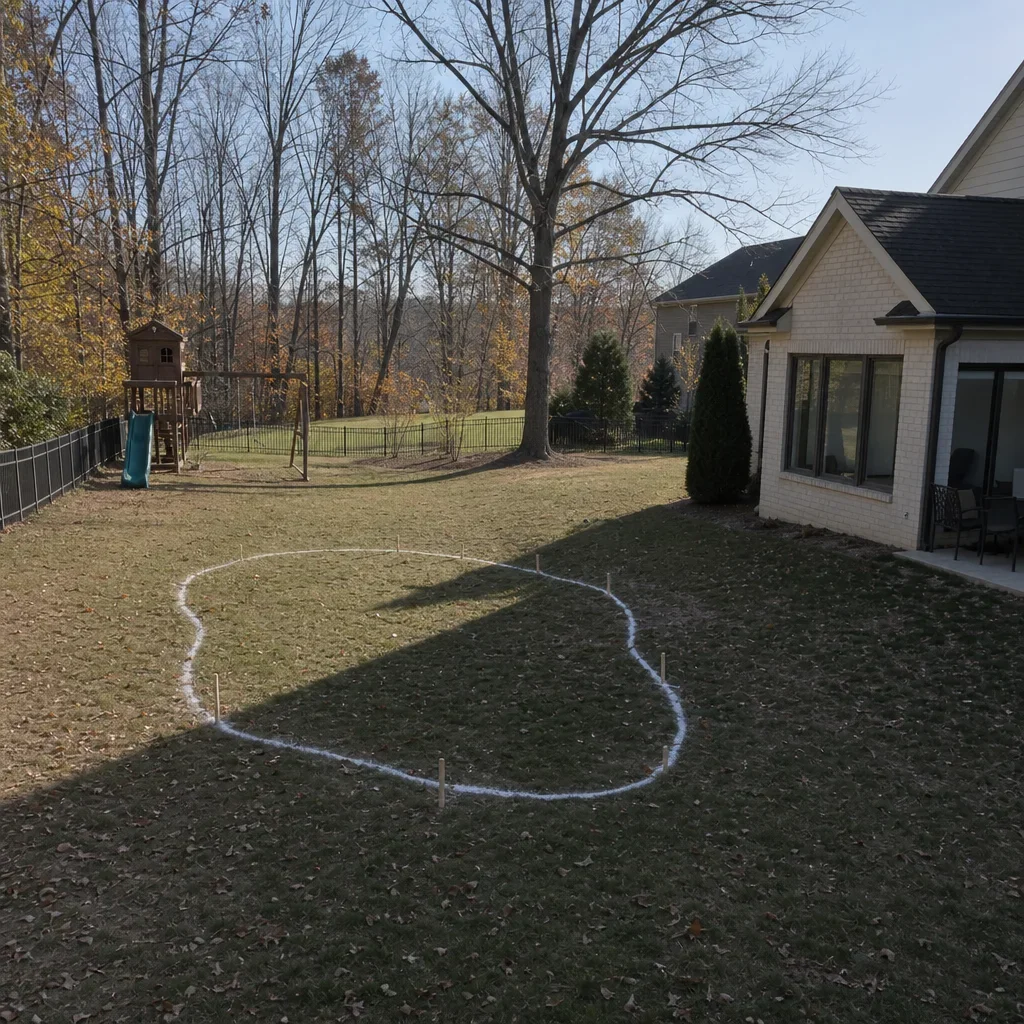
Most ponds do best with balanced light, not deep shade and not harsh all-day exposure. Aquatic plants commonly need about 4 to 6 hours of sunlight to perform well, while too much intense sun can push water temperature up and speed algae growth.
Morning sun with some afternoon relief is often a practical target because it supports plants without heating the pond as aggressively as full late-day exposure. Your actual site still matters because reflected heat off stone, fencing, or walls can make one yard much hotter than another.
A pond should not sit under heavy leaf-drop trees, in a low spot that collects runoff, near buried utilities without locates, or where snow clearing piles salted meltwater into the basin. GTA yards need surface water directed around the pond, not into it, because lawn fertilizer, soil, and road salt residues all work against fish health.
Visibility from the house improves both enjoyment and safety because you can see the water level, fish behaviour, and debris load sooner. Wind also matters because exposed sites lose water faster through evaporation and can create cold stress at the surface in shoulder seasons.
How Deep Should a Backyard Fish Pond Be?
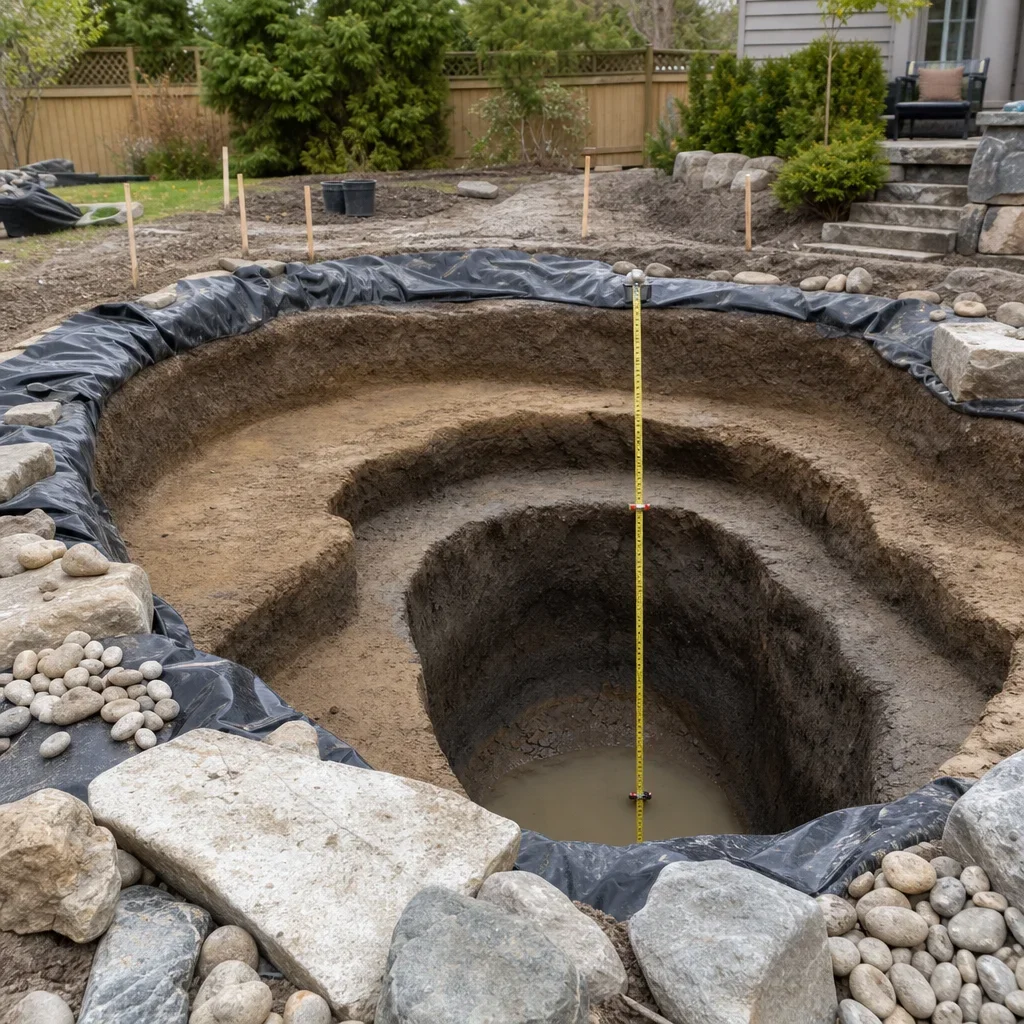
Depth is one of the biggest make-or-break decisions because it affects temperature stability, oxygen, predator exposure, and winter survival. Decorative ponds without fish are often about 12 to 18 inches deep, basic fish ponds commonly start around 18 to 24 inches, and cold-climate koi or overwintering ponds are commonly planned around 3 to 4 feet deep.
Two feet can be enough for some non-koi ponds in milder conditions, but it is usually a limited depth for long-term fish stability in Southern Ontario. Shallow water changes temperature faster, leaves less refuge under ice, and gives herons and raccoons easier access.
Goldfish generally tolerate smaller and shallower setups better than koi, but fish choice should follow the pond you can build properly, not the fish you like in a photo. Pond depth for fish should be planned with circulation, aeration, and winter strategy as one system, not as a stand-alone number.
Shelves and deep zones should work together because a pond that is all one depth wastes planting opportunities, while a pond with only shallow shelves tends to overheat and leaves fish exposed. In Ontario, outdoor overwintering usually needs a deeper refuge zone plus winter aeration or de-icing strategy rather than ice cover alone.
Best Fish for a Backyard Pond and What Can Survive Winter
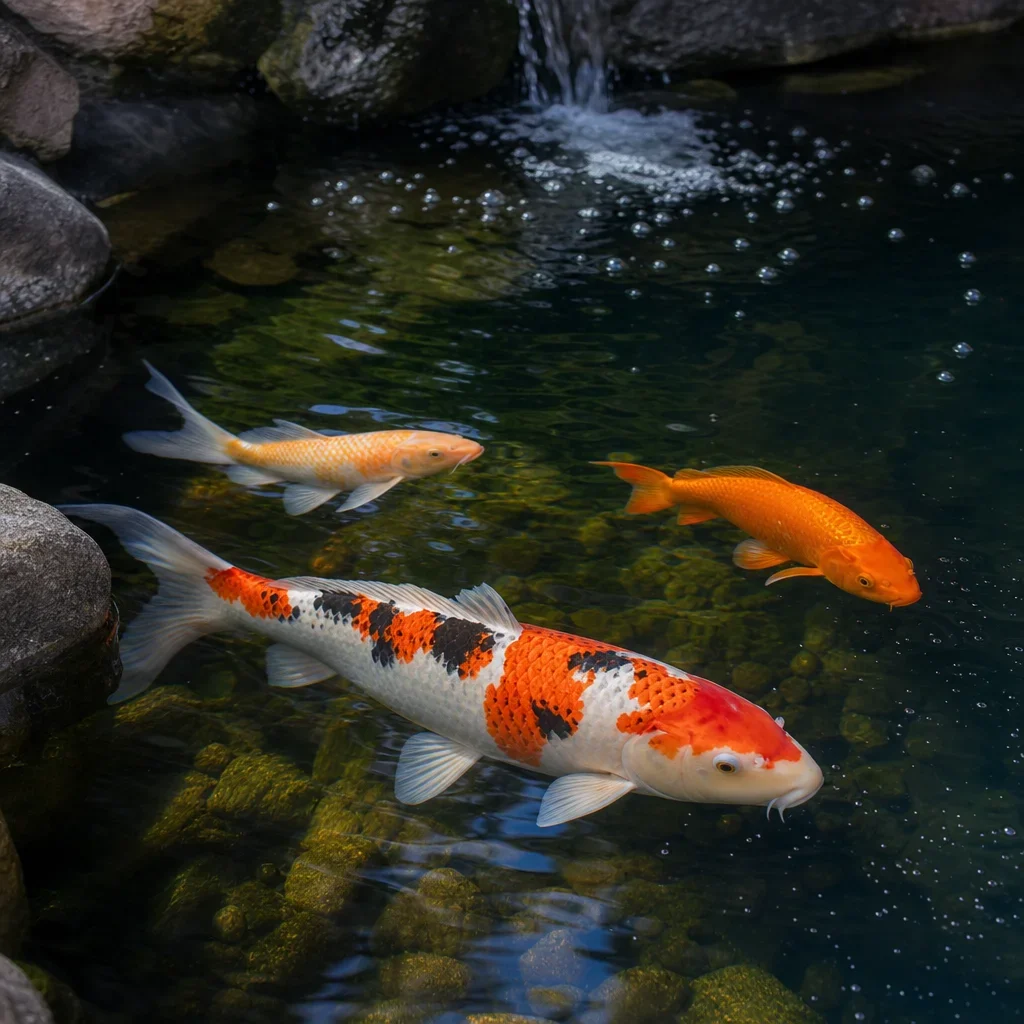
Goldfish are usually the safer starting point for backyard ponds because they need less space and filtration than koi, though they still need stable water quality and sensible stocking. Koi grow much larger, produce heavier waste loads, and push you into a bigger, deeper, more equipment-driven build.
Fish that can survive winter in a pond are typically cold-hardy pond species such as common goldfish, shubunkins, comets, and koi, but only if the pond has suitable depth, oxygen support, and winter conditions. No species reliably overwinters in every pond because depth, ice cover, water quality, and circulation all change the outcome.
The best fish for a backyard pond are the ones your pond can actually support through summer and winter, not the ones that fit a rough gallons-per-fish rule from a forum. I would be very careful with any simple stocking formula, especially for a small fish pond at home, because fish size, filter capacity, oxygen, and feeding all matter more than one blanket number.
A 100 gallon pond is generally too small for koi and leaves very little margin for fish waste, overheating, or water quality swings. Small volumes can still work as planted water features or very lightly stocked ponds, but overstocking is one of the fastest ways to create cloudy water, algae, and fish stress.
Can Fish Live in a Pond Without a Pump?
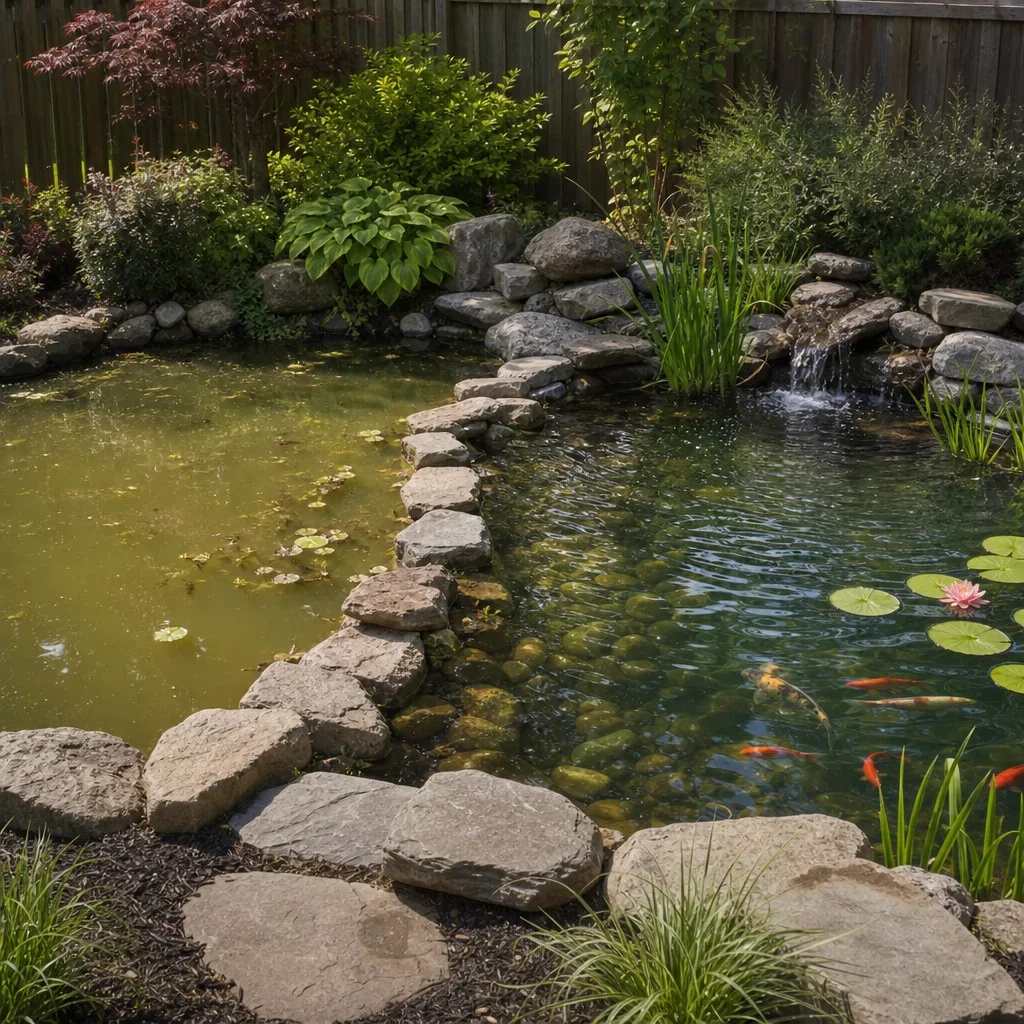
Fish can survive in some low-tech ponds, but fish ponds are generally healthier and easier to maintain with circulation and filtration. A pump moves water, a biological filter supports the bacteria that convert fish waste, and surface movement helps oxygen exchange.
Surviving is not the same as thriving because a stagnant pond can still hold fish for a time while building low oxygen, mosquito pressure, and poor water quality. Smaller ponds are less forgiving than larger ponds because they heat, cool, and foul more quickly.
Fish pond filtration does not always mean one big box of equipment. Mechanical filtration captures debris, biological filtration processes ammonia and nitrite, aeration adds oxygen, and UV clarification can help with suspended green water in some systems.
Liner vs Preformed Shell vs Natural Clay: Which Pond Construction Method Is Best?
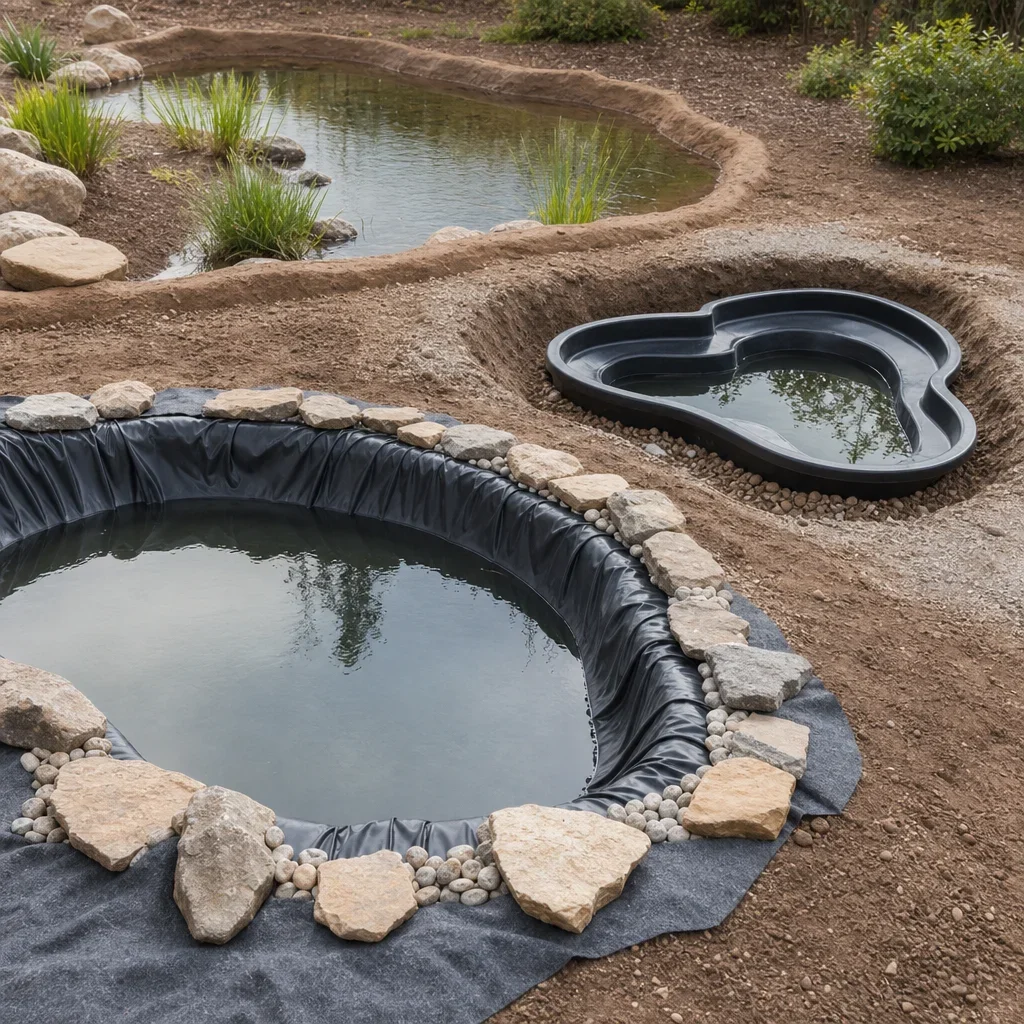
Flexible liner systems are usually the best fit for custom residential ponds because they give you the most freedom on shape, shelves, edge detailing, and integrated waterfalls. Liner sizing is commonly calculated as pond length plus 2 times maximum depth plus overlap, and pond width plus 2 times maximum depth plus overlap, with about 1 to 2 feet of overlap per side.
Preformed shells are simpler for very small projects, but they lock you into factory shapes and depths and can look undersized quickly in a premium landscape. Natural clay ponds are rarely the default for urban and suburban fish pond design at home because they need very specific soil conditions and more land to perform predictably.
Underlayment matters because the liner should sit on a smooth, cushioned base rather than directly on roots, stone, or construction debris. That layer helps resist puncture and makes the liner less vulnerable to settlement damage over time.
| Construction type | Flexibility | Install complexity | Leak risk | Best use |
|---|---|---|---|---|
| Flexible liner | High | Moderate | Low if protected and detailed well | Custom fish ponds and water garden design |
| Preformed shell | Low to moderate | Lower | Moderate if base shifts | Small decorative ponds |
| Natural clay | Site-dependent | High | Site-dependent | Large rural ponds, not typical GTA yards |
Materials and Equipment Checklist for a Backyard Fish Pond
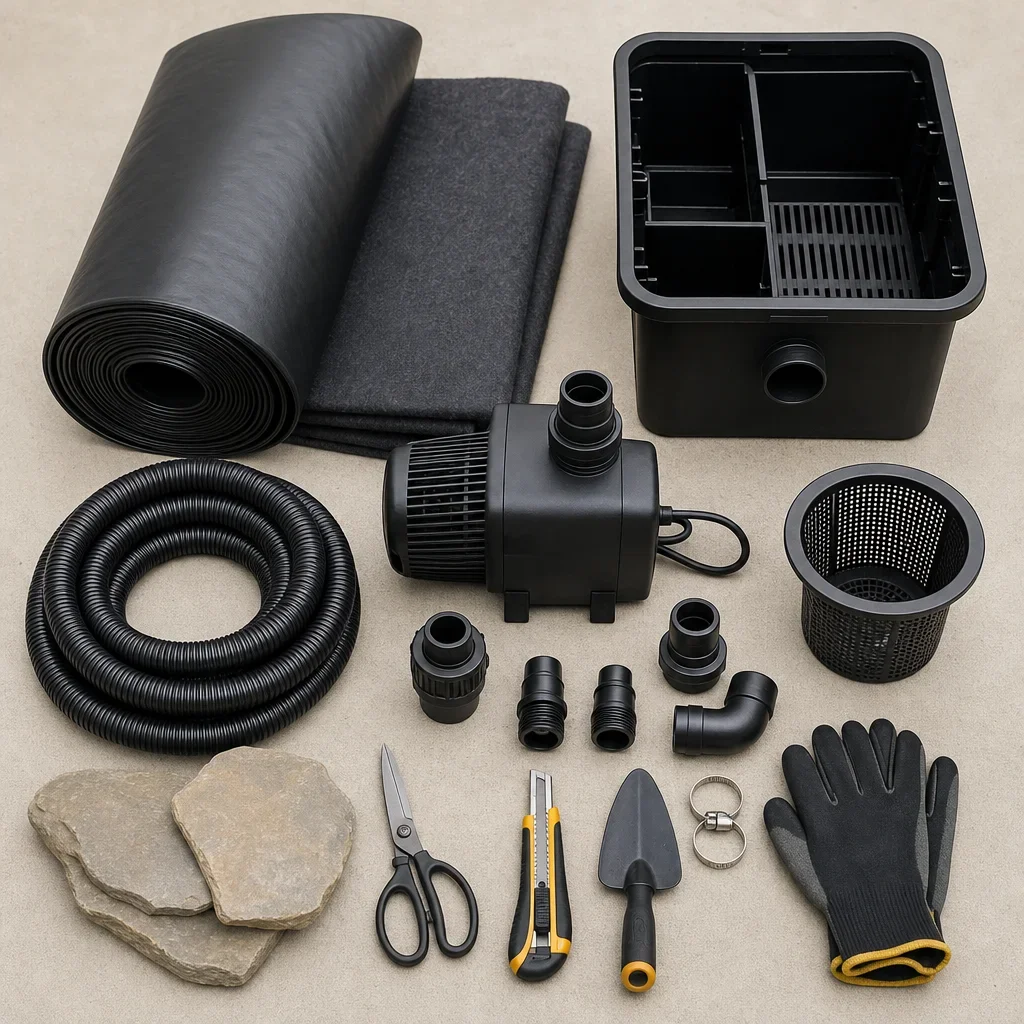
A durable pond build needs excavation materials, liner components, edging, plumbing, electrical planning, filtration, and finishing details before you dig. Core materials for pond liner installation usually include marking paint or hose, excavation tools or machinery, underlayment, liner, edging stone, plumbing fittings, pump, filter, hose or pipe, and a safe access point for maintenance.
A complete fish pond checklist usually adds a skimmer, biological filter, waterfall box or return fitting, check valves where needed, protective netting for leaf season, and dechlorinator if municipal water is used on fill-up. If you want a fountain pump or waterfall, plan that from the start because pipe routes and equipment chambers are harder to fix once stone is in.
Plants, fish care supplies, and finishing materials also belong in the first budget draft because pond projects often run over when owners only price the hole and liner. Service access is not optional on a good build because buried or blocked equipment is one of the main reasons simple maintenance turns into a major teardown.
How to Size a Pond Pump and Filter
Pump and filter sizing should match water volume, head height, waterfall lift, pipe friction, and fish load rather than the box claim alone. Undersized equipment can make a new pond look acceptable for a short time, then struggle once fish grow, plants fill in, and debris load rises.
Mechanical filtration removes solids, biological filtration processes dissolved fish waste, aeration supports oxygen, and UV units target suspended green water rather than every algae problem. Those parts do different jobs, so a single pump does not replace a balanced filtration plan.
A lightly stocked ornamental pond can run on simpler equipment than a koi-heavy pond because waste load is the driver that changes everything. I tell homeowners not to save money by shrinking filtration first, because that decision usually comes back as cloudy water, smell, and repeated cleanup.
Winter operations need separate thought because some waterfall systems are shut down to avoid ice dams and splash loss, while deeper circulation or aeration may still run depending on the setup. You should verify the specific equipment strategy with the manufacturer or your installer rather than copying a generic winter setting.
Step-by-Step Backyard Fish Pond Build Process
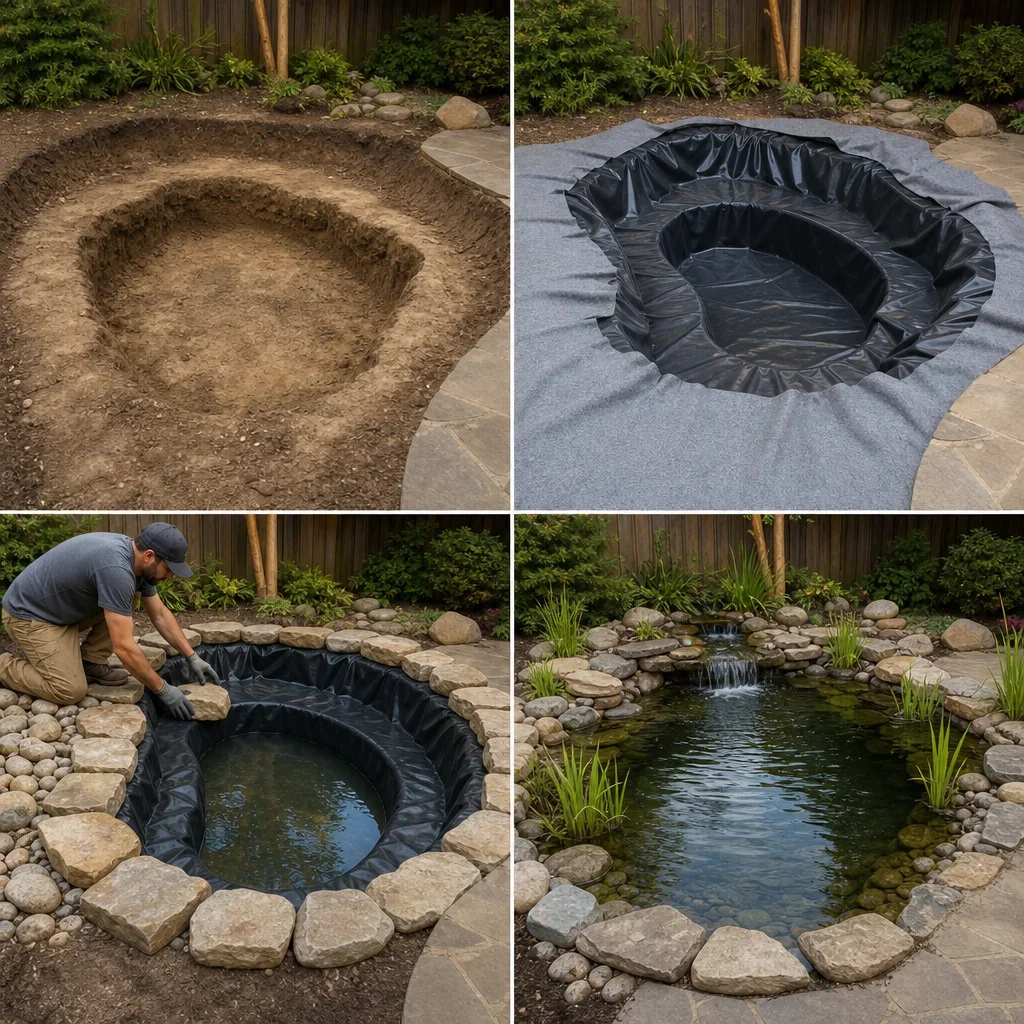
You cannot just dig a hole and make a pond if you want a durable fish system. A proper build sequence is plan, call for utility locates, mark the shape, excavate shelves and deep zones, smooth the base, install underlayment and liner, set edging, place equipment, fill, condition water if needed, start filtration, add plants, and add fish later after the system stabilizes.
The first step is site planning because depth, shape, runoff control, and electrical access are much harder to correct after excavation. In Ontario, underground locates should happen before digging so gas, hydro, telecom, and other services are identified on site.
The excavation should include depth transitions and planting shelves rather than vertical walls everywhere because shelves support pots, edge detailing, and safer visual proportions. The deep zone should be the lowest stable refuge area, not a random pit at one end.
The liner system should go onto a cleaned and protected base because roots, angular stone, and debris are common puncture causes. Once water goes in, the edge treatment should lock the liner visually and physically so exposed liner does not show after settling.
Fish should go in after the system is running and water quality is stable, not on the same day the pond is filled for most setups. DIY can work on smaller, simpler ponds, but professional help is usually worth it for electrical work, steep grades, retaining walls, larger excavations, and koi-grade systems.
How to Finish the Edges So the Pond Looks Built-In
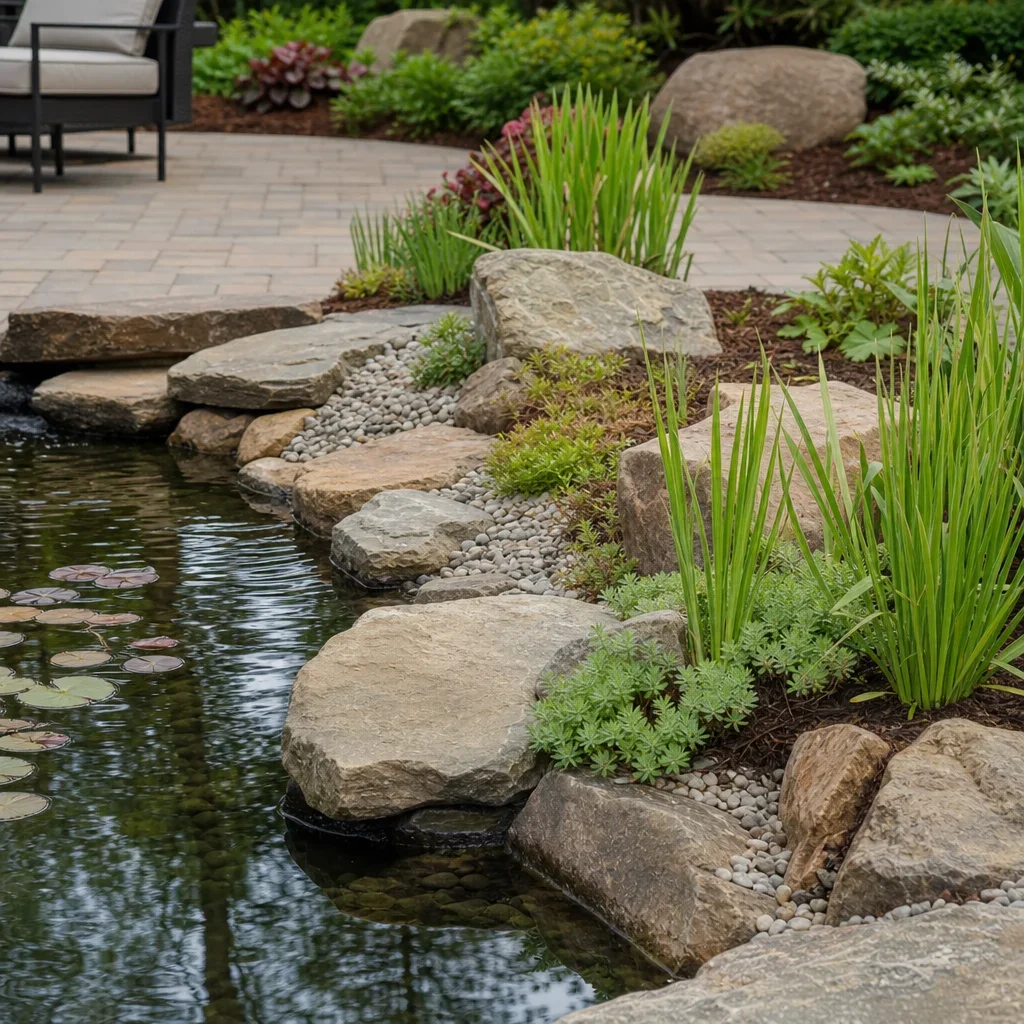
A pond looks custom when the liner edge disappears and the stone detailing feels tied to the rest of the yard. Common approaches include boulder edging, flagstone caps, gravel margins, planting pockets, and formal coping that matches nearby patios or steps.
Rocks should sit stable on prepared support, not on sharp point loads that can pinch the liner. That is one reason underlayment and thoughtful edge build-ups matter as much as the visible stone.
To hide pond liner edges with rocks, the liner usually needs to extend beyond the visible water line and tuck under coping stone, gravel, or planting zones rather than stopping right at the edge. River rocks can soften a natural pond, while flagstone gives a cleaner and more intentional finish on modern or simple fish pond design.
Waterfalls, Skimmers, Returns, and Aeration Options
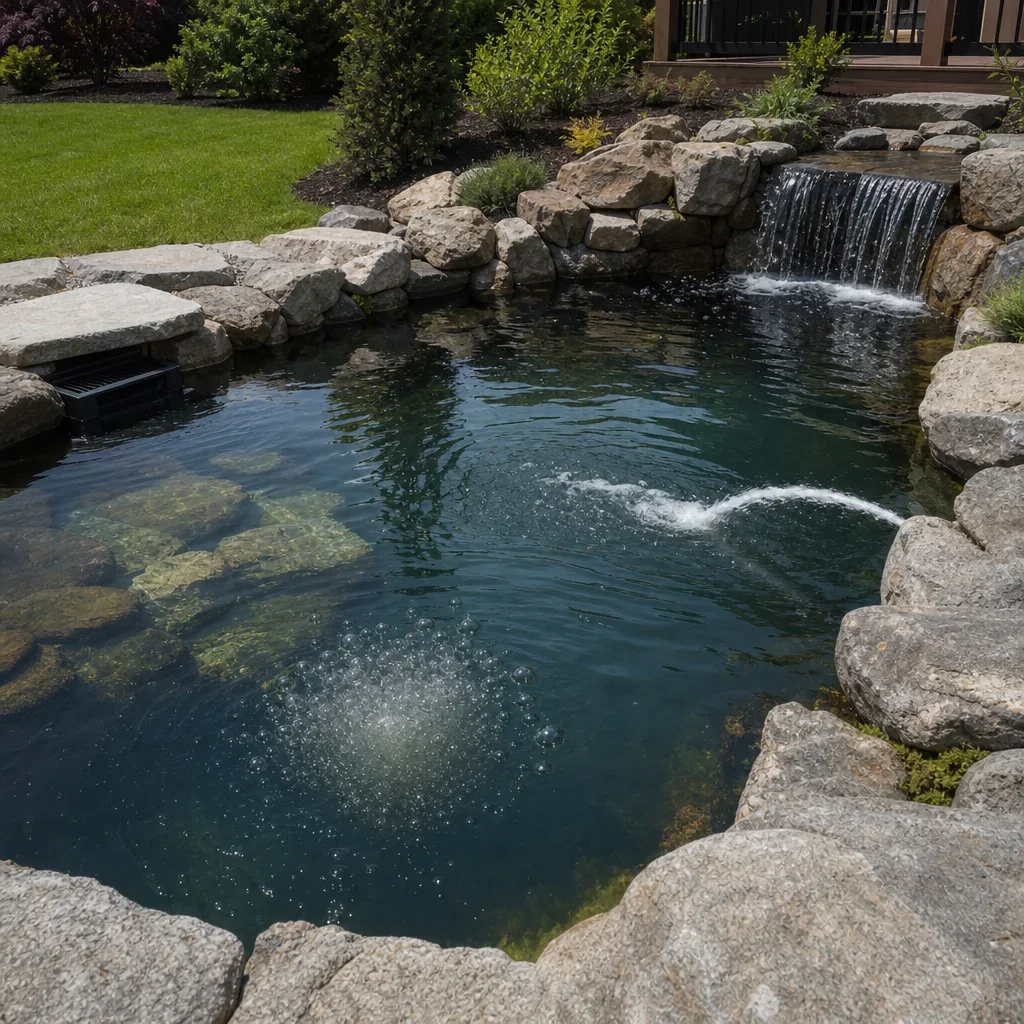
A waterfall adds sound and movement, a skimmer catches floating debris, returns improve circulation, and aeration supports oxygen. Each piece earns its place when it solves a real site problem rather than just adding cost.
Waterfalls are popular because they make the pond feel alive and can visually connect upper and lower grades. They also increase evaporation and can lose a surprising amount of water through splash if the drop and landing are not detailed well.
Skimmers are especially useful on leaf-heavy lots because floating debris is easier to remove before it sinks and feeds algae. Return jets or spillways help reduce dead spots so warmer months do not leave stagnant corners.
Aeration supports fish health and also helps with mosquito control because mosquitoes prefer still water for breeding. A pond with fish, circulation, and surface movement is usually less mosquito-prone than a still decorative basin.
Common Fish Pond Problems and How to Fix Them
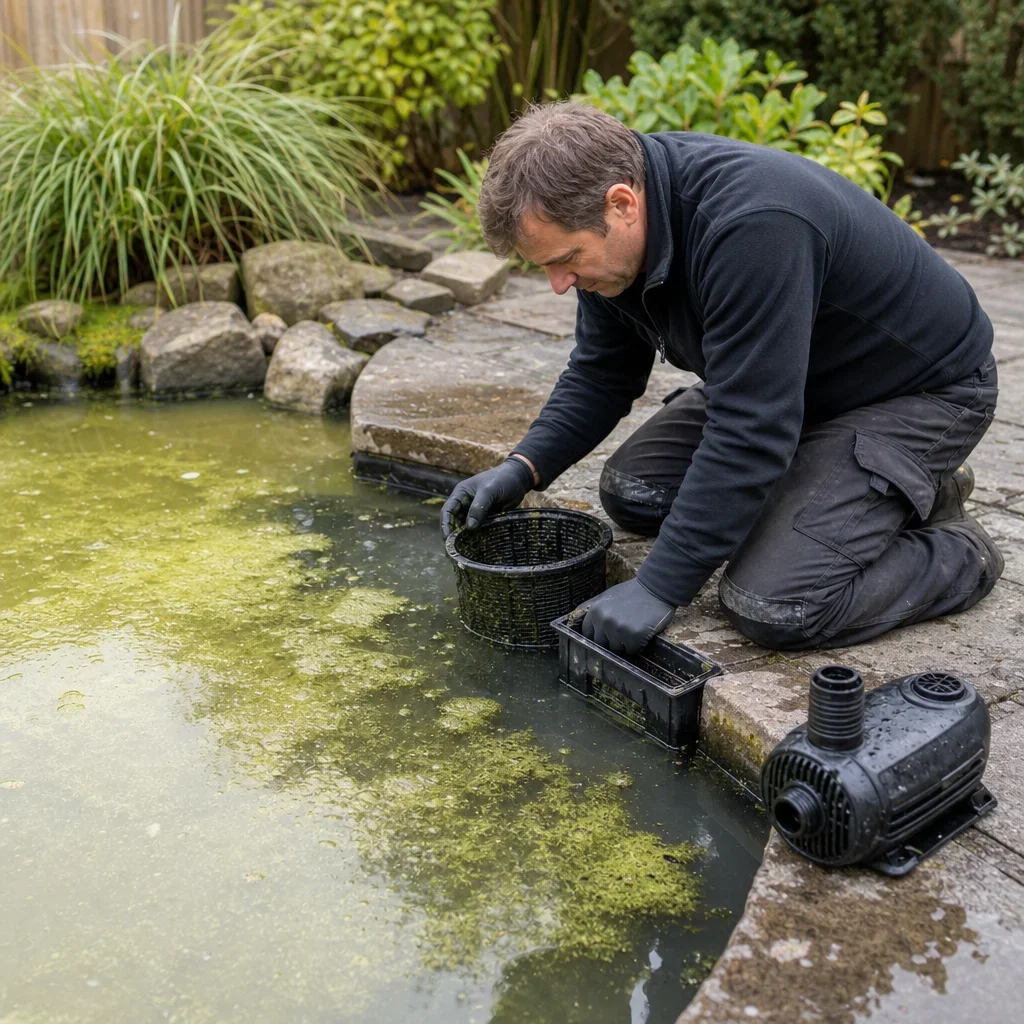
Most pond problems come back to water movement, nutrient load, sunlight, debris, or leaks rather than one missing additive. Cloudy water commonly points to suspended fines, new-system imbalance, fish activity, or insufficient filtration.
Green water usually means suspended algae driven by light and nutrients, while string algae usually grows on surfaces where sunlight and nutrient buildup meet. Pond algae control starts with circulation, shade balance, debris removal, and feeding discipline before any chemical treatment.
A dropping water level can come from splash loss, plumbing leaks, liner punctures, or water wicking over a low edge where stone or soil touches the liner. Pump failure can come from clogged intakes, tripped power, worn impellers, or blocked filter mats reducing flow.
Fish gasping near the surface is a warning sign for low oxygen or water quality stress and should never be brushed off as normal behaviour. Bad smell usually points to decaying organic matter, trapped sludge, or poor circulation at depth.
What kills fish in a pond naturally is usually low oxygen, poor water quality, sudden temperature swings, toxin runoff, disease stress, predator attacks, or winter gas exchange failure under ice. Do not default to algaecides first, because the cause may be circulation, overfeeding, dead plant matter, or a failing pump.
| Symptom | Likely causes | First checks |
|---|---|---|
| Green water | Sun plus nutrients | Reduce feeding, clean debris, review filtration |
| String algae | Surface light and nutrient buildup | Remove manually, improve shade balance |
| Cloudy water | Suspended solids or immature bio system | Check filter condition and fish load |
| Low water level | Leak, splash, wicking edge | Inspect liner edge and plumbing |
| Fish gasping | Low oxygen or poor water quality | Check circulation and aeration immediately |
| Bad smell | Sludge and stagnation | Inspect bottom debris and dead zones |
| Weak pump flow | Clog or pump wear | Clean intake and filter mats |
How to Prevent Algae and Mosquitoes Without Over-Relying on Additives
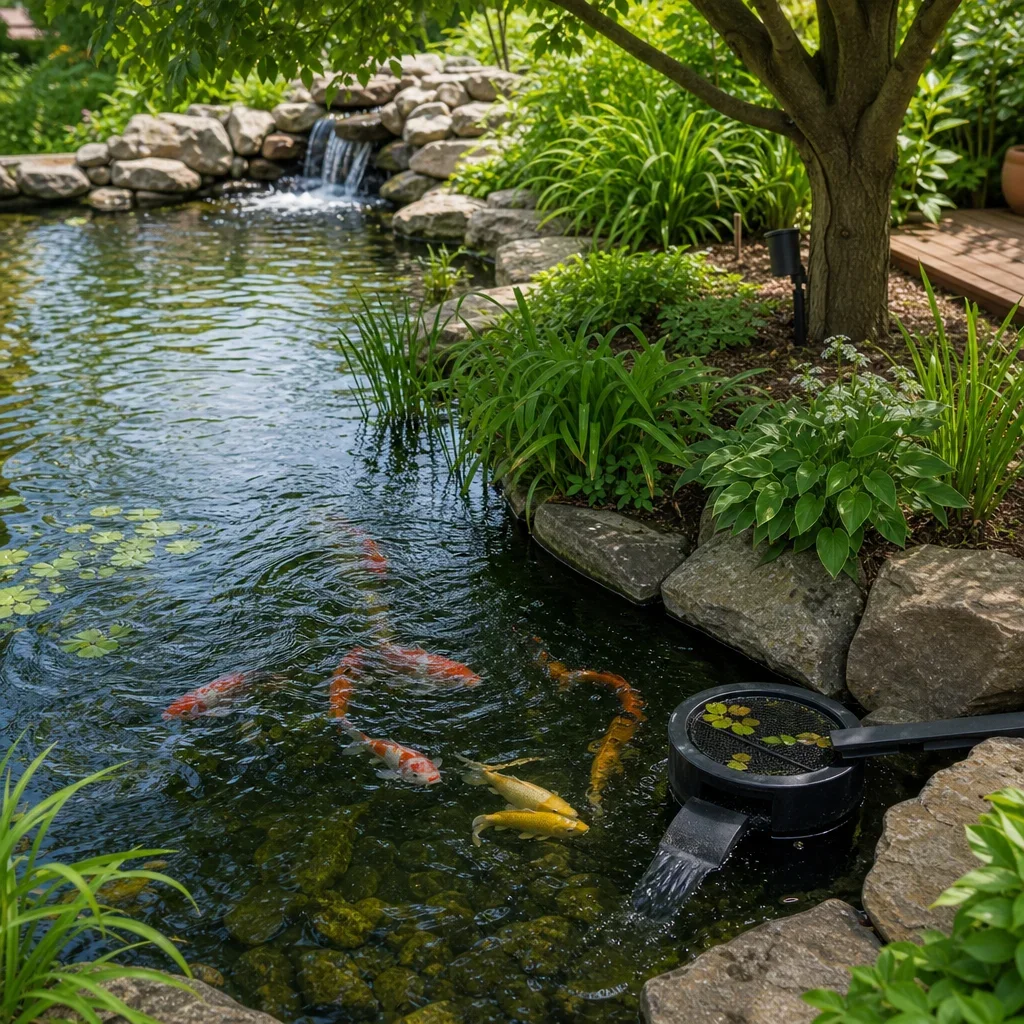
The cleanest ponds usually control nutrients first. That means limiting overfeeding, removing leaf debris, using enough circulation, and building enough plant competition into the system.
Mosquitoes breed in still, nutrient-rich water, so moving water is one of the simplest controls. Fish, surface movement, skimming, and regular debris removal all make the pond less inviting to larvae.
Beneficial bacteria can help process organic waste, but they are one tool, not a cure-all. If the pond gets too much sun, receives runoff, or carries too many fish, no additive will make bad design disappear.
A water garden design with balanced planting can also help by shading water and competing for nutrients, though too much dense planting can trap debris and make clean-out harder. Good pond algae control is usually about ecosystem balance, not quick chemistry.
Cleaning, Seasonal Care, and How to Winterize a Fish Pond in Ontario
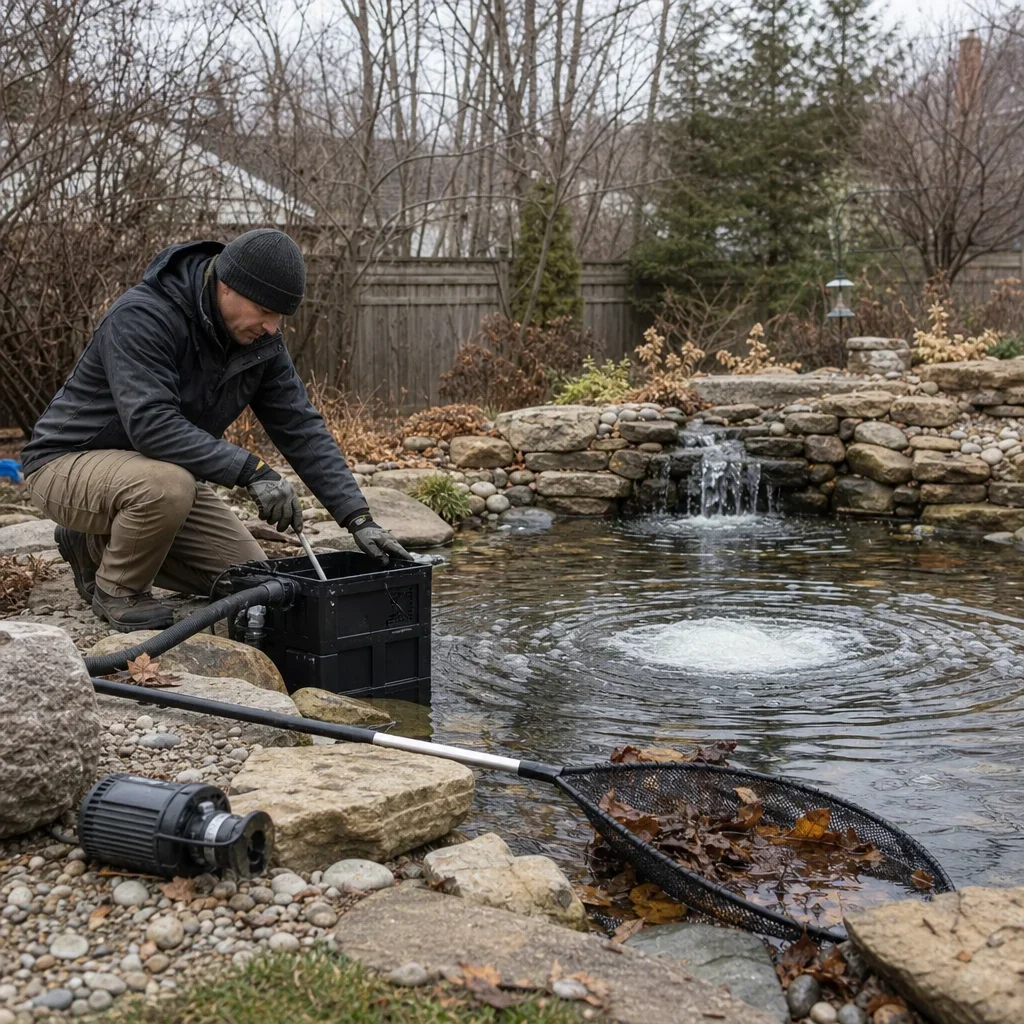
Ontario pond care changes by season because summer algae pressure and winter ice risk are different problems. Spring usually means checking pumps, filters, edging movement, and plant cleanup, while fall usually means managing leaf drop before it sinks.
A DIY backyard pond stays cleaner when debris is removed early rather than left to break down into sludge. Larger ponds do not always need full draining for routine care, and full drain-down can be stressful or unnecessary depending on fish load, pond size, and system design.
Pond winterizing in Ontario should focus on protecting plumbing, preserving gas exchange, and giving fish a stable deeper zone if they will stay outside. An open area in the ice is commonly maintained with aeration or de-icing equipment rather than by smashing ice, which can stress fish.
Some pumps and waterfalls are shut down for winter, especially shallow spillways that can create ice dams or excessive splash loss. Other systems keep selected circulation running, so the correct plan depends on equipment design, pond depth, and the installer or manufacturer guidance.
Freeze-thaw cycles in the GTA also affect stone stability and overflow paths, so the winter plan should include where water goes during thaws and how edges handle movement. If you are unsure whether fish should overwinter outside, speak to a pond professional about your exact pond, because depth and equipment really do change the answer.
Do You Need a Permit for a Backyard Pond in Toronto or the GTA?
Permit needs vary by municipality, project depth, electrical work, grading changes, retaining walls, and how the feature is classified locally. A small decorative basin may be treated differently from a deeper pond with structural walls, drainage changes, and outdoor electrical.
You should also separate the pond itself from the work around it because electrical permits, lot grading review, barrier requirements, and underground locates can all apply even if the excavation seems simple. GTA municipalities do not all handle landscape features the same way, so you need to verify the rule with your own city before construction.
A practical decision tree is simple: if the project is shallow and decorative, verify local zoning and utility locates; if it includes deeper water, major grading, retaining, or fish systems with power, verify municipal requirements and electrical approvals before digging. If your yard has slope issues or drainage conflicts, get those reviewed early because runoff control is often a bigger issue than the pond hole itself.
What Does a Backyard Fish Pond Cost?
Cost depends on size, excavation access, depth, filtration, edging, electrical, planting, fish load, and how much of the surrounding landscape is rebuilt with it. A very simple DIY pond can run in the low thousands, a professionally built mid-range fish pond often lands in the mid-thousands to low five figures, and a custom premium pond integrated with stonework, waterfall features, grading, and planting can move well into five figures and up.
The cheapest pond is rarely the cheapest long-term option because undersized filters, poor edge details, and weak drainage planning tend to come back as repairs, algae work, or partial rebuilds. If you want a koi pond design, expect the budget to rise because deeper excavation and stronger equipment are not optional extras.
Premium GTA builds cost more when access is tight, spoil removal is difficult, electrical runs are long, or the pond ties into retaining walls, patios, outdoor lighting, and planting beds. The upside is that integrated construction usually looks better and performs better than a stand-alone pond dropped into an unfinished yard.
Low-Maintenance Pond Design Tips for Busy Homeowners
Low-maintenance pond design starts with simpler shapes, sensible fish loads, accessible equipment, and good site placement. Many maintenance headaches begin in the design stage, especially when ponds are pushed under trees, built too shallow, or fitted with undersized filters.
A simple backyard fish pond design is easier to keep clean when the perimeter is stable, the skimmer is easy to reach, and the pump area does not require half the garden to be dismantled for service. Hardy plants and balanced shade help too, but they do not replace circulation and basic debris control.
If you want less work, avoid overstocking and avoid treating a small pond like a large ecosystem. In small backyard fish pond design, restraint usually delivers a cleaner look and more stable water.
When to Hire a Pond Contractor Instead of DIY
DIY makes the most sense on small, shallow, low-risk builds with simple edging and minimal electrical complexity. Once the pond gets larger, deeper, structurally retained, or fully integrated into a premium landscape, professional design-build usually reduces risk.
You should strongly consider a contractor when the site has poor grading, steep slopes, retaining walls, utility conflicts, or a fish system that needs reliable winter performance. That is even more true if the pond connects to patios, lighting, drainage, or a broader backyard renovation.
For GTA homeowners who want a high-end result, the value is not just the pond shell. It is the 3D planning, drainage and grading integration, line-by-line pricing, and freeze-thaw detailing around the whole space. RockLeaf serves Markham, Toronto, and the wider GTA with in-house design, a certified crew, 1,030+ completed projects, a 5-year total warranty, a plant-survival guarantee, and a 14-day start promise on qualifying projects . Free 3D design and quote are available; conditions apply, ask an agent.
FAQ
How deep does a backyard fish pond need to be?
Decorative ponds are often about 12 to 18 inches deep, general fish ponds commonly start around 18 to 24 inches, and cold-climate koi or overwintering ponds are commonly planned around 3 to 4 feet. The right depth depends on fish type, winter plan, and filtration.
Is 2 feet deep enough for a pond?
Two feet can work for some non-koi ponds, but it is often a limited depth for GTA overwintering and long-term fish stability. Shallow ponds swing faster in temperature and give fish less refuge.
What are the best fish for a backyard pond?
Goldfish are usually the easiest starting point, while koi need more volume, depth, and filtration. Choose fish based on pond capacity, not just appearance.
What fish can survive winter in a pond?
Cold-hardy pond fish such as common goldfish, comets, shubunkins, and koi can overwinter in some ponds if depth, oxygen, and winter conditions are appropriate. No fish is guaranteed to overwinter in every pond.
Are fish ok in a pond without a pump?
Some fish can survive in low-tech ponds, but ponds with fish are generally healthier with circulation and filtration. Pumps and aeration make water quality easier to maintain.
Is a pond better in sun or shade?
Balanced light is usually best. Many aquatic plants do well with about 4 to 6 hours of sun, while too much all-day exposure can intensify algae and heating.
Where not to put a pond?
Avoid heavy leaf-drop trees, runoff low spots, unknown buried utilities, play-zone edges without safety planning, and areas where salted snowmelt drains into the water.
Do I need a permit to dig a pond in my backyard?
Maybe. Municipal rules can change based on electrical work, grading, walls, barriers, and the kind of pond being built, so check with your city before construction.
How many fish can I put in a 100 gallon pond?
There is no safe one-line answer because species, fish size, filtration, oxygen, and depth all matter. I would treat 100 gallons as a very small pond and stock it very cautiously.
What are common fish pond problems?
The main ones are algae, cloudy water, low oxygen, sludge, leaks, and pump issues. Most trace back to circulation, nutrients, sunlight, debris, or poor detailing.
What kills fish in a pond naturally?
Low oxygen, poor water quality, sudden temperature shifts, toxins in runoff, disease, predator stress, and winter gas exchange failure are common causes.
How do I keep a backyard fish pond clean?
Keep debris out, avoid overfeeding, size the filter correctly, maintain circulation, and clean skimmers and filter media before sludge builds up.
If you are still weighing a pond against other backyard pond ideas, the next smart step is to sketch the location, depth goal, and maintenance level you actually want before pricing anything. That alone usually tells you whether a simple water garden, a goldfish pond, or a true koi build makes sense.