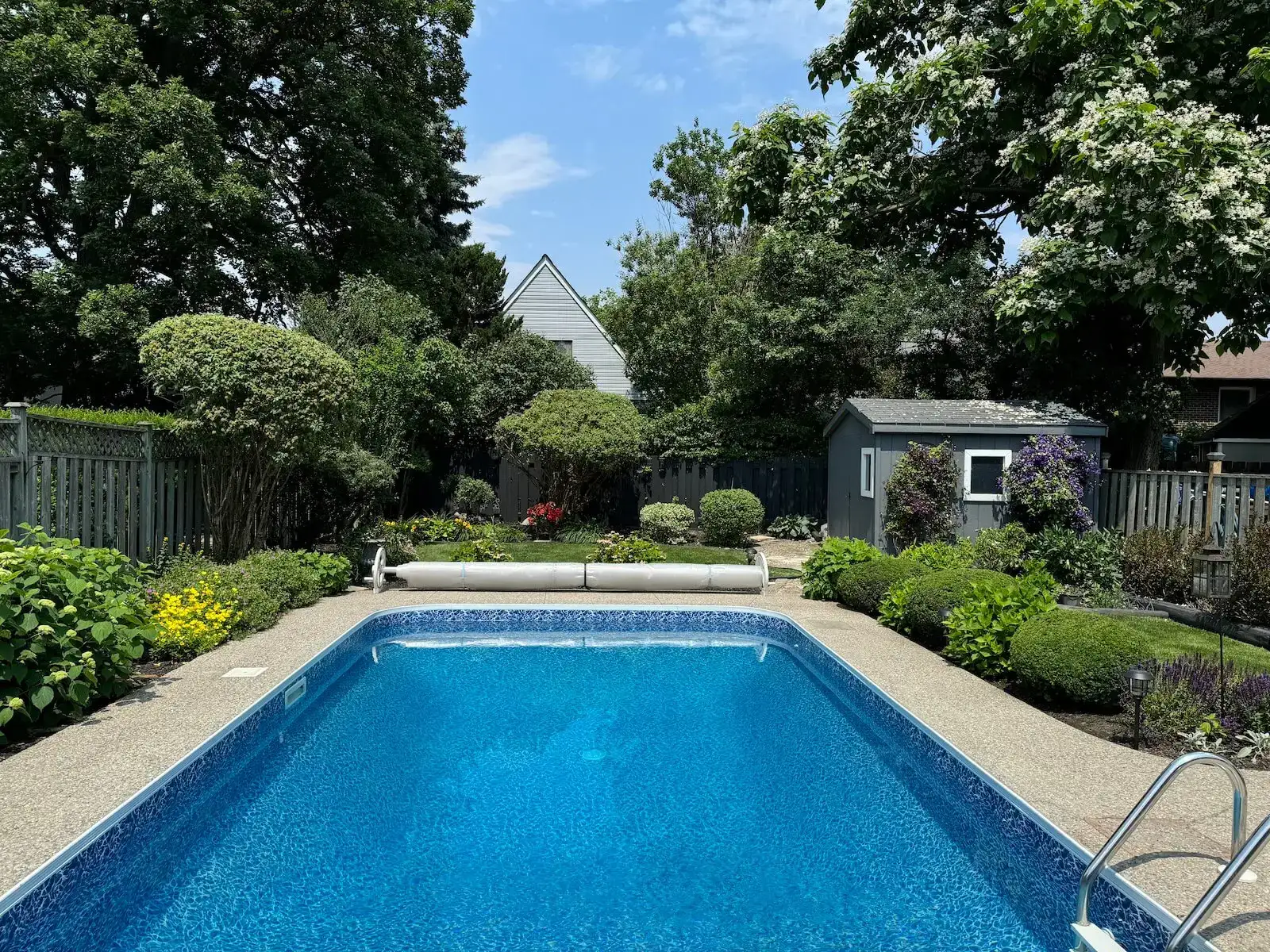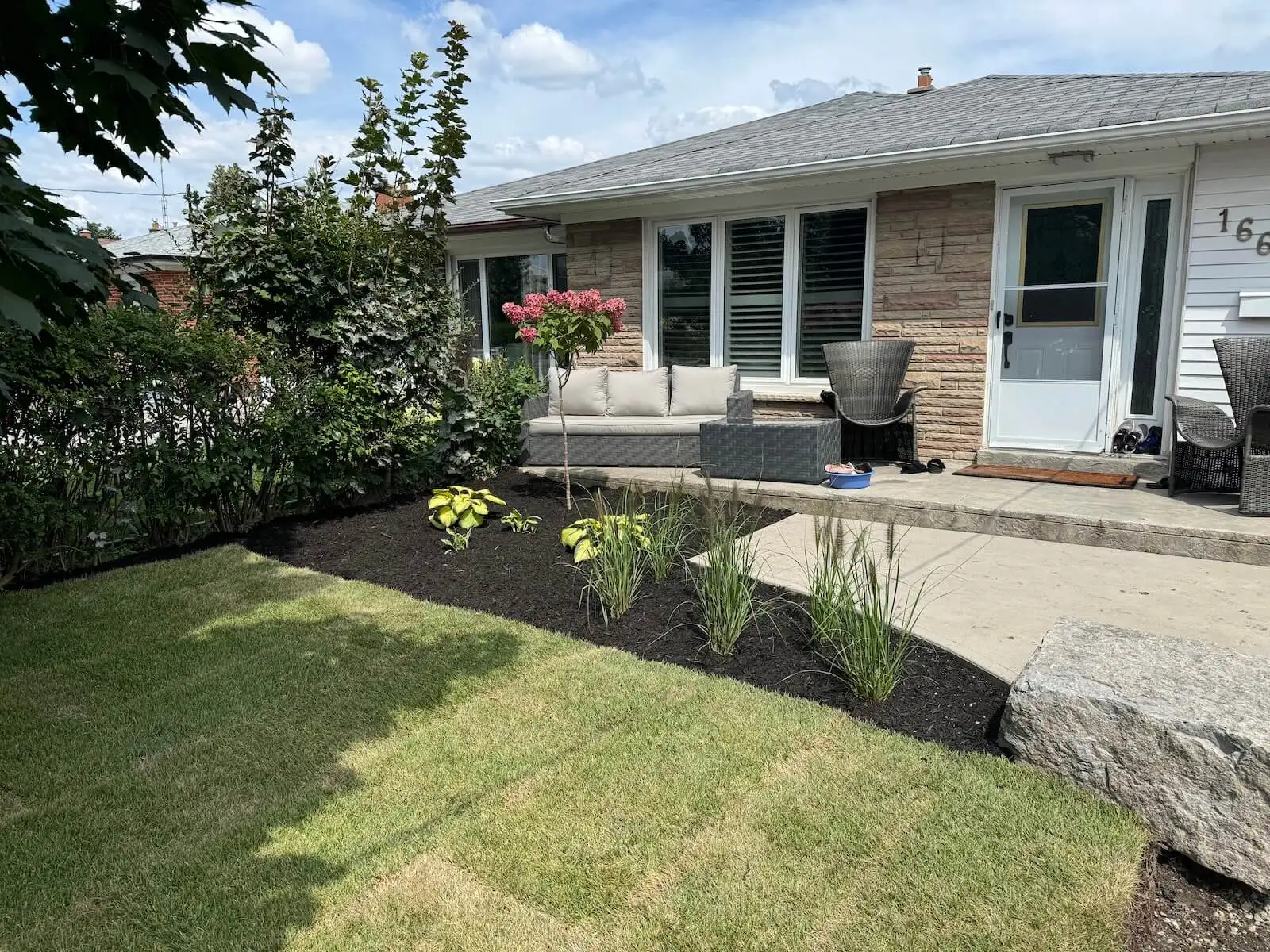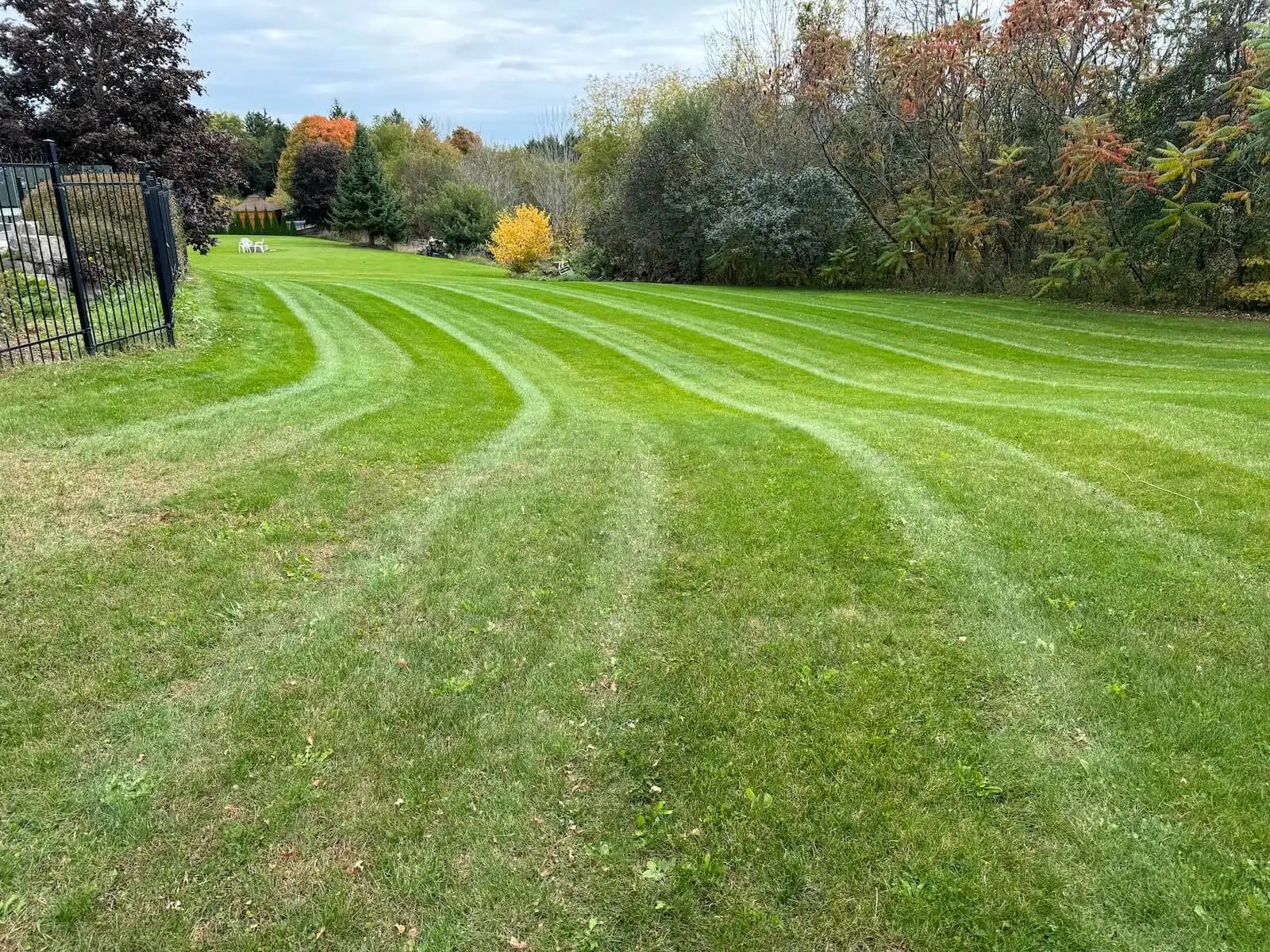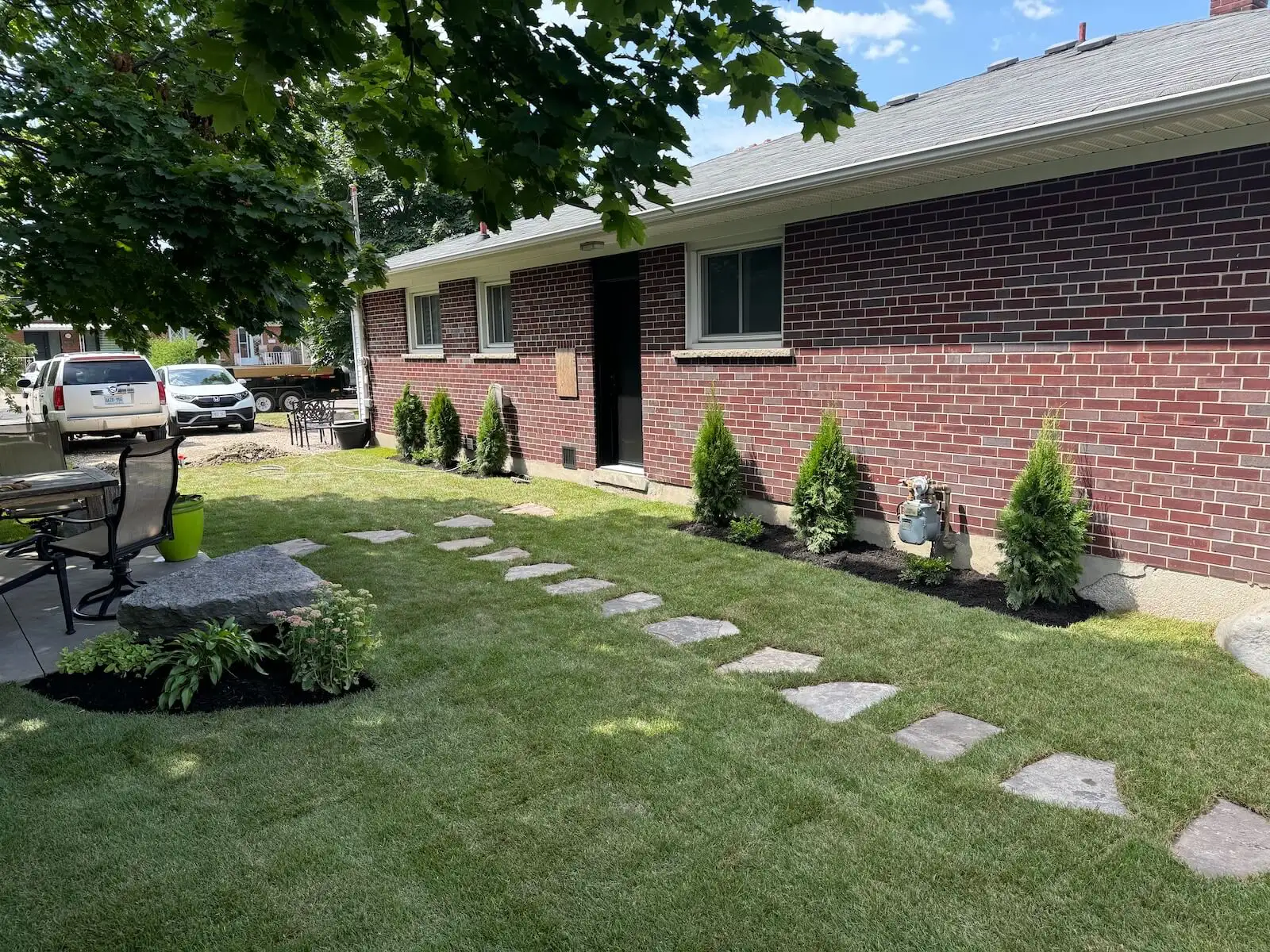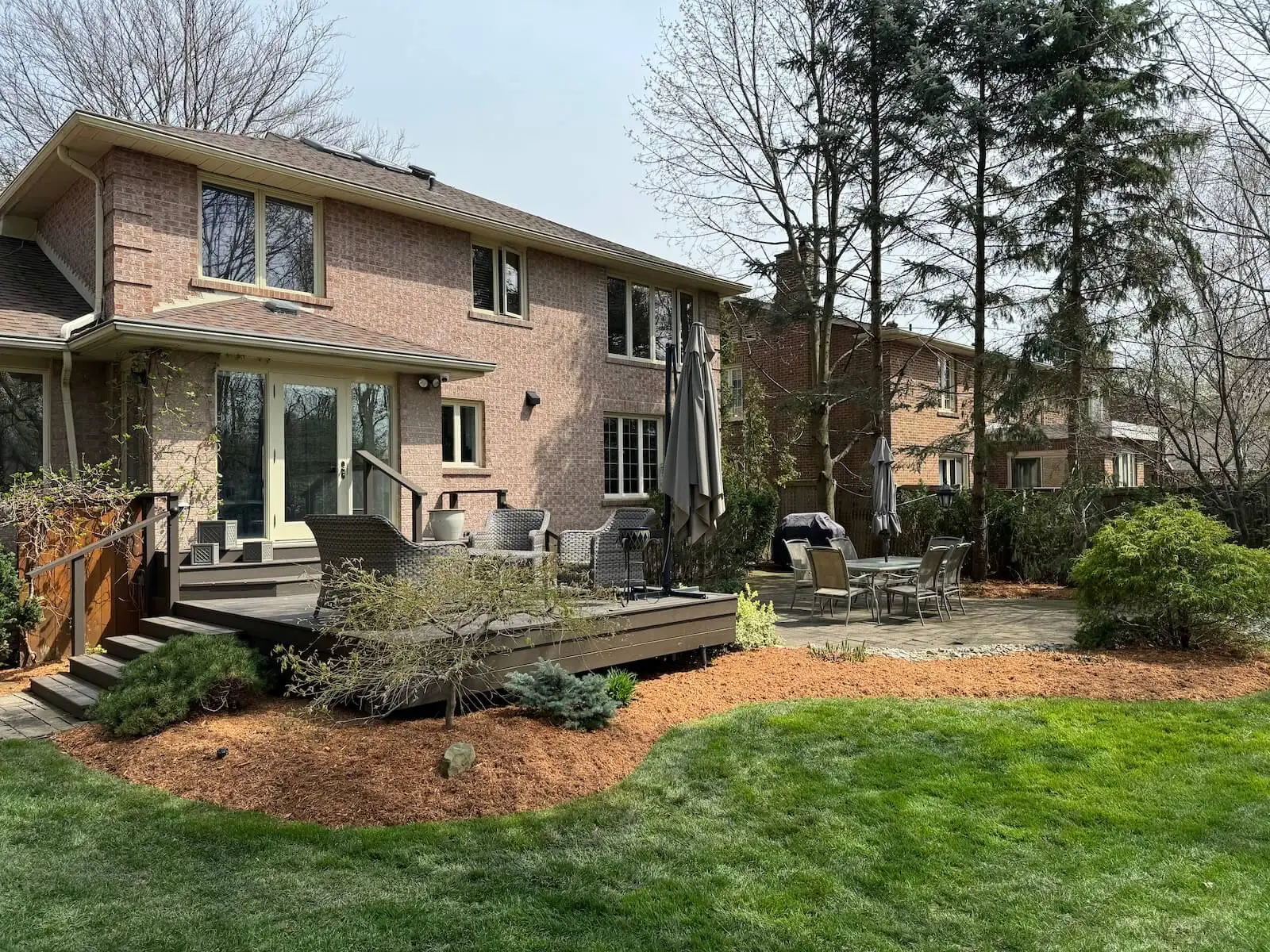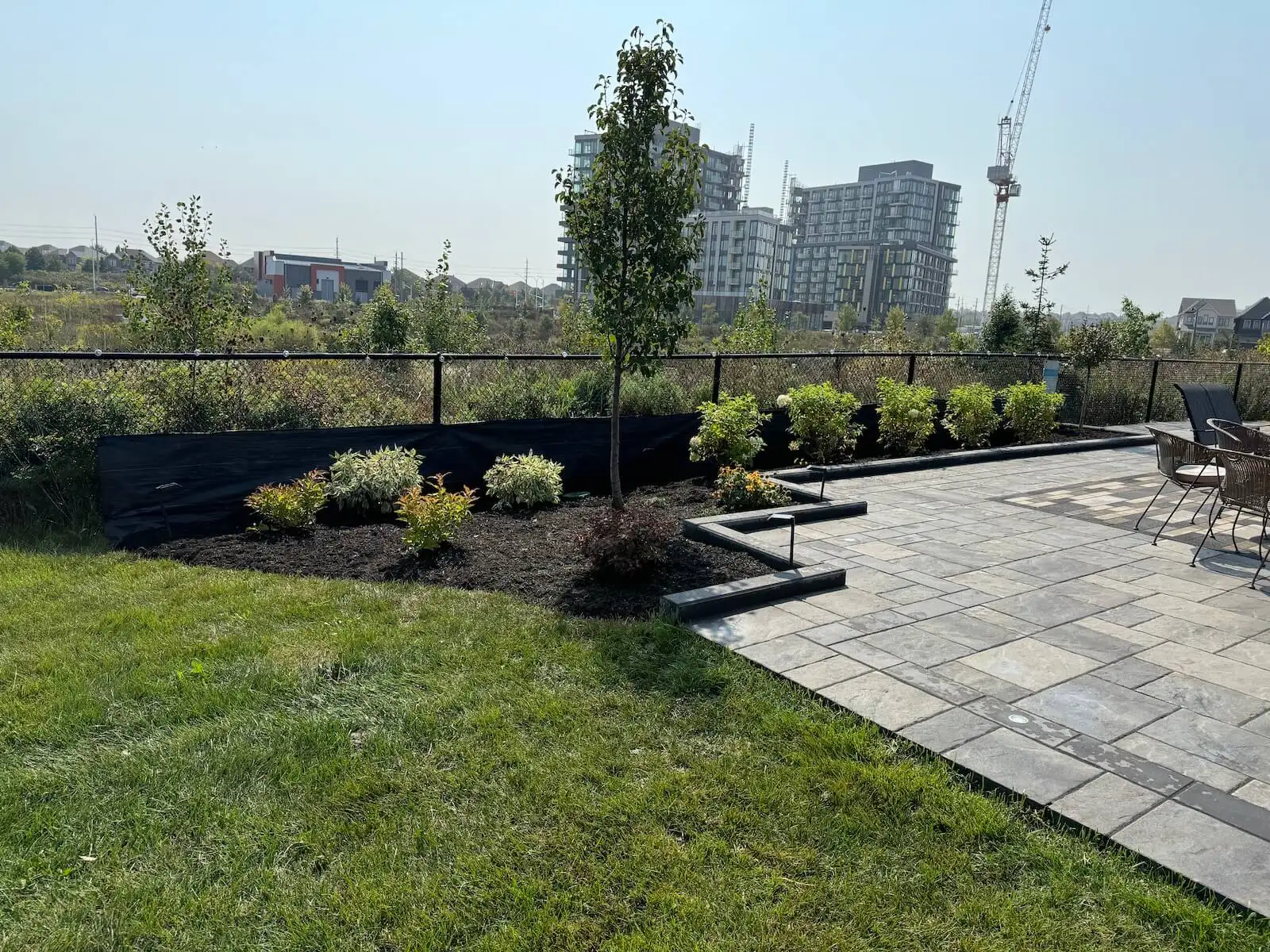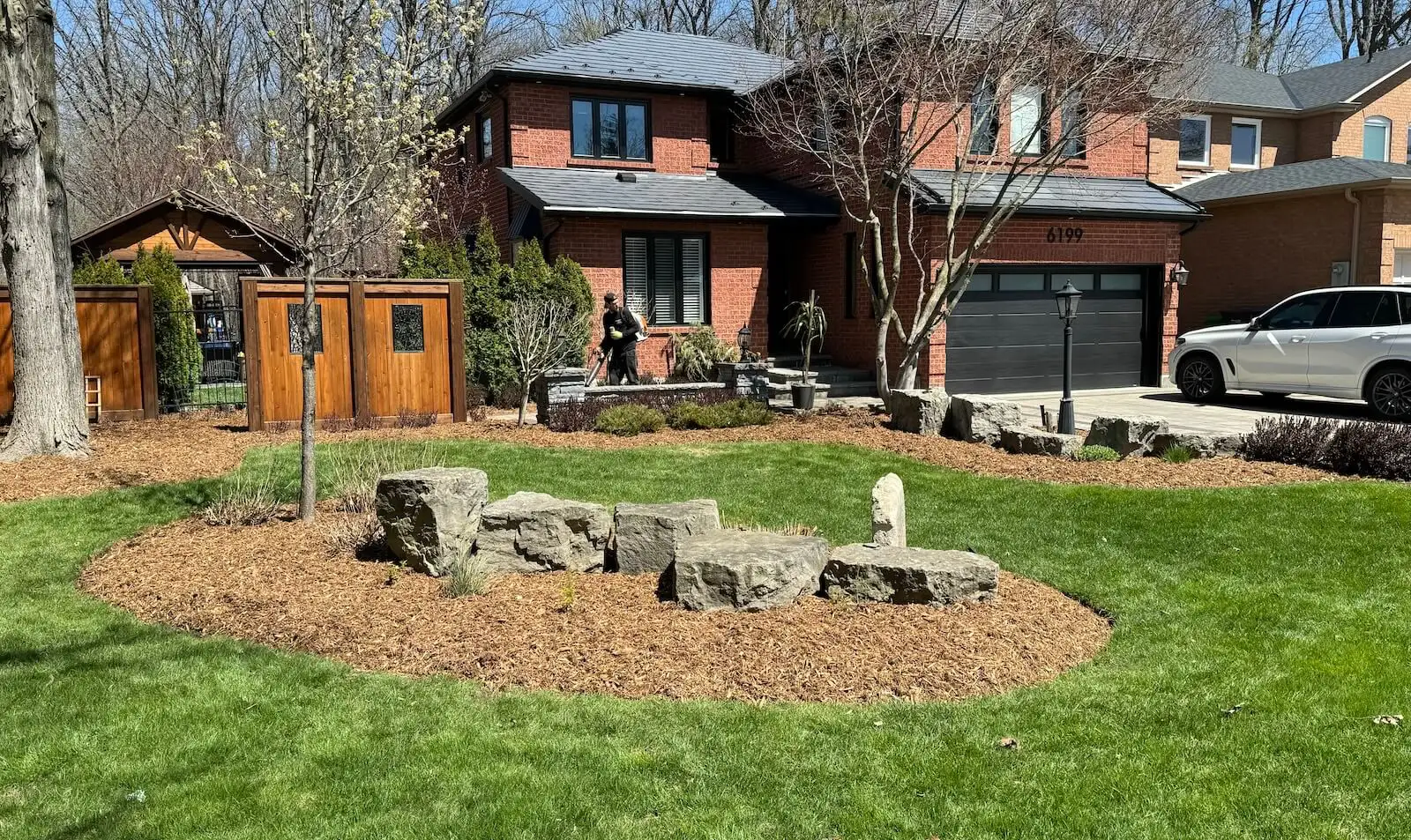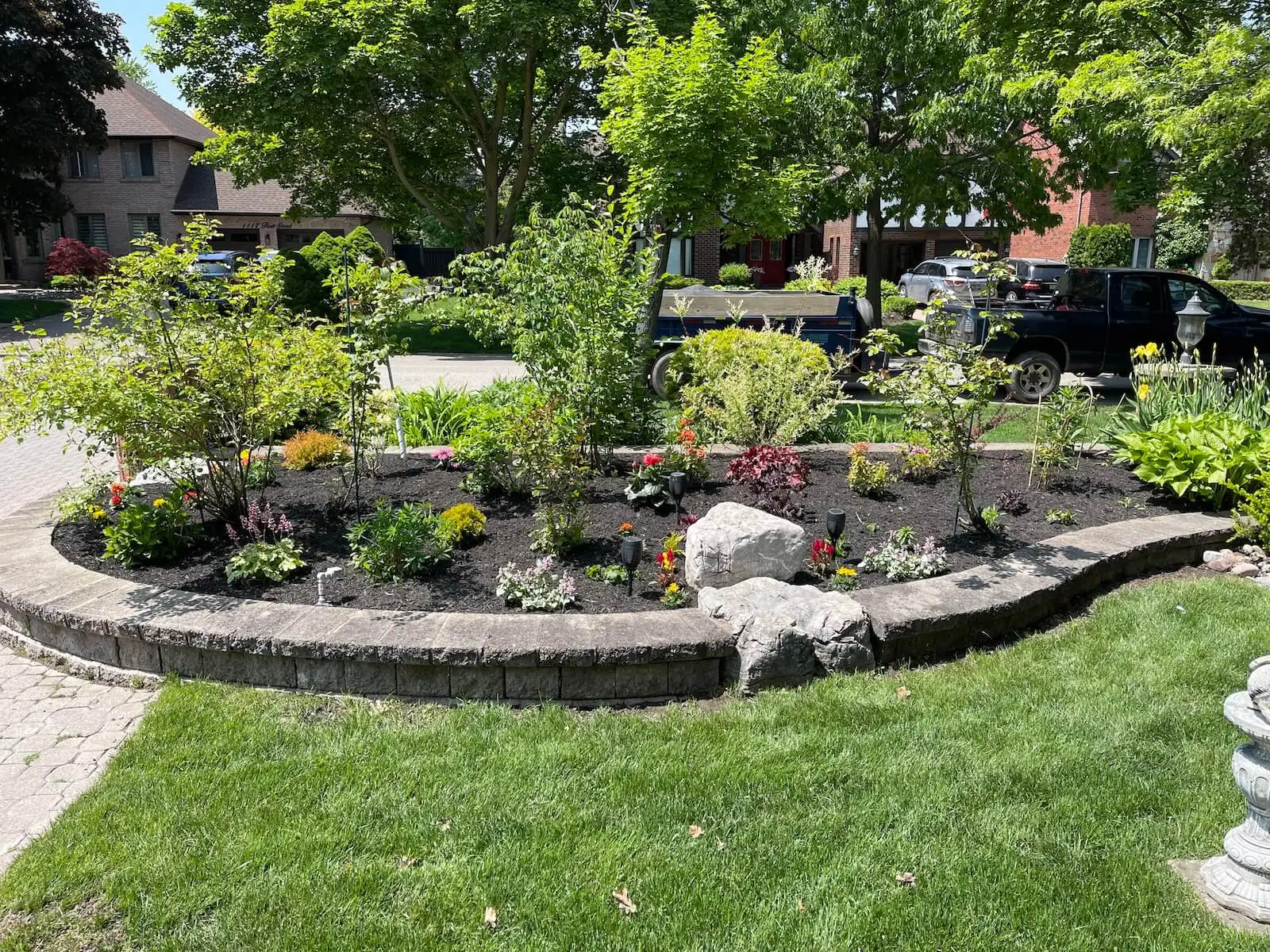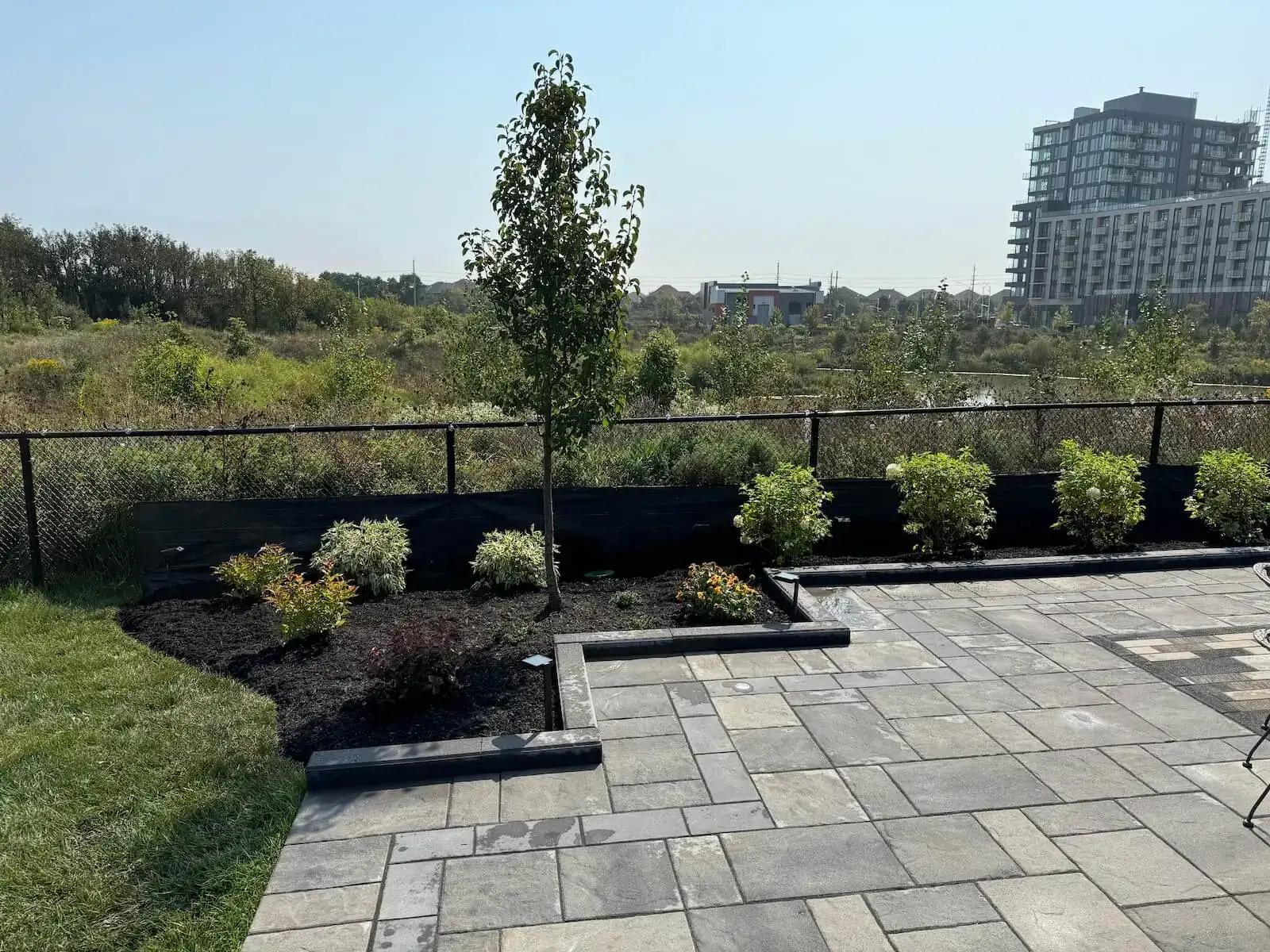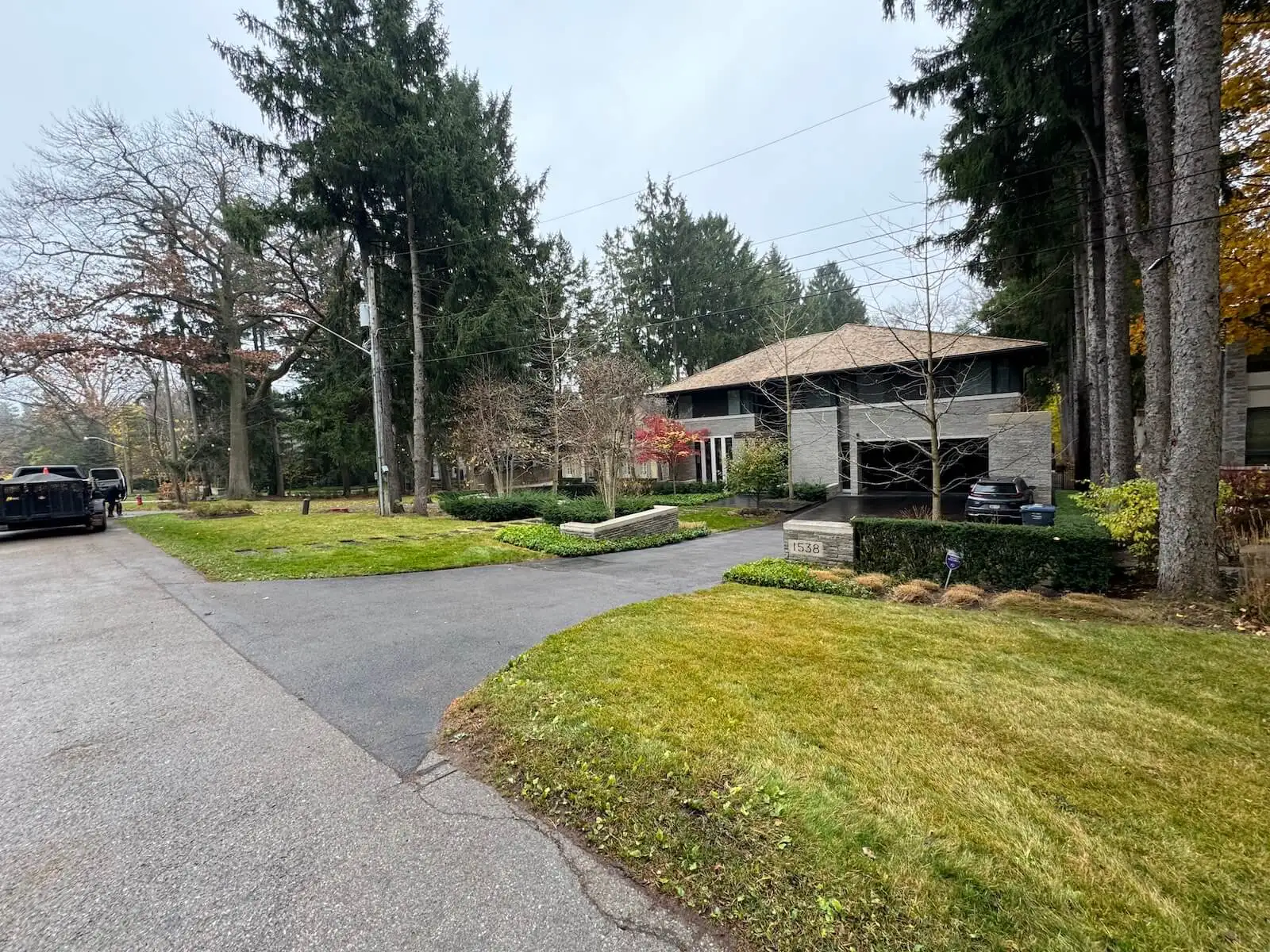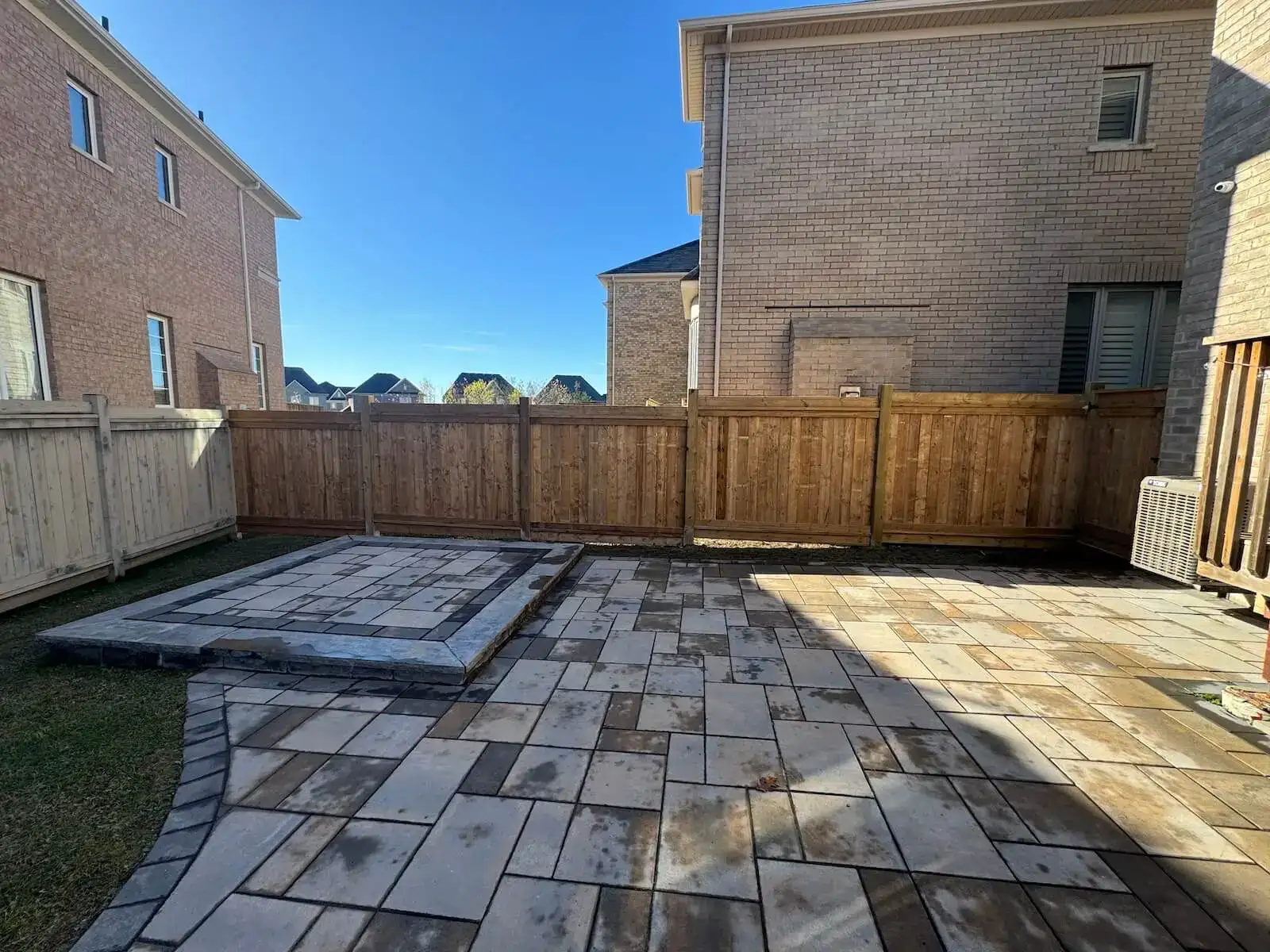









Most homeowners think an ugly slab needs to be ripped out. They’re wrong. These back patio slab ideas work best when you match the fix to the slab’s condition, your budget, and how permanent you want the upgrade to be.
A plain concrete patio can become a usable outdoor room without a full rebuild. A structurally sound slab usually needs surface work, layout, shade, and softer materials. A moving slab needs a different answer. I’ve torn out enough frost-heaved hardscape in the GTA to tell you this plainly: covering a bad base or bad drainage only hides the problem for a season or two.
Back Patio Slab Ideas at a Glance: Choose the Right Upgrade Path
A sound slab with stains or a tired finish is usually best decorated or resurfaced, while a slab with settlement, heaving, or drainage failure is usually best replaced or professionally reworked. Decorative fixes suit cosmetic wear. Structural problems need structural answers. Freeze-thaw movement, pooling water, and recurring cracks are the red flags that change the plan.
A plain but level slab usually gives you 4 workable paths: decorate it, resurface it, cover it, or extend it. Replacing it is the fifth path when the slab is cracked through, badly sloped, or moving year to year. I tell every client the same thing. Start with condition first. Style comes second.
A temporary setup makes sense for renters or short-term owners, while a permanent build makes sense when you want shade structures, steps, lighting, or a new hardscape edge. Freestanding screens, outdoor rugs, deck tiles, and container gardens are reversible. Pergolas, attached covers, electrical, gas, and anything structural may trigger approvals depending on the municipality and the build details.
A quick diagnosis saves money because the wrong upgrade usually fails in 1–3 winters . Cosmetic cracking, stains, and worn colour can often stay. Major vertical displacement, ponding water, or a slab that pitches toward the house needs a closer look before you spend on finishes. I would need to see the grade and soil to quote that properly.
27 Back Patio Slab Ideas for Plain, Old, Small, or Cracked Concrete
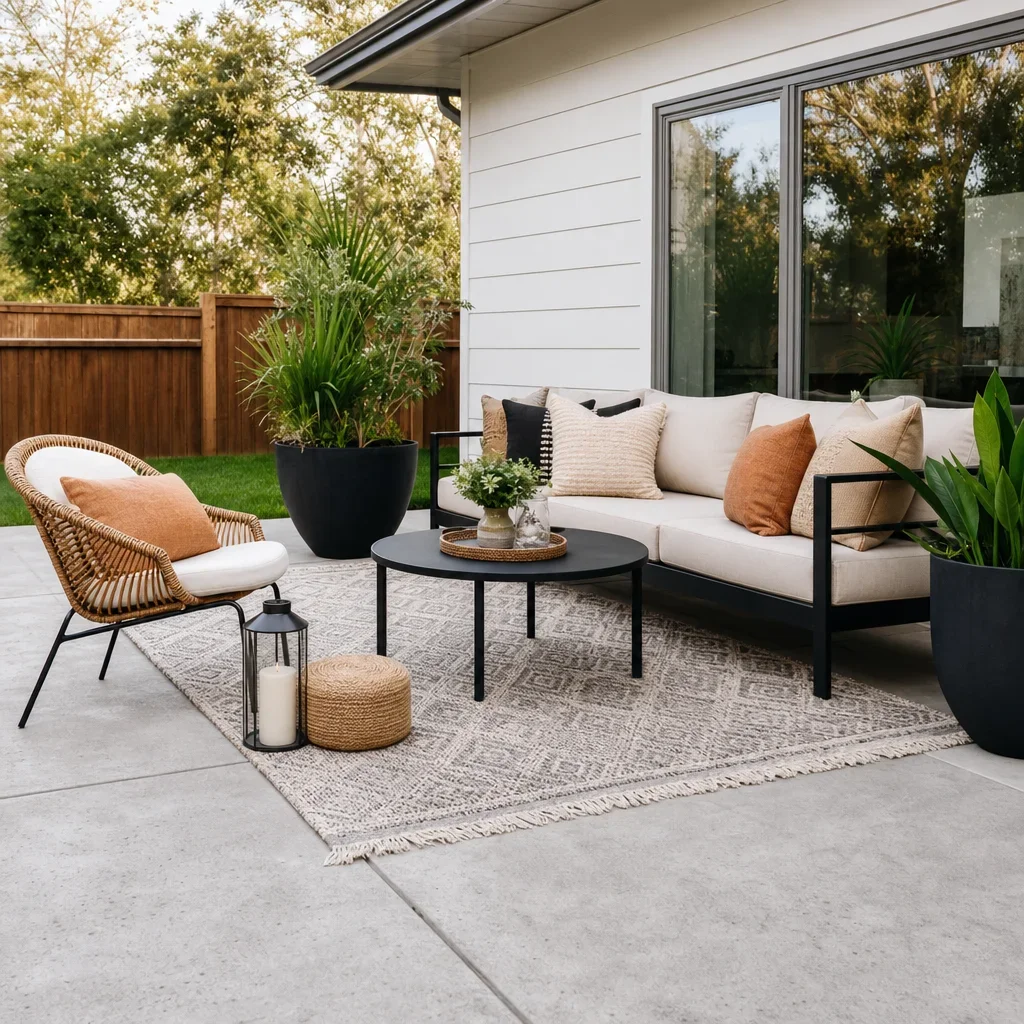
A boring slab looks better fastest with a rug, a furniture grouping, and two large planters. Best for sound concrete and small budgets. Cost tier: low. DIY: easy. Works on cracked or uneven concrete only if the surface is still safe to walk. Caution: small scattered decor pieces make patios look cheaper, not better.
Painted concrete is one of the cheapest concrete back patio slab ideas when the slab is dry and stable. Best for plain grey patios and back patio slab ideas on a budget. Cost tier: low. DIY: moderate. Works on minor cosmetic cracks, not movement cracks. Caution: coatings wear faster in freeze-thaw exposure and traffic paths.
Concrete stain gives a more natural look than paint and usually ages better when prep is done right. Best for homeowners who want colour without a film layer. Cost tier: low to medium. DIY: moderate. Works on sound slabs with light surface wear. Caution: stain does not hide patchy repairs or deep spalling.
A stencil pattern is one of the best simple concrete patio design ideas if you want the look of tile without tile. Best for flat patios with a clean surface. Cost tier: low to medium. DIY: moderate. Works on sound slabs only. Caution: busy patterns can shrink a small patio visually.
A resurfacer can freshen worn concrete when the slab is structurally sound and the damage is mostly surface-deep. Best for old patios with scaling or light pitting. Cost tier: medium. DIY: moderate to hard. Works on ugly-but-sound slabs, not major movement. Caution: resurfacing does not fix poor slope or base prep.
Interlocking deck tiles are strong rental-friendly fixes for cover old concrete patio projects. Best for renters and temporary upgrades. Cost tier: low to medium. DIY: easy. They can bridge very minor imperfections, but not real unevenness. Caution: trapped moisture and debris underneath can become a maintenance issue.
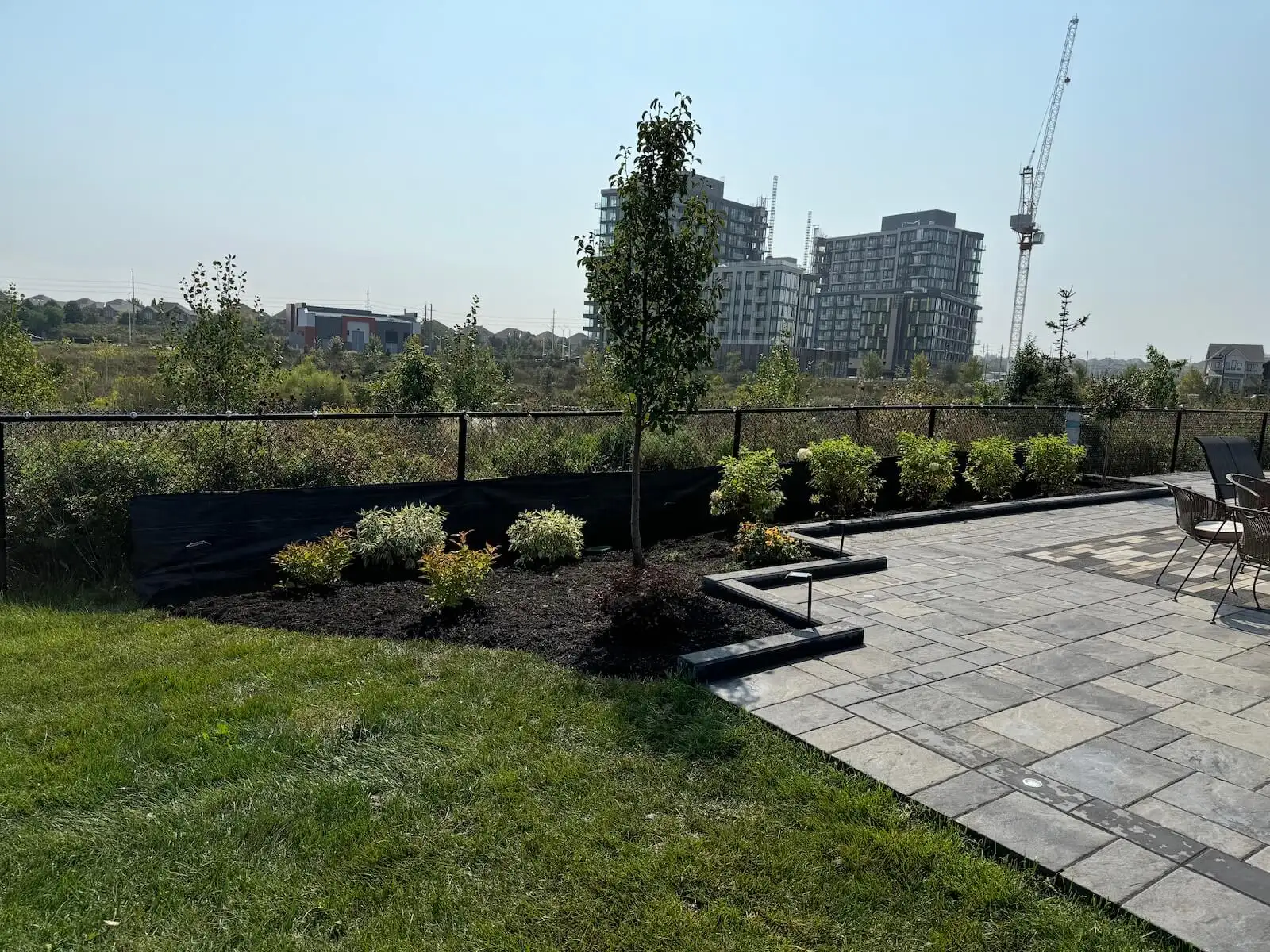
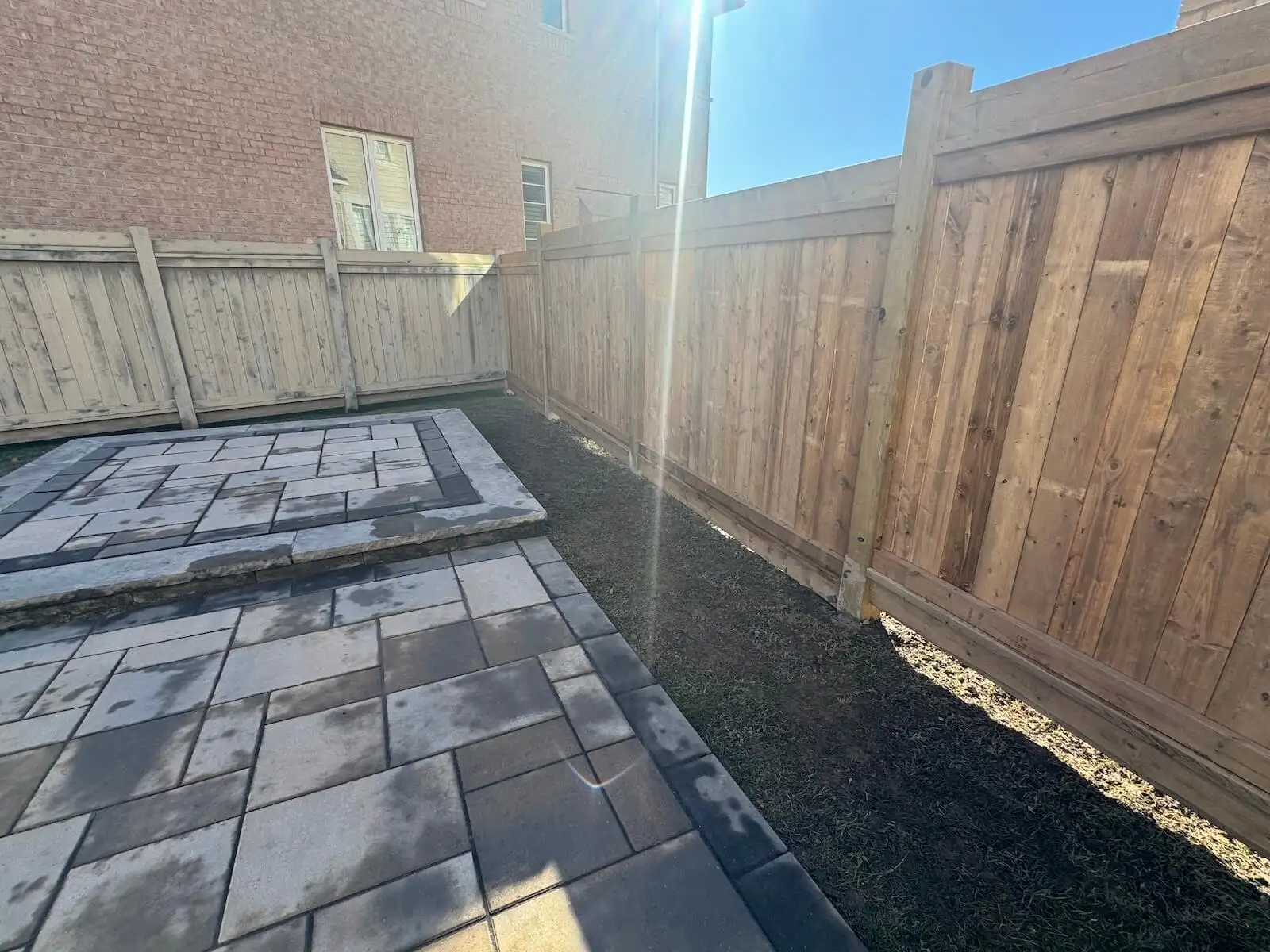
A paver border around the slab makes plain concrete look intentional without rebuilding the whole patio. Best for backyard concrete slab ideas where the slab feels undersized. Cost tier: medium. DIY: moderate. Works beside sound slabs more often than on top of them. Caution: without proper base prep and edging, the border will spread or settle.
A gravel extension is one of the smartest concrete patio ideas on a budget when the slab itself is small but usable. Best for adding a fire pit zone or lounge area beside the slab. Cost tier: low to medium. DIY: moderate. Works with most slab conditions because it sits adjacent. Caution: loose gravel migrates without containment.
A pergola turns a slab into a room-like space and makes seating feel anchored. Best for dining and lounge patios that need vertical definition. Cost tier: medium to high. DIY: moderate to hard. Works if the slab and footings can support the structure design. Caution: attached or structural pergolas may need approvals based on your property and municipality.
A shade sail is a lighter and cheaper alternative to a pergola. Best for modern concrete patio ideas and hot west-facing yards. Cost tier: low to medium. DIY: moderate. Works on most sound patios if anchor points are planned properly. Caution: poor anchoring and wind exposure ruin these quickly.
A covered patio extension gives the biggest comfort jump if sun or rain keeps you indoors. Best for patios used daily. Cost tier: high. DIY: no. Works when structure, drainage, and door clearances are designed together. Caution: anything structural or permit-triggering is priced separately and confirmed by the city for your lot.
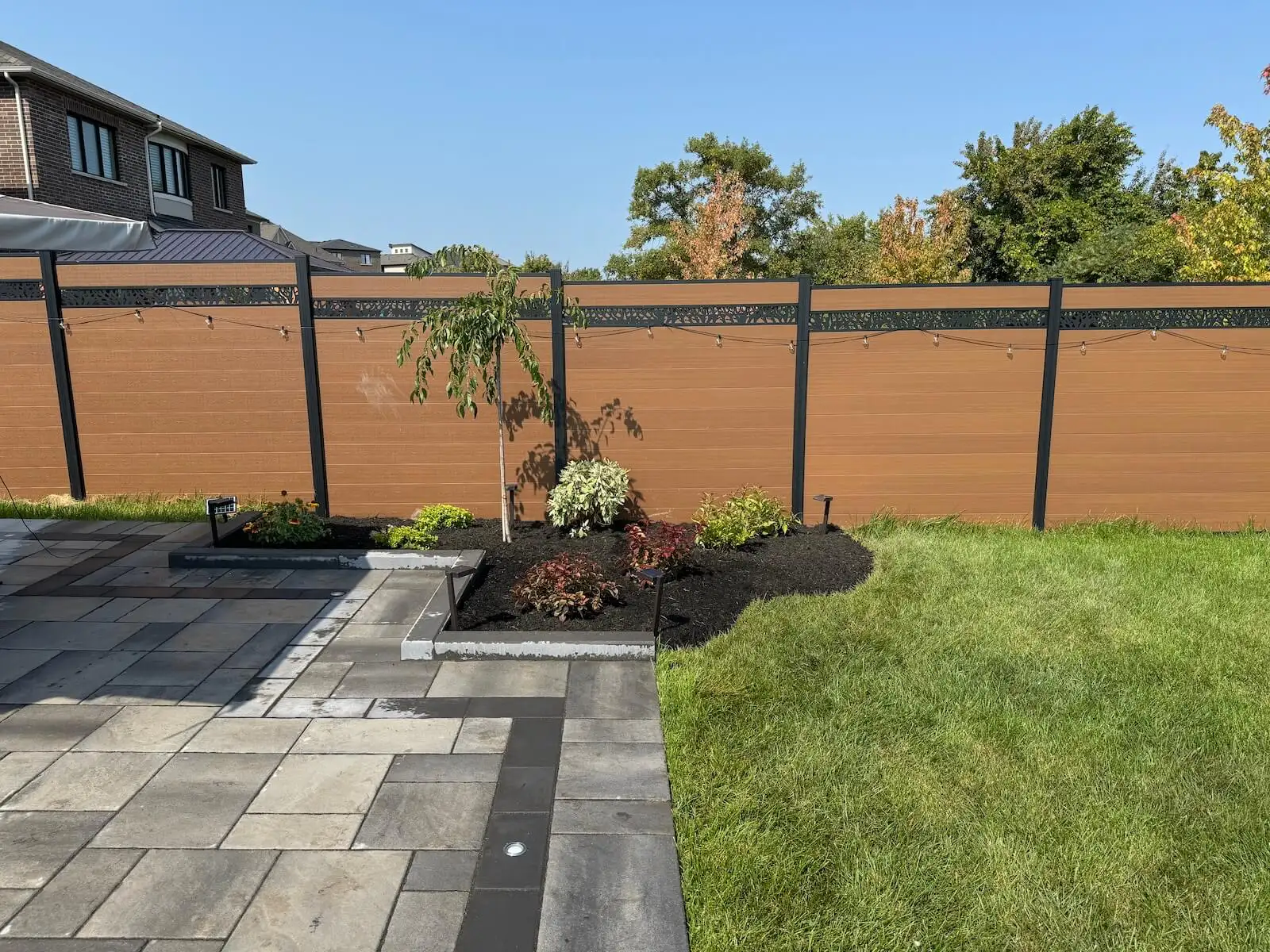
A privacy screen solves a neighbour view problem faster than changing the slab surface. Best for urban and suburban yards. Cost tier: low to medium. DIY: easy to moderate. Works on nearly any patio condition if freestanding. Caution: solid panels catch wind, so anchoring matters.
Built-in benches use less depth than bulky chairs and are excellent small back patio slab ideas. Best for shallow patios and long narrow patio ideas. Cost tier: medium. DIY: moderate to hard. Works beside or on sound slabs depending on design. Caution: fixed seating locks in one layout.
Large planters soften the slab and hide ugly edges better than a row of tiny pots. Best for plain or stained concrete. Cost tier: low to medium. DIY: easy. Works everywhere. Caution: too many small containers create clutter and hard watering routines.
Low-voltage or solar lighting makes the slab usable after dark and makes finishes look warmer. Best for patios that already function but feel flat. Cost tier: low to medium. DIY: easy to moderate. Works on all slab conditions. Caution: lighting should guide steps, edges, and door transitions first.
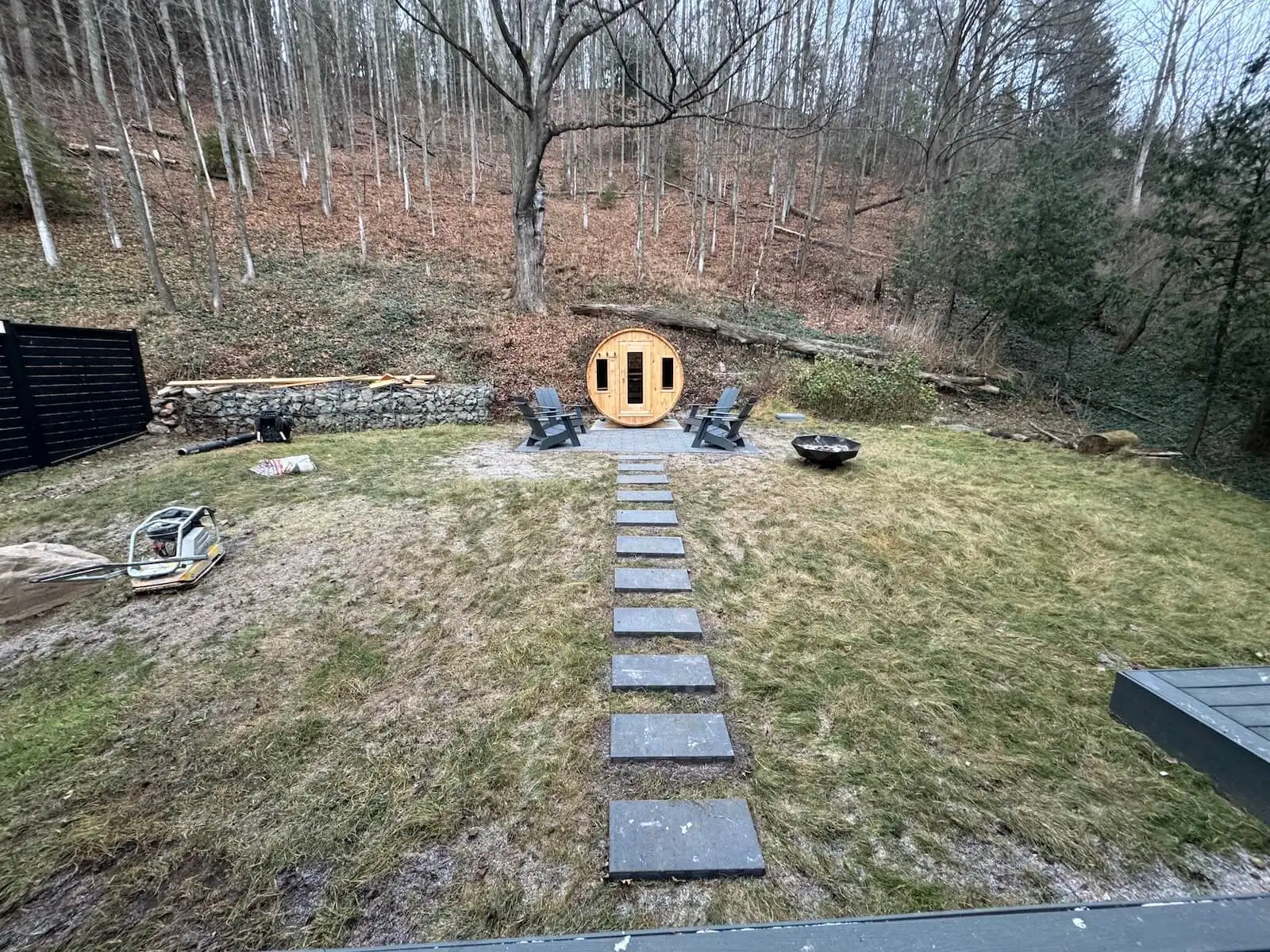
A fire pit zone beside the slab creates a second destination in the yard. Best for entertaining patios with enough open area. Cost tier: medium. DIY: moderate. Works best as an adjacent zone, not crammed onto a tiny slab. Caution: local appliance and fire clearances vary by product and site.
An outdoor dining zone works well when the slab sits close to the back door. Best for family meals and easy serving flow. Cost tier: low to medium. DIY: easy. Works on most sound slabs. Caution: oversized dining sets block circulation and make shallow patios feel cramped.
A conversation zone with two chairs and a loveseat is often better than forcing a full sectional. Best for small concrete patio layout ideas. Cost tier: low to medium. DIY: easy. Works on all sound slabs. Caution: leave a clear walking path from the door to the yard.
A grilling station makes sense when the slab already has width but no clear purpose. Best for homeowners choosing function before decor. Cost tier: medium to high. DIY: moderate to hard. Works on sound slabs with safe clearances and access. Caution: permanent gas or electrical components should be designed, not improvised.
An outdoor kitchen area can anchor a larger entertaining yard if the slab is part of a bigger build. Best for full backyard renovations. Cost tier: high. DIY: no. Works when drainage, utilities, and layout are planned together. Caution: compact patios get crowded fast with fixed kitchen elements.
Steps can solve grade changes and improve flow where the slab sits high above the lawn. Best for concrete patio ideas with steps and sloped yards. Cost tier: medium to high. DIY: hard. Works when riser heights and drainage are designed properly. Caution: random step add-ons create trip hazards.
A small retaining wall or seat wall gives the patio a finished edge and can hold back grade if needed. Best for patios meeting a slope. Cost tier: medium to high. DIY: hard. Works when the wall is engineered for the height and load. Caution: retaining walls are not just decorative blocks when they hold soil.
Wood accents warm up cold concrete faster than another hard finish does. Best for ranch-style homes and simple concrete patio design ideas. Cost tier: low to medium. DIY: easy to moderate. Works with benches, privacy panels, and planter sleeves. Caution: wood needs ongoing maintenance in wet Canadian climates.
A monochrome palette is one of the easiest modern concrete patio ideas to pull off on a budget. Best for newer homes and minimal architecture. Cost tier: low to medium. DIY: easy. Works with charcoal, black, greige, and one warm wood tone. Caution: too many competing finishes kill the clean look.
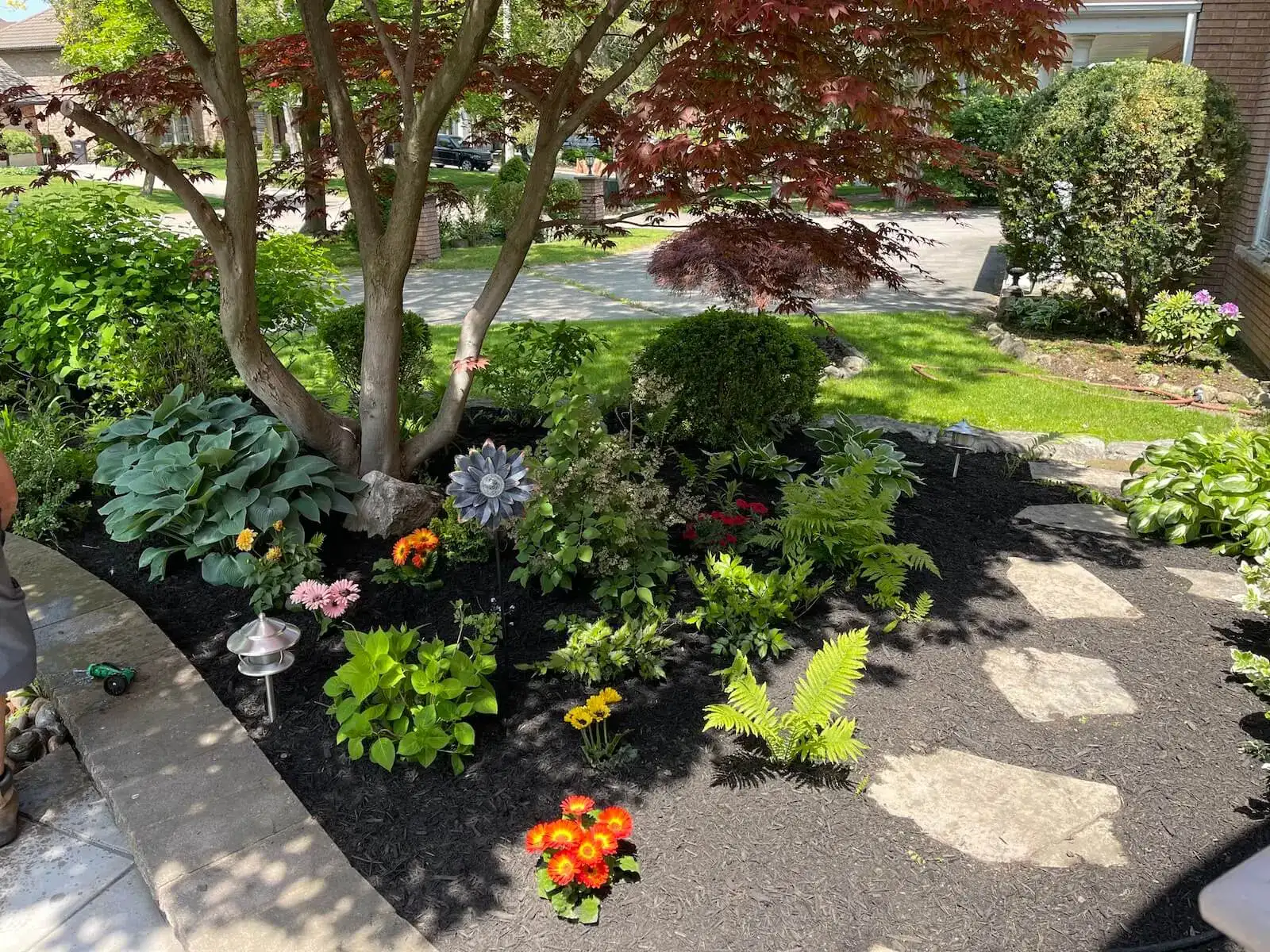
Curved planting beds around a square slab soften harsh lines and make the patio feel custom. Best for older suburban yards. Cost tier: medium. DIY: moderate. Works beside nearly any slab. Caution: curves need enough bed depth to look intentional, not wavy.
A container garden perimeter gives privacy, colour, and seasonal flexibility without touching the slab itself. Best for renters and for how to make a concrete patio look nicer without replacing it. Cost tier: low to medium. DIY: easy. Works on all sound slabs. Caution: plan irrigation because containers dry out faster than in-ground beds.
A child play corner or pet rinse station can make a slab more functional than a style-only makeover. Best for family yards. Cost tier: low to medium. DIY: easy to moderate. Works when you dedicate one clear zone. Caution: slippery coatings and dark surfaces get hot in summer.
A storage bench is one of the highest-value upgrades for a small patio because it adds seating and hides clutter. Best for small back patio slab ideas and renters. Cost tier: low to medium. DIY: easy. Works everywhere. Caution: weather resistance matters more than looks for boxes and benches left outside.
How to Make a Concrete Patio Look Nicer Without Replacing It
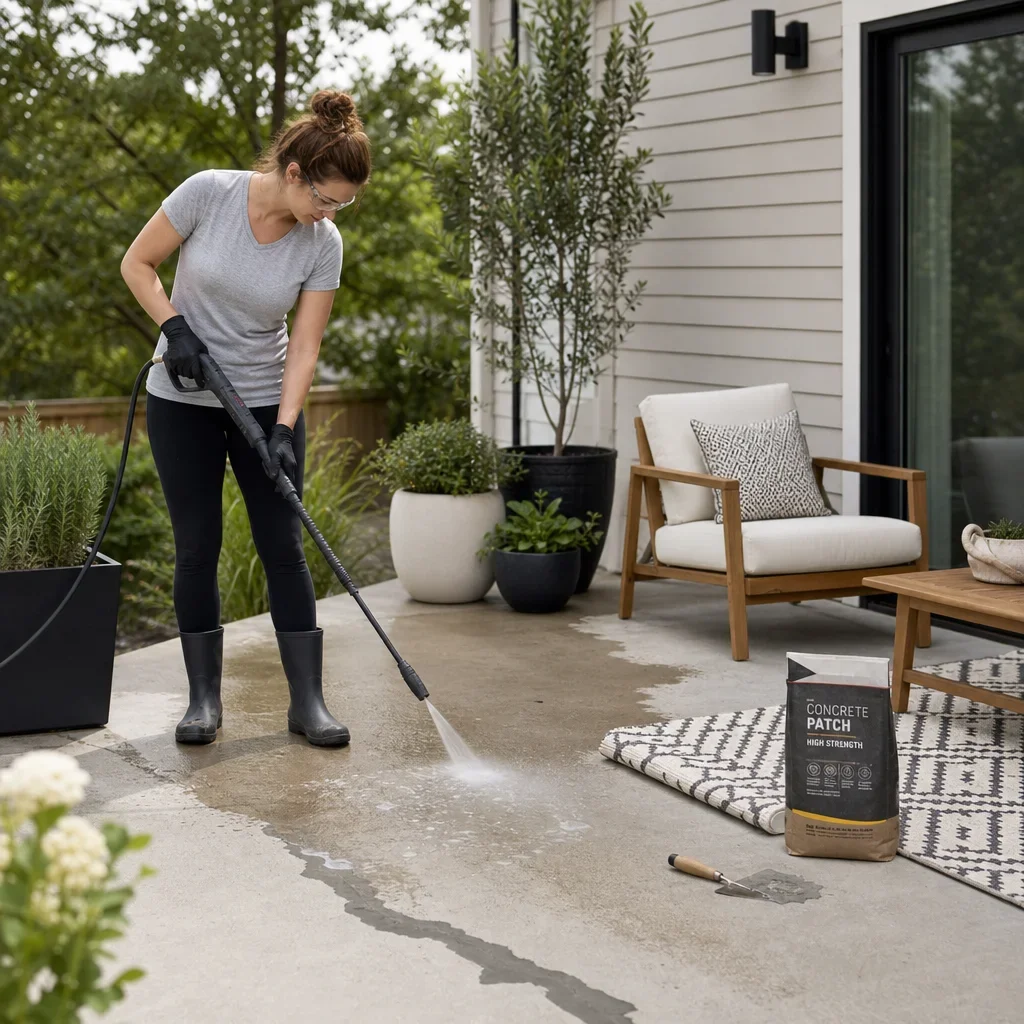
The fastest improvement is usually a 5-part reset: clean, patch, soften, shade, and light the slab. I have seen plain patios change more from layout and vertical elements than from any coating. If the concrete is sound, surface treatment is only one layer of the fix.
Deep cleaning and minor crack patching give the biggest visual return per dollar before any decorating starts. Dirt, algae, rust marks, and leaf stains age a patio more than the concrete colour does. Small cosmetic defects can often be blended. Active cracks that reopen through seasons should not be treated as cosmetic.
Warm materials make concrete read better because they offset the hard, cold look of the slab. Outdoor rugs, wood furniture, woven chairs, and large planters all add texture. This is why simple concrete patio design ideas usually work better with fewer, larger pieces instead of lots of tiny decor.
Furniture scale matters more than most homeowners expect. A small slab looks better with a loveseat and two chairs than with a full sectional. A dining slab looks better with one properly sized table than with a table, bar cart, bench, and storage unit all fighting for space.
Vertical elements make an exposed patio feel finished in a way flat decor never does. Privacy screens, umbrella height, planter walls, and string lighting all pull the eye up. That is the simplest before-and-after framing I know: plain slab to outdoor room with one surface, one seating zone, two planters, overhead interest, and edge lighting.
Best Budget Upgrades for an Existing Patio Slab
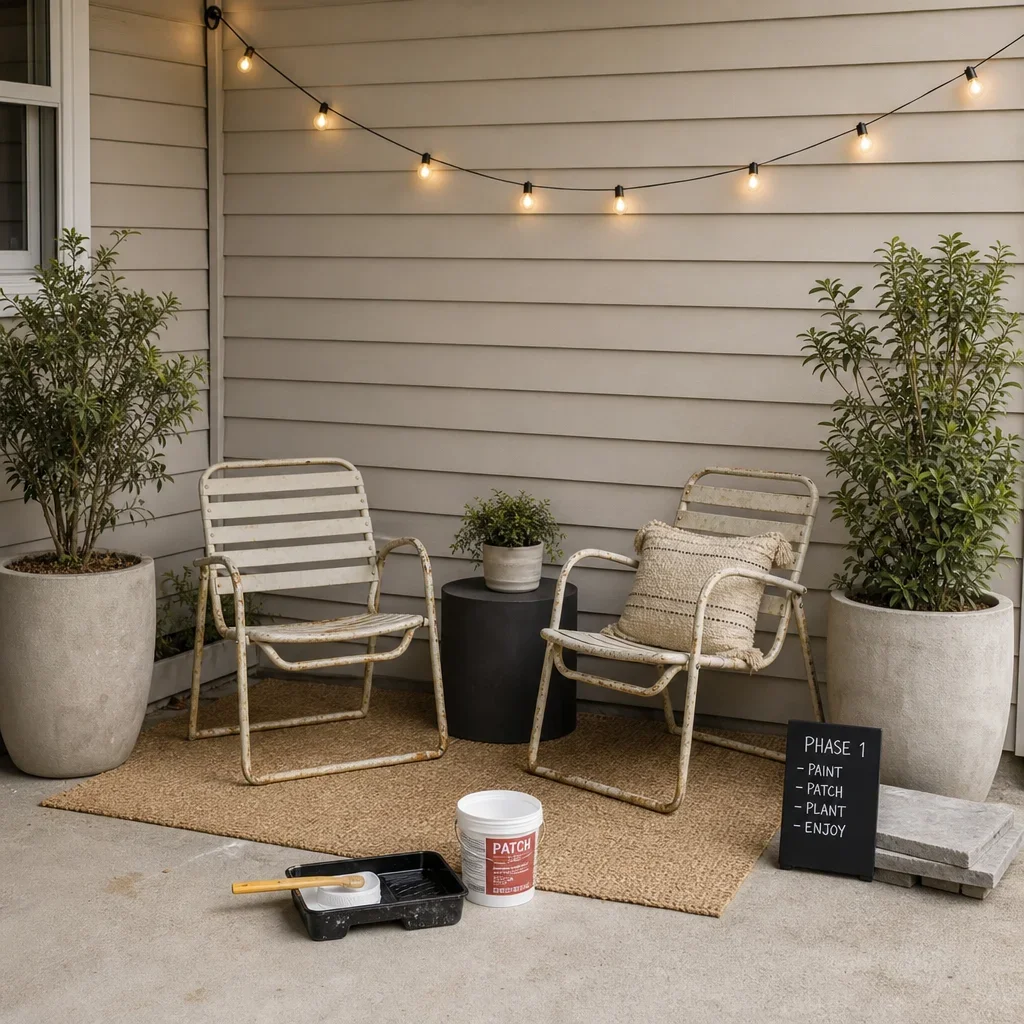
The best budget upgrades are cleaning, patching, stain or paint, one outdoor rug, secondhand seating, lights, and two oversized planters. That mix usually looks better than spreading the same money across ten small items. Back patio slab ideas on a budget work when the patio feels intentional, not crowded.
A phased makeover is easier on cash flow and usually produces better choices. Weekend 1 can be surface prep and cleaning. Weekend 2 can be furniture and rug placement. Weekend 3 can be privacy and lighting. That staged approach keeps you from buying decor before you know how the patio is actually used.
Gravel or mulch borders are low-cost ways to widen the visual footprint without pouring more concrete. Gravel patios commonly land around $1–$4 per square foot , depending on excavation, edging, fabric, and stone type. They are one of the few budget additions that still look deliberate when designed as a border or side zone.
A new 20×20 slab is usually far pricier than a makeover, because new installed concrete often falls around $8–$18 per square foot in many markets . That puts a basic 400-square-foot slab around $3,200–$7,200 before site-specific extras . In the GTA, access, demolition, soil condition, reinforcement, and finish details can push it higher, so I would price that only after seeing the yard.
Renter-safe upgrades work best when every piece lifts off the slab without damage. Freestanding umbrellas, rugs, deck tiles, modular seating, and weighted privacy screens all fit that rule. Paint, anchors, and fixed posts usually need landlord approval first.
Resurface, Cover, or Replace? How to Choose for Your Patio Slab
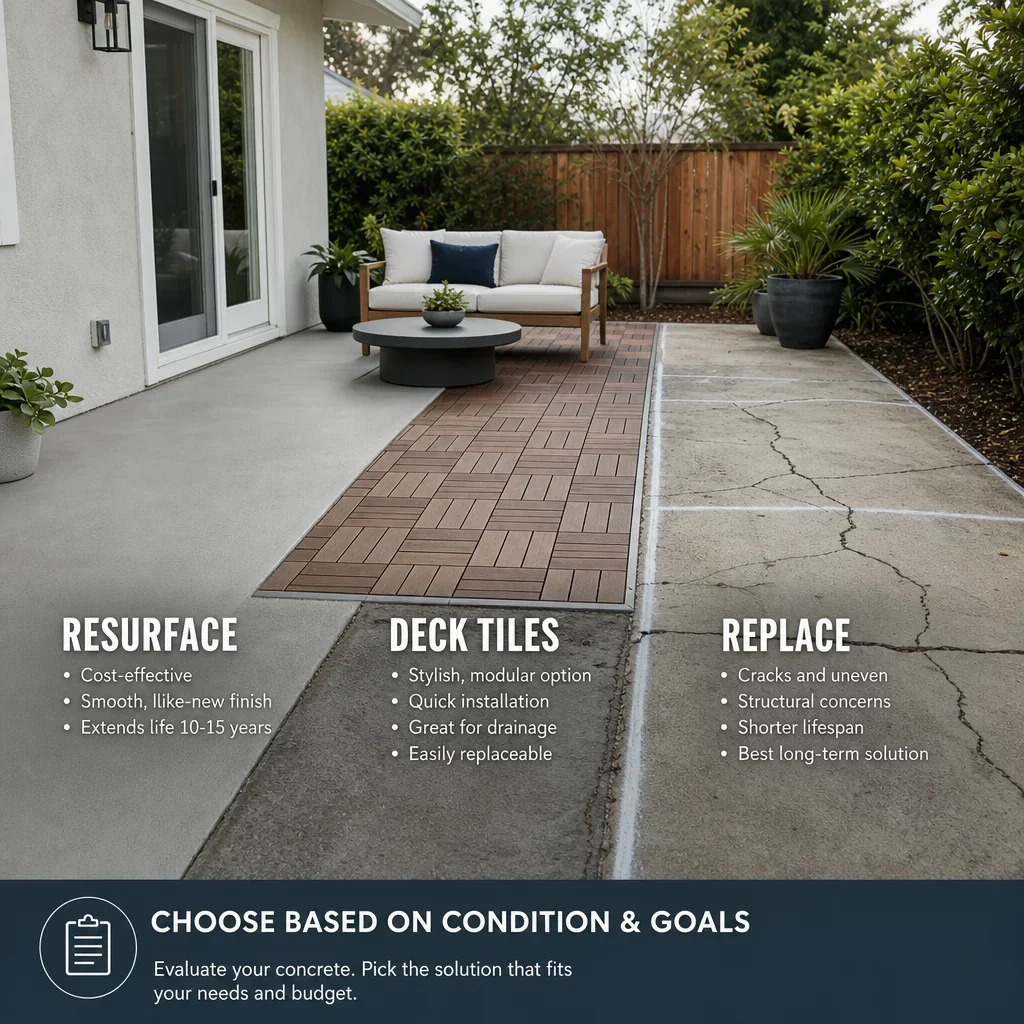
Resurfacing is best for cosmetic wear on a structurally sound slab, covering is best for a new look over an acceptable base, and replacement is best for movement, drainage failure, or major cracking. That is the cleanest decision framework. Anything else blurs cosmetic problems with structural ones.
Hairline cracks, light spalling, and stains usually fit resurfacing if the slab stays level and drains correctly. Resurfacers, stains, and coatings can improve appearance, but they follow the slab you already have. If the slab moves, the finish usually moves with it.
Covering works when the slab is basically stable and you want a different surface or feel. Deck tiles, some overlay systems, adjacent pavers, shade structures, rugs, and built features all fall into this bucket. Covering can change the look dramatically, but it does not fix slope, settlement, or a weak base.
Replacement makes sense when cracks are wide and recurring, sections have lifted, water ponds, or the slab pitches wrong. In Toronto-area landscapes, freeze-thaw and poor drainage are behind well over 9 in 10 failed patio surfaces I get called to inspect . Bad base prep is the usual root problem.
| Slab condition | Best path | Why | Main caution |
|---|---|---|---|
| Stains only | Decorate or stain | Surface issue, not structural | Prep still matters |
| Light surface wear | Resurface | Fast visual reset | Won’t fix movement |
| Hairline cosmetic cracks | Patch and decorate | Often manageable if stable | Monitor seasonal change |
| Ugly but level old slab | Cover or decorate | Good base for visual upgrade | Mind finished height |
| Uneven sections | Replace or rework | Trip risk and movement issue | Coverings telegraph problems |
| Ponding water | Regrade or replace | Drainage failure ruins finishes | Do not trap water |
| Frost heave or settlement | Replace | Base or soil issue below | Surface fixes will fail |
Material-by-Material Comparison: What Can You Put on Top of a Concrete Patio?
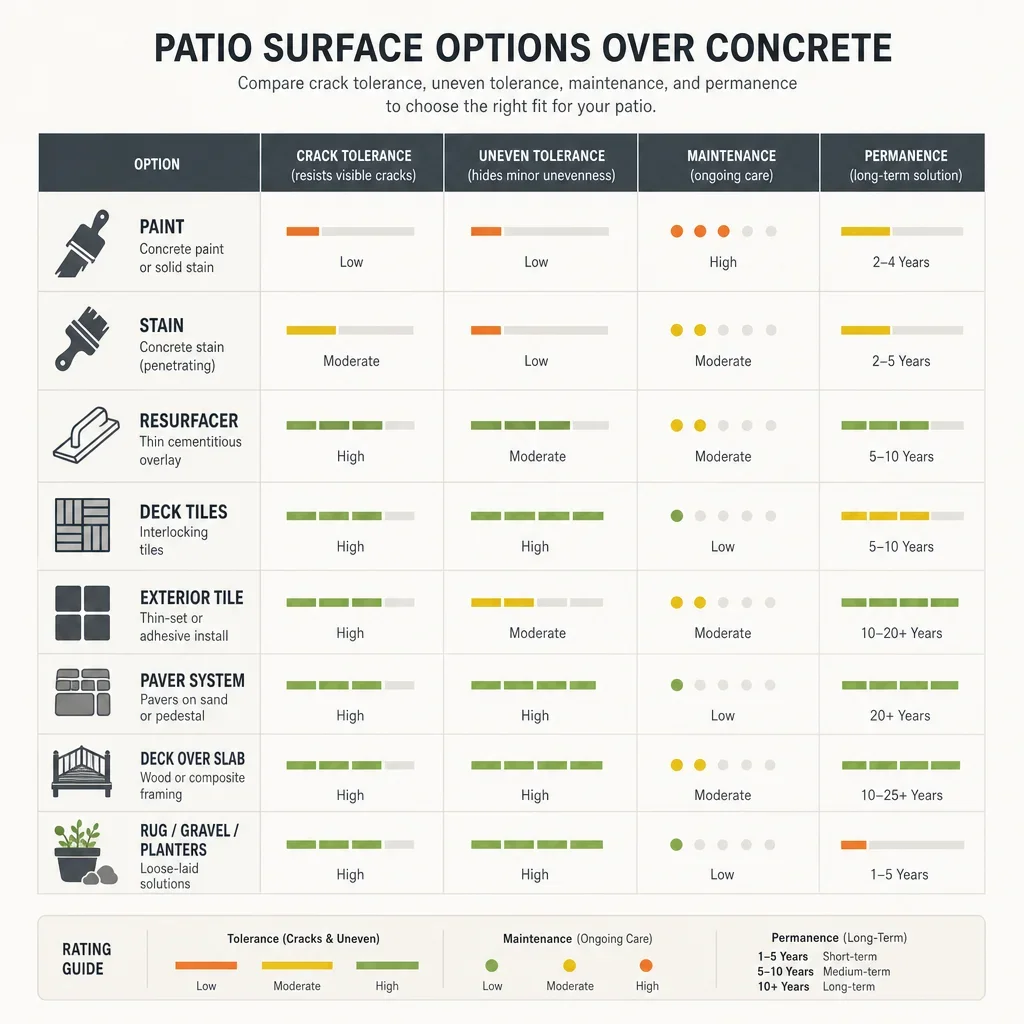
You can put coatings, resurfacers, deck tiles, rugs, and some overlay systems on top of an existing patio, but the best option depends on cracks, slope, drainage, and finished height at doors. I never treat all slabs the same. A sound slab can take a cosmetic layer. A moving slab usually should not.
Paint is cheapest and easiest to change, but it is also one of the least durable finishes in hard-use zones. Best for quick budget makeovers. Worst for freeze-thaw wear, shoveling, and dragged furniture. Prep needed: cleaning and surface prep. Maintenance: medium to high. Permanence: low.
Stain is subtler and usually more forgiving than paint because it colours rather than coats the slab. Best for plain concrete with decent surface integrity. Worst for heavily patched slabs. Prep needed: clean porous concrete. Slip resistance: usually better preserved than with thick films. Maintenance: medium. Permanence: medium.
Resurfacers and overlays work when the slab is stable and the damage is shallow. Best for worn surfaces, not shifting ones. Worst for slabs with movement cracks or drainage problems. Prep needed: repair, cleaning, and bond-ready surface. Maintenance: medium. Permanence: medium.
Deck tiles are one of the best cracked concrete patio cover options when the slab is ugly but mostly level. Best for rental or reversible upgrades. Worst for pronounced unevenness or trapped drainage. Prep needed: clean, reasonably flat surface. Maintenance: medium because debris collects below. Permanence: low to medium.
Exterior tile can look sharp, but it is not universally safe for Ontario patios. Best for highly controlled assemblies designed for exterior use. Worst for moving slabs, moisture problems, and cheap install methods. Freeze-thaw, moisture, and substrate movement are the three reasons tile fails outdoors here.
Pavers over concrete are possible in some assemblies, but they are not a universal cap for old slabs. Best for projects designed around height, edge restraint, and drainage. Worst for slabs with bad slope or movement. Paver systems still rely on proper base logic, drainage, and edge control even when tied to an existing hardscape.
A deck built over concrete can hide an ugly slab and level out minor irregularities when framing is planned correctly. Best for severe visual issues and room-like patio designs. Worst for low door thresholds and trapped moisture conditions. Prep needed: drainage planning, framing design, and clearances. Maintenance: low to medium depending on decking. Permanence: medium to high.
Outdoor rugs, artificial turf accents, and adjacent gravel zones are the lowest-risk visual covers because they do not pretend to fix the slab. Best for styling and comfort. Worst for actual structural defects. Prep needed: almost none. Maintenance: low to medium. Permanence: low.
| Material | Best for | Worst for | Crack tolerance | Uneven tolerance | Maintenance |
|---|---|---|---|---|---|
| Paint | Cheap refresh | High-traffic freeze-thaw wear | Low | Low | Medium-high |
| Stain | Natural colour upgrade | Patchy repaired slabs | Low-medium | Low | Medium |
| Resurfacer | Surface wear | Movement or slope issues | Low | Low | Medium |
| Deck tiles | Rental-friendly cover | Pronounced lippage | Medium for minor flaws | Low-medium | Medium |
| Exterior tile | Premium look | Moisture and movement | Low | Low | Medium-high |
| Paver system | Designed overlays or adjacent extension | Bad drainage and poor height transitions | Medium in proper system | Low-medium | Medium |
| Deck over slab | Full visual change | Tight elevations at doors | High visually | Medium | Low-medium |
| Rug/gravel/planters | Fast decor fix | Structural failures | High visually | Medium visually | Low-medium |
Small Back Patio Slab Ideas That Feel Bigger
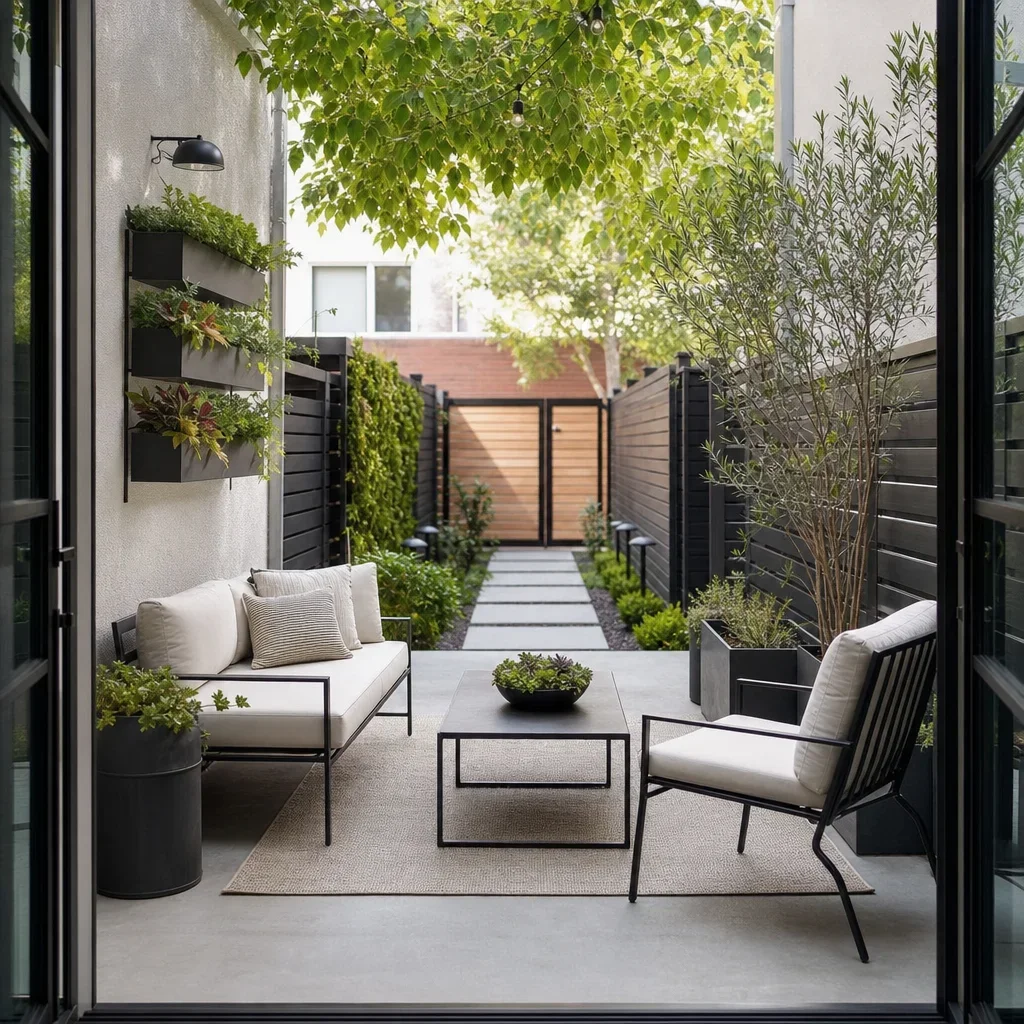
Small patios feel bigger when you give them one job and protect circulation. A coffee spot, dining-for-two setup, or compact lounge works better than trying to squeeze in all three. Small concrete patio layout ideas succeed on restraint more than creativity.
Slim furniture, wall-adjacent benches, and vertical planters save floor space without making the patio feel empty. This is where built-in seating or storage benches earn their keep. You use the edge instead of the centre.
A lighter palette and one focal point make a tight slab read wider. Light rugs, simple cushions, and one planter pair usually outperform mixed colours and lots of small accessories. A diagonal rug can also break up a rigid rectangular layout.
Open walking space should stay obvious from the back door to the yard. Oversized fire tables, deep sectionals, and broad dining chairs are the usual mistakes on small slabs. If the patio feels like an obstacle course, the layout is wrong even if the furniture is expensive.
A small patio often works best in one of these layouts: bistro set by the door, loveseat-plus-two-chairs around a small table, or a bench with two lightweight movable chairs. Those are the small back patio slab ideas I come back to most because they stay usable.
Long Narrow Back Patio Slab Layout Ideas
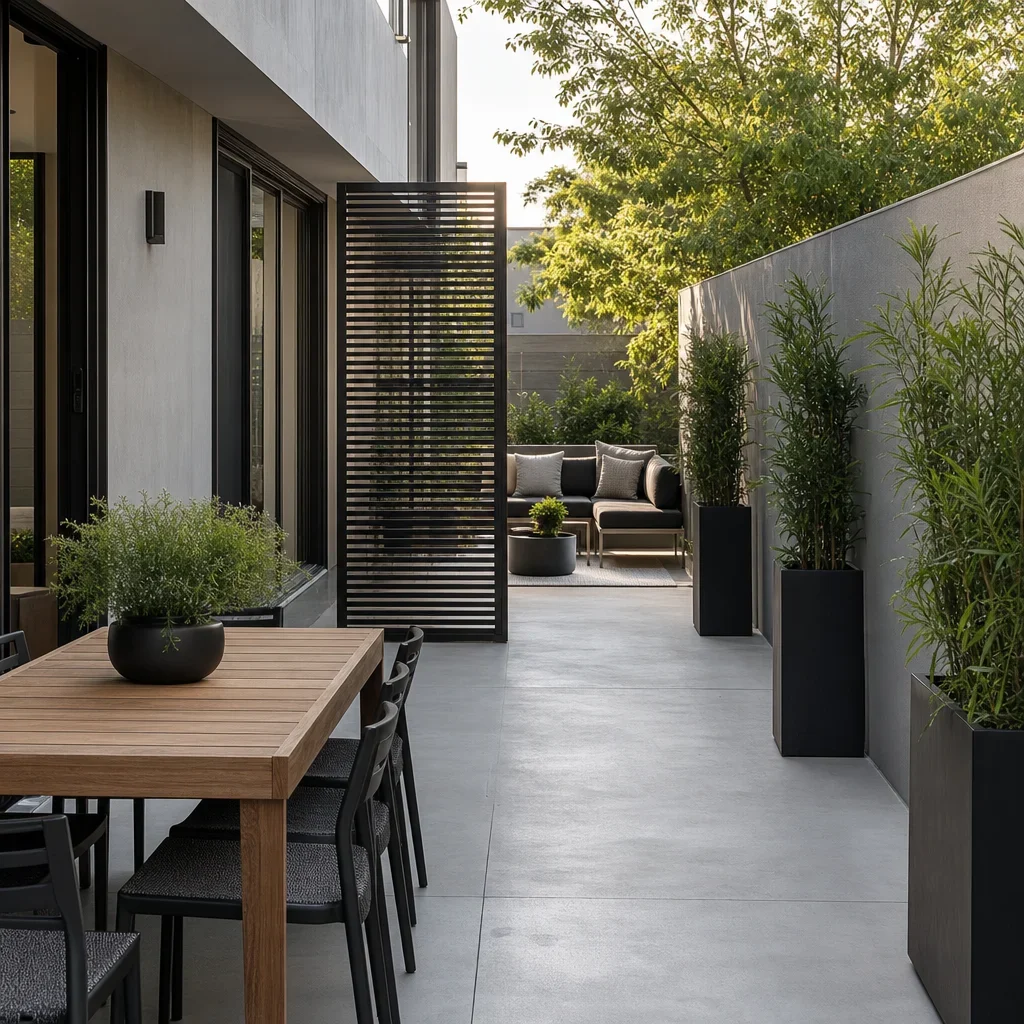
Long narrow slabs work best when you divide the length into zones instead of treating the whole patio as one strip. Dining near the back door, lounging at the far end, and a planter or privacy run along one side is a reliable formula. It makes a corridor feel intentional.
Linear furniture beats deep furniture on shallow patios. Narrow benches, side chairs, slim dining tables, and tall planters preserve width. A sectional that projects too far into the path is usually the piece that ruins these layouts.
Repeated colours and materials make the patio read as one designed space rather than separate leftovers. That means the same planter finish, the same cushion palette, and one flooring language across the slab and any extension. Long narrow patio ideas get messy fast when every zone changes style.
One modern layout uses a straight black dining table by the house, a slatted privacy screen halfway down, and two lounge chairs at the end with a single fire bowl beside them. One budget layout uses a bistro set by the door, a rug and loveseat in the middle, and gravel with planters at the end. Both layouts work because each zone has a clear role.
Shade, Privacy, and Patio Cover Ideas
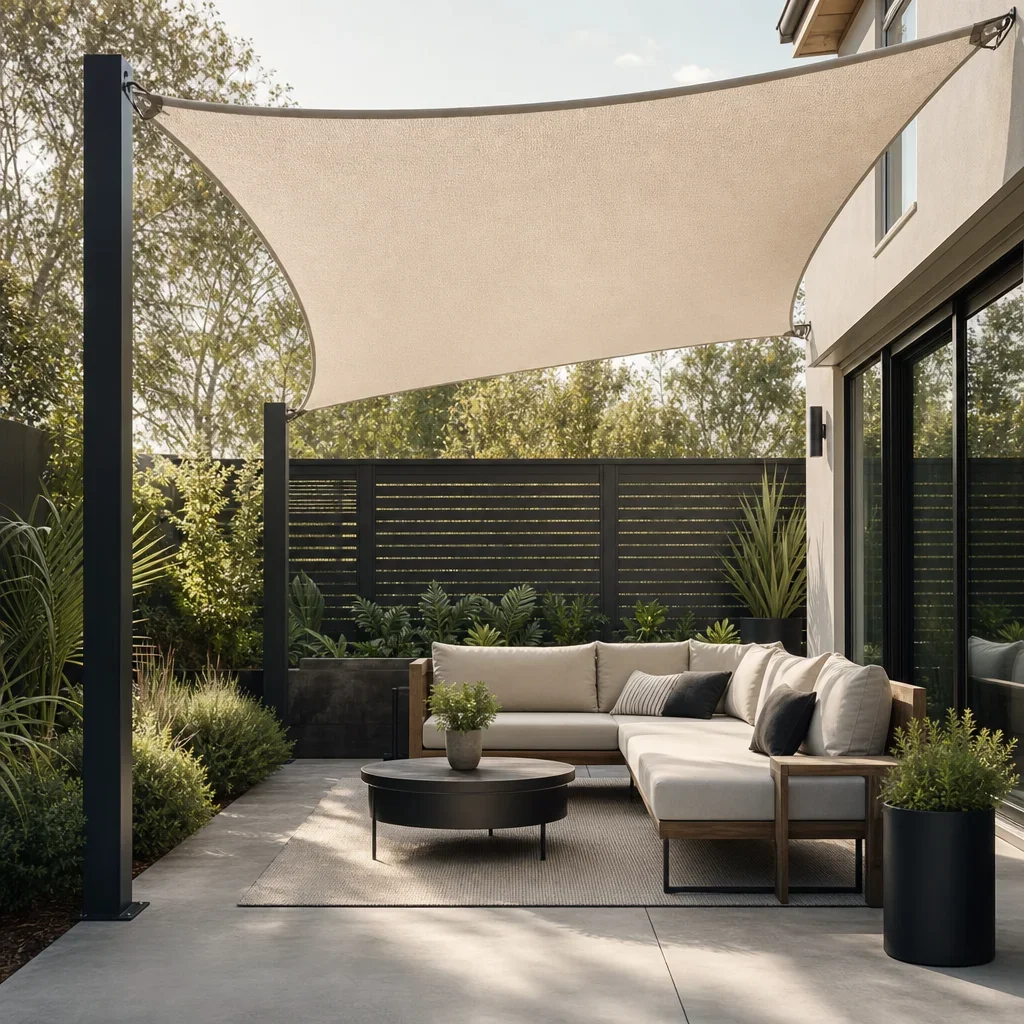
Shade is often the upgrade that makes a slab actually usable from noon to evening. If the patio is too hot, too bright, or too exposed to neighbours, better furniture alone will not solve it. Concrete patio cover ideas should start with sun direction and wind, not just style.
Umbrellas are the cheapest and fastest option for flexible shade. They are best for dining sets and smaller lounge groups. Their weakness is coverage area and wind stability. Freestanding weighted bases are usually the simplest no-construction answer.
Shade sails suit modern patios and irregular spaces where a centred umbrella makes no sense. They look clean and can cover awkward corners well. The caution is that anchor geometry and tension matter. Loose installations flap, sag, and fail.
Pergolas define space better than almost any other patio cover. They add structure, height, and a place to mount lights or privacy panels. In a design-build setting, we also look at drainage around posts, footing locations, and how the structure relates to door swings and sightlines.
Gazebos and roofed covers give the most weather protection, but they also carry the most structural and approval questions. Attached covers, electrical, and integrated drainage should be confirmed through the city and the design. I never promise a permit outcome without reviewing the lot.
Privacy can come from screens, trellises, planter walls, or layered planting. Screens solve the problem fastest. Planting solves it more softly over time. In Zone 5/6 hardiness, plant selection needs to match winter exposure if you want privacy that lasts.
Designing the Slab for Dining, Lounging, Cooking, and Entertaining
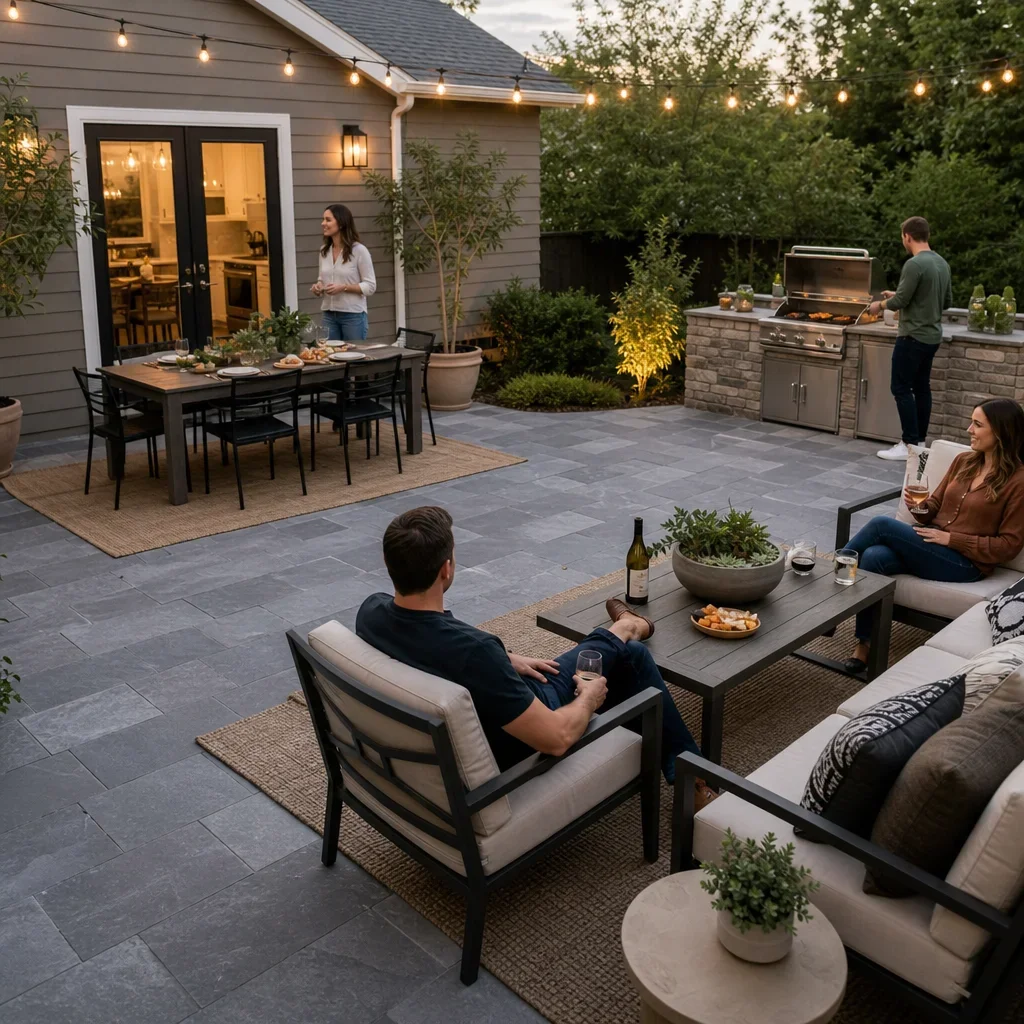
A patio works better when you choose the main use first and build the layout around that. Dining patios need easy flow from the door. Lounge patios need comfort and shade. Grill patios need safe access and clearance. Mixed entertaining patios need defined zones so people are not standing in the traffic path.
A dining patio usually wants the table closest to the door, with planters or lighting at the perimeter. That shortens the trip from kitchen to table. It also keeps chair movement out of the main yard path.
A lounge patio usually wants the seating to face inward around a coffee table, fire feature, or focal planter. The goal is not just furniture placement. It is making conversation feel natural without blocking movement.
A cooking patio needs the grill where smoke, heat, and foot traffic are controlled. That often means keeping the cooking edge off to one side instead of directly in line with the doorway. Permanent gas or electrical connections should be planned with the full yard layout, not added as an afterthought.
A mixed patio works best when zones are defined by rugs, planters, lighting, or a border material change. You do not need walls to create rooms. A dining rug, a bench line, or a gravel edge extension often does enough.
Steps and level changes should be designed, not improvised with loose blocks or mismatched treads. When a slab sits above grade, proper steps improve safety and how the patio meets the lawn. Anything structural or permit-triggering is priced separately because details matter there.
Modern, Ranch, and Mid-Century Patio Styling Ideas
Modern concrete patio ideas work best with clean lines, a tight palette, and large simple forms. Think charcoal, greige, black metal, smooth planters, and one warm wood note. The slab itself can stay simple if the composition feels crisp.
Ranch-style homes usually suit warmer materials and broader gestures. Wood benches, black metal details, gravel edges, practical shade, and family-friendly seating feel more natural here than ultra-minimal furniture. The patio should feel grounded, not precious.
Mid-century patios look right with low-profile seating, geometric patterns, breeze-block-inspired screens, and warm neutral colours with one accent tone. This style is one of the few where a stencil or graphic rug can really work without looking forced.
Small suburban homes usually look better when the patio stays modest in scale. Oversized pergolas, giant dining tables, and full outdoor kitchens can make the house feel visually smaller. Proportion is a design decision, not an accessory choice.
Ideas for Cracked, Uneven, Sloped, or Ugly-but-Sound Concrete
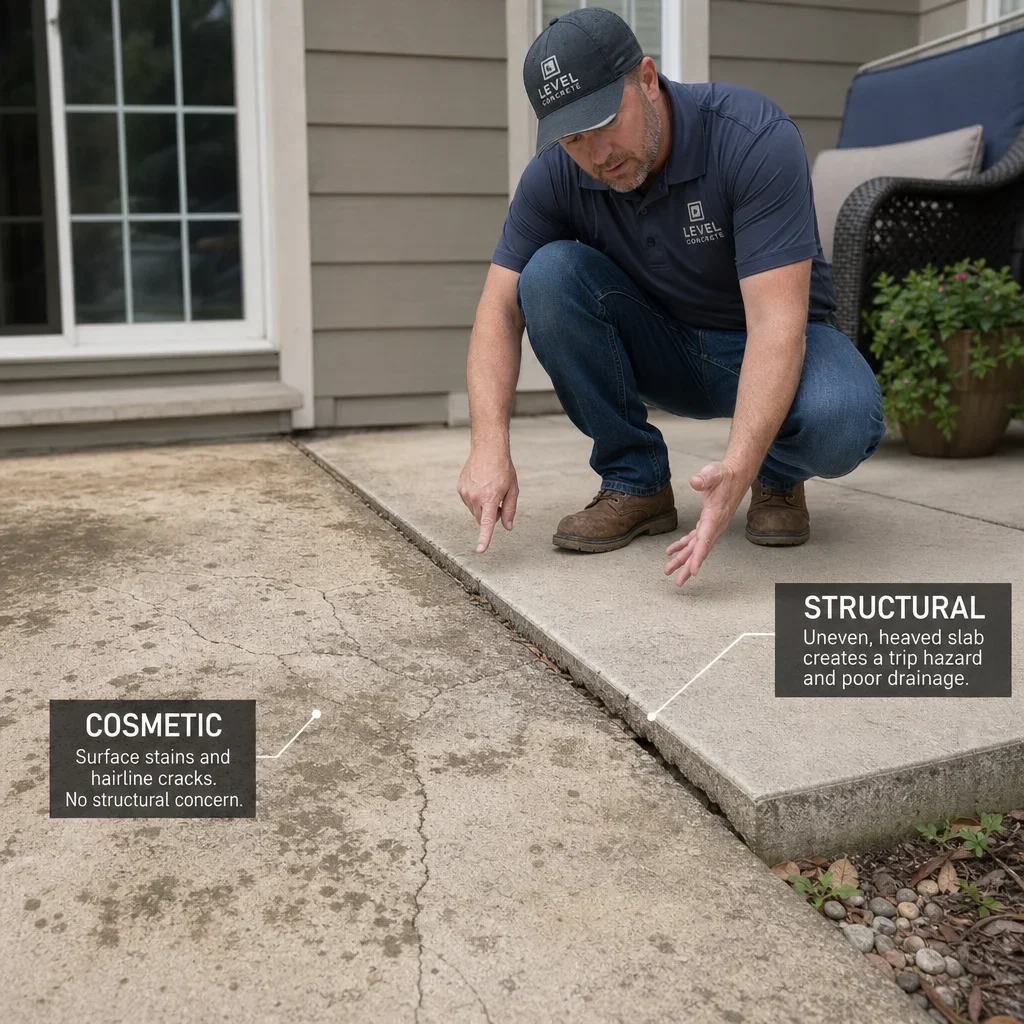
Ugly but sound concrete can often be cleaned, patched, stained, resurfaced, or covered lightly, while uneven or moving concrete usually needs repair or replacement before cosmetics. That split matters. Cracked concrete patio cover options are only as good as the slab underneath.
Cosmetic cracks are usually narrow, stable, and not paired with height change. Movement cracks tend to reopen, widen, or come with one side higher than the other. If I see repeated seasonal movement, I stop talking about finishes and start talking about base prep, drainage, and slab replacement.
Sloped slabs need context because some slope is necessary for drainage and some slope is a problem. A patio should drain away from the house, not hold water against it. The exact acceptable condition depends on how the slab performs, where the doors sit, and how water leaves the yard.
Coverings can telegraph underlying defects or create trip edges where the slab is already uneven. Tile is especially unforgiving. Thin coatings also reveal movement. Deck structures and some tile systems can hide more, but they need proper design and enough finished height.
Professional red flags include standing water after rain, slab sections that rock or sound hollow, door thresholds that are getting tighter, or visible height offsets that catch a toe. At that point, the slab needs evaluation before decor.
Child-Friendly, Pet-Friendly, Low-Maintenance, and Accessible Patio Ideas
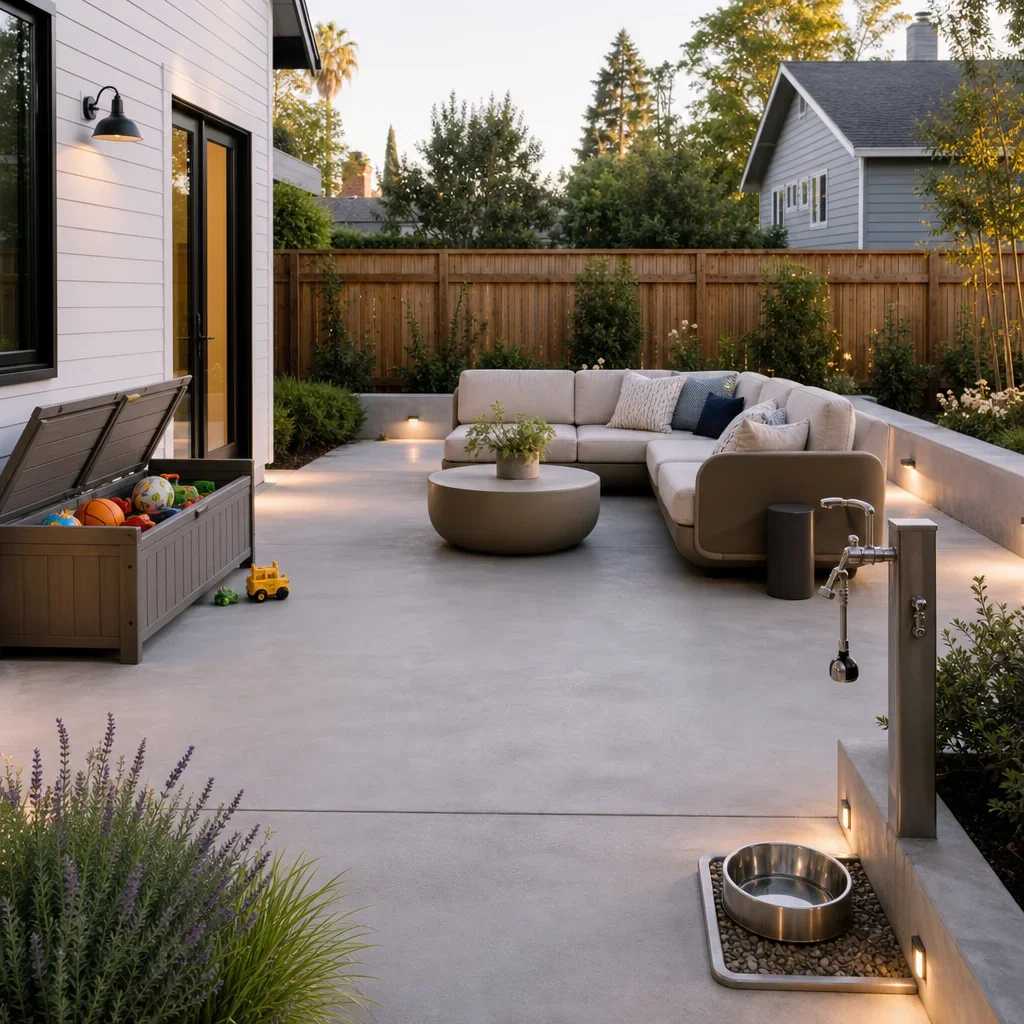
Family-friendly patios prioritize slip resistance, shade, storage, and clear movement lines over delicate finishes. Rounded furniture edges, washable rugs, and visible toy storage make a slab easier to live with. A family patio should be easy to reset, not staged like a photo shoot.
Pet-friendly patios need cooler surfaces, stable footing, and easy cleanup. Dark coatings can run hot in summer sun. Smooth glossy finishes can get slippery. Water stations, rinse areas, and secure boundaries usually add more daily value than decorative extras.
Low-maintenance patios rely on fewer joints, durable materials, larger planters, and simple planting. I usually steer people away from too many little containers and fussy softscape around hardscape. You want a patio you can hose down and enjoy.
Accessible patios benefit from step-free transitions where possible, stable furniture, glare reduction, and strong edge lighting. I do not claim accessibility compliance unless a design is checked for that exact project and jurisdiction. But the practical ideas still stand: fewer level changes, better traction, and easier turning space improve use for everyone.
Rental-Friendly and Temporary Fixes for an Ugly Patio Slab
The best rental-friendly fixes are removable deck tiles, outdoor rugs, freestanding shade, container gardens, portable screens, and modular seating. They change the feel of the slab without tying you to one property. That is what makes them smart, not temporary-looking.
A renter patio often improves most from layout rather than construction. One rug, one seating zone, one privacy layer, and one lighting layer can change the space dramatically. Good temporary design still follows the same rules as permanent work.
Weighted screens and tall planters can create privacy without drilling into concrete. This is one of the simplest ways to make a shared yard feel calmer. It also means you can move the setup if the landlord changes the rules.
Anything that paints the slab, anchors into it, or changes drainage should be approved first. That is not landscaping advice. That is just practical risk control. Reversible upgrades keep your deposit safer and your options open.
Concrete Basics Homeowners Ask About Before Starting
A 20×20 concrete slab often lands around $3,200–$7,200 at $8–$18 per square foot , but that is a broad market range, not a GTA quote. Demolition, forming, reinforcement, access, finish, and soil conditions move the number. In a tight-access Toronto backyard, the same slab can cost more.
Most residential patio slabs are commonly poured around 4 inches thick , with thicker sections or reinforced designs used where loads, soil, or local conditions call for it. Thickness alone does not make a good patio. Base prep, drainage, and reinforcement matter just as much. I would need to see the grade and intended use before advising beyond general guidance.
Concrete is often cheaper upfront than a deck, but the local answer depends on height, site access, foundation needs, and finish level. Ground-level patios usually compete well on cost. Raised backyard spaces often shift the comparison because decks handle elevation changes differently.
“Poor man’s concrete” is an internet term, not a reliable material standard. People use it for everything from compacted gravel mixes to DIY cement blends. Performance varies widely by method, and GTA winters punish experimental base systems. I would not treat that phrase as a spec.
Pavers need a proper granular base, edge restraint, and drainage layer under them or they shift, dip, and separate over time. What happens if you do not put gravel under pavers. Usually settlement, wobble, drainage trouble, and frost heave. Well over 9 in 10 failed paver patios trace back to base prep or water management .
Concrete should not be poured directly on dirt if you expect a durable patio in a freeze-thaw climate. Soil moves. Water sits. Slabs crack when the support below is inconsistent. Proper excavation, compaction, and base prep are what make the slab last.
The most common slab mistakes are bad slope, weak base prep, no control plan for drainage, poor jointing, and treating surface cracks as the real problem instead of the symptom. I have torn out patios where the finish looked fine on day one and the whole surface failed after 1–2 winters . The cause was below, not on top.
FAQ
A back patio slab usually has compacted granular base material underneath it, not on the back of it in the way people mean for interior finishes. If you are asking what goes behind or under patio slabs, the plain answer is support and drainage. For pavers, that means granular base, bedding layer, and edge restraint. For poured concrete, that means excavation, compaction, and base prep suited to the soil.
A concrete slab in the backyard can become a lounge, dining patio, grill zone, covered seating area, or the base for a broader hardscape design. If it is sound, decorate or resurface it. If it is moving, replace or rebuild around the real issue.
A concrete patio looks nicer without replacement when you clean it deeply, patch small defects, add a rug, scale the furniture correctly, soften the edges with planters, and add shade and lighting. The slab is often only half the problem. The other half is layout.
Uneven or cracked concrete can sometimes be covered with deck tiles, a deck build, or adjacent landscaping, but coverings do not fix movement. Thin finishes usually telegraph the defect. Bad slope and active settlement need a structural solution first.
A 20×20 slab commonly falls in the $3,200–$7,200 range at $8–$18 per square foot , with site-specific factors moving it higher or lower. That range is broad on purpose. Access, demolition, reinforcement, and finish all matter.
A back patio concrete slab is commonly about 4 inches thick for basic residential use, but thickness is not the only durability factor. Drainage, compaction, reinforcement, and soil conditions matter just as much.
A poured concrete patio is often cheaper than a deck at grade, while a deck can make more sense where the yard drops away or the patio must sit elevated. The cheaper option on paper is not always the better long-term fit.
If you skip gravel under pavers, the surface usually shifts, settles, and holds water. Frost heave gets worse because water has nowhere to go. Good-looking pavers still fail on a bad base.
Pouring concrete directly on dirt is a shortcut that usually leads to uneven support, cracking, and moisture problems. In a climate with freeze-thaw, that shortcut gets punished faster.
Common concrete slab mistakes include poor slope, weak base prep, trapping water, skipping proper joints, and choosing a cosmetic fix for a structural problem. The symptom is cracking. The cause is often underneath.
The best small back patio slab ideas are a bistro set, a compact lounge, a storage bench, vertical planters, and one strong focal point. Small patios feel better when they do one thing well.
Good rental-friendly ways to cover an ugly patio include removable deck tiles, outdoor rugs, freestanding umbrellas, weighted privacy screens, modular seating, and container gardens. The key is reversibility and proper drainage, not pretending the slab is new.
Before You Upgrade: A Simple Patio Slab Planning Checklist
The best planning checklist is simple: inspect cracks, test drainage with a hose, measure the slab, note door swings, choose the main use, set a budget range, decide temporary or permanent, confirm any landlord or HOA rules, and check structure-related approvals before you build. That one hour of planning prevents a lot of expensive rework.
Material choice should match climate exposure, slip resistance, and maintenance tolerance, not just colour. In the GTA, freeze-thaw, snow shoveling, and spring saturation all matter. Zone 5/6 hardiness matters for planting around the slab, and drainage matters for every hardscape choice.
A scaled sketch and a few before photos make better decisions than shopping first. Mark the doors, steps, grill location, neighbour sightlines, and the worst sun angle. If you are deciding between resurfacing, covering, or replacing, that sketch usually makes the right path obvious.
If you are stuck between a cosmetic refresh and a rebuild, get the slab assessed before you spend on finishes. We do that in our design process because drainage, grade, base prep, and finished height decide whether a patio upgrade lasts. A line-by-line proposal or a design consultation is the right next step when the slab condition is not obvious.