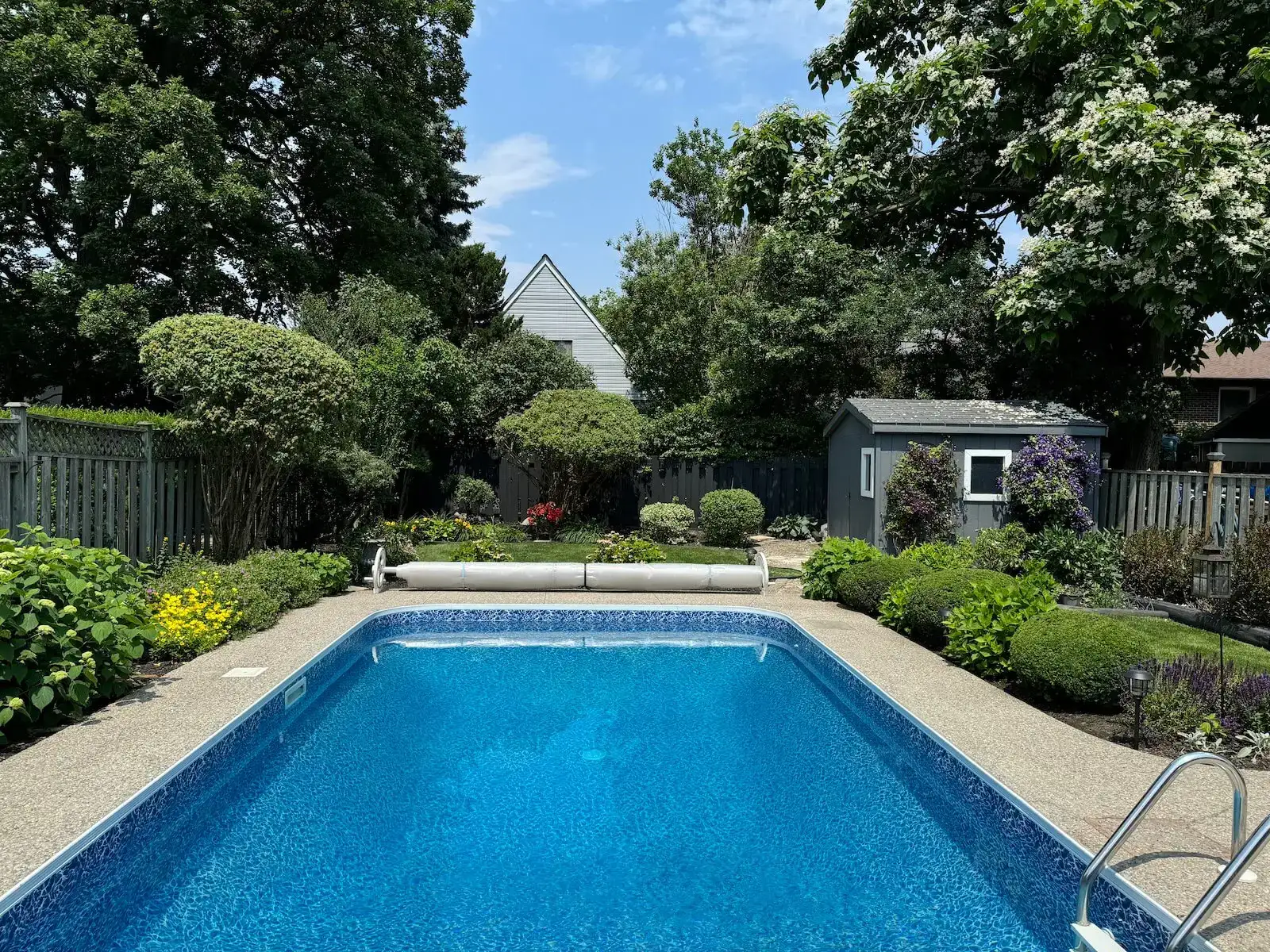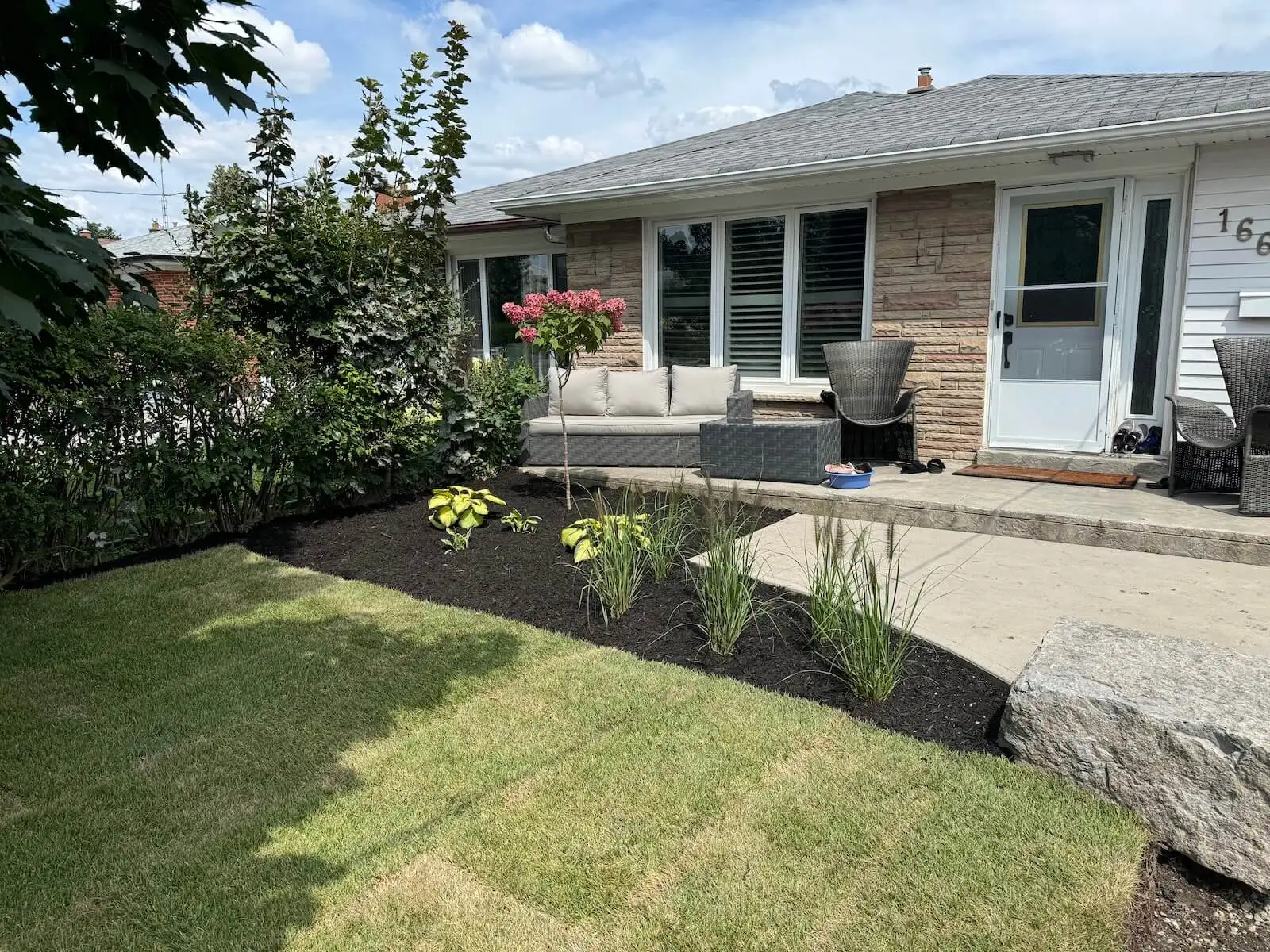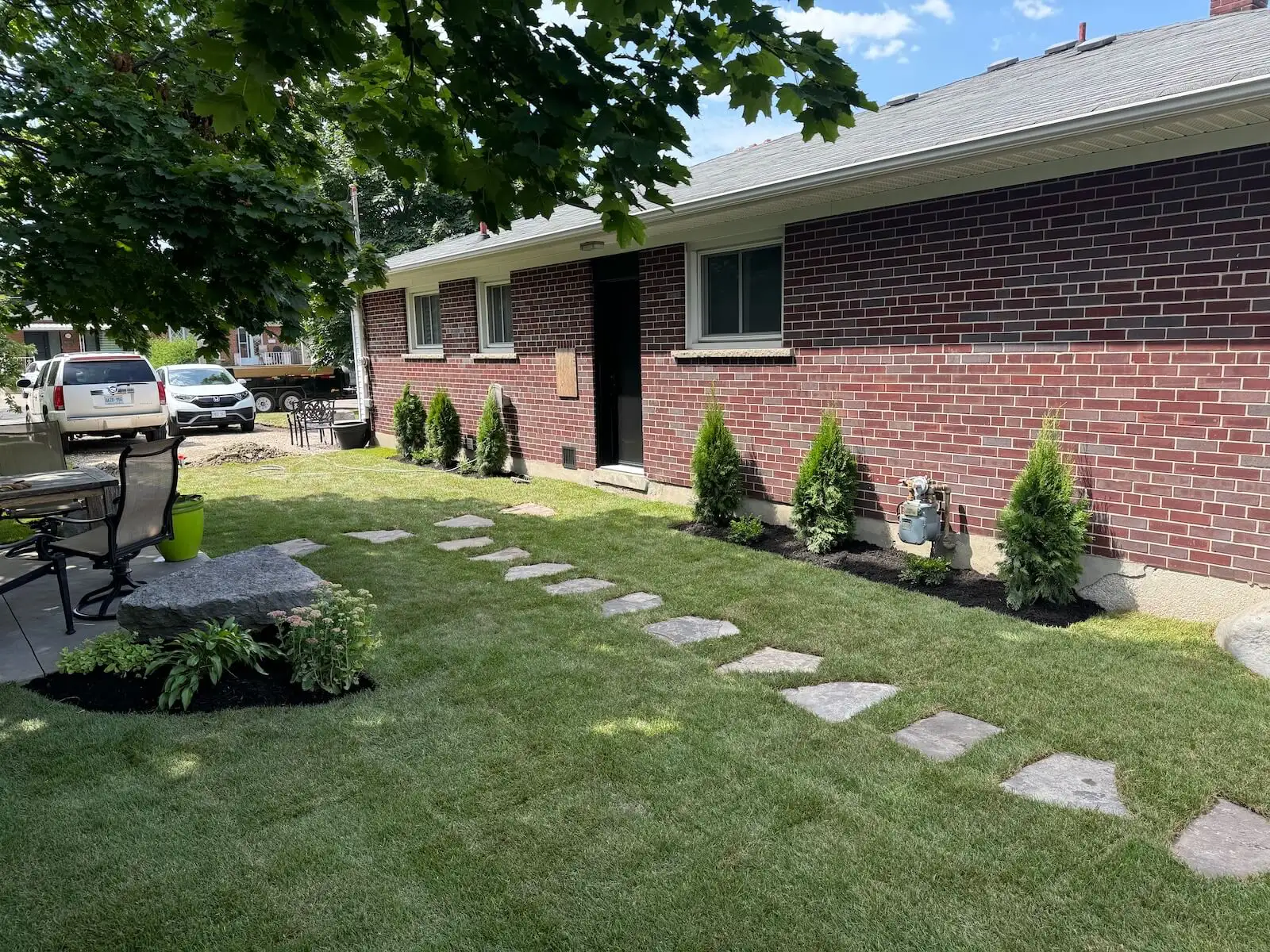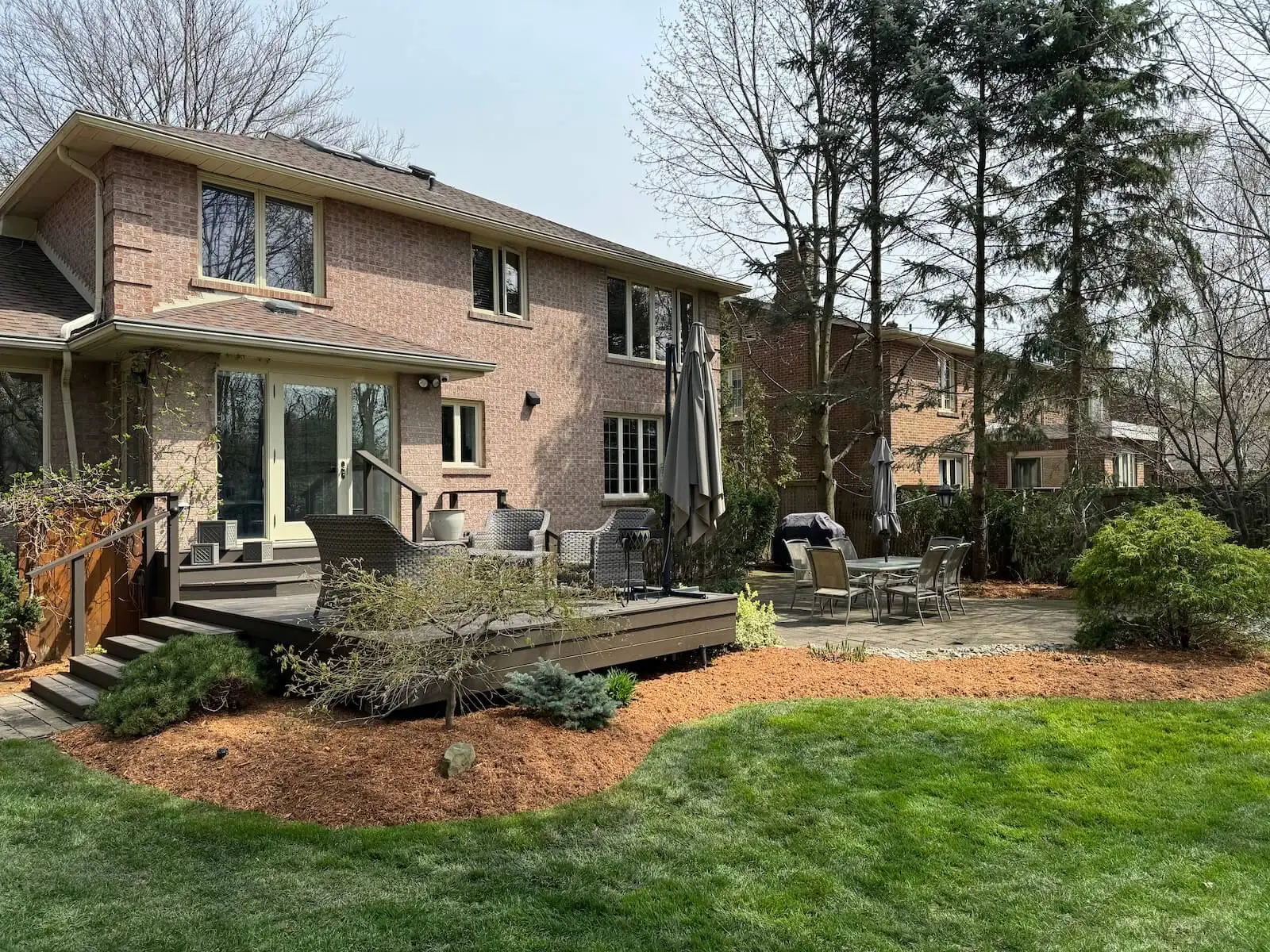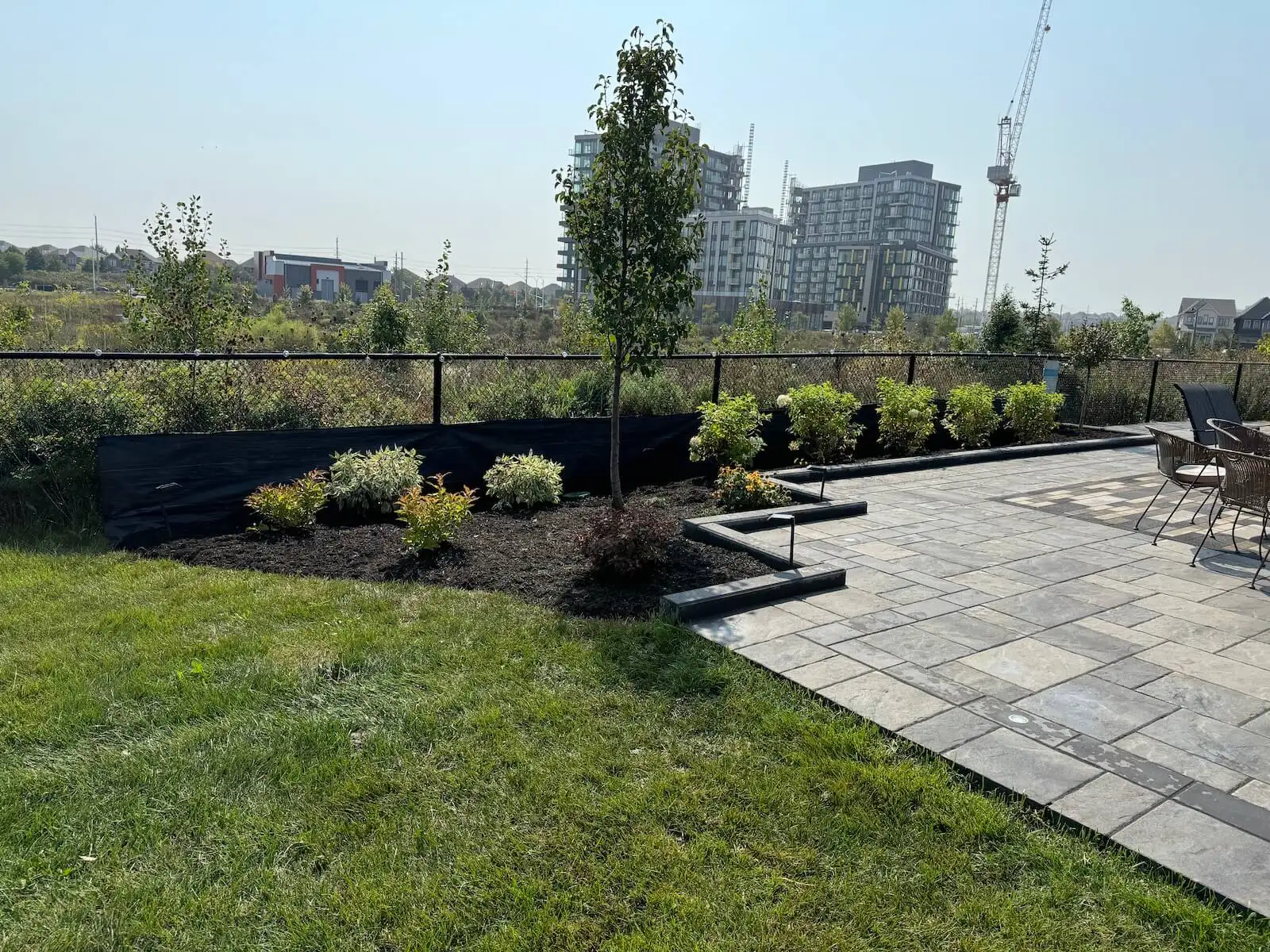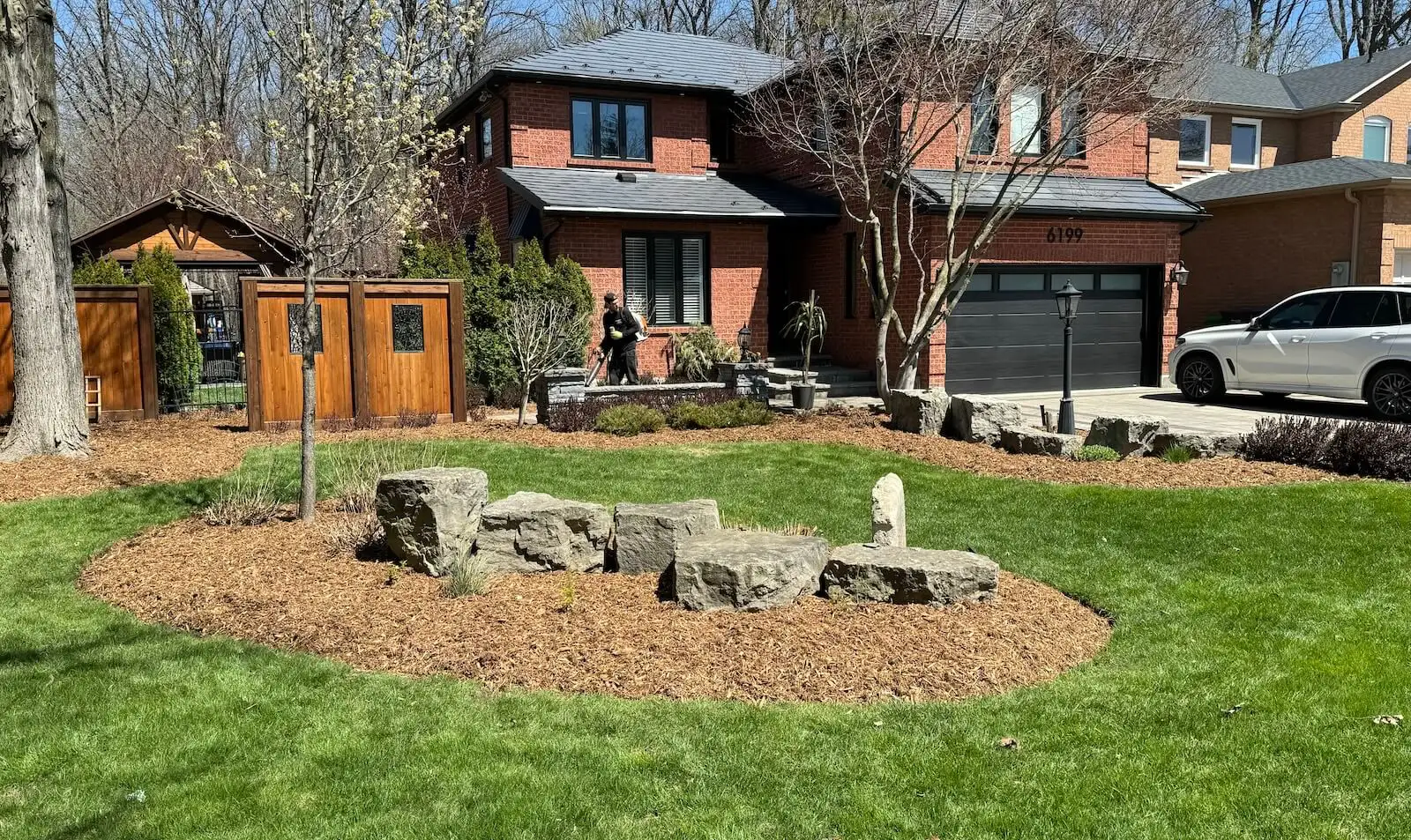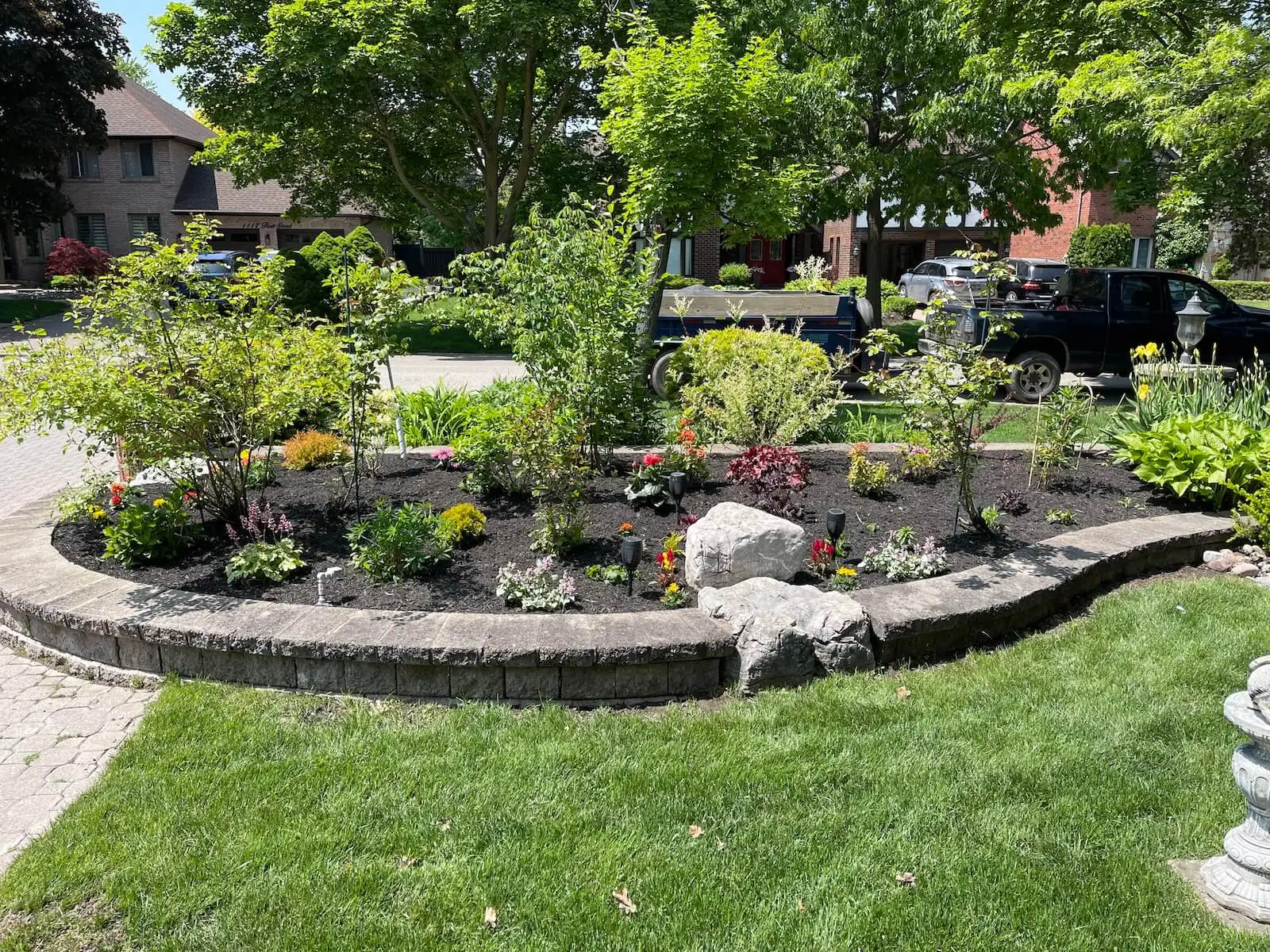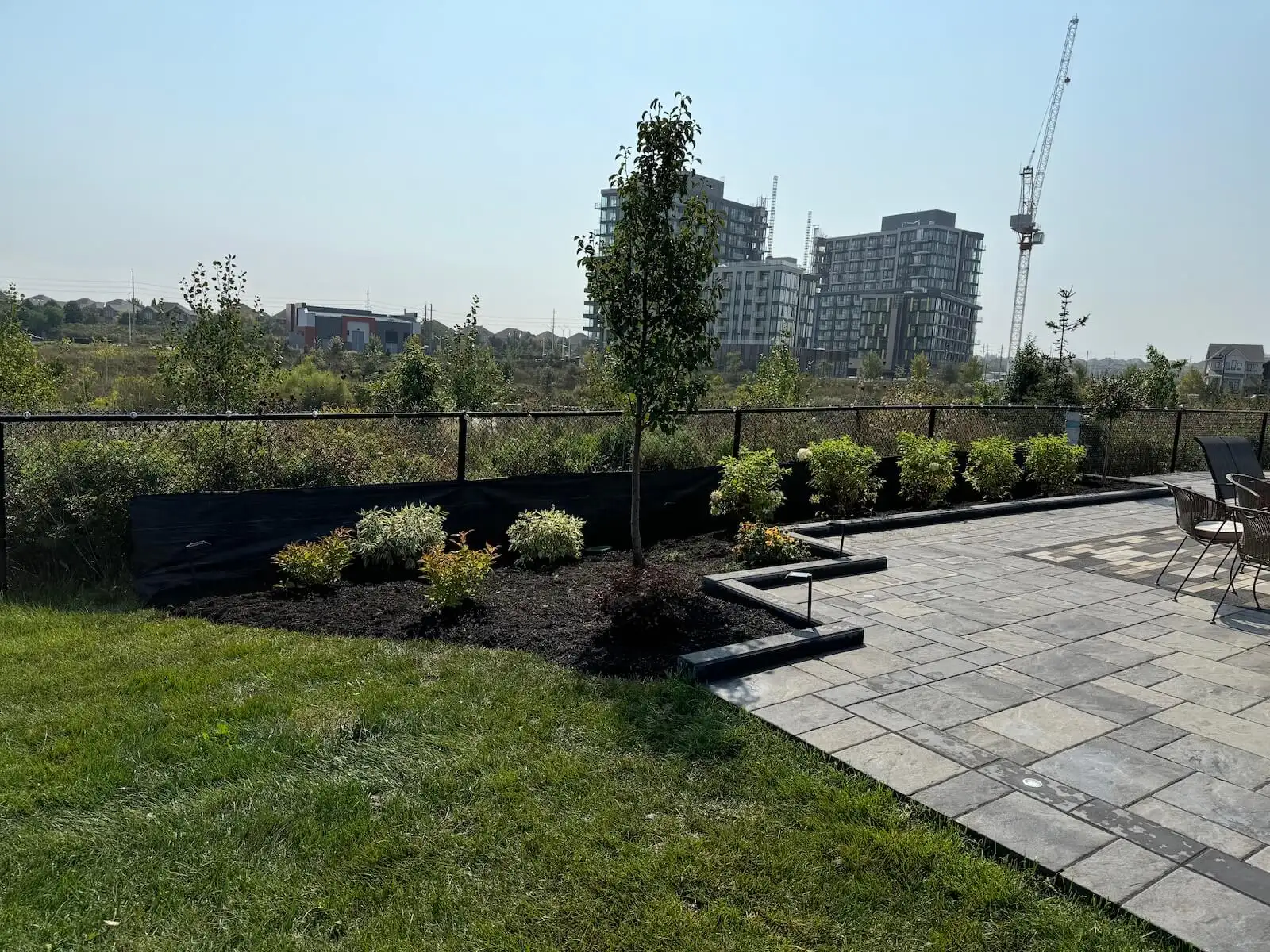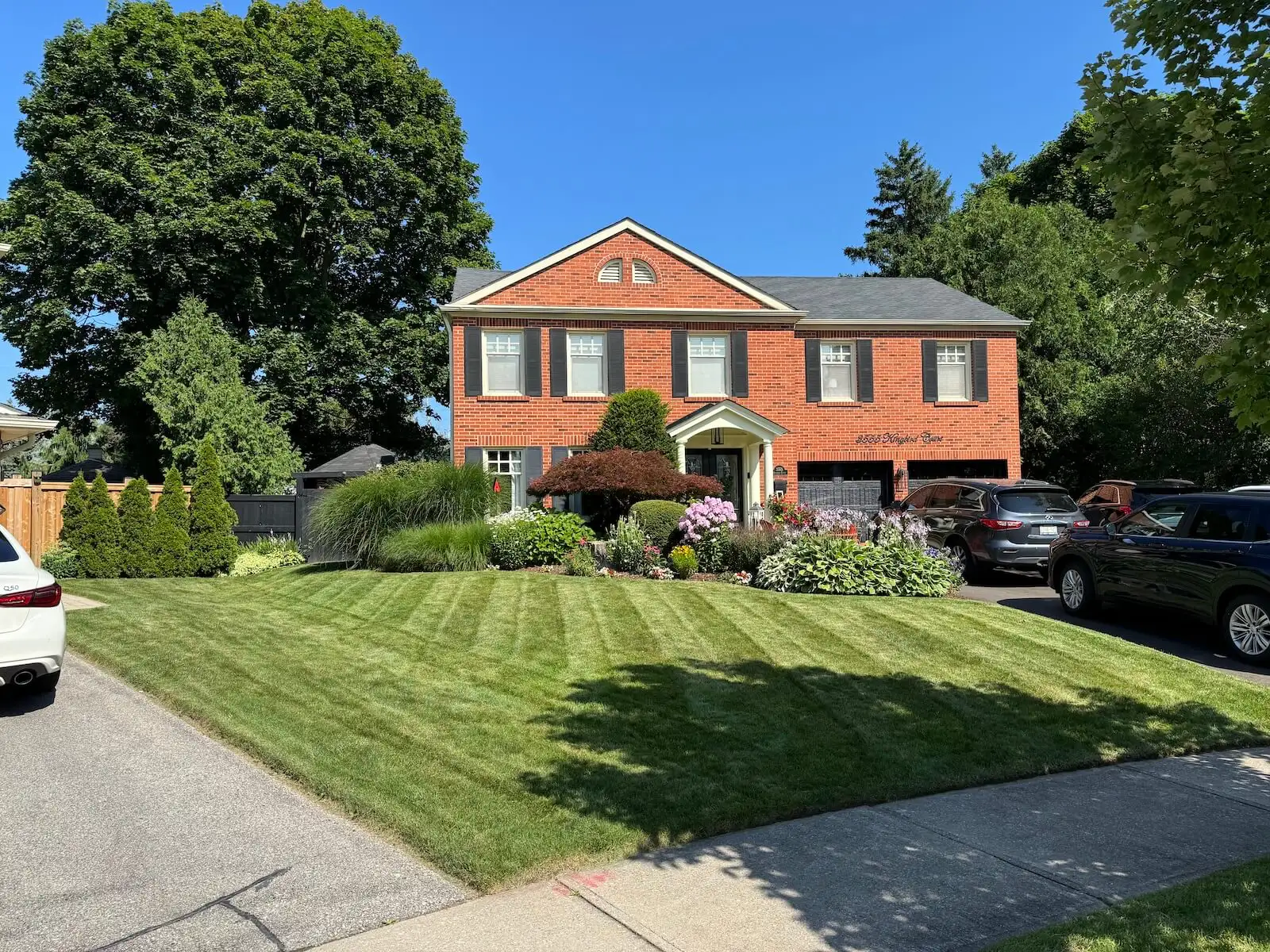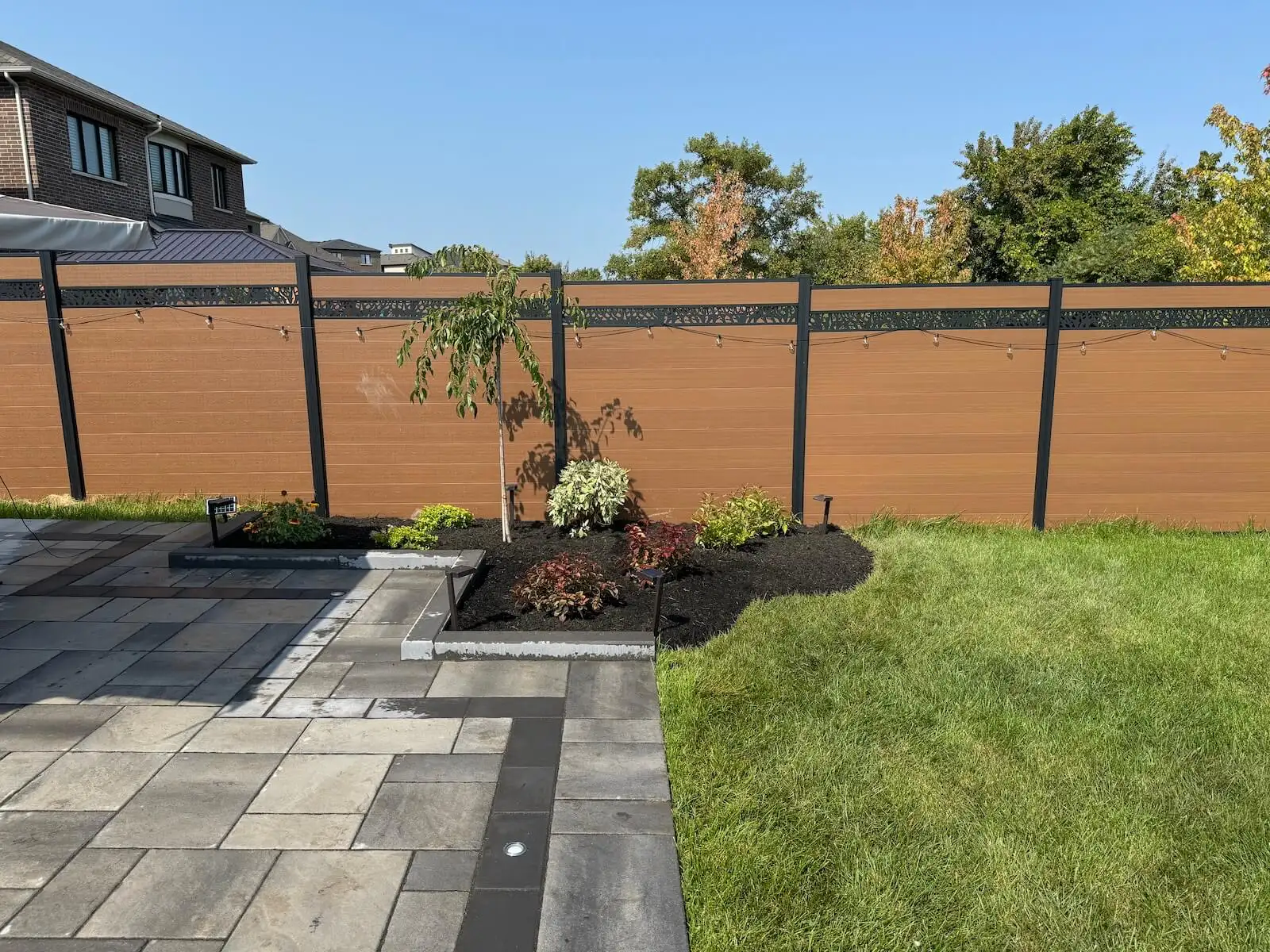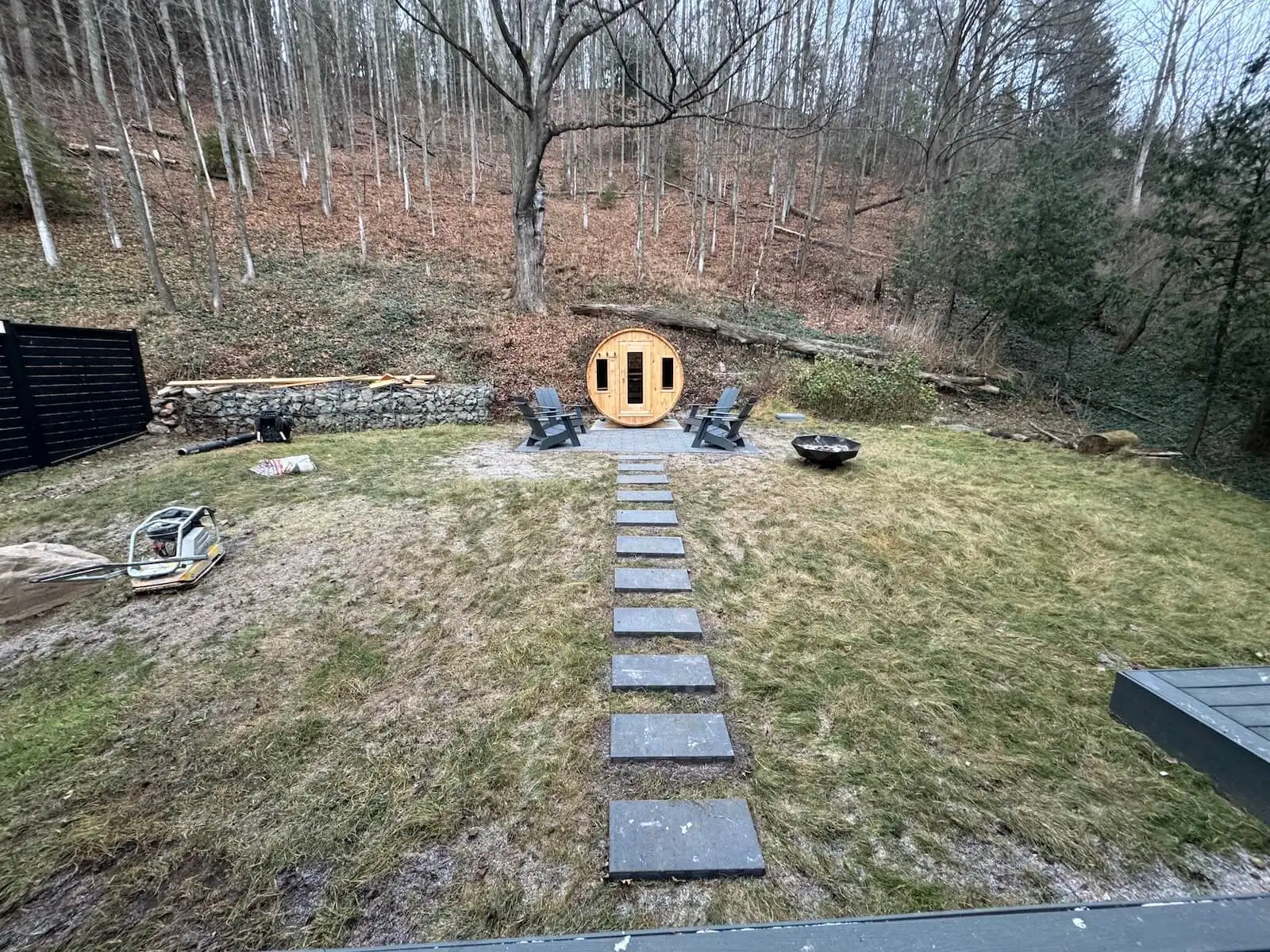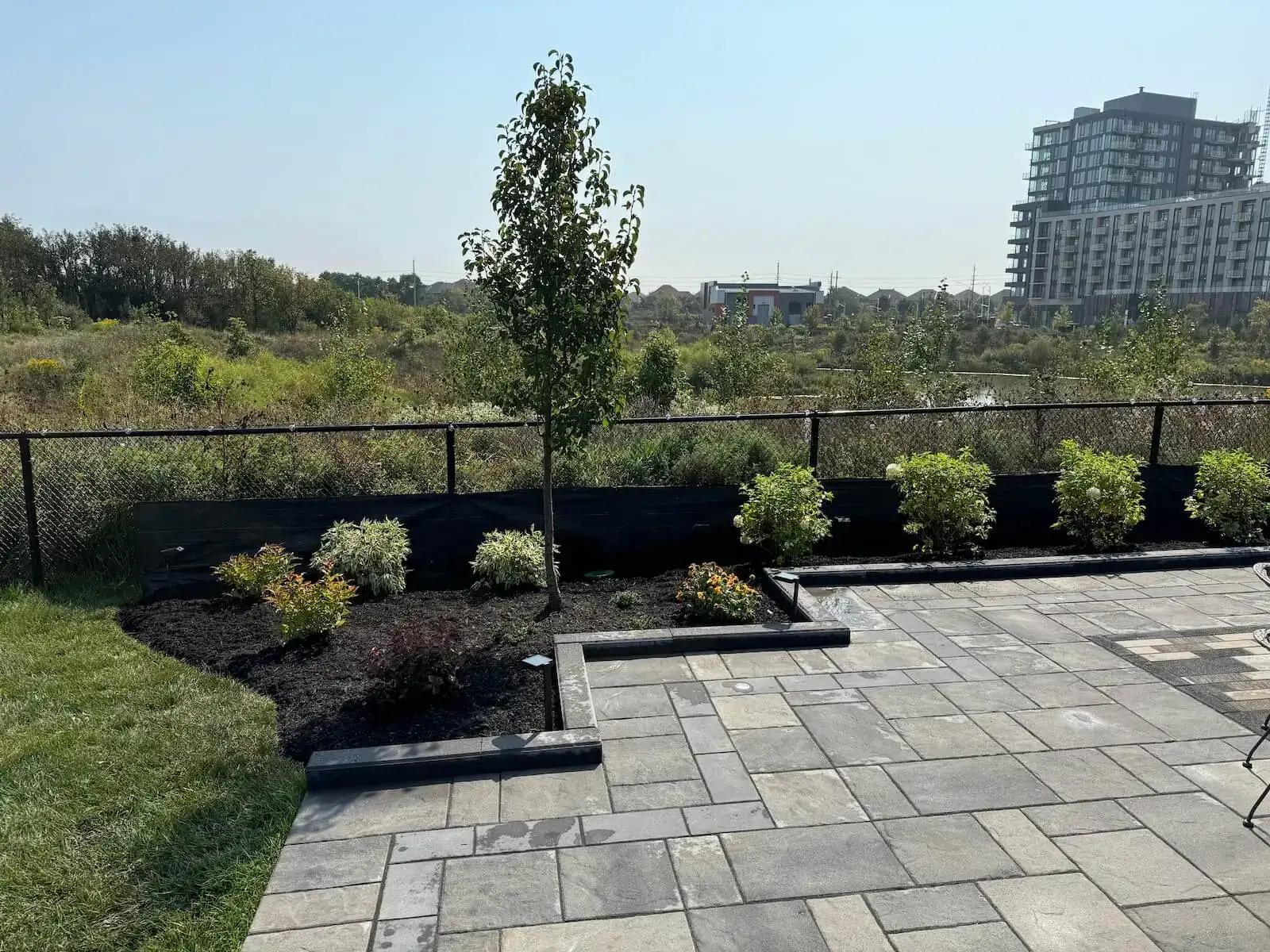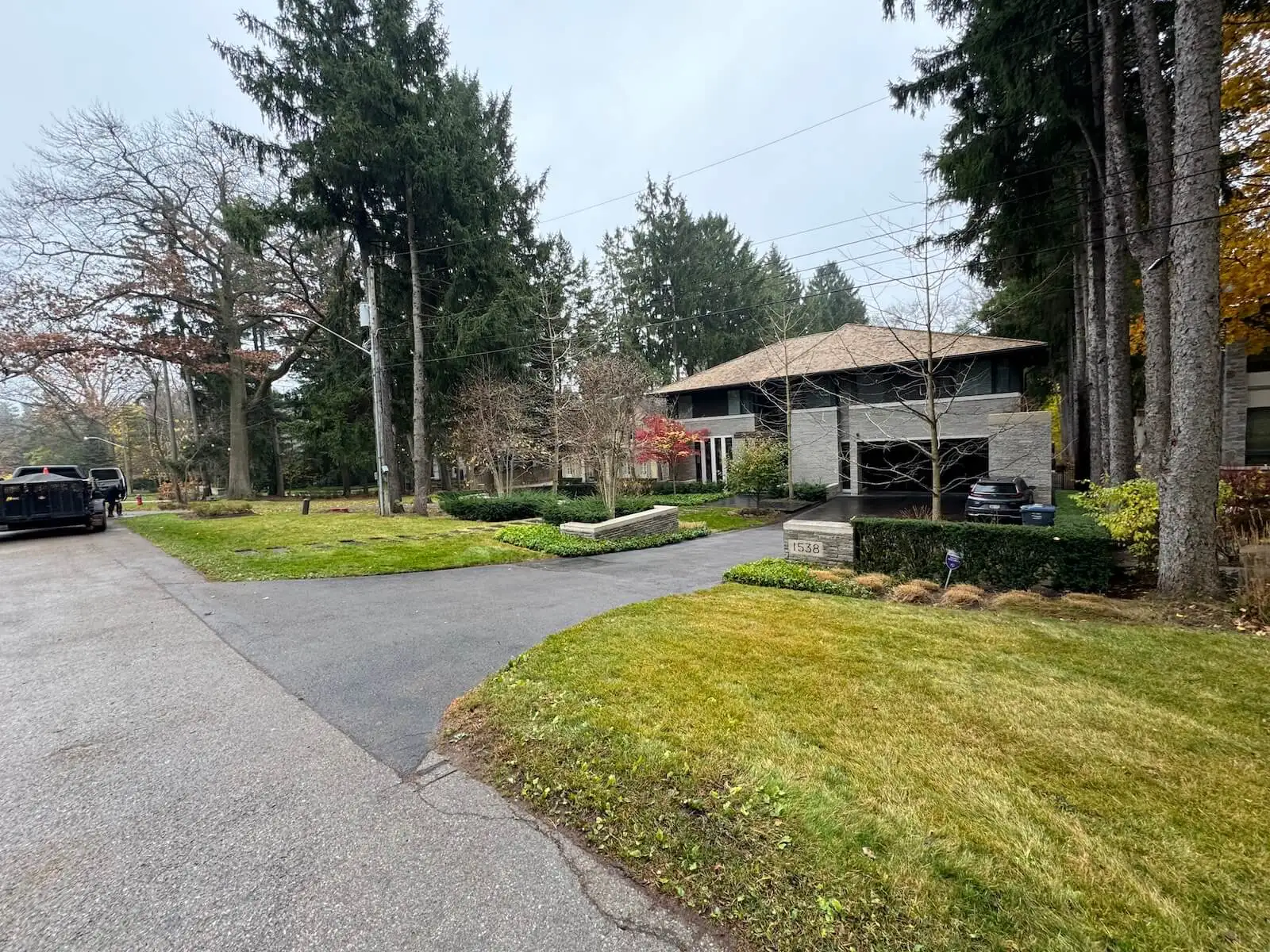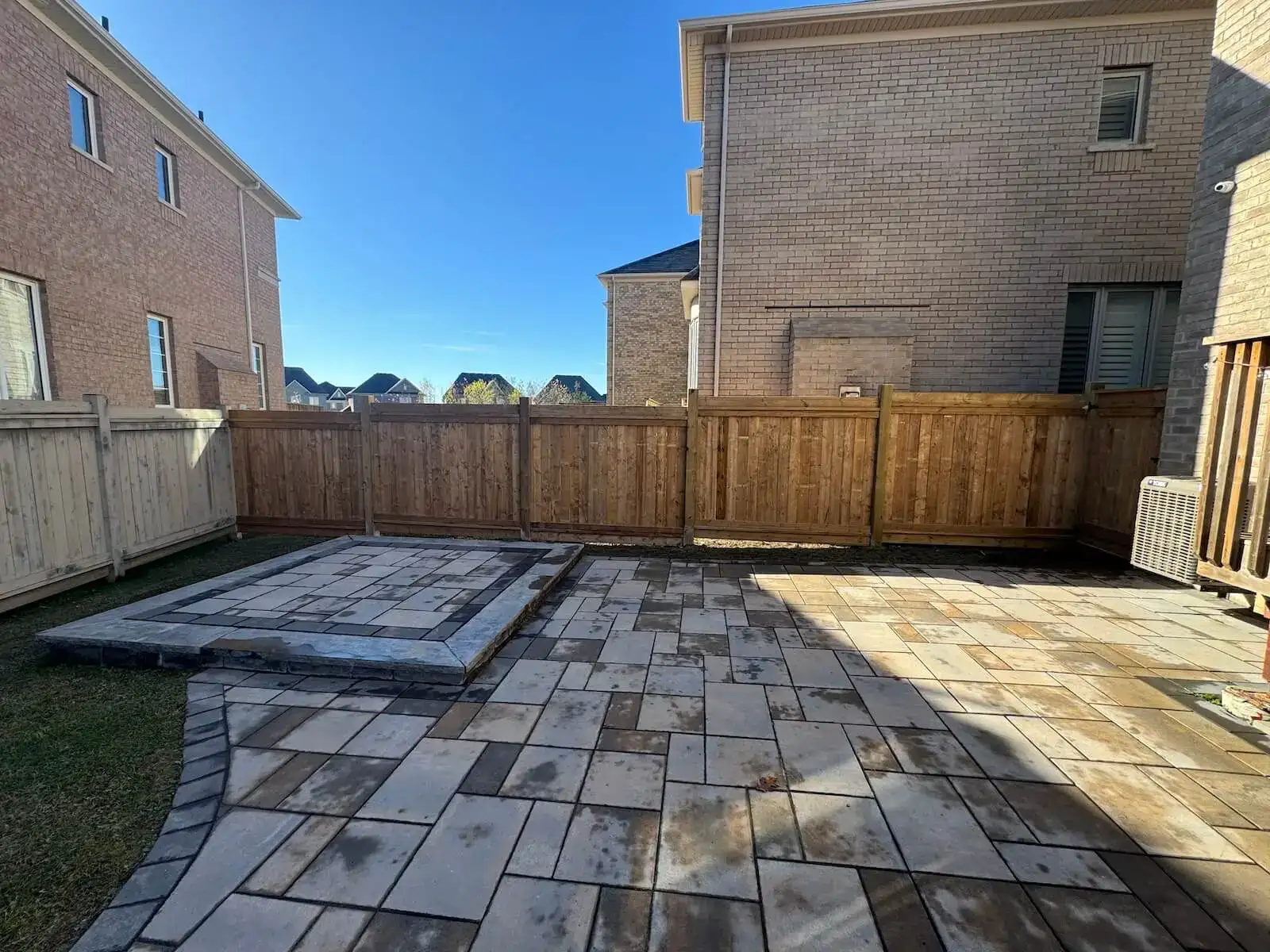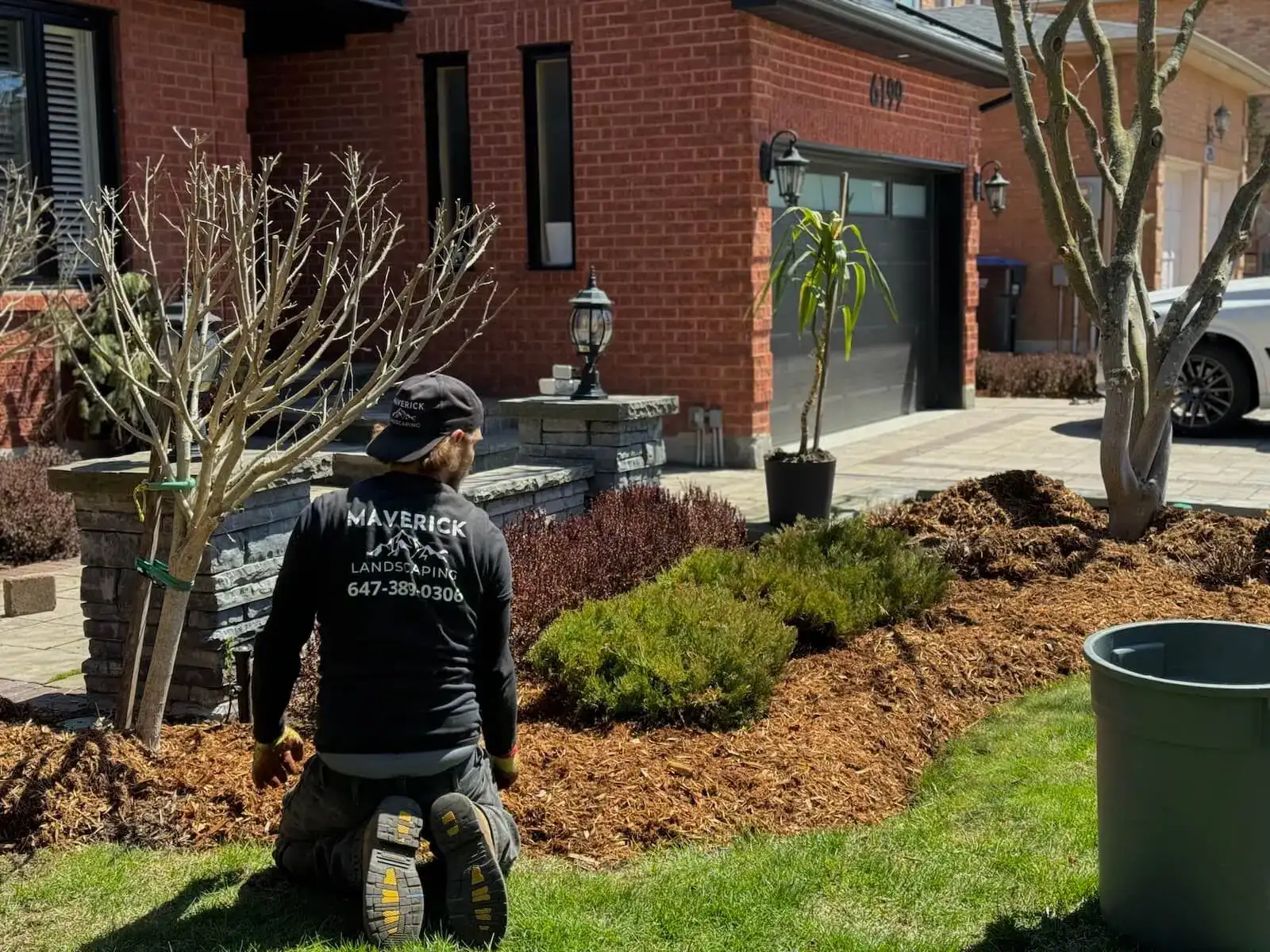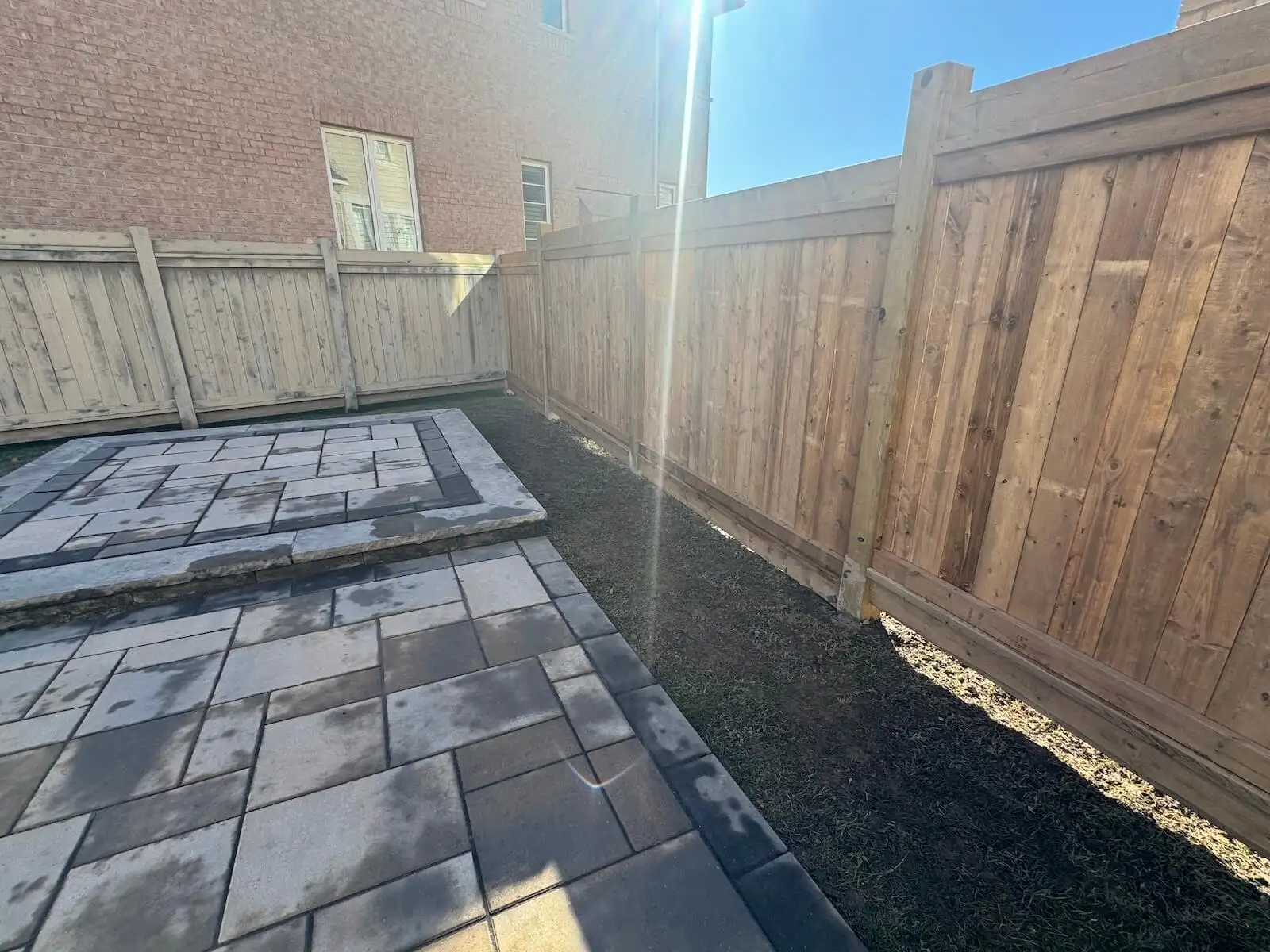









Most homeowners think a slab patio is just a style choice. They’re wrong. The best back garden slab ideas start with use, budget, drainage, and garden shape, then the look follows.
Back Garden Slab Ideas at a Glance: Best Options by Style, Budget and Garden Size
Large-format porcelain suits modern gardens because it gives you fewer joints and a cleaner grid. Porcelain slabs also stay visually crisp in low maintenance back garden slab ideas, but I still check slip resistance, drainage falls, and cut complexity before I recommend them.
Mixed-size natural stone suits cottage and traditional gardens because variation softens the layout. Natural stone weathers well in freeze-thaw climates when the stone is rated for exterior use, but colour variation is part of the product, not a defect.
Standard rectangular concrete paving suits budget-first projects because it keeps the layout simple. Back garden slab ideas on a budget usually work best when you reduce cuts, keep the area compact, and avoid mixing too many materials.
Stepping slabs through gravel suit small spaces and phased makeovers because they cover less area. Garden patio ideas on a budget often get better value from one solid seating zone plus gravel links, not wall-to-wall paving.
A refreshed old patio suits homeowners who have a sound base but dated surfaces. If slabs are stained or ugly but still stable, cleaning, repointing, or selective relaying can be smarter than a full tear-out.
27 Back Garden Slab Ideas to Copy
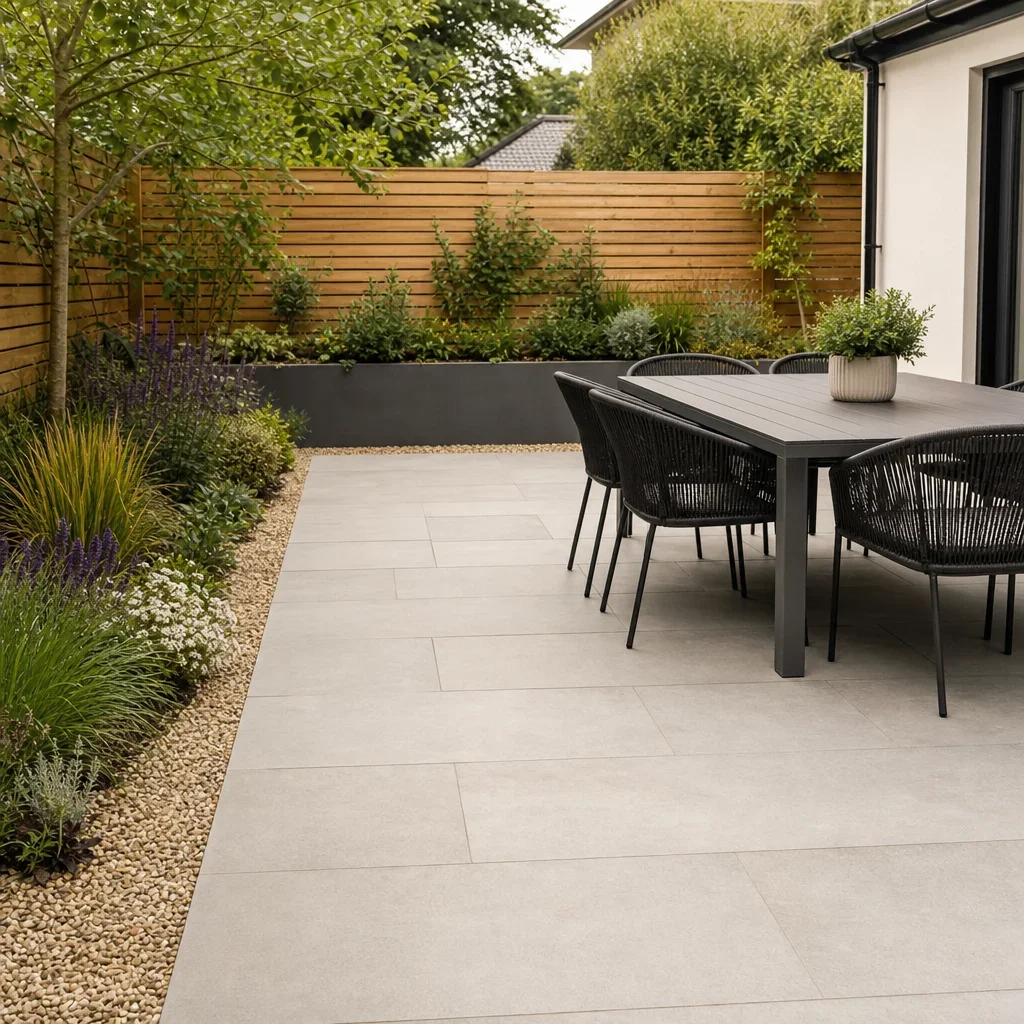
A simple modern terrace uses large rectangular slabs in stack bond with a narrow gravel margin. It suits square and rectangular yards, keeps sightlines calm, and needs accurate base prep because big slabs show lippage fast.
A charcoal porcelain dining pad with black metal edging gives a sharp contemporary look. It suits outdoor dining sets and pergolas, but dark tones can show dust and pollen more clearly than mid-greys.
A warm beige slab patio brightens shaded gardens and makes compact plots feel wider. It suits north-facing yards, though light slabs can show leaf stain and barbecue grease more quickly.
A modular natural stone pattern adds movement without looking chaotic. It suits traditional back garden slab designs, but mixed packs need a planned layout before laying starts.
A riven stone patio with brick edging gives a cottage look that feels established. It suits older homes well, though the extra border work adds more cuts and more labour.
Crazy paving with wide joints and thyme-style planting creates a rustic surface with character. It suits feature seating areas, but planted joints need more upkeep than resin or polymeric jointing.
A slab-and-gravel courtyard cuts cost and improves visual contrast. Cheap back garden slab ideas work well when the main furniture zone is paved and the surrounding area stays permeable and loose.
Stepping slabs across gravel make a narrow garden feel longer because the eye reads the route. Small back garden slab ideas often work best when the path lines pull you outward instead of chopping the space into boxes.
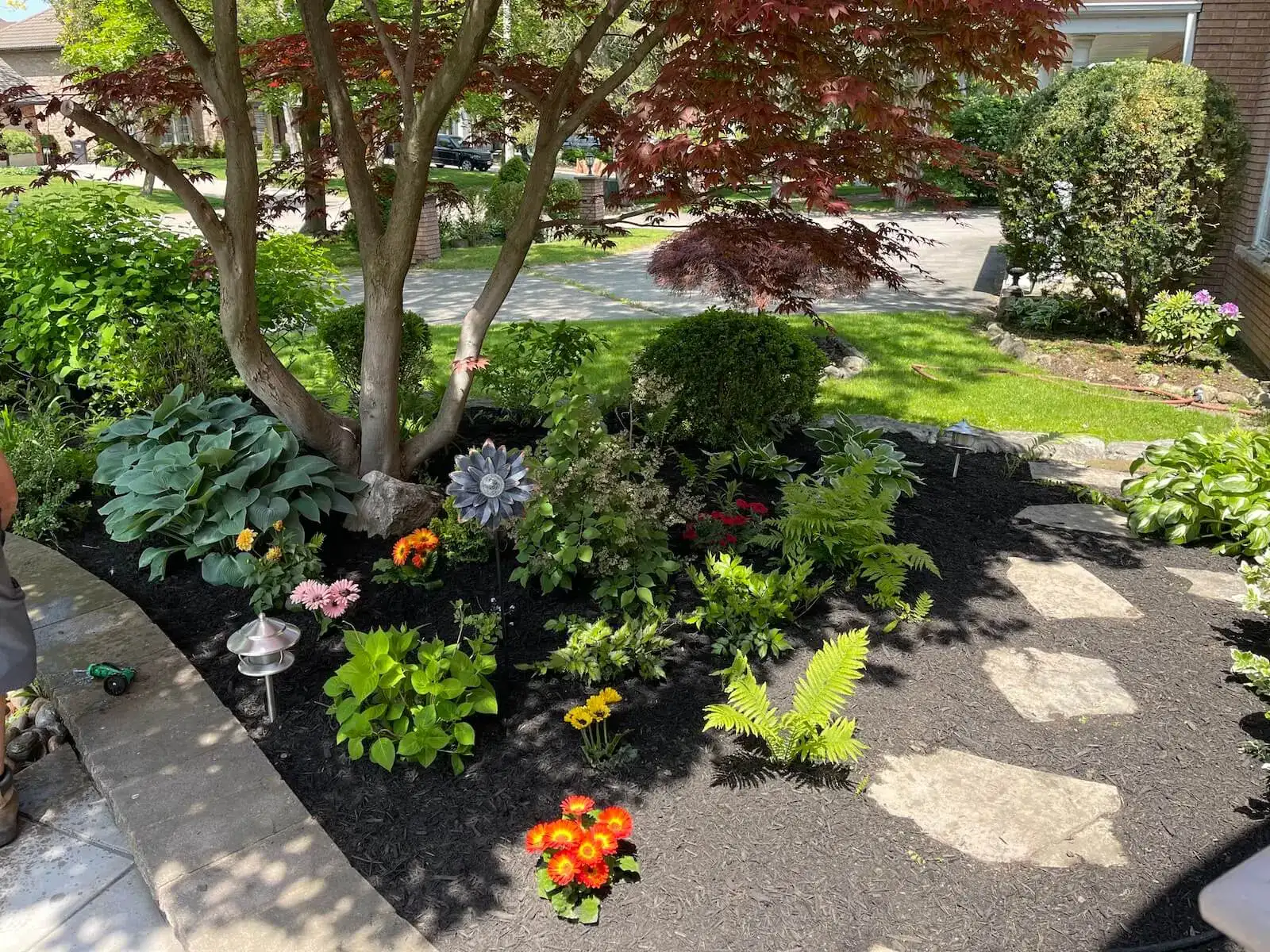
A slab path with planting pockets softens a hardscape-heavy yard. It suits homes that want paving and greenery together, but soil pockets need edging so mulch and stone stay in place.
A square seating pad framed by raised beds makes a small plot feel intentional. It suits tiny courtyards, though bed height must still leave comfortable chair clearance around the table.
A straight path of oversized slabs through lawn gives a clean family route. It suits side returns and utility runs, but each slab needs stable support or it will rock under foot traffic.
A dining zone under a pergola works well with rectangular slabs laid lengthwise. It suits entertaining spaces, though post footings and slab joints need to be coordinated before construction.
A fire pit zone looks balanced with a circular furniture layout inside a square paved pad. It suits larger gardens, but open flame means you need proper clearances from structures and planting.
A dog-friendly patio uses textured, easy-clean slabs with wide turning space. It suits pet owners, though I avoid sharp loose gravel on the main route from door to lawn.
A family garden works well with one main patio and one secondary play surface. Garden ideas with slabs and stones feel more practical when hardscape is concentrated where furniture and traffic actually sit.
A utility-focused budget patio uses standard concrete slabs in stretcher bond. Cheap back garden slab designs are usually strongest when they stay rectangular, use fewer cuts, and skip unnecessary borders.
A premium minimalist layout uses large porcelain with concealed linear drainage at the edge. It suits modern homes, but drainage still has to move water to a legal outlet, not just hide the channel.
A traditional entertaining patio mixes sandstone tones with brick soldier-course edging. It suits red-brick homes, though natural stone batches should be dry-laid first to balance colour variation.
An L-shaped patio breaks one awkward yard into dining and lounge zones. It suits family use, but the inside corner needs careful grading so water does not pond there.
A narrow terrace looks wider with slabs laid across the short dimension. It suits row-house gardens, though too many border strips can make the width look busier, not broader.
A square plot feels less static with a diagonal path leading to a rear seat. It suits gardens that need movement, but diagonal layouts create more waste because they involve more cuts.
A sloped garden can use terraced slab platforms linked by steps. It suits level seating and outdoor dining, but any retaining wall or significant level change needs proper design and may need engineering or permits depending on the municipality and wall conditions.
A patio refresh can keep the old footprint and replace only the visible top course. It suits layouts that still function, though I only do that when the base and drainage are still performing.
A painted-slab makeover can improve a tired corner for a short-term fix. It suits low-budget refreshes, but coatings can peel, weather unevenly, and change slip characteristics.
A mixed-material design uses paving near the house, gravel beyond, and planting at the edges. It suits phased upgrades, though too many finishes in one small space can look busy fast.
A slab patio with artificial grass strips creates a crisp geometric look. It suits modern family gardens, but narrow artificial strips can be fiddly to edge and clean.
A rear seating nook with reclaimed slabs gives character at lower material cost. It suits secondary patios and utility corners, though reclaimed stock usually brings inconsistent thickness and colour.
How to Choose the Right Slab Material
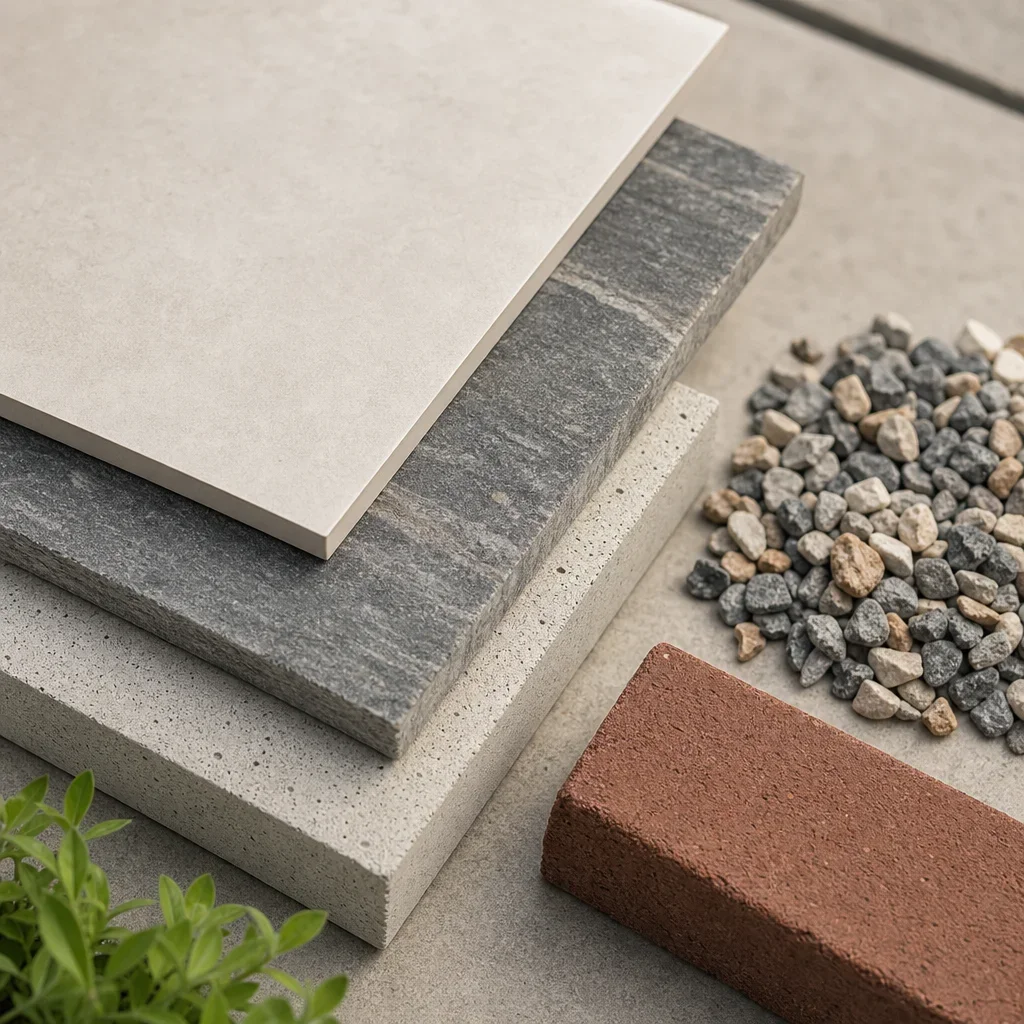
Porcelain is usually the cleanest-looking option for modern paving, natural stone is the most characterful, and concrete is often the most budget-friendly route. No material is best for everyone because maintenance tolerance, drainage strategy, cut complexity, and style all change the right answer.
| Material | Typical look | Pros | Cons | Best for | Caution |
|---|---|---|---|---|---|
| Porcelain slabs | Clean, modern, consistent | Dense surface, easy to clean, sharp edges | Needs precise install, can look flat in rustic gardens | Contemporary patios | Product slip rating and edge detail vary by manufacturer |
| Natural stone | Varied, textured, traditional | Character, softer visual variation, ages well | More colour variation, some stones need more care | Cottage and classic gardens | Confirm exterior frost suitability for the exact stone |
| Concrete slabs or concrete pavers | Simple, practical, broad styles | Usually cost-effective, easier to match on budget jobs | Can weather unevenly, some products look more utilitarian | Budget patios and family gardens | Product quality varies widely by manufacturer |
| Gravel with slabs | Relaxed, permeable-looking, informal | Lower paved area, lower cost, strong contrast | Less ideal for dining chairs, needs edge control | Paths and secondary seating zones | Loose material migrates without proper restraint |
| Brick edging with slabs | Traditional, crisp border | Defines layout, adds contrast, ties to house brick | More labour and more cuts | Borders and framed patios | Border setting-out matters or it looks uneven |
Poured concrete and paving slabs are not the same thing. Concrete slab garden ideas usually mean a continuous poured surface, while paving slabs are separate units with joints, more repair flexibility, and more pattern options.
What Slab Size, Shape and Finish Work Best?
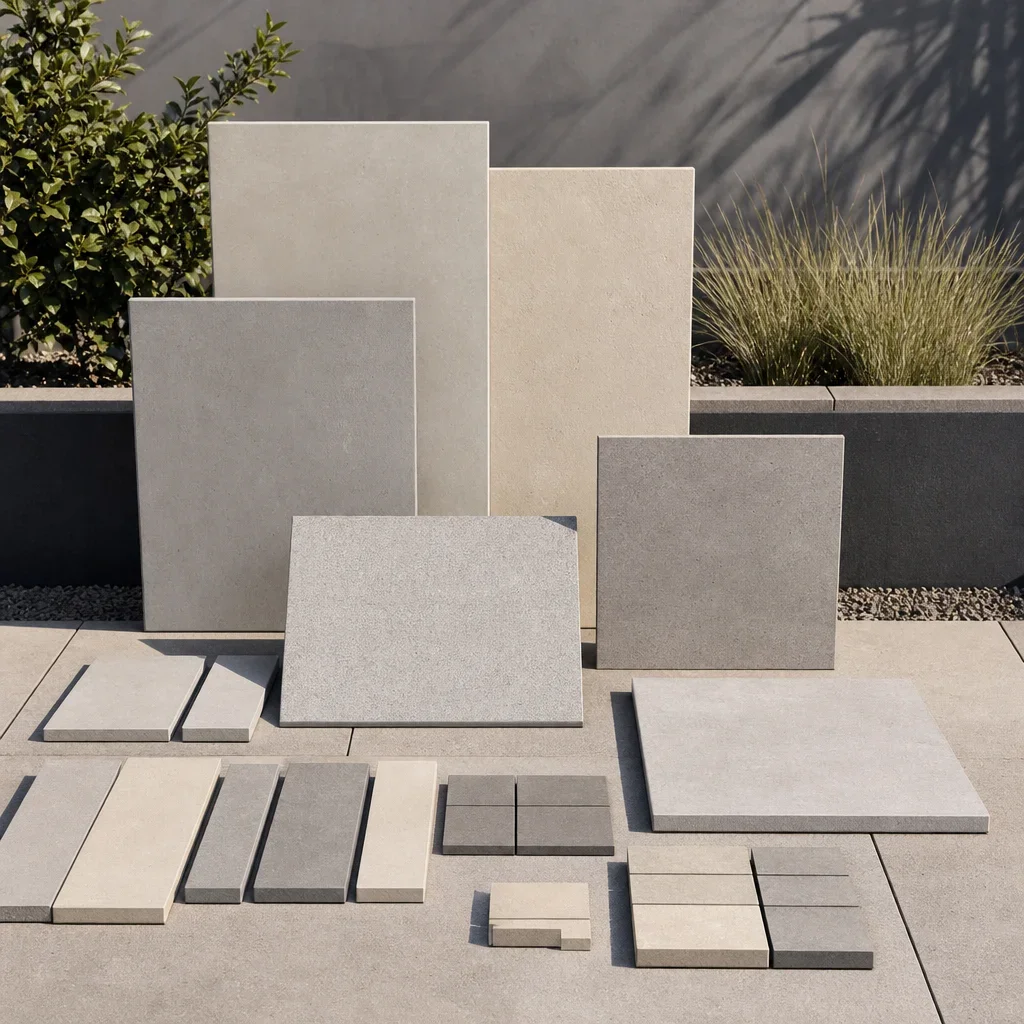
Large slabs make a garden feel calmer because there are fewer joint lines to read. Back garden slab designs for modern spaces often use large rectangles, while smaller units or modular packs are more forgiving in awkward corners and traditional layouts.
Square slabs feel balanced and formal, while rectangles can visually lengthen or widen a space depending on direction. Random and modular layouts suit irregular gardens because they hide small dimensional awkwardness better than a strict grid.
Light colours make shaded gardens feel brighter and can help a small patio look bigger. Dark tones feel moodier and more contemporary, but they usually show dust, pollen, and hard-water marks differently than lighter finishes.
Matte and textured finishes generally look less slippery than polished-looking surfaces in wet weather. For any patio slabs near doors, steps, pools, or high-traffic routes, I check the manufacturer’s exterior rating instead of trusting appearance alone.
Many domestic porcelain paving products are around 18–22 mm thick, while many concrete or natural stone patio products are around 30–40 mm thick. Thickness still depends on the exact product, intended load, and manufacturer specification, so I confirm that before final selection.
Best Slab Layouts and Patterns for Back Gardens
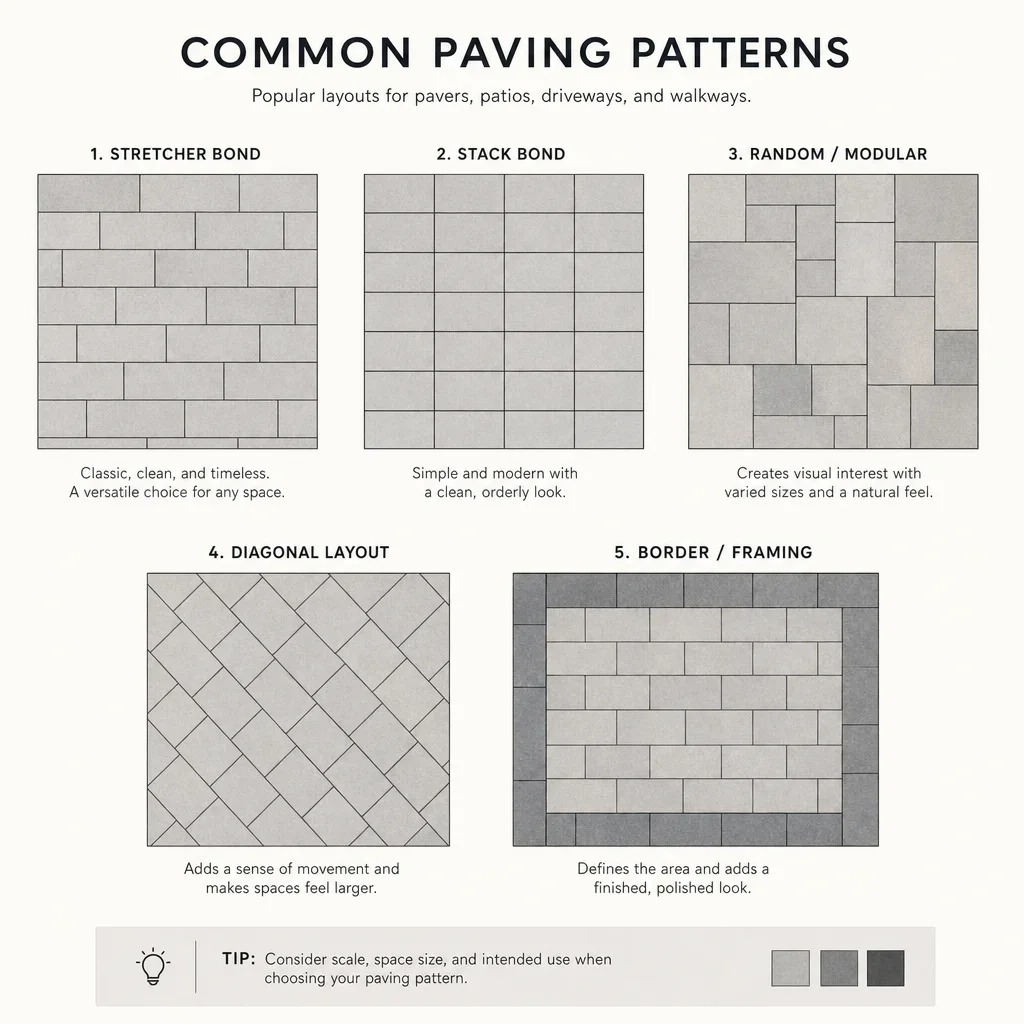
Stretcher bond is the safest layout for most gardens because it looks ordered without feeling rigid. It suits rectangular slabs, works in modern and traditional settings, and usually creates fewer awkward cuts than diagonal patterns.
Stack bond looks the most contemporary because all joints line up in a clean grid. It works best when the installation is very accurate because joint drift and size variation are easier to spot.
Random pattern and modular layouts suit natural stone and mixed-size paving because they create movement. They work well in cottage gardens, but they need a planned repeating sequence or they can look accidental.
Diagonal layouts can widen the look of a square or short garden because the eye follows the angle. They also create more offcuts, which usually means more waste and more labour.
Border-framed designs give a patio a more finished edge and help zone the furniture area. A soldier course, contrasting slab border, brick edge, gravel margin, or metal restraint each changes the character in a different way.
A narrow garden usually reads wider when slabs run across the short dimension. A long garden usually reads calmer when the joints support the length instead of fighting it.
Small Back Garden Slab Ideas That Make the Space Feel Bigger
Small gardens feel larger when you reduce visual breaks and keep the material palette tight. Small back garden slab ideas work best with one main paving tone, one clear layout, and restrained edging.
Large-format slabs can work in compact spaces because fewer joints mean less visual clutter. They are not always the best choice in tiny awkward yards, though, because narrow edge cuts can look clumsy if the setting-out is poor.
Slim raised beds and built-in seating save floor area because they hold the edges cleanly. That matters most in courtyards and narrow terraces where freestanding furniture can crowd circulation fast.
Running the same slab from the back door to the seating zone makes the whole route read as one space. Small garden paving ideas pictures often look calm for that reason, even when the garden itself is not large.
Back Garden Slab Ideas on a Budget
The cheapest way to slab a garden is usually to pave less area, keep the shape simple, and use standard rectangular concrete units. Back garden slab ideas on a budget rarely get cheaper by chasing complex patterns or large numbers of cuts.
A slab-and-gravel mix cuts material use and can still look finished. Cheap back garden slab ideas often put full paving only where a table, chairs, barbecue, or doorway actually need a hard surface.
Reclaimed paving can save money when the stock is sound and the look suits the house. It also brings risks, including mixed thickness, old mortar on the backs, and inconsistent colour from batch to batch.
End-of-line stock, local merchants, salvage yards, and peer-to-peer resale can all be useful sources for cheap garden paving ideas pictures that become real projects. The trade-off is usually less stock consistency and less chance of finding matching replacements later.
Ordering about 5–10% extra for cuts and breakage is a common planning allowance on patio work . The exact overage depends on the pattern, edge complexity, and how many awkward cuts the garden shape creates.
Low-Maintenance and Family-Friendly Slab Designs
Low maintenance back garden slab ideas usually use simple shapes, fewer joints, and surfaces that clean easily. That is why modern porcelain, dense concrete, and some sealed stone setups are all popular, though upkeep still depends on the exact product and finish.
Family patios work better when dining, play, and circulation each get their own zone. One level main surface is easier for furniture, push toys, and everyday traffic than a patio broken into lots of small pads.
Dog-friendly paving needs stable footing, easy cleanup, and sensible heat management. I avoid making the main route all loose gravel, and I check how the chosen finish behaves in full summer sun before finalizing it.
Furniture, heavy planters, and barbecues all put more demand on the build-up than decorative stepping stones do. That is why slab thickness, base prep, and level installation matter more than the surface look alone.
Modern, Cottage and Natural-Look Back Garden Slab Designs
A modern formula is simple: large-format slabs, a tight colour palette, crisp edging, and restrained planting. Back garden slab designs look most contemporary when the layout is uncluttered and the drainage details are integrated cleanly.
A cottage formula is softer: mixed-size stone, brick edging, layered planting, and warmer colour variation. Garden slab ideas in this style usually benefit from a less rigid pattern and more visual texture.
A natural-look formula uses irregular paving, gravel joints, and softened edges with herbs or low planting. It works best when the materials already have colour variation, not when every piece tries to look perfectly uniform.
How to Mix Slabs with Gravel, Grass, Planting and Raised Features
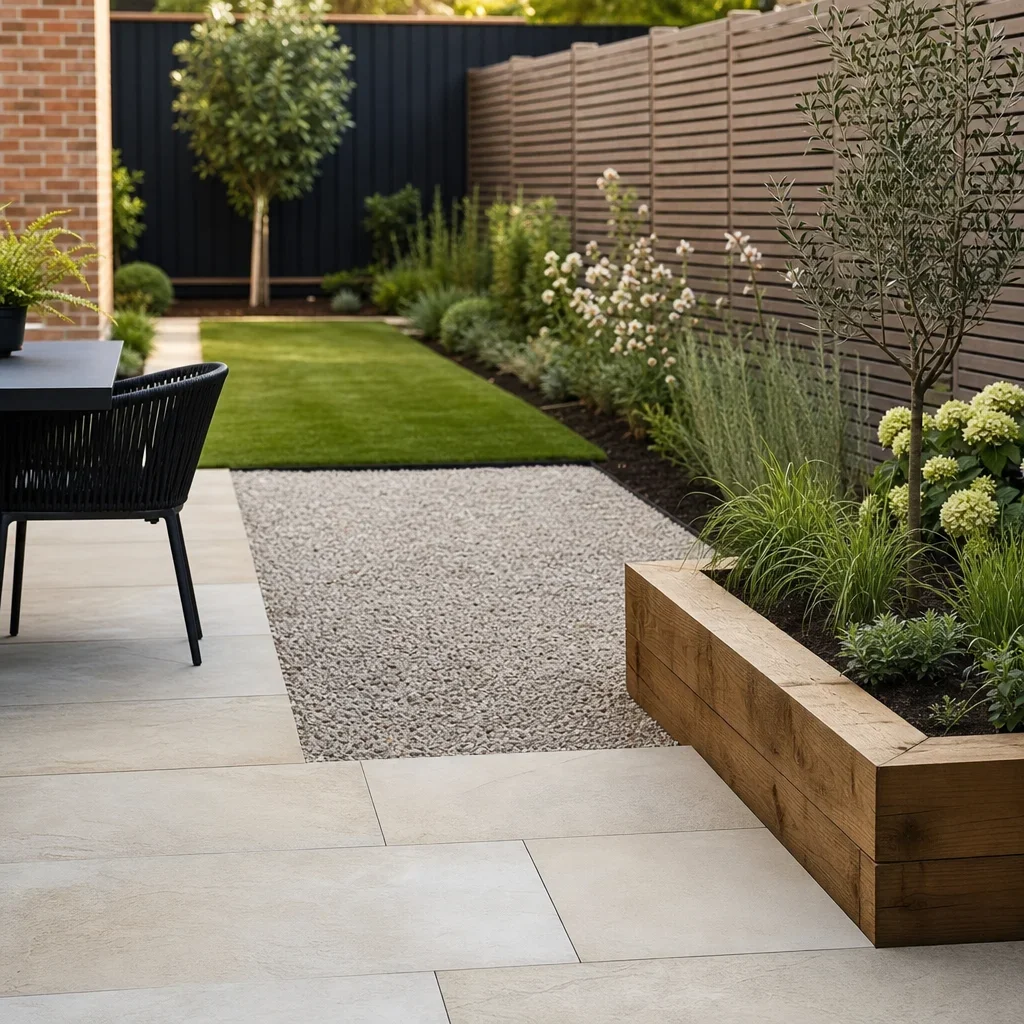
Slabs and gravel work well together because each material does a different job. The slabs give you stable routes and seating areas, while the gravel lowers the paved percentage and creates contrast around them.
Planting pockets can stop a paved garden feeling too hard if the layout leaves enough soil volume. Small pockets are mostly decorative, while deeper beds and raised planters support healthier long-term growth.
Raised beds, sleepers, and pergolas help zone a patio without changing the paving material. They also need to be coordinated with levels early, because posts, bed walls, and paving heights all affect one another.
Artificial grass can pair well with slabs in family gardens when it is used in larger blocks, not fiddly strips. Too many narrow joins between materials can make a design look busy and increase edge-maintenance work.
Planning Before You Buy: Drainage, Base, Levels and Access
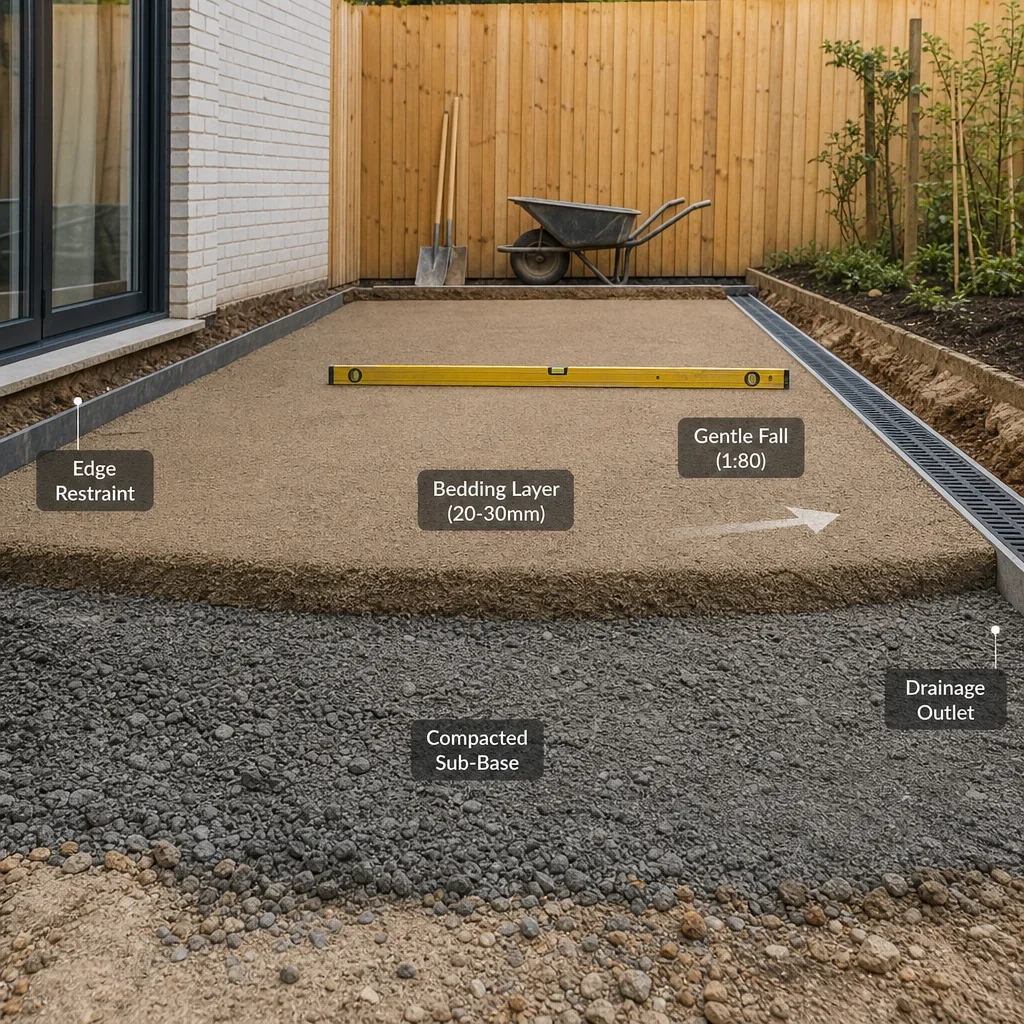
A patio fails early when drainage and base prep are treated like extras. Well over 9 in 10 failed slab jobs I see come back to poor base prep, bad drainage, weak edges, or a combination of those issues.
A sub-base is the compacted support layer under the patio, and base prep means building that layer properly. Without stable support, paving slabs move, joints crack, and freeze-thaw cycles turn small settlement into obvious rocking and lippage.
A bedding layer sits above the sub-base and below the slab to help with level and bond. An edge restraint locks the perimeter so the field of paving does not spread outward over time.
Patios need fall so water drains away instead of pooling at the house. A common target is about 1:60 to 1:80 for domestic paving falls , but I still set drainage to the actual site, thresholds, and discharge route.
You should check door thresholds, air conditioning units, manholes, step heights, and delivery access before ordering a single slab. Excavation can change finished levels fast, and a good-looking patio that traps a door or covers a utility point is still a bad design.
Sub-base depth and bedding depth depend on soil condition, load, drainage needs, and the paving system. I’d need to see the grade and soil to quote or specify that correctly, because GTA winters punish a cheap base.
Can You Lay Slabs Straight Onto Soil? What to Know Before DIY
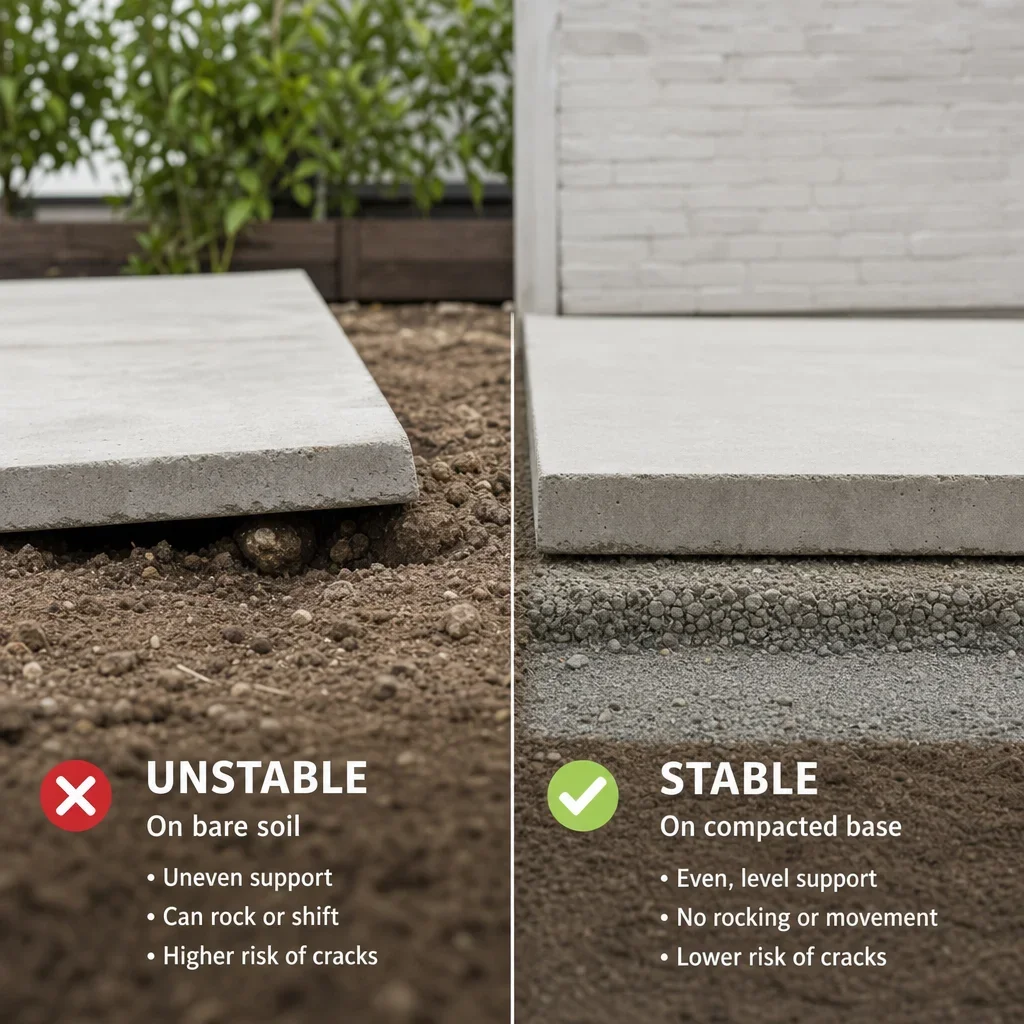
For a lasting patio, laying slabs straight onto soil is generally not recommended. Soil shifts with moisture, settles unevenly, and holds water differently across the same yard, so the surface rarely stays level for long.
Temporary stepping stones are different from a proper patio or seating area. A loose stepping slab can be acceptable for a light garden route, but a dining patio, barbecue area, or furniture pad needs a proper support system.
If you lay paving slabs directly onto soil, the common results are sinking, rocking, pooling, weed growth, and frost movement. In cold climates, frost heave is the big one, because water in the ground expands as it freezes and lifts the slab unevenly.
Common Mistakes When Laying Slabs
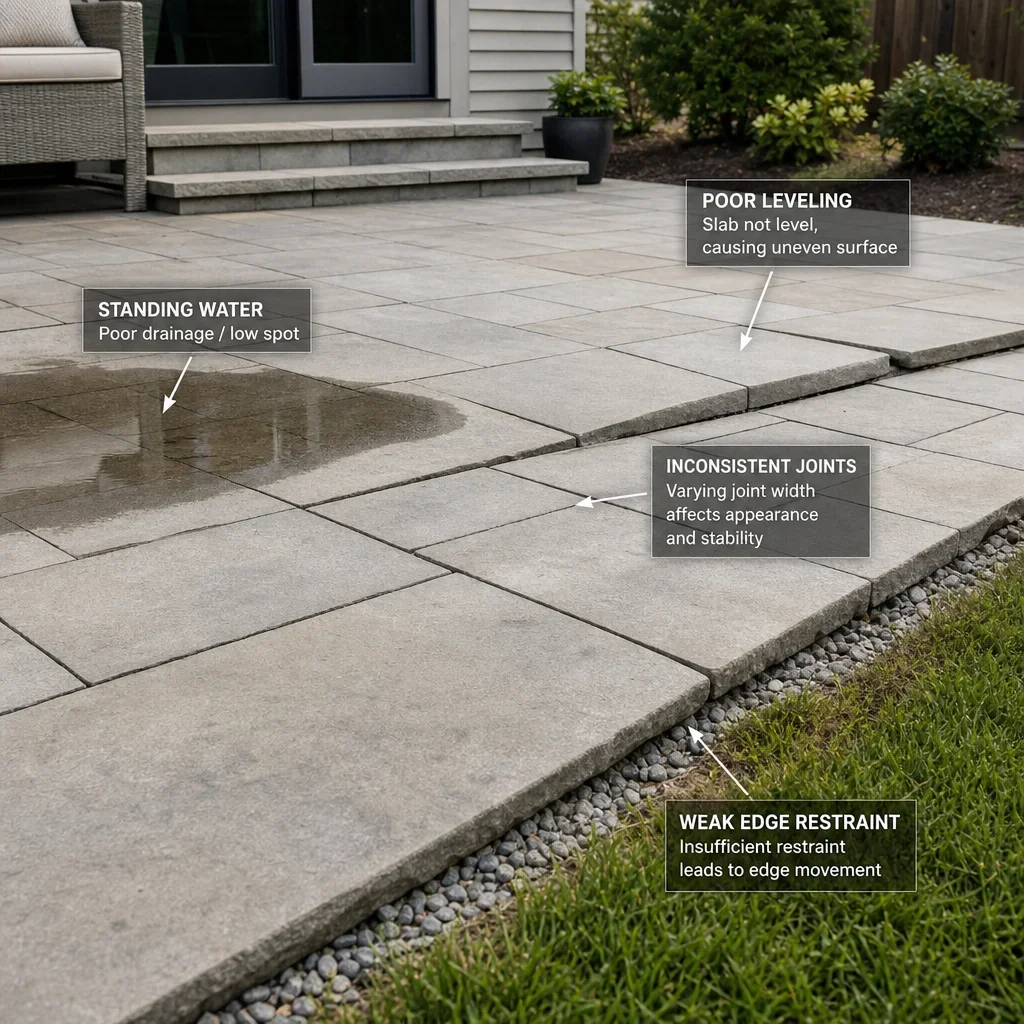
Poor sub-base prep is the biggest installation mistake because the whole surface depends on it. If the support layer is weak or not compacted properly, the finished patio can look fine on day one and fail after the first wet season.
Too little fall causes standing water, algae growth, and winter ice. Drainage is not a finishing detail. It is a design decision that starts before the first excavation.
Weak edge support lets a patio spread and loosen over time. That matters most on the outside edges, path runs, and any slab field beside gravel or lawn.
Inconsistent joint spacing makes even expensive paving look amateur. The cleaner the slab and the more modern the pattern, the more obvious bad alignment becomes.
Overcomplicated layouts create waste and increase the odds of awkward cuts. Simple garden paving ideas pictures often work in real life because the setting-out is disciplined, not because the materials are fancy.
Choosing the wrong surface for the use case is another common miss. A finish that works on a feature path may not be the right choice around dining furniture, pets, steps, or a pool edge.
Underordering materials slows jobs and can create shade mismatch when the second batch arrives. That is especially risky with natural products and any range with visible colour variation.
Ignoring furniture footprints is a design mistake, not just a styling issue. Dining chairs need room to pull back on a flat, stable area, and barbecue wheels hate narrow joints and uneven edges.
Refresh or Replace? What to Do with Old, Stained or Uneven Slabs
A slab patio is worth refreshing when the base is sound and the problem is mostly visual. Cleaning, repointing, spot lifting, and relaying can improve a tired patio without rebuilding the whole area.
Full replacement is usually smarter when slabs are rocking, drainage is poor, or the layout no longer works. New pointing on a failed base is only cosmetic, and it will not stop future movement.
Stains and algae can often be cleaned, but cracked slabs and widespread settlement usually point to a deeper issue. If water is sitting on the surface after rain, I look at grading and drainage before I talk about finishes.
Painting old slabs can change the look quickly, but it is not the same as replacing them. Coatings can wear unevenly, affect maintenance, and look patchy on mixed-porosity surfaces.
Back Garden Slab Design Recipes for Real Garden Shapes
A narrow terrace usually works best with rectangular slabs, a straight run, and minimal borders. The budget version is standard concrete in stretcher bond, while the premium version is large porcelain with a slim gravel edge.
A square garden usually needs zoning more than width tricks. I like one central seating pad with planting or gravel around it on a budget job, or a framed two-zone patio on a premium build.
An L-shaped garden works best when each leg gets a job. One side can hold dining and the other lounging, with the layout lines used to connect both areas instead of fighting the angle.
A sloped garden needs level platforms before it needs pretty paving. The budget version may be a smaller cut-and-fill seating area with simple steps, while the premium version may include terracing, retaining edges, and integrated drainage.
How Much Slab Do You Need and How Do You Avoid Buying Mistakes?
You estimate patio slabs by measuring the area, sketching the layout, and then adding for cuts, borders, and waste. Pack coverage, actual slab size, and planned joint width all affect the real quantity.
Thresholds, steps, curves, drain covers, and border pieces usually create the buying mistakes. If you only measure the open rectangle and ignore the details, the order comes up short fast.
Samples matter because colour, texture, and edge finish read differently outdoors than they do on a screen. That is especially true with natural stone, where tonal variation is part of the appeal.
Ordering about 5–10% extra is a common allowance for cuts and breakage , but a diagonal or highly detailed layout can need more than a simple rectangular field.
FAQ: Practical Questions About Back Garden Slabs
Porcelain is usually the better fit for a crisp modern patio, while natural stone suits a softer and more traditional look. The better choice depends on the style you want, the maintenance you accept, and whether the exact product is rated for your climate and use.
The latest trends in garden paving lean toward larger formats, simpler layouts, calmer colour palettes, and mixed-surface schemes instead of paving every inch. In 2026, I expect that to continue because low-clutter layouts are easier to live with and easier to maintain.
The best slab size for a small back garden is the size that reduces awkward cuts and visual clutter. Large formats can work very well, but only when the setting-out suits the garden shape.
If you do not put gravel or another proper support-and-drainage layer under pavers, the risk of movement and poor drainage goes up sharply. The exact build-up depends on the paving system, but a stable draining base is not optional for a lasting patio.
Old patio slabs can sometimes be painted instead of replaced, but that is usually a cosmetic short-term fix. If the surface is uneven, rocking, or draining poorly, replacement or relaying is the better route.
How thick paving slabs should be for furniture and barbecues depends on the product and the supporting build-up. Many domestic paving products fall into the roughly 18–22 mm porcelain range or the roughly 30–40 mm concrete and natural stone range , but the manufacturer specification and base design decide suitability.
If you’re comparing back garden slab designs and still feel torn, start with a scaled sketch, a rough budget band, and photos of your existing grade. That usually tells you faster whether you need new slabs, a smarter layout, or a full redesign with drainage sorted first.