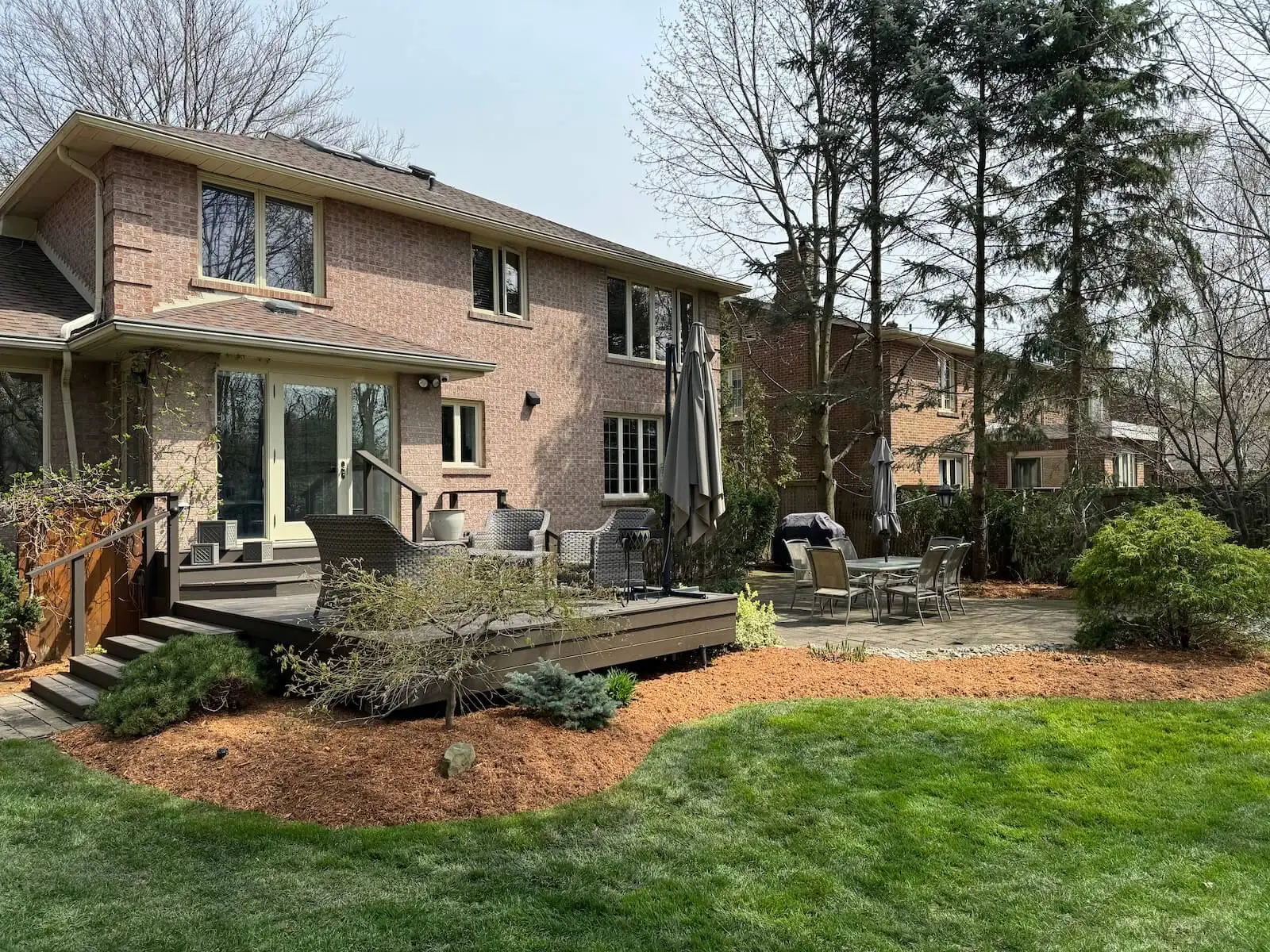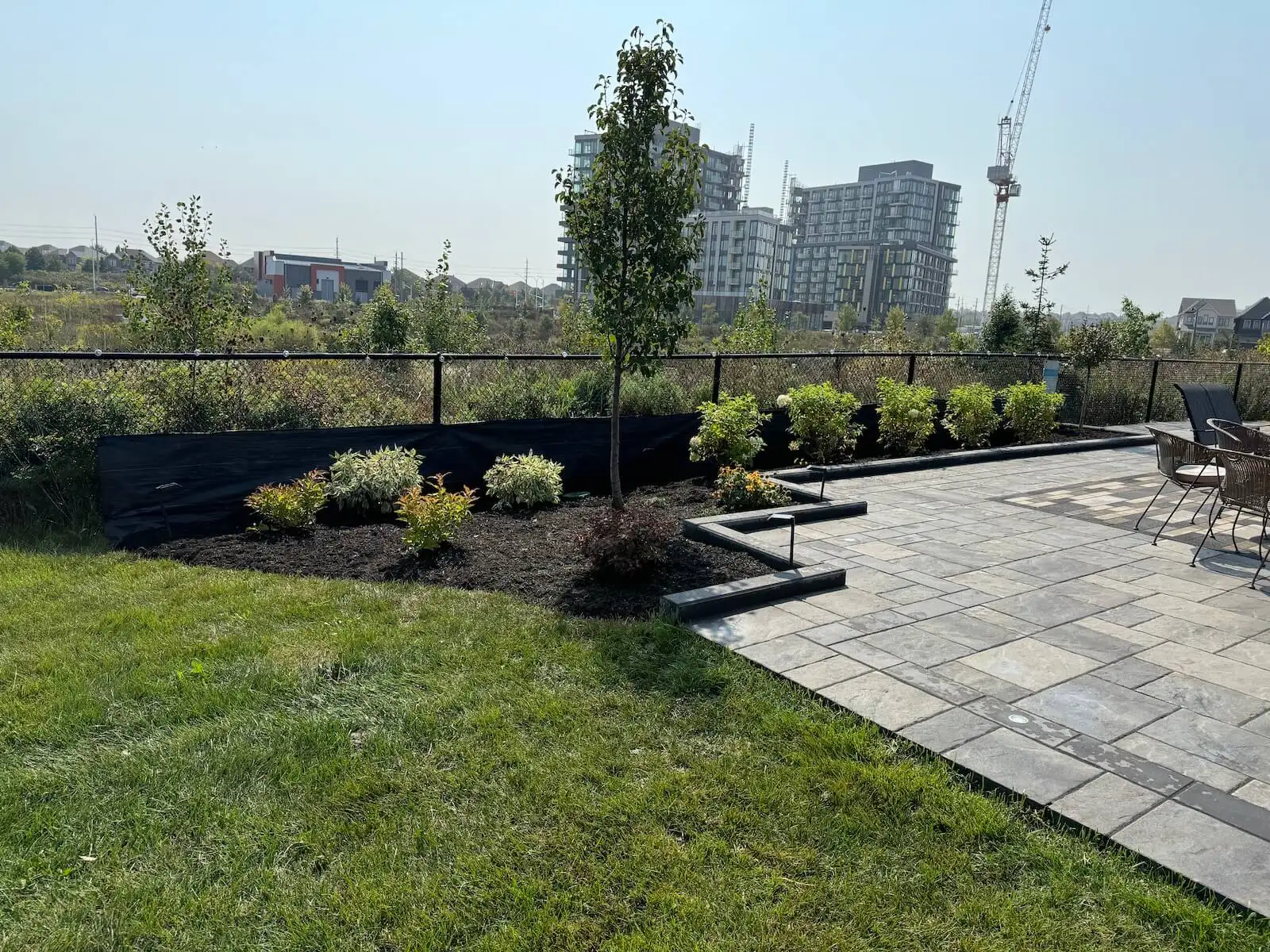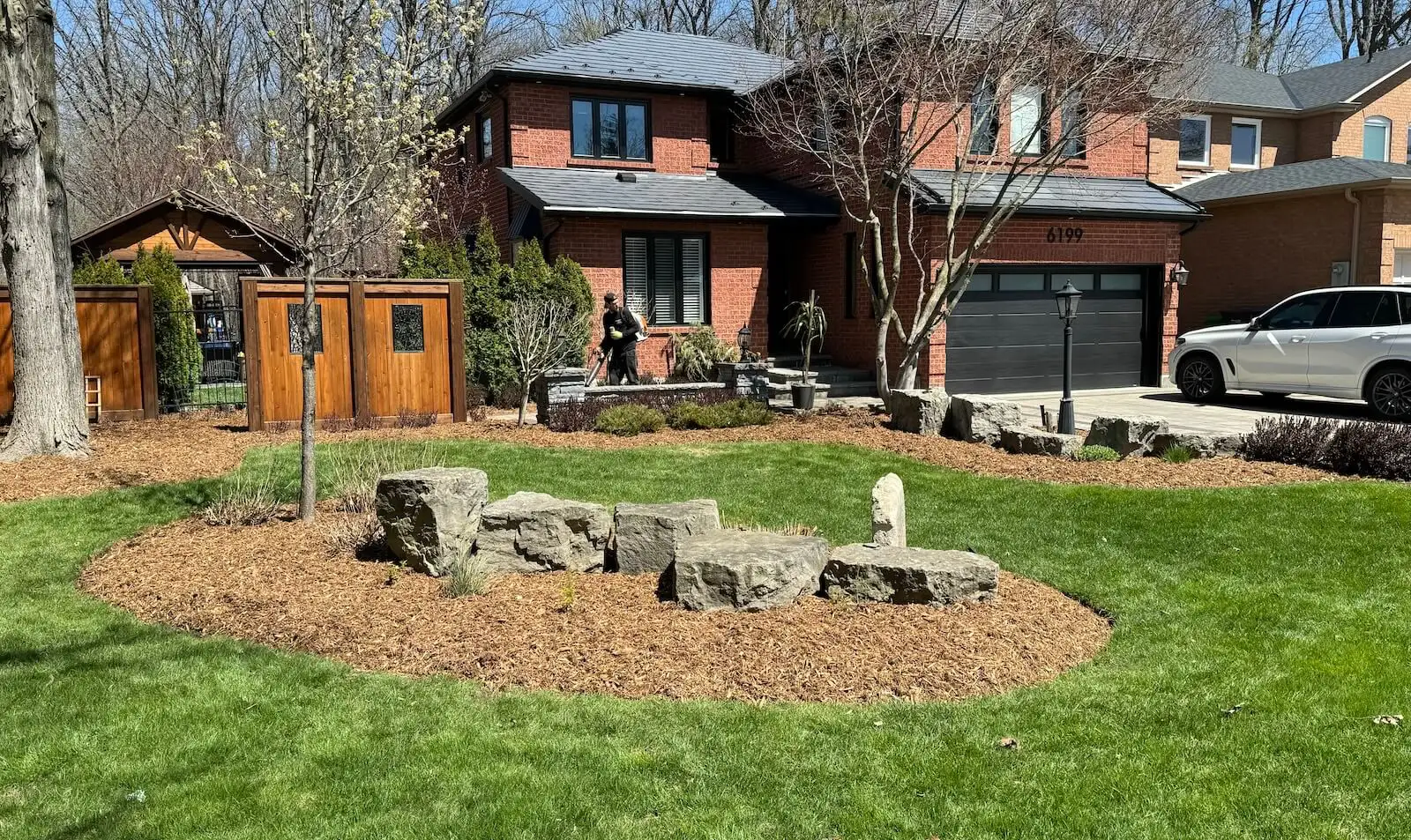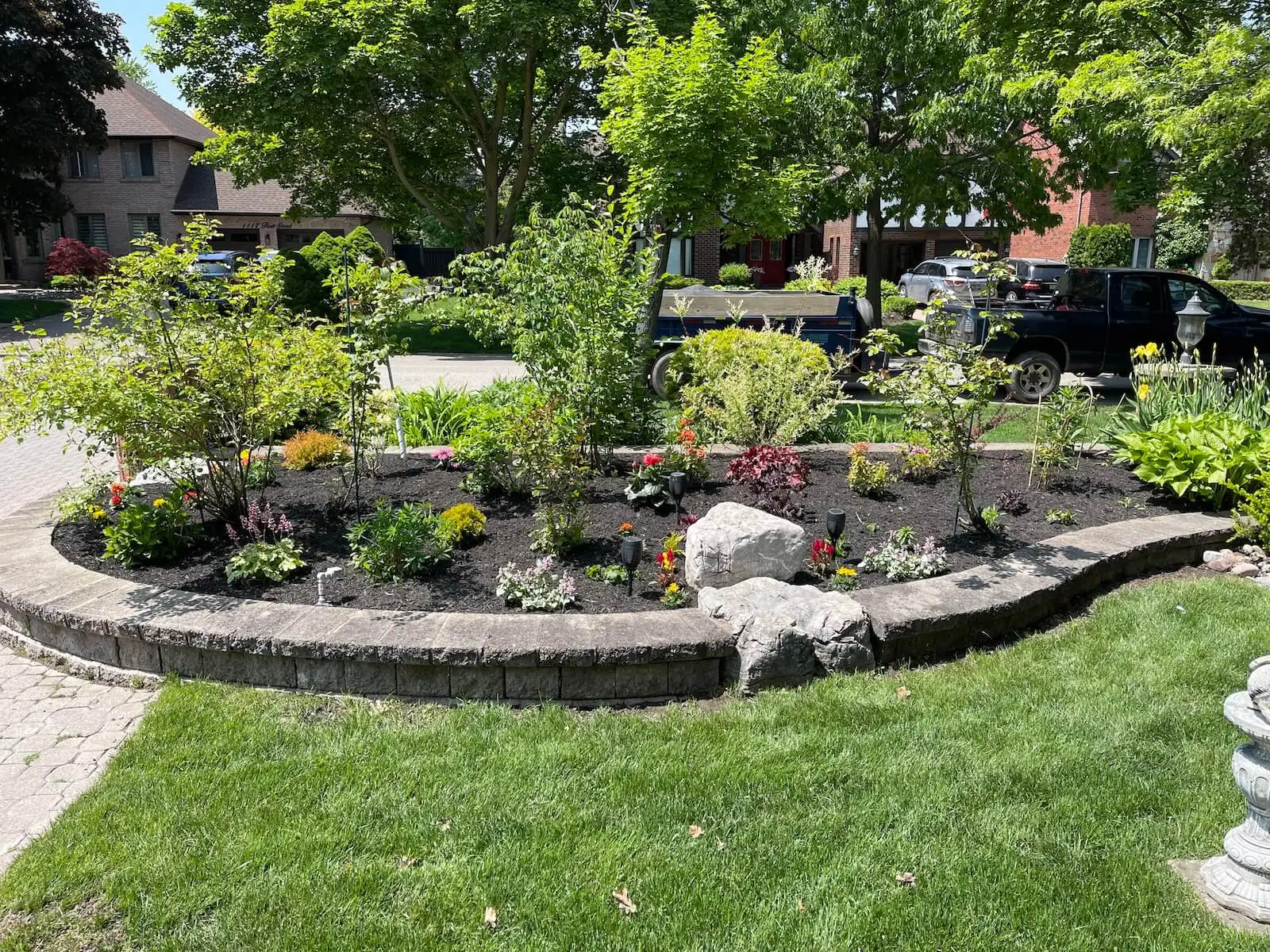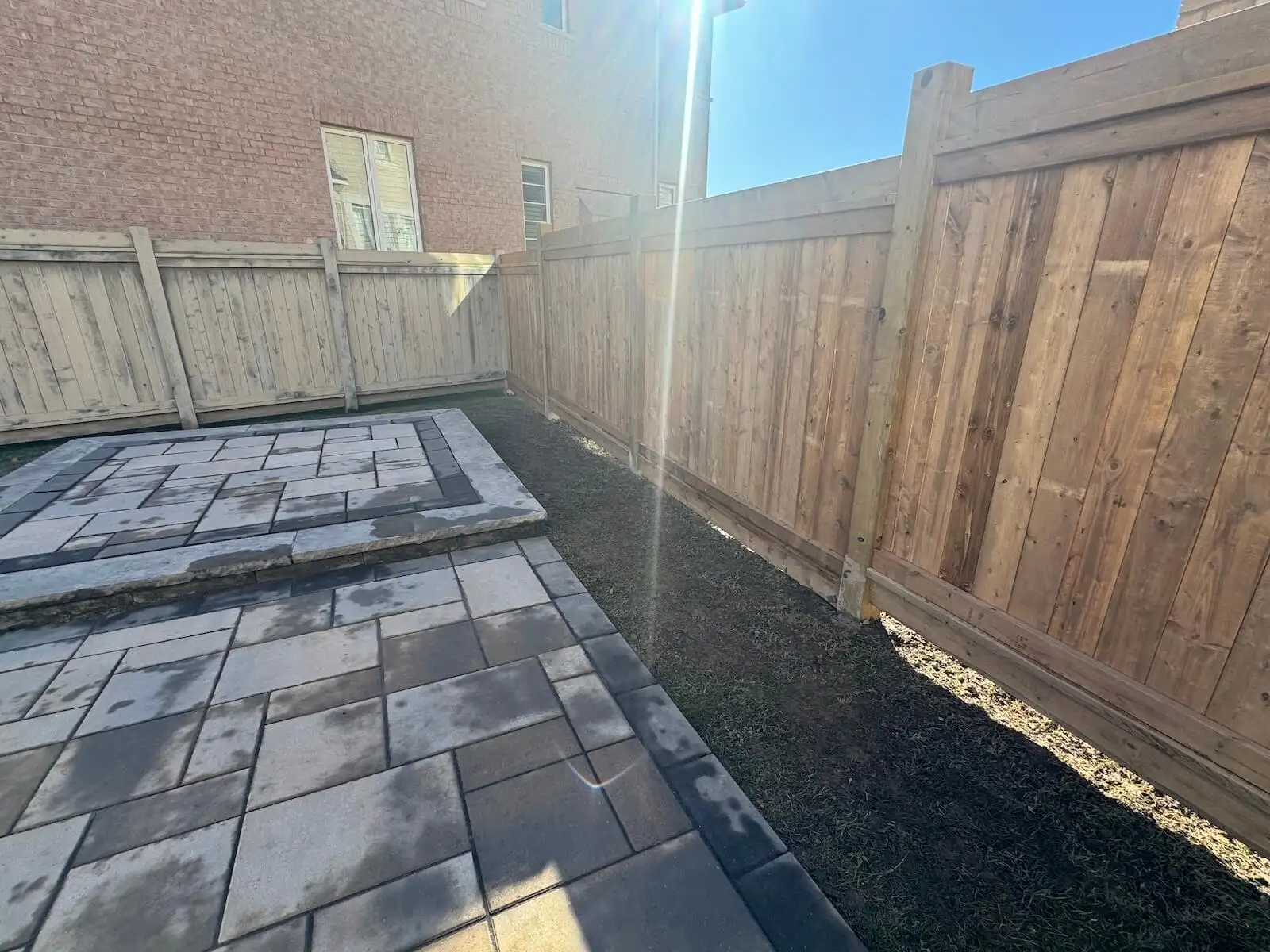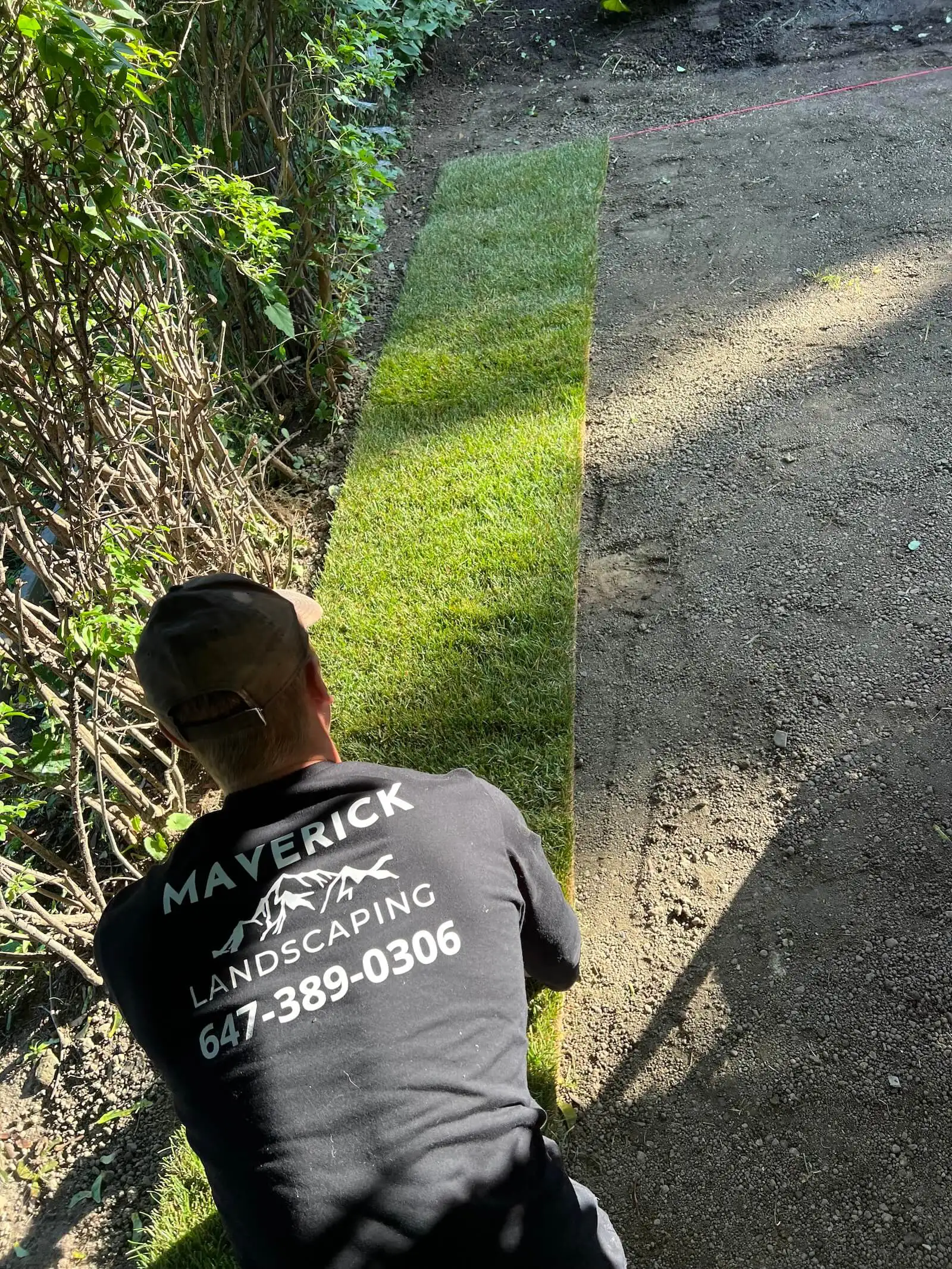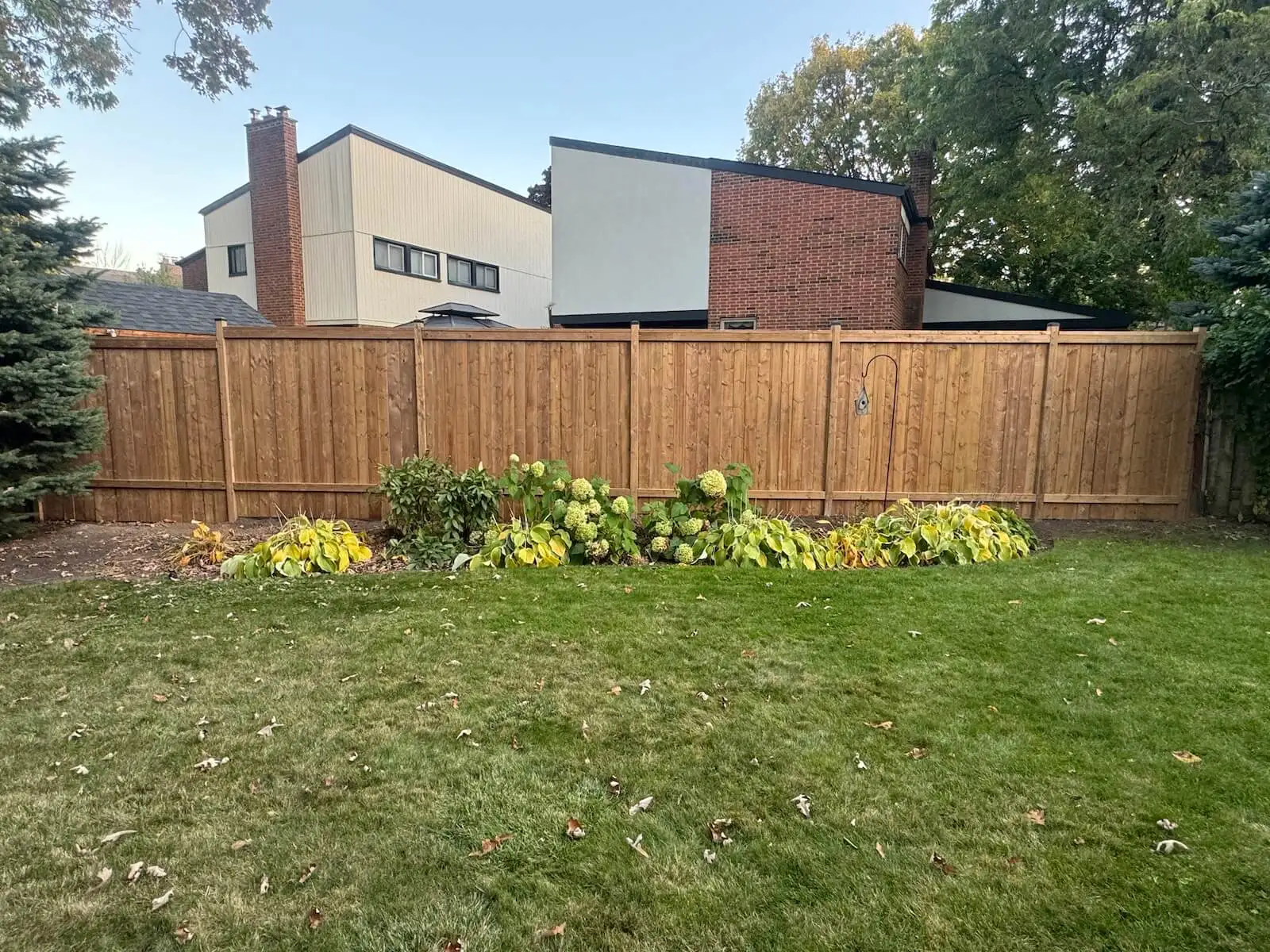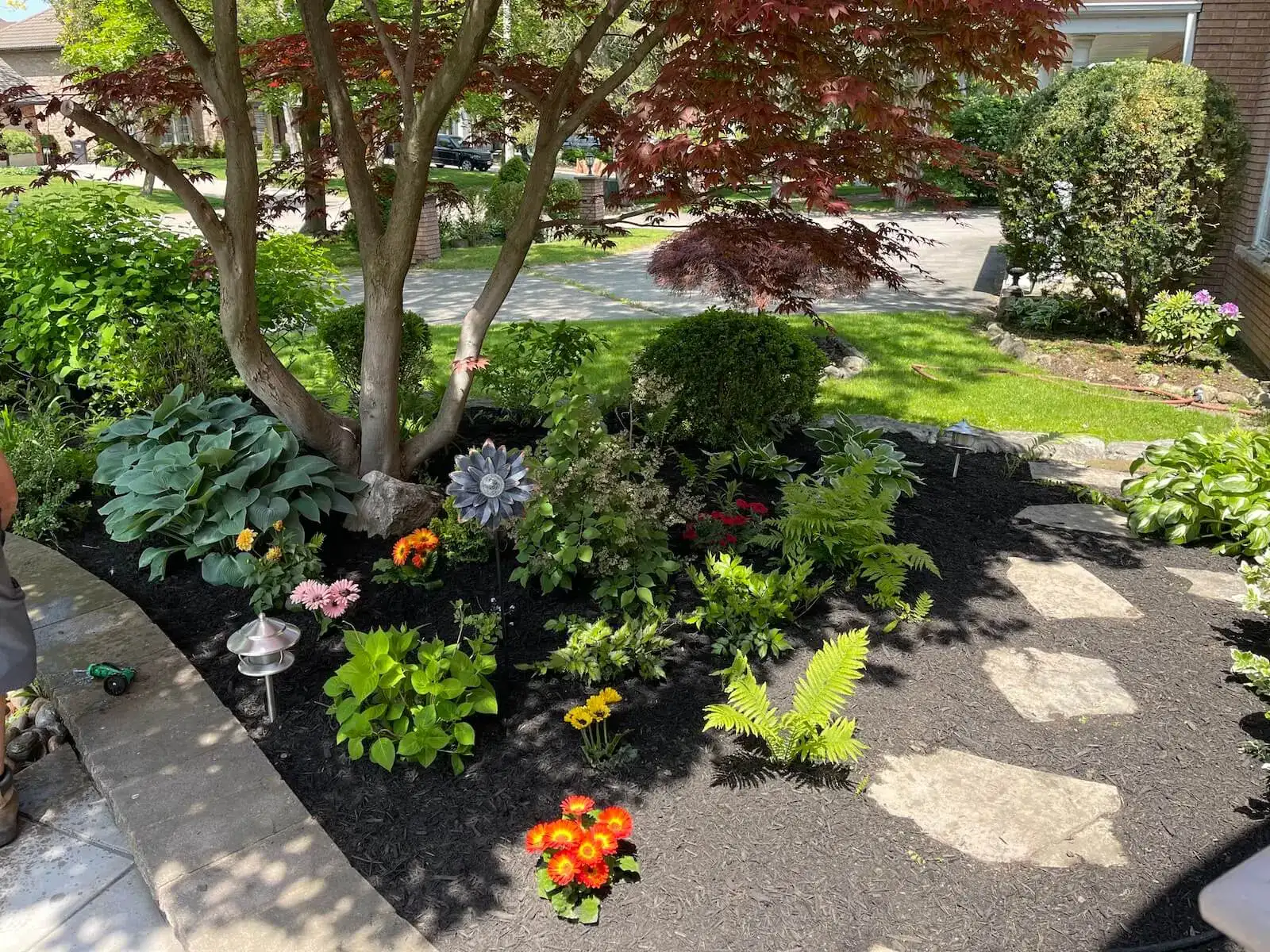









Most patio borders fail for one simple reason. People choose them by looks first, then deal with drainage, winter movement, and maintenance later. These patio border garden ideas work better when you start with how the edge needs to perform, then match the style.
Patio Border Garden Ideas: How to Choose the Right Border for Your Patio
A patio border is the transition between the patio surface and the next zone, whether that is lawn, a planting bed, a walkway, a fence line, or a foundation area. The best border is the one that controls the edge, suits the patio material, and still looks finished after GTA freeze-thaw cycles, snow clearing, and spring runoff.
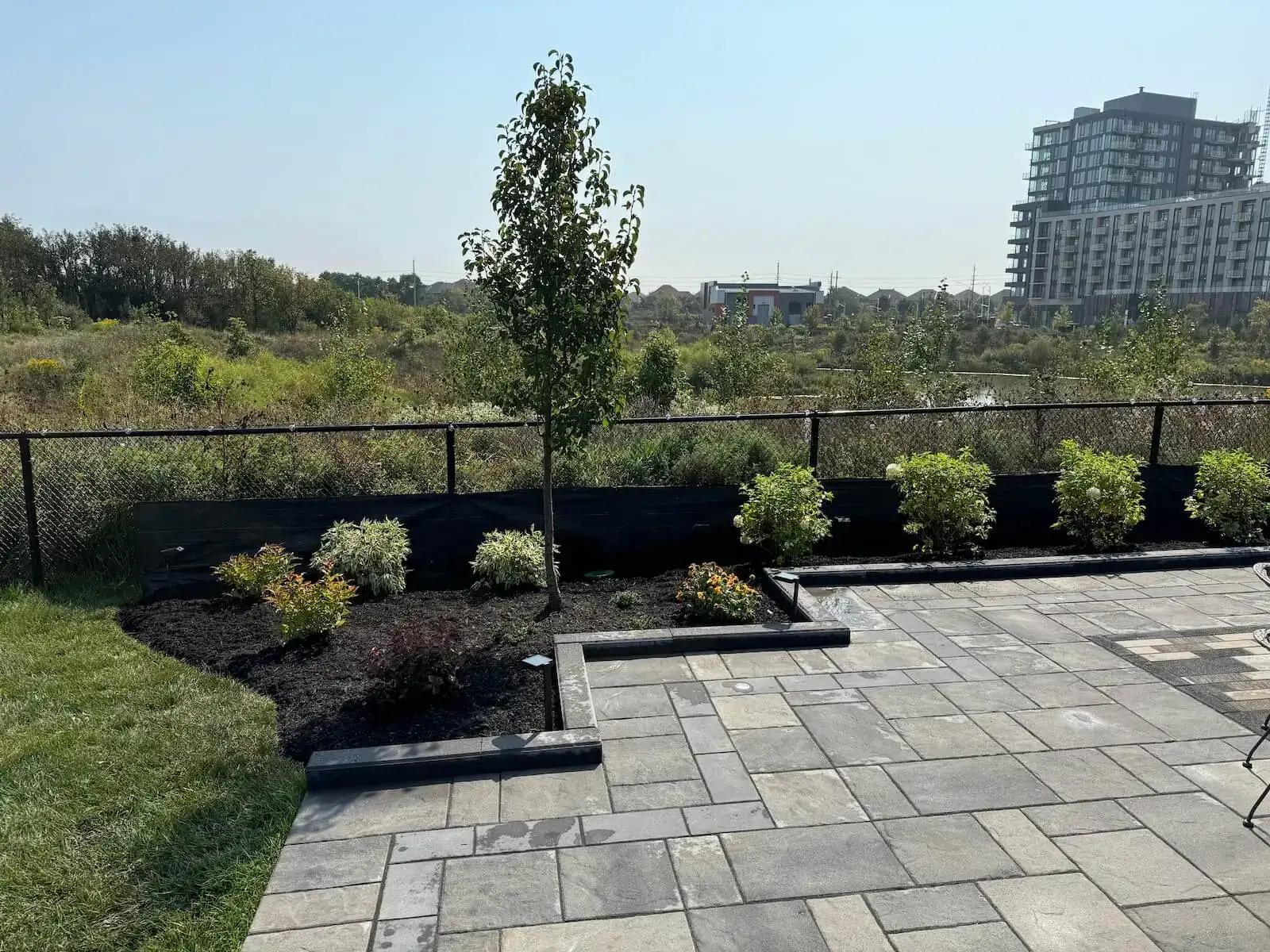
Hardscape-only borders give the cleanest line and the lowest plant upkeep. Plant-only borders soften the space but need better spacing, trimming, and soil control. Mixed borders combine a restraint or edging material with planting, and that is usually the most balanced answer for premium patios.
In southern Ontario, patio edging ideas need to handle frost movement, water shedding, and salt exposure in some locations near walks or driveways. That is why a border that looks good in a mild climate article can perform poorly in Toronto, Markham, and across the GTA.
The Best Way to Border a Patio Depends on These 5 Factors
The best way to border a patio is to match the edge to the patio material, the grade, the drainage pattern, the maintenance level you want, and how the space is used. A border that works beside a paver entertaining patio may be wrong for a concrete pool deck or a flagstone sitting area.
Paver patios usually look best with a matching or contrasting paver border, a metal edge with planting behind it, or a stone restraint that holds the field tight. Concrete patios usually suit cleaner lines, so metal edging, a narrow gravel band with containment, or minimalist planting tends to look more intentional.
Border width is usually about 12 to 36 inches for a planting edge and about 8 to 18 inches in tighter side yards or small patios. Wider borders feel softer and more landscaped, but narrow borders are easier to keep neat in townhouse lots and awkward corners.
A patio edge should not trap water against the slab, house, or base material. Hardscape near the home is commonly built to drain away from the structure, and when a border interrupts that movement, you get washout, ice, and shifting.
Family yards, dog runs, and pool zones need different edges than formal lounge patios. Smooth materials, stable footing, and sightlines matter more in active spaces, while a dining patio may benefit more from fragrance, privacy, and softer planting.
16 Patio Border Garden Ideas by Style, Budget, and Maintenance Level
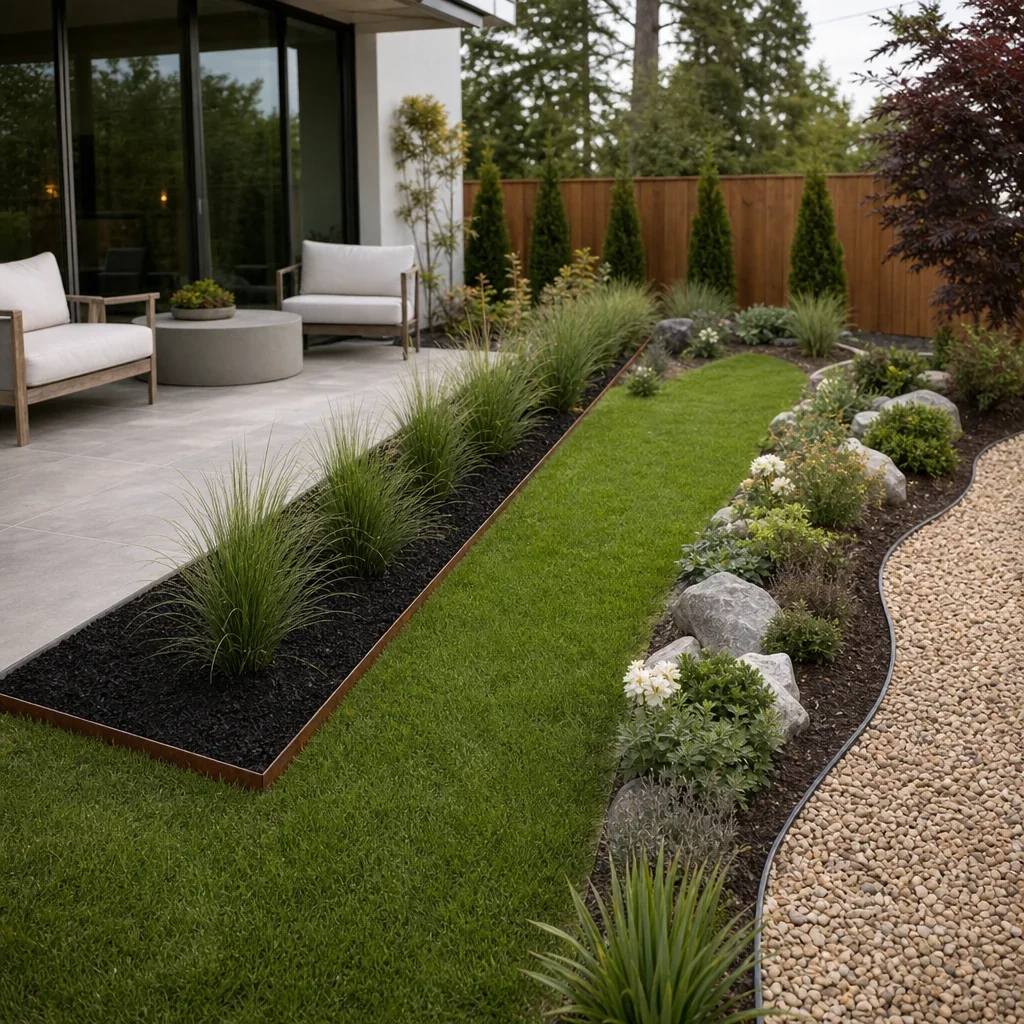
A strong patio border usually falls into one of three buckets: clean hardscape, planting-heavy, or a mixed edge with both. These 16 ideas cover simple patio border garden ideas, small patio border garden ideas, and more modern patio border ideas without drifting into generic garden advice.
- Steel edging with ornamental grasses. This suits modern paver or concrete patios, gives a crisp line, and works well for low maintenance patio border garden ideas if the planting palette stays tight.
- Natural stone soldier course. This works best where the patio already uses natural stone or textured interlock and gives a durable, premium frame.
- Brick border. Garden border ideas with bricks fit traditional homes, cottage gardens, and older GTA properties where red or buff tones already appear on the house.
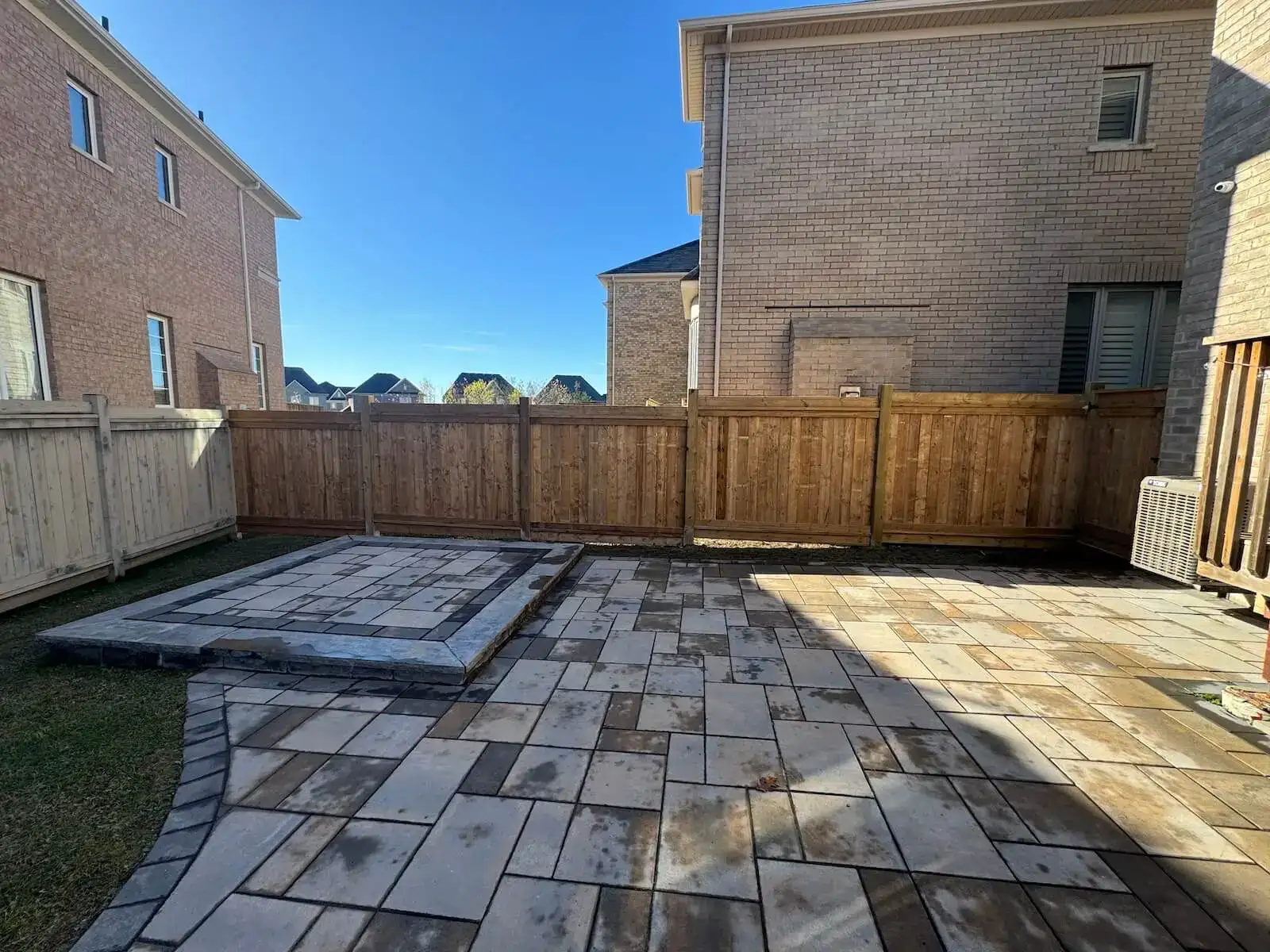
- Contrasting paver border. This is one of the cleanest ways to define a patio and is a standard pro move on interlocking projects.
- Gravel ribbon with containment. This can be a budget to mid-range option, but it needs proper edging or the gravel migrates into lawn and onto the patio.
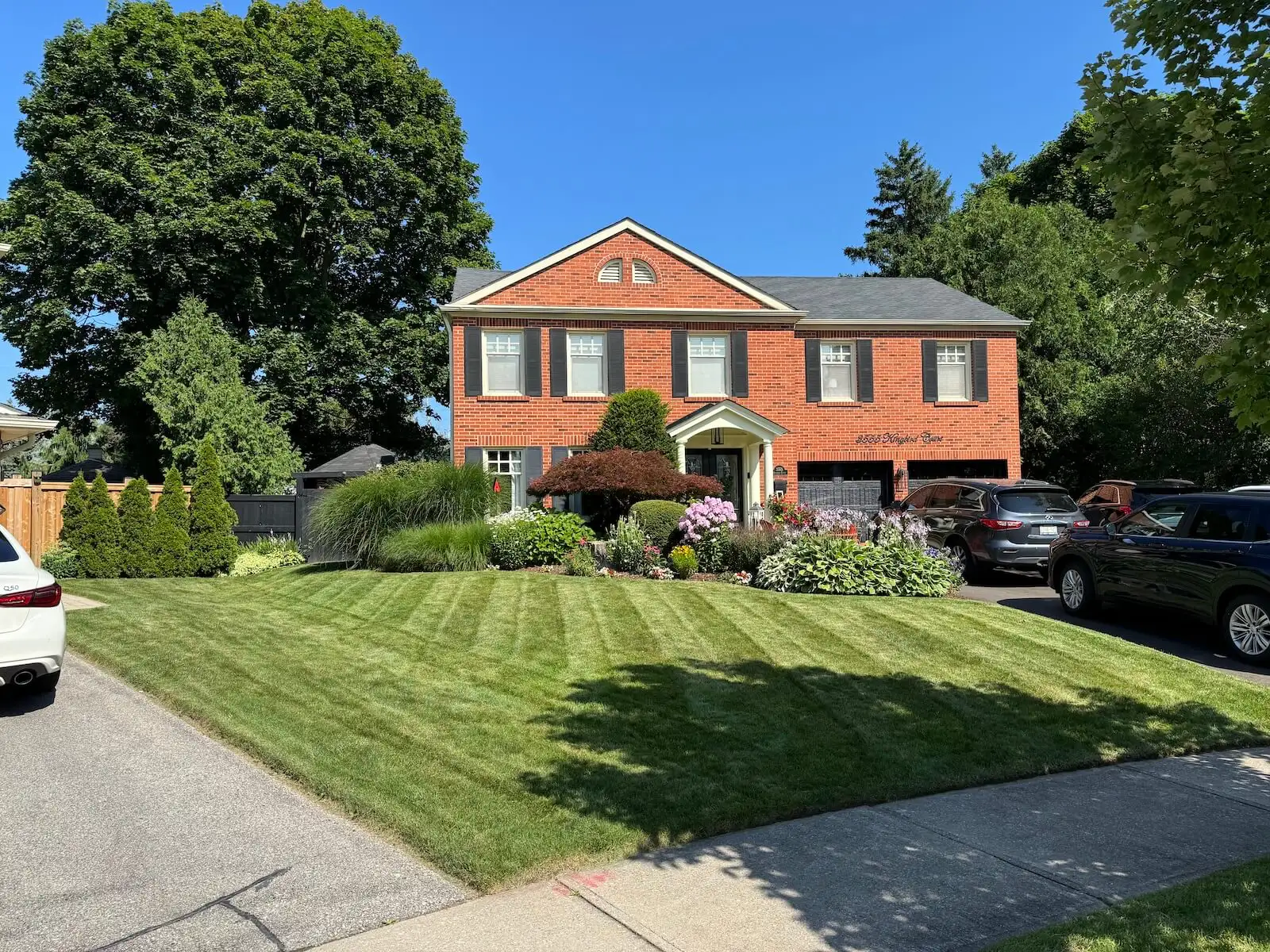
- Low evergreen hedge. This gives four-season structure and suits formal patios, but it needs enough width for mature growth.
- Pollinator perennial strip. This softens hard edges well, though dining areas may need more separation from high-bee activity.
- Fragrant herb border. This is a strong fit near seating zones if sun is adequate and the plants are kept trimmed.
- Creeping groundcover edge. This suits flagstone and naturalistic patios where a looser transition feels right.
- Raised planter edge. This defines space well and can double as a seat wall, especially in small urban backyards.
- Timber edge. This is one of the more rustic diy patio border garden ideas, but it usually has a shorter service life than stone or metal in wet freeze-thaw conditions.
- Boulder edge. This fits naturalized yards and irregular patios, though it can feel too heavy in small spaces.
- Modern concrete curb-look edge. This suits contemporary homes and gives a sharp architectural finish.
- Container-only patio border. This is ideal where there is no in-ground bed, such as a townhouse patio or a tight corner.
- Corner screen planting. This uses a layered planting pocket to soften one patio corner and improve privacy.
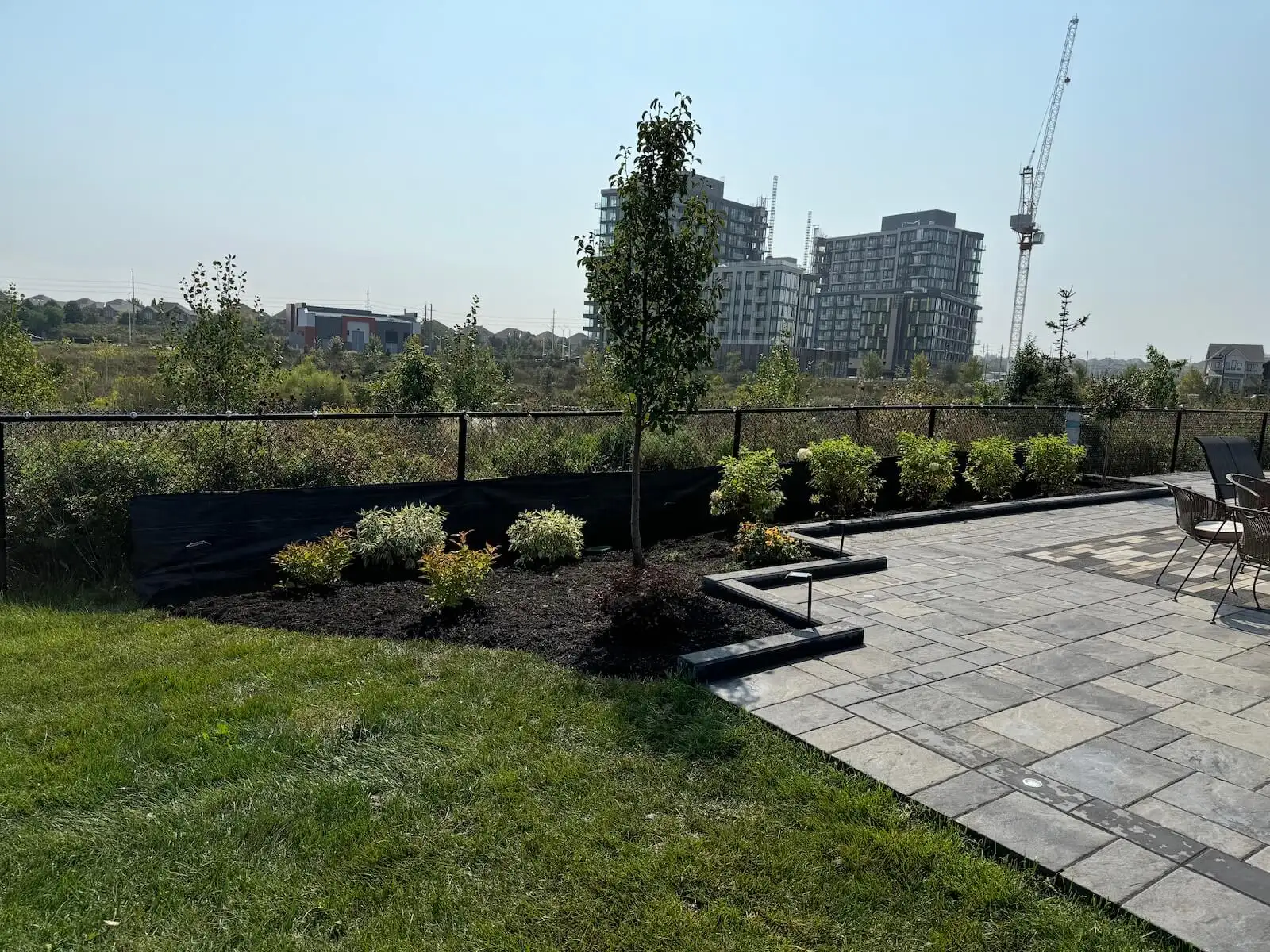
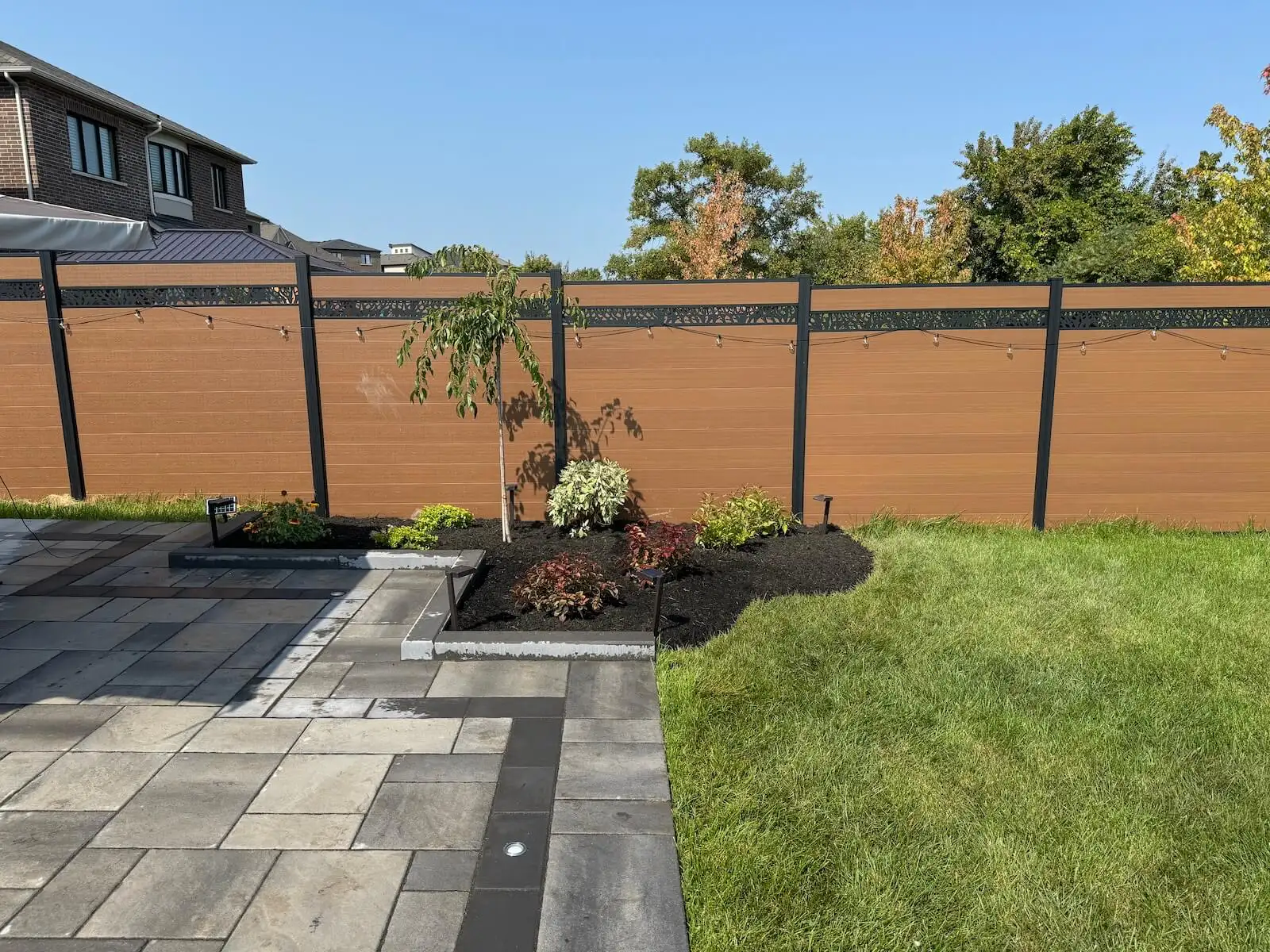
- Mixed stone-and-plant border. This is often the best all-around answer because it gives visual structure and a softer finish together.
Budget-friendly starter options usually include brick, simple trench edges, repurposed materials, or contained gravel. Mid-range options usually include better metal edging, improved planting design, and matching paver transitions. Premium solutions usually use integrated hardscape, cleaner geometry, and more durable detailing.
What to Plant Around the Edge of a Patio
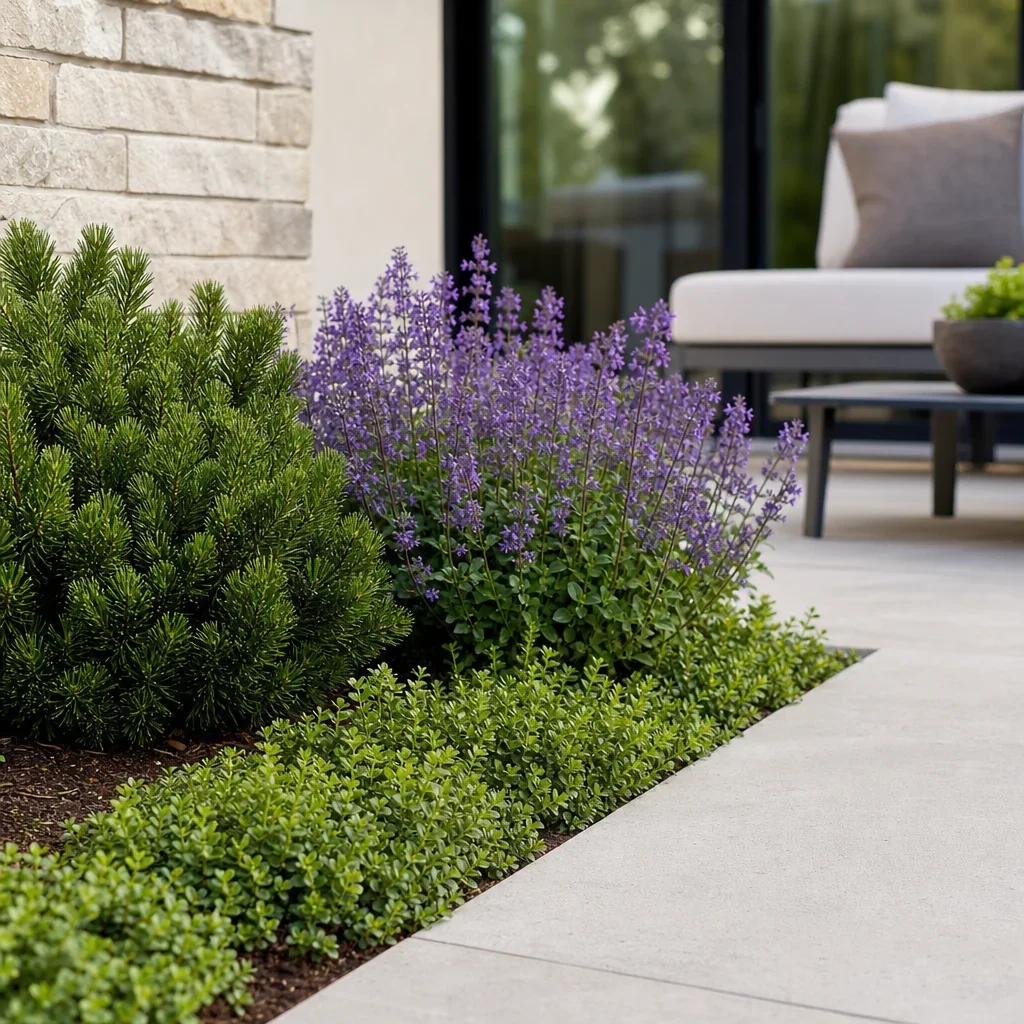
The best plants around a patio edge stay tidy, suit the sun exposure, and do not throw roots, thorns, or litter into the seating area. Good patio border planting ideas usually combine one structural plant, one flowering layer, and one low filler or groundcover.
Plants near a patio need to earn their place. Compact evergreen shrubs add year-round shape, mounded perennials soften the hard line, herbs add fragrance, and low groundcovers can spill slightly over an edge without becoming a trip hazard.
Messy, thorny, or aggressively spreading plants are weak patio choices. Thorned shrubs near traffic zones, sprawling plants that creep onto pavers, and species known for heavy litter drop make a patio feel harder to maintain, not better designed.
Pet-safe and child-safe selections need plant-by-plant checking, not assumptions. If the border sits beside a dining area, play area, or pool route, we would keep sharp foliage, toxic species, and high-bee-attracting bloom masses farther from the edge itself.
Best Patio Border Plants for Sun, Shade, Part Shade, and Dry Spots
Plant choice should follow site conditions first, because the same border can have full sun beside reflective stone and part shade closer to a fence or house. That is the difference between a border that settles in and one that struggles every summer.
For full sun, the safest design approach is a mix of compact evergreen structure, tidy flowering perennials, and a low groundcover layer suited to southern Ontario conditions. Full-sun borders are the best fit for herb edges, many ornamental grasses, and repeated mounded perennials that can handle heat off stone or concrete.
For part shade, a layered border with evergreen anchors and broader-leaf perennials usually looks fuller with less stress. This is a good place for softer planting around fence-line patios and seating areas where a full-sun palette would thin out.
For shade, the border should lean on texture, leaf contrast, and evergreen shape more than flower volume. Shade borders near patios often perform best when the plant list stays restrained and the bed is wide enough to avoid crowding at the edge.
For dry, hot spots beside masonry, the right plants need to tolerate reflected heat, faster soil drying, and occasional winter exposure. Some popular internet plant lists ignore that hardscape can create a harsher microclimate than the rest of the yard.
A strong four-season formula is one evergreen anchor, one long-season perennial, and one spring or fall layer for contrast. That creates a cleaner border than stuffing many species into a narrow strip.
Patio Edging Materials Compared: Cost, Lifespan, Maintenance, and Best Use
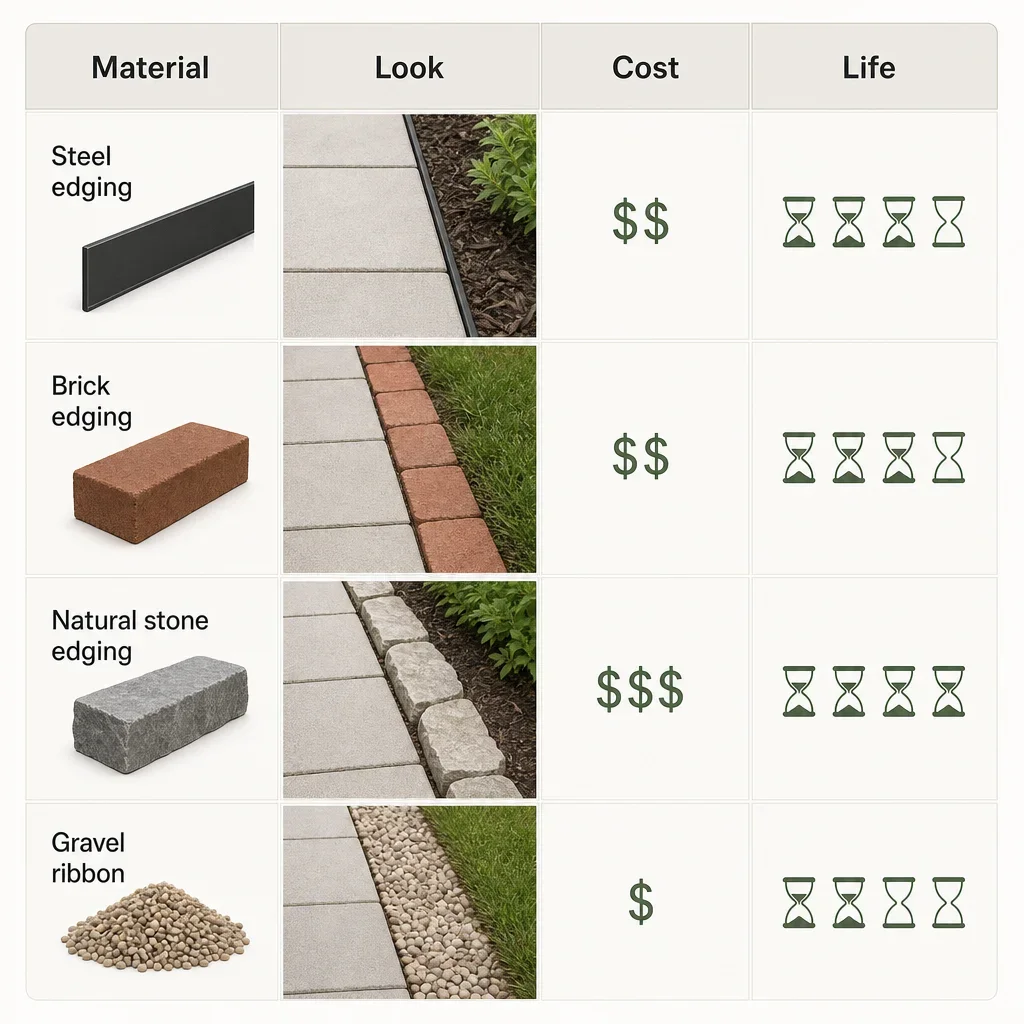
The material matters because cheap-looking edges usually become cheaper-performing edges in winter. What professionals use for edging is usually chosen for rigidity, clean installation, and how well it handles movement over time.
| Material | Look / Style | Best For | Upfront Cost | Install Difficulty | Maintenance | Longevity | Freeze-Thaw Performance | Mower Friendly | Curves |
|---|---|---|---|---|---|---|---|---|---|
| Steel or aluminum edging | Clean, modern | Pavers, concrete, planted borders | Mid-range | Moderate | Low | High | Good when installed properly | Good | Good |
| Brick edging | Traditional | Cottage, classic homes | Budget to mid-range | Moderate | Medium | Medium to high | Fair to good with proper base | Good | Good |
| Natural stone edging | Premium, organic | Flagstone, naturalized layouts | Premium | Moderate to high | Low to medium | High | Good | Fair | Good |
| Matching paver border | Integrated, finished | Interlock patios | Mid-range to premium | Moderate | Low | High | Good with proper restraint | Good | Good |
| Plastic or composite edging | Basic, understated | Hidden restraint, budget borders | Budget | Easy | Medium | Low to medium | Fair | Fair | Good |
| Gravel ribbon | Minimal, natural | Drainage bands, looser layouts | Budget to mid-range | Easy to moderate | Medium to high | Medium | Good only with containment | Fair | Good |
| Timber edging | Rustic | Informal beds | Budget | Easy | Medium to high | Low to medium | Fair | Fair | Straight better |
| Concrete curb-style edge | Architectural | Modern layouts | Mid-range to premium | High | Low | High | Good when detailed properly | Good | Limited to formed curves |
Steel, aluminum, stone, and properly built paver borders are usually the stronger long-term choices in GTA landscapes. Plastic edging can still have a place as a hidden restraint or in a modest refresh, but it often looks out of place on premium patios and can distort over time.
The cheapest garden border ideas are rarely the best long-term value when the patio already represents a larger investment. If the border fails, the yard looks unfinished even when the patio itself is solid.
If you want a border that matches existing patio materials and performs through Toronto winters, a professional layout and a free 3D design and quote can help compare options on a line-by-line basis.
How to Match the Border to Your Patio Material
Paver patios usually look best when the border repeats the geometry of the field or gives it a deliberate contrast. A soldier course, darker frame, or metal edge with a planting strip all work because they support the grid and keep the patio looking intentional.
Concrete patios usually benefit from a softer perimeter or a sharper architectural line, depending on the house style. Modern homes often suit clean edging and restrained planting, while more traditional homes benefit from a border that reduces the visual hardness of the slab.
Flagstone and natural stone patios usually work best with irregular, naturalistic transitions. Gravel-and-plant blends, boulder accents, or creeping planting pockets feel more believable than a rigid edge that fights the patio shape.
Modern patio border ideas usually rely on fewer materials, fewer plant varieties, and stronger repetition. Rustic and cottage styles usually allow more texture and softer edges, but they still need control at the perimeter to stay neat.
Small Patio Border Garden Ideas for Narrow Side Yards and Awkward Corners
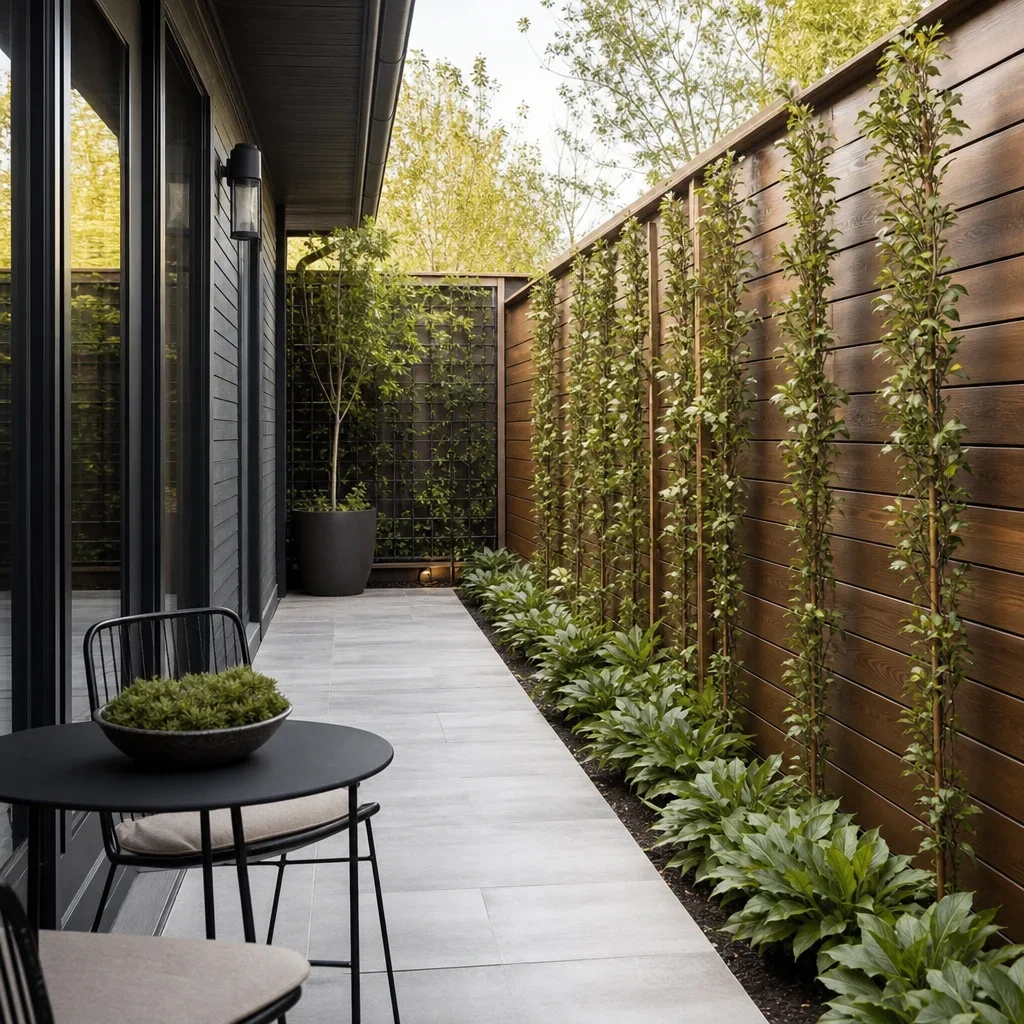
Small patios look better with fewer moves, not more. A narrow border usually needs one structural element, one repeated plant type, and one low filler to feel composed.
A practical small-space bed depth is often about 8 to 24 inches, depending on whether the border uses only groundcovers, compact perennials, or small shrubs. Shallow beds can still work well if the species stay compact and the edging line is clean.
Vertical elements help when there is no depth to work with. Slim planters, trellis-supported greenery, and fence-adjacent planting layers let a border feel lush without eating into patio use.
Curved corners and awkward patio edges look cleaner when the species count stays low. Simple patio border garden ideas usually outperform busy mixed borders in townhouse yards because repetition makes the space feel larger.
Container-only borders are a valid solution where in-ground planting is not practical. They are especially useful on concrete patios, tight urban yards, and places where future layout changes are likely.
Low-Maintenance Patio Borders That Still Look High-End
The high-end formula is simple: durable edging, restrained planting, proper spacing, and enough soil and mulch control to keep the edge clean. Lower maintenance comes from better planning, not from trying to create a zero-maintenance border.
Repeated plant masses usually outperform mixed collections of small plants. Fewer species make watering, trimming, replacement, and seasonal cleanup more predictable.
Evergreen structure, ornamental grasses, and compact perennials give a polished result with less fuss than floppy, fast-spreading choices. The border also needs enough width for mature size, because overcrowding is one of the quickest ways to turn a neat patio edge into a maintenance problem.
Loose gravel without containment, weak plastic edges, and overplanting are common shortcuts that make a border look tired early. Luxury comes from strong lines and durability, not from packing in more materials.
Cheapest Way to Make a Garden Border vs Best Long-Term Value
The cheapest way to do garden borders is usually a simple trench edge, entry-level plastic edging, basic gravel, or reused brick. Those options can work for a DIY refresh, but they vary a lot in appearance and service life.
The cheapest way to make a garden border is not always the cheapest way to own one. In freeze-thaw conditions, weak restraint, poor base prep, and badly contained loose materials tend to need repairs sooner.
A useful budget frame is three levels. A DIY refresh uses simple geometry, light planting, and modest edging. A mid-range upgrade improves containment, material quality, and plant structure. A premium permanent solution usually integrates the border with the patio build and treats drainage and movement as part of the design.
The best places to save are species count, border length, and phased installation. The worst places to cut are base prep, edge restraint, drainage management, and weed control strategy.
DIY Patio Border Installation: A Simple Step-by-Step Overview
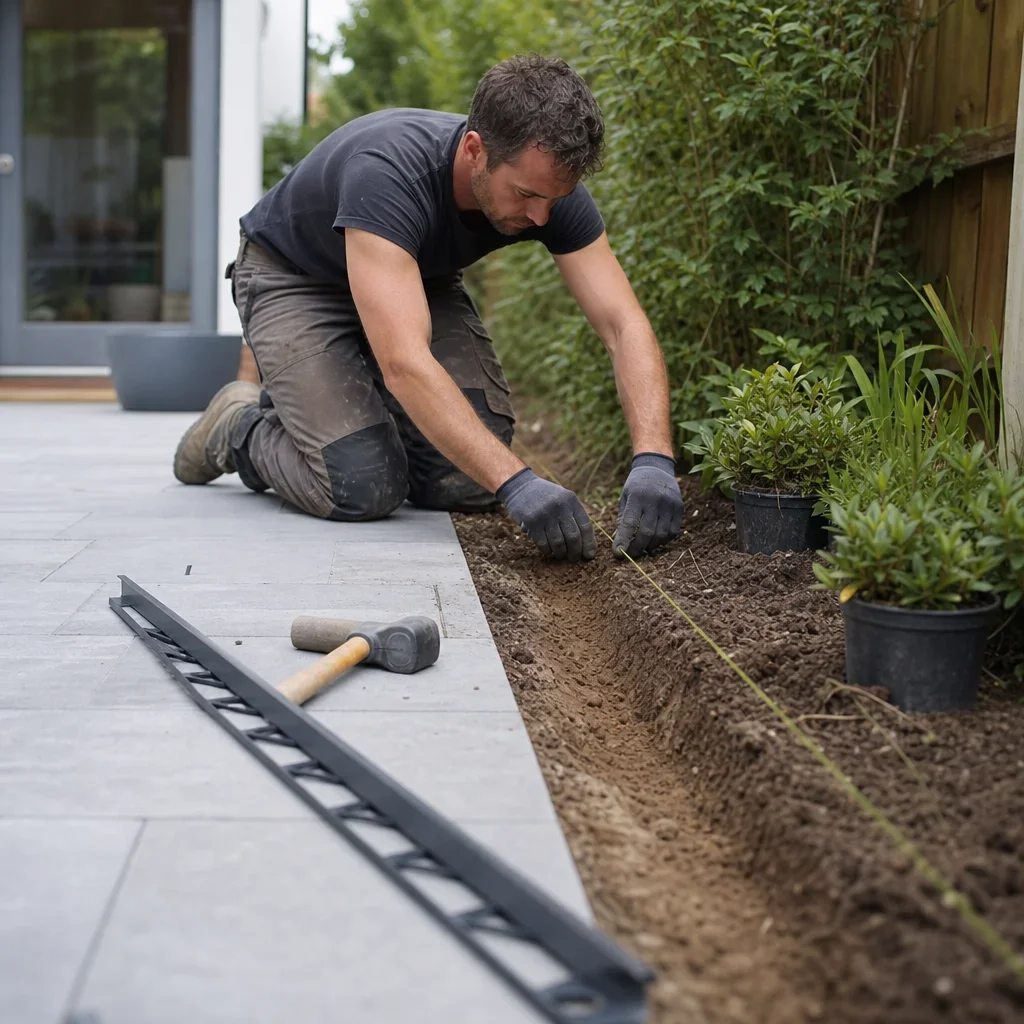
A basic DIY border can be reasonable when the run is simple, the grade is stable, and the edging is decorative rather than structural. Straightforward projects are usually the safest starting point for diy patio border garden ideas.
The sequence is simple: plan the line, mark the border, confirm what is below grade before digging, check drainage, excavate, install the base where needed, set the edging or restraint, backfill, plant, mulch, and water in. Ontario homeowners should use the provincial utility locate process before digging.
A simple DIY border can often be installed in about 1 to 2 days, while a more involved professional patio edge rebuild can take about 2 to 5 or more days depending on materials, drainage work, and site access. The timeline stretches quickly when curves, retaining conditions, or matching existing interlock enter the picture.
DIY works best for light planting, trench edges, and simple borders on stable grades. Pro installation makes more sense for raised edges, drainage correction, pool patios, complex curves, and any border that needs to match premium hardscape cleanly.
The 3 Inch Edging Rule: What It Means and When It Applies
The 3 inch edging rule is not a universal code or one-size-fits-all landscape standard. People use that phrase loosely to describe visible edge height, mowing-strip guidance, or a manufacturer detail, but the meaning changes by material and system.
Actual edging height and depth should follow the product instructions, the patio construction details, and the drainage needs of the site. On a patio, an edge also needs to separate materials without creating a trip hazard or trapping runoff.
If a project has winter movement, grade issues, or drainage concerns, I would not design from a rule-of-thumb phrase alone. The edge detail has to suit the assembly under it.
Common Patio Edging Mistakes and How to Avoid Them
The biggest edging mistake is choosing by appearance alone. A border can look sharp on install day and still fail fast if the base, restraint, slope, and plant sizing were not thought through.
Skipping base prep is one of the fastest ways to get shifting stones, heaving edges, and trip points. Weak restraints around pavers, especially at corners and curves, also lead to movement that homeowners often blame on the material instead of the detail.
Bad plant selection causes a different kind of failure. Plants that outgrow the bed, flop into seating, drop heavy litter, or demand constant trimming make a patio feel crowded and messy.
Mower-unfriendly edges, uncontained mulch, and weed-prone gravel create constant cleanup. Professionals avoid that by planning the line, choosing the right restraint, and sizing the bed and plants for mature use, not install-day size.
A border likely needs rebuilding when the edge stones shift, the gravel keeps escaping, weeds return through the same seams, or water repeatedly pools at the perimeter. Those are not just cosmetic issues. They usually point back to the edge assembly.
Drainage, Frost Heave, and Winter-Proofing for GTA Patio Borders
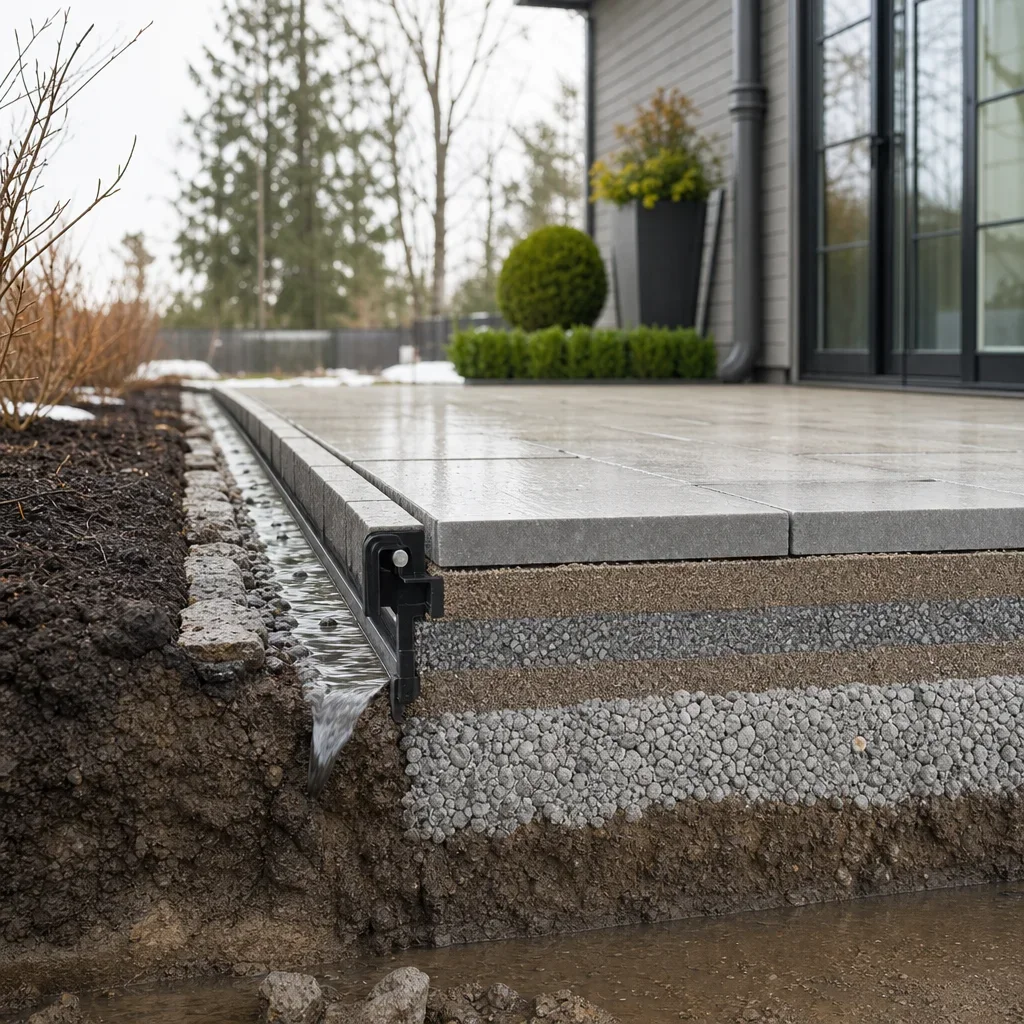
GTA patios fail at the edges first because that is where water, temperature swings, and snow management all meet. A border that ignores drainage and frost movement is usually the weak point in an otherwise good patio.
Water should move away from structures and should not be trapped by a raised edge, dense berm, or poorly placed planting pocket. If runoff washes through the perimeter, the base can soften and the edge can start to shift.
Freeze-thaw movement is harder on loosely built borders, under-supported paver edges, and materials installed without enough restraint. That is one reason stone, metal, and properly integrated hardscape edges tend to outperform temporary fixes in southern Ontario.
Root barriers are only useful where a known invasive-root risk exists. Most patio borders do not need one, but some sites do need better separation from nearby trees or aggressive plantings.
Drainage changes, retaining conditions, and grade adjustments can affect lot drainage performance and may trigger permit or design review requirements depending on scope and municipality. For larger projects in Toronto, Markham, and nearby municipalities, that needs to be checked before construction rather than guessed at on site.
Is October Too Late to Plant Around a Patio?
October is not automatically too late to plant, but success depends on plant type, soil temperature, frost timing, site exposure, and whether watering can continue during establishment. Hardscape timing and planting timing do not always have to be the same.
Trees, shrubs, perennials, bulbs, and annuals all handle fall differently, so late-season planting should be evaluated by category, not treated as one blanket rule. Tender or borderline-hardy choices are a bigger risk late in the season than durable, site-appropriate plants.
If the border install happens late, a practical option is to complete the edging and base work first, then schedule the planting for the better spring or early-fall window. That usually protects the patio build quality without forcing weak plant timing.
Pet-Safe and Child-Safe Patio Border Ideas
The safest family-friendly patio borders use smooth edges, stable footing, and compact planting that stays out of circulation paths. That matters more than style labels when children run or pets cut corners off the patio.
Loose unstable stones, exposed sharp metal, thorny shrubs, and plants with irritating or toxic properties are poor choices beside active family spaces. Pet-safe planting should always be verified species by species before installation.
Clear corners improve visibility and reduce collisions where people step down from the patio. A border can still look lush without using sprawling plants right at the edge line.
When to DIY and When to Hire a Professional Patio Border Installer
DIY is usually suitable for simple decorative edges, light planting, and small straight runs on stable ground. It becomes less suitable when the project affects drainage, retaining, pool areas, complex curves, or the performance of an existing premium patio.
Professional installation makes the biggest difference when the border must match existing interlock, correct edge instability, or solve winter performance issues. That is where design, base prep, and detailing matter more than the material choice alone.
A good design-build team should be able to show the border in the context of the full yard, explain the drainage logic, and price the work clearly. RockLeaf offers a free 3D design and quote, line-by-line pricing, a 14-day start promise, and a 5-year total warranty; conditions apply.
FAQ
What is the best way to border a patio?
The best border matches the patio material, controls the edge, handles drainage, and suits your maintenance tolerance. Mixed borders with durable edging plus planting are often the most balanced solution.
What to plant around the edge of a patio?
Use tidy, compact plants with manageable roots and controlled spread. Patio-edge planting should suit the light, stay out of walking space, and avoid messy or thorny habits near seating.
What do professionals use for edging?
Professionals commonly use steel or aluminum edging, stone, brick, concrete curb-style details, and matching paver borders depending on the patio build. The right choice depends on restraint, finish quality, and winter performance.
What is the cheapest way to make a garden border?
A trench edge, basic gravel, reused brick, or entry-level plastic edging is usually the lowest upfront cost. Those options are rarely the strongest long-term value in freeze-thaw conditions.
What are some common mistakes people make when edging?
Skipping base prep, ignoring drainage, choosing weak restraints, overplanting, and using materials that do not suit winter movement are common errors. Messy plant choices near dining zones are another expensive mistake.
What is the 3 inch edging rule?
It is not a universal rule or code. The phrase is used informally in different ways, so edging height and depth should follow the material system and site conditions instead.
Is October too late to plant?
Not always. Planting success depends on the species, weather, soil warmth, and whether roots have time to establish before winter. Late-season hardscape can still move ahead even if planting waits.
Which patio border ideas are best for small patios?
The best small patio border garden ideas use fewer species, narrow beds, strong repetition, and sometimes containers or vertical planting instead of deep borders. Clean lines make a tight patio feel larger.
What edging holds up best in freeze-thaw climates?
Properly installed metal edging, stone, and integrated paver borders usually hold up better than temporary or lightly supported edges. Performance depends as much on prep and drainage as on the material itself.
Should I use plants, stone, brick, or metal around a patio?
Use plants when you want softness, privacy, or seasonal change. Use hardscape when you need stronger containment and crisp lines. Use a mixed border when you want both.
If your goal is a patio edge that looks finished and still performs after a few GTA winters, compare the border as part of the whole patio system, not as an afterthought.