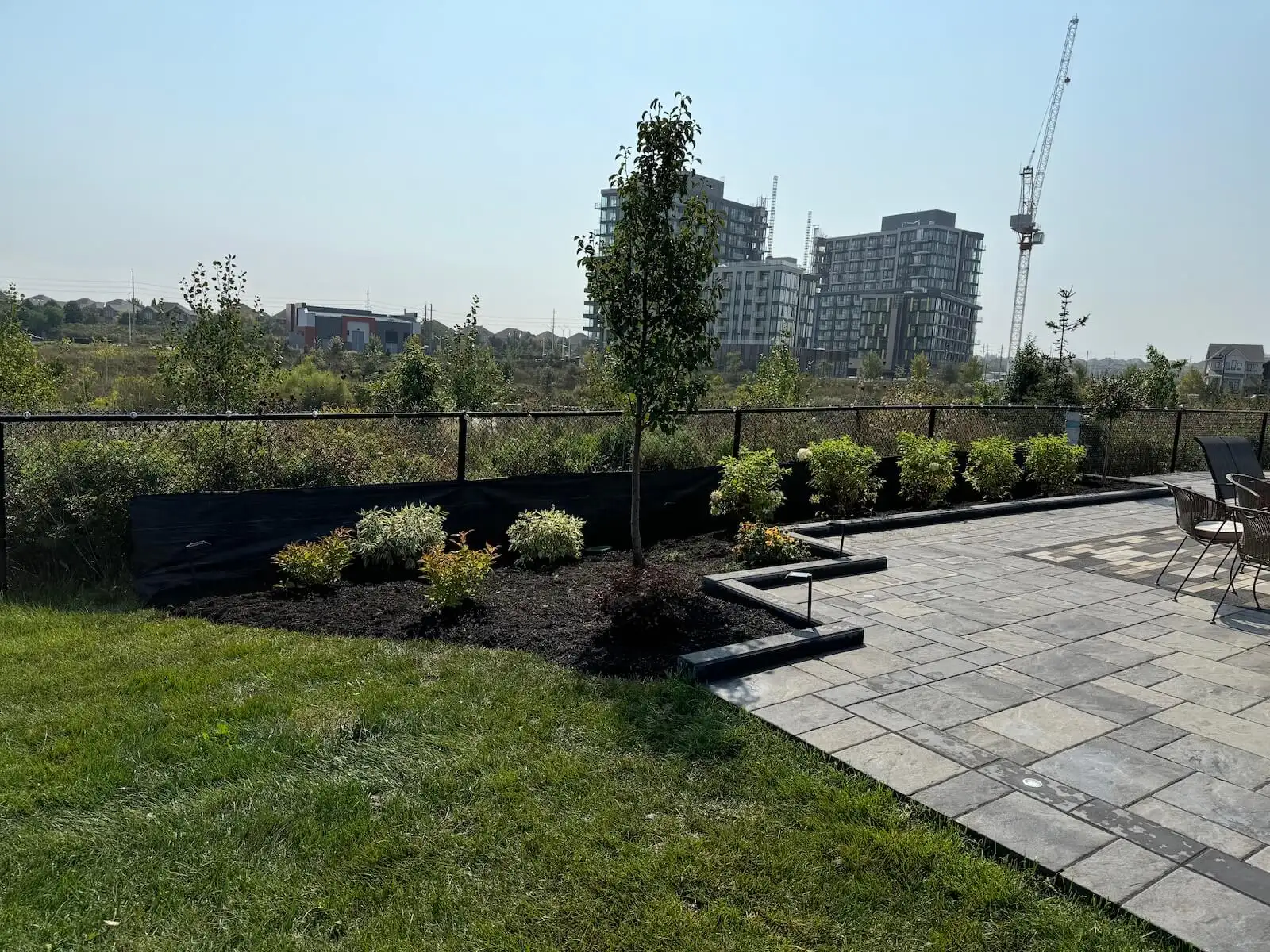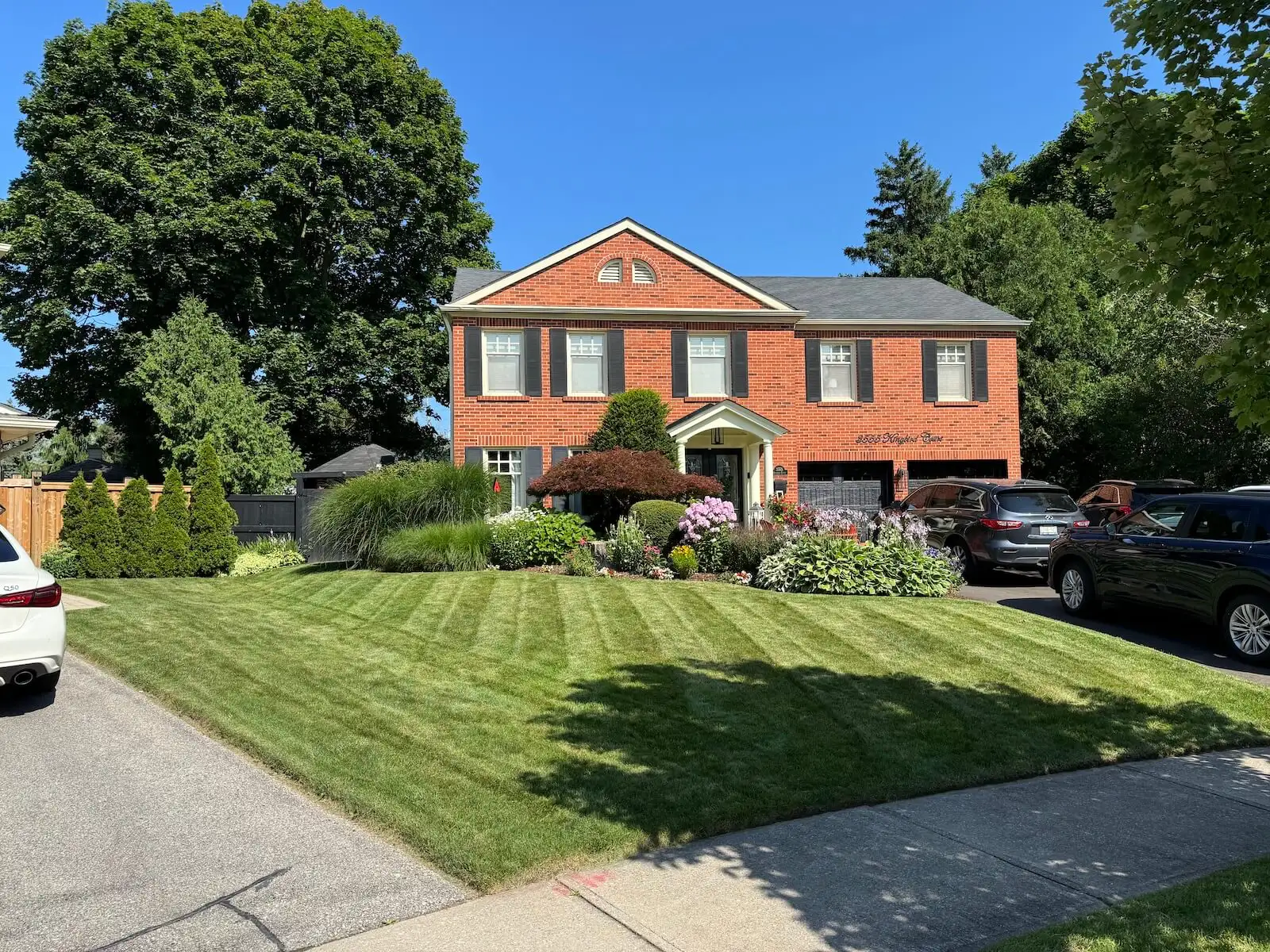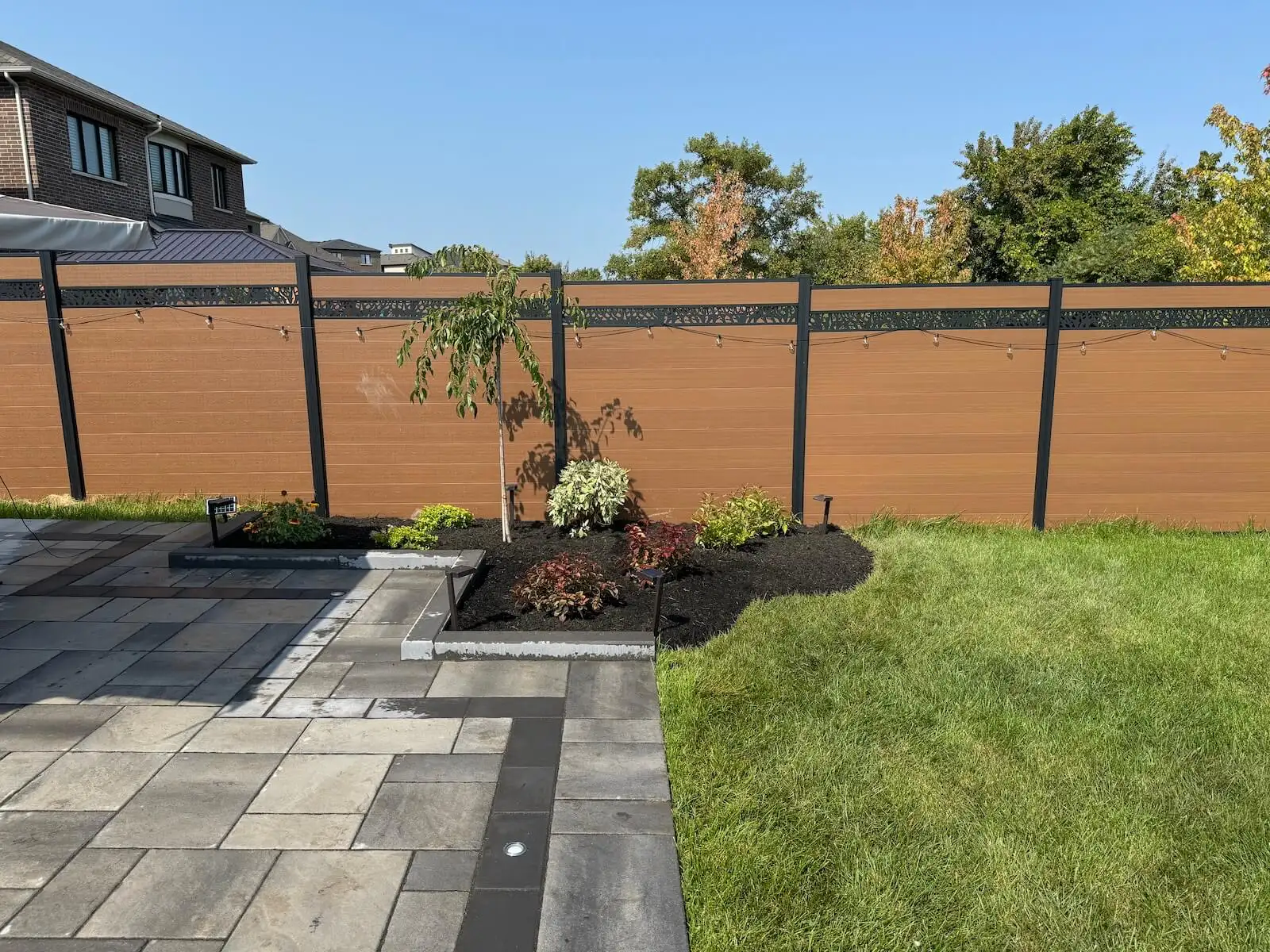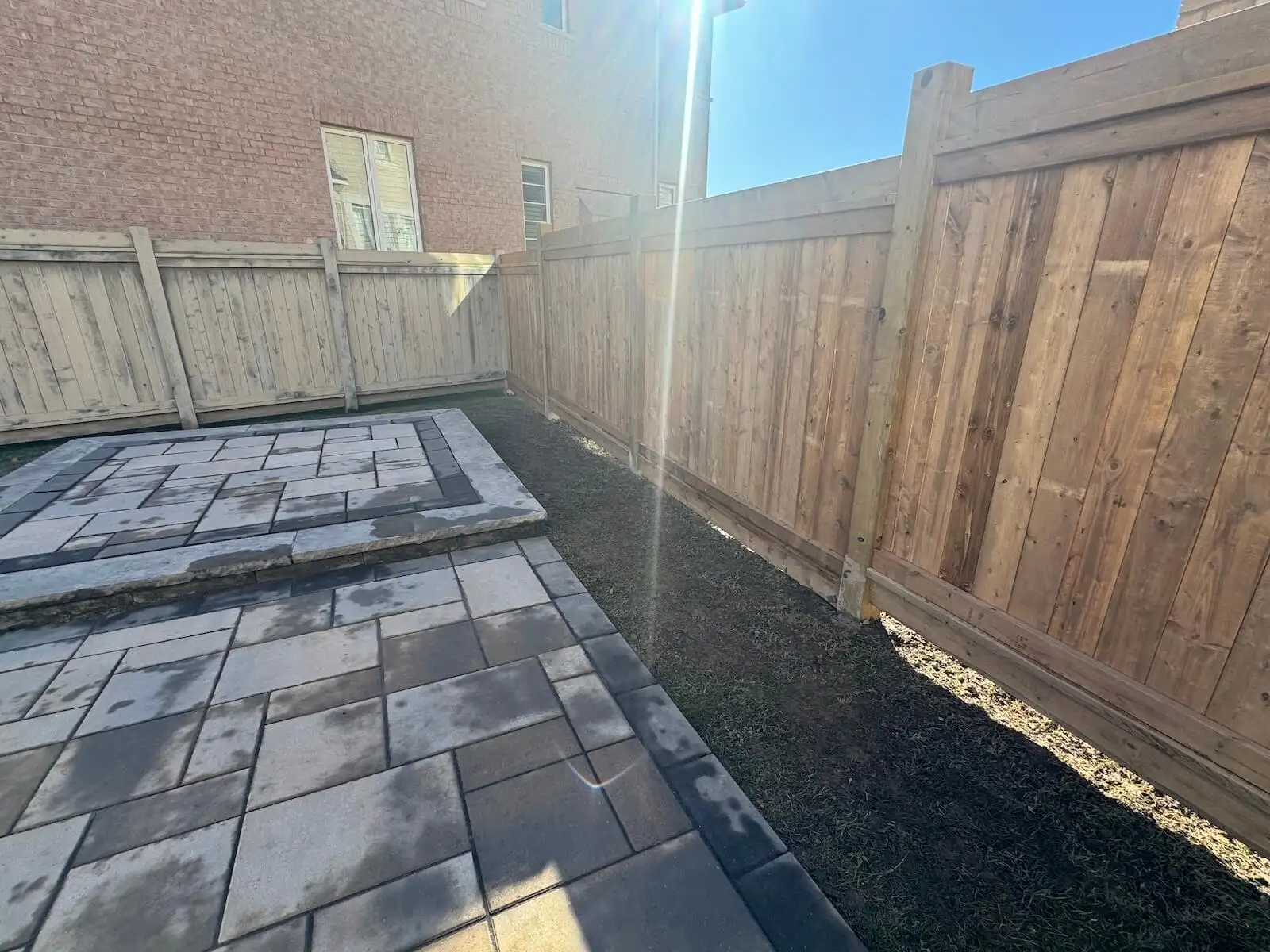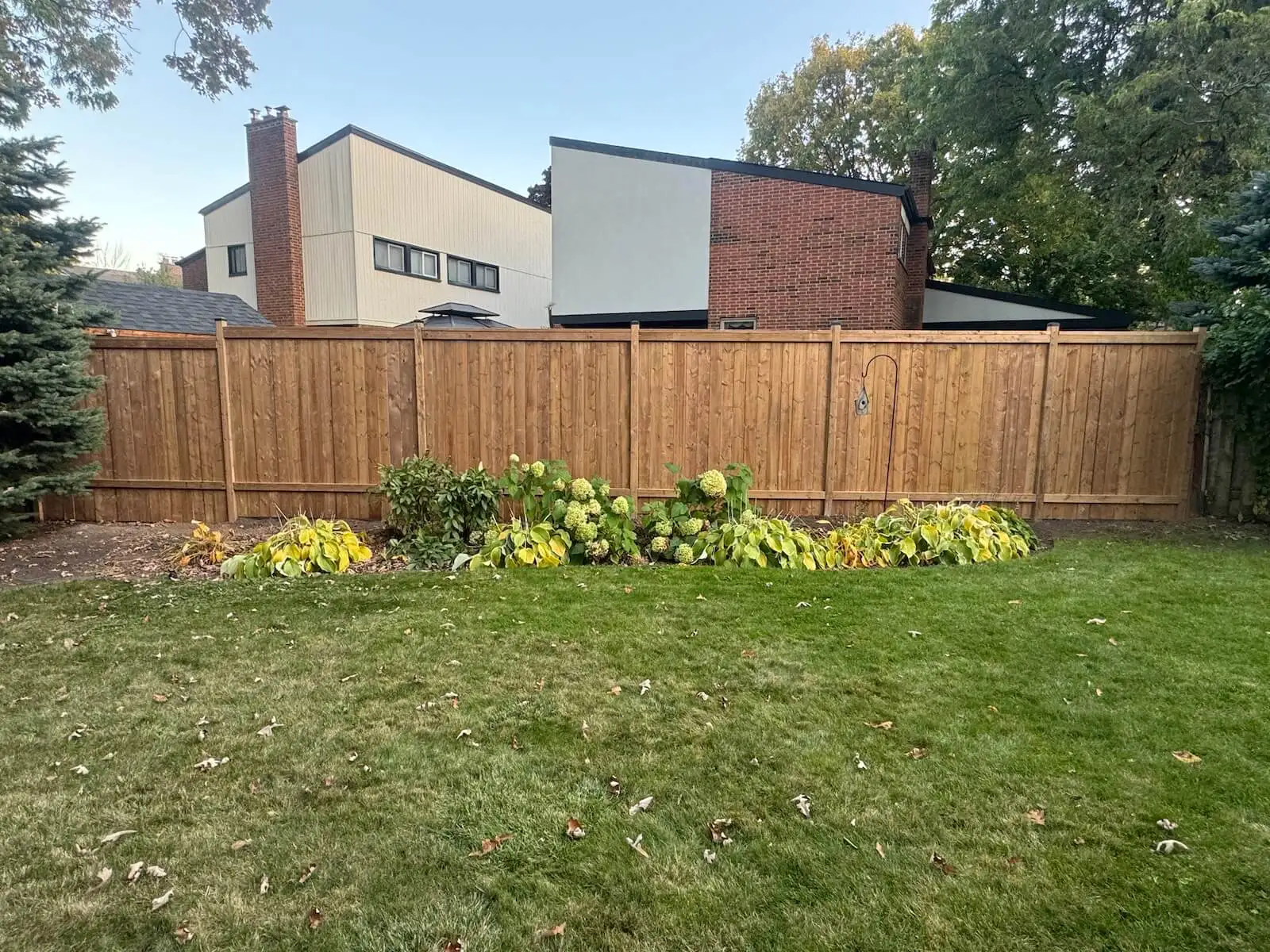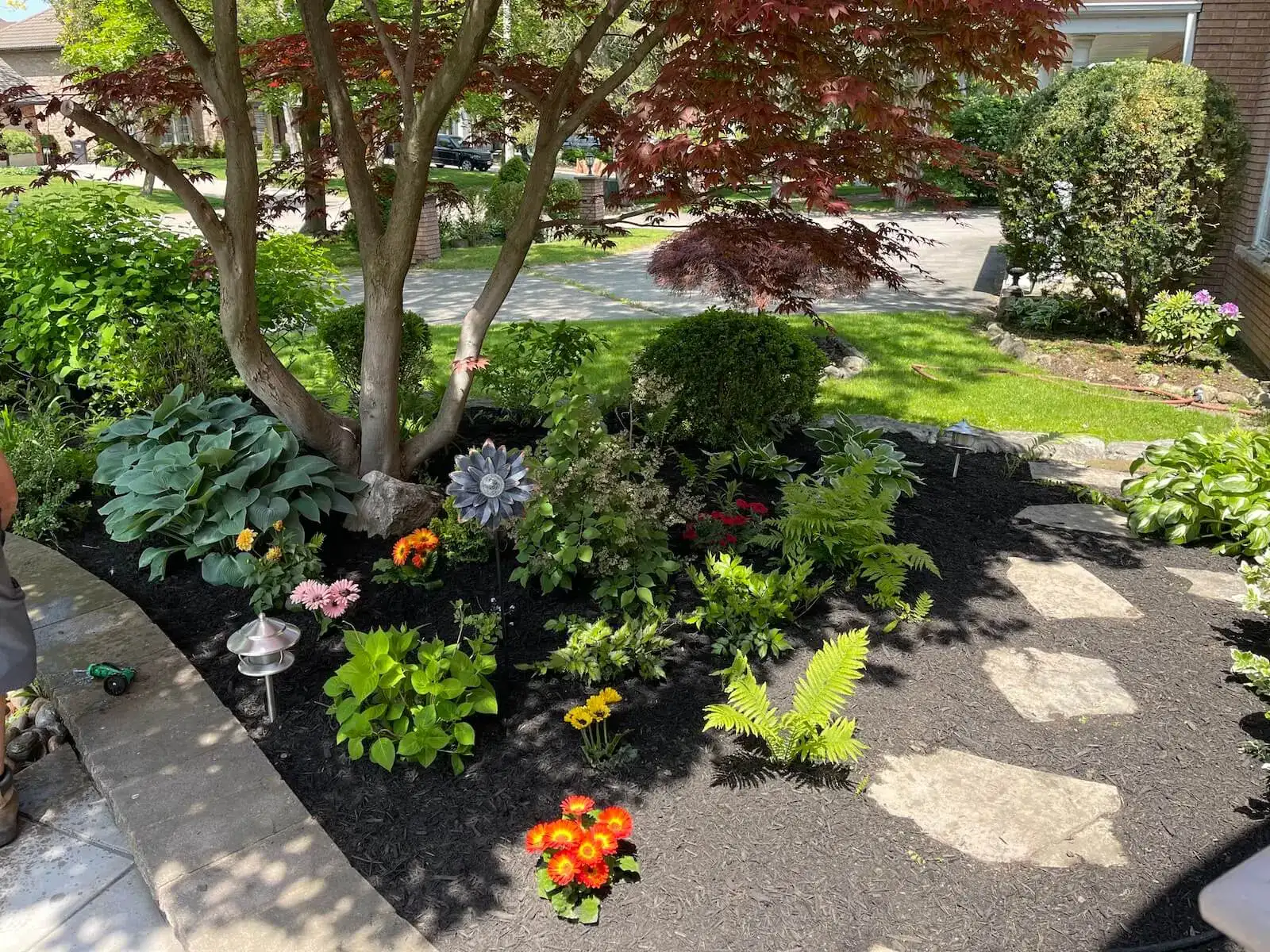









The best travertine walkway ideas are not just about looks. They work when the stone, finish, base prep, drainage, and layout all fit the property, especially in Toronto and the GTA.
Travertine Walkway Ideas at a Glance: When This Material Makes Sense
Travertine can be an excellent walkway material when you want a premium natural-stone look, comfortable underfoot texture, and visible variation rather than a factory-uniform surface. Travertine is a type of natural stone paver, so the real comparison is not travertine versus pavers, but travertine versus concrete pavers, porcelain, granite, or other stone options.
A travertine walkway fits best at front entries, garden paths, patio connectors, pool-adjacent routes, and upscale side-yard paths where design matters as much as function. It is a weaker fit in chronically wet shade, on sites with drainage problems, or for owners who want the absolute lowest-maintenance surface with minimal upkeep.
Freeze-thaw travertine can perform well in the GTA, but installation quality matters as much as the stone itself. Water management, a stable base, edge restraint, and consistent substrate support determine whether the path stays level and durable through winter movement.
Travertine is not a zero-maintenance surface. It is porous, can stain, and can react to acidic cleaners, so you need realistic expectations before you choose it.
21 Travertine Walkway Ideas for Front Yards, Gardens, Side Yards, and Pool Areas
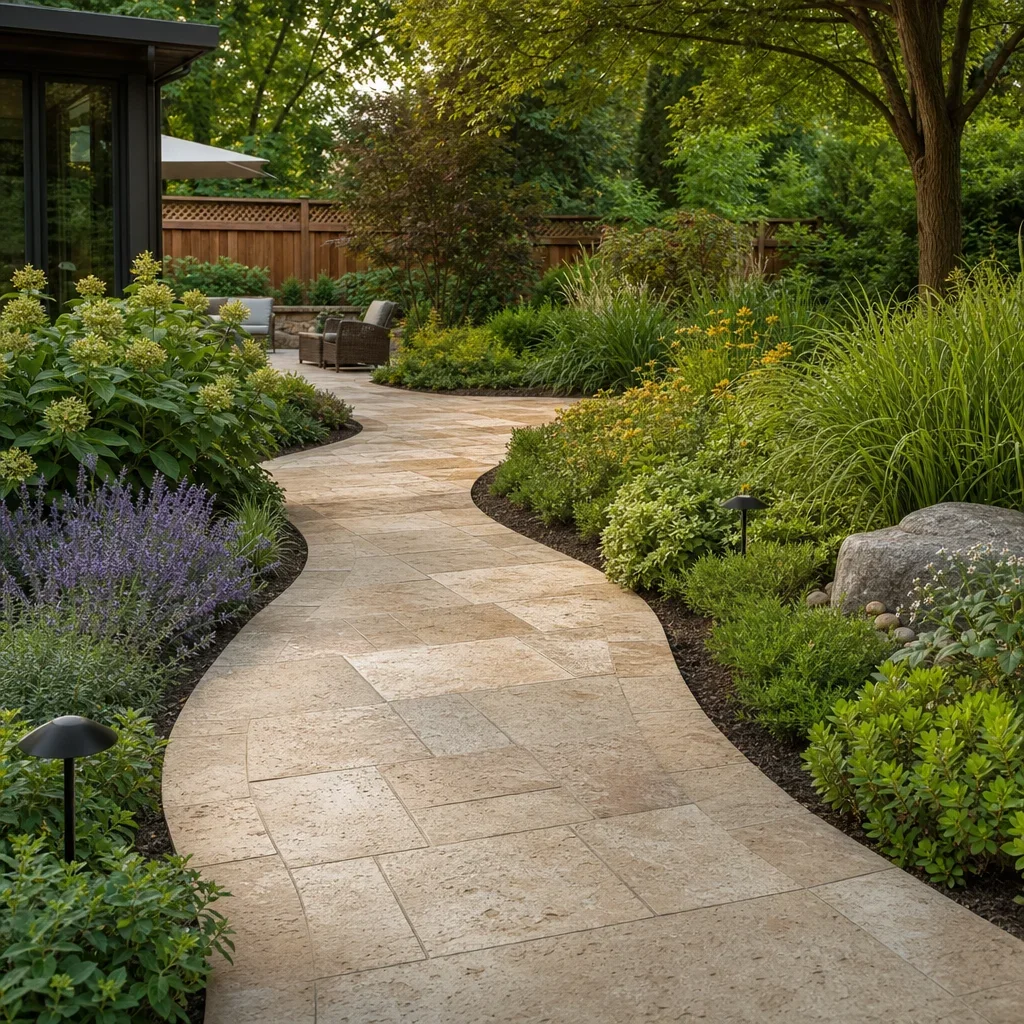
1. Straight formal front walk
A straight front yard travertine walkway ideas layout suits Georgian, transitional, and newer custom homes because it gives the entry a clean axis and formal arrival. Maintenance is moderate, and the main watch-out is that perfectly straight lines make uneven cuts and drifting edges more obvious.

2. Curved garden path through planting beds
Curved garden travertine path ideas work best where you want the walkway to feel softer and more natural around shrubs, ornamental grasses, and perennials. Maintenance stays moderate, but curved runs create more cuts and more edge detail than a straight path.

3. Oversized rectangular slab path
Large rectangular units create a calm, modern look and suit contemporary architecture with fewer visible joints. This style is easier to read visually in small spaces, but bigger pieces need flatter support and tighter install tolerances to avoid lippage.

4. Square paver grid with tight joints
Square paver walkway ideas suit modern and transitional homes because the geometry feels neat and ordered. The watch-out is that a rigid grid can look too busy on narrow paths if the unit size is too small.

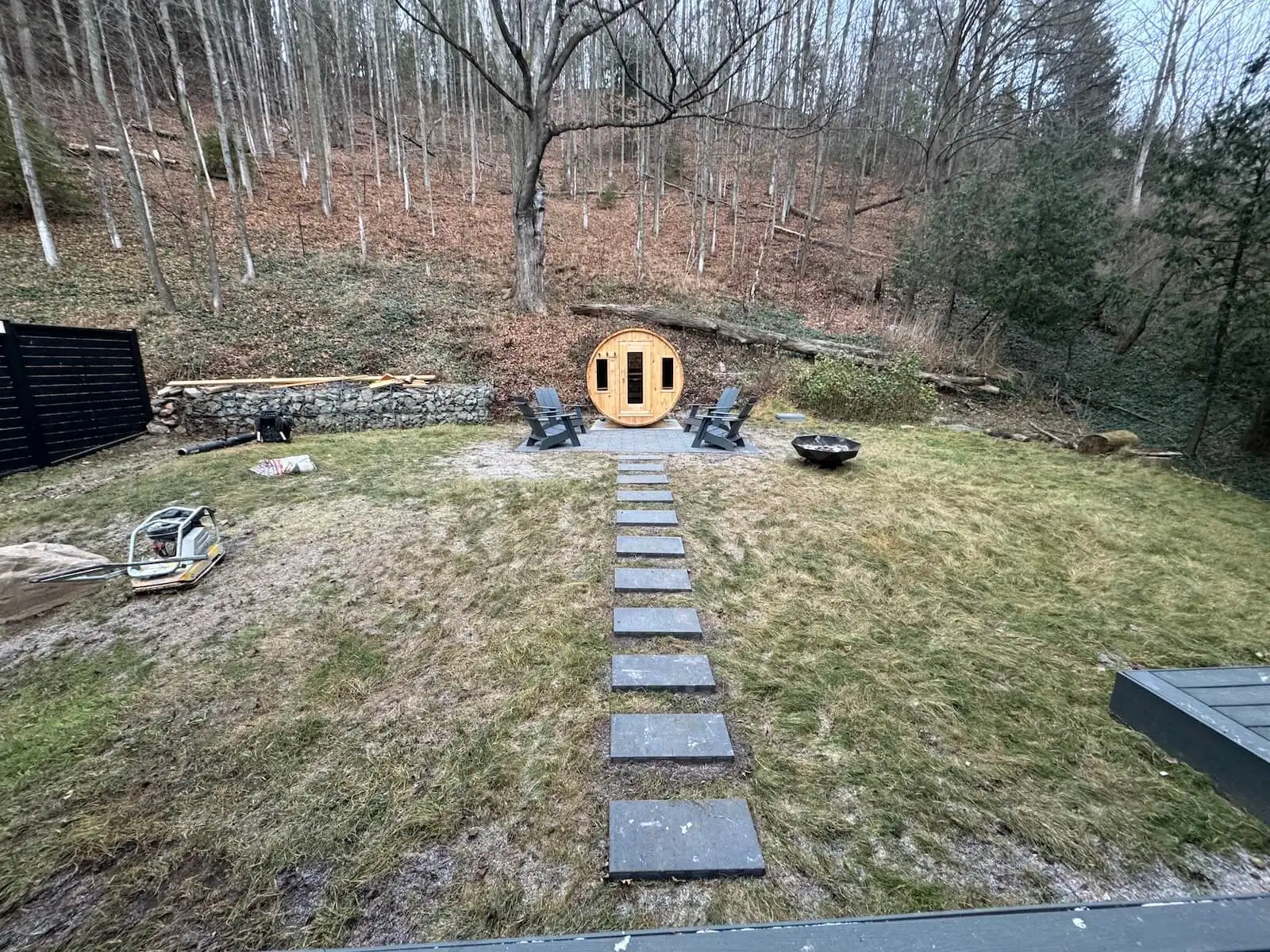
5. Spaced stepping stones through groundcover
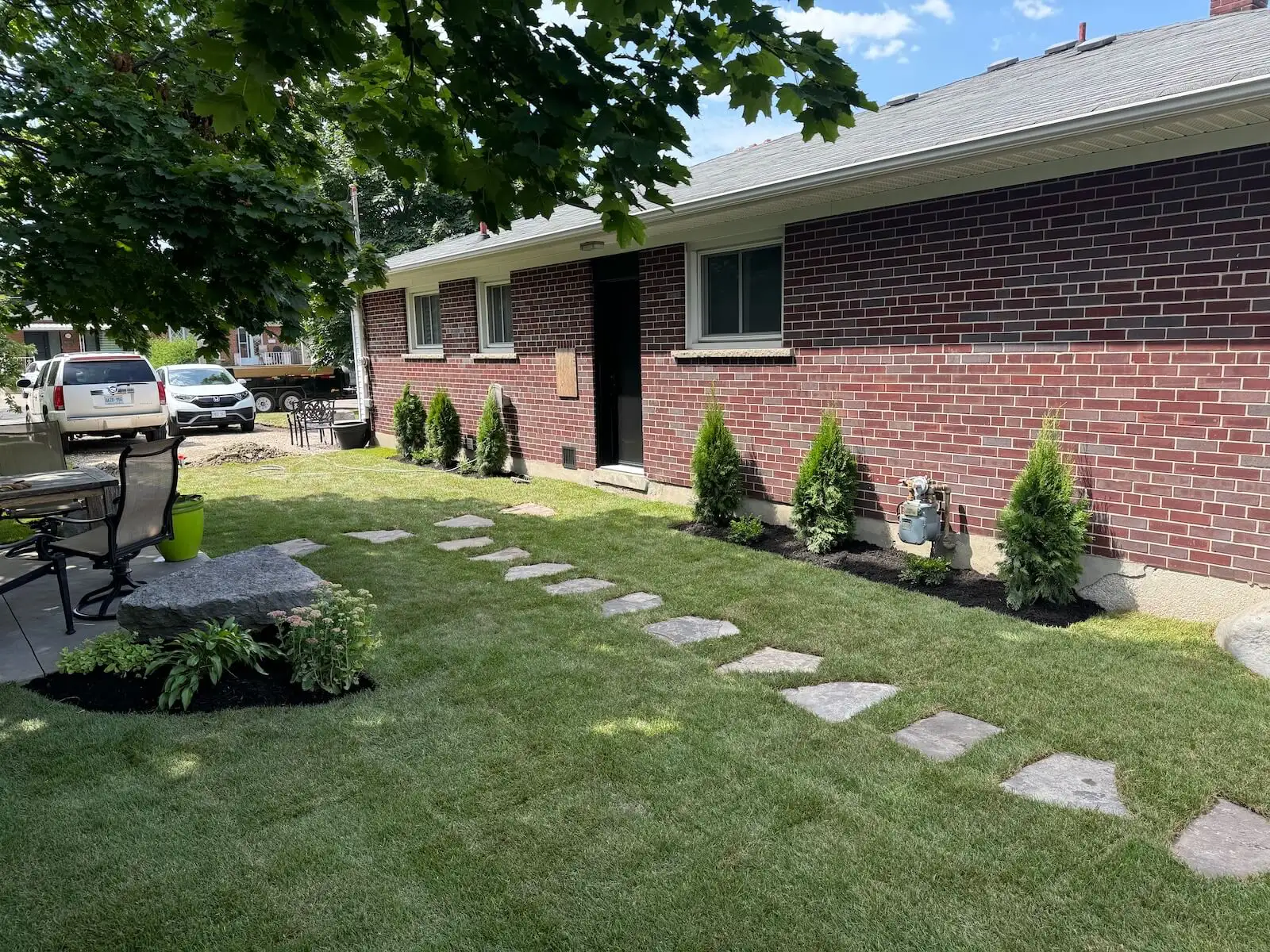
This is one of the best outdoor travertine walkway ideas for informal gardens and secondary routes where you want more planting than paving. It is lower in material use, but it is not ideal for snow shovelling, strollers, or smooth accessible circulation.
6. Travertine with gravel joints
A travertine paver walkway with open gravel joints gives a looser Mediterranean or rustic look and can soften large paved areas. The trade-off is higher maintenance because gravel joints can shift, collect debris, and grow weeds if detailing is weak.
7. Travertine with dark stone border
A contrasting border frames the path and makes light stone look sharper against brick or landscaping. This is a strong choice for front entries, but border movement becomes obvious if the edge restraint below is weak.
8. Pool-to-patio connector
A poolside travertine walkway works well when you want a continuous premium route from house to pool, cabana, or lounge area. The main watch-out is traction, because finish choice matters more here than in a dry front walk.
9. Narrow side-yard ribbon path
A side yard travertine walkway is a smart upgrade for homes with tight access corridors because it brightens the space and keeps the route cleaner than bare soil or loose gravel. The risk is making the path too narrow for bins, maintenance access, or comfortable passing.
10. Linear plank layout
Plank-style travertine creates a longer visual line and can make a narrow lot feel stretched and more contemporary. It suits straight runs best, and the watch-out is that long narrow units can highlight any waviness in the base.
11. Rustic tumbled path with irregular character
Tumbled travertine pavers give a softer, aged look that fits older homes, cottage-style gardens, and relaxed backyard settings. They hide minor dirt and wear well visually, but the look is less crisp if you want a sharp minimalist design.
12. Mediterranean French pattern walkway
French pattern travertine, also called Versailles pattern travertine in common use, suits stucco homes, arched entries, and warm-toned masonry because the mixed sizes feel layered and old-world. The trade-off is more layout planning and more visual activity than a simple linear pattern.
13. Travertine with planting strips
Alternating stone bands and green strips reduces the paved look and helps a path feel lighter in compact yards. This approach needs thoughtful drainage and planting selection because wet, muddy strips can undermine the clean effect.
14. Entry court with inset lighting
A wider entry zone in travertine with recessed or adjacent path lighting adds drama and safer evening use. The watch-out is coordination, because stone layout and lighting rough-ins need to be planned together before installation.
15. Travertine tied into a retaining wall
This idea works when the path climbs or crosses grade changes and needs a retaining wall, planter wall, or raised edge. It creates a cohesive front landscape, but movement at the wall and movement at the walkway have to be managed as one system.
16. Modern floating pads over dark gravel
Large travertine pads separated by dark gravel create a high-contrast modern composition and can make a small front yard feel more architectural. It is visually strong, but loose infill is less friendly for high heels, snow clearing, and mobility devices.
17. Small-yard diagonal entry path
A diagonal layout is one of the most useful front yard travertine walkway ideas for awkward lots because it makes a short route feel longer and more deliberate. The watch-out is cut waste, since diagonal patterns usually need more perimeter trimming.
18. Corner-to-corner courtyard connector
A simple travertine link between deck, patio, and gate keeps circulation clear in compact backyards where every square foot matters. This is one of the better simple paver walkway ideas pictures often miss because the value is functional, not just decorative.
19. Smooth accessible front approach
A wider path with tight joints, flatter transitions, and minimal lippage is the best travertine idea for strollers, rolling carts, and easier entry use. This layout depends less on pattern and more on execution, especially surface consistency and clean thresholds.
20. Garden path with metal edging
A clean metal edge lets the stone stay visually light while keeping surrounding mulch or gravel in place. It suits modern garden design well, but thin edge details need proper anchoring to stay straight over time.
21. Mixed-material walk with travertine feature zone
This is one of the smartest simple paver walkway ideas on a budget because you can use travertine where it shows most, such as the front landing or main axis, then pair it with another premium-compatible material. The key is matching thickness, colour balance, and joint detailing so the path still feels intentional.
Best Travertine Walkway Patterns, Shapes, and Layouts
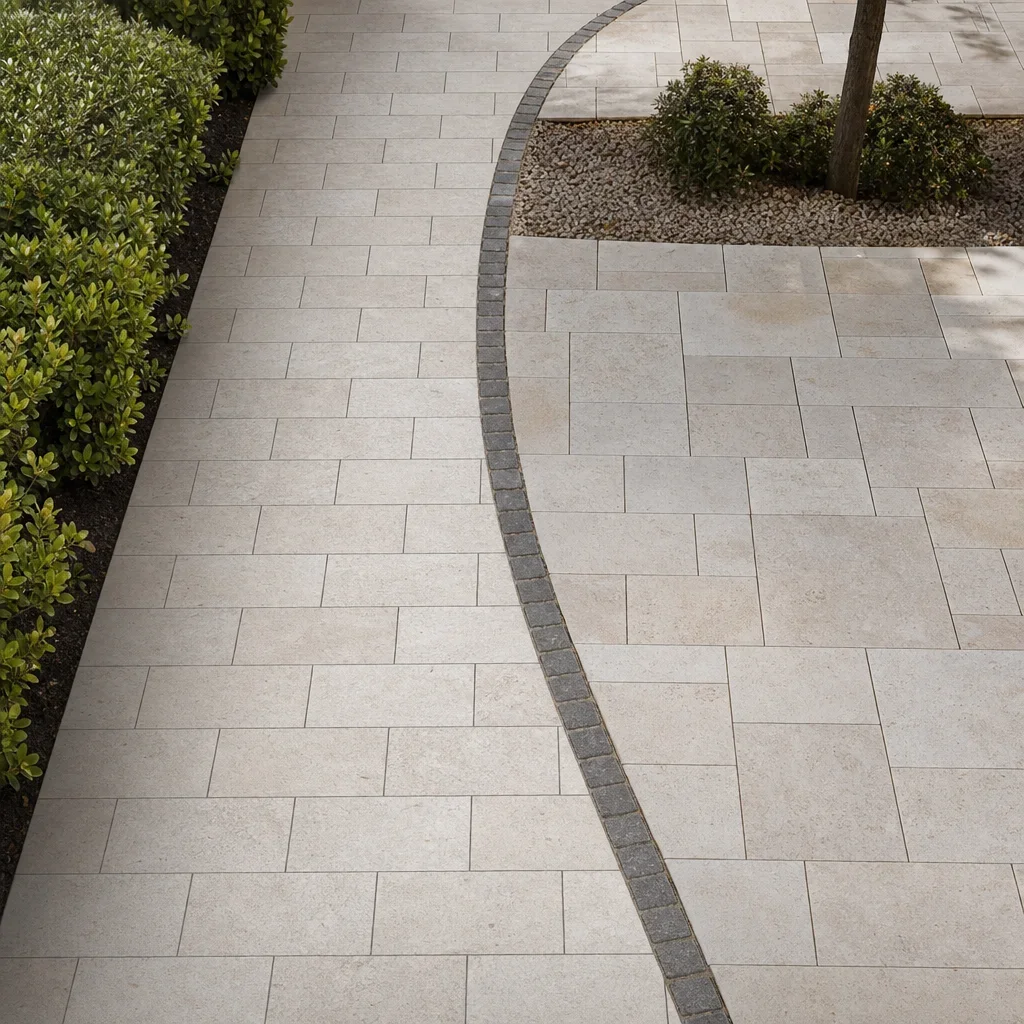
Travertine walkway patterns change both the look and the build complexity of the path. Running bond and stacked linear layouts feel cleaner and more modern, while ashlar and French pattern travertine read as more traditional or Mediterranean.
Modular travertine pavers are the most flexible choice for typical walkways because they handle straight runs, light curves, repairs, and border details more easily than large slabs. Large slabs create a premium modern look, but they demand more consistent support and more precise handling during install.
Plank-style units are best when you want to visually lengthen a route or match linear architecture. They are less forgiving on winding paths because curves require more cuts and can break the rhythm of the layout.
Stepping stones are best for informal secondary paths where a lighter footprint matters more than all-season smooth access. They are the weakest choice for a main entrance because joints are wider, snow removal is harder, and circulation is less fluid.
Square paver walkway ideas work well in both front and side yards when you want a simple repeatable geometry. They also pair well with grass joints or gravel infill, but the cleaner the grid, the more visible any crooked line becomes.
Pattern choice also affects waste, cuts, edging, and visual pace over long distances. Simpler patterns usually reduce install complexity, while mixed-size patterns reward careful planning with more character.
Travertine Finishes and Colors: Tumbled, Chiseled, Brushed, Filled, and More
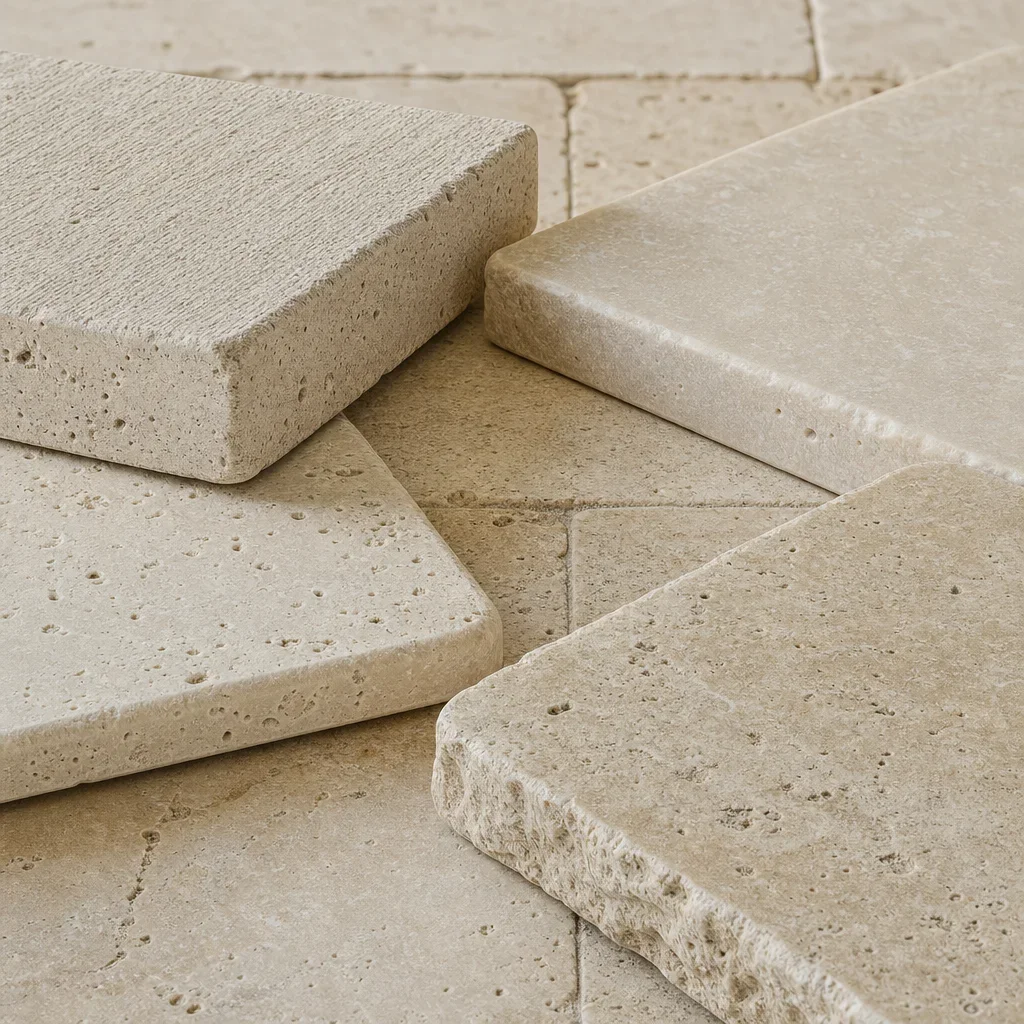
Tumbled travertine pavers have softened edges and a time-worn look, so they suit rustic, traditional, and Mediterranean spaces. They also hide minor wear and dust better than sharper-edged stone.
Chiseled edge travertine has a deliberate hand-cut look with stronger edge definition than a fully tumbled piece. It adds character, but it is visually busier than a clean-sawn modern layout.
Brushed finish travertine has a textured surface that feels more refined than rough split stone and less formal than a polished finish. For walkways, this makes sense when you want a smoother visual read without a glossy surface.
Filled travertine has natural voids filled during manufacturing for a cleaner, more uniform appearance. That can look more refined, but filler areas may need closer long-term attention if they weather differently than the stone body.
The most popular travertine colours in residential landscapes are usually light neutrals such as ivory, beige, and warm mixed blends because they pair easily with brick, stucco, and natural planting palettes. Availability varies by supplier and quarry, so you should choose from current stock rather than a generic colour chart.
Colour should be chosen for more than style. Light tones can brighten narrow side yards, mixed tones can hide dirt better, and warm hues usually sit more comfortably against red or tan masonry than cooler grey stones.
Is Travertine Slippery, Durable, and Worth It? Pros, Cons, and Trade-Offs
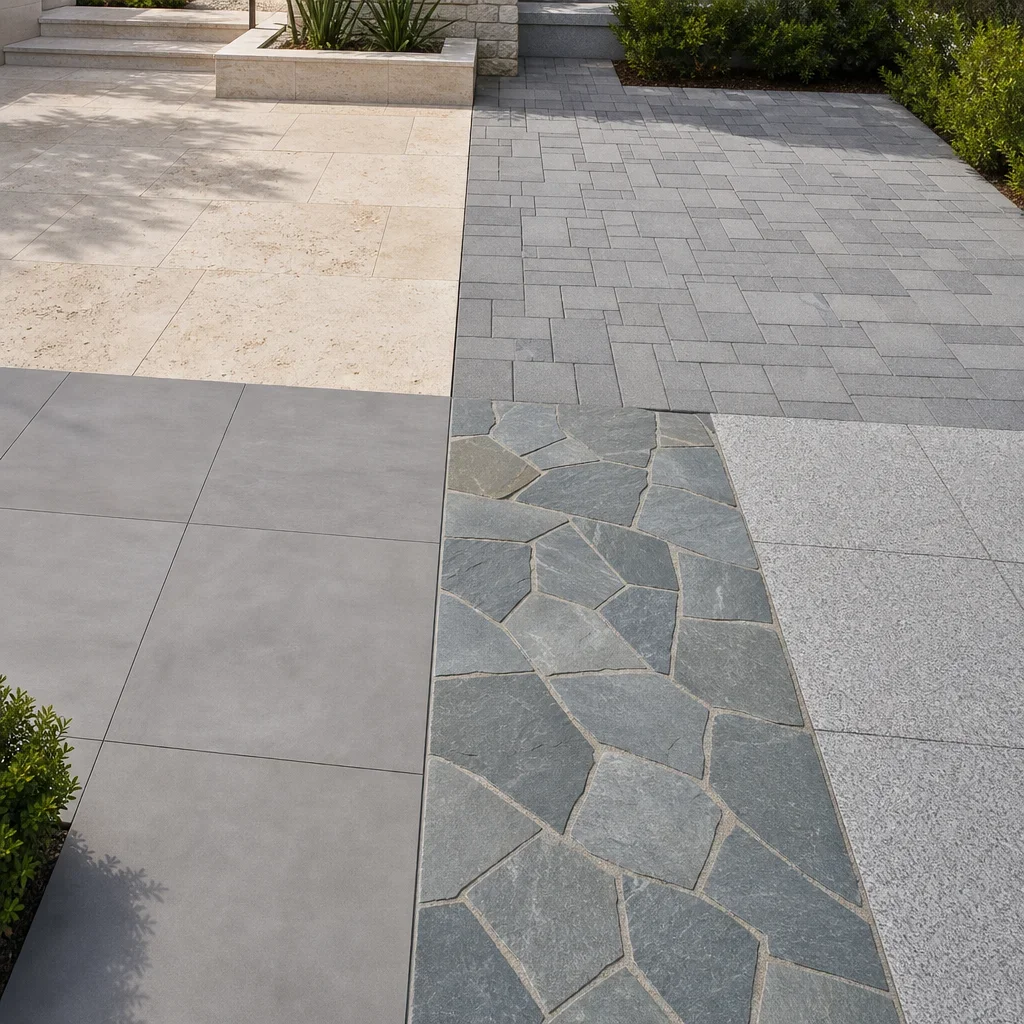
Travertine can be slip-resistant enough for many walkways when the finish is appropriate and the surface is kept clean, but no outdoor paving material is universally non-slip in every wet, icy, shaded, or algae-prone condition. Texture, slope, maintenance, and location matter more than the word travertine alone.
Travertine is durable enough for pedestrian walkways when the stone quality is consistent and the system below it is built properly. Most failures people blame on stone actually start with movement, trapped water, weak edge support, or poor substrate preparation.
The disadvantages of travertine are real. It is porous, can stain, may chip on exposed edges, needs more careful cleaning than concrete, and does not like acidic products such as vinegar-based cleaners.
Travertine is worth it when appearance, natural variation, and a softer high-end look are priorities. Concrete pavers usually win on budget flexibility, porcelain often appeals to owners who want a more uniform low-porosity surface, and denser stones such as granite may suit harsher exposure better.
Bare-foot comfort depends on colour, finish, sun exposure, and local heat gain, not just material category. Lighter stone and textured finishes usually feel more forgiving than dark heat-absorbing surfaces in direct sun, but site conditions still decide the result.
| Material | Look | Traction depends on finish | Maintenance | Repairability | GTA climate fit |
|---|---|---|---|---|---|
| Travertine | Natural, warm, premium | Good when finish and upkeep are right | Moderate | Good if units are individually set | Good with proper drainage and base prep |
| Concrete pavers | Wide style range | Varies by product texture | Low to moderate | Good | Good |
| Porcelain pavers | Crisp, modern, uniform | Product-specific | Low | Moderate | Good when system is designed correctly |
| Bluestone | Natural, cooler-toned | Finish-specific | Moderate | Good | Good with proper detailing |
| Granite | Dense, formal, durable-looking | Finish-specific | Low to moderate | Good | Strong choice for demanding sites |
Travertine in Toronto and GTA Freeze-Thaw Conditions
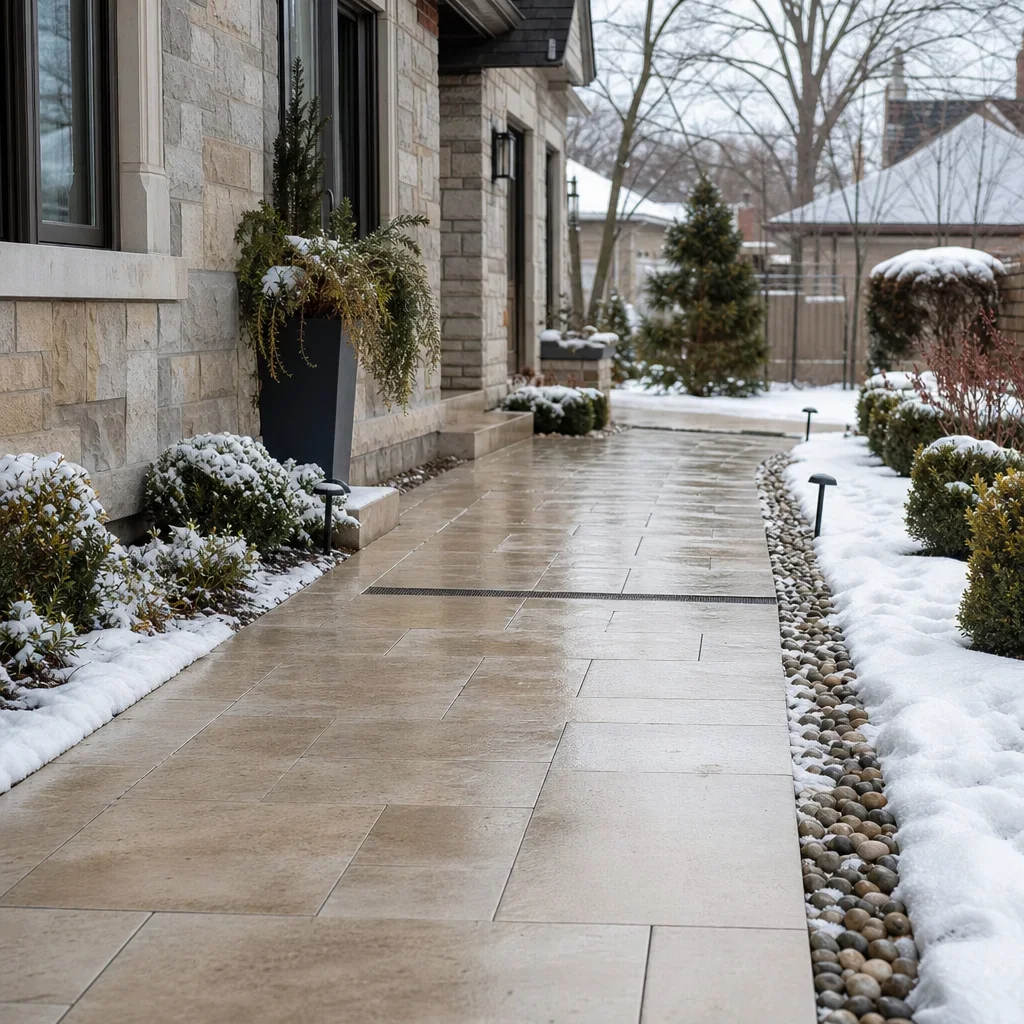
Toronto advice should never copy warm-climate stone articles without adjustment. GTA winters bring repeated freeze-thaw cycles, snow storage, spring melt, and drainage pressure that can expose weak construction quickly.
Freeze-thaw travertine works best when water is moved away from the surface and away from the base below. A walkway that holds water near joints, edges, or low spots is much more likely to shift, stain, or deteriorate visually through winter.
Lower-grade stone and inconsistent-thickness units are riskier in Ontario conditions because uneven support creates stress points across the walkway. Premium natural stone is only as good as the calibration, edge quality, and consistency of the pieces delivered to site.
Travertine may be less forgiving than denser alternatives on sites with chronic shade, poor runoff, or heavy de-icer exposure. In those cases, porcelain, granite, or premium concrete pavers may be the better fit even if you love the travertine look.
A climate-proof walkway is built from the ground up. That means the lot is read for slope, runoff, snow management, and drainage before the stone pattern is even chosen.
If you are comparing materials for a GTA property, we prefer to show the same layout in more than one option so you can see where travertine fits and where another surface may make more sense. RockLeaf offers a free 3D design and quote with line-by-line pricing, and any current promotions are subject to conditions apply, ask an agent.
Base Prep, Drainage, and Joint Material: What Actually Determines Performance
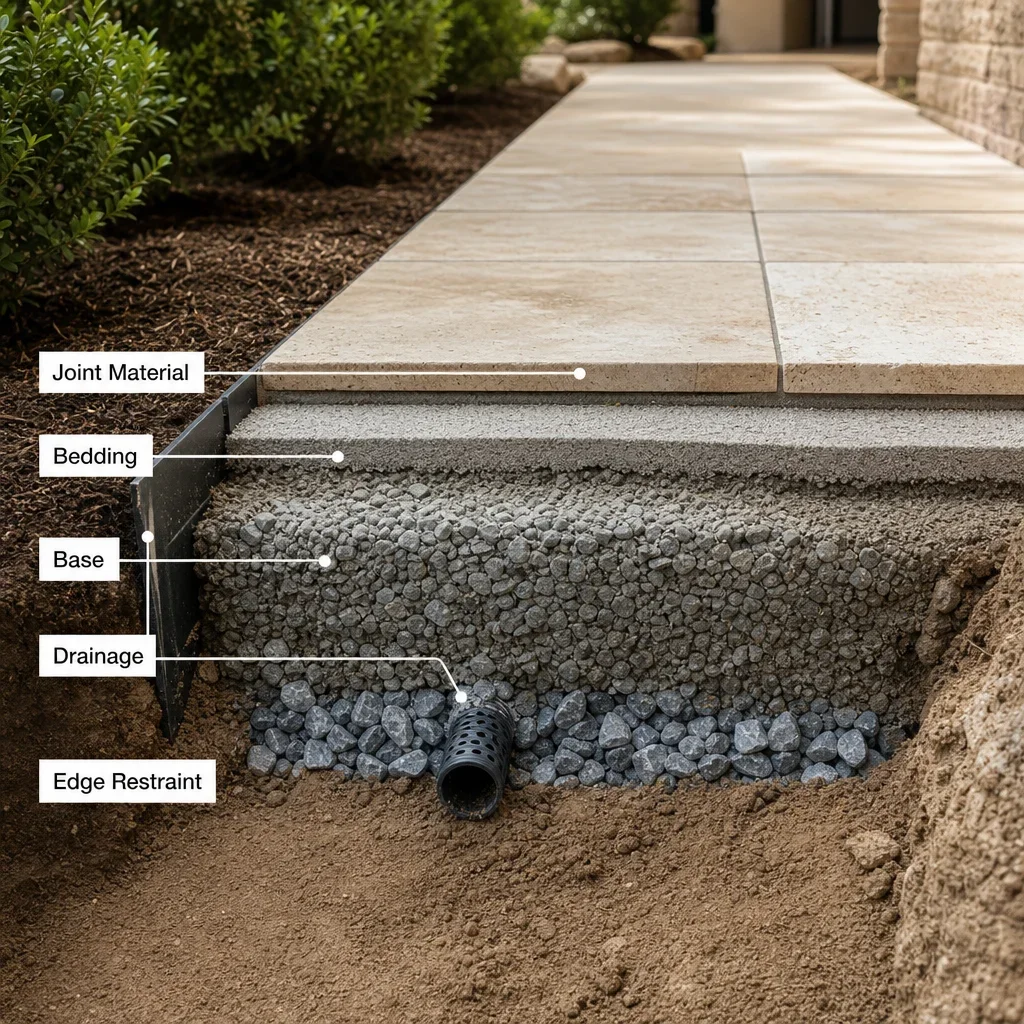
You should not lay travertine pavers directly on dirt if you want a durable walkway. Soil moves, holds moisture unevenly, and does not provide the stable, compacted support that an outdoor stone system needs.
Walkway performance comes from excavation, a compacted granular base, a consistent bedding layer, proper edge restraint, and a route for water to leave the area. Those are the hidden details that keep stone from rocking, settling, or spreading.
Drainage matters both on top of the walkway and below it. Surface water needs somewhere to go, and subsurface moisture needs to avoid sitting under the stone where freeze-thaw movement can start.
Joint material should be chosen for the stone, the joint width, the intended look, and the exposure conditions. Polymeric sand can work in many paver applications, while open joints with gravel can suit stepping-stone layouts, but the right choice depends on the specific product and system details.
Travertine walkway ideas diy can make sense for a small informal stepping-stone path, but a front entry or full freeze-thaw installation needs more precision than most homeowners expect. Stone thickness, base consistency, cut quality, and drainage are harder to get right than the finished path makes it look.
Travertine Walkway Cost: What Affects Price in the GTA
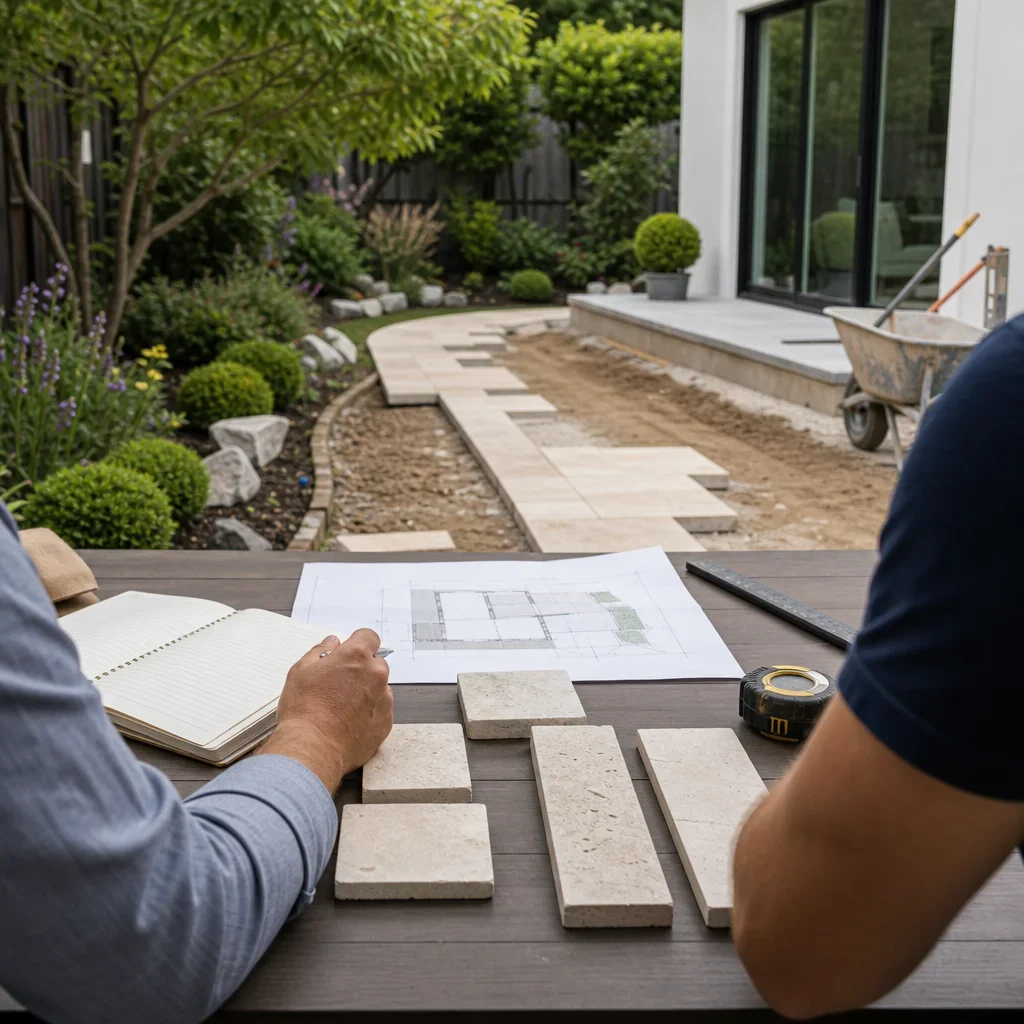
Travertine walkway cost is driven more by scope and site conditions than by stone alone. The big cost factors are stone grade, thickness, finish, pattern complexity, number of cuts, border details, excavation difficulty, access, demolition, drainage work, lighting, and sealing approach.
Installed cost comparisons are best treated as project bands, not universal price tags, because GTA labour, access, and subgrade conditions can move a walkway budget quickly. That is why material-only shopping often underestimates the real cost of a premium path.
Travertine usually sits above standard concrete pavers and can overlap with or exceed other premium materials depending on the source stone and complexity of the design. Porcelain, granite, and bluestone can land below or above it depending on product selection and install method.
If the budget is tight, the smarter move is usually to simplify the layout rather than abandon the look. Smaller feature areas, straighter runs, and mixed-material designs can preserve the premium effect more effectively than forcing a large complex pattern into the wrong budget.
Maintenance, Sealing, and Cleaning: What to Do and What to Avoid
Travertine walkways may need sealing, but sealing is not a universal rule for every product or every site. The decision depends on porosity, finish, exposure, stain risk, and whether you want to change appearance or mainly add stain resistance.
You should never clean travertine with vinegar because vinegar is acidic and can etch calcareous stone. The same caution applies to harsh acid-based cleaners sold for masonry or concrete residue.
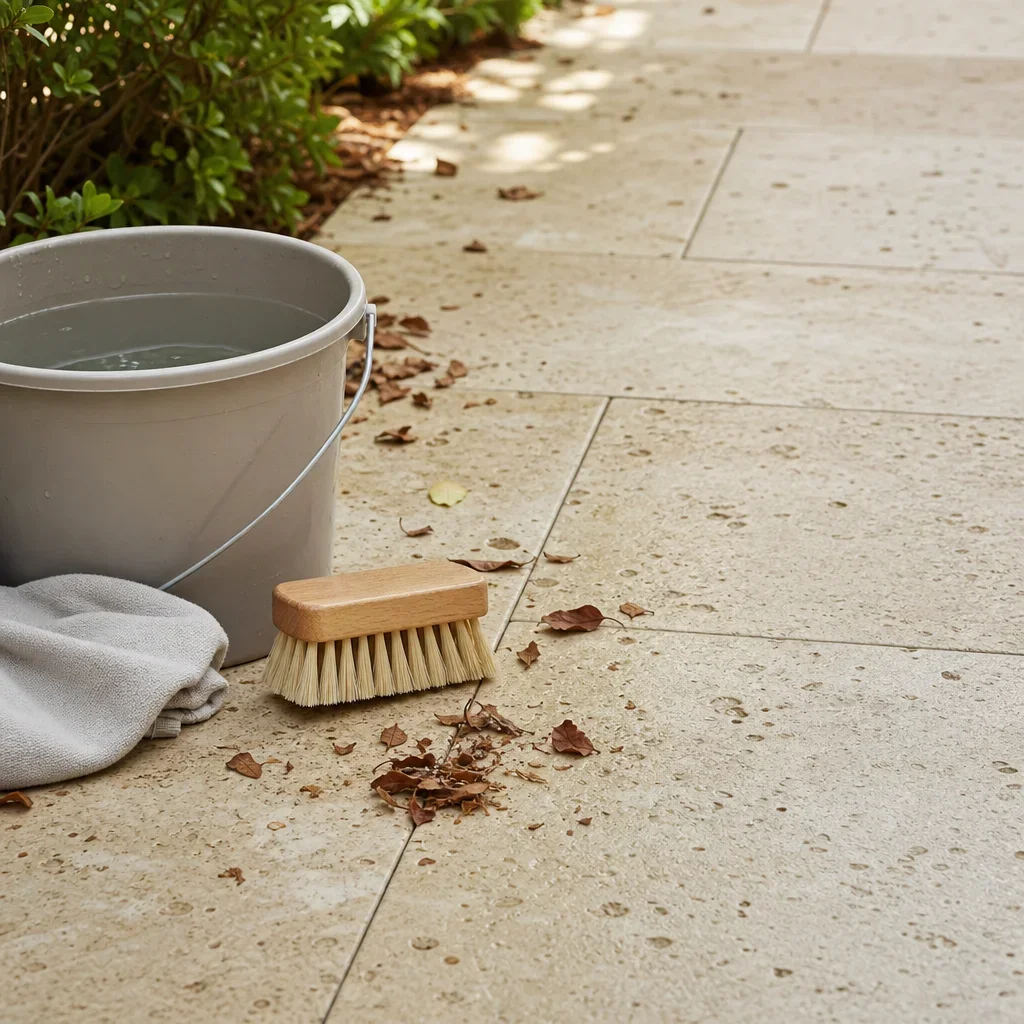
Routine cleaning should be gentle and stone-safe. A pH-appropriate stone cleaner, soft brush, water, and careful rinsing are the safer default approach for dirt, film, and seasonal buildup.
Moss, algae, and leaf tannins need attention early because organic buildup makes a walkway both dirtier and potentially slicker. Shade, standing moisture, and poor airflow increase that risk.
Efflorescence is a salt deposit that can appear on or near masonry and paver surfaces when water moves minerals to the face and evaporates there. It is a moisture-management signal as much as a cleaning issue.
Weeds between outdoor travertine pavers are easier to prevent than to fight after the joints fail. Good joint stabilization, proper edge restraint, and regular debris removal are safer for the stone than repeated harsh chemical treatments.
Never use vinegar, harsh acids, aggressive pressure washing into the joints, or random de-icing products without checking the stone and joint-system guidance first. If you are unsure, use the manufacturer care instructions or speak to your installer before experimenting.
Repairs, Longevity, and Red Flags When Buying Travertine
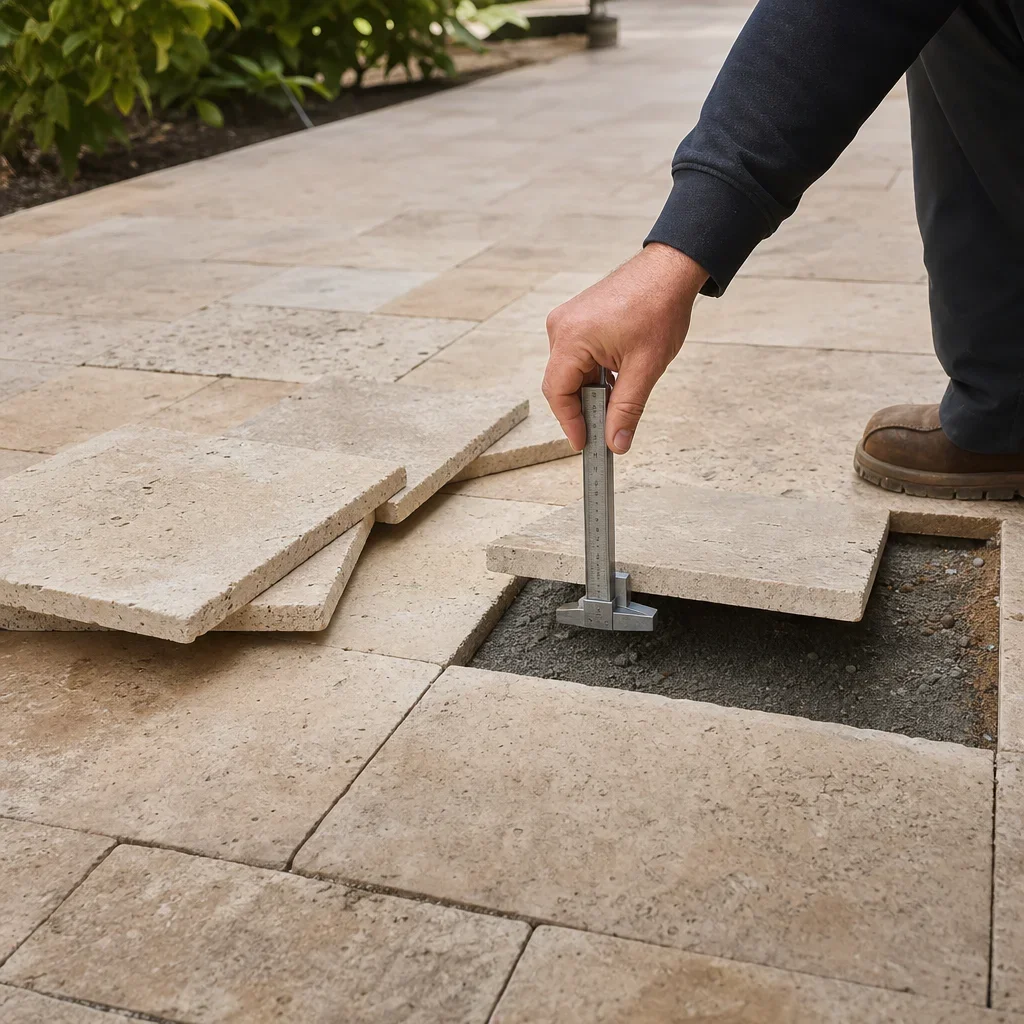
Most travertine walkway failures show up as movement, loose pieces, edge separation, standing water, lippage, or cracked units rather than sudden total failure. Those symptoms usually point back to drainage, support, or edge control.
A well-installed travertine paver walkway is repairable because individual units can often be lifted, reset, or replaced without rebuilding the entire path. That is one reason modular systems are practical for long-term ownership.
You should inspect stone quality before purchase, not after delivery. Warning signs include inconsistent thickness, brittle-looking edges, excessive filler, weak calibration, and a lot that varies too much from sample pieces.
Longevity depends more on installation quality, water management, snow practices, and maintenance than on a simple material label. A premium stone laid over a weak system will age worse than a more modest product installed correctly.
Choosing the Right Travertine Walkway for Your Home Style, Budget, and Layout
Modern homes usually look best with larger units, cleaner lines, fewer joint breaks, and simple border detailing. Traditional and Mediterranean homes usually carry mixed sizes, warmer colour blends, and more textured edges more naturally.
For a formal front entry, choose a layout that directs the eye clearly to the door and supports smooth daily traffic. For a casual garden path, looser spacing and softer edges can feel more relaxed and landscape-driven.
For a side-yard utility route, prioritize clean drainage, easy maintenance, and enough width for the way the space is actually used. For a pool connection, prioritize finish, comfort, and how the walkway handles splashing and adjacent hardscape transitions.
If you want the premium travertine look but maintenance tolerance is low, use it in focal areas and compare other materials for utility zones. That often gives a better balance than forcing the same surface into every part of the lot.
| Priority | Better travertine choice | Better alternate choice |
|---|---|---|
| Warm natural luxury look | Tumbled or brushed travertine | Bluestone for cooler tone |
| Crisp modern uniformity | Large-format or linear travertine | Porcelain |
| Strong budget control | Simpler travertine feature zone | Concrete pavers |
| Demanding wet or shaded exposure | Carefully detailed travertine in select areas | Granite or porcelain |
| Informal garden character | Tumbled travertine or stepping pads | Natural flagstone-style alternatives |
Walkway Width, Lighting, Edging, and Accessibility Details Homeowners Overlook
Residential walkways usually feel more comfortable when they are wide enough for the way they will actually be used, and a common planning range is about 36 to 60 inches depending on function. Narrow utility paths can work at the lower end, while front entries and shared routes feel better with more width.
Accessibility is shaped by smoothness, transitions, and minimal lippage as much as width. A visually beautiful path can still feel awkward if the joints are uneven, the thresholds catch wheels, or the route changes level too abruptly.
Edging changes both the look and the lifespan of the path. Matching borders, contrasting dark stone, metal edging, raised planter edges, and retaining-wall integration all work, but each needs proper anchoring below grade.
Lighting should support safety first and mood second. Low-voltage path lights, recessed lights near entries, and subtle wall washing can define the route without creating glare that flattens the stone texture at night.
When Travertine Is the Wrong Choice
Travertine is the wrong choice when ultra-low maintenance is the top priority and the owner does not want to think about sealing, stone-safe cleaning, or staining risk. In that case, porcelain or a low-maintenance concrete paver system may be easier to live with.
It is also a weaker choice in heavily shaded damp zones, sites with chronic drainage trouble, or areas likely to see repeated harsh de-icer exposure. Those conditions can push the project toward denser stone or other paving systems.
If the goal is a very uniform, crisp, contemporary finish with minimal natural variation, travertine may not give the clean factory-consistent look you want. Porcelain usually serves that design brief more directly.
If the project budget only supports the cheapest possible walkway, travertine is usually not the right starting point. The better move is to be honest about priorities and choose a material that can be installed properly instead of stretching a premium material too thin.
FAQ
Is travertine good for walkways?
Yes, it can be very good for walkways when the finish, stone quality, base prep, and drainage are right. It is best for homeowners who want a premium natural-stone look and accept moderate maintenance.
Are travertine walkways slippery when wet?
They can be reasonably slip-resistant with the right finish and maintenance, but no outdoor surface is slip-proof in every condition. Wet leaves, algae, ice, slope, and surface contamination all affect traction.
Do travertine walkways need sealing?
Sometimes, yes. The need depends on the stone, porosity, finish, and exposure rather than a one-size-fits-all rule.
What does vinegar do to travertine?
Vinegar can etch travertine because it is acidic and travertine is a calcareous stone. It is not a safe routine cleaner for this material.
What is better, pavers or travertine?
Travertine is one type of paver material, so the real comparison is travertine versus concrete, porcelain, granite, or other stone. The better option depends on your style, maintenance tolerance, climate exposure, and budget.
Is travertine out of style in 2026?
No, but the way it is used has shifted. Cleaner formats, simpler layouts, and tighter palettes feel more current than overly busy patterns in every setting.
What are the disadvantages of travertine?
Its main drawbacks are porosity, staining risk, edge chipping, sensitivity to acidic cleaners, and the need for good installation and maintenance.
Can I lay travertine pavers directly on dirt?
No, not if you want the walkway to stay stable. A durable installation needs excavation, base prep, compaction, and drainage planning.
Which travertine finish is best for a walkway?
That depends on use. Tumbled and brushed finishes are common choices because they balance texture, appearance, and everyday practicality for outdoor paths.
How much does a travertine walkway cost in the GTA?
There is no honest fixed number without the site and scope. Cost is shaped by stone selection, pattern, cuts, excavation, drainage, access, edging, lighting, and overall size.
Get the layout right before you fall in love with the stone sample. That is usually what separates a walkway that still looks good after a few GTA winters from one that looked good for one season.