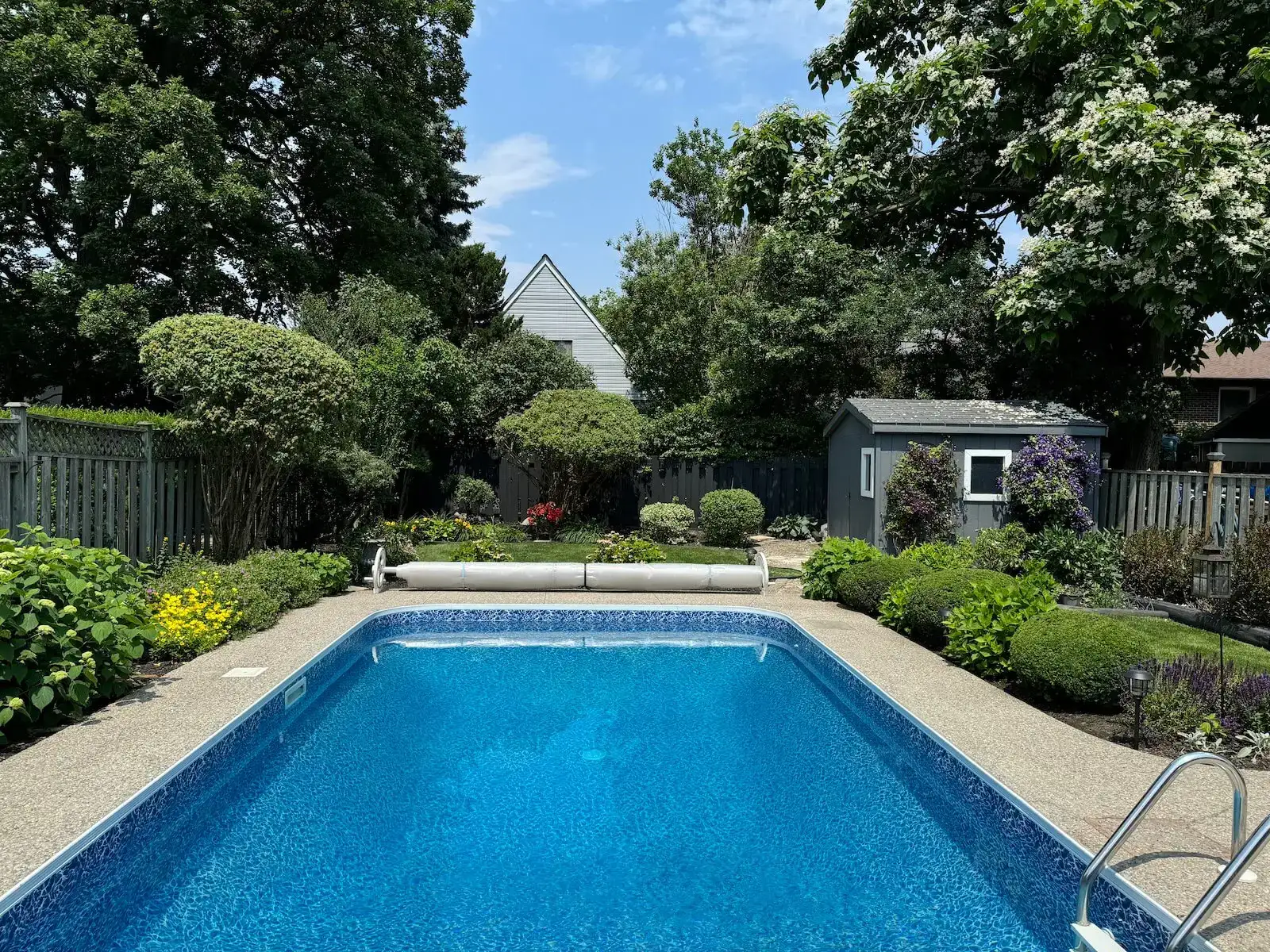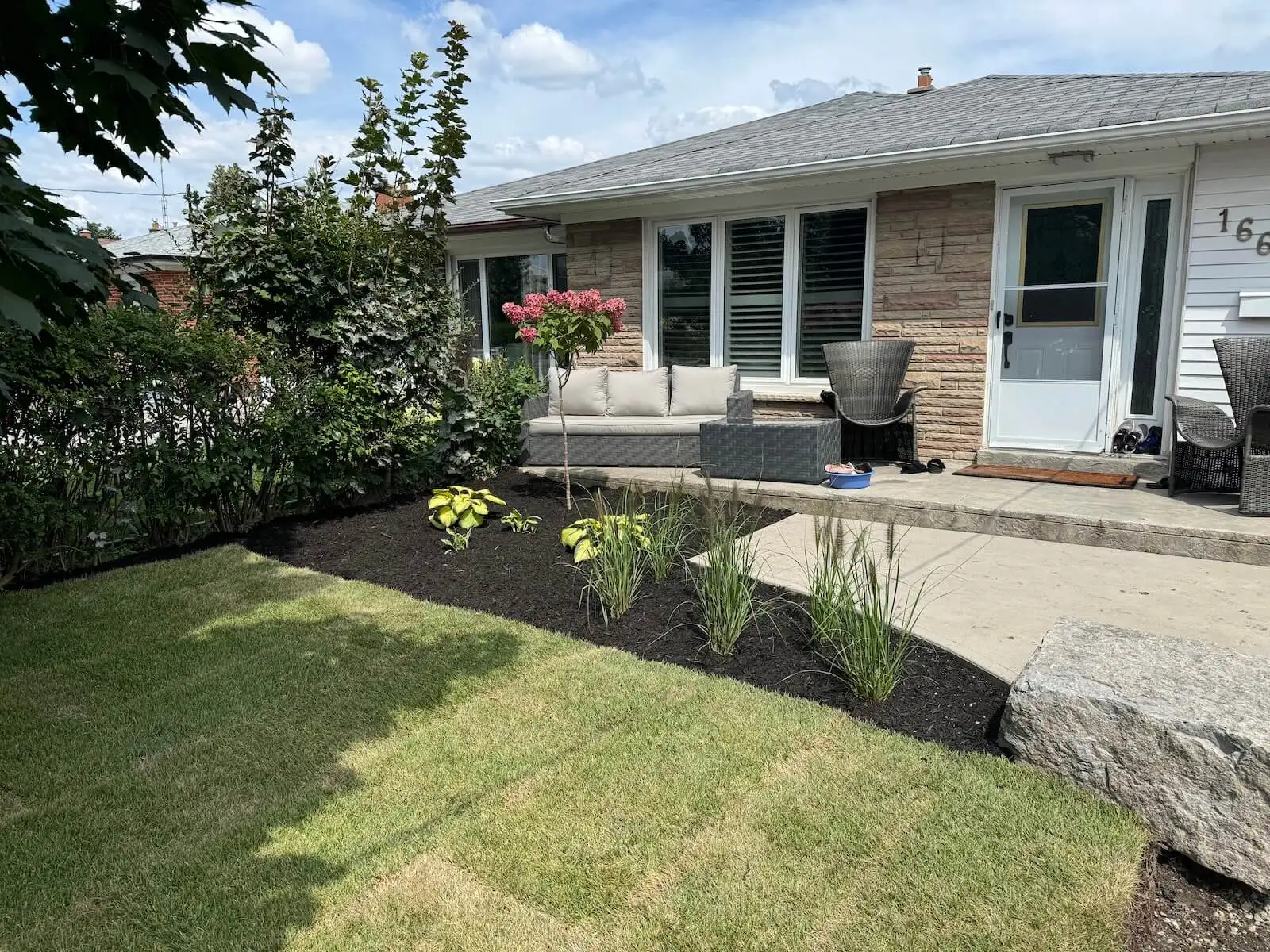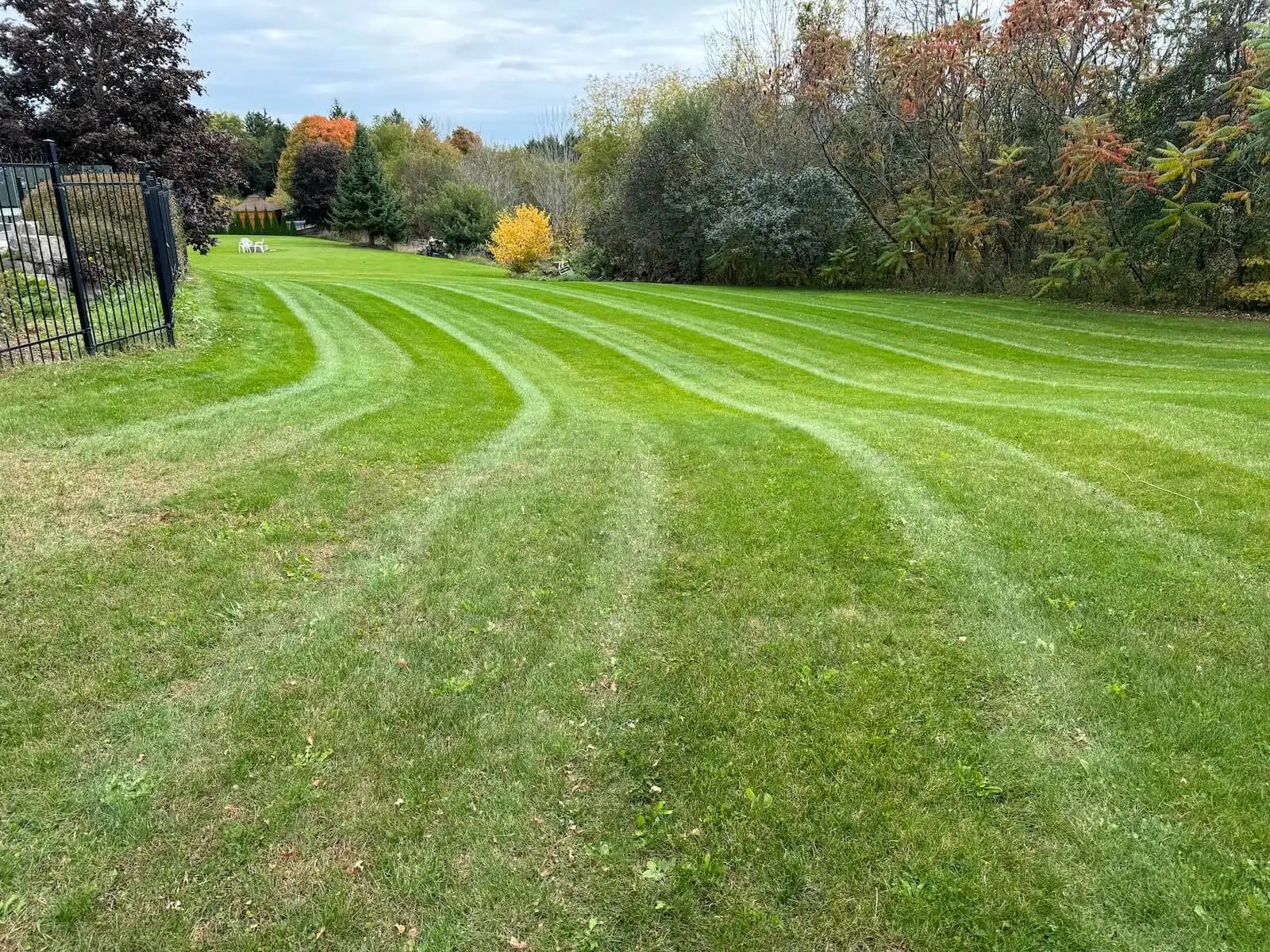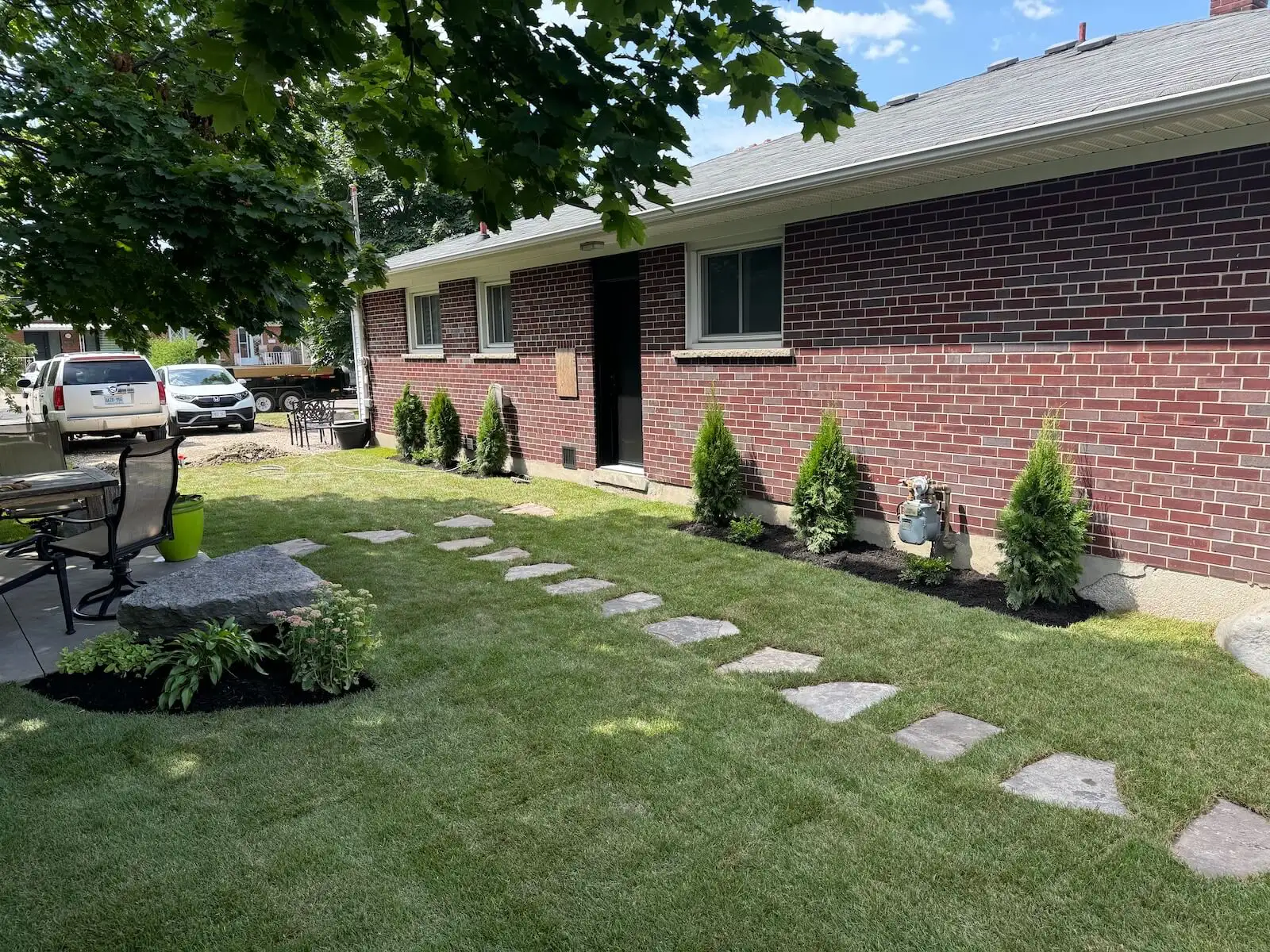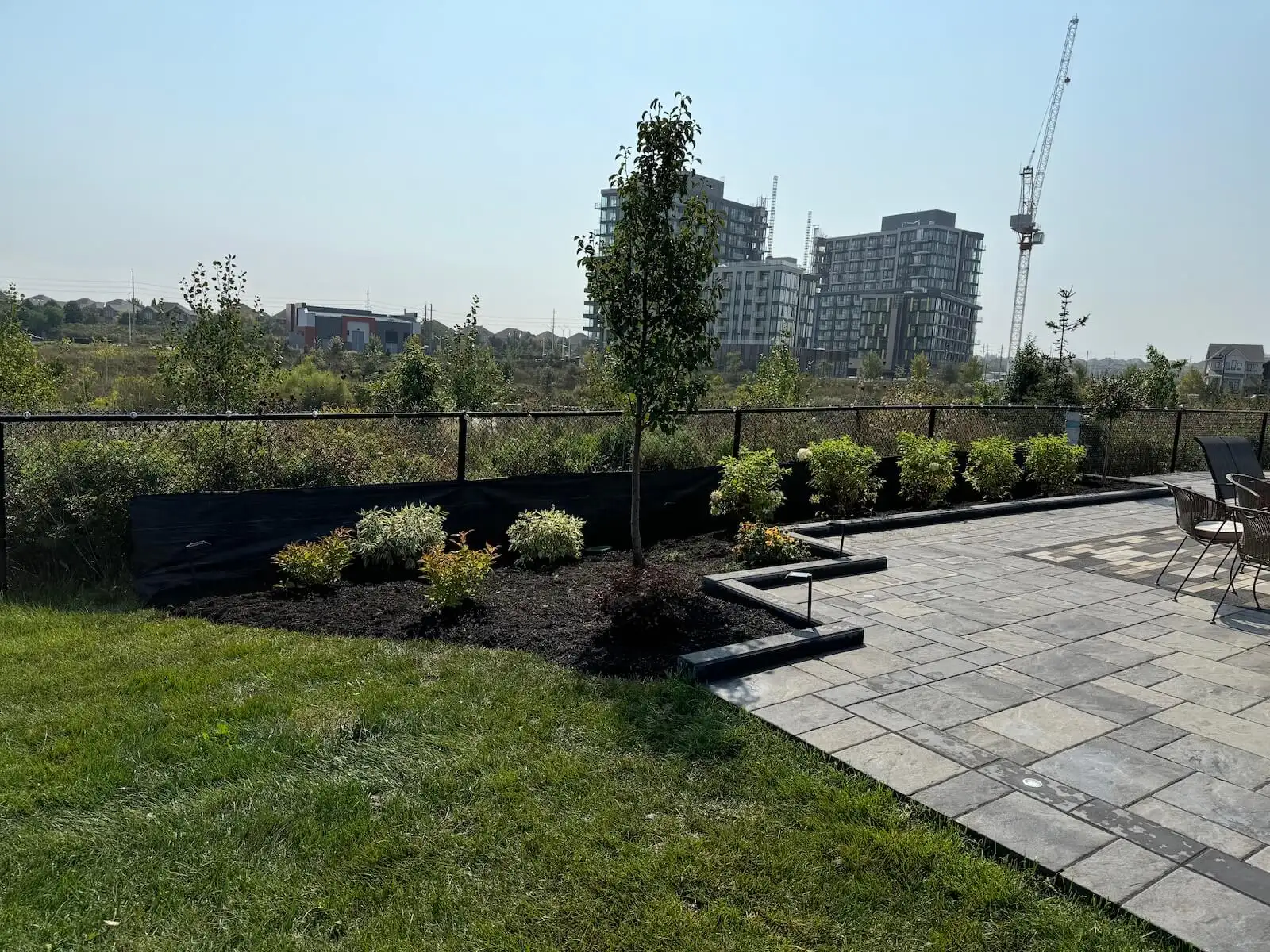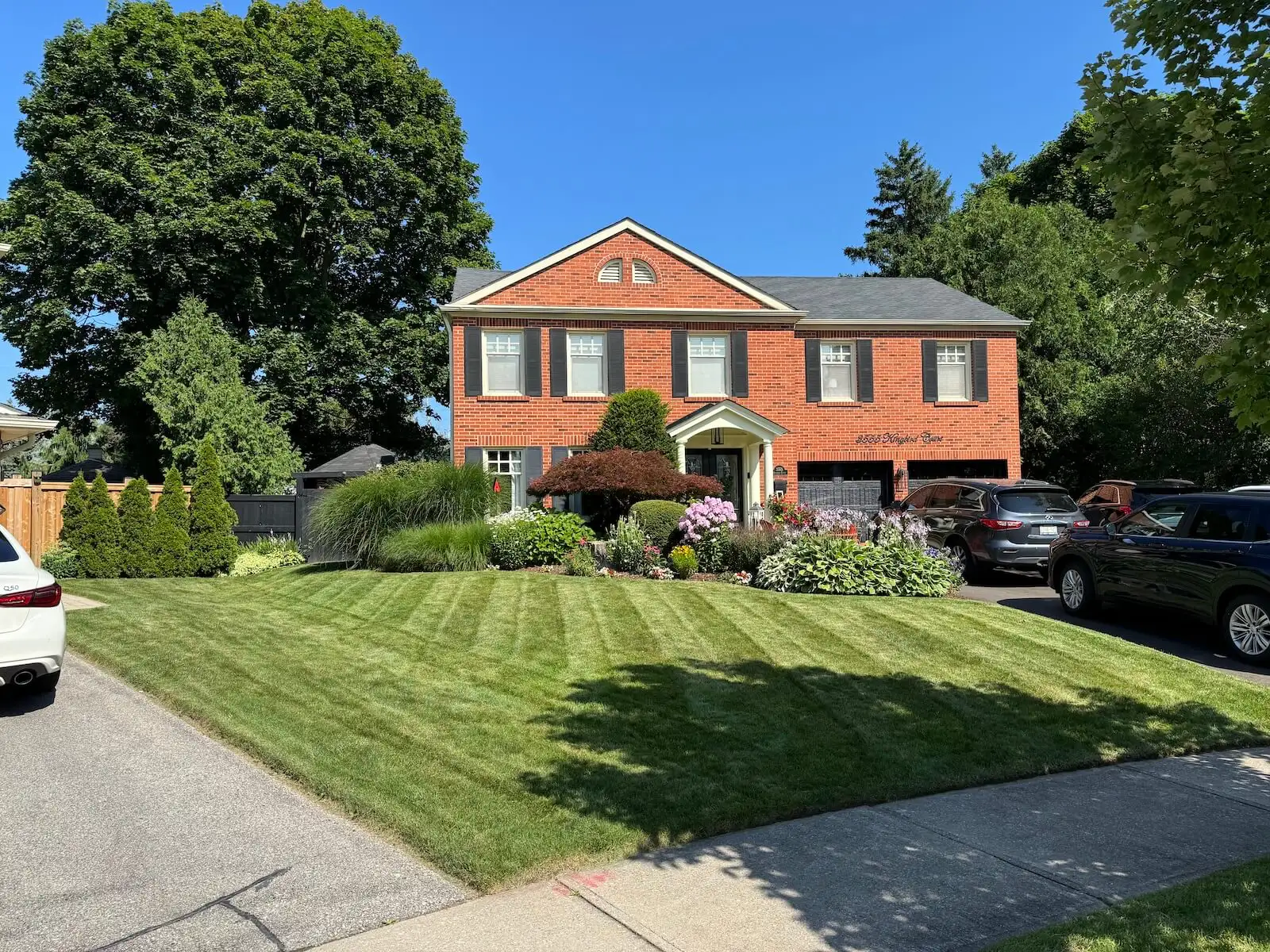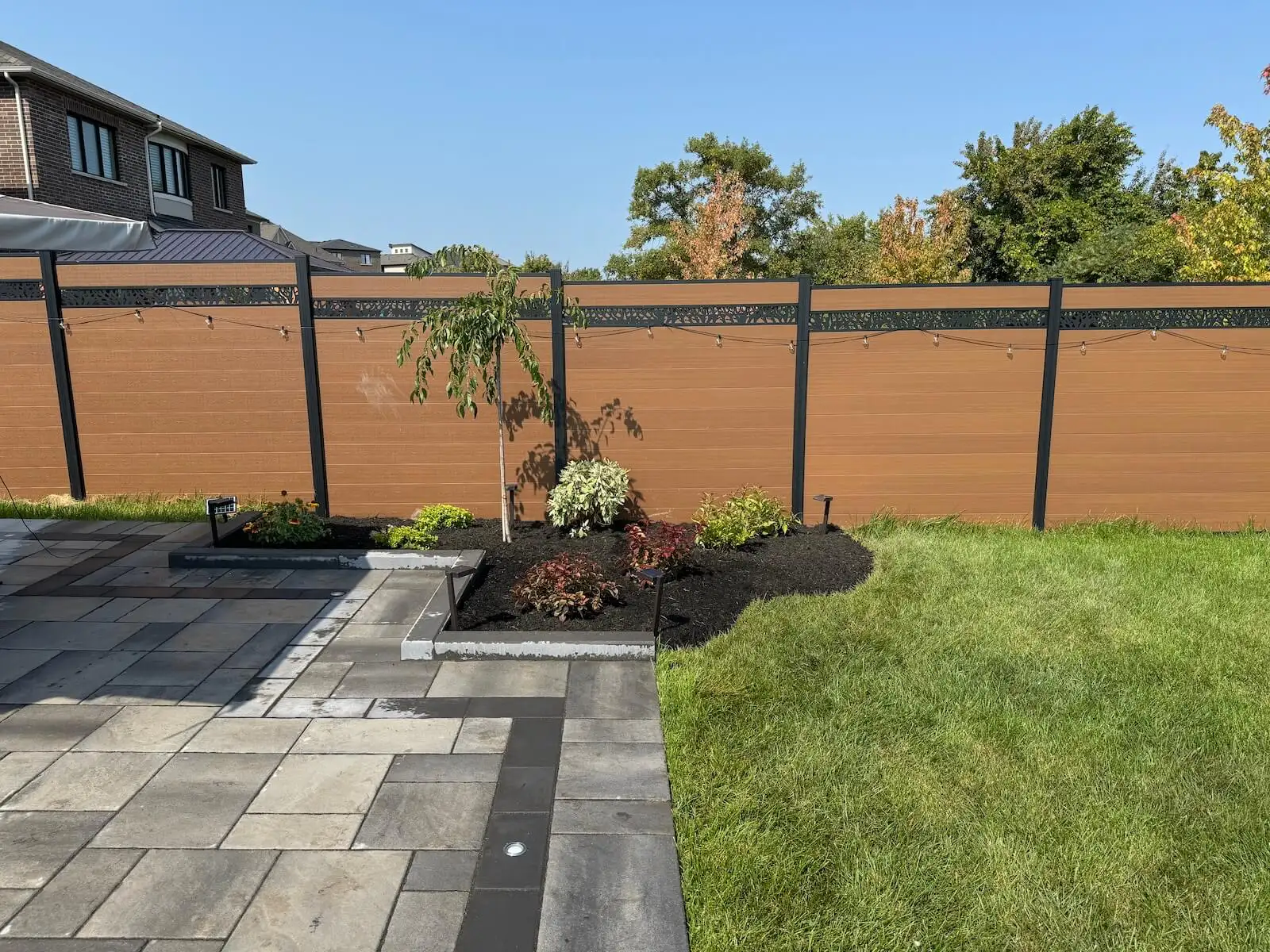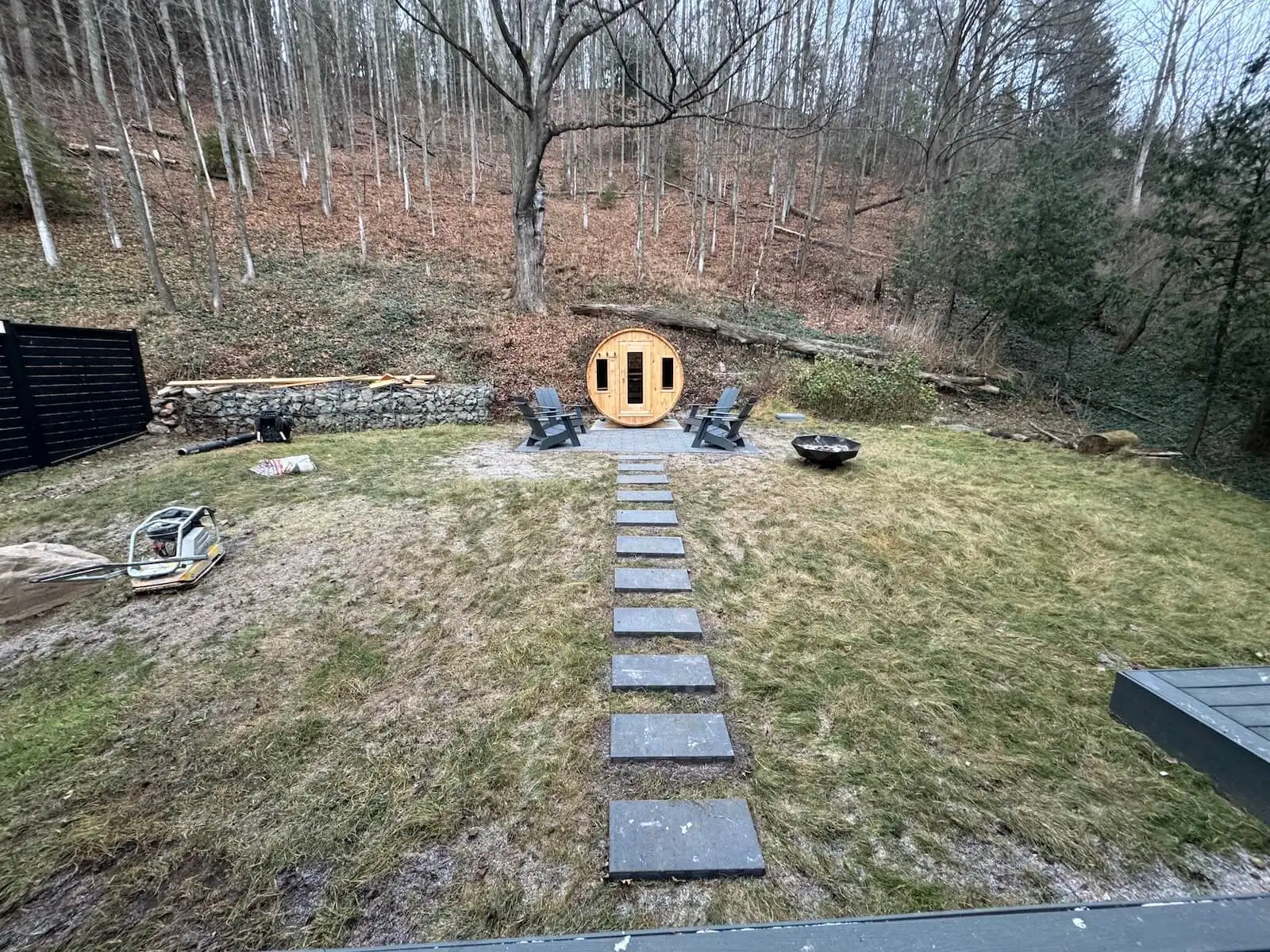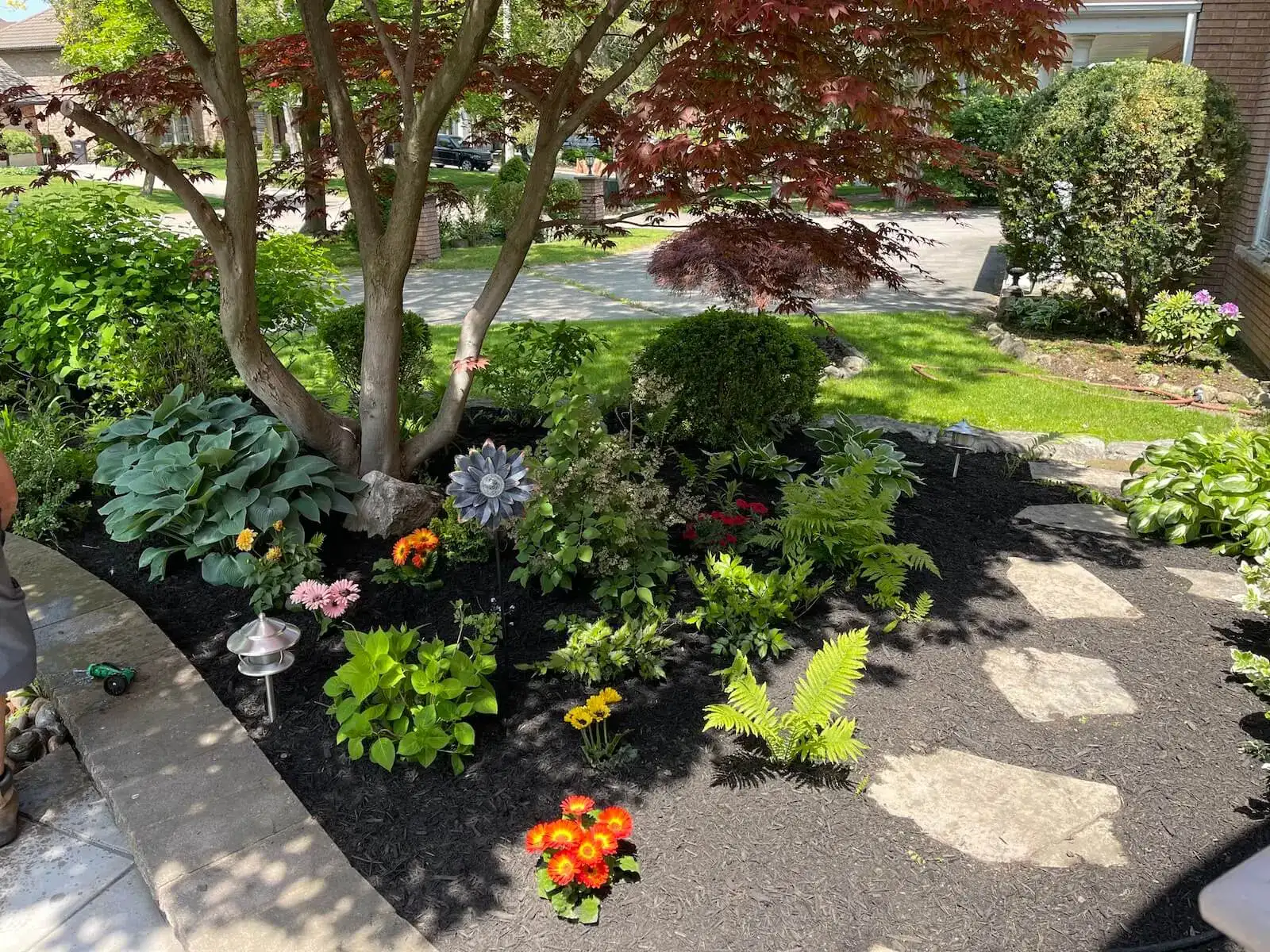









The best water feature ideas for front yard spaces are not always the best backyard choice. Front yards sell curb appeal. Backyards carry sound, privacy, and day-to-day use.
If you are choosing between front and back, start with function before style. A front-yard fountain works best when you want a visible focal point from the street, a stronger entry sequence, and a feature that reads well from a distance. A backyard fountain makes more sense when you want relaxation, sound masking near seating, and closer day-to-day enjoyment. In the GTA, freeze-thaw exposure should influence that choice just as much as looks, because Ontario winters can punish the wrong basin, stone, or plumbing detail.
Front Yard vs Backyard Water Features: How to Choose the Right One First
| Priority | Front yard water feature | Backyard water feature |
|---|---|---|
| Main purpose | Curb appeal and entry focus | Relaxation and entertaining |
| Best sound level | Quiet to moderate | Moderate to stronger masking sound |
| Best visibility | Street, front walk, entry door | Patio, deck, pool, indoor sightlines |
| Privacy need | Low | Higher |
| Safer family option | Usually pondless or shallow | Pondless is often easiest |
| Winter exposure concern | High, especially near walks and road salt | High, but often easier to shield |
| Best fit | Formal entries, compact front gardens | Patios, lounges, pool areas |
A front-yard feature is usually the better call when architecture and approach matter more than linger time. Symmetry, clean sightlines, and restrained sound tend to work best here, because the feature has to support the house rather than overpower it. A modern front yard water fountain often succeeds with one simple basin, a narrow rill, or paired urns placed on the entry axis.
A backyard feature is usually the stronger option when you want the water to change how the space feels. Sound can soften traffic noise or nearby conversation, and the feature can anchor a patio, pergola, pool edge, or dining area. Most water fountain backyard ideas work better when they are visible from the main seating zone and at least one indoor room, because that gives you value even when the weather is cool.
Low maintenance usually points homeowners toward pondless systems, sealed reservoirs, and simple recirculating features. Open ponds, fish systems, and heavily planted basins can look beautiful, but they ask for more cleaning, more seasonal attention, and more safety planning around children and pets. That is one reason many family yards in Toronto and Markham lean toward bubbling boulders, spillway bowls, and wall fountains instead of exposed ponds.
GTA climate should narrow your shortlist early. Materials, splash patterns, wind exposure, leaf drop, and winter shutdown all affect how the feature ages. A feature that looks good in a warm-climate inspiration photo may fail quickly here if trapped water freezes inside a bowl, coping joint, or plumbing line.
20 Water Feature Ideas for Front Yards and Backyard Fountains
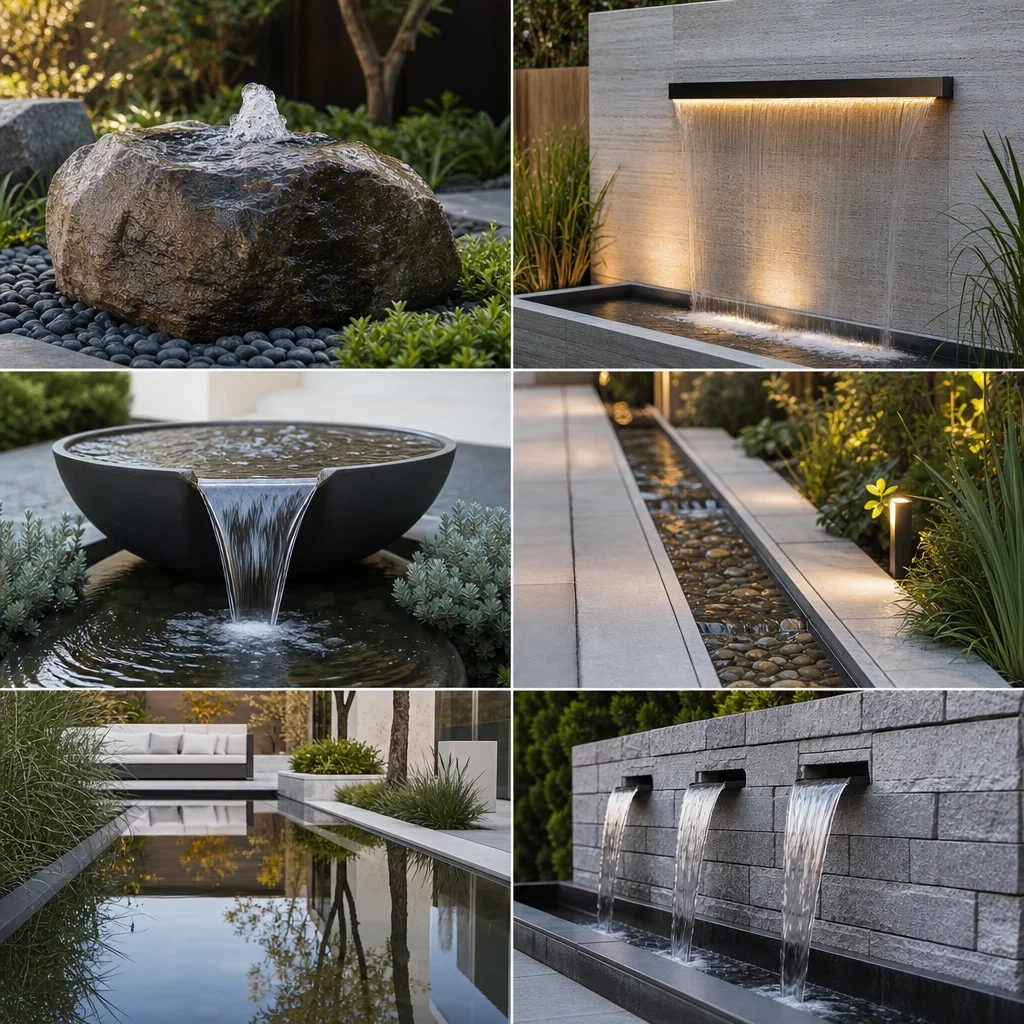
- Pondless bubbling boulders are one of the most flexible outdoor water feature ideas for front yard and backyard use. They suit modern, rustic, and naturalistic landscapes, work well in small footprints, and hide the reservoir below grade for easier safety and cleaner lines. Maintenance is usually lower than a pond because there is less open water and less debris collection.
- Wall fountains are strong small-space performers because they build vertically instead of wide. They fit courtyards, side yards, and compact patios, and they can suit classic, Mediterranean, or contemporary homes depending on the cladding and spout detail. A self-contained wall unit can be simple, while a custom masonry wall fountain becomes a permanent architectural feature.
- Tiered fountains suit traditional and formal landscapes best. They belong in front courtyards, circular drives, and grand backyard terraces where symmetry matters more than naturalism. They create a recognizable luxury focal point, but they also need careful winterization and splash control in Ontario.
- A narrow rill or linear channel works best with contemporary architecture. This is one of the cleanest water feature ideas for front yard layouts with straight walks, geometric planting, and crisp stone detailing. It reads as elegant from the street, but it needs precise grading, overflow planning, and disciplined construction.
- Reflecting basins create visual calm more than sound. They suit modern, minimalist, and Japanese-inspired landscapes where still water and sky reflection are the point. They are best in controlled settings with clean lines and enough room to appreciate the surface, not in cluttered small entries.
- Spillway bowls are popular because they mix sculpture and motion. They work in front entries, backyard lounges, and pool-adjacent layouts, and they can be used singly or in grouped compositions. Their sound depends on drop height and water volume, so they can range from a soft trickle to a more assertive statement.
- Scupper walls fit modern homes and outdoor living zones. Water can sheet from metal or stone spouts into a narrow basin, often beside seating or as part of a retaining feature. This is one of the better water fountain outdoor options when you want sound without a large visual footprint.
- Rock waterfalls feel natural and can help larger yards transition between grades. They suit rustic, woodland, and cottage-style gardens more than formal urban properties. They need careful stone placement and drainage planning, because random-looking rockwork is usually the result of very deliberate construction.
- Bird-friendly bubblers attract wildlife better than deep formal fountains. A shallow, moving surface is easier for birds to use, and the lower water volume is often safer in family landscapes. Hygiene still matters, so these work best where debris can be removed easily and splash will not stain nearby paving.
- Entry urn fountains are compact and versatile. They can suit classic, Mediterranean, transitional, or even modern homes depending on the vessel shape and plinth detail. For a compact front entry, one strong urn often looks cleaner than several unrelated ornaments.
- Courtyard fountains belong in enclosed or semi-enclosed outdoor rooms. These are usually best for backyards or protected front courts where the feature can be seen up close and heard at a moderate level. They pair well with stone paving, formal planting, and architectural lighting.
- Pedestal or compact basin fountains are some of the easiest small water feature ideas for front yard spaces. They suit narrow garden beds, townhouse entries, and modest forecourts where scale has to stay disciplined. They are decorative, but the right pedestal can still act as a proper focal point.
- A rain-chain-to-stone-basin feature turns runoff into an intentional design moment. It suits rustic, Japanese-inspired, and transitional gardens, especially near entry alcoves or side courts. It is more of a seasonal accent than a full fountain, but it can be beautifully integrated with drainage design.
- Small formal basins work well where you want order and symmetry. They fit front entries with straight walks, clipped evergreens, and a balanced façade. They are not always the lowest-maintenance option, but they can deliver sharp curb appeal when proportioned correctly.
- Ornamental ponds and koi ponds create the richest habitat and planting opportunities. They suit larger backyards where owners accept more maintenance, more filtration needs, and more safety planning. In compact family yards, pondless systems are often the smarter trade-off.
- Stream-style watercourses work best on larger sites with grade change. They suit naturalistic backyards, woodland gardens, and properties where the water can appear to move through the landscape instead of sitting in one spot. They are immersive, but they also require more space and more technical coordination.
- Water walls beside seating create a strong sensory backdrop. They work especially well in contemporary patios where vertical surfaces already exist. This is one of the best backyard fountain ideas for masking neighbour noise without filling the yard with a bulky basin.
- Retaining-wall spillways combine structure and water in one build. They are useful on sloped sites where a grade-control wall already belongs in the design. Instead of adding a fountain as an afterthought, the wall itself becomes the feature.
- Poolside sheer descents fit modern backyards and high-end entertaining spaces. They create clean lines, strong reflections, and controlled sound near water. They also require careful electrical, plumbing, and splash planning, especially around adjacent finishes.
- Fire-and-water combinations make the strongest statement in larger luxury landscapes. They suit modern and resort-style backyards more than modest front gardens. The effect is dramatic, but this category usually belongs to a custom design-build project, not a casual add-on.
Best Front Yard Water Feature Ideas for Curb Appeal
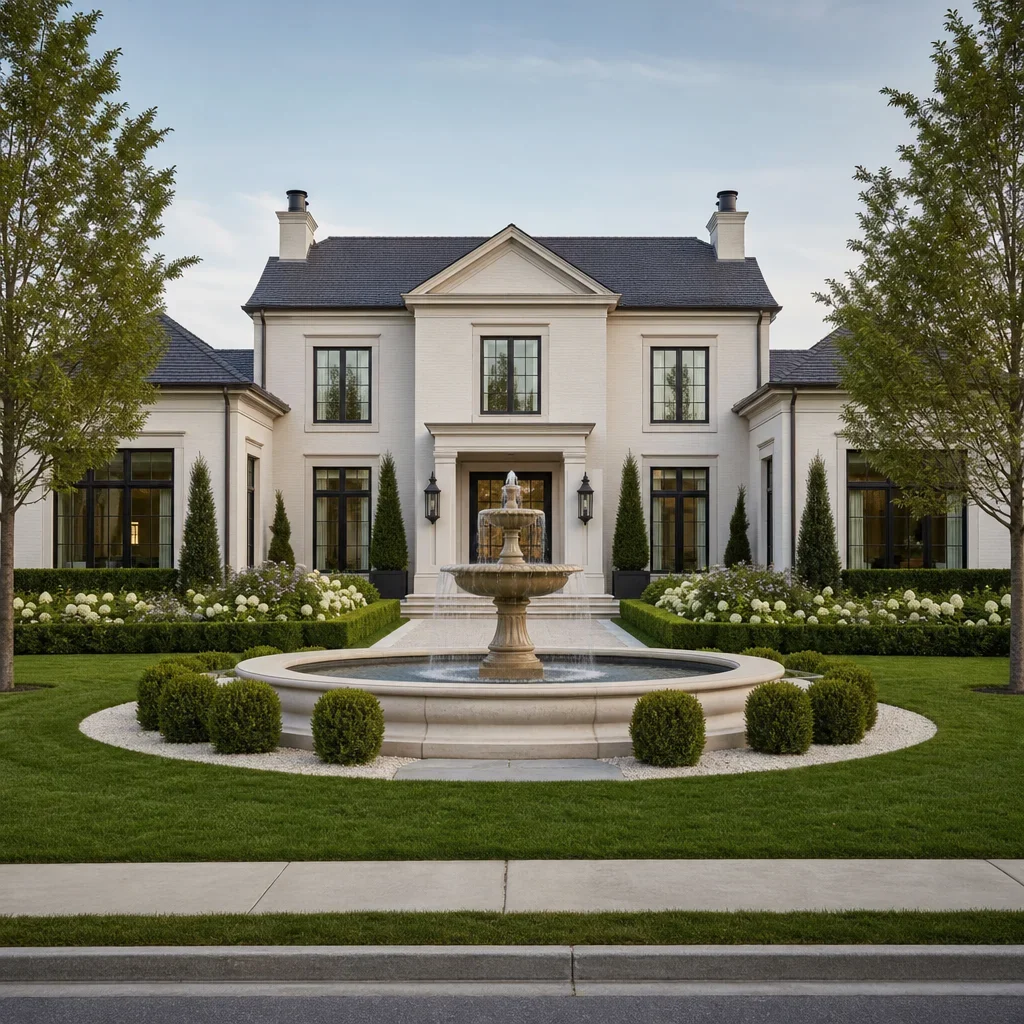
A water fountain can be excellent in front of a house when scale, visibility, and splash are handled properly. The feature should support the entry sequence, stay legible from the street, and avoid overspray onto sidewalks, steps, or the façade. That is why many of the best water feature ideas for front yard projects are simpler than homeowners first expect.
Grand entrances usually suit a central basin, paired symmetrical features, or a formal courtyard fountain. These work best when the house has enough width, setback, and architectural presence to carry the composition. Large outdoor water fountains can look spectacular here, but only when the surrounding hardscape, planting, and sightlines are equally strong.
Compact entries usually need smaller moves. A single urn fountain, a slim side-entry wall fountain, or a basinless bubbler near the walk can add sound and texture without crowding the approach. Small water feature ideas for front yard spaces usually work best when they are visible from one main angle rather than trying to impress from every direction.
Modern homes tend to suit restrained forms. A modern front yard water fountain often uses dark stone, smooth concrete, metal scuppers, or a low linear basin with minimal ornament. Clean geometry usually ages better than trendy decorative pieces, especially in climates with salt, snow, and repeated freeze-thaw cycling.
Night lighting matters because many front-yard features are seen most often after work. A well-lit basin edge, spout, or bubbling stone can extend curb appeal without adding visual clutter in the day. The goal is legibility, not glare, especially near the front door and walkway.
Best Backyard Fountain Ideas for Relaxation, Privacy, and Entertaining
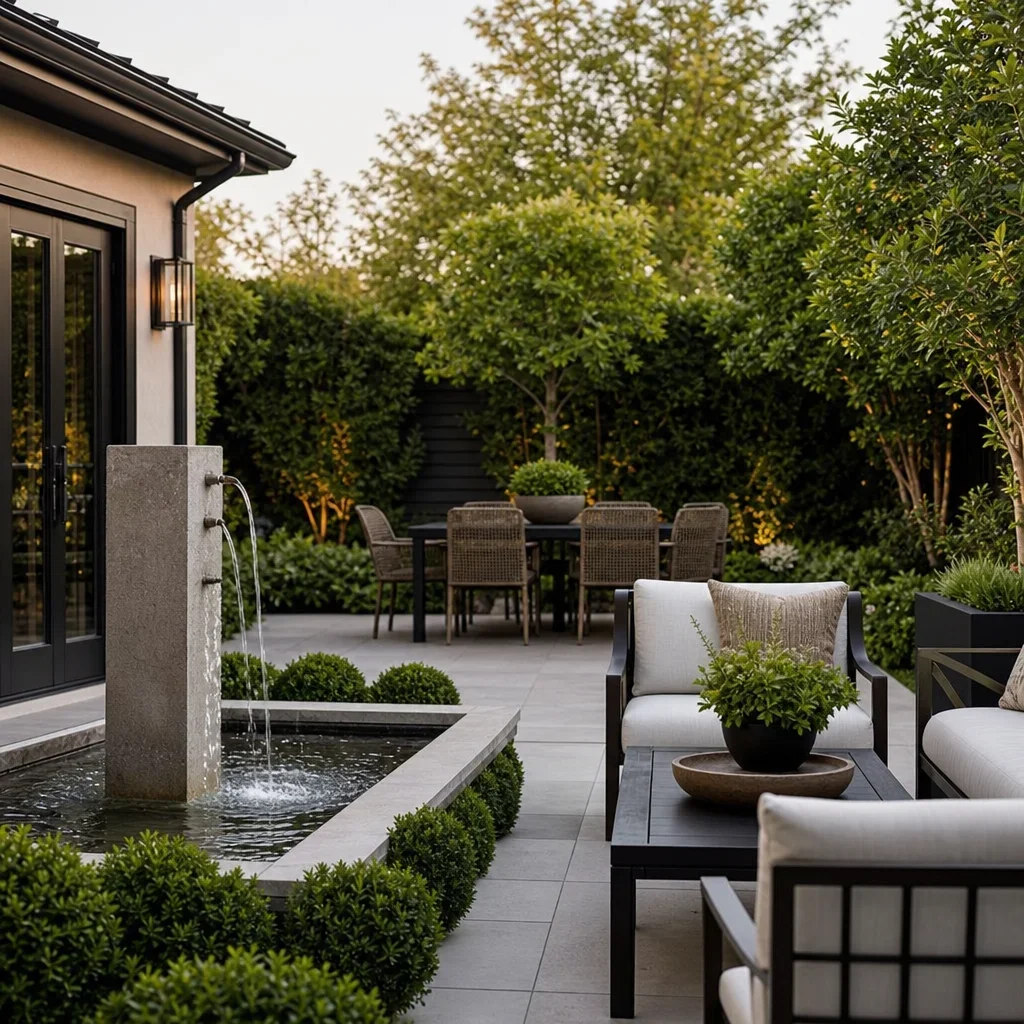
Backyard fountains work best when they are placed for use, not just for looks. The right spot is usually visible from the main seating area, clear of furniture splash, away from heavy leaf drop, and accessible for pump service and cleaning. That is what turns a feature into part of daily living instead of background decoration.
Pondless waterfalls are one of the easiest backyard water feature options for a family yard. They create a natural sound, hide the reservoir below grade, and reduce standing-water concerns compared with a full pond. For many homeowners asking what is an easy backyard water feature, this is one of the strongest answers.
Water walls and scupper features fit contemporary patios well. They can sit behind a dining area, beside a lounge zone, or near a spa where a vertical surface already exists. Stronger drops create more masking sound, while shorter sheets and smaller spill points keep conversation easier.
Spillway bowls, bubblers, and compact reflecting basins are better where you want a cleaner, lower-profile composition. They pair nicely with decks, pergolas, and outdoor kitchens because they do not consume the whole yard. Small backyard water feature ideas usually perform best when they are integrated with paving and planting, not parked in leftover space.
Pool-adjacent water features need extra discipline. Moisture, electrical planning, edge details, and the sound relationship between pool equipment and the fountain all matter here. A feature near a pool should feel intentional, not like a second water element competing for attention.
Small-Space Water Feature Ideas That Actually Fit Patios, Courtyards, and Compact Yards
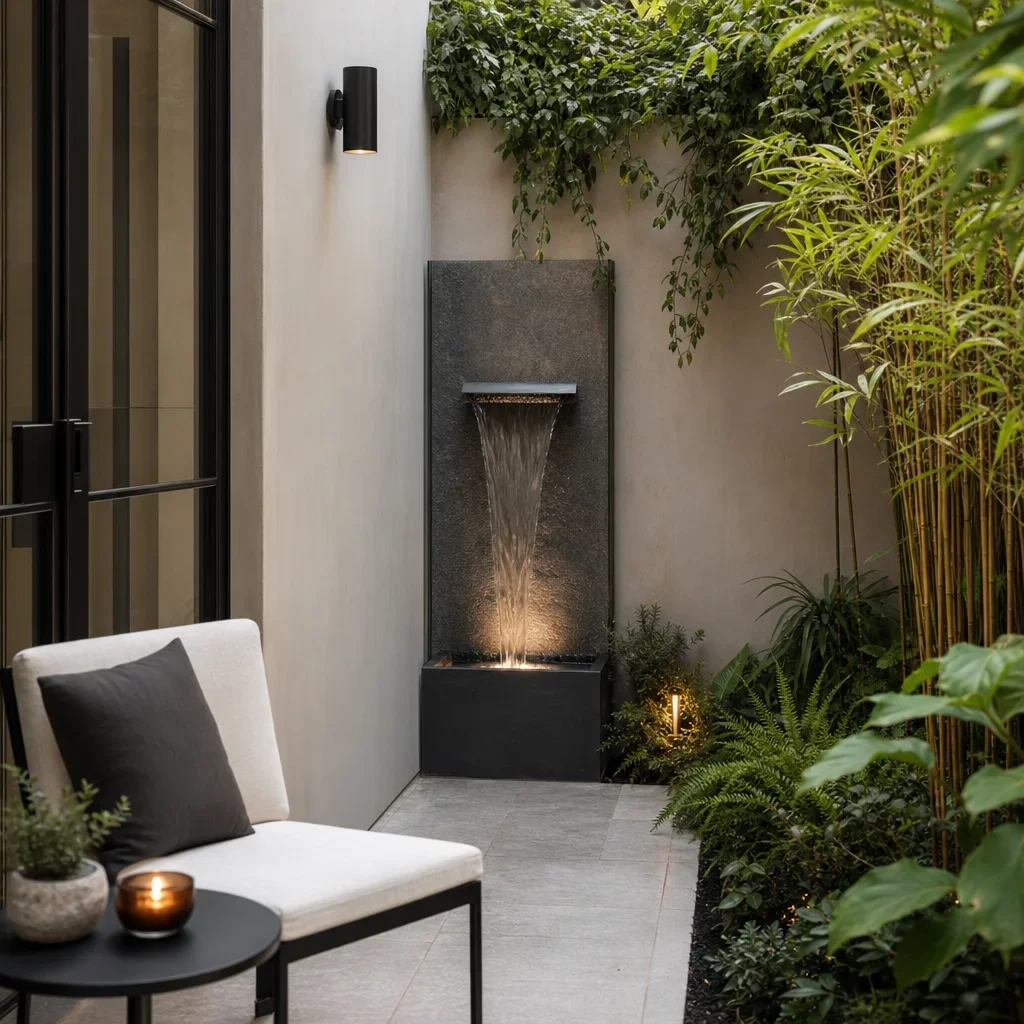
Small spaces usually do better with vertical or basinless features than with wide open-water layouts. That keeps circulation clear, reduces clutter, and lets one strong element carry the design. Water feature ideas for small spaces should solve for proportion first and style second.
Slim wall fountains are ideal in narrow side yards and urban courtyards. They use very little floor area, create a contained sound, and can be detailed to match modern, classic, or Mediterranean homes. In dense GTA neighbourhoods, that vertical approach is often more practical than a wide basin near lot lines.
Corner bubblers and basinless stones are strong choices where there is no room for a formal centrepiece. They can tuck into planting beds, patio corners, or compact front entries without blocking movement. These are some of the most reliable small backyard water feature ideas because they ask less of the site.
Integrated seat-wall spillways let one construction element do two jobs. A low wall can define a patio edge and carry a clean water spill into a hidden basin. This is one of the smarter simple outdoor water fountain design ideas for modern compact yards where every square foot has to work.
Sound needs more control in tight spaces because hard surfaces can amplify it. A bubbler or soft spill usually feels better in a small courtyard than a tall drop with multiple loud spill points. In design terms, quiet water often makes a compact yard feel larger than aggressive water does.
How to Choose the Right Size, Style, and Sound Level
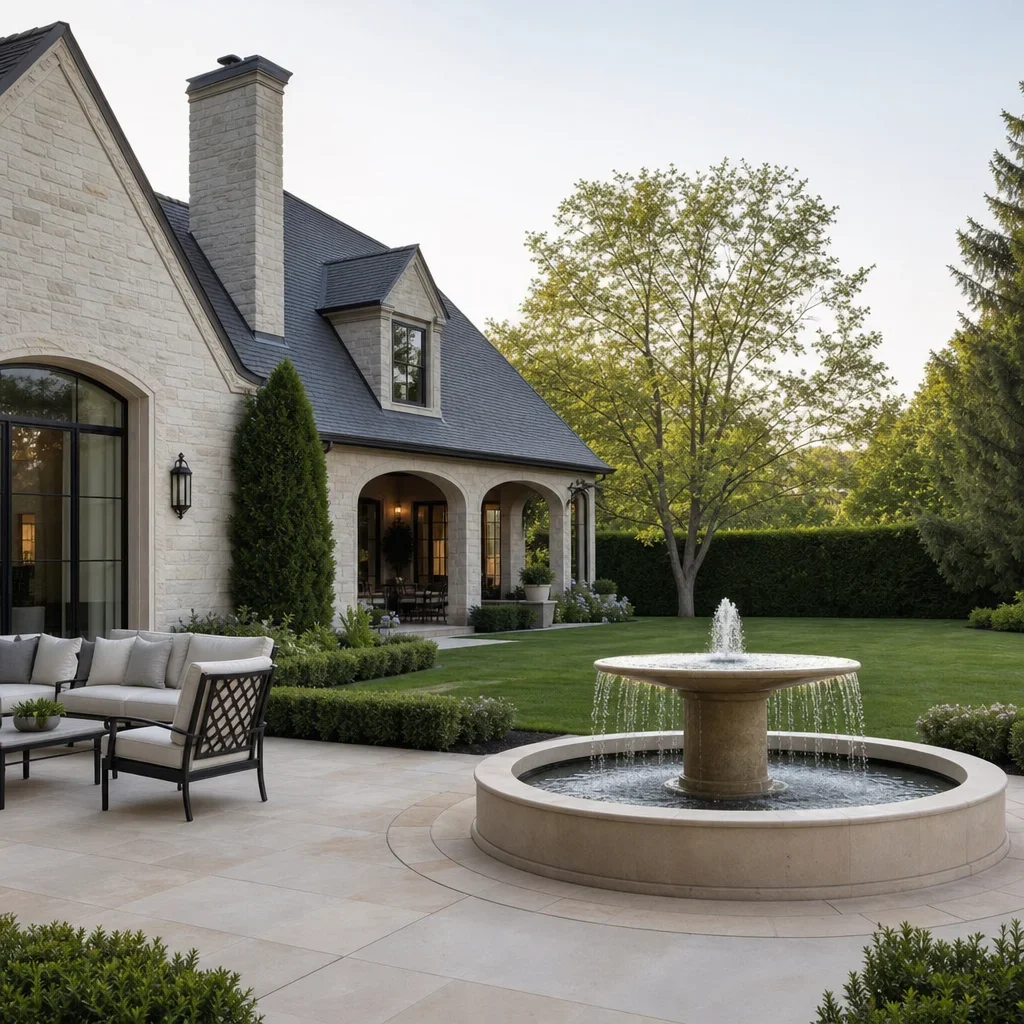
The right size is the one that fits the architecture and the viewing distance at the same time. A fountain can be physically small but visually strong if it sits on axis with the front walk, or physically large but underwhelming if it is buried in planting. That is why garden fountain design pictures can inspire, but they cannot size a feature for your lot.
Modern architecture usually pairs best with linear basins, scuppers, smooth vessels, and restrained detailing. Traditional homes usually support tiered fountains, urns, and formal basins more naturally. Rustic and woodland landscapes lean toward boulders, streams, and rock falls, while Japanese-inspired gardens usually benefit from simpler basins and quieter water movement.
Sound should be chosen like lighting. A quiet trickle suits front entries, meditation corners, and smaller courts. A moderate masking sound works near patios and lounges. A strong statement sound fits larger backyards where the feature needs to soften traffic or neighbour noise over a wider area.
Multiple spill points and larger drops are usually louder than bubblers and still basins. That is the practical difference between acoustic scale and visual scale. A low, broad sheet of water may look substantial while sounding calmer than a narrow high drop.
One well-scaled feature almost always beats several smaller unrelated pieces. Too many decorative items dilute the focal point and make the landscape feel busy. If you want the fountain to read as design rather than décor, give it enough clear space around it.
Placement Rules: Sun or Shade, Direction, Sightlines, and Distance from Living Areas
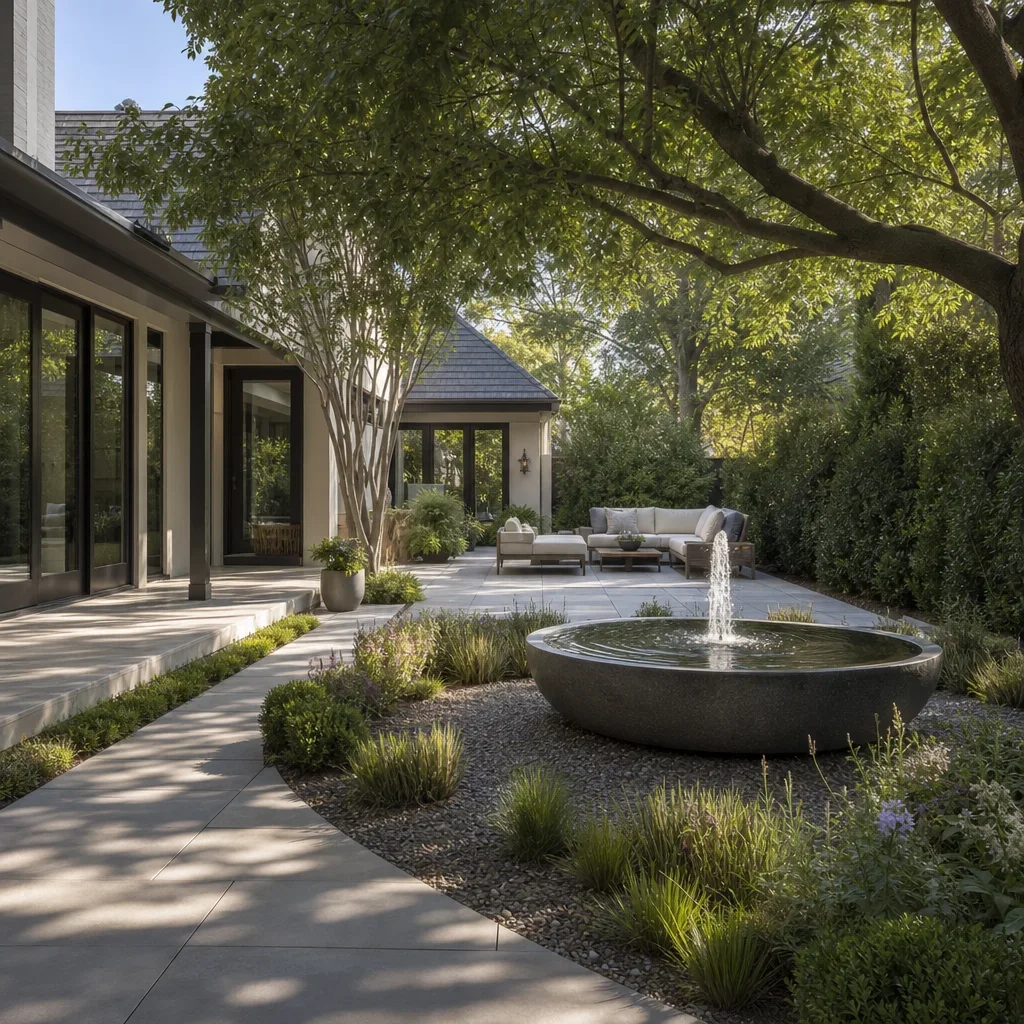
Partial shade is usually easier on water quality than full sun. Less direct sun can help limit heat and algae pressure, while full deep shade may increase debris and limit the kinds of plants that work nearby. Should a water fountain be in the sun or shade is really a maintenance question first, and partial shade often gives the easiest balance.
Direction should follow sightlines, not superstition. In the front yard, the best orientation is usually toward the street view, the front walk, and the door approach. In the backyard, the feature should face the main seating zone and ideally be visible from interior rooms as well.
Tree litter is one of the most common placement problems. Needles, leaves, blossoms, and seed pods increase cleaning and can clog intakes or stain surfaces. A fountain placed under a heavy deciduous canopy may look romantic in photos, but it usually creates a maintenance cycle owners get tired of quickly.
Splash and overspray should be planned around doors, windows, stone joints, wood surfaces, and walking routes. Wind can move fine spray farther than homeowners expect, especially in exposed front yards. Good placement keeps the experience pleasant without turning nearby paving into a slip zone.
Access matters because pumps, basins, autofill parts, and lighting connections eventually need service. If a feature is hard to reach without moving furniture or stepping through dense planting, maintenance becomes more expensive and less consistent. That is one of the quiet reasons simple layouts tend to age better.
Low-Maintenance Water Features: Best Options for Busy Homeowners
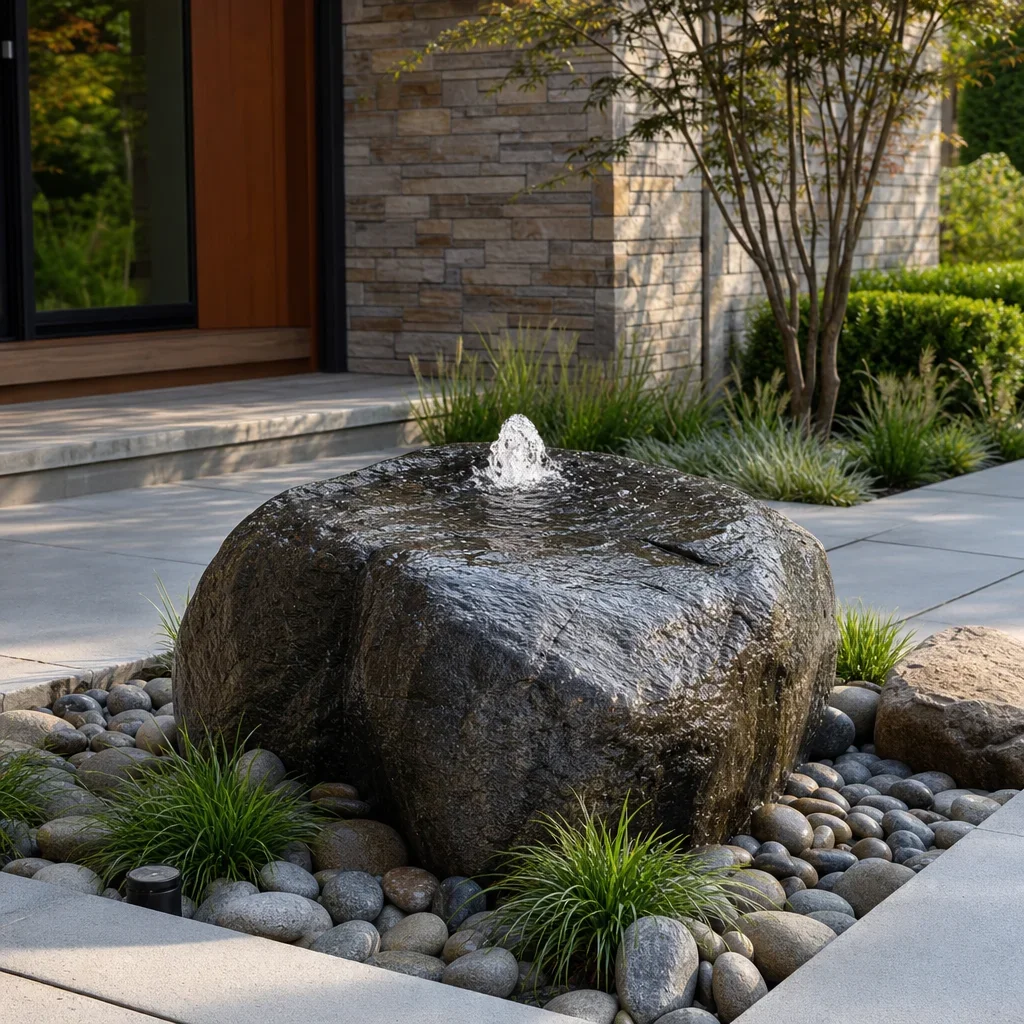
Pondless systems are usually the lowest-maintenance permanent option. The water recirculates into a hidden reservoir, there is less open surface to collect debris, and safety is easier to manage in family yards. For many premium homeowners, that trade-off makes more sense than a decorative pond.
Basinless bubblers and bubbling boulders are easy because there is less to clean and less visible waterline to monitor. They also pair well with low-maintenance planting and modern hardscaping. This is why they appear so often in small water feature ideas for front yard and backyard designs alike.
Simple wall features can also be low maintenance when the reservoir and pump access are designed well. A recirculating wall fountain with clean lines is often easier to live with than a complex tiered piece with multiple shallow bowls. Lower maintenance is usually the result of simpler detailing, not just smaller size.
Open ponds, fish systems, and heavily planted water gardens usually require more filtration, more debris removal, and more seasonal attention. They are not bad choices, but they are active landscape elements rather than passive ones. Busy households should decide honestly how much upkeep they want before they fall in love with a picture.
Maintenance depends on placement as much as product. A low-maintenance fountain under a maple tree can become high maintenance fast, while a more complex feature in a clean, sheltered area can stay manageable. Good design reduces the work before the pump is ever switched on.
Common Problems With Outdoor Water Fountains and How to Prevent Them
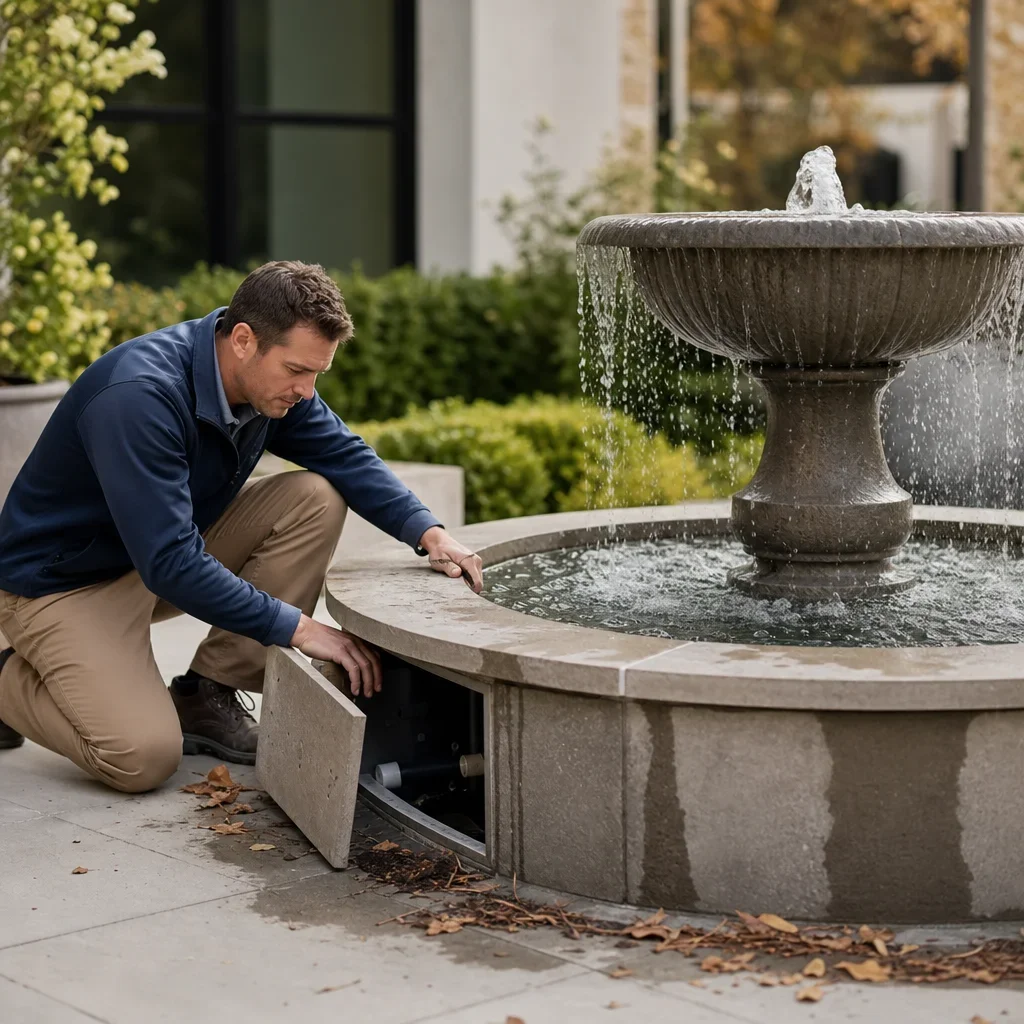
The most common outdoor fountain problems are algae, cloudy water, evaporation, splashing, pump noise, clogs, uneven water level, mineral buildup, leaks, mosquitoes, and winter cracking. Most of those issues come from placement, water chemistry, debris, poor installation details, or skipped seasonal care rather than from the concept of a fountain itself.
Cloudy or green water usually points to sun exposure, debris load, or missed cleaning. The first things to check are how much direct sun the feature gets, whether leaves are collecting in the basin, and whether the pump intake needs cleaning. Cleaner siting usually prevents more trouble than stronger chemicals do.
A noisy pump often means low water, trapped air, clogging, or vibration against the basin or housing. Refilling to the proper operating level, cleaning intakes, and checking mounting pads are basic first steps. If the unit sounds harsh instead of smooth, something usually needs attention before the pump wears faster.
Excess splash usually comes from poor level, too much flow, or wind exposure. Water should land where the basin can reliably catch it under normal conditions, not just on a still day. Persistent splash causes refill problems, stains adjacent stone, and creates slip risk on nearby paving.
Winter cracking is one of the biggest Ontario-specific failures. Water trapped in bowls, basins, plumbing lines, or porous materials expands when it freezes and can split components apart. Proper shutdown, drainage, and material choice prevent a large share of the damage we see after hard winters in the GTA.
One of the biggest installation challenges is balancing beauty with drainage, electrical planning, and maintenance access. A fountain is not just an object. It is water movement, overflow management, power, structure, and service space working together over time.
Common fountain garden mistakes include putting the feature under messy trees, choosing the wrong scale, ignoring drainage, skipping winterization, and building a DIY layout with no access to the pump. Those mistakes cost more than the original feature style ever saves.
Keeping Fountain Water Clear and Clean
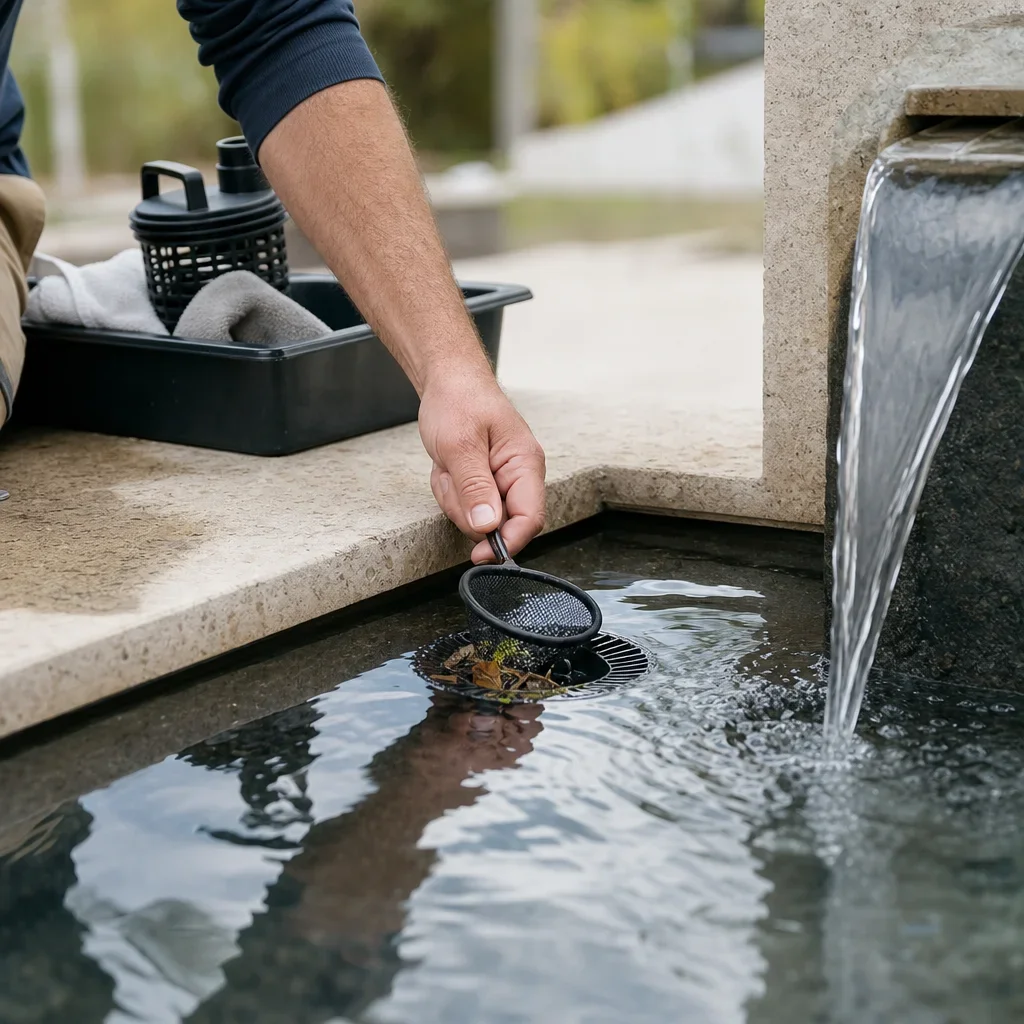
Clear water starts with debris control and routine cleaning. Skim leaves, clean the pump intake, top up fresh water as needed, and reduce direct sun where possible. Most clarity problems get worse when owners wait too long between simple maintenance tasks.
Use only fountain-safe treatments that are approved for your material and pump system. Natural stone, cast stone, concrete, and metal can all react differently to cleaners, and pump warranties may depend on compatible products. Manufacturer instructions should lead here, not guesswork.
Vinegar can be useful for cleaning mineral deposits during maintenance, but it is not a blanket in-system treatment. It should be used only when the material and pump components allow it, and it should be rinsed properly afterward. For routine care, always verify compatibility first.
Household bleach or Clorox should not be treated as standard fountain care. Unless the manufacturer explicitly allows it, random chemical dosing can damage finishes, harm pump parts, and create avoidable safety issues around pets and planting. That is why we tell homeowners to avoid improvised chemistry.
Fresh water, shade management, and regular cleaning are safer long-term strategies than strong household chemicals. If staining, odour, or persistent algae keeps returning, the better fix is usually to review sun exposure, splash loss, debris load, and circulation rather than to pour in harsher products.
Solar, DIY, and Budget Options: What Works and What Usually Falls Short
Solar power can work for small decorative fountains with strong direct sun, but it is less reliable in shade, cloud, and shoulder seasons. That makes it better for light-duty features than for a permanent architectural water element in a premium landscape. In southern Ontario, seasonal daylight variation is a real performance factor.
DIY water feature ideas for front yard spaces make the most sense when the unit is lightweight, self-contained, and not tied to trenching, permanent electrical, structural bases, or drainage changes. A simple bowl bubbler, container fountain, or small recirculating urn can be a reasonable project. A custom masonry wall, pondless waterfall, or retaining-wall spillway usually is not.
DIY water fountain backyard ideas tend to fail when homeowners underestimate waterproofing, level control, access, and winter shutdown. The feature may run on day one, but long-term performance usually depends on what is hidden below the finished surface. Garden fountain ideas DIY can be fun, but the bigger and more permanent the feature gets, the more professional detailing matters.
Budget should be thought of in tiers, not promises. Self-contained decorative units are the entry level. Professionally installed pondless or bubbler systems are the middle tier. Custom integrated water architecture sits at the premium end because it combines excavation, structure, electrical coordination, stonework, and finish detailing.
Water feature ideas for front yard on a budget make sense when the goal is accent, not transformation. Once the feature needs grading changes, a proper base, integrated lighting, or hardscape rebuilding, professional installation is usually smarter than patchwork upgrades later. That is especially true in freeze-thaw climates where poor detailing shows up quickly.
Materials, Winterization, and GTA Climate: What Holds Up in Ontario
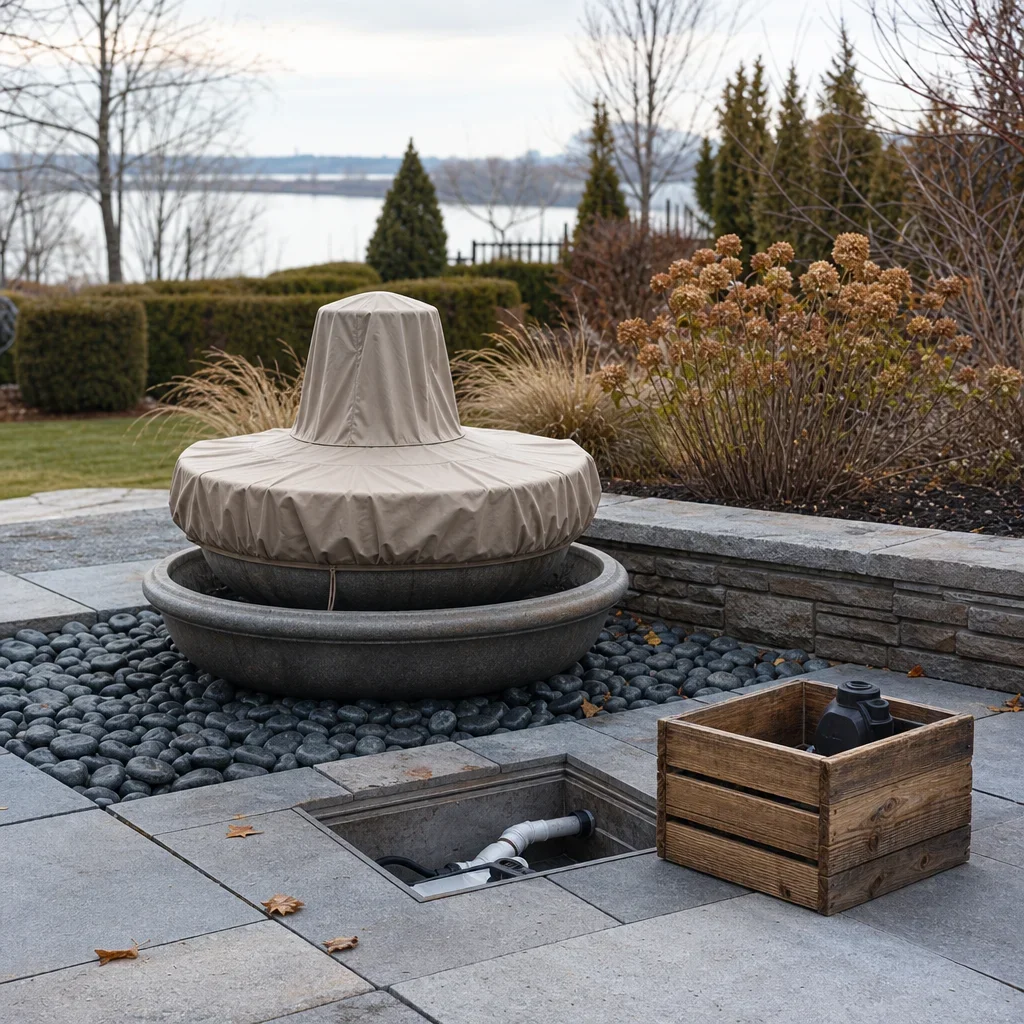
Not every outdoor fountain should run year-round in Ontario. Many systems need seasonal shutdown before sustained freeze conditions, because trapped water can crack bowls, basins, joints, and lines. Should you leave an outdoor fountain running all the time is usually answered with no for GTA winters unless the system was specifically engineered for cold-weather operation and maintained accordingly.
Freeze-thaw cycles are hard on porous materials and poorly detailed joints. Natural stone, cast stone, concrete, and metal all behave differently, but none of them benefit from standing water freezing inside hidden cavities or connection points. Material selection and drainage detailing matter as much as appearance.
Winterization usually means shutting off power as appropriate, draining or clearing water from vulnerable areas, protecting pumps, and making sure bowls or basins do not hold water that can freeze and expand. Some components may need to be removed or covered depending on the manufacturer guidance. The exact process depends on the feature type and how it was built.
Road salt, plow splash, and winter wind make exposed front-yard conditions tougher than many homeowners expect. A fountain near a front walk or drive has to handle not just cold, but also snow-management realities. That is why climate-proof detailing should be part of the design from the start, not an afterthought.
For GTA landscapes, the most durable water features are usually the ones designed as part of the full hardscape and drainage plan. RockLeaf builds outdoor spaces for Zone 5 to 6 conditions and backs qualifying projects with a 5-year total warranty and a 14-day start promise. Conditions apply for project scope and timing.
Safety, Drainage, Electrical, and Permit Considerations
Pondless and shallow-profile features are often the safest options around children and pets. They reduce open-water depth, simplify edge conditions, and make supervision easier. Safety still depends on slip resistance, stable coping, and secure access to pumps and electrical components.
Drainage planning is not optional because every water feature can overspray, overflow, or lose water during storms and wind. Runoff paths, nearby pavers, wood surfaces, and grading all need review before the feature is built. A beautiful fountain that sends water toward the house or across a walkway was not designed properly.
Permanent exterior electrical work should be handled by qualified professionals. Pumps, lighting, controls, and any trenching need to be planned with the broader landscape, especially near pools, spas, or retaining walls. This is one area where a custom feature stops being décor and becomes construction.
Permit needs depend on scope rather than on the word fountain alone. Some projects may intersect with grading, retaining walls, pool work, electrical changes, or other site alterations that trigger municipal review. In Toronto, Markham, and across the GTA, that is worth checking at the design stage rather than after excavation starts.
Water source and refill planning should be decided early. A feature that loses water naturally through splash and evaporation still needs a convenient maintenance routine, and hidden access is always better than dragging hoses across finished spaces. Good installation makes upkeep practical, not awkward.
How Water Features Pair With Plants, Stonework, Pools, and Outdoor Living
A fountain works best when it is part of a landscape composition, not a stand-alone ornament. Stonework, planting, lighting, and circulation should all support the same focal point. That is what makes a water element feel intentional and expensive rather than added on later.
In front yards, fountains pair well with entry walks, steps, symmetrical planting, and low evergreen structure. Ornamental grasses can soften harder edges, while clipped forms keep formal basins looking disciplined. The water feature should connect visually to the path of arrival.
In backyards, water combines naturally with patios, pergolas, privacy screens, lounge areas, and fire features. A spillway wall behind seating, a bubbler beside a path, or a poolside water line can all help organize the space. The most successful water fountain backyard ideas usually tie into at least one other hardscape element.
Natural stone and interlocking around fountains need slip-aware detailing and stain-aware material choices. Splash zones should be anticipated, not discovered after the first week of operation. This is one reason integrated design-build work tends to outperform pieced-together installs.
Wildlife-friendly concepts can work when the goal is a softer garden experience. Shallow bubbling basins are usually better for birds than deep formal bowls, but maintenance and water quality still matter. Attracting wildlife should not come at the cost of stagnant water or messy placement.
If you are trying to visualize several options at once, 3D design helps more than scrolling garden fountain design pictures online. It lets you compare scale, material, and sightlines in the context of your actual house and lot. That is where premium landscapes start to get the details right.
When to Hire a Pro for a Water Feature
Professional help is usually the right move when the feature is permanent, integrated with stonework, near a pool, tied to a retaining wall, or dependent on trenching, grading, or electrical coordination. Those projects fail expensively when the hidden technical work is treated casually. A custom fountain is construction first and decoration second.
Design-build coordination matters because water features touch several systems at once. Structure, waterproofing, drainage, circulation, access, planting, lighting, and winter shutdown all need to work as one package. That is hard to achieve when multiple trades are improvising around each other.
Transparent line-by-line pricing is valuable here because the cost lives in the details. Excavation, basin construction, waterproofing, stonework, pump equipment, electrical, and finish materials all affect the budget differently. Clear scopes protect homeowners from underbuilt quotes that look good only on paper.
For homeowners who want a permanent, winter-ready water feature integrated into a full landscape, professional design also helps avoid the usual mistakes in scale and placement. RockLeaf offers a free 3D design and quote for qualifying projects, with conditions apply. That kind of process is most useful when the fountain is part of a broader front-yard, backyard, pool, or hardscape plan.
FAQ
Is a water fountain good in front of a house?
Yes, if it fits the architecture, does not overpower the entry, and controls splash near walks and the façade. Front-yard fountains work best when they are visible from the street and aligned with the arrival sequence.
Where should I put my water fountain in my backyard?
Place it where it is visible from the main seating area and at least one indoor room, away from heavy leaf drop and furniture splash, with clear access for service. Good backyard placement balances sound, sightlines, and maintenance.
Should you leave an outdoor fountain running all the time?
Not as a blanket rule. In Ontario, many outdoor fountains should be shut down and winterized before sustained freezing weather unless the system was specifically designed for cold-weather operation.
Should a water fountain be in the sun or shade?
Partial shade is usually easiest for water clarity and algae control. Full sun can increase heat and algae pressure, while deep shade can increase debris and limit nearby planting options.
Which direction should a water feature face?
Face it toward the best view lines. In front yards, that usually means the street, front walk, and door. In backyards, it usually means the main seating area and important indoor views.
What is an easy backyard water feature?
A self-contained bubbler or a pondless bubbling boulder is one of the easiest options. Both are compact, relatively simple to maintain, and safer than open ponds in many family yards.
What are the common problems with outdoor water fountains?
Algae, cloudy water, evaporation, splashing, pump noise, clogs, uneven water level, mineral buildup, leaks, mosquitoes, and winter cracking are the most common issues. Most are preventable with better placement, cleaning, and seasonal care.
What can I put in my fountain to keep the water clean outdoor?
Use fresh water, remove debris regularly, clean the pump, and use only fountain-safe treatments approved by the manufacturer for your material and pump. Random household chemicals are not the safe default.
Can I put vinegar in my outdoor fountain?
Sometimes for cleaning mineral deposits during maintenance, but only if the material and pump components are compatible. It is not a universal in-system treatment.
Can I put Clorox in my outdoor fountain?
Do not treat Clorox or bleach as routine fountain care unless the manufacturer explicitly allows it. It can damage finishes, harm pump parts, and create avoidable safety issues.
Can I use solar power for a fountain?
Yes, for small decorative features in strong direct sun. Solar is less dependable for larger permanent installations or shaded sites, especially with Ontario’s changing seasonal light conditions.
How do I winterize an outdoor fountain in Ontario?
The basic steps are to shut the system down as appropriate, drain vulnerable areas, protect or remove sensitive components if recommended, and make sure no water remains trapped where it can freeze and expand. The exact process depends on the fountain type and manufacturer guidance.
A good water feature should earn its place in the layout, not just fill space. If you are still deciding between a front-yard statement and a quieter backyard retreat, start with sightlines, sound, maintenance, and winter exposure before you choose the style.