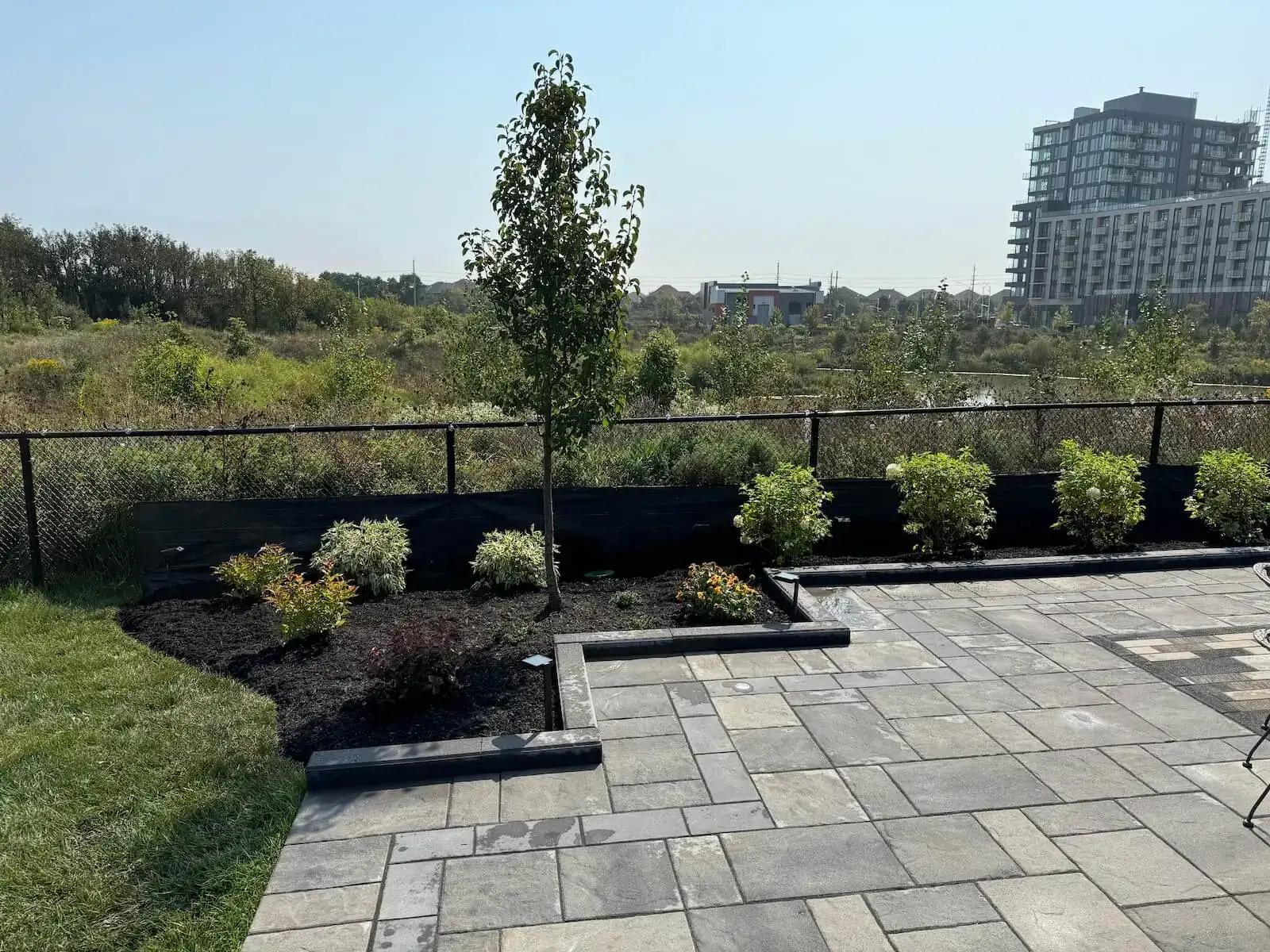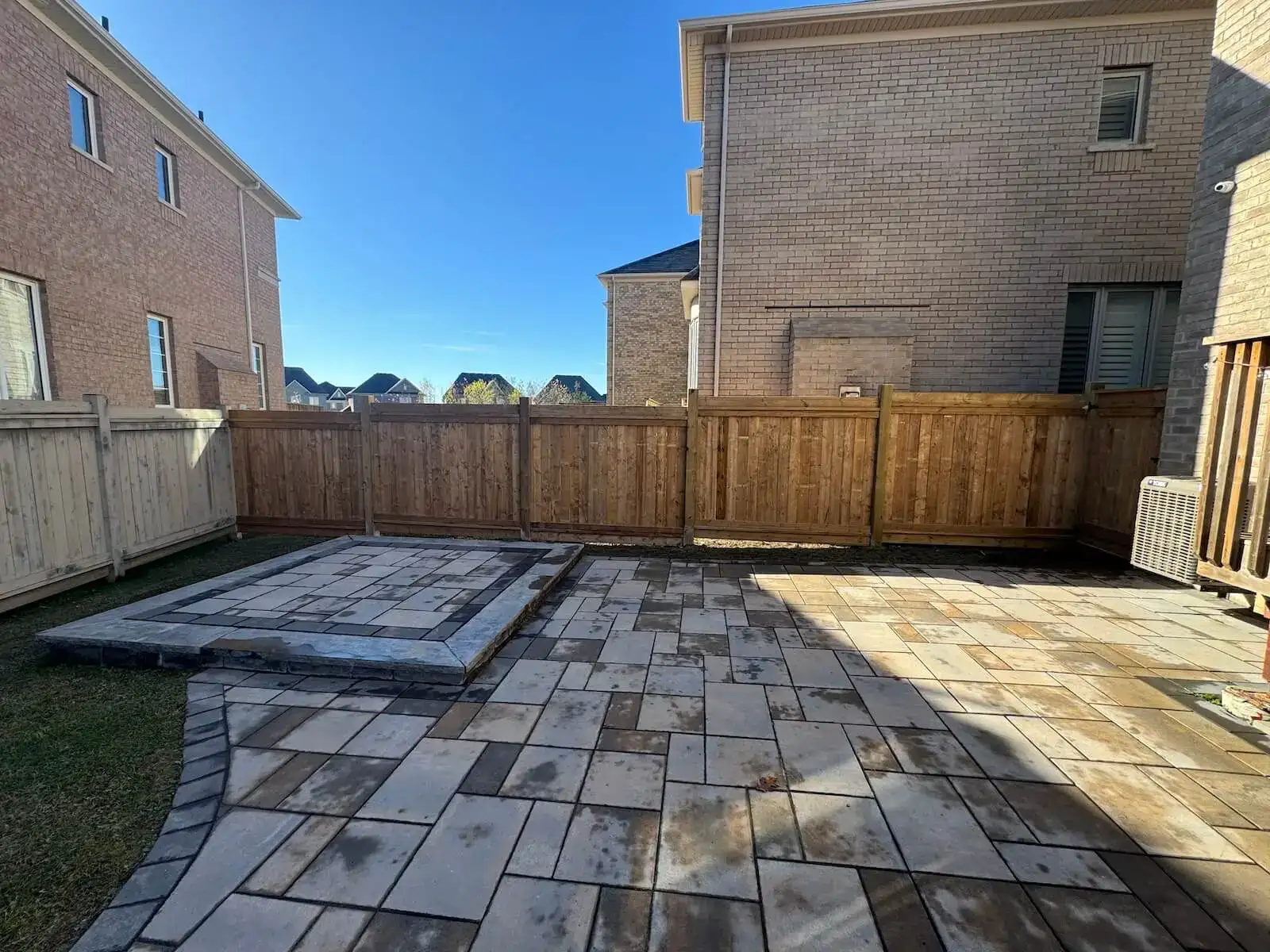









Most homeowners think a fence is just a line around the yard. They’re wrong. The best backyard garden fence ideas solve privacy, pets, sightlines, wind, and maintenance at the same time, and the wrong one can make a small yard feel tighter, cost more to maintain, or fight your grade instead of working with it.
Choose the right fence idea for your goal first
The best fence starts with the job you need it to do, not the look you saved online. A full privacy fence suits direct overlook from neighbours, hot tubs, dining areas, and utility screening, while open or semi-private fencing works better for front-to-back transitions, garden edges, and yards that already feel tight.
Privacy, pet control, child safety, decoration, and pool separation are not the same problem. Solid panels block views best, semi-privacy slats balance light and airflow, decorative borders define planting beds, and pool barriers must put safety and code first rather than style first.
A quick decision matrix saves you from picking the wrong system. For full privacy, use board-on-board, solid panel, vinyl privacy, or composite screens; for pets, use tight pickets, mesh-backed rails, or chain link with better screening; for noise, dense continuous construction helps more than open pickets; for budget, fence only priority zones first.
The best kind of fence for a backyard depends on maintenance tolerance, climate exposure, and layout. In wet or freeze-thaw conditions, low spots, splash zones, and poor drainage will shorten the life of almost any fence, so I always look at grade, irrigation spray, and snow storage before I talk style.
33 backyard garden fence ideas to copy or adapt
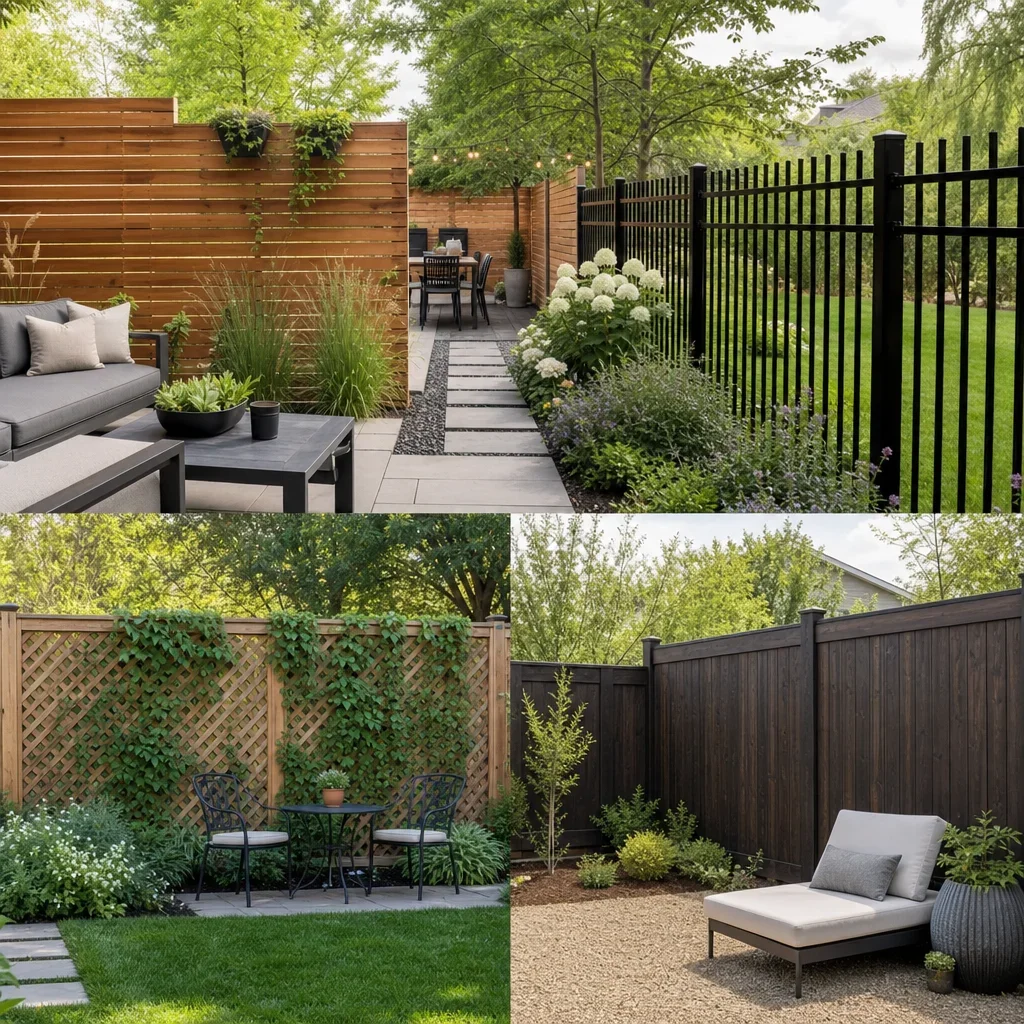
1. Horizontal cedar slat fence. Best for modern homes, patio edges, and clean-lined backyard fence design ideas. Privacy is medium to high depending on gap spacing, maintenance is medium, and it works best on flatter yards where layout lines can stay crisp.
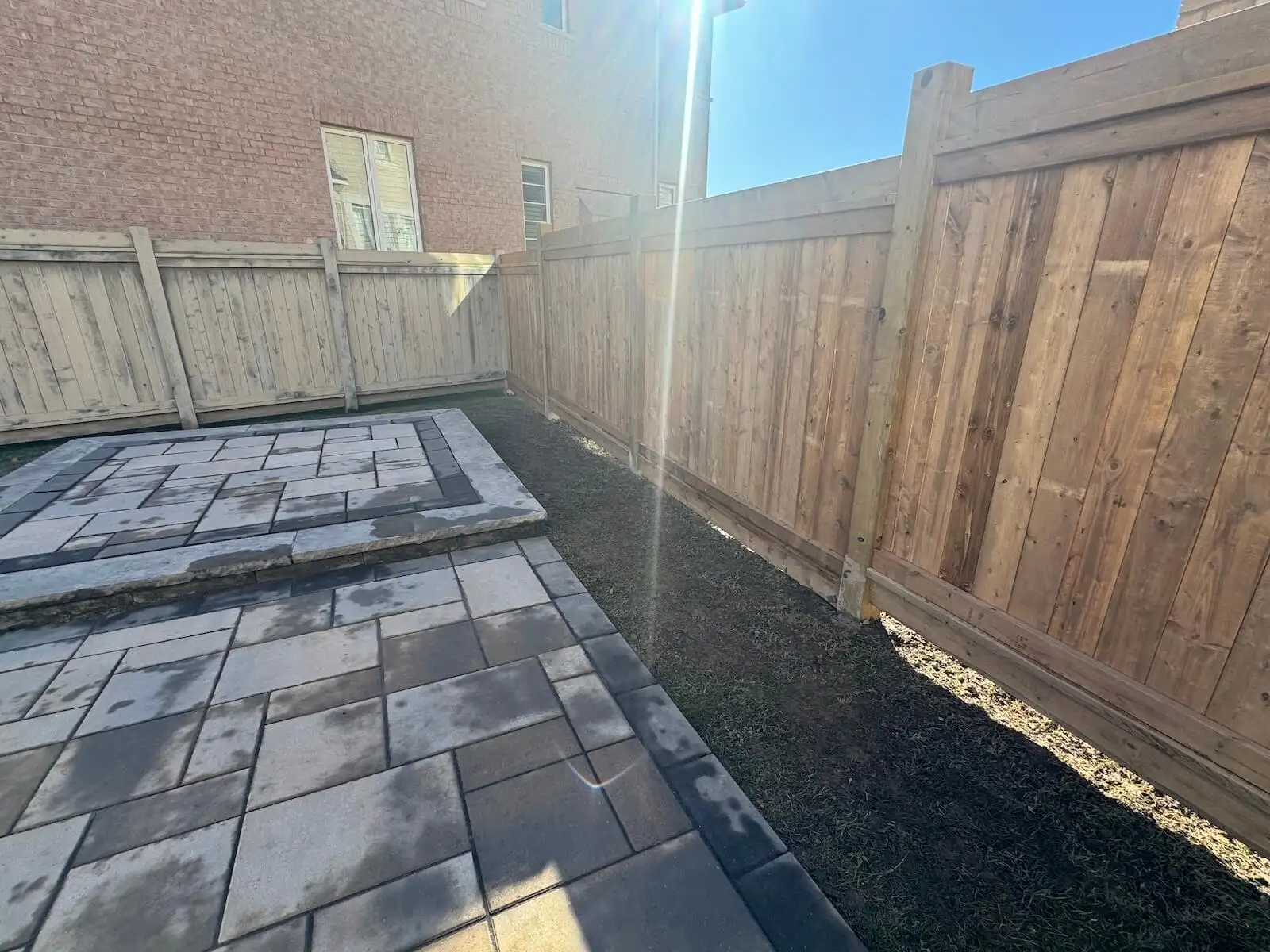
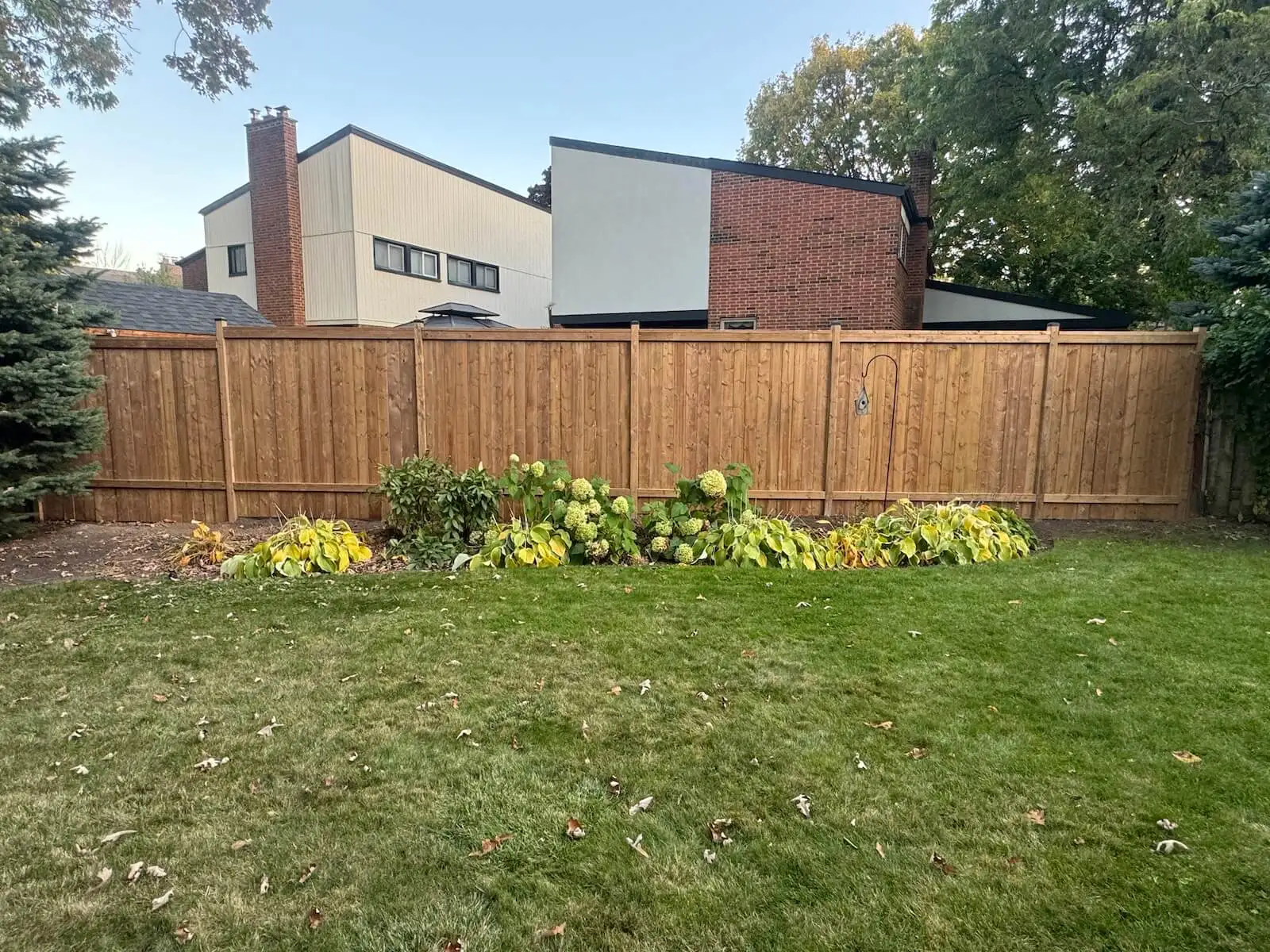
2. Board-on-board wood privacy fence. Best for full screening on shared boundaries because overlapping boards reduce direct sightlines from both sides. Privacy is high, maintenance is medium, and it suits large yards and traditional homes.
3. Shadowbox fence. Best for neighbour-friendly semi-privacy because it looks finished from both sides and lets some air move through. Privacy is medium, maintenance is medium, and it handles windy exposures better than a fully solid wall in many yards.
4. Solid vertical board privacy fence. Best for blocking direct views around seating areas, bins, and side yards. Privacy is high, maintenance is medium, and it can feel visually heavy in small backyard garden fence ideas unless you break it with planting or a topper.
5. Vinyl privacy fence. Best for homeowners who want low maintenance fence for backyard ideas with a clean, uniform finish. Privacy is high, maintenance is low, and it suits family yards where washing a surface is easier than staining it.
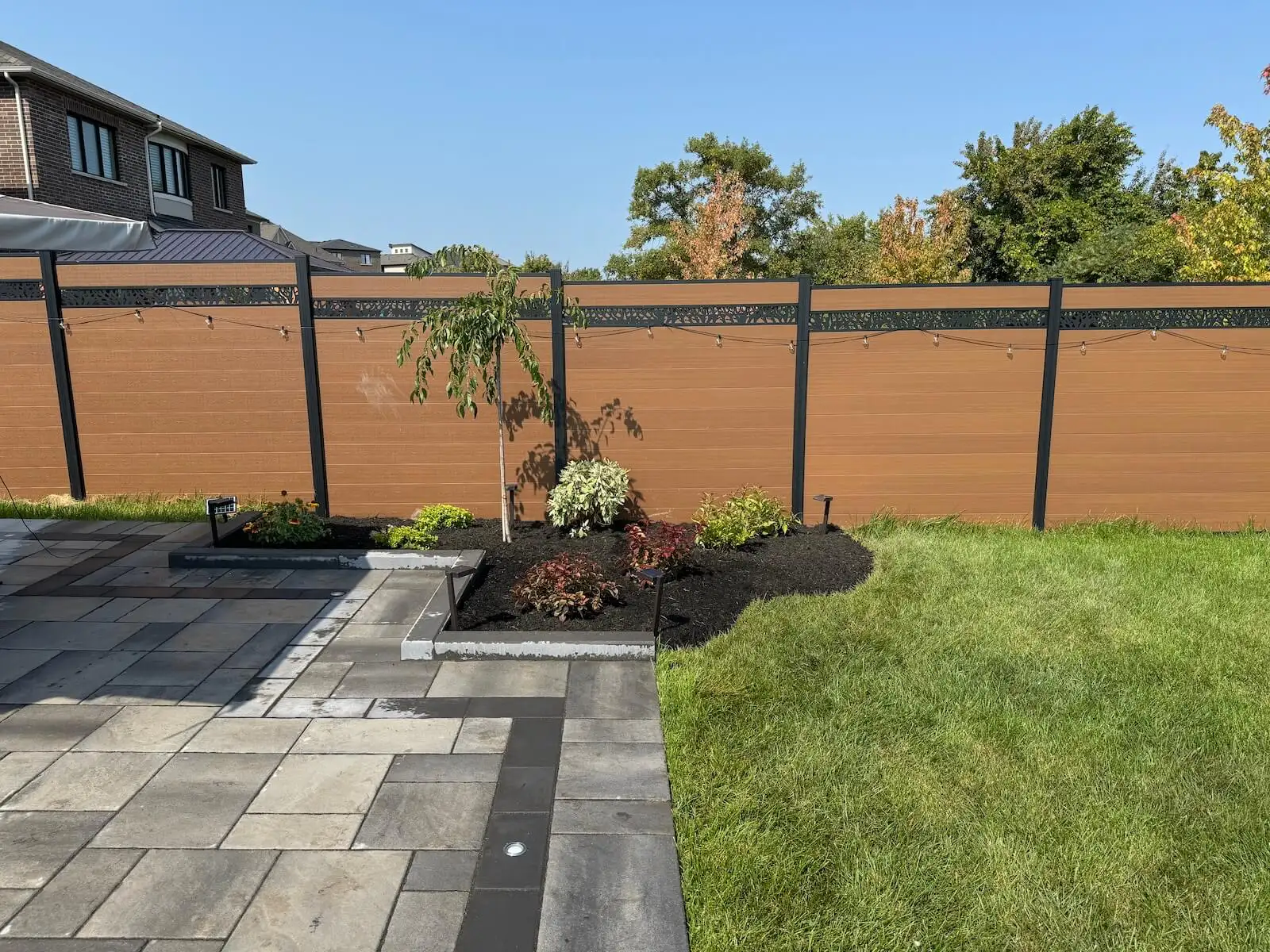
6. Composite privacy fence. Best for premium low-upkeep builds where you want a modern look without regular refinishing. Privacy is high, maintenance is low, and it pairs well with composite decks and contemporary hardscape.
7. Black aluminum picket fence. Best for pools, open views, and formal backyards where safety matters but full screening does not. Privacy is low, maintenance is low, and it works well on slopes because many systems can rack with the grade.
8. Steel or metal panel fence. Best for sharp modern lines and durable metal fence for backyard ideas. Privacy ranges from medium to high depending on perforation, maintenance is low to medium, and it suits urban yards with minimalist architecture.
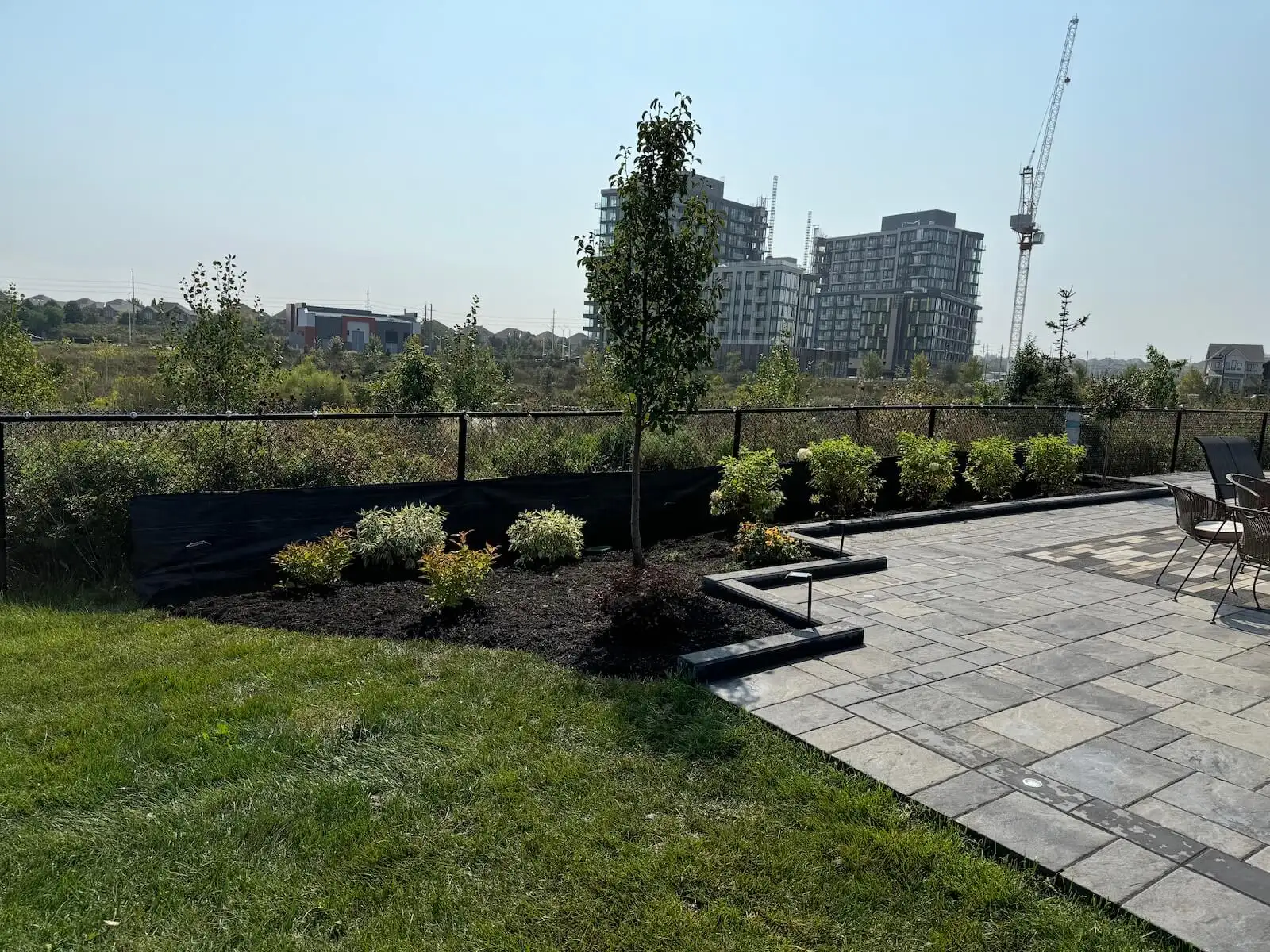
9. Chain link with privacy slats. Best for cheap fence for backyard ideas where function matters more than finish. Privacy is medium, maintenance is low, and it is practical for pet containment on larger lots.
10. Chain link softened with hedge planting. Best for fence landscaping ideas on a budget because the fence does the containment and the plants improve the view over time. Privacy starts low and improves as the hedge fills in, maintenance is medium, and it suits deep rear yards.
11. Bamboo or reed roll screening on an existing frame. Best for quick, simple backyard fence design ideas and temporary screening. Privacy is medium, maintenance is medium to high, and it fits renters or short-term upgrades better than full permanent builds.
12. Gabion wall sections. Best for modern focal zones, seating backdrops, and utility screening where you want texture and mass. Privacy is high where used, maintenance is low, and it usually works as an accent panel rather than a full perimeter.
13. Laser-cut metal screens. Best for decorative privacy near patios, hot tubs, and side-yard transitions. Privacy is medium, maintenance is low, and these read more like outdoor architecture than standard fencing.
14. Lattice panel fence. Best for garden-first yards and nice garden fence ideas that support climbers. Privacy is low to medium, maintenance is medium, and it works well around seating nooks that need softness more than complete screening.
15. Lattice-top privacy fence. Best when you want a lighter look than a solid wall. Privacy is high through the lower section and medium through the top, maintenance is medium, and the topper often adds about 12–18 inches where local rules allow it.
16. Trellis-top fence with vines. Best for cottage and transitional gardens because it combines structure with planting. Privacy starts medium and improves as climbers fill in, maintenance is medium, and it suits patios better than pet containment.
17. White painted picket fence. Best for decorative boundaries, front-to-back transitions, and classic garden framing. Privacy is low, maintenance is high, and it suits traditional homes more than modern ones.
18. Dark-stained modern wood fence. Best for making greenery pop and giving a plain yard stronger contrast. Privacy is medium to high, maintenance is medium, and it is one of the cleaner modern garden fence designs pictures homeowners save for contemporary builds.
19. Rustic reclaimed timber fence. Best for rural-style properties, informal gardens, and accent sections rather than full privacy runs. Privacy is low to medium, maintenance varies by material condition, and I would inspect reclaimed wood carefully before using it structurally.
20. Mixed wood and black metal fence. Best for custom backyard fence design ideas that need warmth and a sharper frame. Privacy is medium, maintenance is medium, and it ties in well with black windows, pergolas, or outdoor kitchens.
21. Living hedge with hidden wire fence. Best when you want privacy without the look of a hard boundary. Privacy is medium to high once established, maintenance is medium to high, and year-round coverage depends on plant choice rather than the frame alone.
22. Espalier against a simple fence. Best for narrow yards because the fence gives structure and the planting adds detail without stealing much depth. Privacy is low to medium, maintenance is medium, and it suits side yards and townhouse lots.
23. Low decorative garden border fence. Best for flower beds, front edges, and vegetable plot definition. Privacy is low, maintenance is low to medium, and this is one of the easiest fencing for backyard ideas when the goal is organization, not screening.
24. Split rail with wire mesh backing. Best for large yards, dog areas, and informal landscapes where you need containment without a heavy wall. Privacy is low, maintenance is low to medium, and it works better on long property runs than tight urban lots.
25. Pool fence in aluminum or glass-accent style. Best for keeping a pool zone safe while preserving sightlines. Privacy is low to medium, maintenance is low, and local pool-barrier rules can require minimum heights around 4 feet with self-closing, self-latching gates in many jurisdictions.
26. Patio privacy screen. Best for a dining area or hot tub where you do not need to fence the full yard. Privacy is high where placed, maintenance depends on material, and partial screening often costs less than a full perimeter build.
27. AC and bin enclosure screens. Best for hiding ugly yard elements without overbuilding the lot. Privacy is high for the equipment zone, maintenance is low to medium, and airflow clearance needs to be respected around mechanical units.
28. Gate feature wall. Best for turning a side entrance into a designed transition instead of an afterthought. Privacy is medium to high at the gate, maintenance depends on finish, and good hardware matters more here than on a straight run.
29. Hog wire panels in wood frames. Best for nice garden fence ideas diy and vegetable gardens because they are simple, open, and relatively DIY-friendly. Privacy is low, maintenance is medium, and they suit modern-rustic homes well.
30. Slatted semi-privacy screen fence. Best for small backyard garden fence ideas because narrow gaps keep light moving and reduce the boxed-in feel. Privacy is medium, maintenance is medium to low depending on material, and it works well around patios.
31. Stepped fence for a sloped yard. Best when panel systems cannot rack cleanly with the grade. Privacy is medium to high, maintenance depends on material, and the stepped look is usually more noticeable on steep lots.
32. Racked metal or aluminum fence on a slope. Best for fence ideas for sloped yard where you want the top line to follow the ground smoothly. Privacy is low to medium, maintenance is low, and this approach often reads cleaner than stepped sections on gentle grades.
33. Partial fence plus layered planting. Best when you want privacy without closing every side of the lot. Privacy is medium to high in targeted areas, maintenance is medium, and this is one of the smartest fence for backyard ideas on compact urban properties.
Image guidance: show each idea in straight-on and angled views, plus one photo with people or furniture for scale. Include captions that name the use case, privacy level, and whether the design suits small yards, slopes, pools, or shared boundaries.
Material comparison: wood, vinyl, composite, metal, chain link, bamboo and more
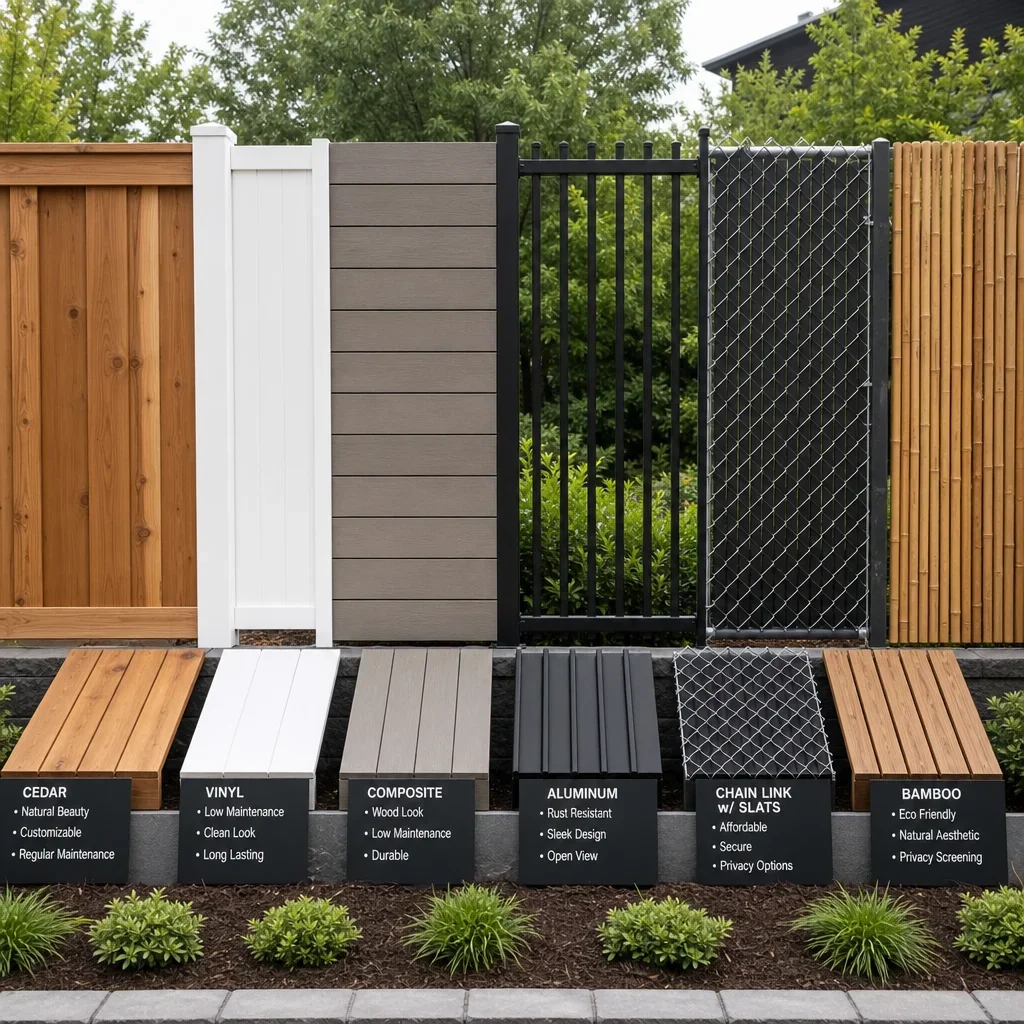
Material choice changes both the look and the long-term workload. Wood gives the warmest finish in most yards, vinyl and composite cut upkeep, aluminum stays clean and open, steel feels sharper and heavier, chain link is budget-first, and bamboo screening is usually more of an accessory than a full long-term system in our climate.
| Material | Look | Privacy potential | Maintenance | Relative cost | DIY difficulty | Climate fit | Best use |
|---|---|---|---|---|---|---|---|
| Cedar or pressure-treated wood | Warm, natural | Low to high | Medium | $25–$65 per linear foot installed for many wood privacy builds | Medium | Good if detailed and maintained | Privacy, decorative, custom styles |
| Vinyl | Clean, uniform | Medium to high | Low | $25–$60 per linear foot installed for many privacy styles | Medium | Good in wet conditions, but product quality varies | Family yards, low upkeep |
| Composite | Modern, premium | High | Low | $60–$150 per linear foot installed on many projects | High | Good where low maintenance matters | Premium privacy screens |
| Aluminum | Light, crisp | Low | Low | $20–$40 per linear foot installed for many open styles | Medium | Good in exposed settings | Pools, slopes, open views |
| Steel or metal panels | Modern, architectural | Medium to high | Low to medium | $50–$140 per linear foot installed on many custom jobs | High | Depends on coating and exposure | Feature fencing, privacy screens |
| Chain link | Utility-first | Low, medium with slats | Low | $25–$45 per linear foot installed on many projects | Medium | Good for practical containment | Budget runs, pet yards |
| Bamboo or reed screening | Casual, natural | Medium | Medium to high | Lower material cost, shorter service life in exposure | Low | Best in sheltered areas | Quick screening, accents |
| Mixed-material systems | Custom, high-design | Medium to high | Medium | Wide range based on components and labour | High | Depends on the mix | Modern custom yards |
Installed costs for a 6-foot privacy fence often land around $40–$150 per linear foot depending on material, access, corners, gates, and removal of old fencing. I would still price your yard by layout and site conditions because a straight run is one job and a yard with slope, tree roots, or three gates is another.
The cheapest option to buy is not always the cheapest option to own. Chain link and simple wood systems usually start lower on day one, but staining, repairs, or add-on privacy screens can move the long-term number closer to vinyl or better detailed wood than homeowners expect.
Privacy fence ideas: full privacy vs semi-privacy
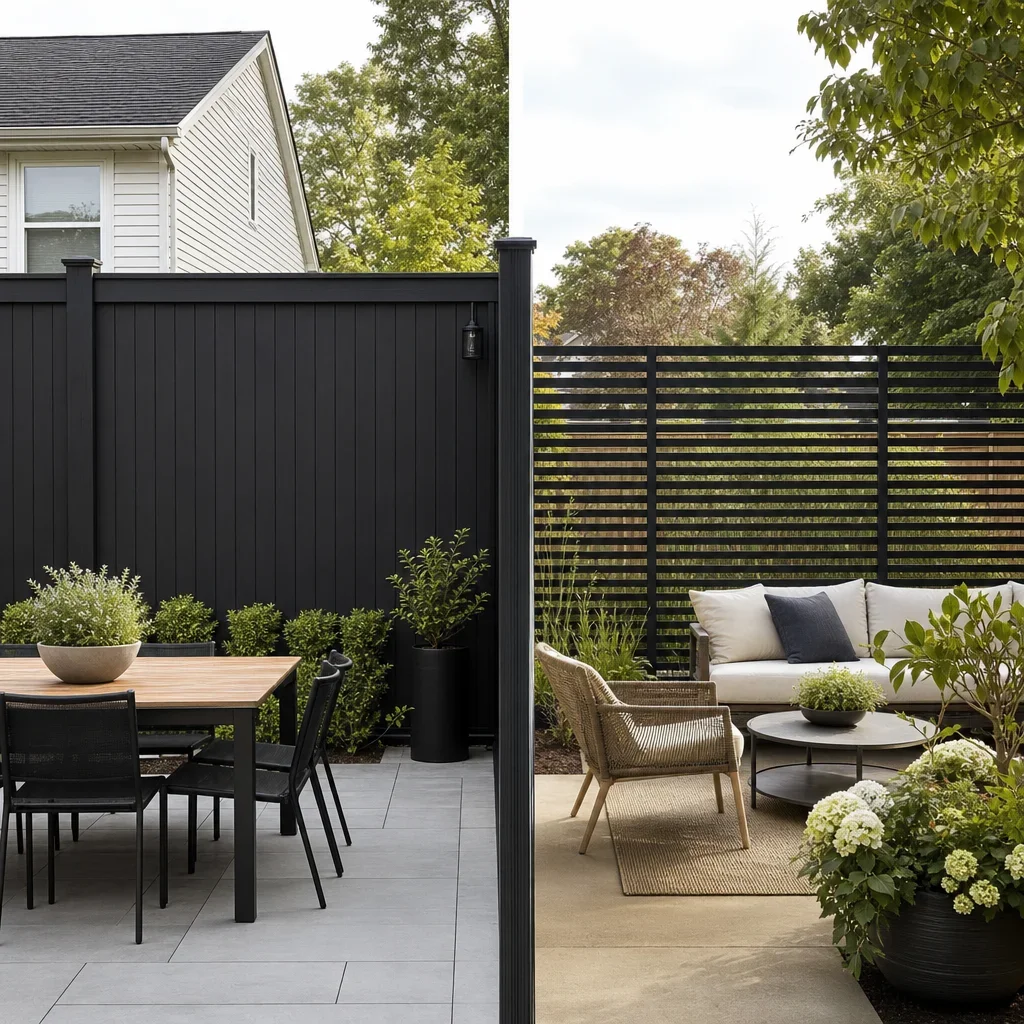
A solid privacy fence blocks direct views best, while a semi-privacy fence trades some screening for more light and airflow. Solid panel, board-on-board, and composite screens suit hot tubs, dining spaces, and direct rear overlook, while shadowbox, spaced slats, and lattice-top systems fit yards that need privacy without feeling sealed off.
A 6-foot fence blocks many ground-level sightlines in typical backyards, and 6–8 feet is the common privacy range discussed across many municipalities and products. Exact allowable height depends on local rules, so I would verify that before you lock in a design or topper.
Semi-privacy often works better in small spaces because your eye can borrow depth through the gaps. That is why a townhouse patio usually benefits from one targeted full-screen wall and one or two lighter boundaries rather than a solid wall on all sides.
You can add privacy without making the yard feel closed in by screening only where people sit. A patio screen, trellis panel, hedge-backed section, or slatted feature wall gives privacy exactly where needed and leaves the rest of the yard more open.
Small backyard fence ideas that do not feel closed in
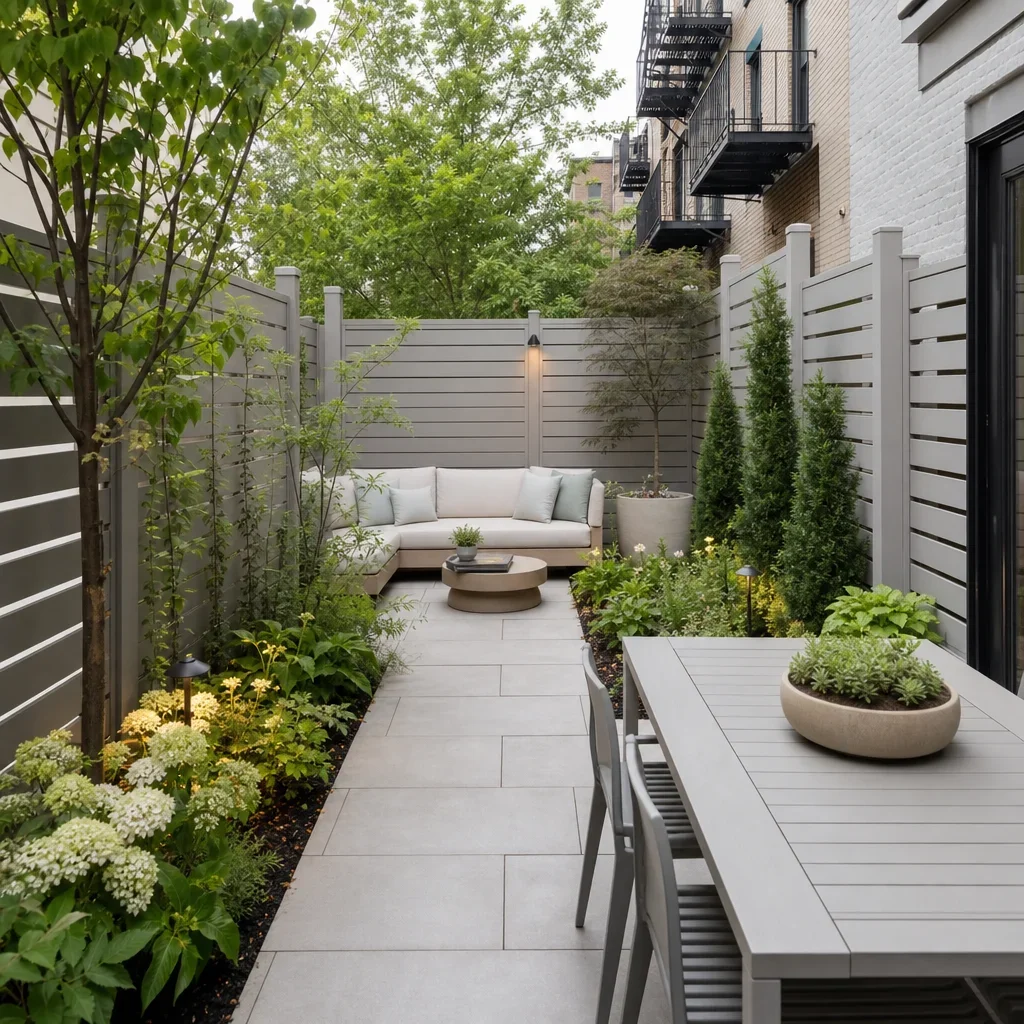
Small yards look better with fewer heavy moves. Slim posts, consistent colour, semi-private sections, and one strong style repeated across the yard usually feel bigger than mixing three fence types in one compact footprint.
Horizontal lines can make a fence read wider, but they are not magic. They work best when board spacing is disciplined, nearby hardscape lines match the direction, and the yard is not already cluttered with too many competing patterns.
Lighter stains, warm natural wood, and soft greige tones can reduce visual weight in a narrow yard. Dark charcoal and black can still work in small spaces, but they look best when balanced by lighter paving, open planting, or reflected light from the house.
Privacy belongs at the problem sightline first. In a compact yard, screening the rear seating area, hot tub corner, or direct upper-storey overlook usually performs better than building a tall opaque fence around every inch of the perimeter.
Budget and DIY fence ideas
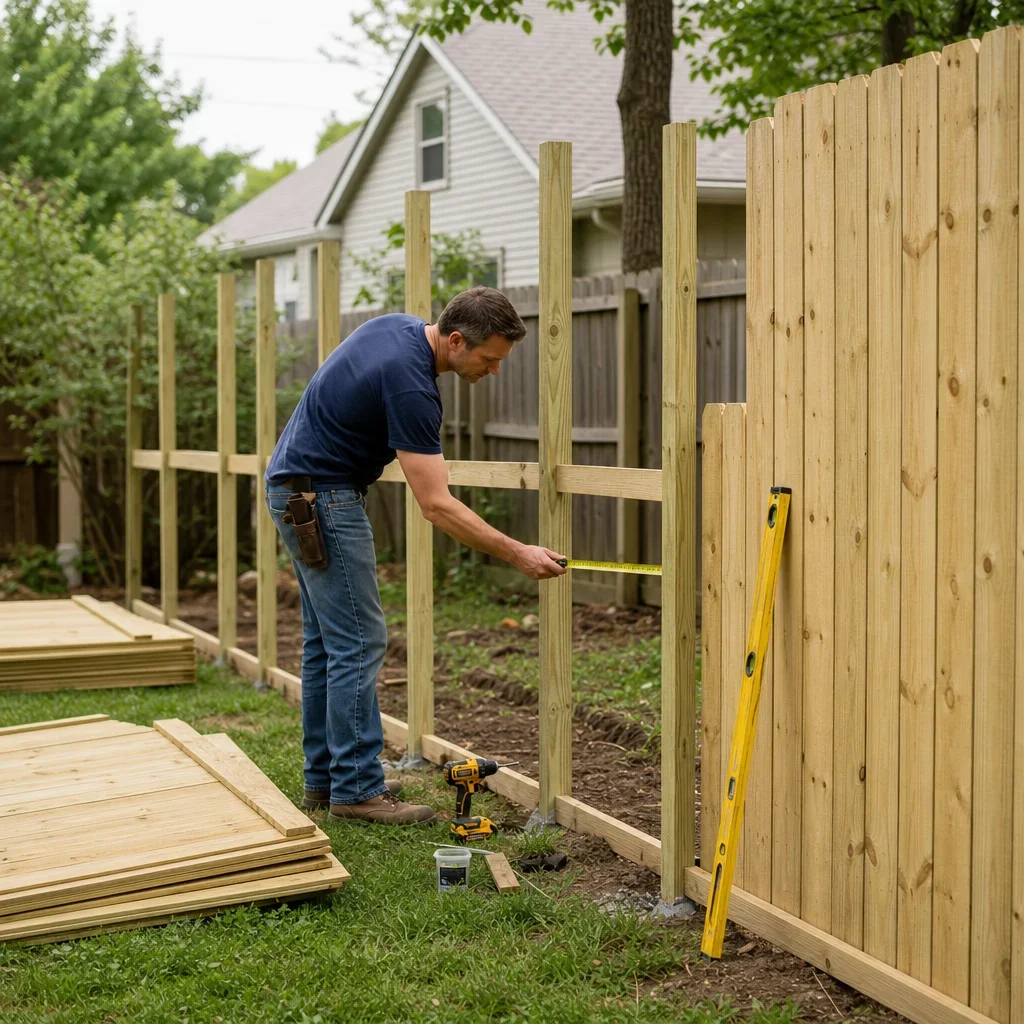
The cheapest way to fence a backyard is usually to fence less of it. Targeting one patio edge, one dog run, or one rear boundary can cut material and labour meaningfully compared with a full-perimeter build.
The least expensive fence types are usually chain link, simple wire or mesh systems, basic wood picket, split rail with mesh, and some prefab panel kits. Privacy changes that math because once you need height and solid coverage, material, posts, and wind load all go up together.
A 6-foot fence average cost is too site-specific to state as one universal number, but many installed privacy fences fall around $40–$150 per linear foot. Gates, demolition, tight access, rocky digging, and custom details push that upward faster than most homeowners expect.
DIY-friendly options include hog wire frames, simple post-and-wire borders, prefab panels, and rolled bamboo screens. These are easier to install than custom horizontal slat systems, heavy composite assemblies, or any layout with multiple corners and grade changes.
Cheap to buy can become expensive to fix. Nine times out of 10, a failing fence comes back to poor post work, bad fasteners, weak gate framing, or material placed in constant wet contact with soil.
Pallet and reclaimed wood can work for decorative garden edging, but I would be cautious using unknown reclaimed material for structural privacy fencing. Condition, treatment history, warping, and local acceptance all need to be checked before you build around it.
Budget-saving tactics that usually hold up are simple runs, standard panel sizes, fewer corners, fewer custom cuts, phased construction, and reusing an existing frame only if it is actually sound. A straight honest quote should separate the fence, gates, removals, and extras so you can see where to save without underbuilding the structure.
What to use instead of a fence
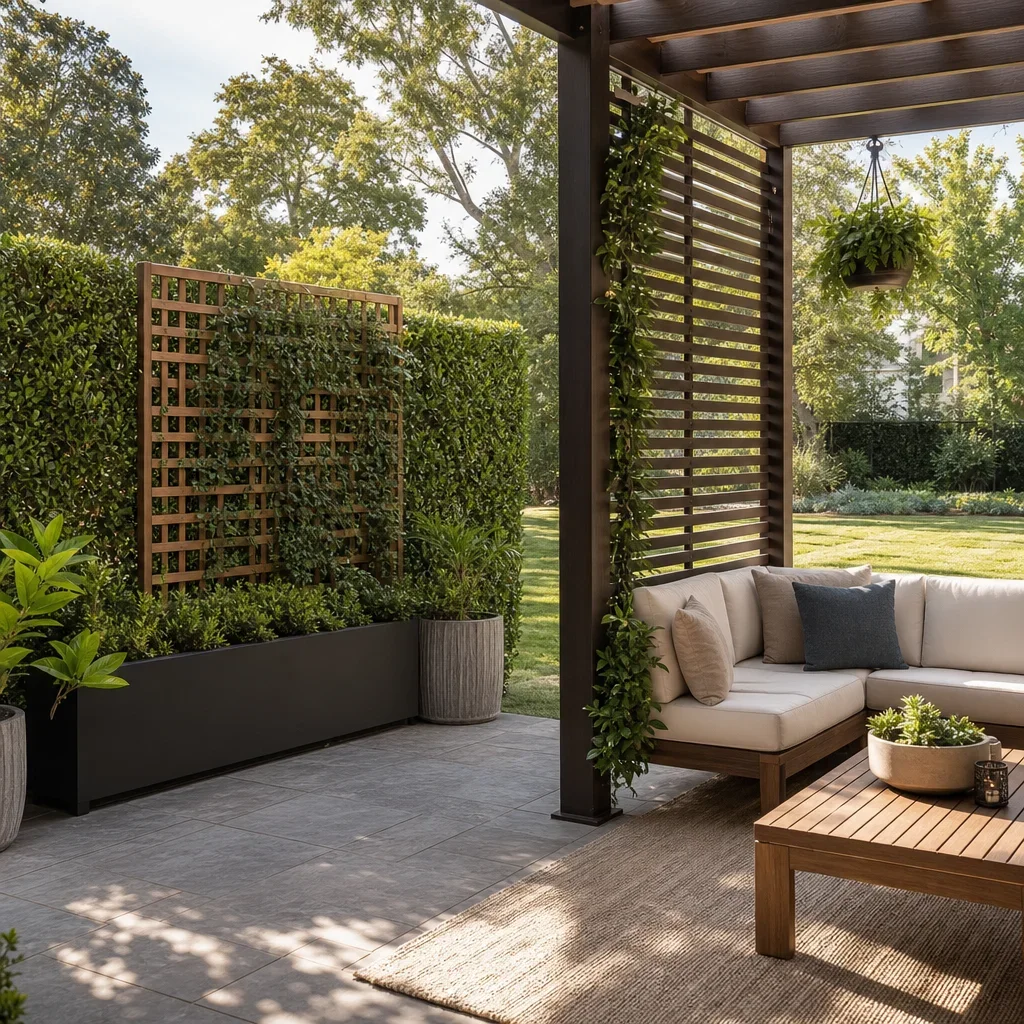
A full fence is not the only way to create privacy or define a yard. Hedges, layered shrubs, trellises, pergola side panels, planter screens, decorative metal panels, berms, and retaining walls with planting can all do part of the job.
Living screens work best when you can wait for growth and do not need hard containment. They soften a yard beautifully, but they do not reliably hold pets, stop children, or satisfy pool-barrier requirements on their own.
A hedge plus a short fence often performs better than either one alone. The fence gives immediate structure, and the planting reduces the hard edge and improves privacy as it fills in.
Planter screens and pergola side panels are strong alternatives for patios because they solve privacy only where you sit. That usually means lower cost and a lighter visual impact than enclosing the entire lot.
Design details that make a fence look nicer
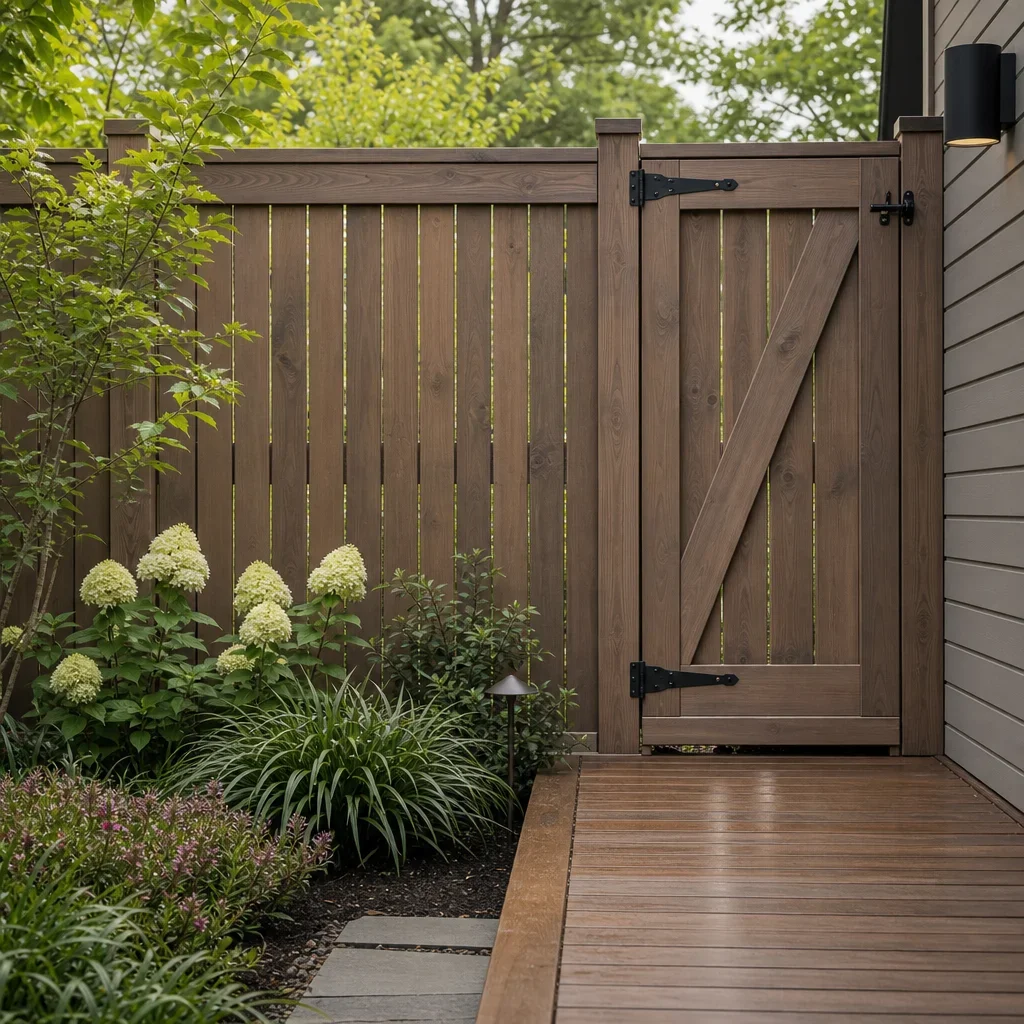
A fence looks finished when the small parts agree with the house. Board width consistency, clean spacing, good gate hardware, aligned top lines, trim details, and coordinated stain or paint do more than decorative extras ever will.
The easiest way to make a backyard fence look nice is to treat it as part of the whole landscape. Match the fence tone to the deck, window frames, masonry, or planters, then repeat that palette in lighting, gate details, and nearby planting.
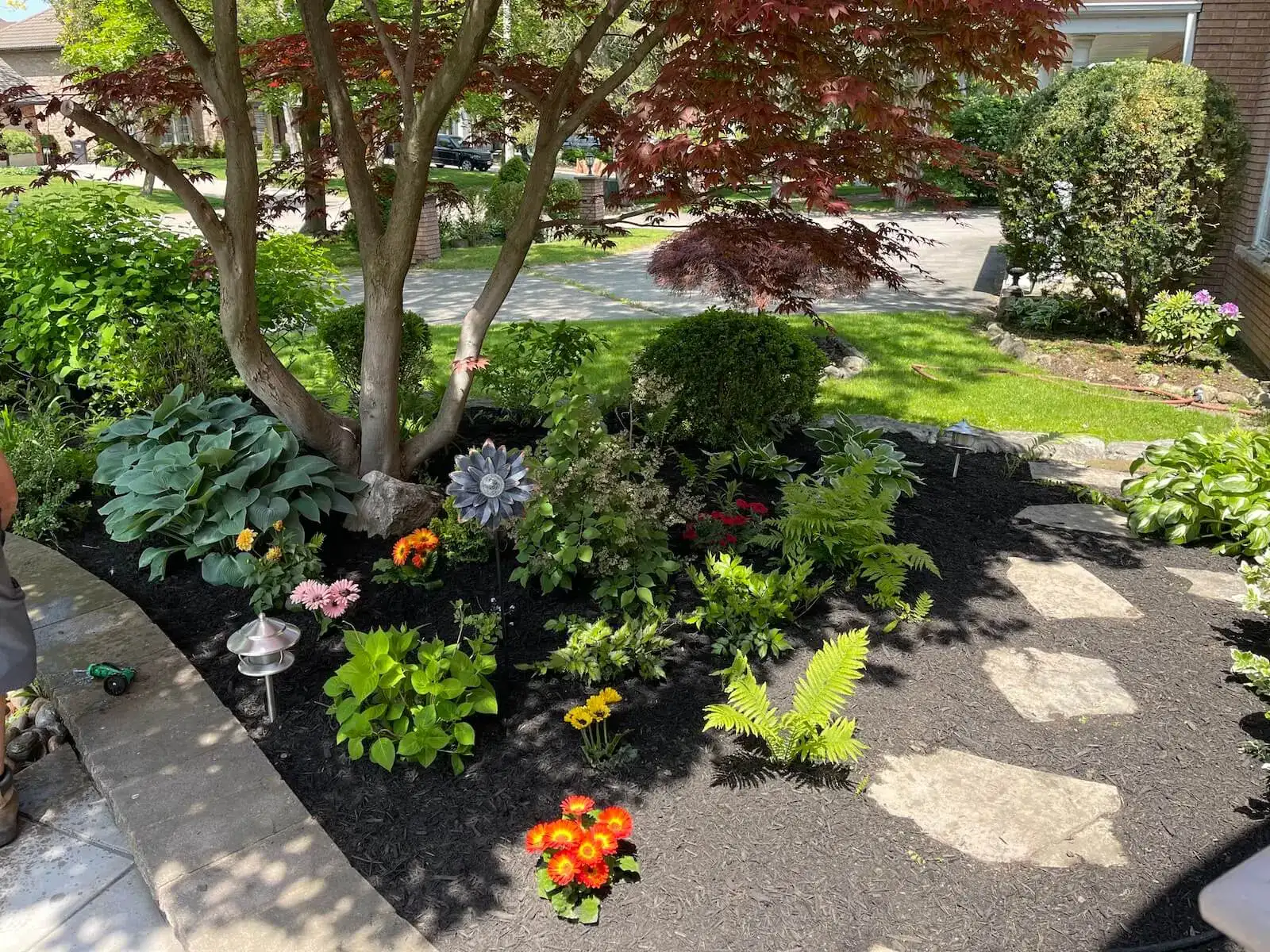
Layered planting is what makes a plain fence stop looking plain. Ornamental grasses, shrubs, espalier, hydrangeas, or columnar evergreens placed in front of a fence break up long runs and make the boundary feel intentional. Zone 5/6 hardiness matters here in the GTA, because a beautiful screen that winter-kills is not really a screen.
You can make an existing garden fence look nicer without replacing it fully. Stain or paint, a lattice or trellis topper where allowed, slat overlays, better gate hardware, lighting, and utility enclosures usually deliver more visual improvement per dollar than tearing out a fence that is still structurally sound.
Fence color and finish trends for 2026
The strongest 2026 fence colour directions are dark charcoal, black, warm natural wood, weathered brown, and soft greige. I would treat those as popular directions rather than fixed rules, because the right colour still depends on the house, paving, and planting around it.
Black and charcoal make foliage stand out and suit modern architecture well. They can also show dust, pollen, and fading differently than mid-tone stains, so the cleanest choice on day one is not always the easiest look to keep crisp.
Natural wood tones soften a garden and fit more home styles than people think. They are especially useful when the fence needs to support nice garden fence ideas low maintenance in feel, even if the material itself still needs periodic upkeep.
The most popular fence colour in 2026 will still be the one that matches the home architecture. Modern houses usually handle black, charcoal, or mixed-material systems well, while traditional and cottage homes tend to read better with mid-brown, natural cedar, off-white, or softer painted finishes.
Fence ideas by use case: pool, patio, vegetable garden, corner lot and shared boundary
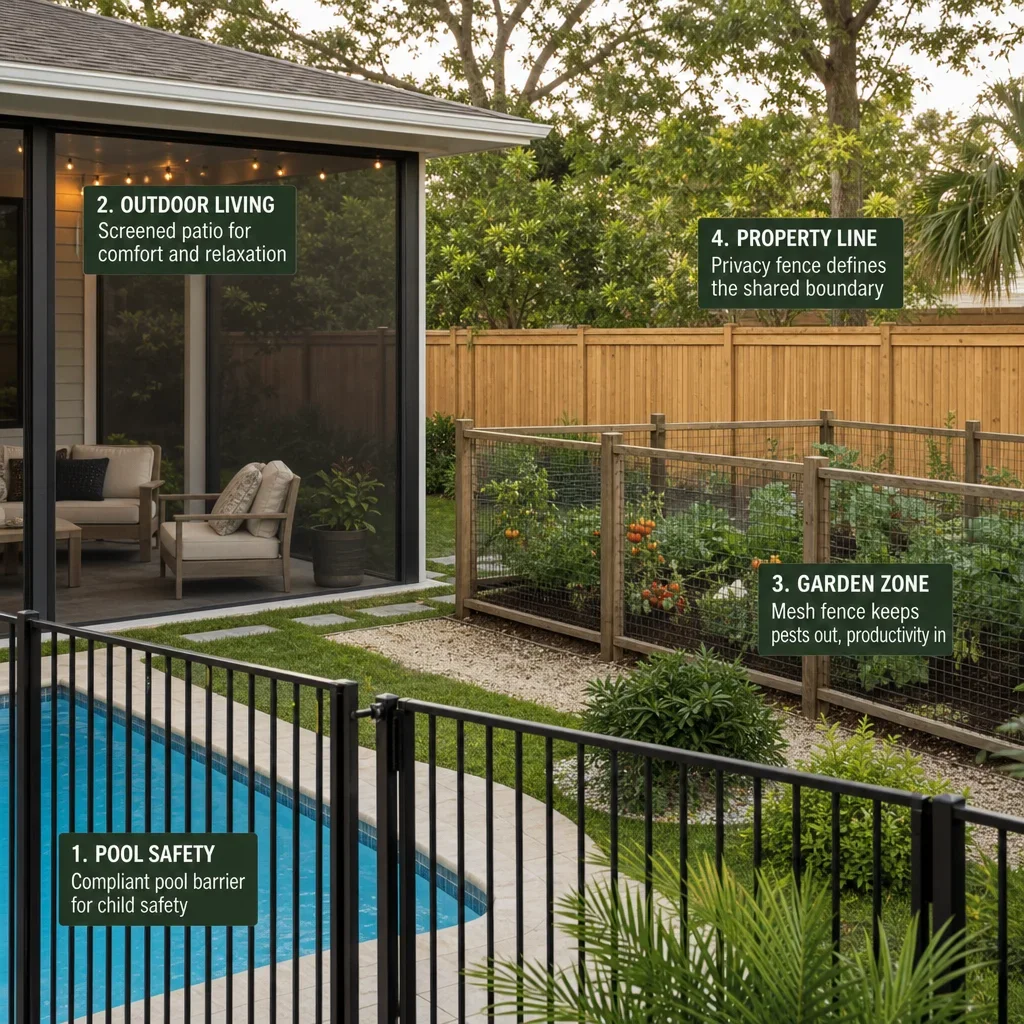
Pools need safety and code compliance before aesthetics. In many jurisdictions, pool barriers are commonly cited at a minimum of about 4 feet with self-closing, self-latching gates, but the local authority confirms what your property needs.
Patio and dining areas usually need privacy at seated height, not necessarily around the whole yard. Slatted screens, laser-cut panels, pergola sides, and planter walls often solve the issue more elegantly than a tall solid perimeter.
Vegetable gardens work best with fencing that balances protection, sunlight, and easy access. Wire mesh, hog panels, picket, and low decorative borders are all useful depending on whether you are keeping out pets, defining rows, or simply organizing space.
Corner lots need extra care because one side often reads publicly. A fence that is acceptable at the rear can look too heavy at the side street, and sightline rules or visibility concerns may affect what can go near the corner. The city confirms those specifics.
Shared boundary fences go smoother when the finished appearance works from both sides. Shadowbox, board-on-board, and simple clean panel systems tend to create fewer neighbour issues than reflective finishes, noisy loose gates, or a patchwork of mismatched heights.
Ugly yard elements should be screened with access and airflow in mind. Bin pads, AC units, pool equipment, and service areas usually need enclosure screens that hide the view without blocking maintenance clearance or drainage around the base.
Low-maintenance fence ideas for different climates
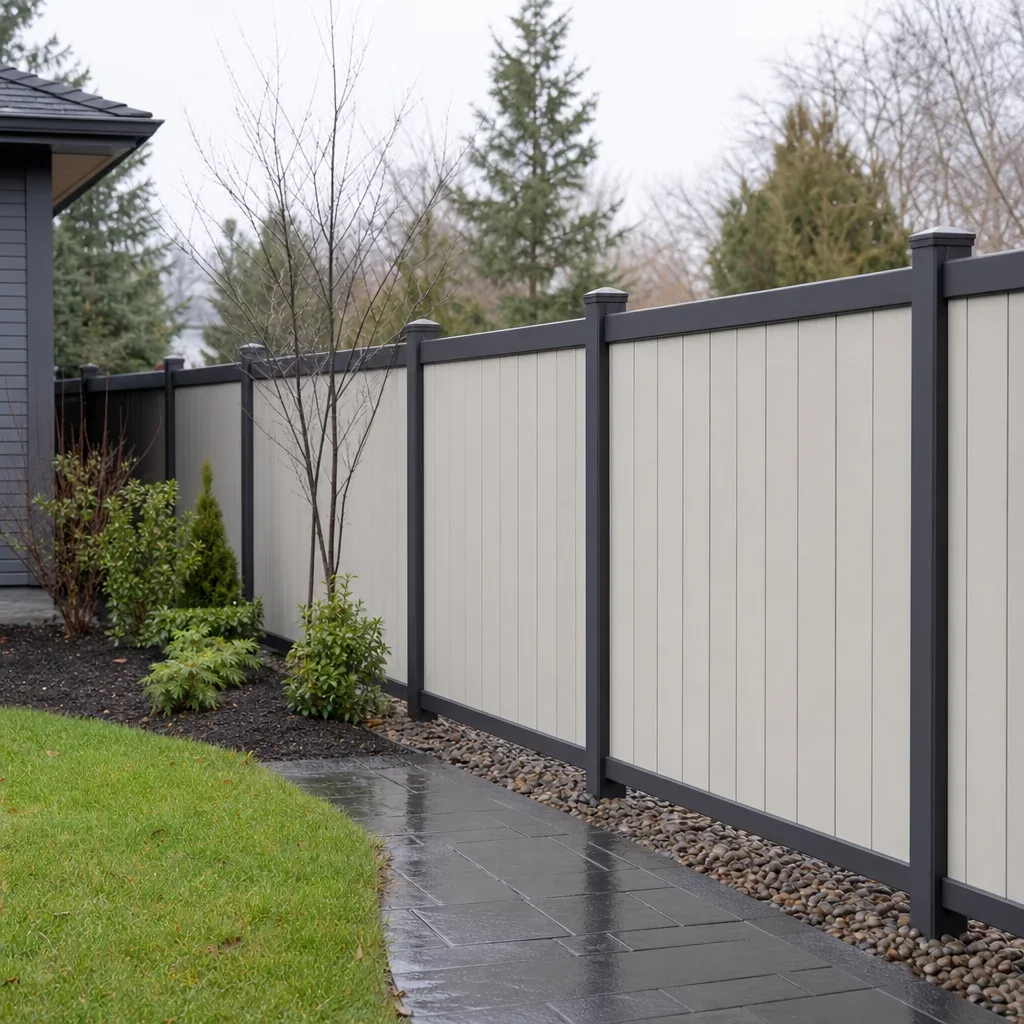
Low maintenance starts with material choice, but exposure matters just as much. Constant moisture, freeze-thaw cycling, intense sun, wind, and road salt all affect how a fence ages, and GTA winters punish cheap materials and weak detailing.
Vinyl and composite are often strong low-upkeep picks in wet conditions because they do not need regular staining the way wood does. Product quality still matters, and I would look at panel stiffness, post design, and how the system handles movement before I called any option low maintenance.
Aluminum works well in many exposed settings because it is light, durable, and visually open. That makes it useful around pools, slopes, and windy yards where a full solid panel would carry more load and visual weight.
Wood still makes sense when natural appearance matters most, but detailing decides whether it ages well. Keeping soil and mulch off the boards, controlling irrigation spray, and allowing airflow along the fence line do more for wood performance than the stain colour ever will.
Noise reduction is a different problem from visual privacy. A fence can help with sound only when it is dense, continuous, and properly detailed, and strong acoustic performance usually needs more construction than a standard decorative privacy panel.
Practical installation choices: slopes, post depth, foundations and upgrades
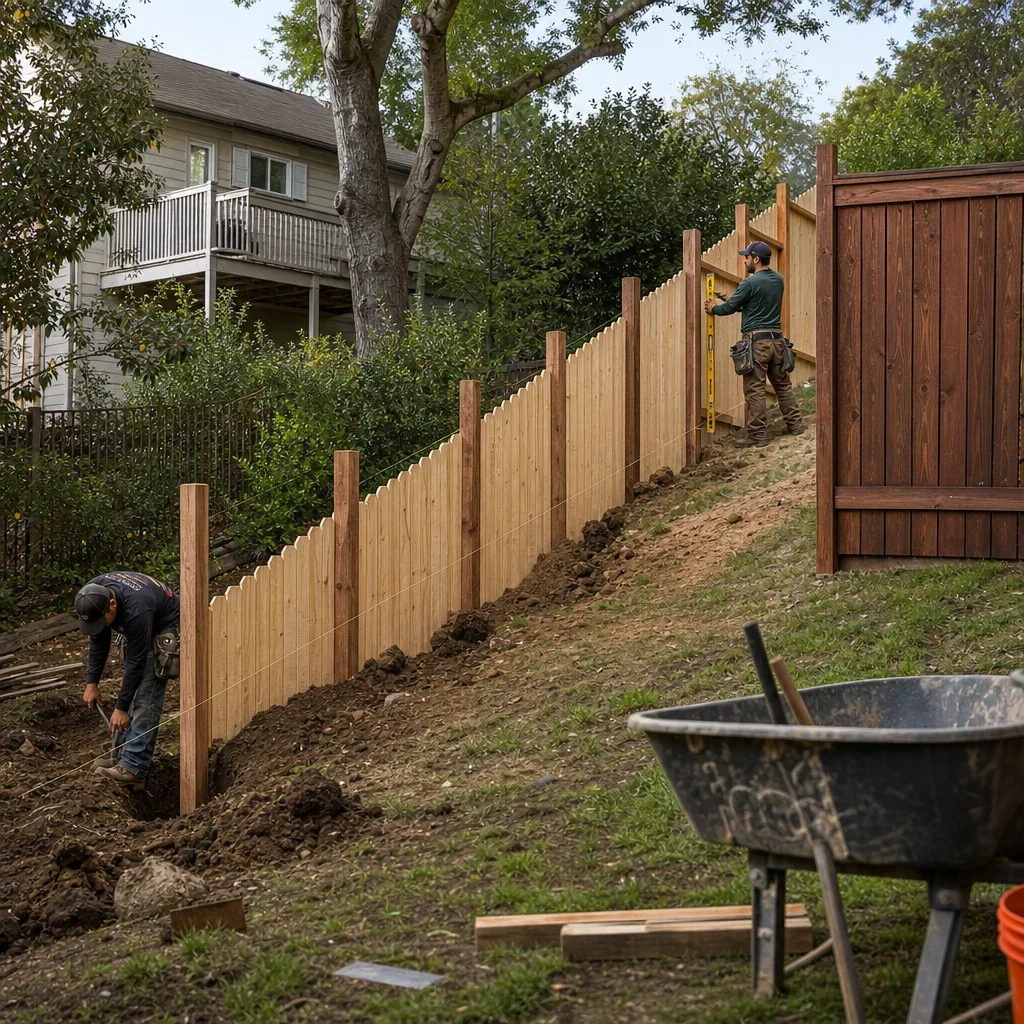
A sloped yard usually calls for either a stepped fence or a racked fence. Stepped sections keep panels level and stair-step down the grade, while racked systems follow the slope more smoothly and are common with aluminum and some panel systems.
Gates, corners, and grade changes should be planned before the fence style is chosen. That is because a beautiful panel layout can become awkward fast if the gate lands at the low spot, swings into a slope, or pinches the access you need for mowers and equipment.
Post depth, footing type, drainage, frost conditions, and wind exposure all matter, but those specifics depend on local code and site conditions. I would never guess at structural details from a photo because soils, grade, and frost movement can change the right build.
Existing fences can often be upgraded without full replacement. Lattice toppers, trellis add-ons, new gates, privacy screens, paint or stain, and layered planting can extend the usefulness of a sound fence while improving privacy and appearance.
Codes, permits and neighbor issues to think about before you build
Property lines come first. A survey, existing pins, or other reliable boundary information matters more than where the old fence happens to sit, because replacing a fence in the wrong place can create an avoidable dispute.
Fence height, setbacks, easements, utilities, and pool-barrier rules vary by municipality and by lot condition. I would verify the exact requirements with the local authority before buying materials, especially if the yard has a pool, corner exposure, a ravine condition, or any unusual grade issue.
Some fence replacements are straightforward and some trigger more review. Anything tied to pool safety, visibility, shared boundaries, or property-specific restrictions deserves a check before design is finalized rather than after posts are in the ground.
The fences that annoy neighbours are usually not the expensive ones or the simple ones. They are the ones that block a key view without discussion, throw glare, slam in the wind, lean over the line, dump water, or show an unfinished backside where a cleaner shared solution was possible.
Common fencing mistakes to avoid
The biggest mistake is choosing by looks alone. A fence that suits the photo but ignores privacy goal, maintenance tolerance, pets, grade, and climate usually disappoints faster than homeowners expect.
Over-fencing a small yard is one of the most common design misses I see. Full-height solid panels on every edge can make a compact lot feel darker and tighter when one or two targeted privacy zones would have done the job better.
Skipping gate planning causes real daily frustration. At least one practical access gate wide enough for mowers, materials, or future work is usually smarter than a beautiful fence line with no usable entry.
Ignoring drainage around the fence line is another expensive mistake. Water sitting at posts, mulch piled against boards, and downspouts dumping at the base all shorten service life and create avoidable movement or rot.
Budget mistakes usually show up below grade or at the gate. Underbuilt posts, weak hardware, cheap fasteners, and premium panels used in low-priority zones are common ways a project spends money in the wrong place.
A quick pre-build checklist helps: confirm the boundary, define the goal, choose the privacy level, map the gates, note slopes and drainage, shortlist materials, and verify local rules before ordering anything.
How to choose the best fence idea for your yard in 5 steps
Step 1 is to define the main goal. Pick one priority first: privacy, pets, child separation, decoration, pool safety, utility screening, or budget control.
Step 2 is to check rules and boundaries. Confirm height limits, pool requirements if any, property lines, easements, and whether the yard has corner or visibility issues that affect the layout.
Step 3 is to choose the privacy level. Full privacy suits direct overlook and equipment screening, while semi-privacy or partial dividers usually fit small yards, patio zones, and garden spaces better.
Step 4 is to pick the material based on maintenance and climate. Wood gives warmth, vinyl and composite reduce upkeep, aluminum suits pools and slopes, and chain link or wire systems keep budget projects practical.
Step 5 is to finalize the design details. Lock in colour, gate placement, hardware, lighting, and planting so the fence reads like part of the landscape instead of a separate afterthought.
A smaller, smarter fence system often outperforms a full perimeter build. If you are narrowing down wood, vinyl, composite, or metal for your yard, get a recommendation and line-by-line quote based on the layout, privacy goals, and local code needs rather than choosing by photos alone.
FAQ
What is the best fence for a backyard?
The best fence is the one that matches the goal. Board-on-board, solid panel, vinyl privacy, and composite screens are strong for full privacy; aluminum works well for pools and slopes; chain link and mesh systems are practical for budget pet containment.
What is the cheapest option for a backyard fence?
Chain link, simple wire or mesh systems, and basic wood picket are usually among the least expensive categories. The cheapest way overall is often to fence only the priority area instead of the entire yard.
What is the average cost of a 6 foot fence?
Many installed 6-foot privacy fences fall around $40–$150 per linear foot depending on material, gates, access, slope, and removal. A straight run with no demolition prices very differently from a tight yard with corners and custom work.
What is the difference between a privacy fence and a semi-privacy fence?
A privacy fence uses little to no gap between boards or panels to block views directly. A semi-privacy fence leaves intentional spacing or uses elements like shadowbox or slats to allow airflow and some light through.
How tall should a privacy fence be?
A 6-foot fence blocks many common sightlines, and 6–8 feet is the range most often discussed for privacy builds. The exact height allowed on your lot depends on local rules and any pool or corner-lot conditions.
What can I use instead of a fence?
You can use hedges, planter screens, pergola side panels, trellises with climbers, decorative metal screens, berms, or retaining walls with planting. These alternatives help with screening and design, but they may not contain pets or satisfy safety rules.
What is the easiest garden fence to put up?
Low decorative borders, prefab mesh panels, simple wire systems, and rolled bamboo screens are among the easier garden fence options. Heavy privacy systems, custom slat fences, and complex sloped layouts are not the easy category.
How can I make my backyard fence look nicer?
Use one clear colour palette, upgrade the gate hardware, keep the top line clean, and add layered planting in front of long runs. Stain, paint, trellis toppers where allowed, and utility screens can upgrade an existing fence without full replacement.
What are the latest fence design trends?
Current trends lean toward dark charcoal, black, warm wood tones, mixed materials, slatted semi-privacy panels, and cleaner architectural detailing. The strongest trend is still a fence that matches the home and hardscape around it.
What fence styles work best for small backyards?
Semi-private slats, lighter visual finishes, partial screens, slim posts, and fence-plus-planting combinations usually work best. One strong privacy wall often performs better than tall opaque fencing on every side.
What is the best low-maintenance fence material?
Vinyl, composite, and aluminum are common low-upkeep choices, but the best one depends on the exposure and the look you want. Wet zones, wind, irrigation spray, and winter conditions still matter even with low-maintenance materials.
Do I need a permit to build a backyard fence?
Permit and code requirements depend on the municipality, the height, the lot, and whether a pool or corner condition is involved. Check local rules before you build, and do not assume a replacement fence is automatically exempt.
If you have three fence styles saved and they all look right, compare them on four things: privacy, maintenance, site fit, and gate layout. That usually narrows the choice faster than chasing one more inspiration photo.